


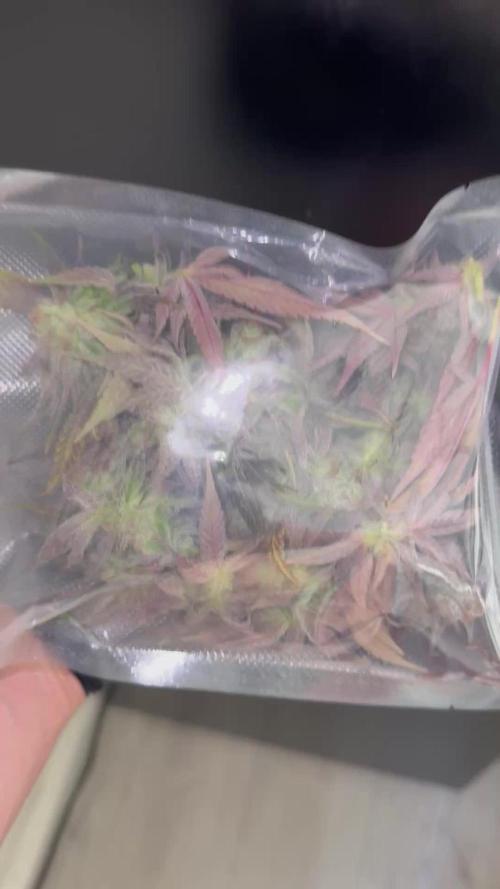


Likes
35
Share


@HarvesterOfSorrow
Follow
Overall I'm extremely impressed with this strain. Terpene profile definitely leans traditional GG#4. Extremely pungent and lingering aroma. I personally wouldn't consume this if I had any plans for the day. Definitely helps with my sleep issues. The bud to leaf ratio was above average and fairly easy to trim. The bud themselves are extremely resinous and dense. So if you've followed this grow you'll know I made to change back to organic growing and made a light change mid grow. I'm glad I went back to organics because it's always been the favorable growing style of mine. I switched to a light bar style LED from Kind LED lights and noticed a big difference over the Spider Farmer. Now let me state that the Kind pulls more watts and should technically on paper out perform the smaller SF2000 from Spider Farmer. This is not at all a slam against Spider Farmer because I love my Spider lights. I really didn't do anything special this grow other than my normal routine. I topped multiple times and the rest was a mixture of LST and HST techniques. I finished in a 10 Gallon pot to try and fill my canopy to provided grow area. The organics I pretty much kept as simple as possible. Amended soil before transplant and topdressed every 4 weeks. What I would consider the most important aspect of organic growing is to not let the soil dry out and keep the microbial life in your soil prosperous and happy. Well im not very good at this at all but I do hope everyone enjoyed this grow and appreciate all the support and comments ❤️. Thank you. Oh I pulled 12.47 ounces off of this plant dried 😁

Likes
27
Share


@Pennello
Follow
Hi guys,
At the end of the story, I am very happy with the whole cycle and finally the outcome, since I almost killed everything in there 😂
Fat Banana is a very nice fruity-kush strain ,with a genetic background tracing back to OG Kush x Chiquita Banana. It is a heritage with a lot of power behind it, this can be seen in the potency of Fat Banana’s bud, which can reach up to 25%+ THC in just 9 weeks! When grown with an expert hand (NOT MINE😅).
The potential here is great! I did have problems throughout the cycle overfertilizing the plant. This is one of the strain that did notice more my mistake, can be clearly seen on the final product. Infact, a good part of the flowers, went for bubble hash, I kept a bit to try it out because the smell its amazing.
I topped her and then, because of an accidents I mainlined her, first to try the Mainlining training and 2nd as it was the only one I had, I wanted to grow her. Probably If I wouldnt have messed up with the ferilizer I would have had a much better final product, this time, talking about quantity and quality.
The whole plants were dried for 18 days after which they were finished in jars for another 6 weeks, if I dont fell sooner.
Gonna grow this strain again 80%
I would like to thank Grow Diaries for this amazingly-organized community they have created, where we all can learn a lot, and share something we really love.
Thanks to everyone who stopped by and looked at the diary, squeezed the like button or comment the diary.
13/12 I'VE MADE MY FIRST RUN OF BUBBLE HASH!
Very very happy with the end result, did not weight anything yet because is still wet big time, I lightly squeezed it a bit, before let it drying on parchment on a cardboard. The smell it's just absolutely crazy. I can smell strong citrus notes in the 120µm but the 90µm and 73µm explodes with crazy-sweet note. While the 25µm (did not use the 43µm) where I did collect most of the hash, smell like good and sweet hash, nothing crazy like the previous ones but a very buttery like consistency that makes me want to eat it like this...dont ask me why...even though I know you all probably felt this way too...
Anyway, the paper sheet says it all about timing, washes and µm used for the extractions, but just in case I'll explain it down here.
I have done 3 wash with different timing.
1º wash: 5 min only to get the most brittle trichome heads
2º wash: 10 min stardard
3º wash: 30 min to stock up a bit 😅
I could have done an extra wash for sure and get more out, but I was running out of time so...I will update with the dry weight, it was not the only wash I've done, that were just too many grades to weight up..so I chose to do it once all dry!
See you really soon with on the nex run pals!


Processing
Likes
15
Share


@MG2009
Follow
08/09/2020
She is a little wilted but she will be fine water now.Gave her LAB earlier this week and feed her next week with Fox farms 4-9-3 fruit and bloom?
I think?
She will bounce back to life in about 10min.


Likes
32
Share


@Hawkbo
Follow
Just started them all on the Green Buzz Liquid Organics and will run it the rest of the way. I'm not going to add much to the line just some calmag, enzymes maybe terpinator I have to experiment with it a little bit. The first feed went extremely well the plants instantly reacted within an hour after the feed especially the next day. The additives in this line barely raised PPM at all which I liked. It also doesnt stink like other liquid organics I've used.
These 2 seem a little slower coming along than the others. I had to do a little defoliation to open up some space but other than that not much to update. Have had some high humidity the past couple days.
Likes
9
Share


@Mr_nugs_lover_David
Follow
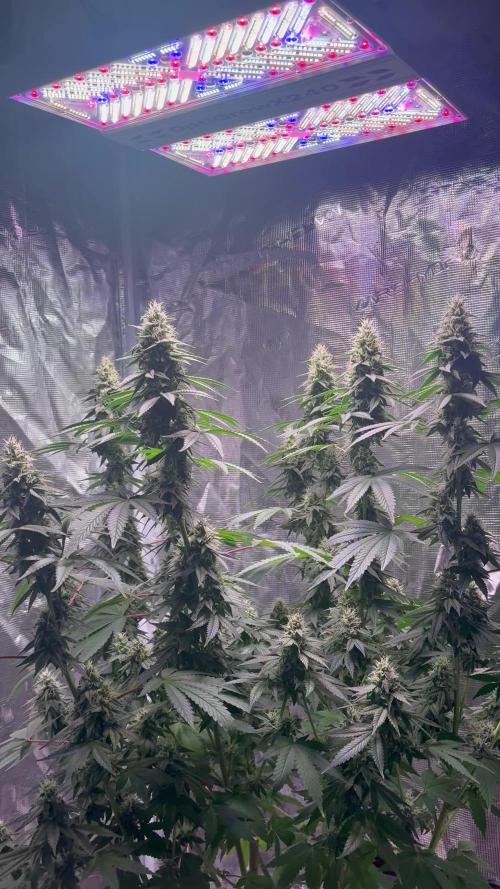
She's developing very healthy and strong, she's responding very well to tje training techniques and she looks fantastic right now, she's enjoying life! Hope you guys enjoy my work! ❤️💚💎




Likes
12
Share


@Gdawg
Follow
They are striving in there inviroment... sorry been ill for two weeks im impressed with the plants smell amazing and growing just as good
Likes
14
Share


@Stork
Follow
Drying time , to bad i can't dry her in the tent because the rest are not ready yet... i will try my best to make it ideal temp for drying, so i can have the best taste 😋 I hope is sweet 😋 😊


Likes
10
Share

@MrWeeedWorld
Follow
Hallo zusammen! 👋
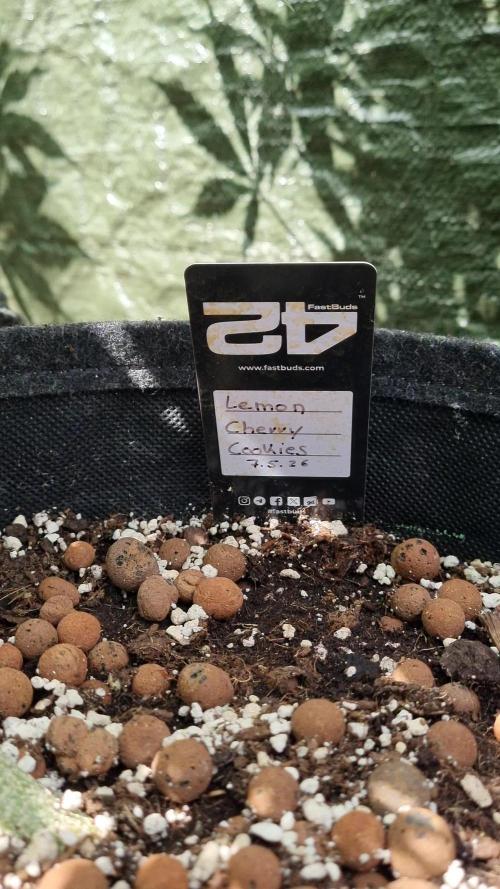
Eine weitere Woche liegt hinter meinen Outdoor-Mädels und langsam wird richtig deutlich, in welche Richtung sich dieses Projekt entwickelt.
Die drei Pflanzen, die ich zu einer einzigen trainiert habe, wachsen inzwischen erstaunlich harmonisch zusammen. Jede von ihnen trägt ihren Teil zum Gesamtbild bei und genau das macht dieses Projekt für mich so spannend.
In den letzten Tagen haben die Blüten sichtbar an Volumen gewonnen. Besonders die Hauptcolas beginnen jetzt richtig aufzubauen und werden Woche für Woche kompakter. Gleichzeitig entwickeln sich auch die vielen kleineren Seitentriebe hervorragend und füllen sich immer weiter mit Blüten.
Besonders freut mich die zunehmende Harzproduktion. Die Sugar Leaves sind inzwischen ordentlich mit Trichomen überzogen und die Blüten beginnen bereits schön zu funkeln. Man merkt, dass die Pflanzen jetzt langsam in ihre produktivste Blütephase kommen.
Die größte der drei Pflanzen streckt sich weiterhin deutlich nach oben und bildet eine beeindruckende Main Cola. Die beiden anderen Pflanzen investieren ihre Energie dagegen stärker in die zahlreichen Seitentriebe, wodurch eine sehr gleichmäßige Verteilung der Blüten entsteht. Genau diese unterschiedlichen Wuchsformen machen das Projekt so interessant.
Auch gesundheitlich bin ich sehr zufrieden. Das Laub präsentiert sich überwiegend kräftig und vital. Trotz des wechselhaften Wetters entwickeln sich die Pflanzen kontinuierlich weiter und zeigen eine schöne Blütenentwicklung.
Was mir besonders gefällt, ist die Struktur der gesamten Pflanze. Durch das Training gelangt viel Licht bis in die unteren Bereiche, wodurch auch kleinere Budsites ordentlich zulegen können. Ich bin gespannt, wie dicht die Blüten in den nächsten Wochen noch werden.
Jetzt beginnt langsam die Phase, auf die sich jeder Grower freut. Die Buds werden von Woche zu Woche dicker, die Harzproduktion nimmt sichtbar zu und die Pflanzen legen jeden Tag noch einmal ein kleines Stück nach.
Ich freue mich schon auf das nächste Update und bin gespannt, wie sich die Blüten bis zur Ernte noch entwickeln werden.
Vielen Dank fürs Vorbeischauen und viel Erfolg euch allen bei euren Grows! 💚🌱
--------------------------------------------------------------------------------------------------------------------------------------------------------------------
Hello everyone! 👋
Another week has passed, and it's becoming more and more exciting to watch how these plants continue to develop.
The three plants that I trained into one structure are now growing together surprisingly well. Each one contributes something different, making this project even more interesting every week.
Over the last few days the flowers have noticeably increased in size. The main colas are finally starting to bulk up, becoming denser week after week. At the same time, the numerous side branches are filling out nicely and producing more and more well-developed bud sites.
One of the highlights this week is definitely the resin production. The sugar leaves are now heavily covered in trichomes, and the buds are beginning to sparkle beautifully. It's obvious that the plants are entering their most productive flowering stage.
The tallest plant continues to dominate the canopy with an impressive central cola, while the other two focus more on building multiple side branches. This creates a very balanced plant structure with flowers developing across the entire canopy.
Overall, I'm very happy with their health. The foliage remains healthy and vigorous, and despite changing outdoor weather conditions, the plants continue to progress steadily without slowing down.
Another thing I'm really pleased with is the overall canopy structure. Thanks to the training, plenty of light reaches the lower branches, allowing even the smaller bud sites to develop much better than I initially expected.
Now comes the stage every grower looks forward to. The buds are swelling week by week, resin production keeps increasing, and every day the plants seem to make another small step toward their full potential.
I'm really looking forward to seeing how much they can still develop over the coming weeks.
Thanks for stopping by, and I wish everyone a successful growing season! 💚🌱
Likes
2
Share


@theicyeffect
Follow
First week Veg and the growth is remarkable!
Starting out with a very much needed repotting, which they all appreciated. Their colour got fully uniform and more vibrant after only a couple of hours. Their definitive locations in the grow tent are:
Top left - Sunset Sherbet
Bottom left - Gorilla Glue (you can check out her diary on my profile)
Top right - Bruce Banner
Bottom right - Biscotti Mintz
All are developing a strong structure with consistency.
Very little water is needed, the humidity in the tent is stable by itself. Don’t got much to worry about, just enjoying watching them grow. Perks of a good living soil.


Processing
Likes
4
Share


@Skillgrower
Follow
As mais pequenas um pouco atrasadas em relacao a maior, estavam muito estressadas e atrasaram um pouco a floracao mas ja foi resolvido o problema com o revive da advanced nutrients, foi dia de lolipop nas mais pequenas pois a maior ja o tinha feito a semana passada por estar mais desenvolvida, strain forte compacta mas robusta com muita ramificação....

Likes
13
Share


@GloveGreen
Follow
14/09/2021
Hello everyone, welcome to the third week of life of the so dreamed Dark Phoenix of Green House Seeds Co.
I'm very surprised with the development of one of the plants, it grew a lot in the last week getting an excellent performance in my opinion. I would like to know your opinion. Leave comments please.
Speaking of cultivation I keep keeping the temperature around 25°C to 26°C
I raised the EC value to 1.0 ms.

Likes
29
Share


@Damonkey
Follow
Great progress being made at a really fast rate. The orange sherbert are starting to catch up with the POG and the buds look like they’re gonna be big and fat. All OS fairly short bar one, all developing at breakneck speed bar one, but all looking great and like they’ll produce gold. Barneys Farm truly do have some great genetics going on, I’ve been so pleased watching every strain I’ve grown from them. In the past I’ve noticed a similar vigour with cookies kush and with gorilla Zkittlez. Anyhow, all moving nicely in the tent, if only it reflected on life in general😣😂
Really looking forward to tasting these girls now. In week 4 they’ve shown the kind of size they’re gonna reach, I think I’m doing better than previous grows but I kind of always think that or at least hope it and alas again I am a smoker and am prone to over exaggeration especially when comparing two ladies, you gotta be careful not to offend either one ya kna!😉😬
Processing
Likes
18
Share


@Silverback_Guerilla
Follow
11/30:
I harvested the first 6 today, flushed 5 more for the second time, and fed everybody else for the last time.
I washed all the branches using the 4-step method ascribed by Doc Bud at High Times/420magazine and many other notable cannabis connoisseurs, with slight modifications:
4 x big plastic totes/bins
8 x ounces of 12% hydrogen peroxide (or 32 ounces of 3%)
2 x cups of concentrated lemon juice
2 x cups of baking soda
10 x gallons of water in each bin
Unless your tap water stinks, you're safe to use tap water for the procedure, but I used an inline carbon hose filter to fill my buckets.
Bin #1 - 10 gallons of water mixed with the hydrogen peroxide
Bin #2 - 10 gallons of water mixed with the lemon juice and baking soda
Bin #3 - 10 gallons of water as hot tap water
Bin #4 - 10 gallons of cold tap water
I was mainly concerned about removing as much lint and cat/dog hair as possible, but also rinsing off any residue left from all the various foliar applications of humic/fulvic acid, kelp, axiom, big bloom, and tiger bloom I did. First, I put my leaf blower on low speed and blasted my plants thoroughly, one at a time, replicating 50-60mph winds for about 10 seconds and watched as a whirlwind of debris and hair flew out the back door.
Bud-washing:
Pluck any necrotic plant material and any old fan leaves off while they're still on the plant. Then, take a handful of branches and submerge them in Bin #1 for about 30 seconds, agitating it, removing from water, submerging again, agitating, etc...then remove it and let it drip out for a few seconds...then repeat the process with Bins #2-4. Let it drip dry overnight with a little bit of airflow, then dry as you normally would...baskets, boxes, etc..
I hadn't watered these plants in a few days, so they were almost in draught, but after doing this procedure, they were fully hydrated(turgid) and seemed to have brighter colors than before. Nice!😍
12/1:
The bottom part of the closet seems empty with only 9 plants in there.. 😟
I cut the harvested plants up and put them into drying baskets in the top of my closet with a small oscillating fan on. I've got the temperature fluctuating between 68f and 75f and the RH is staying between 48% and 52%.
To do that, I had to take down the small light in the top of the closet to fit the drying baskets up there. So, I moved the 3 shorter plants still up there down to the bottom and put them on top of buckets. Now the bottom of the closet looks full again!😃
I'm anxious to finish up this grow so I can get busy growing the Fastbuds Fast Flowering Photo Testers!!! When I harvest the next 5, I'll flush the remaining plants really well and that will be all the flushing they'll get..I'll let them dry back out for a few days and harvest them. I've got to make some minor improvements to the garden (adding UV, blue and red/far red booster panels and intake fans) That should put me on track to start germinating them by mid-December if all goes well.
12/3:
...early a.m...
The harvested plants are already dry!?!?? And have excellent texture??? Wow..bud washing is for real..roughly 48 hours after I hung them to drip dry, and 40 hours after I put them in baskets in 50% RH/70f conditions with moderate airflow...usually takes 4 or 5 days to get a good slow-dry in the same conditions, so I'm convinced that this must be attributed to the bud-washing procedure. I'm sold!
Here's the talley so far:
plant #1 - 115g (plus 13g larf) - Candy Cane [F2]
plant #2 - 108g (plus 18g larf) - Candy Cane [F2]
plant #3 - 119g (plus 15g larf) - C4ndycaine [Candy Cane x C4]
plant #4 - 92g (plus 6g larf) - Candy Cane [F2] - the smallest plant in the main area
plant #5 - 112g (plus 22g larf) - Candesia [Candy Cane x Amnesia]
plant #6 - 75g (no larf) - Candesia [Candy Cane x Amnesia] - grown in upper area under 200w
...afternoon:
I flushed 6 of the last 7 plants for the first time today and harvested 4 more of them. I washed them and hung them to dry.....my dripping wet bathing beauties!😍
Likes
2
Share

@Olduffybastard88
Follow
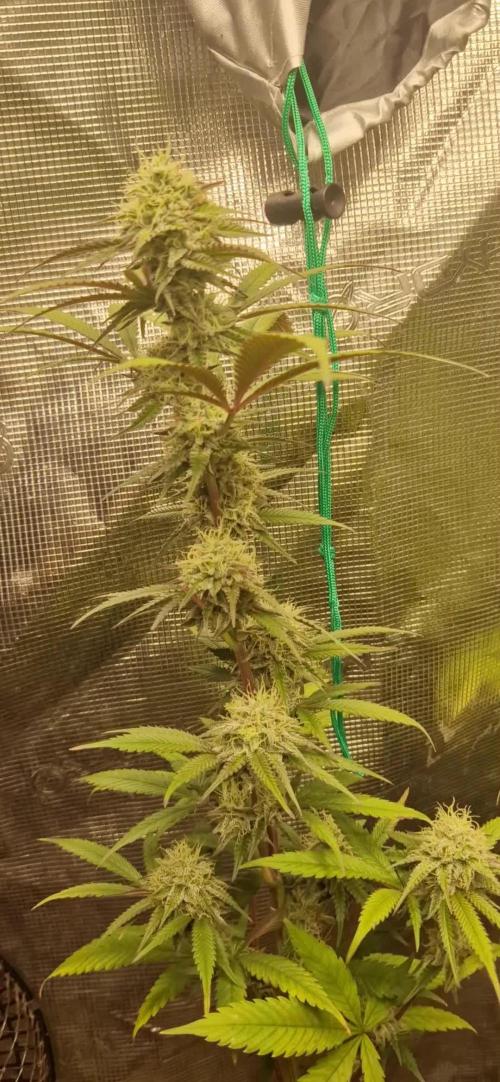
Saying around 3 weeks left untill I harvest the flowering tent under the mars hydro already got the next batch of phenos in veg stage around week 5 so I have plants to flower right away for you guys had my tent on 12/12 all year using natural sunlight to veg my plants and the mars hydro to flower them
Likes
15
Share


@BicRed
Follow
The buds are starting to form. The smell is strong when I open the cabinet, but with the filter, it doesn't smell.
I corrected the deficiencies I had correctly. I defoliated a bit to allow good light penetration. I'll let you judge how they look now. I did a week of stretching, lowering the light by 1 hour each day.