


Likes
Comments
Share

@Suemchen
Follow
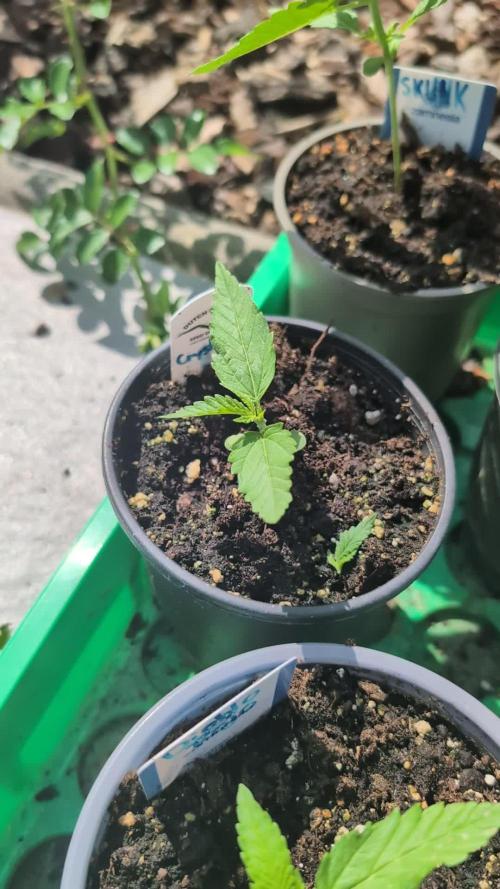
Outside right now untill there is room in the tent
Day 1: Here she is🤗 Looks good 👍🏻 watered with rain water 👌🏻 keeping the soil moist 🌧️
Day 2: looking good 🤗 added mycorrhizal and watered with rain water and 1 ml/l root juice and 1 ml/l Cal mag 👌🏻
Day 3: it rained, so I didn't have to do anything 👌🏻
Day 4: watered with out supplements 👌🏻 Just rain water 👍🏻
Day 5: Looks good 👍🏻 did nothing 👌🏻
Day 6: Looks good 👍🏻 watered with rain water 👌🏻 keeping the soil moist 🌧️
Day 7: Looks good 👍🏻 did nothing 👌🏻she some how lost a leaf🤔

Likes
38
Share


@Homegrown93
Follow
They’re off and running, I may need to fill two of the pots with a bit more substrate as I ran out towards the end. Otherwise, they’re feeding and growing well.


Likes
9
Share


@DaddyPrime2
Follow
chopped #1 on 1/21/25
started curing today 1/27/25
chopped #5 on 1/23/25
still hanging and drying.
will update with weights and smoke reports and more pictures when dried and cured
#1 33 grams. nice big nugs. i really like how the mainline turned out with the final product
#5 32 grams smaller buds overall but the yeild is very similar.
these are weights after trimming. i did a fairly heavy trim on thesr 2 plants.
this diary started with 5 plants but because of my perpetual flowering set up, i have had 3 other diaries for the flowering stages of the other 3.
The flowering stage of this diary are only plant #1 and plant #5

Processing
Likes
105
Share


@Green_Friends_Inc
Follow
Commencing week 4: Day 22 on November 14th
Day 22-ph'd back to 5.8x range from 5.5 to 6.1
It
Day 23- added 5ml Clonex to each buck and ph'd. Ppm around 600-650
Day 24- added a little fertilizer salts for N mostly and then ph'd again. Ppm 750-850. Also turned on a few more lights as well as turned timer off to increase temps in lieu of pending storm. Also adding passive humidifier to at least help with the coming dip in humidity from snow outside.
Day 25- pass few days are going well. Aside from a heavy dip in the temp and humidity last night (we have a bit of snow come already). Plants seem to be picking up the pace a little finally. Not much but A little bit which is great because it feels like I've been watching paint dry lol
Day 26- plants are doing great. Seem to be happy 😄 despite or maybe because of the changes over pass two days. And..,.we have roots in water!!!!!! So far gorilla zkittlez2 and gorilla zkittlez3 both have a few roots in the nutrient solution. Now I expect growth rate and work to pick up soon. Hopefully the rest get their feet wet soon 💧
Day 28 last day of week 4 Nov 19
Some plants went from seedlings to "hardened off" this week nearly tripling and doubling in size as well as starting with the secondary growth. Some still a little behind. I've noticed all the Gorilla Zkittlez are simply growing much faster then the rest so far. And that out of the three GZ s one seems to be leaving more hybrid or possibly sativa (see pics) .
Also one or two of the plants seems to have some funny traits like the Boss Hogg1 very purple and covered in baby hairs.
Overall I am amped to see the growth in the coming two weeks and expect big changes 👍👍
Thank you all! who view, like, comment, follow, and support me. I swear it will be much more exciting grow soon!😎

Likes
10
Share


@JeyGanesha
Follow
Per fortuna non è lei l'hermafrodita.
Pensavo era lei ma poi guardando bene ho visto che è la strawberry 🍓 banana 🍌 della fast buds..mai successo prima...sarà che s'è stressata troppo con il taglio del apicale..boh non so. .,


Likes
8
Share

@PlantMike
Follow
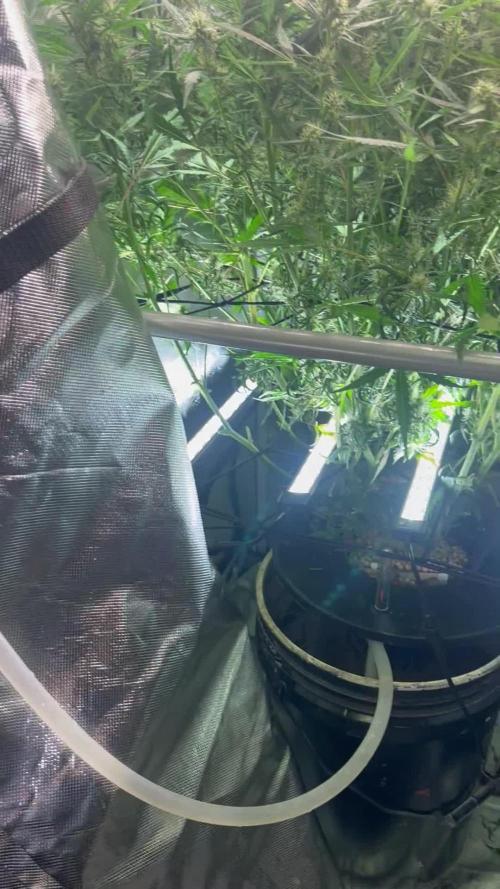
She's really starting to fill out at each nug site, pistil hairs are still vibrant white and an intoxicating citrus/melon smell has taken over the grow tent! Still feeding at an EC of 2 and keeping the pH around 5.5-5.8. Leaf health is good for the most part and I did add a small under canopy fan to keep air moving through the plant. Plant shows no signs of senescence at this point so let's keep it going!
Likes
12
Share


@artems
Follow
Thats a new experience for me. To grow and share the result. Im really like it. It's helpful, inspiring and have a great community! Thank for support, keep in touch for new grows!


Likes
2
Share


@Madman2020
Follow
Oct 5-11 Vegetative steering?
Aiming for:
leaf Temp -80f
CO2 -1250ppm
VPD +1.04
(65%/75F)
Vegetative Steering 6P1/ 2P2/1P3
Each P1 water event is 15 minutes apart. Seems to far apart. I think i Need More water events, with less time in between events in order to get a strong veg signal?
Watering for 2min(110)ml
May need 3min waterings(currently not getting runoff)
I have to hand water every two days.
Day 11 flo
18.5inches tall
12inches from light(moved to 16)
1300ppm
Day 18
Defol
Sprout chickpea(2days)
Soaked 1cup for 4 hours then rinsed. Completely covered then Soaked overnight.
Rinsed then poured water out and layed jar on the side for one day.
Blended with water(aloe vera and coconut)
Day 19&20 foilarspray
Alfalfa/Chickpea SST with Kelp,aloe,coconut,silicate,microbes brewed for 1.5 days
Day 21
Fed the Tea blend
Leaf temp 80
65kluxx
Co2 100
Plants look like they responded well to the foilar. The flowers at this stage are my best performance yet .crop steering may be working?


Likes
7
Share


@Dpizzle1986
Follow
Tricomes telling me she's pretty much done.. gonna let her go maybe another week.. she's super dense, Budd are hard as a rock..
Likes
23
Share


@Foggedaboudit
Follow
I got my work cut out for me trimming wise! Boy these are some big bushes!


Likes
7
Share


@Stickygreens420
Follow
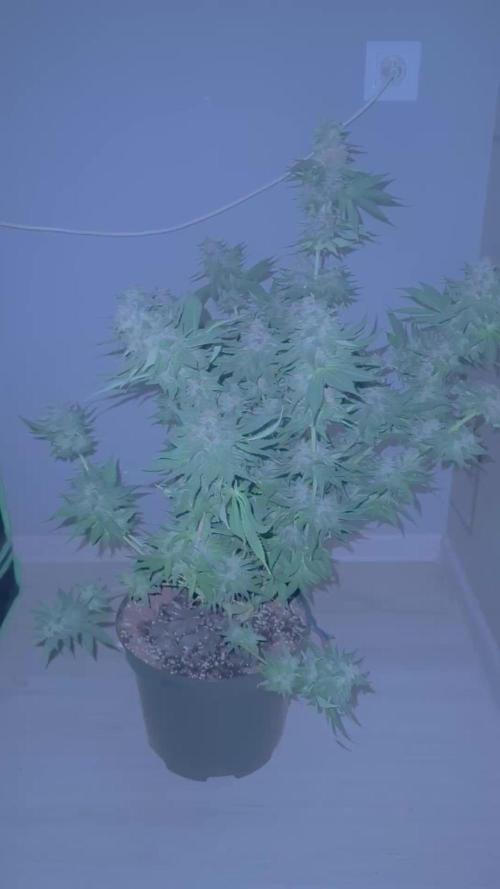
Overall I was happy with this strain and I did not have many problems growing. Plant was healthy for the entire grow with little to no signs of deficiencies. The only issue I had with the plant was it started sprouting a good amount of nanners the last few weeks of flower. I was able to pull them all off with tweezers, so now I just need to hope they didn't pollinate any of the other plants. Still need to dry for another two weeks, so I will provide a smoke report at that point. The plant is loud and still has that sweet funk. Excited to smoke it. I will be drying at 60° and 60% RH for 12 to 16 days.
12/28/2022: day 10 of drying at 60° and 60% RH. Smallest branches are starting to snap, but most of the main branches are not providing a noticable cracking sound yet. Buds are a little on the airy side, from what I can tell, but I'll provide a final update once trimmed.
1/2/2023: started trimming today, which is day 15 at 60° and 60% RH
1/4/2022: finished trimming and totaled 84 grams, so just under 3 oz. I know I said earlier the bud was a little airy, but I must have grabbed some lowers. Not the densest ever, but pretty nice nugs. Found some additional nanners I missed, but no seeds so far. Pretty happy with the results.



Likes
45
Share


@Ultraviolet
Follow
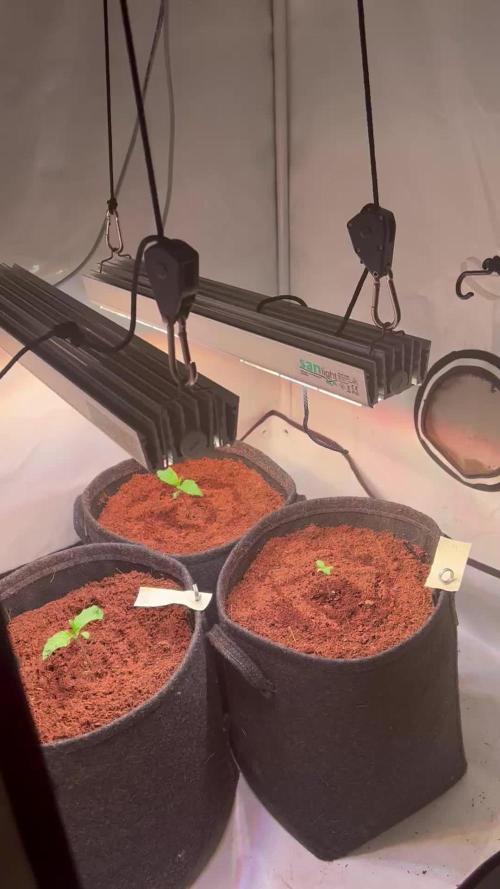
2nd net is up. Early bud formations are promising. holding up to the extremes pretty well, some leaves taking minor damage, but overall, she is holding up, gave her 1 night at 50F see how she would react, stressful. Not advised as it messes with her metabolism, but I want to see if it triggers any anthocyanin response. Love to see her purp up but no signs yet.
My homework.
Rubisco regeneration is intrinsically linked to nitrogen supply because Rubisco is a major sink for nitrogen in plants, typically accounting for 15% to over 25% of total leaf nitrogen. The regeneration phase itself consumes nitrogen through the synthesis of the Rubisco enzyme and associated proteins (like Rubisco activase), and overall nitrogen status heavily influences the efficiency of RuBP regeneration.Structural Component: Nitrogen is an essential building block for all proteins, and the sheer abundance of the Rubisco protein makes it the single largest storage of nitrogen in the leaf.
Synthesis and Activity: Adequate nitrogen supply is crucial for the synthesis and maintenance of sufficient Rubisco enzyme and Rubisco activase (Rca), the regulatory protein responsible for maintaining Rubisco's active state. Nitrogen deficiency leads to a decrease in the content and activity of both Rubisco and Rca, which in turn limits the maximum carboxylation rate, Vmax, and the rate of RuBP regeneration Jmax, thus reducing overall photosynthetic capacity.
Nitrogen Storage and Remobilization: Rubisco can act as a temporary nitrogen storage protein, which is degraded to remobilize nitrogen to other growing parts of the plant, especially under conditions of nitrogen deficiency or senescence.
Nitrogen Use Efficiency (NUE): The allocation of nitrogen to Rubisco is a key determinant of a plant's photosynthetic nitrogen use efficiency (PNUE). In high-nitrogen conditions, plants may accumulate a surplus of Rubisco, which may not be fully activated, leading to a lower PNUE. Optimizing the amount and activity of Rubisco relative to nitrogen availability is a target for improving crop NUE.
Photorespiration and Nitrogen Metabolism: Nitrogen metabolism is also linked to the photorespiration pathway (which competes with carboxylation at the Rubisco active site), particularly in the reassimilation of ammonia released during the process.
To increase RuBisCO regeneration, which refers to the process of forming the CO2 acceptor molecule Ribulose-1,5-bisphosphate (RuBP) during photosynthesis, the primary methods involve optimizing the levels and activity of Rubisco activase (Rca) and enhancing the performance of other Calvin-Benson-Bassham (CBB) cycle enzymes.
Biochemical and Environmental Approaches:
Optimize Rubisco Activase (Rca) activity: Rca is a crucial chaperone protein that removes inhibitory sugar phosphates, such as CA1P (2-carboxy-D-arabinitol 1-phosphate), from the Rubisco active site, thus maintaining its catalytic competence.
•Ensure optimal light conditions: Rca is light-activated via the chloroplast's redox status. Adequate light intensity ensures Rca can effectively maintain Rubisco in its active, carbamylated state.
•Maintain optimal temperature: Rca is highly temperature-sensitive and can become unstable at moderately high temperatures (e.g., above 35°C/95F° in many C3 plants), which decreases its ability to activate Rubisco. Maintaining temperatures within the optimal range for a specific plant species is important.
•Optimize Mg2+ concentration: Mg2+ is a key cofactor for both Rubisco carbamylation and Rca activity. In the light, Mg2+ concentration in the chloroplast stroma increases, promoting activation.
•Manage ATP/ADP ratio: Rca activity depends on ATP hydrolysis and is inhibited by ADP. Conditions that maintain a high ATP/ADP ratio in the chloroplast stroma favor Rca activity.
Enhance Calvin-Benson-Bassham (CBB) cycle enzyme activity: The overall rate of RuBP regeneration can be limited by other enzymes in the cycle.
•Increase SBPase activity: Sedoheptulose-1,7-bisphosphatase (SBPase) is a key regulatory enzyme in the regeneration pathway, and increasing its activity can enhance RuBP regeneration and overall photosynthesis.
•Optimize other enzymes: Overexpression of other CBB cycle enzymes such as fructose-1,6-bisphosphate aldolase (FBA) and triose phosphate isomerase (TPI) can also help to balance the metabolic flux and improve RuBP regeneration capacity.
Magnesium ions, Mg2+, are specifically required for Rubisco activation because the cation plays a critical structural and chemical role in forming the active site: A specific lysine residue in the active site must be carbamylated by a CO2 molecule to activate the enzyme. The resulting negatively charged carbamyl group then facilitates the binding of the positively charged Mg2+ion. While other divalent metal ions like Mn2+ can bind to Rubisco, they alter the enzyme's substrate specificity and lead to dramatically lower activity or a higher rate of the non-productive oxygenation reaction compared to Mg2+, making them biologically unfavorable in the context of efficient carbon fixation. The concentration of Mg2+ in the chloroplast stroma naturally increases in the light due to ion potential balancing during ATP synthesis, providing a physiological mechanism to ensure the enzyme is activated when photosynthesis is possible. At the center of the porphyrin ring, nestled within its nitrogen atoms, is a Magnesium ion (Mg2+). This magnesium ion is crucial for the function of chlorophyll, and without it, the pigment cannot effectively capture and transfer light energy.
Mg acts as a cofactor: Mg2+ binds to Rubisco after an activator CO2 molecule, forming a catalytically competent complex (Enzyme-CO2-Mg2+). High light + CO2) increases demand: Under high light (60 DLI is a very high intensity, potentially saturating) and high CO2, the plant's capacity for photosynthesis is high, and thus the demand for activated Rubisco and the necessary Mg2+ cofactor increases. Mg deficiency becomes limiting: If Mg2+ is deficient under these conditions, the higher levels of Rubisco and Rubisco activase produced cannot be fully activated, leading to lower photosynthetic rates and potential photo-oxidative damage.
Optimal range: Studies show that adequate Mg2+ application can enhance Rubisco activation and stabilize net photosynthetic rates under stress conditions, but the required concentration is specific to the experimental setup.
Monitoring is key: The most effective approach in a controlled environment is to monitor the plant's physiological responses e.g., leaf Mg2+ concentration, photosynthetic rate, Rubisco activation state, and adjust the nutrient solution/fertilizer to maintain adequate levels, rather than supplementing a fixed "extra" amount.
In practice, this means ensuring that Mg2+ is not a limiting factor in the plant's standard nutrient solution when pushing the limits with high light and CO2.
Applying Mg2+ through foliar spray is beneficial to Rubisco regeneration, particularly in alleviating the negative effects of magnesium (Mg) deficiency and high-temperature stress (HTS). While Mg can be leached from soil, within the plant it is considered a mobile nutrient, particularly in the phloem. Foliar-applied Mg is quickly absorbed by the leaves and can be translocate to other plant parts, including new growth and sink organs.
Foliar application of: NATURES VERY OWN MgSO4 @ 15.0g L-1 in a spray bottle.
Foliar sprays are often recommended as a rapid rescue measure for existing deficiencies or as a supplement during critical growth stages, when demand for Mg is high. Application in the early morning or late evening can improve absorption and prevent leaf burn.
The starting point [of creativity] is curiosity: pondering why the default exists in the first place. We’re driven to question defaults when we experience vuja de, the opposite of déjà vu. Déjà vu occurs when we encounter something new, but it feels as if we’ve seen it before. Vuja de is the reverse—we face something familiar, but we see it with a fresh perspective that enables us to gain new insights into old problems. Come walk in the enchanted forest.


