

Likes
37
Share


@masterofsmeagol
Follow
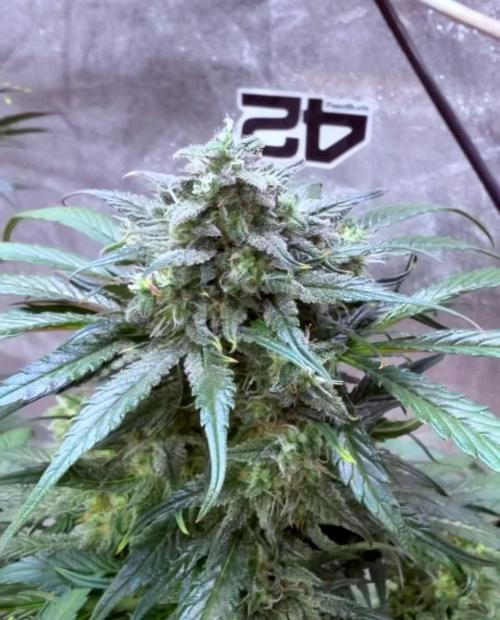
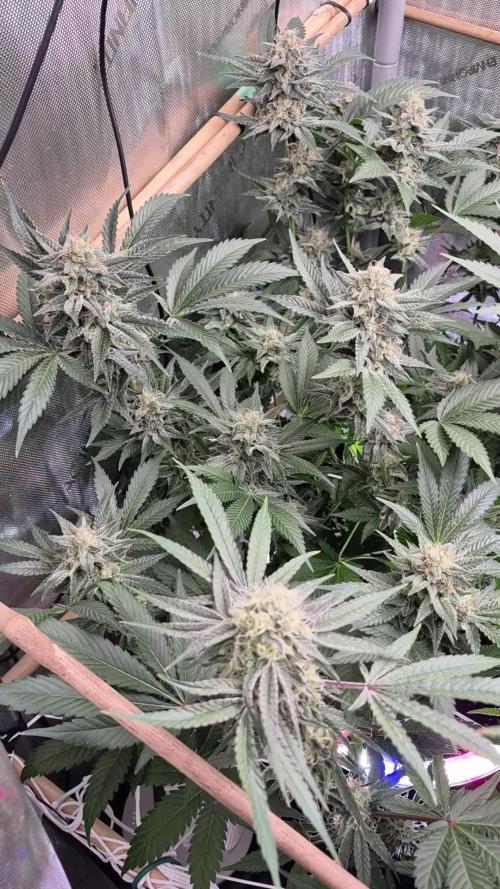
Week begins 8/12 LAST FEED 2 gallons 8/12 AFTER A RAINING NIGHT.
8/13 I've found what appears to be septoria on a couple plants. Looks like the weather will be OK tonight so I can apply organocide or something similar before dark. I've seen random pillar damage so this will be a two-for. I also should move the middle plant back and utilize my space more. Ph seems on point around 7.3. Higher in some places of the soil. I've noticed what looks like root issues on my blueberry. Winds were horrible yesterday and this plant doesnt hace a vertical trellis for support. Stem was pretty wobbly for a while but the plant seems to be growing fine. Either that or a jpn beetle munched the top of a bud. That's probably what happened. It was in the low 50's this morning. That's a 40 degree temperature swing in just a few days. This grow season has been the most challenging I've faced. Of course it had to happen when personal, family, and health concerns rear their head. Oh well. I can only do my best.
8/14 Went over at 5am to apply organocide to treat WPM or septoria as well as insecticide for pillars. I got there and one of my healthiest plants had been turning a little lime green now it was drooped over just like the larger GDP. This one is a 9lb kush though and they were doing good. Now it looks like it's dead over night. Maybe it's that liquid kool bloom. The soil seemed dry so I watered the plants. It MIGHT have picked ok a little. I'll have to check tonight. If not something is going on at night or in the rootzone and I really don't know what the fuck is going on. I will post updates and check later tonight. Damn. This has been a real challenging year.
8/15 That plant might be overwatered or not be draining correctly. At least I was able to get underneath it and the ground was dry. It was also hard packed dirt so elevating the bag may help. I'm going to wait a few days and see if things improve. This really sucks. I'm getting that defeated feeling. I need to get out of it though as I'm starting to see flower begin. The blueberry is probably the farthest along. I need to remember to take pictures of the newly developing flowers. Granted I've had numerous medical and other issues that have taken me off my game but losing two plants in one year is pretty shitty. I was able to fix things with COVID last year or the year before so I hope I can at least save this 9lb kush plant. If I lose this plant too it will be a substantial amount of cannabis lost. I need to rearrange my cage as well to make use of the extra space. Maybe I could've overwatered that plant that had been in the rain for a long time. I need to get my water routine down pat instead of doing the "lift the pot" method I have been doing. I went to several different commercial growers and got a bunch of crazy answers. Only time will tell. Last night I finished the organocide application on all the other plants except for the two babies and the drooped 9lb kush. Don't want to stress it further. I'll see how it goes.
8/16 Despite the soil drying out the newest disaster (my 9lb kush) is much worse with chlorosis killing leaves. Stalks and branches seem good. Soil smells musty and a little wetter than the rest. It was roofed to the ground slightly. NO water underneath. I stuck my hand in the bag from a bunch of angles. It's like the same thing that happened with the other one. I added to my surveillance. I also smell bleech and I hace an idea this might not be my doing at all. I can't be detailed but I'll find out one way or another. UPDATE. Went back over after the dentist and plants were dry as a fucking bone and droopy. I mixed up five gallons of phed water and watered everything. Even the 9lb kush that is pretty much dead. The soil was dry though. Everyone is saying overwater but I really doubt that. We had some massive rainstorms bur still. I need to review a game cam I have because unfortunately my cams went on the frits for a couple days (and the dogs went wild during that time around midnight) couple nights in a row. I fucking smell bleech. I'm a good dude and don't really have any enemies but we'll see what the game cam pulls up.
8/17 Of course we are getting a shit ton of rain. I watered yestetday because everything was dry as a bone
I watched yesterday as my blueberry was almost horizontal due to the wind. I added several supports to every branch and a few more up the main stalk. That may be what has been happening. The wind blowing so hard it separates the stalk from the roots. My problems started after I took my windbreaker tarp down. I put it back up for this storm. Or maybe it's just root rot. I dont fucking know. I cut all the dead stuff off the 9lb kush thats pretty mucb dead. Its holding on though. I probably shouldnt have watered that but it seemed bone dry. Maybe further down was wet. I dont know. Extra cams are up. I didn't smell that chemical bleachy smell today so it's probably in my head. I have better peace of mind with the night cams up though.and the dogs though. I've had a visitor this year but he left very quickly.
8/18 We got a shit ton of rain last night. No damage though. I spent what time I had in the garden working on the 9lb kush that looked like it was dieing. I'm not giving up on this one so easy. It seems to want to hold on. Despite the severely overwatered medium (due to this storm) I cam see new growth that looks healthy. The branches also seem stronger. I'm cautiously optimistic. The other one straight up died. So I might be able to salvage this. I'll go over later today and check on it. I debated putting it inside for the storm bur I figured I'd let the rain leech out anything in the medium in case it's locked out or something. At least I've got a couple real healthy ones this year. That NYCSA is amazing. That's a strain I'll probably grow again. Resilient as all all. Vigorous and doesn't seem impacted by things like WPM or other fungal ok infections or diseases like some other strains. I got a great recommendation from my buddy to use pots all the same size. It makes things easier watering. I just used what I had this year. I had bigger pots so I wanted to fill them. That tarp being up I think greatly helped with the wind. It's down now so things cam dry out. Still raining bit not yard and no wind. I think that may have played a large role in killing the 7ft GDP. Wind ripping the stalk away from the roots. Or it could've been a million other things. I'll never know. I do know that I have a better mindset, a great set of resources and I'm learning something new every year. If I can br8ng this plant back to life I'm going to be very proud of myself.....and her. Oh and I'm going to buy new tiger bloom. I'll start beasty bloom (hesitant as it has caused lockout in the past) as it goes better with my other nutes than the liquid kool bloom. Plus I started getting portables around tge time I used the liquid kool bloom. That being said, after two weeks I can see buds where there weren't before so I don't know. Next year I'm using seeds and I'm doing things different. I'm STRONGLY considering rapacaps idea about adding a removable roof for flower. The more I think about it tge better it sounds. That and putting wheels on pallets (buddy suggestion) and I could attach my supports directly to the pallet. I've got a lot of work to do that's for sure. Plants look healthy but I needvto him them again with organocide to fight any fungal stuff or pillars that might be hiding.


Likes
10
Share

@D4D3DHOMMIES
Follow
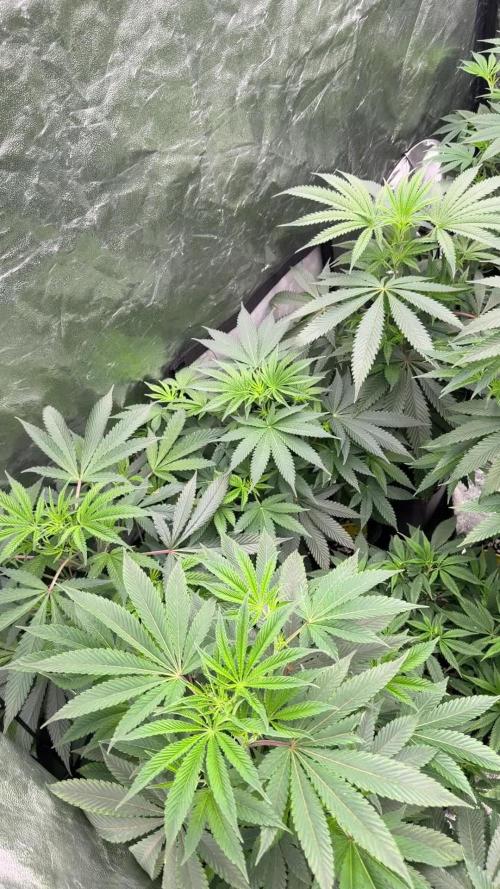
This week I finished the last clones, hoping to see some great phenotypes. I plan to keep the best ones, make a selection, and keep the best ones, then plant more to select the best and discard the rest. Next week, for flowering, I've raised my light to its maximum height (I don't use a filter inside the grow tent; I have the whole room under one filter) and to 50% power to give them a little extra boost these last few weeks and improve their growth. I love having the information on my phone to know what's happening with my babies at all times.

Likes
4
Share


@Pilotpanthro
Follow
Just finished week 6 and I have to say she is looking so healthy and started to fill out lovely now 😀 gave her a couple of leaves trim as they was starting to overgrown the leaves below and wanted to give the plant much more light to help her grow to her potential. My earlier worry about being stunted with early progress issues has well and truly disappeared as you just continues to grow from strength to strength! Happy days happy growing !

Likes
16
Share


@Dr_Rook
Follow
Ya casi un mes a 12/12 y entrando en su etapa más bonita.
Están resinando muy bien por todos lados y ya cada vez huelen más y mejor. Empiezan a coger color, demasiado pronto ya que a veces pasan más frío de la cuenta.
Esta semana les he alejado el foco unos centímetros. Estaban 3/4 centímetros por debajo de lo mínimo recomendado y no me fío de quemar mis primeras plantas de interior. (Ya habrá tiempo para experimentos)
La semana que entra ya deberían de entrar en la fase de engorde. Toca seguir atentos a ellas


Likes
7
Share


@OwlGang_Uk
Follow
Week 4 - Sometimes You Got To Lose To Gain Phase 2 - I took off the fan leaves so that the plant would redirect its energy into the stem and branches rather than the leaves. I also cut of the top heads so that the energy would go into the development of the 2 heads below.

Likes
Comments
Share


@Bizio
Follow
So this week I defoliated a bit more, now you can clearly see that they look better and there's more light going through especially in the middle of each plant. I had a little deficiency of K with one plant of Blue widow but I started to give the right amount of BioFlores after the transition from Veg. phase. The Blue widow ones are apparently going faster than Royal medic, (Royal medic plants are in the front on the sides, only 2 out of 5 plants). Overall I experiencing the variations' genes of each seed and I can clearly see that some plants go well than others and the importance of a "Mother plant" for consistency but unfortunately I cannot afford, right now, another grow room for this scope. Happy growing fellas! and grow your own!

Likes
8
Share


@Salokin
Follow
Week went again very uneventful. The plant does what she is supposed to be doing (gaining weight) :). Still lots of new pistils appearing overnight, I am checking the Trichomes daily, however, everything remains milky, with only very little % of amber trichomes. Once amber colours start increasing I will start flushing.

Processing
Likes
15
Share


@MG2009
Follow
05/25/2020
All are growing well,but #2 still is weird. I might reppot and check the PH. She is most finicky plant of the 5.
Although she did put on 8.5 " of growth the best out of all the girls this week!
#1 grew 7" up to 17"
#2 wow ! 8.5" up to 20"!
# 4 grew 5" up to 12"
# 5 grew 6" up to 23" and topped her.
Topped all this week, so super cropping will begin next week.got to keep them low and wide.
Mid week update
#4 in hydro is a male, I will harvest his pollen and hit a branch on each female plant . Also #2 maybe a male....
Each plant is getting .5 gallon per day, hand watering.
I will make video of pollen collection.
Likes
3
Share


@MarihuAchA
Follow
Empezamos a darle el OVERDRIVE así que en esta semana vamos a engordar un poco. Igual le voy a hacer en estos días una poda selectiva de hojas porque está muy verde, igual le saco un beneficio. Muy vigorosas las ramas laterales, un olor potente y mucho potencial por sacarle. Estoy muy entusiasmado. Un abrazo gente ya les mandaré los adelantos.
Likes
17
Share


@420DeepGrow
Follow
Gracias al equipo de AnesiaSeeds, Marshydro, XpertNutrients y Trolmaster sin ellos esto no sería posible.
💐🍁 Sticky Boof:
Prepárate para dejarte llevar por Sticky Boof, nuestra última obra maestra que está poniendo el listón muy alto para los amantes de las índicas. Nacida del legendario cruce de Super Boof y Cadillac Rainbow, Sticky Boof es una potente planta con un asombroso 80% de dominancia Indica que promete una relajación sin igual.
Prepárate para un viaje épico con el asombroso 37,5% de THC de Sticky Boof.
Sumérgete en una cosecha abundante con Sticky Boof, que produce hasta la friolera de 500 g/m² en interior y 800 - 900 g por planta en exterior. Esta variedad es generosa y está lista para llenar tu alijo de cogollos de la mejor calidad.
Sticky Boof es todo rapidez y eficacia, acelerando el tiempo de floración en sólo 7 u 8 semanas.
💡TS-3000 + TS-1000: se usaran dos de las lámparas de la serie TS de Marshydro, para cubrir todas las necesidades de las plantas durante el ciclo de cultivo, uso las dos lámparas en floracion para llegar a toda la carpa de 1.50 x 1.50 x 1.80.
https://marshydro.eu/products/mars-hydro-ts-3000-led-grow-light/
🏠 : Marshydro 1.50 x 1.50 x 1.80, carpa 100% estanca con ventanas laterales para llegar a todos los lugares durante el grow
https://marshydro.eu/products/diy-150x150x200cm-grow-tent-kit
🌬️💨 Marshydro 6inch + filtro carbon para evitar olores indeseables.
https://marshydro.eu/products/ifresh-smart-6inch-filter-kits/
🍣🍦🌴 Xpert Nutrients es una empresa especializada en la producción y comercialización de fertilizantes líquidos y tierras, que garantizan excelentes cosechas y un crecimiento activo para sus plantas durante todas las fases de cultivo.
Consigue aqui tus Nutrientes:
https://xpertnutrients.com/es/shop/
💻 Trolmaster Tent-X TCS-1 como controlador de luz, optimiza tu cultivo con la última tecnología del mercado, desde donde puedes controlar todos los parametros.
https://www.trolmaster.com/Products/Details/TCS-1
📆 Semana 3:
Esta variedad sera un cultivo mixto, interior y exterior para ver todo su poderio em ambos lugares.
Ha sido una buena semana en la que han dado un gran cambio en sus lugares definitivo 😎.
Se le ha aplicado un tratamiento insecticida con agua + tierra de diatomeas ( 1 cucharadita por litro de agua), también se le aplica un tratamiento fungicida con una infusión de cola de caballo para evitar futuro moho.
A partir de ahora se aplica riego por goteo, 1/3 de la dosis recomendada por el fabricante ya que al estar en exterior y en buena tierra tiene bastante comida.
En interior seguira el mismo plan nutricional que el resto, ajustando sus dosis de nutrientes segun sean requeridos.
El ejemplar de interior es mucho mas rápido que el resto, he tenido que hacer una poda para frenar su crecimiento.


Likes
32
Share


@MadeInGermany
Follow
Info:
Unfortunately, I had to find out that my account is used for fake pages in social media.
I am only active here on growdiaries.
I am not on facebook instagram twitter etc All accounts except this one are fake.
Flowering day 11
since time change
to 12/12 h.
Hi everyone .
The lady is developing beautifully :-).
The buds start to grow .
I added 2 g GHSC Bio Bloom per l coco.
Otherwise everything was checked and cleaned as usual.
Have fun with the update and stay healthy 🙏🏻
You can buy this Strain at :
www.Zamnesia.com
Type:
Runtz
☝️🏼
Genetics:
Zkittlez x Gelato
👍
Vega lamp: 2 x Todogrow Led
Quantum Board 100 W
💡
Bloom Lamp : 2 x Todogrow Led
Cxb 3590 COB 3500 K 205 W
💡💡☝️🏼
Soil : Bio Bizz Coco
☝️🏼
Nutrients : Green House Seeds Company Powder Feeding Bio
☝️🏼🌱
Water: Osmosis water mixed with normal water (24 hours stale that the chlorine evaporates) to 0.2 EC. Add Cal / Mag to 0.4 Ec Ph with Organic Ph - to 5.8
Processing
Likes
2
Share


@TinyGrowingAdventures
Follow
This week i defoliated on day 18 because i have way too many top coming out and too many lowbuds that were getting no light from being covered by layers and layers of leaves. All strains but the og Martian have real tight internodal spacing.

Likes
3
Share


@Xabii
Follow
Had to do a root wash, again, also cut some really bad roots of, also saw lots of new healthy root growths since last week, upping ORP and wash last week seemed to have helped.
Overall still very unhappy but that is on me, learned that prepping a plant in DWC and then transplant it to NFT is not a good idea, better do it as usual directly in NFT so that the roots follow the stream better, usually at this time there would be at least 3x the amount of roots.
Also switched back to the 10cm diameter tube, will stick with that one from now on, very good experiences in the past and this one does not, maybe RH does not rise enough in a 16cm diameter tube.
Also changed the light cycle to 18/6 from 24/0, in the timelapse I see phases where the leafs droop slightly and come back, kind of like the night cycle but less, seems to me like the plant wants to go to "sleep" even tough it was raised in 24/0 and I have good experiences with 18/6.
Values are average of the day.
DATE - EC(us/cm)
20250430 1952
20250501 1649
20250502 1722
20250503 1735
20250504 1719
20250505 1750
20250506 1796
DATE - PH
20250430 6.03
20250501 6.24
20250502 6.27
20250503 6.24
20250504 6.21
20250505 6.15
20250506 6.13
DATE - ORP (mV)
20250430 259
20250501 248
20250502 225
20250503 233
20250504 222
20250505 235
20250506 307
DATE - °C - RH% (Tent Temp/RH)
20250430 25.9 42
20250501 25.4 47
20250502 26.6 48
20250503 24.2 51
20250504 23.7 46
20250505 24.5 45
20250506 24.0 47
DATE - °C (Reservoir)
20250430 20.4
20250501 20.4
20250502 21.7
20250503 21.1
20250504 19.5
20250505 19.3
20250506 19.6
DATE - CF
20250430 19.52
20250501 16.49
20250502 17.22
20250503 17.35
20250504 17.19
20250505 17.50
20250506 17.96

Likes
59
Share


@AsNoriu
Follow
Day 36. Will have to clear bottom ,, few worthless shoots has to go. Will do it straight before next watering.
All good, girl is flowering ;)
Day 38. 100 ml of 6.3 ph water in. Trimmed two worthless branches before watering.
Ripped one leaf finger while taking some stuff ;)) 2x damage today ...
Day 40. She is still dark, so maybe no feed till rest of her life, will add 1g. Of BioSys with next watering .
Happy Growing !!!

Likes
23
Share


@Organic_LarF
Follow
High GD community,
Week 6,
Wonder pie doing fine. She keeps her tempo steady, not really fast, but she keeps developing. Some of the side branches starting to take form and first lining is a fact.
Ive removed 9 leafs, so te center gets more open for the small branches trying to come up.
I think i should cut the internodes that are up and down, but i only cutted the one underneath. If anyone is convinced its better to get rid of the upperone 2, please comment. I do thinl it might cause problems in a few weeks, bcs it will grow up instead of out to the sides, so, hormone regulation will change, slow down the outgrowing buds and extra pump up these internodes.
Enough rambling about that, lets talk about the plant intirely, bit by bit she starts to look like something i have in mind.
💦👨🔬
Just spraying ph 6.2water and 1 feeding this week. 3 waterings this week, 1 with nuts.
Thats it for this week boys👨🌾 and girls👩🌾,
Grow safe buds and feel free to check out my other ladies doing fine, 🌿🌿🌿
🙏🌿🌿🌿🙏
Likes
43
Share


@Sejnik
Follow
Ke konci týdne dostali poslední lehkou defoliaci.
Biobizz má sytě zelené barvy a viditelně o něco málo větší květy.
Florganics chytil světlejší zeleno žlutý odstín a má o něco menší květy. Ale má o trochu víc pryskyřice. Pokračuji v zalévání čistou vodou