


Likes
Comments
Share

@JNSGenetics
Follow
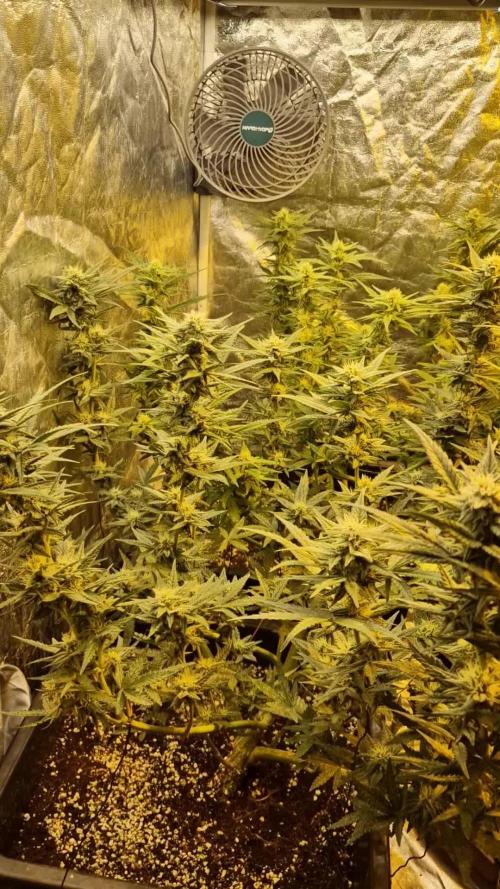
They are starting to flower nicely.
Orange sherbert is still behind but its ganing momentum.
Bubba kush og the autoflower are well ahead in flower.
The clones are doing fine.


Likes
5
Share


@ladyjane
Follow
9/1 - Start of week 4 and the GSCs are looking strong. The shorter pheno is starting to catch up. She has multiple main sights as if she had been topped...even though she hasn't. Can't wait to see how she turns out. Watered all today with RO water and molasses.
9/4 - Just a light water and some LST today. Still no nutrients and they are looking fabulous. Loving the Nature's Living Soil Autoflower mix!
9/6 - I come in each day and water and do a little LST on all the ladies.
Moving them just about a quarter of the way around the pot. They are really starting to become bushy and branch out.. They are all very green and looking great.


Likes
55
Share


@Ultraviolet
Follow
2nd net is up. Early bud formations are promising. holding up to the extremes pretty well, some leaves taking minor damage, but overall, she is holding up, gave her 1 night at 50F see how she would react, stressful. Not advised as it messes with her metabolism, but I want to see if it triggers any anthocyanin response. Love to see her purp up but no signs yet. Remember, For every molecule of glucose produced during photosynthesis, a plant needs to split six molecules of water. This process provides the hydrogen needed for synthesizing glucose and other organic compounds, while oxygen is released as a byproduct.
Homework.
If Rubisco activity is impaired and it cannot properly function or regenerate its substrate, the plant's leaves are likely to turn a pale green or lime green, a condition known as chlorosis. Essentially, Rubisco activity is highly regulated and susceptible to various environmental and metabolic factors that can cause it to become inhibited, leading to an apparent failure in RuBP regeneration due to a lack of consumption.
Rubisco regeneration is intrinsically linked to nitrogen supply because Rubisco is a major sink for nitrogen in plants, typically accounting for 15% to over 25% of total leaf nitrogen. The regeneration phase itself consumes nitrogen through the synthesis of the Rubisco enzyme and associated proteins (like Rubisco activase), and overall nitrogen status heavily influences the efficiency of RuBP regeneration. RuBisCO is a very large enzyme that constitutes a significant proportion (up to 50%) of leaf soluble protein and requires large investments in nitrogen. Insufficient nitrogen supply limits the plant's ability to produce adequate amounts of RuBisCO, thereby limiting the overall capacity for photosynthesis and carbon fixation. Maintaining the optimal, slightly alkaline pH is crucial for the proper function and regeneration of Rubisco. Deviations in either direction (too high or too low) disrupt the enzyme's structure, activation state, and interaction with its substrates, leading to decreased activity and impaired RuBP regeneration. (Lime/yellowing)
Structural Component: Nitrogen is an essential building block for all proteins, and the sheer abundance of the Rubisco protein makes it the single largest storage of nitrogen in the leaf.
Synthesis and Activity: Adequate nitrogen supply is crucial for the synthesis and maintenance of sufficient Rubisco enzyme and Rubisco activase (Rca), the regulatory protein responsible for maintaining Rubisco's active state. Nitrogen deficiency leads to a decrease in the content and activity of both Rubisco and Rca, which in turn limits the maximum carboxylation rate, Vmax, and the rate of RuBP regeneration Jmax, thus reducing overall photosynthetic capacity.
Nitrogen Storage and Remobilization: Rubisco can act as a temporary nitrogen storage protein, which is degraded to remobilize nitrogen to other growing parts of the plant, especially under conditions of nitrogen deficiency or senescence.
Nitrogen Use Efficiency (NUE): The allocation of nitrogen to Rubisco is a key determinant of a plant's photosynthetic nitrogen use efficiency (PNUE). In high-nitrogen conditions, plants may accumulate a surplus of Rubisco, which may not be fully activated, leading to a lower PNUE. Optimizing the amount and activity of Rubisco relative to nitrogen availability is a target for improving crop NUE.
Photorespiration and Nitrogen Metabolism: Nitrogen metabolism is also linked to the photorespiration pathway (which competes with carboxylation at the Rubisco active site), particularly in the reassimilation of ammonia released during the process.
To increase RuBisCO regeneration, which refers to the process of forming the CO2 acceptor molecule Ribulose-1,5-bisphosphate (RuBP) during photosynthesis, the primary methods involve optimizing the levels and activity of Rubisco activase (Rca) and enhancing the performance of other Calvin-Benson-Bassham (CBB) cycle enzymes.
Biochemical and Environmental Approaches:
Optimize Rubisco Activase (Rca) activity: Rca is a crucial chaperone protein that removes inhibitory sugar phosphates, such as CA1P (2-carboxy-D-arabinitol 1-phosphate), from the Rubisco active site, thus maintaining its catalytic competence.
•Ensure optimal light conditions: Rca is light-activated via the chloroplast's redox status. Adequate light intensity ensures Rca can effectively maintain Rubisco in its active, carbamylated state.
•Maintain optimal temperature: Rca is highly temperature-sensitive and can become unstable at moderately high temperatures (e.g., above 35°C/95F° in many C3 plants), which decreases its ability to activate Rubisco. Maintaining temperatures within the optimal range for a specific plant species is important.
•Optimize Mg2+ concentration: Mg2+ is a key cofactor for both Rubisco carbamylation and Rca activity. In the light, Mg2+ concentration in the chloroplast stroma increases, promoting activation.
•Manage ATP/ADP ratio: Rca activity depends on ATP hydrolysis and is inhibited by ADP. Conditions that maintain a high ATP/ADP ratio in the chloroplast stroma favor Rca activity.
Enhance Calvin-Benson-Bassham (CBB) cycle enzyme activity: The overall rate of RuBP regeneration can be limited by other enzymes in the cycle.
•Increase SBPase activity: Sedoheptulose-1,7-bisphosphatase (SBPase) is a key regulatory enzyme in the regeneration pathway, and increasing its activity can enhance RuBP regeneration and overall photosynthesis.
•Optimize other enzymes: Overexpression of other CBB cycle enzymes such as fructose-1,6-bisphosphate aldolase (FBA) and triose phosphate isomerase (TPI) can also help to balance the metabolic flux and improve RuBP regeneration capacity.
Magnesium ions, Mg2+, are specifically required for Rubisco activation because the cation plays a critical structural and chemical role in forming the active site: A specific lysine residue in the active site must be carbamylated by a CO2 molecule to activate the enzyme. The resulting negatively charged carbamyl group then facilitates the binding of the positively charged Mg2+ion. While other divalent metal ions like Mn2+ can bind to Rubisco, they alter the enzyme's substrate specificity and lead to dramatically lower activity or a higher rate of the non-productive oxygenation reaction compared to Mg2+, making them biologically unfavorable in the context of efficient carbon fixation. The concentration of Mg2+ in the chloroplast stroma naturally increases in the light due to ion potential balancing during ATP synthesis, providing a physiological mechanism to ensure the enzyme is activated when photosynthesis is possible. At the center of the porphyrin ring, nestled within its nitrogen atoms, is a Magnesium ion (Mg2+). This magnesium ion is crucial for the function of chlorophyll, and without it, the pigment cannot effectively capture and transfer light energy.
Mg acts as a cofactor: Mg2+ binds to Rubisco after an activator CO2 molecule, forming a catalytically competent complex (Enzyme-CO2-Mg2+). High light + CO2) increases demand: Under high light (60 DLI is a very high intensity, potentially saturating) and high CO2, the plant's capacity for photosynthesis is high, and thus the demand for activated Rubisco and the necessary Mg2+ cofactor increases. Mg deficiency becomes limiting: If Mg2+ is deficient under these conditions, the higher levels of Rubisco and Rubisco activase produced cannot be fully activated, leading to lower photosynthetic rates and potential photo-oxidative damage.
Optimal range: Studies show that adequate Mg2+ application can enhance Rubisco activation and stabilize net photosynthetic rates under stress conditions, but the required concentration is specific to the experimental setup.
Monitoring is key: The most effective approach in a controlled environment is to monitor the plant's physiological responses e.g., leaf Mg2+ concentration, photosynthetic rate, Rubisco activation state, and adjust the nutrient solution/fertilizer to maintain adequate levels, rather than supplementing a fixed "extra" amount.
In practice, this means ensuring that Mg2+ is not a limiting factor in the plant's standard nutrient solution when pushing the limits with high light and CO2.
Applying Mg2+ through foliar spray is beneficial to Rubisco regeneration, particularly in alleviating the negative effects of magnesium (Mg) deficiency and high-temperature stress (HTS). While Mg can be leached from soil, within the plant it is considered a mobile nutrient, particularly in the phloem. Foliar-applied Mg is quickly absorbed by the leaves and can be translocate to other plant parts, including new growth and sink organs.
Foliar application of: NATURES VERY OWN MgSO4 @ 15.0g L-1 in a spray bottle. For those high-intensity workouts when 1 meal a day is just not enough!
Foliar sprays are often recommended as a rapid rescue measure for existing deficiencies or as a supplement during critical growth stages, when demand for Mg is high. Application in the early morning or late evening can improve absorption and prevent leaf burn. The plant was getting a little limey yellow in the centre. Shortly thereafter, she was back in business, green mostly regenerated. The starting point [of creativity] is curiosity: pondering why the default exists in the first place. We’re driven to question defaults when we experience vuja de, the opposite of déjà vu. Déjà vu occurs when we encounter something new, but it feels as if we’ve seen it before. Vuja de is the reverse—we face something familiar, but we see it with a fresh perspective that enables us to gain new insights into old problems.
Confidence is evidence... nothing more. You are confident because you have driven 10,000 times, you are confident because you have spoken 10,000 times. People think confidence is a feeling, but it's not. If you want more confidence, then you need to create evidence, take more shots, collect more data, build more experiences, take more risks; fail, confidence doesn't come first; it is the reward you get for doing the work. no one else wants to do.
Likes
2
Share


@DaisyNabis
Follow
Mi oasis recibe si primer baño con preventivo, aplico aceite de neem cuando mis bellas se van a dormir justo cuando la luz se apaga las dejo bien empapadas por todos lados repitiendo una vez por semana.


Likes
2
Share

Likes
19
Share


@Troy_Farms
Follow
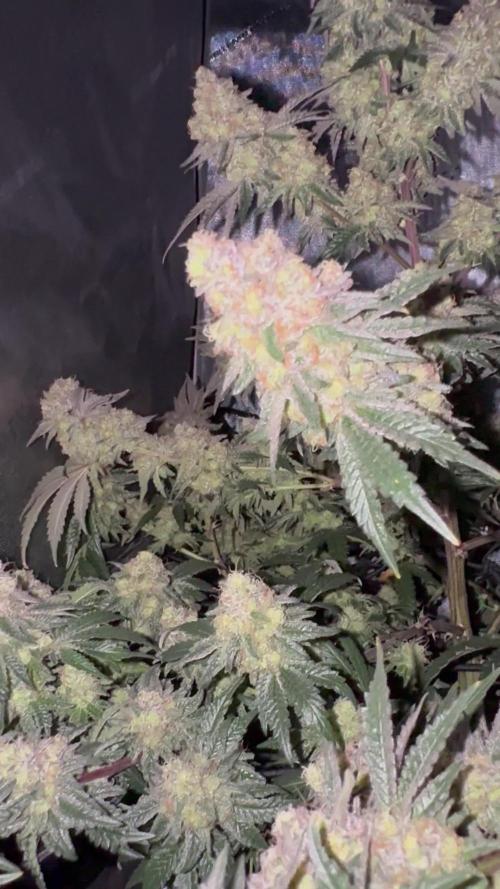
Kicking off the 10th week and she is looking really great. Buds filling in and she is quickly getting thick with coverage from the 4 way mainline. Took a cutting from the side that needed to be trimmed anyway. Gonna experiment and try to get it to root and then spray with Silver Colloidal to try and get some Black Jack female pollen. But it is probably to far along for that, but definitely wont hurt to try. All good things.

Likes
24
Share


@Canadian
Follow
Day 92 from seed the plant has responded very well to lifting her up to have more exposure to the light the buds start to fatten them right away unfortunately it's too late to get huge buds as I was hoping in the beginning but nevertheless for sure it will give me a very good quality flower despise the lack of light in the most important weeks for Bud development and unfortunately that time cannot be claimed back despise that she looks beautiful and I'm sure she will be delightful to smoke .
Thank you for reading I will continue to update have a happy grow.

Likes
14
Share


@MG2009
Follow
12/30/2021
5 Biscotti Skunk, 5 Lemon OG, 4 Grape Skunk.
Starting veg at 18 hours for 4 or 5 weeks of veg and into flowering. Will reppot this week into 6" pots then into 3 gallon pots.
One maybe going to 20 gallon fabric pot, if I got an extra one but I'll see 🙏🏻
Potted up to 6" pots
1,Biscotti Skunk
1,Grape Skunk
1,Biscotti Skunk
Hoping to start a staggerd grow where I can trim only 3 plants a week.
Into pots I added 1 tsp per 6" pot of Coast of Maine stonington plant food 5-2-4 added to happy frogs .30-.30-.05 NPK they should fill out quickly in time for reppot in 2-3 weeks.

Likes
10
Share


@Zeravlab
Follow
Beg of week 1/22/24 - just trying to maintain. Having ph swings. Taking at least 200ml a day sometimes double

Likes
25
Share


@Bongman
Follow
Hi Guys,
Week 17. I think F2 is almost ready for harvest. I got some deficiencies on some of the leaves. WIll Upload photos when its time for her to wake up. I am scared that it might be light leaks due to the new 6 in fan I added for air out flow cause to temp is too high for flowering. The problem is the ducting. I used some cheap ducting that came as a package from my Phresh carbon filter... BE SURE TO CHECK FOR LIGHT LEAKS ON DUCTING and not just the grow area and the appliance lights. Will add more later.
9th June update: F2 is ready to be taken down. WIll Flush today and let it dry out for two or three days then its harvest time.
QUESTION: How to tell if nutrients are flushed. Leaf color/Deficiencies right before harvesting. For my two plants in this grow.
F1 - Healthy dark green color leaves, which was bigger and taller due to the early transplant to larger pot Mid Veg. I flushed a few days before harvest and almost all the leaves were healthy looking and dark green.
F2 - A lot of thin dried and yellowish brown leaves that look like a lot of different deficiencies, which was shorter but collas are much bigger. It is short because I didn't transplant until 2 weeks into flower. . About to flush and harvest this week but the leaves are all showing heavy deficiencies. Does that mean there are still a lot of stored nutrients in the plant?????? thanks for the help in advance.
BM
Likes
2
Share


@Trinidad
Follow
15.06.25. Day 30.
Plants are looking healthy. Lots of growth in past week. She is showing preflower so I switched to flowering nutrients. First reservoir change out since I placed them into buckets. One plant topped herself because of rapid growth, I did not pull back training wire on main node and so the branch snapped where it was tied down. She is entering stretch now so I took of training wire on all plants.
18.06.25. Day 33!
Defoliation, lilipop.

Likes
13
Share


@raulmoat123
Follow
I have been really busy so haven't got round to updating , these girls are doing fine some wonderful keeper phenos and some I won't be running again .


Likes
7
Share


@RallyAutos
Follow
Light burn/nute surplus damaged a lot of my fan leaves but the actual buds are looking fairly nice. I just got a mini microscope to check trichomes and I’m flushing for these next couple weeks. Big shout out to everyone who helped on my grow questions! I learned a lot from them and I’m even more excited for my next grow now.
Likes
92
Share


@Hou_Stone
Follow
This week i flush the roots with tap water ( PPM : 310 , PH : 7.5) after i add water with 0.7 grow powder and 0.1g of Booster PK+ to reach 720PPM and adjust PH to 5.8
----------------------------------------------------
-Daytime temperature: 27°C
-Night temperature: 23°C
-Humidity: 45-65%
-Lamp: Mars Hydro FC3000. intensity 80% at 40cm from the top leaves
-Room: Mars Hydro 100x100x180cm
-Extractor: Mars hydro 402 CFM Max. power 2/10
-Substrate : 70% coco, 25% perlite, 5% vermiculite.
My instagram : https://www.instagram.com/p/CuMhQ_BsjRP/?utm_source=ig_web_copy_link&igshid=MzRlODBiNWFlZA==

Likes
9
Share


@Gawelwel
Follow
Bon voila ! les larves de chrysopes sont arrivées, je les aime bien car après avoir mangé les thrips sous toutes leurs formes, les chrysopes adultes restent dans la tente, très utile en cas de nouvelle invasion de thrips...
en seulement 2 jours on voit que les feuilles des plantes ne s'abîment plus et redeviennent bien verte, c'est plutôt bon signe...
ma petite bouture acid dough entame donc son reveging, les fleurs qui restaient s'allongent et des nouvelles feuilles à 1 pale sont apparues, pour le moment elle fait un peu mutante mais je ne m'inquiète pas, affaire à suivre, en attendant arrosage à l'eau, et je prévois un TCO la semaine prochaine.

Likes
36
Share


@Cannabeast40
Follow
Welcome back to yet another short update☺️
Transplanted and filled with tender care and love 🤗 A bit colder temperatures then inside the veg tent , but I’m not worried at all🤩
Videos show the process, hope you enjoy 💯💚
See you next week🤩
------------------------------------------------------------------------------------------
Light source:
Medicgrow SpectrumX
880W LED
Build in PPFD
4 controllable spectrums V1, F1, VS, FS
Visit https://medicgrow.com/ for more informaton.
Light measurement:
Apogee MQ-610 & Apogee DLI-600.
Fertiliser:
Organics Nutrients
https://www.organicsnutrients.com/en/
Green Buzz Nutrients
Discount Code: GD42025
Grants 25% with a minimum Order value at 75 Euro.
https://greenbuzzliquids.com/en/shop/

Likes
25
Share


@Elpicor
Follow
Una settimana colma di cambiamenti, é incredibile come le piante senza nessun tipo di training si adattino perfettamente tra di loro allo spazio circostante, quanti sensori possiedono le piante? Come comunicano tra di loro? mi ha sempre affascinato...