


Likes
Comments
Share

@TrickzCutz
Follow
Servus Moin!
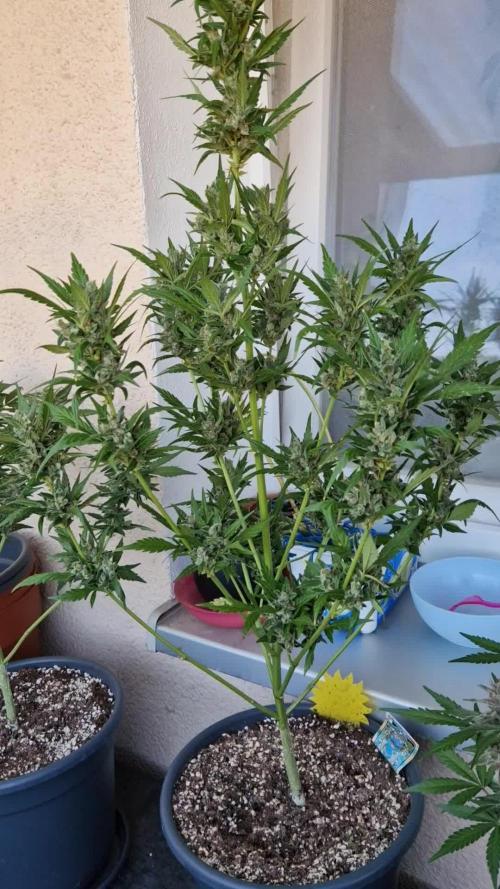
Bei der Pineapple Slush XL sieht man auch keine deutliche Steigerung im Budwachstum. Es wird eventuell auch ihre letzte Woche.


Likes
13
Share


@MotherNaturesSon
Follow
Limited success with LST, but still most likely helped to boost yield. Grew without problems indoors in soil. This pheno had good yield and bud quality, and didn’t stretch too much given it was a sativa-heavy genotype


Likes
7
Share

@all_about_420
Follow
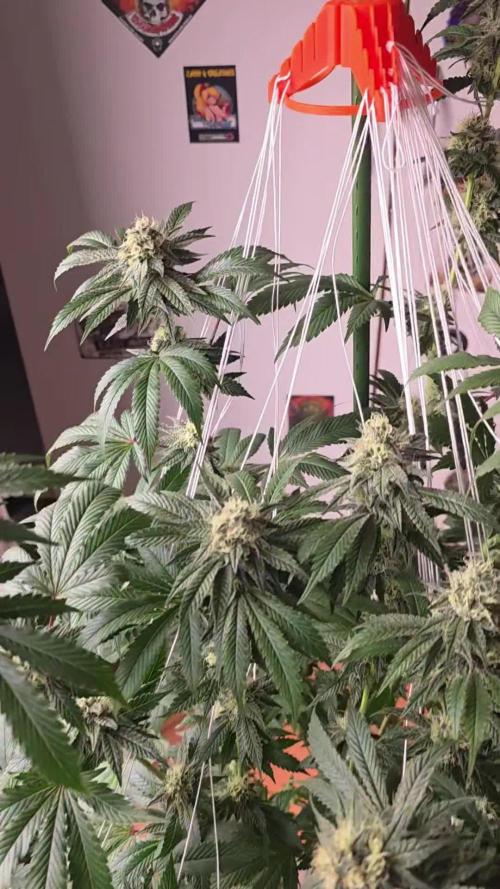
In der sechsten Blühwoche macht die Naughty Dawg ihrem Namen alle Ehre. Während die Dancing Sprite kompakt bleibt, hat sich diese Lady zu einem echten Freigeist entwickelt und ist deutlich höher gewachsen. Die Triebspitzen sind mittlerweile so massiv mit Blüten besetzt, dass sie ihr eigenes Gewicht kaum tragen kann. Die florale Reife schreitet rasant voran, die Buds schwellen zu beeindruckenden Keulen an, und der Harzbesatz wird täglich dichter.
Um dieser unbändigen Energie standzuhalten, bin ich nun als 'Pflanzen-Dompteur' gefragt: Ab sofort muss die Pflanze massiv gestützt werden, um die schweren Köpfe sicher zu tragen. Es ist eine Freude, diesem wilden Part in meinem Wunderbohnen-Garten zuzusehen. Die sortentypischen Terpene entfalten sich jetzt vollends: Ein scharfer Mix aus Gas und Treibstoff dominiert das Zelt, kombiniert mit einer schweren Moschus-Note und einem leicht säuerlichen Unterton, der die Vorfreude auf die Ernte massiv steigert.


Likes
3
Share


@OrganicPower
Follow
Week 09 flower and still just watering until the end. Removed all leaf that had a long petiole, but the top three of main branches. Leaves are turning a dark purple and the buds a purple hue to them. The bud are good and frosty with the classic death bubba smell.
Likes
27
Share


@GrowInger420
Follow
Habe sie diese woche in ein scrog netz eingeflochten, sie kommen sehr schön


Likes
28
Share


@Professor_Chaos
Follow
Beginning of week...
So the ladies are beginning to stack pistils at the crowns.. The Mandarin Cookies has been stacking a little quicker.. Thicker.. They both are showing purple tips on the stiples.. Not the pistils or leaves.. The stiples.. ETHOS Cookies has been showing that for ever now.. The Mandarin Cookies has just started showing these purple tipped stiples.. Gorgeous plants.. Even tho Mandarin Cookies is super freakishly tall and stretchy.. And the ETHOS Cookies is basically a runt.. Doesn't want to make ANY stems.. But plenty of leaves lol.. She should be able to hold up some super fat colas pretty easily tho so that's awesome! I stopped using the Armor Si and the FloraGro.. As well as the MYCO Plus (powder) stuff.. Also going down on the FloraMicro.. Just basically using 1 tsp/gallon of the CALiMAGic, FloraMicro, FloraBloom, and Kushie Kush.. 30 drops/gallon of the Floralicous Plus (not sure if that's too much to be honest).. 2 tsp/gallon of the FloraNectar Fruit-N-Fusion and last but not least... 2 mL/gallon of Hydroguard... *phew*.. Damn that's alot.. But that's alot less then what I was giving these girls... They should do alot better..
Mid week...
I have defoliated the ETHOS Cookies a bit more.. Mostly trying to make sure there is good airflow and no larfy producing branches in there.. She should produce some really nice colas with how short and stubby she is lol.. As for the Mandarin Cookies, I've just been supercropping the shit outta the really tall branches.. I've never supercropped a plant so much lol.. And I'm not good at it at all.. Most of the branches are split open, bruised.. Just very crappy looking.. It will heal, they always do 😂 I just hate hurting them like this.. Especially in flower.. But it's still pretty early in flower.. And the pistils are still exploding just as much as the non-supercropped branches.. I can't wait!!!...
End of week..
Both girls are exploding with trichomes! I love these super frosted strains! The ETHOS Cookies seems to be stackin calyxes faster than the Mandarin Cookies.. I can tell the ETHOS Cookies is gonna stack some fat ass colas! The ETHOS Cookies runoff is doing good.. pH going in is 6.2 - 6.3 and runoff is usually 6.0 - 6.2.. Foliage is nice and green.. She may be nitrogen sensitive deeper into flower.. Maybe not.. We shall see.. As for the Mandarin Cookies.. Wow.. This girl is super tall.. She is also stackin calyxes, pistils and nicely. The runoff is still giving me issues but as far as I can tell, she is accepting it and making the best of what she has. Going in pH is 6.2 - 6.3.. Runoff is coming out 5.6 - 5.7.. It's bothering the shit outta me! Lol.. It doesn't seem to matter what pH I put in, it will ALWAYS runoff at 5.6 - 5.7 pH.. But like I said.. She is accepting it as long as I keep the "in" pH in my preferred range.. I usually keep the "going in" pH at 6.1 - 6.3 the ENTIRE grow.. I always get great results doing this.. Its best for Calcium uptake and Calcium is a huge issue when it comes to growing in coco coir.. Anyways.. Both ladies are doing great.. Both look gorgeous and healthy.. Oh yeah!! I like to rub the trichomes to get a little idea of what the terpenes are gonna be like.. And hoooooly shit.. ETHOS Cookies smells like nothing I've ever smelled before.. I can't even begin to explain it.. Literally.. And the Mandarin Cookies is starting to give off a nice citrusy scent.. I hope this carbon filter is able to scrub the air enough.. Cuz if these are anything like the Early Lemon Berry, then yeah, this carbon filter is gonna be put thru the ultimate test lol.. Anyways.. On to the next week!....

Likes
7
Share


@MrPott
Follow
she's about ready to enter the flowering phase. pistils are coming out and I'm quite happy with the canopy so far. Might improve it this week.


Likes
45
Share


@Natrona
Follow
Sour Jealousy Auto FastBuds 2025 Outside Grow
Week 3 April 20-26 Veg
This week was mostly sunny in the mid-eighties and low 60s at night with an occasional drop into the low 50s. I added kelp fertilizer to the water twice during the week. She is about 3 inches tall. I have had her under a dome for these past two weeks. This week, after heavy rain, I removed it for good since the leaves were touching the sides. Hopefully no renegade squirrels trample her.
Pics taken 4/21 & 24
Your likes and comments are appreciated. Thanks for stopping by.
Growers love 💚🌿
💫Natrona💫
Likes
14
Share


@BushDoctor740
Follow
Ok so today is day 9 and I have had a change of plans for the grow and have lost 4 of the 9 papaya cookie seedlings.Probably just a stroke of bad luck but I must move forward.I have 5 papaya cookies,1 gelato auto and 3 mystery photos from fast buds mix pack in the tent that will flourish after the autos finish.Just plain water every few days is the plan and recharge once every 10 days.SE7000 is raised to the ceiling of my 5x5 80 inch high tent set at 30 percent power.


Likes
6
Share


@Muravushka
Follow
During my previous grow, I harvested and made some bubble hash. Afterward, I dropped the used, wet buds onto this coco, and it seems some seeds sprouted from the leftover material. I’m not even sure if they’re photoperiod or autoflower, but hey—let's roll with it!
Both my pH meter and PPM meter are broken. I have no idea why they keep breaking so often. They’re ADWA meters, and while you can replace the reading elements, the replacements cost half the price of a new meter. It’s frustrating, and I really don’t want to keep buying them every time I start a new grow


Likes
7
Share


@Mr_nugs_lover_David
Follow
Looking very good, this ladies are breaking the shield within 48hs since planted as I was expecting, let's see how my beautiful queens develop on this "little run" on a 2x4! Growing with a tsl2000 by mars hydro! 👨🌾💯✌️ Stay tuned guys.
Likes
30
Share

@eldruida_lamota
Follow
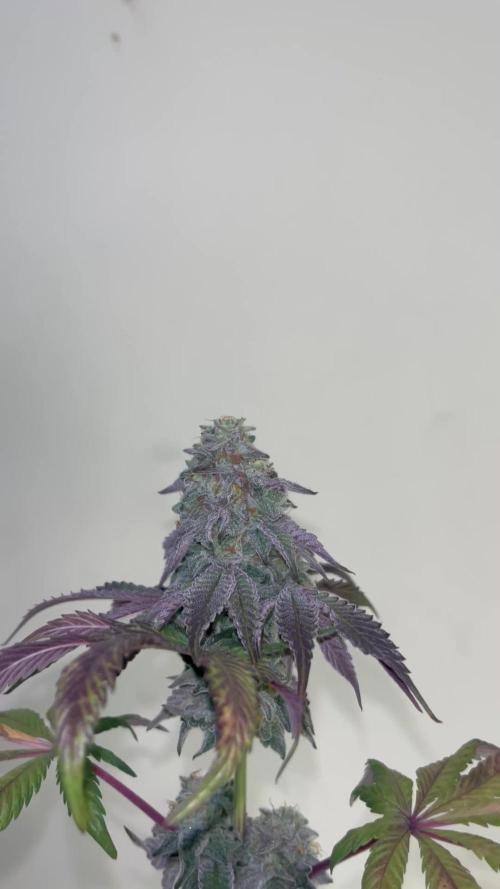
Vamos familia que se viene la cosecha de estas Papayton de Fastbuds, que ganas que tenia ya de darles machetazo.
Que locura de variedad, me encantó cultivarla , pero e de comentar que para mí es una variedad bastante complicada y hacía años que no me encontraba un reto así, al final salieron y bastante top.
Las flores aparte de piedras, se ven resinosas.
a sido una genética, dificil de cultivar y no es muy resistente pero si tienes paciencia fliparas con la calidad, 8/9 semanas de floración, los aromas son bastante intensos y hay que tener cuidado con los plátanos , si sale alguno a final de flora quitarlos y si sale antes desechar mejor la planta.
Por esos problemas que comenté por muy buena variedad que sea no puedo darle muchas estrellas.
Agrobeta:
https://www.agrobeta.com/agrobetatiendaonline/36-abonos-canamo
Mars hydro:
Code discount: Eldruida
https://www.mars-hydro.com/
Hasta aquí es todo , espero que lo disfrutéis, buenos humos 💨💨.
Likes
4
Share

@Chucky324
Follow
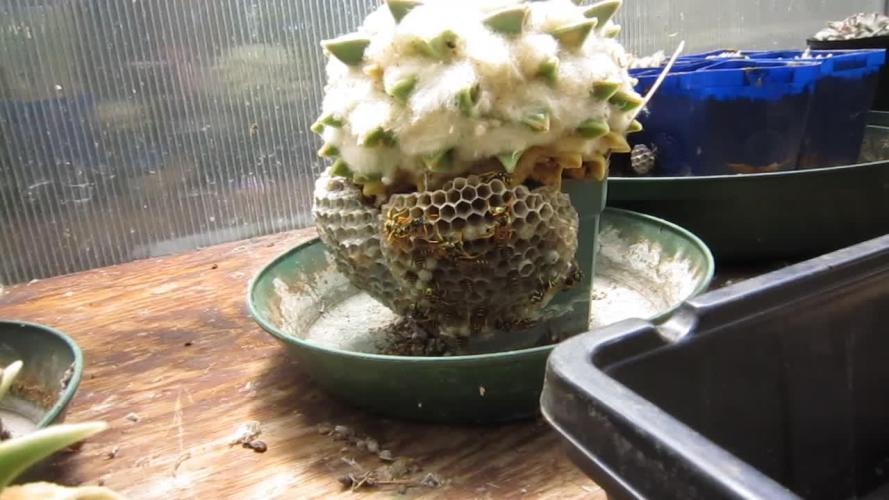
Hello. This is the end of week 10 and the beginning of week 11 of veg.
Things are going good in here. The plant is doing good.
Saw some thrips damage on one leaf near the door. I'm trying diluted peppermint essential oil this year as an insecticide.
Getting some hot days ahead with strong sun... Got the fans going on full most days now.
OK. Be Great.
Chuck.

Likes
28
Share


@TheGreenQueen420
Follow
Growing well apart from middle one. Pot fees heavy so I am drying it out for a few days before I water.
Will be increasing nutrients next feed to 1ml grow 1ml bloom and will introduce top max soon.

Likes
12
Share

@Bncgrower
Follow
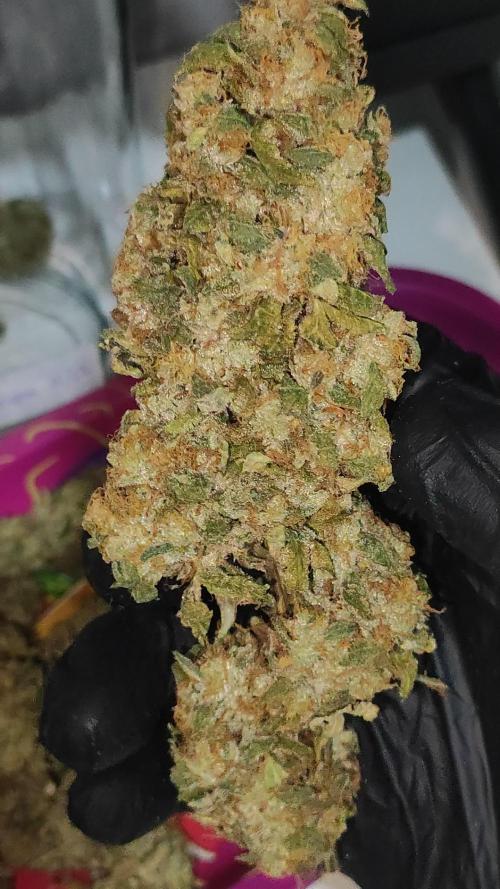
Another successful grow! This strain has a wonderful aroma and generous, resinous buds. This will definitely always be my go-to strain. 💪🥦
Likes
5
Share

@The_Doctor_Green
Follow
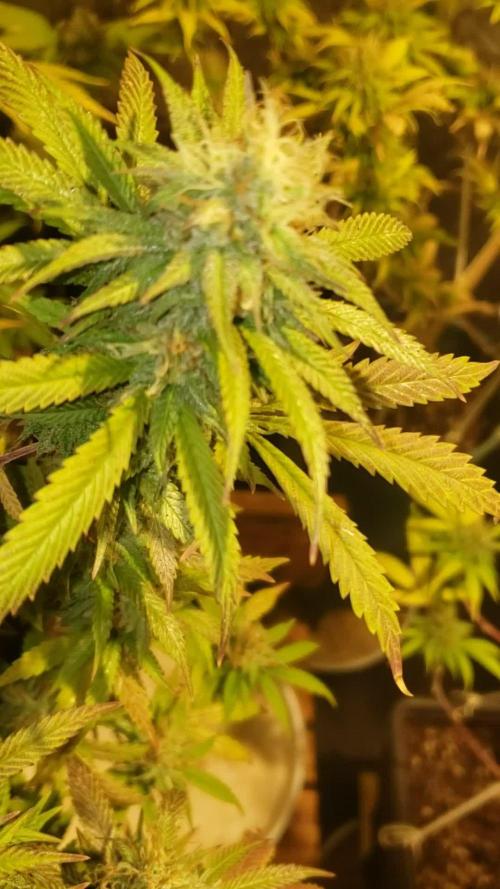
Hola a todos! Esta semana he regado solo con top candy 2ml x litro de agua.
Esta misma semana que comienza mañana, empezare a lavar raices de todas las variedades.
Muchos tricomas están lechosos aunque hay algunos transparentes, pero la idea es hacer un lavado de raices progresivo, En 2 veces, ya que no les deben de quedar más de 2 semanas previo al corte✂️🙌🤩

