


Likes
Comments
Share

@Condocannibus
Follow
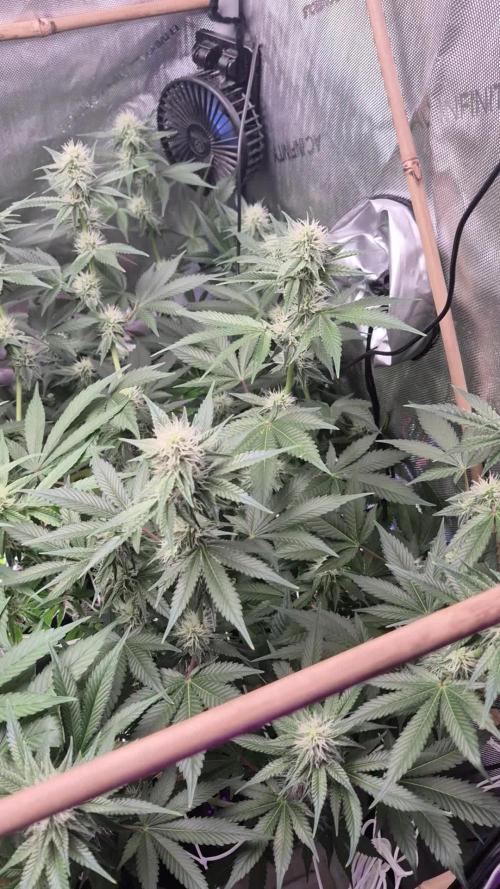
End of week 3 stretch is coming to the end.
Buds have formed nicely. Starting to frost and the smell is amazing. Open the tent and it nails you right in the nose.
No deficiencies to report. Smooth week.
Shes a thirsty one just like her sister 5 liters every morning and a lite pot 24 hours later.
Thanks everyone ☺️

Likes
9
Share


@julian100614
Follow
NORTHERN LIGHT AUTO (ROYAL QUEEN SEEDS)
Descripción:
Poco después de conquistar la escena del cannabis en Holanda, la Northern Lights se convirtió en el estándar del cultivo en interior. Su influencia se extendió por todo el mundo y acabaría convirtiéndose en uno de los pilares del desarrollo de cepas de cannabis modernas. Durante los últimos años, las técnicas de cultivo y reproducción han generado versiones de Northern Lights que mantienen las características de esta leyenda mientras añaden algo interesante a la fórmula. La Northern Light Automatic de Royal Queen Seeds es la combinación perfecta entre lo nuevo y lo viejo.
Al tratarse de una cepa autofloreciente y feminizada, la Northern Light Automatic es una planta versátil, perfecta para cultivadores discretos de interior pero también para cultivadores de exterior a gran escala. Tras una breve fase vegetativa, la planta empieza a crecer y a producir gran cantidad de flores, terminando su ciclo de vida en solo 9 o 10 semanas desde que se planta la semilla.
Día 0: He germinado la semilla en un papel humedecido a 30°C con un pH6
Día 1: La semilla abrió perfectamente y la trasplanté rapidamente a su maceta final de 15L geotextil de Royal Queen Seeds y he puesto en el agua de riego Deeper Underground 1ml/l y Atami NRG Roots-C 2ml/l.
Día 2: La pequeña ha cogido 3cm y va creciendo rapidamente. Parece que los nutrientes hacen sus efectos perfectamente
Día 3: después de alcanzar los 3cm hoy hemos regado con el enrraizador para su sistema radicular aportando 1ml/l Deeper Underground y 2ml/l de Atami NRG Roots-C

Likes
12
Share


@GermanGrow182
Follow
Der Herbst ist da. Sonne , Wind Wind Wind und Regen wechseln sich ab.larry ist n Blüte Woche 5, die AK in woche3 . Die buds werden dicker und dicker 😁. Noch keine Anzeichen von Schimmel. Die Nacht Temperatur ist noch nicht unter 8 Grad gewesen, kaum fade zu erkennen.
Es läuft gut 👍
Bis nächste Woche ✌️
Likes
16
Share


@DrShotzUK
Follow
Sugarlato really starting to come on well now.. small compact plant only around 50cm in height so far in 15 litre pot.
Looking like its flowers will be nice.
All round the best out of the 3 strains in the tent. Smell is moderate right now but filter is on inside the grow tent.
Updates will be coming again in a few days
DRSHOTZUK

Processing
Likes
10
Share


@Hbomb420
Follow
Gone in to flower so started on some bloom nutes this week and also gave them a good defoliation


Processing
Likes
39
Share


@Greenthumbguru
Follow
What can I say she’s a beast and she’s swelling well for a viparspectra 450w n galaxy hydro 300w rotated on her
And she only going to get fatter Ive been feeding her extra nutes and she’s been responding welll I almost ran in to an issue I was out of ph up and. She was super light when i picked her up there Isn’t hydroponic store around me so I googled and found out baking soda can be used as a ph up so
Sum. Improv. But she’s fattening up and prolly 40 %of the hairs are orange so im gone to push for one more week and then begin to flush
Processing
Likes
9
Share


@Tokologo
Follow
Day 78 plants are now going to grow outdoor.
Clones coming along nicely.
This week I'm giving the mothers a chance to get used to outdoor grow.
Day 84, mother enjoying the sun, got 91 clones from the first 3 batches.


Likes
57
Share


@DudeGrowsWeed
Follow
Auto Lemon is soooo close to harvest. Buds are frosty, hairs are orange, she stinks really strong, the trichs are milky white, but no amber yet. Trying to wait for amber trichs. Gave her Recharge only in anticipation of flushing soon. 👍

Likes
3
Share


@Rinna
Follow
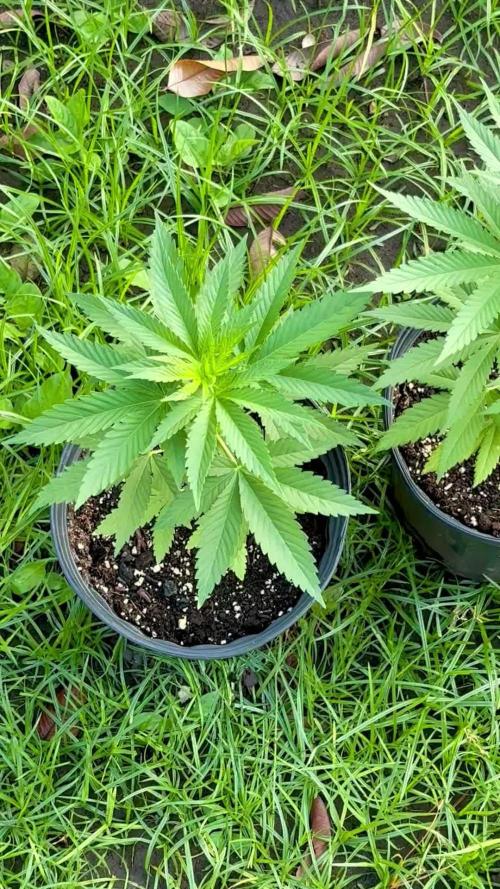
Did some more defoliation but keeping her going as she's wrapping up the stretch. Really starting to flower now, which took way longer than I expected. She's a late bloomer for sure, not the best for growing outdoors, this was a test seed though so I just kept her going. Amsterdam Genetics doesn't recommend this one for growing outdoors btw.



Likes
21
Share


@gr3g4l
Follow
con 64 dias y viendo el estado de los tricomas diría que voy a empezar a regar con agua sola , unas 3 veces más en el que añadiré en el riego Dos de acido cítrico por uno acido ascórbico
y en 7 -10 dias cosecharé.

Likes
55
Share


@Ultraviolet
Follow
2nd net is up. Early bud formations are promising. holding up to the extremes pretty well, some leaves taking minor damage, but overall, she is holding up, gave her 1 night at 50F see how she would react, stressful. Not advised as it messes with her metabolism, but I want to see if it triggers any anthocyanin response. Love to see her purp up but no signs yet. Remember, For every molecule of glucose produced during photosynthesis, a plant needs to split six molecules of water. This process provides the hydrogen needed for synthesizing glucose and other organic compounds, while oxygen is released as a byproduct.
Homework.
If Rubisco activity is impaired and it cannot properly function or regenerate its substrate, the plant's leaves are likely to turn a pale green or lime green, a condition known as chlorosis. Essentially, Rubisco activity is highly regulated and susceptible to various environmental and metabolic factors that can cause it to become inhibited, leading to an apparent failure in RuBP regeneration due to a lack of consumption.
Rubisco regeneration is intrinsically linked to nitrogen supply because Rubisco is a major sink for nitrogen in plants, typically accounting for 15% to over 25% of total leaf nitrogen. The regeneration phase itself consumes nitrogen through the synthesis of the Rubisco enzyme and associated proteins (like Rubisco activase), and overall nitrogen status heavily influences the efficiency of RuBP regeneration. RuBisCO is a very large enzyme that constitutes a significant proportion (up to 50%) of leaf soluble protein and requires large investments in nitrogen. Insufficient nitrogen supply limits the plant's ability to produce adequate amounts of RuBisCO, thereby limiting the overall capacity for photosynthesis and carbon fixation. Maintaining the optimal, slightly alkaline pH is crucial for the proper function and regeneration of Rubisco. Deviations in either direction (too high or too low) disrupt the enzyme's structure, activation state, and interaction with its substrates, leading to decreased activity and impaired RuBP regeneration. (Lime/yellowing)
Structural Component: Nitrogen is an essential building block for all proteins, and the sheer abundance of the Rubisco protein makes it the single largest storage of nitrogen in the leaf.
Synthesis and Activity: Adequate nitrogen supply is crucial for the synthesis and maintenance of sufficient Rubisco enzyme and Rubisco activase (Rca), the regulatory protein responsible for maintaining Rubisco's active state. Nitrogen deficiency leads to a decrease in the content and activity of both Rubisco and Rca, which in turn limits the maximum carboxylation rate, Vmax, and the rate of RuBP regeneration Jmax, thus reducing overall photosynthetic capacity.
Nitrogen Storage and Remobilization: Rubisco can act as a temporary nitrogen storage protein, which is degraded to remobilize nitrogen to other growing parts of the plant, especially under conditions of nitrogen deficiency or senescence.
Nitrogen Use Efficiency (NUE): The allocation of nitrogen to Rubisco is a key determinant of a plant's photosynthetic nitrogen use efficiency (PNUE). In high-nitrogen conditions, plants may accumulate a surplus of Rubisco, which may not be fully activated, leading to a lower PNUE. Optimizing the amount and activity of Rubisco relative to nitrogen availability is a target for improving crop NUE.
Photorespiration and Nitrogen Metabolism: Nitrogen metabolism is also linked to the photorespiration pathway (which competes with carboxylation at the Rubisco active site), particularly in the reassimilation of ammonia released during the process.
To increase RuBisCO regeneration, which refers to the process of forming the CO2 acceptor molecule Ribulose-1,5-bisphosphate (RuBP) during photosynthesis, the primary methods involve optimizing the levels and activity of Rubisco activase (Rca) and enhancing the performance of other Calvin-Benson-Bassham (CBB) cycle enzymes.
Biochemical and Environmental Approaches:
Optimize Rubisco Activase (Rca) activity: Rca is a crucial chaperone protein that removes inhibitory sugar phosphates, such as CA1P (2-carboxy-D-arabinitol 1-phosphate), from the Rubisco active site, thus maintaining its catalytic competence.
•Ensure optimal light conditions: Rca is light-activated via the chloroplast's redox status. Adequate light intensity ensures Rca can effectively maintain Rubisco in its active, carbamylated state.
•Maintain optimal temperature: Rca is highly temperature-sensitive and can become unstable at moderately high temperatures (e.g., above 35°C/95F° in many C3 plants), which decreases its ability to activate Rubisco. Maintaining temperatures within the optimal range for a specific plant species is important.
•Optimize Mg2+ concentration: Mg2+ is a key cofactor for both Rubisco carbamylation and Rca activity. In the light, Mg2+ concentration in the chloroplast stroma increases, promoting activation.
•Manage ATP/ADP ratio: Rca activity depends on ATP hydrolysis and is inhibited by ADP. Conditions that maintain a high ATP/ADP ratio in the chloroplast stroma favor Rca activity.
Enhance Calvin-Benson-Bassham (CBB) cycle enzyme activity: The overall rate of RuBP regeneration can be limited by other enzymes in the cycle.
•Increase SBPase activity: Sedoheptulose-1,7-bisphosphatase (SBPase) is a key regulatory enzyme in the regeneration pathway, and increasing its activity can enhance RuBP regeneration and overall photosynthesis.
•Optimize other enzymes: Overexpression of other CBB cycle enzymes such as fructose-1,6-bisphosphate aldolase (FBA) and triose phosphate isomerase (TPI) can also help to balance the metabolic flux and improve RuBP regeneration capacity.
Magnesium ions, Mg2+, are specifically required for Rubisco activation because the cation plays a critical structural and chemical role in forming the active site: A specific lysine residue in the active site must be carbamylated by a CO2 molecule to activate the enzyme. The resulting negatively charged carbamyl group then facilitates the binding of the positively charged Mg2+ion. While other divalent metal ions like Mn2+ can bind to Rubisco, they alter the enzyme's substrate specificity and lead to dramatically lower activity or a higher rate of the non-productive oxygenation reaction compared to Mg2+, making them biologically unfavorable in the context of efficient carbon fixation. The concentration of Mg2+ in the chloroplast stroma naturally increases in the light due to ion potential balancing during ATP synthesis, providing a physiological mechanism to ensure the enzyme is activated when photosynthesis is possible. At the center of the porphyrin ring, nestled within its nitrogen atoms, is a Magnesium ion (Mg2+). This magnesium ion is crucial for the function of chlorophyll, and without it, the pigment cannot effectively capture and transfer light energy.
Mg acts as a cofactor: Mg2+ binds to Rubisco after an activator CO2 molecule, forming a catalytically competent complex (Enzyme-CO2-Mg2+). High light + CO2) increases demand: Under high light (60 DLI is a very high intensity, potentially saturating) and high CO2, the plant's capacity for photosynthesis is high, and thus the demand for activated Rubisco and the necessary Mg2+ cofactor increases. Mg deficiency becomes limiting: If Mg2+ is deficient under these conditions, the higher levels of Rubisco and Rubisco activase produced cannot be fully activated, leading to lower photosynthetic rates and potential photo-oxidative damage.
Optimal range: Studies show that adequate Mg2+ application can enhance Rubisco activation and stabilize net photosynthetic rates under stress conditions, but the required concentration is specific to the experimental setup.
Monitoring is key: The most effective approach in a controlled environment is to monitor the plant's physiological responses e.g., leaf Mg2+ concentration, photosynthetic rate, Rubisco activation state, and adjust the nutrient solution/fertilizer to maintain adequate levels, rather than supplementing a fixed "extra" amount.
In practice, this means ensuring that Mg2+ is not a limiting factor in the plant's standard nutrient solution when pushing the limits with high light and CO2.
Applying Mg2+ through foliar spray is beneficial to Rubisco regeneration, particularly in alleviating the negative effects of magnesium (Mg) deficiency and high-temperature stress (HTS). While Mg can be leached from soil, within the plant it is considered a mobile nutrient, particularly in the phloem. Foliar-applied Mg is quickly absorbed by the leaves and can be translocate to other plant parts, including new growth and sink organs.
Foliar application of: NATURES VERY OWN MgSO4 @ 15.0g L-1 in a spray bottle. For those high-intensity workouts when 1 meal a day is just not enough!
Foliar sprays are often recommended as a rapid rescue measure for existing deficiencies or as a supplement during critical growth stages, when demand for Mg is high. Application in the early morning or late evening can improve absorption and prevent leaf burn. The plant was getting a little limey yellow in the centre. Shortly thereafter, she was back in business, green mostly regenerated. The starting point [of creativity] is curiosity: pondering why the default exists in the first place. We’re driven to question defaults when we experience vuja de, the opposite of déjà vu. Déjà vu occurs when we encounter something new, but it feels as if we’ve seen it before. Vuja de is the reverse—we face something familiar, but we see it with a fresh perspective that enables us to gain new insights into old problems.
Confidence is evidence... nothing more. You are confident because you have driven 10,000 times, you are confident because you have spoken 10,000 times. People think confidence is a feeling, but it's not. If you want more confidence, then you need to create evidence, take more shots, collect more data, build more experiences, take more risks; fail, confidence doesn't come first; it is the reward you get for doing the work. no one else wants to do.
Likes
5
Share


@GrowFunMD
Follow
I am now putting my weekly comments in the videos. Watch the videos for updates.

Likes
50
Share


@MyCloset
Follow
Still week 12 changed to 12/12 on day 90, thought my system is working properly now and nutrient solution seems to be alright now.. maybe it can improve but its fine for now. They are growing ridiculous fast even when its not in perfect conditions, im definitely staying with rdwc the stem of this plant is about 3-4 cm big wich is insane before flower

Likes
40
Share


@Mr_und_Ms_Lue_Roots
Follow
Das Blütenwachstum schreitet gut voran. Die Blüten werden jetzt fülliger und der Geruch hat stark zu genommen. Trichome bilden sich langsam.
Seit dieser Woche geben wir auch PK 14/15 ,05-,075 ml/ l pro Tag in die Nährstofflösung.
Wiegehabt gießen wir jeden Tag ca. 3 Liter inkl. Co2 Zugabe.
Processing
Likes
6
Share


@daybreaksky
Follow
topped above 5th node, trying to figure out when to switch to flower, may be another week.
Likes
35
Share


@The_Bearded_Grower
Follow
Day 64 Okay so we're entering the last couple weeks things are looking good I've managed to bring the ppm's down I added three of just straight tap water waited 10 minutes and then added my 2 L of nutrients. Doing this for the last couple days has managed to bring my ppm's down a very large amount now it sits at 1973 PPM I am well on my way
Day 66 not much to say just checking the trichomes and she is coming along well this my be the last week for her then on to flushing. PPM now 1836 and the solution is 1668 PPM so i'm doing good now
Day 67 i'm happy to say that my ppm run off is now the same as the solution i'm putting in and that's a big win so now in going back to 2L of water then 2L of nute's
Day 68 she is holding steady at 1550 ppm i now know the watering that works best more knowledge for the arsenal lol
Day 69 not much to say. She is putting on weight fast now that i got the ppm's under control but at this point it may be a week 17 harvest as trichome development is still on the slow side ppm 1763
Day 70 by my estimation she had suffered a minor nute lock out that slowed growth a little bit. T he reason i think this is because now that i have the ppm's in check and at a steady 1550-1620 ppm she is ( for lack of a better word ) exploding with growth in bud size. some new growth has doubled in size in just 24 hrs and that's huge, because of this i'm going to keep her in flower for week 16 and how knows maybe 17 before flush..... side note i had a freak problem with my one Aglex light and the veg side of the light along with some bloom light diodes stopped working. with some help i found out it was 2 LED diodes were drawing on the power and in effect stopped half the light from working we bypassed the bad LED's and we are back in business 😀
Likes
1
Share


@WaspWeed
Follow
La planta crece rapido, ya se realizo el primer corte apical el proximo paso a va a ser realizar un entrenamiento por LST para empezar a desarrollar hacia los costados para comenzar a desarrollar la superficie del Scrog. Ademas se agrego un ventilador para fomentar el desarrollo del tallo y la fortaleza de ramificaciones.
Por otro lado ya se observa que las raices llegaron a la base de la maceta, por ahora va creciendo muy bien esta genetica.


Likes
2
Share


@Green_Peace
Follow
Putting on weight fast now in peak flower. Love the structure of the plant and really regretting not taking a cutting. Oh well, ce la vie. Will stop adding PK in the next few days before cutting back on nutrients next week then flushing for the last 2 weeks. This plant is at the back of the timelapse.