




Likes
8
Share


@jaydee702
Follow
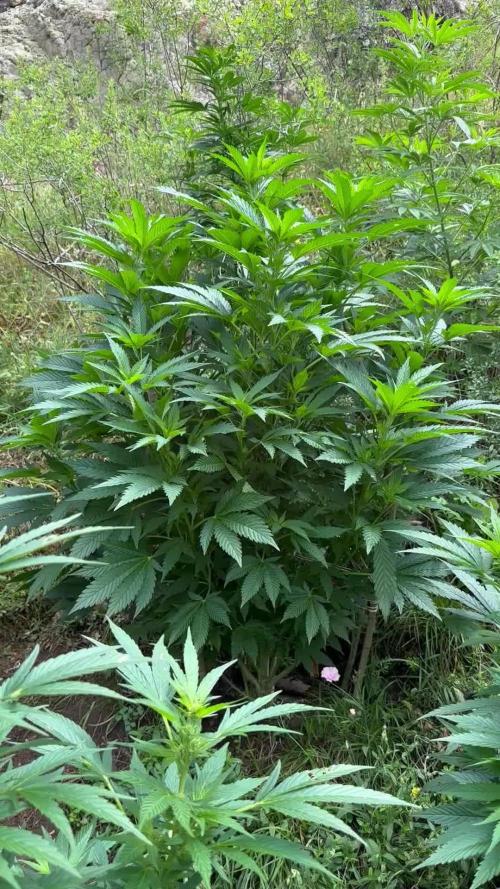
she finally showing pistels after three weeks(21) days in 12/12 tent.she is Thriving in its tiny pot dwc hydro spam.she is about 16 inches tall was 4 inches 21 days ago .She has a min of 5 weeks to go still hope she slows her stretch some to stay in the baby bears bed for light distance.

Likes
17
Share


@SeshHouseCannabis
Follow
I choose to go with lollipops technique for the small plant. I did cut a lot of leaves on that small plant, but the bud size is getting huge. For the another one, I will just continue with defoliation until harvest. And I also just bought some terpinator to give the flower more nutrients and boost the smell.

Likes
76
Share


@TheFattyMcCoy
Follow
Hey yall!
Super stoked to show yall some beneficial nematodes in my soil. Lots of other beneficials in there, the nematodes are the most fun to me! Love to show yall what Korean Natural Farming and JADAM can do.
This is all Natural, all organic, all homemade inputs. I just want to prove to you all, the entire community, and the entire cannabis industry that you don't need to drop money on your inputs. You can source everything yourself!
Remember, Bottles are for Babies! 🍼 👶
You don't need to buy into anything, you don't need to invest in anything, but YOURSELF!
You are the most valuable tool, you are the most dangerous thing on this Earth 🌎
I want to be a resource to everyone and anyone who is willing to be open minded and learn. It doesn't matter your background, where you live, what color you are, or what is in your past. Your future and the future of this Earth is in your (our) hands. Togetherness over oneness
Anyways, weekly compost tea applications and quality compost gets you gold!
Also hand crafted inputs with love makes a huge difference. Use what you have near you, if you are wildcrafting inputs, be sure to not take from nature without giving back. Recycle, use less chemicals, pour your extra compost tea in your community.
We can stop this wild climate change, but we can seriously slow it down, almost completely if we all do our part.
I hope these posts inspire you to go down that rabbit hole 🐇 🐰 and get your hands dirty.
Use and reuse the same soil, use larger pots or go in a living bed if possible.
Have fun and learn something each day, pass on love ❤️ 😍 learn from your mistakes, that is what makes us stronger. No matter the mistake in your garden, or in life, we can always learn something new about life and ourselves.
You are not alone on this journey, I got your back, and I truly believe in you.
Peace and blessings to all!
❤️ 💙 💜 💖 💗

Processing
Likes
12
Share





Likes
6
Share


@Smokyhorizon
Follow
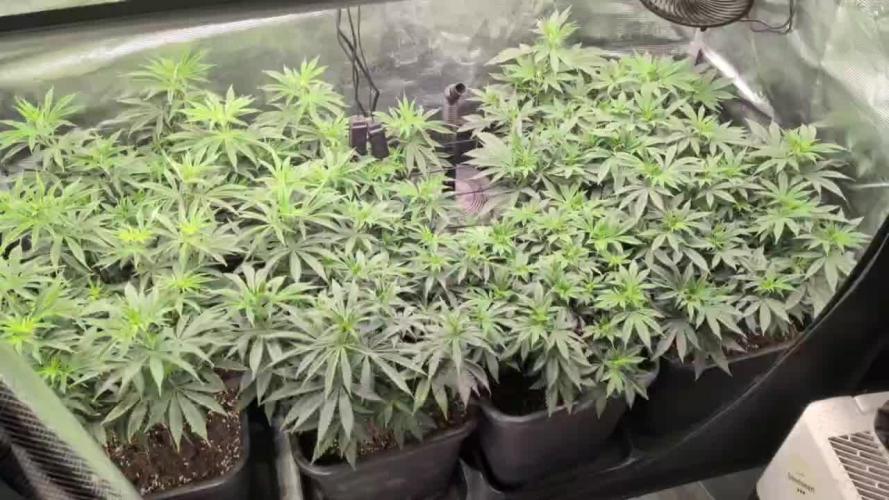
Unfortunately 2 Caligen ladies died.
The weather is pretty good.
Watering once 2-3 days.

Likes
6
Share


@NewbieLearner
Follow
Amazing Colours! As you can see the colours on this plant at the end of its run are absolutely amazing. The buds didnt out as dense as I had hoped but I think thats just this pheno and we are busy hunting a denser pheno atm. what a great strain to grow though. no problems during the cycle of the plant and the colours make it so rewarding to grow! I would definitely recommend this strain to people who like fruity and colourful plants.
Barneys never disappoints really;)


Likes
52
Share


@MeaCulpa
Follow
I counted the days again and came to the conclusion that I have 70 days full and harvested tonight.
Enough brown and amber trichomes are also present. I'm excited to see how they taste and pop.
They definitely look and smell very good.
What's really funny: From the 2-3 week onwards, I turned both TS1000s up to 100% for 18 hours a day. I just wanted to find out my cap.
I used around 100kW/h and €40 less in electricity costs. Compared to my last grow with Feminized and 10 weeks of flowering + Veggy. I wouldn't have expected that.
Well... let it dry in peace first.
Another project is already underway. Have a nice weekend everyone.
Likes
54
Share


@Hou_Stone
Follow
I'm happy for a first time, I obviously made a lot of mistakes but above all I learned a lot 👌😎
------------------------------------------------------
Looking for MarsHydro equipment for your crop? 🔥
You can use my promo codes! 🙏😻
"houstone3" for: TS LED Grow Light, Tent, Ventilation for 3% off
"houstone5" for: FC&FC-E&SP LED Grow Lights; Grow Tent Kits for 5% off
https://www.mars-hydro.com/?acc=hou-stone

Likes
121
Share


@Cruzsider
Follow
Well I think I could have gone another 2 to 3 weeks but I'm happy and need to move on to the next relm of life. I'll be back at the end of the week with total weights for everything once curred. Thank you for for you interest and likes 👍

Likes
12
Share


@Lonelygrass
Follow
I am really happy that the plant is so beautiful. I am 100% sure that in better conditions it can give even more, now there is little time left to harvest. bye growers
OKeyyy now the harvest day is 23/05! i love this strain ! looking for the second plant ;D
Likes
10
Share


@berlinbeginner
Follow
Day 34 veg
BM1 responding well to topping. Vigorous growth.
BM2 growing normal
BM3 has tight internodal spacing.
BM4 grew slower than the others but didnt get topped at all.
I started feeding today 0.5ml/l biobizz grow.
Problem with watering: pots dont get watered properly. Water just runs off of the bottom.


Likes
30
Share


@Mazgoth
Follow
We are close for 2 months,one
Month for harvest far,what do you think guys
Likes
16
Share


@Siriuz
Follow
Alright so she is coming back to life and with better leaves as you can see, sad but true something happened to her before and I think she was getting too much water a d too little ventilation, now that the problem has been solved and nutes has been added with sprinkle water and sprinkle nutes every so often not everyday tho, good climate around 22/25C top
So she is ready to keep developing good
Also we transplanted her to a verte pot
We think soon she is going to need a bigger one but still we are thankful she is not dead and that she is strong enough to grow better <3
******UPDATED 06/05********
She is finally looking good
Im not sure what happened to her
But I do have an idea
And that is why i transplanted to better
And bigger pot
Now the issue is that after that a tiny drop of fertilizer probably fall into those first leaves that she grew up before but doesn't matter I knew with love and good caring plus good nutes and faith
I knew she was gonna go up
And she is going up thank God
LOVELY
She is growing good and finally getting shape as the others
This is a photoperiod so hopefully we have her in veggie for long time because we want her huge
Now guys please help me here
For how long can you have a photoperiod veggie and for how long and she still be Alive after bloom?
Just wondering if they are like an apple tree or some other tree that you plant outdoors and she lives forever I am wondering
Can someone tell?
Alright that iss for the record
Anyways guys im glad she is here with us
I am glad we are doing good
Thanks for visiting please let me win something help me out haha
Have fun guys love peace and blessings
Always showing love to this cold wolrd
Always real never fake
Siriuz loves y'all take care

Likes
21
Share


@Ultraviolet
Follow
Heyoka.
12x12=144, A dodecahedron is a polyhedron with 12 faces, and in coordination chemistry, it refers to a geometry where ligands surround a central metal atom (in this case, Magnesium) in a specific, 8-coordinate arrangement. Dodecahedrane is a hydrocarbon, meaning it's composed solely of carbon and hydrogen atoms. The carbon atoms are arranged at the corners of a dodecahedron, a 3D shape with 12 pentagonal faces. The water molecules in the dodecahedron form hydrogen bonds that are individually slightly weaker than in either the dimer or the tetramer. However, because three-quarters of the O -H groups in the dodecahedron form hydrogen bonds, it has a more negative energy per molecule than has either the dimer or the tetramer. Magnesium (Mg2+) is the essential, central metal ion in the chlorophyll molecule, crucial for photosynthesis by enabling light absorption and energy transfer. It is chelated by four nitrogen atoms within the porphyrin (or chlorin) ring structure. Chlorophyll appears green because it reflects light in the green region of the visible spectrum, specifically between 490 and 570 nm. The main resonance electronic frequency of a neutral Magnesium (Mg) atom corresponds to the transition from the ground state to the first excited state. Resonance Line Wavelength of Mg2+: 285.1nm (UVB light). The central atom of the chlorophyll molecule is Magnesium (Mg2+), which is coordinated within a porphyrin ring. The electronic "resonance frequency" of this central atom—meaning the frequency at which its electrons absorb energy—is primarily driven by the electronic transitions (ETR) of the surrounding conjugated chlorin ring structure, rather than a discrete atomic transition of the Magnesium atom itself. The resonant electronic frequencies of the chlorophyll porphyrin (technically, a chlorin) ring are determined by the energy required to promote π-electrons within its conjugated system, primarily appearing in the blue and red regions of the visible spectrum.
In standard physics, Chloryphyll b has peak absorption at 460nm (Blue). If we take the peak wavelength 460nm and a UV-B, UVR8 peak absorption wavelength 285nm Tryptophan-285 (W285) Sensing protein. 460/285=1.618 Φ, "natural harmony" and the "structure of light". The cryptochrome photoreceptor (CRY) is a UV-A/blue light receptor that shares this dual sensitivity with several other biological structures and functions, including significant sequence similarity and a common evolutionary ancestor with DNA photolyase enzymes. These are light-activated enzymes that use blue/UV-A light to repair DNA damage caused by UV-B radiation in plants.
Dodecahedrane (C20H20) is a hydrocarbon with a cage-like structure where carbon atoms form 12 pentagonal faces (a regular dodecahedron). It is highly symmetric (icosahedral), contains no delocalized electrons (no aromaticity), and has minimal angle strain, but significant torsional strain. Water Dodecahedron (H2O) forms hydrogen-bonded cages. While individual hydrogen bonds in this structure are weaker than in the linear dimer or tetramer, it has a more negative total energy per molecule. This is because three-quarters (75%) of the groups are involved in hydrogen bonding, creating a very stable, closed-shell configuration. a 3D carbon hydrocarbon (C20H20) to stable water clusters in hydrate, while the Magnesium ion acts as the central activator within a conjugated ring in biological systems, with its electronic absorption dominated by the ring, not the atom itself.
Effective quantum efficiency of photosystem II, often denoted as ΦPSII
In horticultural lighting, adding 730 nm (far-red) LEDs alongside standard red/blue lights has been shown to increase canopy photosynthesis by 20–30% in several crops by acting synergistically with shorter wavelengths. However, the limitation is that excessive, pure IR/Far-red light (without accompanying red light) can trigger the "shade avoidance response," causing plants to grow tall, weak, and spindly rather than robust. Knowing is half the battle however, engineering or utilizing infrared light (specifically the 700-750 nm far-red range) is a viable method to boost photosynthetic efficiency. It acts as a bridge to allow PSII to utilize a broader spectrum of light, breaking the traditional 700 nm barrier.
Extend, then multiply.
UVR8-mediated signaling (often in conjunction with CRY proteins) triggers protective mechanisms that maintain the stability of the photosynthetic apparatus (including LHCII and reaction center proteins), thus ensuring that the efficiency of Photosystem II remains higher in UV-B-exposed plants compared to plants lacking this receptor. ΦPSII indictates the rate of electron transfer from water to plastoquinone, which drives the production of ATP and NADPH. There is a close link between ΦPSII and the true rate of CO2 fixation (Φ*co2), particularly in C4 plants.
Effective quantum efficiency of photosystem II, often denoted as ΦPSII, represents the proportion of light absorbed by Photosystem II (ΦPSII) that is actually used in photosynthetic electron transport. It is a key indicator of how efficiently a plant is using light for photosynthesis, as opposed to losing it as heat or fluorescence. ΦPSII (effective quantum yield of photosystem II) functions primarily as a "multiplier" (a coefficient of efficiency) rather than an additive factor when estimating the overall photosynthetic electron transport rate (ETR). Multipliers are considered far more beneficial than additions because they generate exponential growth, leverage existing resources to their full potential, and create sustainable, self-multiplying capacity, rather than just incremental, linear increases.
Humans, and most other mammals, rely on other mechanisms, such as nucleotide excision repair, to manage and repair UV-induced DNA damage. As such, humans do not have the direct, light-driven repair mechanism that photolyase offers in plants.

Likes
1
Share


@zzzzzzz064
Follow
On week 2 the woolrock got some mohoo, i fixed it by putting water mixed with "safe roots" from Hydrotek directly into the rockwool superfice.
After a couple days that problem was solved and the plant kept growing very well.
And also i started to train the plants (lst)

