


Likes
Comments
Share

@BobbersDown
Follow
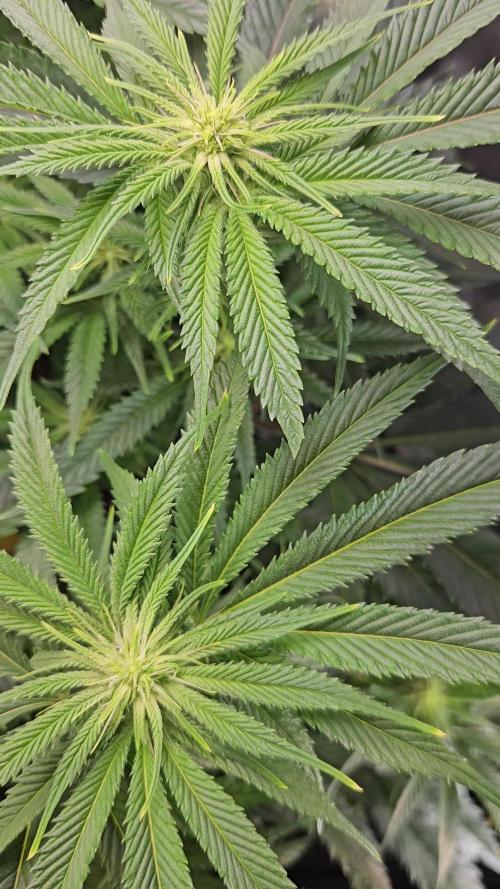
This plant is an absolute beast. Have trimmed up all the lowers I need to I think, left several that should make good colas and even out the canopy. Starting to smell a bit sour in a good way, expect it to swell up over the next week. Favorite time now that we're in flower and most of the trimming and training is done! Stay tuned folks!

Likes
4
Share


@Mr_nugs_lover_David
Follow
It's been a wonderful journey, I'm very happy about this lady's performance, she has produced a high quality harvest, low quantity but I didn't maximice the space as good as I should, but definitely a wonderful genetic to grow, the flowrs are super sticky, full of trichomes and the smell is just the clasic amnesia smell you expect.


Likes
10
Share

@Pierrougarou21
Follow
Salut les growmies
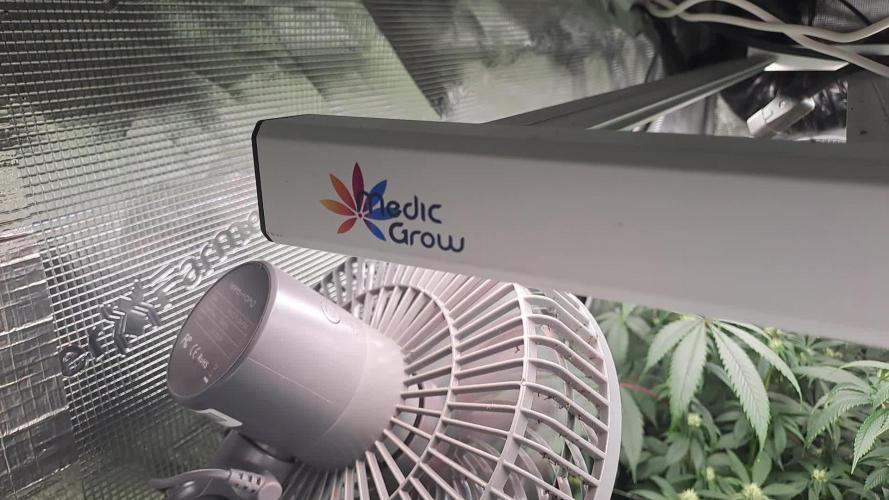
19/01 On commence la semaine avec un arrosage avec l'enhanceur de@greenhousefeeding.
Hier j ai finalisé la semaine avec une legere défoliation des grosses capteuses qui faisaient trop d ombre pour les sites floraux adjacents.
De plus je viens d augmenter a 90 % l intensité de mes lampes que je vais progressivement augmenter jusqu a 100%.
Ce soir quand j ai ouvert la tente les filles m ont acceuilli en priant . Que de joie de voir ces filles en pleine santé et avec des couleurs resplendissantes.
Likes
24
Share

@Ultraviolet
Follow
The cannabis strain Grape Guava can be a purple strain, depending on its specific phenotype and genetic makeup. While not all phenotypes of Grape Guava are purple, some variations, such as the Zatix Grape Guava, are noted for their striking purple appearance due to the genetic expression of anthocyanin pigments.
In a garden of green, Grape Guava gleams,
With its fruity aroma, enchanting dreams.
Clusters of grapes, guava's sweetness ignite,
A strain so divine, in purple and white.
Euphoria whispers, a lush fruity haze,
Grape Guava's embrace, a tranquil daze.
Off and away.@1400ppm. The increased CO2 allows plants to thrive at higher temperatures, which in turn necessitates higher humidity to maintain the ideal VPD for healthy growth and transpiration. 80F -5F = 75F LST with 70% RH = 0.72 kPa. Higher temperatures and humidity promote rapid growth, nutrient uptake, and photosynthesis while maintaining a lower stress level. Temperature influences the rate of enzymatic reactions involved in aerobic respiration. Enzymes, such as those involved in glycolysis, the Krebs cycle, and the electron transport chain, work most efficiently at an optimal temperature range. In low temperatures, enzymatic activity will slow down, thus reducing the rate of aerobic respiration. In high temperatures, enzymes can become denatured, thus impairing their function and stopping the process of aerobic respiration. Glucose is the primary fuel for aerobic respiration. The rate of aerobic respiration increases with the availability of glucose, as it is the starting point for glycolysis. If glucose levels are low, cells may rely on alternative energy sources such as fatty acids or amino acids , but these processes may yield less ATP or be less efficient. To determine this effect, carbon dioxide volume was measured (as carbon dioxide is an output of aerobic respiration)
A seed germinated via skotomorphogenesis (in the dark) will generally develop faster in its initial stages to reach light, though it will be etiolated (elongated and weak) and will switch to slower, more robust photomorphogenesis (light development) once it emerges into light. While skotomorphogenesis is a rapid, growth-oriented process for soil escape, it's a temporary phase; photomorphogenesis is a more sustainable development program that prepares the seedling for photosynthesis.
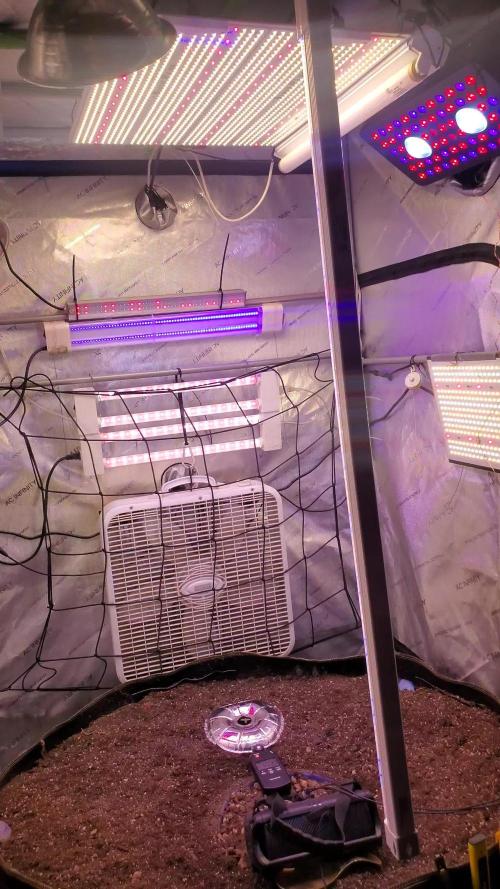
18/6 with the 6 being IR instead of darkness, keeping temps overnight a neat 77F-80F. PPFD overnight 1.8.
Think of my tent as a lung. What goes in must come out. When the rate of air going out exceeds the amount of air coming in, it creates a negative pressure. Tent concaves (bends in). If set up correctly, your RH will begin to drop slowly to the desired level you set, and the extraction turns off when it reaches 50% RH. The plant, as it performs cellular respiration, will always be releasing more water into the air, so the RH% of the tent overnight will always increase, so long as oxidative phosphorylation is occurring. As soon as the RH% creeps back up to 55%, the extraction turns back on, over and over, this creates a strong pressure differential which will work wonders on your grow. replicating high and low pressure fronts in nature, critical for oxygen diffusion, but more importantly, full control of your RH%.
Moisture will not transfer from a saturated atmosphere to another if that air is already at or above its saturation point, meaning the air can't hold any more water vapor. Once I understood that water is produced as a by product during cellular respiration, specifically at the very end of the electron transport chain (ETC) where electrons are finally transferred to molecular oxygen, the higher the RH of the air, the more resistance there is for more moisture to be added to that environment, and effects the ease with which it does so. But none of that water comes from the pot; it's pulled from the air. If you run high daytime RH, your medium/pot is 100% reliant on transpirational root pull to move water. ZERO evaporation happens across the atmosphere if the tent air has high RH%, the medium cannot release its water through evaporation. Once a canopy develops, light no longer slowly wicks and evaporates from the topsoil. The Soil-Plant-Atmosphere Continuum (SPAC) describes the continuous pathway and process of water movement, driven by a gradient in water potential, from the soil, through the plant's roots, stem, and leaves, and finally evaporating into the atmosphere through transpiration. There is evaporation, there is transpiration, then there is evapotranspiration; Evapotranspiration (ET) is the combined total of two processes: evaporation (water lost directly from soil and surface water into the atmosphere) and transpiration (water released from plants to the atmosphere through their leaves). Evapotranspiration represents the total amount of water that moves from the medium into the air. There is no such thing as a medium with too much water, only a medium that retains too much for too long.
The water must always flow efficiently from one atmosphere(Medium) to another(Air) in a timely manner. Moisture is a critical factor for bacterial growth and decay. Dictating how long it's allowed to sit in any one location for any given period is a key preferred control. To ensure a net reduction in a bacterial population, the rate of removal (ET) must exceed the rate of bacterial growth (decay rate), which is often modeled as a growth rate for the specific bacterium under the given conditions. By optimizing daytime VPD, we also optimize conditions for bacterial growth to explode exponentially above 77°F.. If water is allowed to sit in a medium without an escape within a timeframe, nothing good will happen. IF High RH is maintained overnight as well as during the day, placing 100% of water movement at the behest of daytime transpiration, roots can only pull where they can reach, and if soil is compressed above a certain point, moisture will become trapped in a medium with no way of moving day or night. This will begin the countdown for decay to take hold. When water stagnates in a medium, it loses oxygen, creating anaerobic conditions that foster the growth of harmful microorganisms like bacteria and fungi, which can produce toxins and disease vectors.
Thigmomorphogenesis, the process by which plants respond to mechanical stimuli like touch by altering their growth and development, resulting in significant morphological changes to improve survival against mechanical perturbations. This complex response involves sensing touch and initiating physiological and genetic responses, leading to changes in form and structure over days or weeks. The process is triggered by physical forces such as wind, rain, or touch. Plants adapt to these stimuli by changing their shape and structure, which may include slower growth, thickened stems, or altered leaf development. Plants possess sophisticated mechanisms to detect even subtle mechanical stimuli and initiate responses. A variety of molecules, including calcium ions, jasmonates, ethylene, and nitric oxide, are involved in signaling these mechanical inputs. Touch can induce the expression of genes that encode proteins for calcium sensing, cell wall modification, and defense mechanisms. A plant exposed to constant wind may become shorter and sturdier. A plant that is touched frequently might grow slower to conserve energy and develop thicker cell walls. These changes increase a plant's resilience and ability to survive in harsh environments.
Let's get Thiggy with it.
Likes
1
Share

@420abbybox
Follow
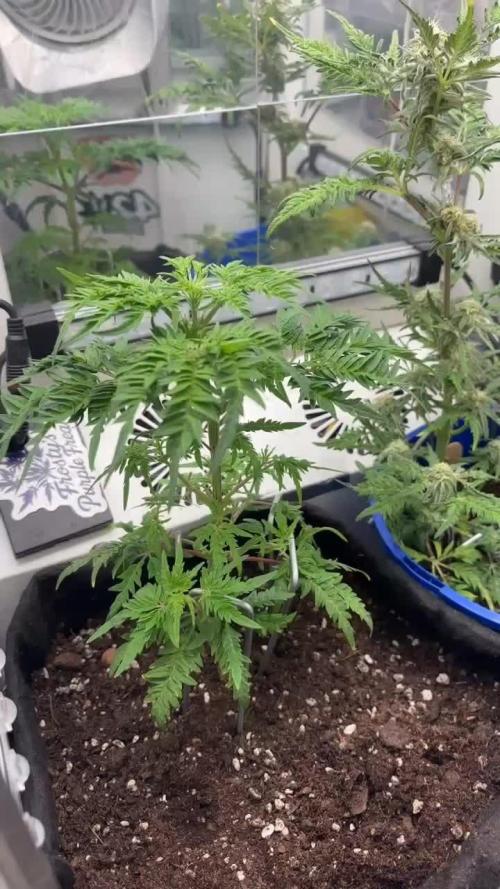
Frosty’s purple freak is now on week:10 of the vegetive stage with the 12-13th set of leaves and got multiple side branches with a few stretching outwards and lollypoped the lower branches to promote growth upwards/outwards

Processing
Likes
15
Share


@DailyhighclubNLyara
Follow
Okay so the result of my LST surprised me like a lot. The plant looks great under the light, it’s still my second grow so I hope to learn a lot about the beautiful plants and how they respond. I want to experience everything to learn from them and know how to respond.
I think this week went good but the dry wet cyclus is something I really needed to learn this week. I first tried watering every day but i noticed that the soil wasn’t dry at all, so I thought no that’s maybe just the soil. *Ive learned this cycle in the next week* spoiler alert: it wasn’t
I still give around 1 tbsp of the molasses because the plant is really responding good to it.
The small plant is also looking healthy so perfect, just keep giving her love.
I did a big oops:
So, the plant grew bigger and bigger and faster then I could keep up. So I decided to lst some more, Olga went perfect and I build a lot of confidence from that. So... busy with the other “big” plant and I started doing the head top, but the band was just to tight, but I noticed that to late *SNAP*. Did I just snapped the biggest branch of the middle plant? Yes, I hated myself for 4 days until I thought: there are no mistakes, just happy..... (fill in with your brainpower) well see what happens


Likes
16
Share


@Marijuanaisland
Follow
Trocando a configuração de Dwc para coco, calor está forte neste verão elas responderam bem ao super croping, mais eu não tenho espaço no quarto de floração então elas estão esperando


Processing
Likes
13
Share


@kevgrow
Follow
Hey Guys its End of week 3 from the day these girls were placed in a jar, hoping they are females :)
Plant #1 is looking great, started slow but picked up quickly
1st time of transplanting, it was a success, I was nervous.
1st week of nutrients, I tried to feed 1/3 to start
Looking forward in training and topping my plants in week 4. Hopefully ill be able to detect there genders.
Will read more info on cloning and will try to grow the same strains outdoors, off Course thats if they are girlas :)
Stay tuned guys and thanks for all the support!
Likes
14
Share


@danicrisan
Follow
Week 9 ongoing
Banana Kush 74 cm
Black Domina 54 cm
Cheese 51 cm
Blue Berry 58 cm
Finally stopped from going up, only 1-2 cm in the last week.
The smell is starting to get strong. The buds are looking better by day.
More photos at the end of the week.
Likes
4
Share

@CheeRz
Follow
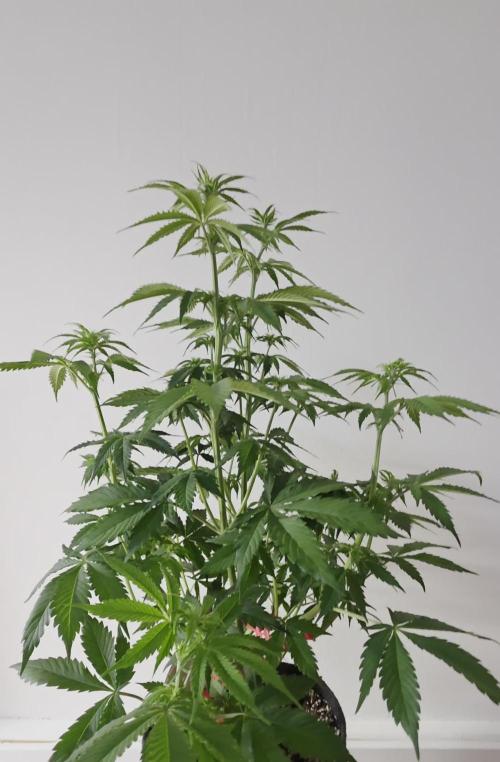
The ladies are doing great and growing well. I'm really happy with the progress so far. They have now reached 60 cm. I plan to install the Scrog net within the next few days to allow them to grow wider.
Likes
49
Share


@Kayotic
Follow
Raised the light a few inches to try to get more to the middle buds. Also retied down a couple branches for the same reason. You can tell where the middle and bottom ones are not getting enough. That smell!! 💜
Likes
16
Share


@Bigbankbossshit
Follow
Overall good week finally setup my double trellis net, I hate it because my room so small and I have to crawl all around to get anything done. Plants were looking good a few branches which are completely unnoticeable looked like they suffer from nutrient burn. Beside that we taking off. I’m expecting some significant changes in the coming weeks.


Likes
53
Share


@Mastr
Follow
Week 11 come along and she finished nicely I already flush her now i just feed her with water and bloombastic
and take off all fan leaves to bud recive more energy I will chop her down at day 75 so not long left
Today day 72 and guys she is ready but I don't wanna rush so let her 3 more days to get best results

Likes
8
Share


@Valleywestbuds
Follow
Final week at most! Going to keep a close eye on the important part from here on out. Smell has picked up big time over the last week. Almost there!

Likes
11
Share


@samuraifroggig
Follow
Look at the video Weds was an explosion of growth. I tried a higher ambient temp on Thursday to dry out the medium and see how she would respond growth seamed to slow so it's back to 70F mornings slowly bring it up to 78F-80F for mid day. Watering every 48 hours early morning when light comes on or right before, Friday was flush 20% nutes 2 gals. LST seamed to slow growth too so I just let it do its own natural thing.

Processing
Likes
23
Share


@drzoidberg
Follow
man these fastbud plants are awesome getting nice color on the gg#1 think it is getting very close to kull time for a couple of these girls the smell is amazing did not take pictures of the sour hound #2 because it is not flowering but she is in the videos
Likes
5
Share


@LittleBigTrees
Follow
Defoliated a bit more, feeding sugar royal and green sensation.
The smell is really coming through now.
