Likes
Comments
Share
We become aware at such times of man's wonderful ability to bring seemingly unrelated elements into harmonic balance, and receive a glimpse into a world where everything exists in conscious sympathetic attunement to everything else. When we listen to a piece of music that seems to strike a beautiful chord somewhere inside us, or view a painting that simply glows with harmonic awareness well executed, we probably do not spare much time to contemplate the wonderfully intricate combination of vibrations that our sensors make it possible for us to perceive. We tend to appreciate the relationship between the parts of something by an awareness of the harmony or dissonance of the whole. This ability enables us to say "what a beautiful house!" instead of "analysis has proven that this collection of building materials exhibits certain elements of harmonic proportion." While this ability to instinctively appreciate the beauty of true harmony has an important role to play in evolution, a more analytical understanding of the laws involved can be most useful. This is especially so if we wish to create works of art where each part exists in true harmony, not only with the other part of that particular whole, but with the universe within which the creator and the created exist. Everything vibrates. From the most dense matter to the most subtle cosmic rays, everything which our senses allow our thoughts to become aware of, can be specified in terms of wavelength or frequency of vibration. These two terms define the same thing, but from different points of view. The following are the approximate wavelengths of various energy carriers: Cosmic rays 0.000,000,001 mm Gamma rays 0.000,000,1 mm X rays 0.000,500 mm Ultraviolet rays 0.003 mm Visible light 0.006 mm Infrared 0.01 mm Sound waves 1 meter Radio waves 300 meters Violet light 400 nm to 450 nm Blue light 450 nm to 500 nm Green light 500 nm to 570 nm Yellow light 570 nm to 590 nm Orange light 590 nm to 610 nm Red light 610 to 700 nm 1 nanometer (nm) = 0.000,000,1 cm = 1/10,000,000 cm If a guitar string is plucked and we hear a sound, it is not too difficult for the human mind to associate this sound with the vibration of the guitar string. With color it is quite different. It is difficult for us to conceive that the color of a substance is not an inherent property of the substance itself, but an indication picked up by our senses of that substance's ability to absorb or reflect the light which happens to be shining on it at that moment. Neither the matter nor the light is colored. What happens is that the brain learns to differentiate between the frequencies reflected or transmitted by the substance the eyes are focused on. The same thing happens with sound. When we say "Oh! Listen, they're playing my favorite song," what we really mean is: "My brain has stored within it a particular pattern of frequencies. I have compared the new information being received with this stored pattern and have deduced the answer that the two patterns are similar within certain specified tolerances." The 'pleasure' involved could have something to do with our running the pre-recorded pattern at the same time, in 'sympathy' with the new pattern as it is received. The word sympathy describes very well our ability to appreciate color and sound. It also describes the reason behind certain elements of harmony. For instance, if a substance vibrating at 100 cycles per second (tone 1) is in the proximity of another substance vibrating at 200 cycles per second (tone 2), we could perceive, if we had the right equipment, a certain sympathetic relationship between the two. We will see from this that there is a uniform doubling of the first tone seen in the second. At various points along the waves, the two are the same in amplitude. At other points, they are at opposite poles to each other. This doubled frequency has more points of similarity to the original than any other frequency except the original itself. If the equipment we had available for measuring these two frequencies was a soundboard amplifier and a pair of ears, then we would hear what would sound to us like one tone. If we had the opportunity to hear one at a time, we would hear that although they sound the same, one is higher in pitch than the other. This characteristic of 'the same but different in pitch', musicians have called the octave. Any two tones produced where one has exactly doubled the frequency of the other is called an octave. Speaking in ratios, an octave would appear then as the ratio 2:1 or 1:2, depending on whether we are talking of an octave up or down. A single note produced by almost any instrument will contain more than one wavelength or frequency. It will have a dominant frequency, the wavelength of which we would call the note's 'fundamental' or 1st harmonic. It will also have a varying number of upper harmonics, gradually fading in intensity into infinity or silence. Natural harmonics always have the same pattern of intervals between them. The interval between the 1st and 2nd harmonic is a perfect octave; between the 2nd and 3rd a perfect fifth; between the 3rd and 4th a perfect 4th; and so on, the intervals becoming smaller and smaller until they lose any relationship with the western 12 tone scale as it exists at the moment. Just as an octave has certain elements of sympathy with its fundamental, so some intervals have been noted to be more perfectly in sympathy with the fundamental than others. The ratio of the 'perfect 5th' or interval of 7 semitones, as it occurs in the harmonic series, is 3:2 or 2:3, while that of the 'perfect fourth" is 4:3 or 3:4. All the tones in the western 12 tone scale can be expressed in terms of the ratio between the upper tone and its fundamental. This would seem to be an ideal way of generating a scale from any given fundamental and several attempts have been made to do this, the Pythagorean system being probably the most well known. Although when working with a single tone instrument playing on its own, the Pythagorean formula works wonderfully well, if we had several instruments tuned this way together and asked them to play almost any western music, we would find that at times they sounded quite out of tune to each other. The lack of flexibility of the various scale systems based on the harmonic series has led to what is known as the 'tempered' scale. This uses as its primary unit of interval the ratio of the octave or 2:1. It then proceeds to divide the interval between any fundamental and its upper octave into 12 smaller intervals by applying the ratio: two to the one-twelfth power, to one (21/12:1). This equals 1.059463094, so by multiplying any frequency by this number, we will obtain the tempered semitone next up from our fundamental. We will also find that any tone twelve semitones up from any other tone, in a scale generated in this way, will have exactly double the frequency. If we took the note middle C on a piano and halved the wavelength, we would have the note C one octave above. If we halved this, we would have the C above, and so on. However, within about 6 octaves, we would find that although a 'sound' was being produced, no human ear could perceive it. If we kept on going, halving and producing upper octaves of our fundamental C, we would proceed through the infrared band, into the visible light spectrum. If we happened to be outside during the day, we would, for one octave only, see the note C with our eyes. The next octave above would already be in the ultraviolet band, and outside the eye's sensitivity range. If we can think of color as being an indication of a substance's vibratory rate or wavelength, we may begin to see a relationship that could exist between the color and sound spectrums. The logical extension of what has so far been said is that there exists a scale in the color spectrum that corresponds exactly to the scale in the sound spectrum, each color tone being an octave of the equivalent note in the sound range. This is not the end of the story but only the beginning. If we can for the moment accept that any wavelength in one band has upper and lower octave stretching out to infinity, then the next question is 'fine, but what shall we use as our fundamental? A particular color? A particular sound frequency?' The musicians among us will probably say 'A 440'. This means that the note A should vibrate at 440 Hertz, or 440 times per second. They would tell us that this is standard pitch has been adopted by most orchestras around the world; pianos are tuned to it, instruments are constructed to formulas based on it, and so to them it would probably seem the most appropriate place to begin. Some of these musicians may know of the battle that is still raging with regards to this being the standard, but few would know why A = 440 Hz was chosen except that it worked when it was set to be a suitable compromise between the many different pitches in use at the time. 432 Hz is said to be mathematically consistent with the patterns of the universe. Studies reveal that 432 Hz tuning vibrates with the universe’s golden mean PHI and unifies the properties of light, time, space, matter, gravity, and magnetism with biology, the DNA code, and consciousness. When our atoms and DNA start to resonate in harmony with the spiraling pattern of nature, our sense of connection to nature is said to be magnified. Another interesting factor to consider is that the A=432 Hz tuning correlates with the color spectrum, while the A=440 Hz is off. Audiophiles have also stated that A = 432 Hz music seems to be non-local and can fill an entire room, whereas A=440 Hz can be perceived as directional or linear in sound propagation. Once you adopt the idea that sound (or vibration in general) can have an equalizing and harmonizing effect (as well as a disturbing effect), the science of harmony can be applied to bring greater harmony into one's life or tune to specific energies. There is a form of absolute and relative harmony. Absolute harmony can, for example, be determined by the tuning of an instrument. The ancients tuned their instruments at an A of 432 Hz instead of 440 Hz - and for a good reason. There are plenty of music examples on the internet that you can listen to in order to establish the difference for yourself. Attuning the instrument to 432 Hz results in a more relaxing sound, while 440 Hz slightly tenses up the body. This is because 440 Hz is out of tune with both macro and micro cosmos. On the contrary, 432 Hz is in tune. To give an example of how this is manifested microcosmically: our breath (0,3 Hz) and our pulse (1,2 Hz) relate to the frequency of the lower octave of an A of 432 Hz (108 Hz) as 1:360 and 1:90. It is interesting to note that 432 Hz was the standard pitch of many old instruments and that it was only recently (19th and 20th century) the standard pitch was increased. This was done in order to be able to play for bigger audiences. Bigger audiences (more bodies) absorb more of the lower frequencies, so the higher pitch was more likely to “cut through”. One of the oldest instruments of the world is the bell ensemble of Yi Zeng (dated 423 BC), tuned to a standard F4 of 345 Hz, which gives an A= 432 Hz. The frequency of 345 Hz is that of the platonic year! Similarly, many old organs are tuned in A=432 as well; for example, St. Peter’s Capella Gregoriana, St. Peter’s Capella Giulia, S. Maria Maggiore in Rome. Maria Renold’s book “Intervals Scales Tones and the Concert Pitch C=128 Hz” claims conclusive evidence that 440 Hz and raising concert pitch above scientific “C” Prime=128 Hz (Concert A=432 Hz) disassociates the connection of consciousness to the body and creates anti-social conditions in humanity. The difference between concert pitch A=440 Hz and Concert A=432 Hz is only 8 cycles per second, but it is a perceptible difference of awareness in the human consciousness experience of the dream we share called existence.
Likes
18
Share
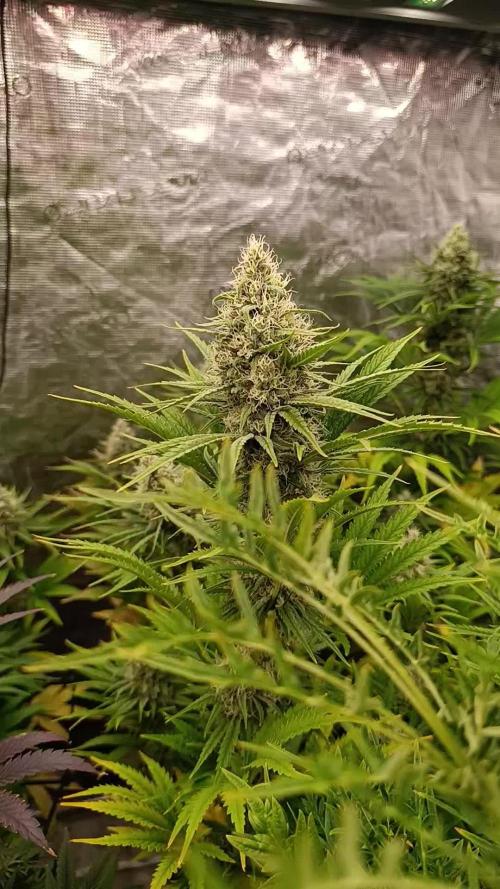
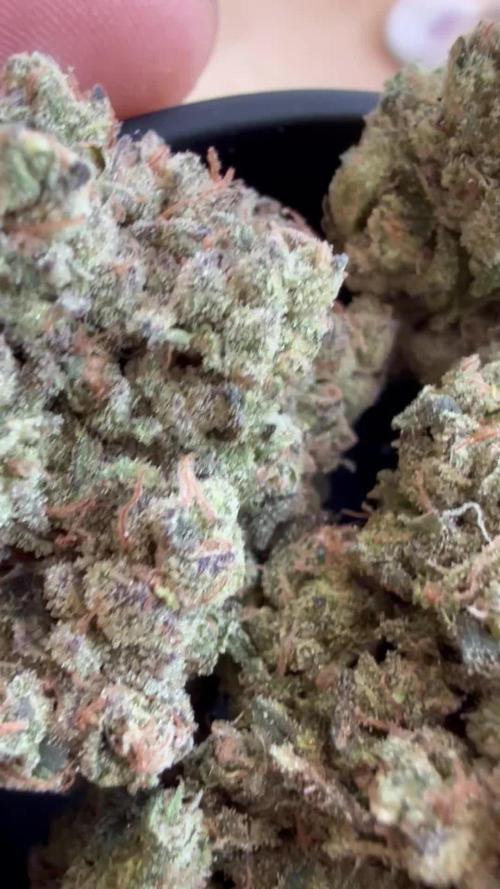
🌸 BlueBerry – Week 6 Flower Report Grower’s Journal | Zamnesia BlueBerry ⸻ 🌱 The Girls This Week Both BlueBerry ladies are now true queens, stretching big, stacking huge colas, and getting so heavy that yo-yos are holding them up. Without support, branches would fall under their own weight, which is a good sign of strong flower density but also a reminder of the importance of plant training. The frost continues to thicken, and the trichomes look spectacular up close, sparkling in photos and videos like tiny glass forests. ⸻ ⚠️ Trouble in Paradise – Bud Rot But with big flowers also come risks. This week, Bud Rot (Botrytis cinerea) showed up on BlueBerry #2. • Conditions: High humidity (65%+, sometimes higher) combined with dense flowers created the perfect environment for rot. • Detection: Early spotting saved the plant. We caught it in time before it spread too far, but it still left its mark. • Action Taken: • Carefully removed every infected area. • Isolated affected material to prevent spores spreading. • Improved airflow around the canopy by moving plants and adjusting fans. 👉 For anyone learning, here’s a great educational read by Zamnesia: Bud Rot Grower’s Guide. https://www.zamnesia.com/grow-weed/563-bud-rot-cannabis-grower-guide ⸻ 🌿 Bud Rot – What It Is & How to Prevent It Bud Rot is caused by the fungus Botrytis cinerea. It thrives in humid, poorly ventilated conditions, especially inside large dense colas where moisture can hide. How to prevent: • Keep humidity lower during flower (ideally 40–50%). • Maintain constant airflow across and through the canopy. • Defoliate strategically to open airflow inside dense plants. • Avoid watering late in the cycle to reduce night-time moisture. What to do if it appears: • Act quickly. Remove all affected buds immediately. • Sterilize scissors/tools between cuts to avoid spreading spores. • Keep monitoring daily — once it appears, it can spread fast. Bud Rot is every grower’s nightmare, but also one of the most important lessons in environmental balance. ⸻ 💡 Lessons Learned (and Moving Forward) This 8x8 setup is teaching us a lot. For the next run, I’ll be redesigning the airflow system entirely to prevent these issues. For now, the plants are still thriving, and catching the rot early means we can continue with this grow. Big flowers are a blessing, but they require serious air control. We’re already working on solutions, including an AC and new placement strategies, which I’ll cover in more detail on YouTube. ⸻ 📸 The Beauty Side Even with this challenge, the girls are stunning: • Massive colas held up by yo-yos. • Sparkling trichome close-ups showing the magic of Week 6. • Heavy branches bending under the weight of their own production. The resilience of BlueBerry genetics shows through, they continue to push strong, healthy growth despite the setback. ⸻ 🔮 Looking Ahead – Week 7 What to expect: • Further bulking and resin production. • Stronger terpene expression, the BlueBerry scent growing richer. • More vigilance against humidity and bud rot, especially as flowers keep swelling. What not to expect: • Major structural changes. From here, it’s all about ripening and finishing strong. ⸻ 💬 Final Thoughts Week 6 has been both a celebration and a reminder: heavy, beautiful flowers need perfect conditions to stay healthy. Bud rot may have appeared, but it was caught, managed, and turned into a learning moment for this run and for future ones. The BlueBerry ladies are still shining, still heavy, still legends in the making. This is why we grow, why we learn, and why we share, because even challenges make the story richer. 📲 Don’t forget to Subscribe and follow me on Instagram and YouTube @DogDoctorOfficial for exclusive content, real-time updates, and behind-the-scenes magic. We’ve got so much more coming, including transplanting and all the amazing techniques that go along with it. You won’t want to miss it. • GrowDiaries Journal: https://growdiaries.com/grower/dogdoctorofficial • Instagram: https://www.instagram.com/dogdoctorofficial/ • YouTube: https://www.youtube.com/@dogdoctorofficial ⸻ Explore the Gear that Powers My Grow If you’re curious about the tech I’m using, check out these links: • Genetics, gear, nutrients, and more – Zamnesia: https://www.zamnesia.com/ • Environmental control & automation – TrolMaster: https://www.trolmaster.eu/ • Advanced LED lighting – Future of Grow: https://www.futureofgrow.com/ • Root and growth nutrition – Aptus Holland: https://aptus-holland.com/ • Nutrient systems & boosters – Plagron: https://plagron.com/en/ • Soil & substrate excellence – PRO-MIX BX: https://www.pthorticulture.com/en-us/products/pro-mix-bx-mycorrhizae • Curing and storage – Grove Bags: https://grovebags.com/ ⸻ We’ve got much more coming as we move through the grow cycles. Trust me, you won’t want to miss the next steps, let’s push the boundaries of indoor horticulture together! As always, this is shared for educational purposes, aiming to spread understanding and appreciation for this plant. Let’s celebrate it responsibly and continue to learn and grow together. With true love comes happiness. Always believe in yourself, and always do things expecting nothing and with an open heart. Be a giver, and the universe will give back in ways you could never imagine. 💚 Growers love to all 💚
Likes
31
Share
They looking good, but temp is a little too high. It is what it is One of the plants (In front to the left) is more frosty, with less amber pistils. But overall the trichomes are starting to go from crystal to cloudy. Which is my timing for start flush. 24/7 -Temp 23-26day/21-24night -47%RH (2+-) 25/7 Water day* start of flush Gave them till run through with plain ph balanced water, and topped it off with some light nutrients-mixed water. -Temp 23-26day/21-24night -49%RH (2+-) 26/7 -Temp 23-27day/21-24night -47%RH (2+-) 27/7 -Temp 23-26day/21-24night -47%RH (2+-) 28/7* Water day / flush -Temp 23-27day/22-24night -47%RH (2+-) 29/7 -Temp 24-27day/22-24night -47%RH (2+-)
Likes
4
Share
I did her second tie-down on day 22 actually. Day 24- I’m okay with the fan leaf laying on the surface for *now.* Just because I live in a high, dry desert with a consistent RH at around 20-25%. And also, because the top quarter inch of soil is dry. However I will probably be propping it up with something tomorrow morning. Day 25- finally I decided to fold down the rim of the pot for more light!
Likes
5
Share
@Ninjabuds
Follow
The pound cake auto is really taking off. I’m happy I didn’t top the plant and just let it do its thing. It’s gonna have big long bugs all over the whole plant is just gonna be nugs. Not sure what I did with this plant but I got the roots perfect this time and it’s showing it the growth of the plant
Likes
2
Share
@vilahaze
Follow
primera semana despues de la germinacion , las fotos son justo del dia despues del transplante , le puse mykos microrizas y velokelp de remo
Likes
1
Share
So where do I start they are both the same strain but just growing completely different. The first picture is super frost growing strong while the second still seem to be in the beginning of flower stage. We will just keep an eye on it from week to week
Likes
47
Share
Hemos cortado el armario mix strains y hemos catado algo de estas magnificas cepas que pusimos del banco bsf seeds. Han dado unas flores espectaculares, muy duras y con olores muy intensos a frutos rojos. Sin duda haremos más catas y la iremos documentando. De momento un 10 .
Likes
6
Share
My gorilla melons transitioning into flower this week. Not much change in height yet but I will get a good measurement next week. I haven't had to water this plant much at all this whole summer but now that I have the canopy up top I'm gonna have to start watering more. Last day of this week got a mix of compost tea with some liquid fish. It got around 8 gallons.
Likes
6
Share
More Big changes this week! The flowers seem to be growing and getting bigger every day - I anxiously look in my tent each morning to see the new developments and there seems to be new changes each time - very cool to smoke a bowl in the morning and go check your garden! I was able to get some pretty cool photos with my macro lens - I found the ONLY flower site and first signs of red colors on one of the lower flowers of Cherry Gorilla #3 - I was able to get some pretty sweet pics of that. If you have a smart phone or tablet, definitely check out some of the macro shots and pinch/zoom in! I did add a fan on the bottom blowing underneath the canopy, in efforts of opening up the stomata of the ladies. We are finally having our first relatively hot week up here and it has absolutely tested my environment management skills - AC, Dehumidifier, Fans, Window open and close - this silly temp VPD and humidity control dance all day will not be too much longer, very much looking forward to the lower temperatures of the fall and winter months! When opening up the tent - you are blasted with a unfamiliar smell that can be explained as a sweet dank. I have touched some of the lower buds on each of the plants and WOW! - They are SWEET and Cherry flavor like crazy - The GMO is just as I expected - Garlic Gas Sweetness when touching her leaves - You are left with a very sticky goo on your finger that absolutely smells of its particular strain. Again - I could not be happier with the garden, and especially this being my first grow ever. Looking forward to more changes and absolutely some input from the Grow Diaries Community!
Likes
8
Share
Both plants grow with a nice healthy green color and develop well. Barbarian (=AK-47 x Barabara Bud) plant # 2 is a little taller than plant #1 at this time, but both show nice side-branching and overall growth. They love the Advanced Nutrients feeding schedule and are well protected inside the Secret Jardin grow tent.
Processing
Likes
57
Share
11/24: Both Black Jacks finally turned the corner and are looking like they'll produce for me.👍 The big Zkittlez just keeps on stretching and outpacing most of the other plants....looks like a supercropping is in her immediate future. Kinda sux, because she's got picture-perfect, textbook, conifer structure😑 11/25: Had to raise the lights today about 5 inches to accommodate the big Zkittlez and a Sucrose Overdose..couldn't bring myself to ugly her up yet..maybe everybody else will catch up (ya right) For now, I'm using platforms of various heights for the shorter plants, to keep the canopy level.
Likes
4
Share
Left her more than 15 days drying that she lost a bit of her 10 day terpines... But still I could let her finally curing. Also i think I pushed the plant a bit too much at the end, I think she needed less light a bit more nutrients until the end. Fun plant to grow, interesting terpines exactly from a the mix of sweet critical taste with citrus kinda skunky side. I'm still more of a fan of RQS Critical auto, but both are very good, easy and fun plants to grow. Effects quite uplifting, creative and trippy, but mild as it should for a 15%. THC plant.
Likes
48
Share
@DreamIT
Follow
💐🌟HESI contest🌟💐 💮 1.3... 💮 2.3... 💮 3.3... 💮 4.3... 💮 5.3 more fertilized, second week of flowering, yeah 💮 6.3 💮 7.3 ____________________________________________________________________________________ ❕❗❕ Do you already know HESI products? Take a look at the details You will be fully satisfied 😉 👀 https://www.hesi.nl/en/products 📜 A look at the details of what I'm growing 📜 🍓🍌🍇Strawberry Banana Grape by Seedsman🍇🍌🍓 ⚧ Gender ▪️ Feminised ➰ Genes mS 🎄 Genetics ▪️ Strawberry x Grape x Banana OG 🚜Harvest ▪️ 400 - 500 g / m² 🌷Flowering ▪️ 60 - 65 days ✨THC ▪️ 15.0-20.0% ✅CBD ▪️ 1.0% 🏡Room Type ▪️ Indoor 🌄Room Type ▪️ Outdoor 🕋Room Type ▪️ N/D 🎂Release Year ▪️ 2019 __________________________________________________________________________ 📷🥇 Follow the best photos on instagram 🥇📷 https://www.instagram.com/dreamit420/ 🔻🔻Leave a comment with your opinions if you pass by here🔻🔻 🤟🤗💚Thanks and Enjoy growth 💚🤗🤟
Likes
136
Share
~_~_~_~_~_~_~_~_~_~_~_~_~_~_~_~_~_~_~_~_~_~_~_~_~_~_~_~_~_~_~_~_~_~_~_~_~_~_~_~_~_~_~_~_~_~_~_~_~_~_~_~_~_~_~_~_~_~_~_~_~_~_~_~_~_~_~_~_~_~_~_~_~_~_~_~_~_~_~_~_~_~_~_ 1/15/22 😻Week 5 of veg and things are looking good! I didn't know how I wanted to train these so my husband's suggested we top 2 plants and low-stress the other 2.. I went a little too heavy with their last feeding, no burned tips yet but 2 of them are very dark, we'll be doing water only for these this week..there is some minor discoloration on a couple of the lower leaves nothing major but something we're watching..we'll update again midweek..thanks for all the love Growmies ❤️🌱 ⚡Mars Hydro/SP-3000⚡ Specifications ⚙️: Diodes: Samsung LM301B / Osram 660nm (960 total!) Driver: Meanwell 300watt 🔌 (300W±5% @AC120V-277V) PPF: 824umol/S ☢️ PPE: 2.8 µmol/j 〰️〰️ Lifespan: >50k hrs ⌛ Weight: 10.1 lbs (4.6kg) Veg Coverage: 3 x 5 ft 🌱 Flowering Coverage: 2 x 4 ft 🌼 -The SP-3000 uses an aluminum heatsink (no fan) and the driver can be placed outside the tent 🌡️⬇️ -IP65 waterproof ratings, tolerant to high humidity grow environments 💦 .. -Up to 15 can be daisy-chained together and all controlled from a single light 💡~💡~💡~💡~💡 ~_~_~_~_~_~_~_~_~_~_~_~_~_~_~_~_~_~_~_~_~_~_~_~_~_~_~_~_~_~_~_~_~_~_~_~_~_~_~_~_~_~_~_~_~_~_~_~_~_~_~_~_~_~_~_~_~_~_~_~_~_~_~_~_~_~_~_~_~_~_~_~_~_~_~_~_~_~_~_~_~_~_~_ 1/18/22 Things are good 😺👌..New growth seems to be coming in fast on the 2 plants we topped...much faster growth than we've seen up to this point..all plants seem happy and all have a great color (after working out my slight overfeeding )..we've been running the MarsHydro near the top of the tent the entire grow as a test and its still more than adequate. .we don't have a light meter but we do have some crazy tight node spacing to confirm lol...I still say these plants are a little on the small side but they seem to be growing faster now..I'm pretty sure leaving them rootbound in cups didn't help their development...I think they're finally becoming adjusted to their new homes and we'll see some explosive growth in the coming week 💡🌱... fingers crossed 😺🤞 ~_~_~_~_~_~_~_~_~_~_~_~_~_~_~_~_~_~_~_~_~_~_~_~_~_~_~_~_~_~_~_~_~_~_~_~_~_~_~_~_~_~_~_~_~_~_~_~_~_~_~_~_~_~_~_~_~_~_~_~_~_~_~_~_~_~_~_~_~_~_~_~_~_~_~_~_~_~_~_~_~_~_~_ 01/19/22 AHHHHHH!!! I DID IT AGAIN!! Kicked my timer power after watering yesterday and put these into about 14hrs of darkness 😥.. lights are back on, hopefully they didn't notice lol.. ah well these things happen and I'm sure they'll be just fine ❤️🌱 ~_~_~_~_~_~_~_~_~_~_~_~_~_~_~_~_~_~_~_~_~_~_~_~_~_~_~_~_~_~_~_~_~_~_~_~_~_~_~_~_~_~_~_~_~_~_~_~_~_~_~_~_~_~_~_~_~_~_~_~_~_~_~_~_~_~_~_~_~_~_~
Likes
11
Share
@Sauce_XL
Follow
3.9.2024: Start of week 8. Day 50 from seed, 46 from sprout. Nothing doing today, plant is healthy and getting fatter by the day. Plucked a few leaves but thats it. 3.10.2024: Day 51. Fed 1/4 strength fox farm trio mixed w/ calmag into over a gal of 6.5ph water. Gave roughly 3 liters of the solution. Runoff ppm is finally under 1000. Might increase nutes to 1/2 strength moving forward. I'm no pro when it comes to taking pictures so its hard for me to get clear, detailed shots of the nugs. 3.11.2024: Day 52, 48 from sprout. Moving along nicely. Some nice purple hues here and there. Still very "hairy." 3.12.2024: Day 53. Fed 1/4 strength, roughly 96oz at 6.4ph. I broke the feed/water/feed schedule and fed twice in a row. Also did some lite defoliation on the bottom fan leaves that weren't getting light. 3.13.2024: Day 54 from seed. Plant is doing its thing. 3.14.2024: Day 55. Fed again at 1/4 strength, 96oz at 6.6ph. Runoff ppm was 880. 3.15.2024: Day 56 from seed, 52 from sprout.