


Processing
Likes
Comments
Share


@Kitties_and_Colas
Follow
I'll be flipping them soon, i dont typically wait this long..i just need to get the closet set back up for the other seedlings/strains..the 3 Pineapple Express in the back are a week older than the 2 in the front..i like to give them a shot of bloom nutrients 4-5 days before flipping to flower and there's a good chance this is the last week of veg for the Pinapples..

Likes
7
Share

@georgesa
Follow
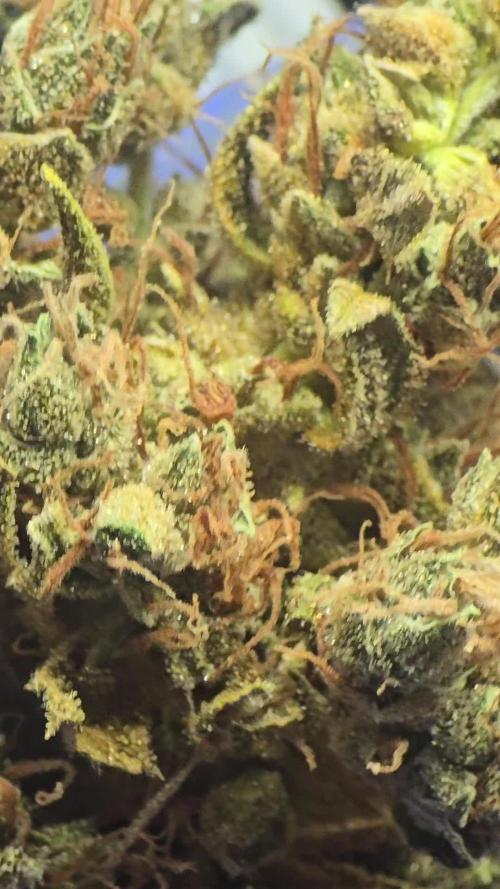
Super hazy goodness!!
Like growing nevils haze, but with the Yields and shorter flower time of Casey Jones!
Would recommend this, or any of the other Haze x CJ crosses to scratch that old school amsterdam itch!


Likes
1
Share


@PalmaGrow
Follow
12 - 18 noviembre
Realizamos poda apical y dejamos crecer libremente quitamos únicamente hojas grandes

Likes
57
Share


@Ultraviolet
Follow
The cannabis strain Grape Guava can be a purple strain, depending on its specific phenotype and genetic makeup. While not all phenotypes of Grape Guava are purple, some variations, such as the Zatix Grape Guava, are noted for their striking purple appearance due to the genetic expression of anthocyanin pigments.
Grand Cru Genetics is a cannabis seed bank that emerged in 2018 from a group of breeders in Madrid to provide a satisfactory experience to all cannabis users.
"If we do things, we do them well. Due to our experience in the sector and our taste for excellence, we know high quality and we seek it in everything we propose and do."
"We have a “cultivate without giving up” philosophy that we apply to everything we do. We do not give up, we are friends of change, and we adapt as necessary in a still restricted sector."
"We speak relaxed because we know how to relax. We are not intense or preachy; we accept everyone as they are, and we understand that farming is not for everyone. But for those who do, we are here to accompany you. We like to do it and tell it. We are experts in the field because we are the first to do it. We speak from experience and connect with others because we share the passion for cultivation."
"Cannabis has the ability to show us a world of possibilities. When you cultivate and live its growth process, you enjoy a path full of emotions and not just the final destination. At Grand Cru we find beauty in small things. We are attentive, observant, detail-oriented and aware of everyday things, and we savor them without rushing."
In a garden of green, Grape Guava gleams,
With its fruity aroma, enchanting dreams.
Clusters of grapes, guava's sweetness ignite,
A strain so divine, in purple and white.
Euphoria whispers, a lush fruity haze,
Grape Guava's embrace, a tranquil daze.
Off and away.@1400ppm. The increased CO2 allows plants to thrive at higher temperatures, which in turn necessitates higher humidity to maintain the ideal VPD for healthy growth and transpiration. 80F -5F = 75F LST with 70% RH = 0.72 kPa. Higher temperatures and humidity promote rapid growth, nutrient uptake, and photosynthesis while maintaining a lower stress level. Temperature influences the rate of enzymatic reactions involved in aerobic respiration. Enzymes, such as those involved in glycolysis, the Krebs cycle, and the electron transport chain, work most efficiently at an optimal temperature range. In low temperatures, enzymatic activity will slow down, thus reducing the rate of aerobic respiration. In high temperatures, enzymes can become denatured, thus impairing their function and stopping the process of aerobic respiration. Glucose is the primary fuel for aerobic respiration. The rate of aerobic respiration increases with the availability of glucose, as it is the starting point for glycolysis. If glucose levels are low, cells may rely on alternative energy sources such as fatty acids or amino acids , but these processes may yield less ATP or be less efficient. To determine this effect, carbon dioxide volume was measured (as carbon dioxide is an output of aerobic respiration)
18/6 with the 6 being IR. The near infrared (IR-a) borders around 700nm up to 1400nm @ photon par flux density of 1.8 instead of darkness, keeping temps overnight a neat 77F-80F.
I think of my tent as a lung. What goes in must come out. When the rate of air going out exceeds the amount of air coming in, it creates a negative pressure. Tent concaves (bends in). If set up correctly, the RH will begin to drop slowly to the desired level I set, and the extraction turns off when it reaches the desired RH. The plant, as it performs cellular respiration, will always release more water into the air; therefore, the RH% of the tent overnight will increase, as long as oxidative phosphorylation is occurring. As soon as the RH% creeps back up to 55%, the extraction turns back on, over and over. This creates a strong pressure differential, which will work wonders with mass flow. Replicating high and low-pressure fronts in nature. Critical for oxygen diffusion at the critical time of peak cellular respiratory function..
Moisture will not transfer from a saturated atmosphere to another if that air is already at or above its saturation point, meaning the air can't hold any more water vapor. Once I understood that water is produced as a by product during cellular respiration, specifically at the very end of the electron transport chain (ETC) where electrons are finally transferred to molecular oxygen, the higher the RH of the air, the more resistance there is for more moisture to be added to that environment, and effects the ease with which it does so. But none of that water comes from the pot; it's pulled from the air. If you run high daytime RH, your medium/pot is 100% reliant on transpirational root pull to move water. ZERO evaporation happens across the atmosphere if the tent air has high RH%, the medium cannot release its water through evaporation. Once a canopy develops, light no longer slowly wicks and evaporates from the topsoil. The Soil-Plant-Atmosphere Continuum (SPAC) describes the continuous pathway and process of water movement, driven by a gradient in water potential, from the soil, through the plant's roots, stem, and leaves, and finally evaporating into the atmosphere through transpiration. There is evaporation, there is transpiration, and then there is evapotranspiration; Evapotranspiration (ET) is the combined total of two processes: evaporation (water lost directly from soil and surface water into the atmosphere) and transpiration (water released from plants to the atmosphere through their leaves). Evapotranspiration represents the total amount of water that moves from the medium into the air. There is no such thing as a medium with too much water, only a medium that retains too much for too long.
The water must always flow efficiently from one atmosphere(Medium) to another(Air) in a timely manner. Moisture is a critical factor for bacterial growth and decay. Dictating how long it's allowed to sit in any one location for any given period is a key preferred control. To ensure a net reduction in a bacterial population, the rate of removal (ET) must exceed the rate of bacterial growth (decay rate), which is often modeled as a growth rate for the specific bacterium under the given conditions. By optimizing daytime VPD, we also optimize conditions for bacterial growth to explode exponentially above 77°F.. If water is allowed to sit in a medium without an escape within a timeframe, nothing good will happen. IF High RH is maintained overnight as well as during the day, placing 100% of water movement at the behest of daytime transpiration, roots can only pull where they can reach, and if soil is compressed above a certain point, moisture will become trapped in a medium with no way of moving day or night. This will begin the countdown for decay to take hold. When water stagnates in a medium, it loses oxygen, creating anaerobic conditions that foster the growth of harmful microorganisms like bacteria and fungi, which can produce toxins and disease vectors.
Thigmomorphogenesis, the process by which plants respond to mechanical stimuli like touch by altering their growth and development, results in significant morphological changes to improve survival against mechanical perturbations. This complex response involves sensing touch and initiating physiological and genetic responses, leading to changes in form and structure over days or weeks. The process is triggered by physical forces such as wind, rain, or touch. Plants adapt to these stimuli by changing their shape and structure, which may include slower growth, thickened stems, or altered leaf development. Plants possess sophisticated mechanisms to detect even subtle mechanical stimuli and initiate responses. A variety of molecules, including calcium ions, jasmonates, ethylene, and nitric oxide, are involved in signaling these mechanical inputs. Touch can induce the expression of genes that encode proteins for calcium sensing, cell wall modification, and defense mechanisms. A plant exposed to constant wind may become shorter and sturdier. A plant that is touched frequently might grow more slowly to conserve energy and develop thicker cell walls. These changes increase a plant's resilience and ability to survive in harsh environments.
Let's get Thiggy with it.
Likes
6
Share

@Hempcules
Follow
WEEK 7
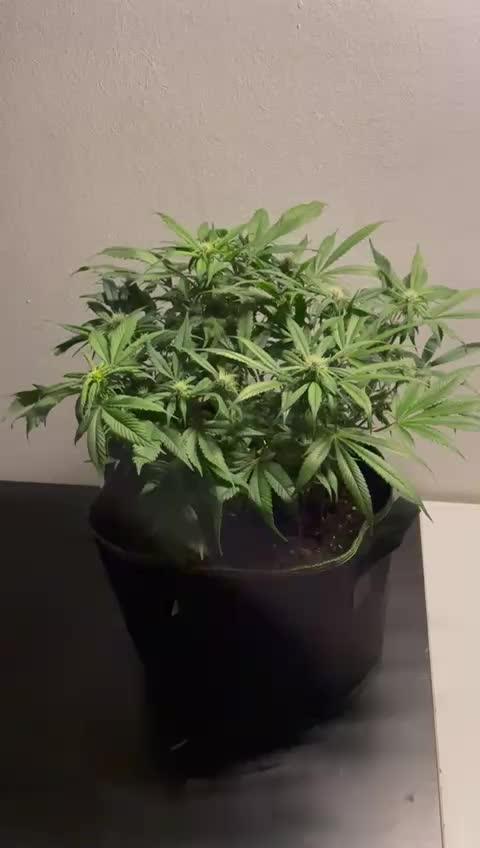
My plant is now well into flowering, but hasn’t stretched much so far. That might be due to the large number of shoots that have developed. Still, there’s already a decent amount of visible buds, which makes me really happy. I expect she’ll gain a bit more height, but overall she’ll likely stay compact and bushy.
I’m satisfied and excited to see more of what’s to come.
This week, my lamp ran at 600 PPFD, and I watered once with plain water and once with nutrient solution.

Likes
1
Share


@HumboldtHomegrown
Follow
Bottomed the plants on day 22
Over three weeks into flower and they’re still stretching but starting to slow down
nice pistils forming
I like the way she is stacking up
Likes
7
Share


@kanabise
Follow
Rinçage a l'eau de ville 1 semaine avec juste un ajustement du ph
0.6 ec et bientôt les récoltes les boyzz
la pulvérisation de purin d'ail pour prévenir les acariens
j'ai du accroché des ficelles parce que les têtes étant trop grosses

Processing
Likes
21
Share


@LittleBigTrees
Follow
The plants were so crowded I decided to put them into a Larger tent to allow some light to the lower bud sites and to help lower the humidity amongst the plants. I'm sure they will love the extra space.
The light has now been raised 20cm (20cm taller tent)
Allowing me to turn out right up which is 45000 lux in the centre right below it.
I will up the bloom to 2ml/l this coming week.
Likes
13
Share


@Skunk_Life85
Follow
She only streached during week 3. She has almost doubled in size. Medium nodal spacing. She is super healthy. No deficancys or issues. Glad I mainlined her. She is coming along nice, blushing out well. All the buds are level in the canopy. Stem is sturdy and thick, for the fat heavy buds to come(hopefully🤞) 😁😁😁. She is a little slow to start flowering but some of the best bud takes time to grow.#worththewait

Likes
2
Share


@KEVS_BEST
Follow
Woche 2 - Weiteres Wachstum und Vorbereitung auf das finale Umtopfen
In der zweiten Woche wurde die Wassermenge schrittweise erhöht, um dem wachsenden Bedarf der Pflanzen gerecht zu werden. Ich habe die Bewässerung auf 300 ml alle zwei Tage erhöht, weiterhin ohne Düngerzugabe. Die beiden Sherbzooka Ladies ernährten sich noch vollständig von den in der Biobizz Light Mix Erde vorhandenen Nährstoffen.
Am 20.04.2024 wurde die erste Düngerladung Canna Terra verabreicht, mit einem Verhältnis von 10 ml auf 10 Liter Wasser. Der pH-Wert des Wassers lag bei 5,9 und der EC-Wert betrug 1,0. Die Pflanzen zeigten keinerlei Symptome von Mangel oder Überschuss.
Am 21.04.2024 wurden die Pflanzen abends in ihre finalen 9-Liter-Töpfe umgetopft. Die Pflanzen waren sichtbar gesund, kräftig und zeigten ein starkes Wachstum. Die durchschnittliche Temperatur blieb sehr stabil, und die Luftfeuchtigkeit wurde weiterhin manuell erhöht. Dazu habe ich täglich 500 ml Wasser in tiefen Tellern, verteilt auf vier Teller und fünf Handtücher, verwendet, um die Feuchtigkeit zu regulieren.
Die Beleuchtung war fest eingestellt: Das Licht ging um 06:40 Uhr an und schaltete sich um 00:40 Uhr aus, was den Pflanzen einen stabilen Tag-Nacht-Rhythmus gewährte. Insgesamt verlief die zweite Woche sehr erfolgreich, und die Pflanzen waren bereit, noch weiter zu gedeihen.
ENGLISH
Week 2 - Continued Growth and Preparation for Final Transplant
During the second week, I gradually increased the amount of water to match the plants' growing needs. I raised the watering amount to 300 ml every two days, still without any added nutrients. The two Sherbzooka ladies continued to thrive on the nutrients provided by the Biobizz Light Mix soil.
On April 20th, 2024, the first dose of Canna Terra nutrients was given, with a ratio of 10 ml per 10 liters of water. The pH of the water was 5.9, and the EC level was 1.0. The plants showed no signs of nutrient deficiency or excess.
On the evening of April 21st, 2024, both plants were transplanted into their final 9-liter pots. The plants remained visibly healthy, strong, and showed significant growth. The temperature stayed very stable, and I maintained the humidity manually by placing 500 ml of water daily across four plates and five towels, which helped regulate moisture levels in the room.
Lighting was kept consistent, with lights turning on at 6:40 AM and off at 12:40 AM, providing a steady day-night cycle. Overall, the second week was a great success, with the plants ready to continue thriving.

Likes
8
Share


@Sur_cannabico
Follow
Estas niñas dieron un “estirón” bien bueno. Después de que empezamos a subir la dosis de alimento se noto el crecimiento vegetal más acelerado.
Además aplicamos king crab ( bacterias de greatwithemyco) para potenciar el desarrollo de raíces ! Y se nota 👌🏻
Ya están con un pan de raíces bien fuertes por lo tanto, se van de trasplante a maceta de 7L.
Likes
4
Share


@Santica_Garden
Follow
(sigh) Disaster! But still we keep on growing 😅 I have uploaded a video for you guys with all the information, any questions just ask away guys 👍🏾🔥👊🏾😎


Likes
23
Share


@XperencdGmanXG
Follow
I've got another clone.of this in the seedling station getting read for the next grow cycle. Once that is done I'll let this pheno die off and try more tfuck seeds see what other phenos pop.

Likes
15
Share


@WEEDMANconnect
Follow
So week 15 and she’s been chopped she’s is massive and she smells great the colour oof her is mesmerising I can’t wait to smoke her 🔥🔥🔥💨💨let these hang for 5 days then started removing buds from stalk and gave her a little trim I’ll leave her on nets for a few more days before putting her in jars it’s taken hours to get through these two plants some parts Easyer to trim than others buts it worth the hard work in the end the colours are amazing and the smell is ridiculous so sweet leaves my mouth watering the buds are very dense aswell very happy with her 🍒🍒🔥🔥🔥💨💨💨💨🍒🍇🍇

Processing
Likes
15
Share


@HisHope
Follow
8/31 Week 7 and the damned tent is full .... such problems err?
25 sq ft of green, did not expect this really was hoping the extra space would allow more plants but this is full on 5
Plants doing well just trying to make em all fit
Nuets remain as is
These girls be a growin!
Defoliation to try and get they to fit in the tent a bit easier, removed fan leaves.
9/1
Upped PK to 2ml/g the cotton balls have begun
Both hit 30" tonight and are becoming exceptional plants
9/2 Still stretching but seems to be slowing now 31" both plants
9/4
Major defoliation cleaned bottoms middle tops get the buds in light and help them fit in the tent better.
Still hitting about 1 inch-ish a day nut seem to be slowing

Likes
Comments
Share



Likes
5
Share


@DopeLeaves
Follow
I've added a video review about this strain, and here's the information about Beary White from mephistogenetics.com:
-Beary white is a medium sized variety, she doesn't veg for too long before rapidly entering the flowering phase. She has a nice balance of resin coverage on both leaves and flowers. Flowers grow nicely compact and the quality is great. She is a lovely all-rounder in many aspects.
-Effect - Strong, Happy, relaxed, but not too inda-couch.
-Medicinal Benefits - Great strain for pain and stress relief.
Thank you so much for the seeds to grow this great tasting strain.
@MephistoGenetics #MephistoGenetics | October 2017000

Likes
14
Share


@FourVentiFarms
Follow
28th week for critical
the critical was very resistant, very strong but had like 50 seeds maybe for stress or defected seed
Likes
56
Share


@nonick123
Follow
Día 22 (11/11) Las plantas muestran pequeños puntos / zonas marrones pero... Don't panic! It's Organic!
Dejaré que el proceso del Super Soil de BioTabs siga su camino tal y como indica el manual de BioTabs!
Ajusto LST a CBD Auto 20:1 #2 aplicando una nueva atadura a la punta, que ya se estiraba hacia arriba 24 horas después! 💥😍
La idea es NO aplicar más LST y dejarla que crezca de forma natural a partir de ahora
Tal vez solo ir recolocando las ramas laterales para que no crezcan demasiado juntas, porque no quiero estresarla y que ralentice su crecimiento...
Día 23 (12/11) Subo a DLI 40
Pequeños ajustes de LST en las ramas laterales a CBD Auto 20:1 #2 para crear una estructura homogenea
No voy a volver a aplicar LST a la punta, voy a dejar que crezca de forma "natural" a partir de ahora
El resto de plantas están creciendo muy bien!
Riego con 750 ml H2O RO a CBD Auto 20:1 #2. El resto no necesitan riego
Día 24 (13/11) Riego todas las plantas con 750 ml H2O RO
CBD Auto 20:1 #2 se muestra sedienta y vuelve a necesitar 750 ml de H20 RO tras solo 24 horas desde el último riego!
Día 25 (14/11) Pequeños ajustes de LST en CBD Auto 20:1 #2
Parece que los puntos / zonas marrones se aceleran en todas las plantas excepto en CBD Auto 20:1 #1...
Día 26 (15/11) LSD-25 Auto & OG Kush Auto empiezan a mostrar muchas zonas marrones y las hojas inferiores se empiezan a retorcer...
Día 27 (16/11) Riego con 1 litro de H2O RO
El area técnica de BioTabs me confirma que lo que muestra las plantas es una quema de nutrientes... 😢
Su recomendación es regar SÓLO con agua la siguiente semana (hasta el día 35 por lo menos)
Día 28 (17/11) LSD-25 Auto & OG Kush Auto se muestran muy afectadas por la quema de nutrientes... Una pena porque estaban creciendo muy bien hasta ahora...
Después de hablar con BioTabs, parece que el error ha sido aplicar el Boom Boom Spray demasiado temprano (en día 21) cuando las plantas tenían suficiente nutrientes y acababa de añadir la 2ª (y ultima) Tab al sustrato...
Tengo que seguir aprendiendo que con el SuperSoil: MENOS ES MÁS, MENOS ES MÁS!
A seguir regando SOLO con agua los próximos días...
CBD Auto 20:1 #2 todavia no muestra el sexo (pre-flores)... es algo extraño...
💦Nutrients by Bio Tabs - www.biotabs.nl/en/
🌱Substrate PRO-MIX HP BACILLUS + MYCORRHIZAE - www.pthorticulture.com/en-us/products/pro-mix-hp-biofungicide-plus-mycorrhizae
"GDBT420" 15% DISCOUNT code for the BIOTABS Webshop https://biotabs.nl/en/shop/
