


Likes
Comments
Share

@Mxlan10
Follow
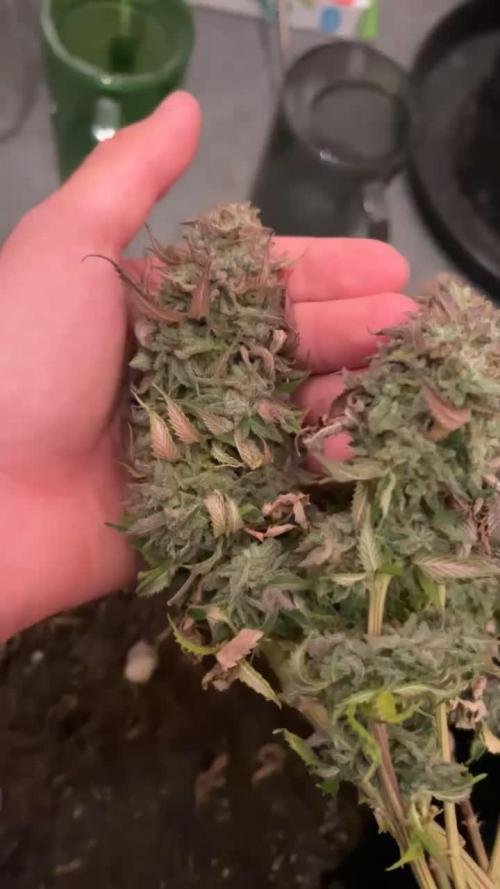
Die Pflanze blieb insgesamt ziemlich klein, hat aber dicke Buds produziert. Leider farblich nicht so besonders wie ich das von einem Doja Strain erwartet hätte. Auch der smell ist nicht wirklich exotisch. Eine Sorte die wahrscheinlich nicht so schnell wieder angebaut wird.


Likes
47
Share


@Northern_Ent
Follow
Sep 7: what a great plant. Totally love how it’s going. Flowers keep getting fatter and heavier and she’ll be done before the end of September.
Sep 8: there a tree root sticking up a bit in my yard which means the plant can be tilted toward the late afternoon sun. This is helpful because the sun is getting really low to the horizon already and we’re down to 13 h of daylight. Plus now direct sun is done in my yard by about 6 pm. Indirect light is okay but you really want direct sun at all times.
Videos shows use of 730 nm far red light at dusk. Just a few seconds is all it takes to set the plant into dark mode two hours faster. It’s a bloom booster because you get two bonus hours of darkness or a 26 h day. Very effective but don’t miss a night and you have to adjust the timing each night.
When starting this on July 20 Civil Twilight, as listed on timeanddate.com for my location, was at 9:45 and today it was at 8:40 pm. The red light at dusk is a highly recommended trick if you have daily access to your outdoor plants. Also works indoors, of course, and on autos too.
Also I think it helps ‘stabilize’ the plant by emphatically putting it into dark mode, and therefore less susceptible to stray light to cause a hermie. Have not had hermie problems in four seasons of using the red light so that is my only ‘proof’ but it is true so far, even with taking flash pics before using the red light.
Sep 9: getting heavier and now more branches are weighed down and slumping against the scrog net. Nice problem to have, I know, and without the scrog net some of the branches would be breaking off now.
She’s now officially too big and too top heavy to keep moving around the yard in pursuit of direct sun. Sun is much lower to horizon now and direct sun hours are dropping too.
Sep 10: getting close to done and getting very top heavy. Awesome.
Sep 12: raining today. Has been cool last few nights and some purple colour is just starting to show.
I don’t want to overdo fertilizer near the end, but I decided she is showing K deficiency. I’m out of malted barley but I still have potassium silicate, so I used that and some cal-mag. I’m avoiding kelp and molasses or using more P at this late stage because that can make the dried bud hard to burn and that really sucks. So, potassium silicate and cal-mag it is. The potassium silicate raises the pH and it takes about the same volume of vinegar to get the pH down. A good does of acetate is likely good for the bugs in the soil too. Then a squirt of Dr Bronners soap as a surfactant and that also supplies some biodegradable carbon for the bugs in the soil. Seems to work overall and is cheap.
Apologies for the large number of pics, but she’s so photogenic. 😎
#seedsman420growoff
#seedsmanseeds

Likes
10
Share


@Minuteman_Organics
Follow
Another easy week. I'm heading into autumn so I'm having some temp and humidity fluctuations. Nothing too crazy.
Hash plant and Zed black are cruising to the finish. Some hash plants will finish over the next couple days. The Zed blacks are looking like they need 1.5 weeks.
Hash plant smelling like diesel, spicy hash, tennis balls
Zed black smelling like rotten fruit and lemons.
I got about 3 keepers I want to use for breeding. Along with the two rainbow belts it's a nice stock to work with.
The males are revenged. I will be transplanting into larger pots and flipping to flower while I reveg the selected flowers after harvest

Likes
23
Share

@Chubbs
Follow
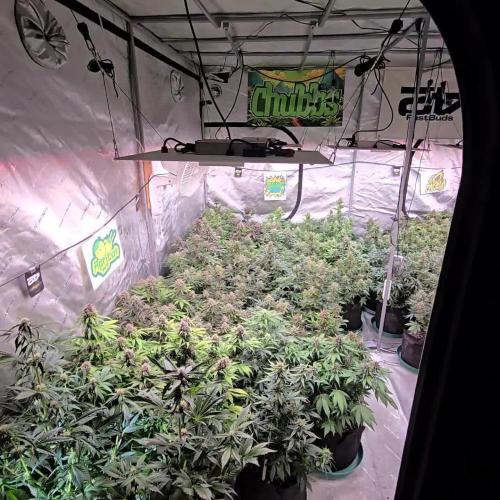
What up family, apologies for the late update. After being gone for a week and coming back to see these amazing girls they leave me shocked how much they've swelled in that time. These girls are still a couple weeks from being finished. All in all Happy Growing

Likes
1
Share


@BushDoctor740
Follow
These 3 beautiful plants are doing fantastic and took off like a 🚀.I spread them open by tieing down all the branches to get that light deeper and widen them out.I currently have 3 autos that a previous grow from fast buds produced seeds which look amazing in the 5x5 with them that will finish around the time I want to flip to flower :).Light intensity has been increased to 60 percent power and they are taking it well.Ive been giving recharge tea and some cal mag they were top dressed with Gaia green 4,4,4 and doing fine.It definitely smells very strong in the tent which I thought it was the autos but the short photo I’ll start naming plant #2 is very strong skunky smelling early on no flower yet.My goal will be to remove the autos and fill the 5x5 with these 3 healthy photos.


Likes
2
Share

@Jinxed
Follow
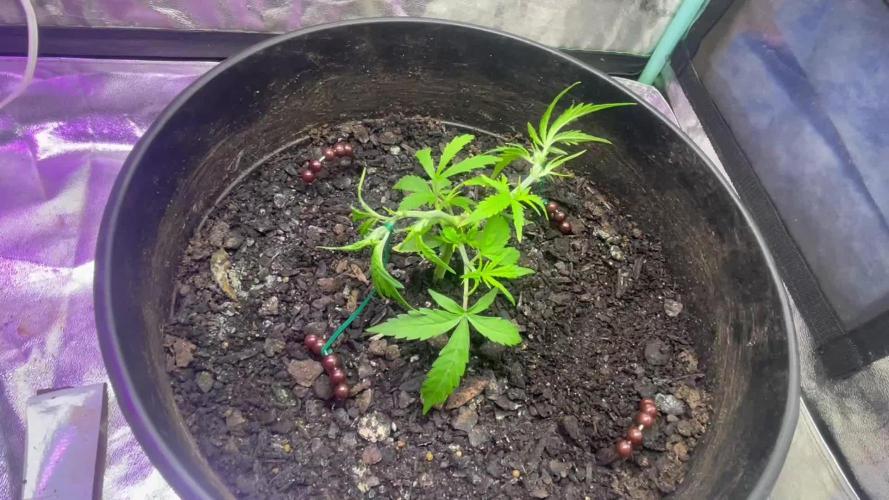
I was losing alil faith in Frosbanger but she’s moving along well !
Random is trying to take over the box is getting real over here now 💪🏽
Likes
1
Share


@RezaM
Follow
This week, I gave my plants more fertilizer to test if they show any signs of burning. Now, I'm stressed out! I think I should give myself some seaweed to relieve the stress 😂
The girls show signs of calcium deficiency. I sprayed a small amount of calcium and magnesium on them to help them recover faster. I’m not sure why the new leaves are very pale. Could they be lacking iron? I think the high soil moisture might be causing issues with iron absorption, but I’m not completely sure. I’ll wait and see what happens this week. Considering that I use regular water, I expected them not to have a calcium deficiency.
Likes
10
Share


@Archieballs
Follow
Both plants are looking good. Trichomes still not completely cloudy but giving nothing but PH water so that as soon as trichomes are right they can be harvested.


Likes
16
Share


@Boomdrawfyah
Follow
Empezamos la 7a semana con 49 dias de vida , el proyecto A ha cogido una fuerza espectacular en general, se estan haciendo unos monstruos, lo puedes comparar con las ultimas fotos y las nuevas, lucen sanisimas. Seguimos con el riego de elicitación y nutrición de terranabis , estan muy bien alimentadas. Las geneticas se ven bastante fuertes y sanas en general también , vamos a ver donde conseguimos llegar este año ya que dependemos mucho del tiempo de vegetación.
Likes
10
Share


@Aekarath
Follow
ช่วงนี้เป็นช่วงที่น่าตื่นเต้น เนื่องจากต้นได้กลับมาฟื้นปกติ ผมได้ย้ายกระถาง กระถางใหญ่ 5 แกลอน แต่ผมใส่ดิน 5 กิโล เลยอยู่ประมาณ 3 แกลอน นะครับ ให้ปุ๋ยปกติ แล้วก็น้ำ 1 ลิตร ทุกๆครั้งที่หน้าดินแห้ง
Likes
45
Share


@AsNoriu
Follow
No training, just hope for them to deliver.
Day 57 . All is good, small doubts about FD3 but she has to make it or bin it ...
Future looks brighter, other girls form some buds and 50 g is looking achievable at least on couple of them ;) Future will show ;))
N went down as feed chart, still no huge hopes from them....
Some leaves look hungry, couple redish stemps with mini Mag def on FD and thats all for now....
Day 58 Morning. Girls starts to love it 4 sure. Droped down temp by 2 degrees from 28 to 26, they liked it even more. Hope it will stop pistils going amber in begining of flower ...
In the midle of the day all will get molasses and cal mag, leaves a bit too bright, hope molasses will boost bacterias and last bits of N will be used. Increasing level of Top-Max aswel.
So feed looked like :
Heavy feed
Water with silica
Water
Water with molasses and CalMag
At the end of the week they will get heavy feed again.
Day 58 Evening. New attack system ;)) instead of 2-3-3 , girls regrouped into two heavy rows and now go like 2-2-2-2 ;))))
Girls are drinking really fast, still get only around 1.5 liters every second day. For auto i quess its ok. In couple hours afer feed they pray, so its a good sign always ...
Day 60. Heavy feed day, they started to bulk up everyday, really nice to see them everytime.
Day 61. They are bulking up. Thats all i have to say and i really really like it ;)))
Day 63. End of week. Everything looks fine, just i really would want to defoliate them a bit, but dont want to stress at the same time. They look too sensi for me.
All 3 FastDiesels started to show Mag def even on stemps, gave stronger cal mag water mix just for them. They need it often and a lot.
Happy growing !


Processing
Likes
17
Share


@jamjam887766
Follow
First ever harvest! Plant #2 has been covered in trichomes for the last two weeks and with a jeweler's magnifying glass and my camera phone zooming 7x it's clear that many of trichomes have turned amber. I chopped her down last night and have been hanging the branches upside down in a cardboard box with a fan and dehumidifier. I've read I should keep the temperature in the 70s F and the humidity around 50%. I'm doing my best but the garage isn't well insulated so I'm at the mercy of the weather. I'll keep an eye on them and when the branches snap easily I'll get them in jars for curing.
Plant #1 still has some time to go. The branches are filling out but to the naked eye there are no trichomes. When I look with the magnifying glass I can see them but I'm concerned that #2 had been coated in them for about two weeks now. Should I just wait? I think I'll just wait
Likes
3
Share

@Z420Organics
Follow
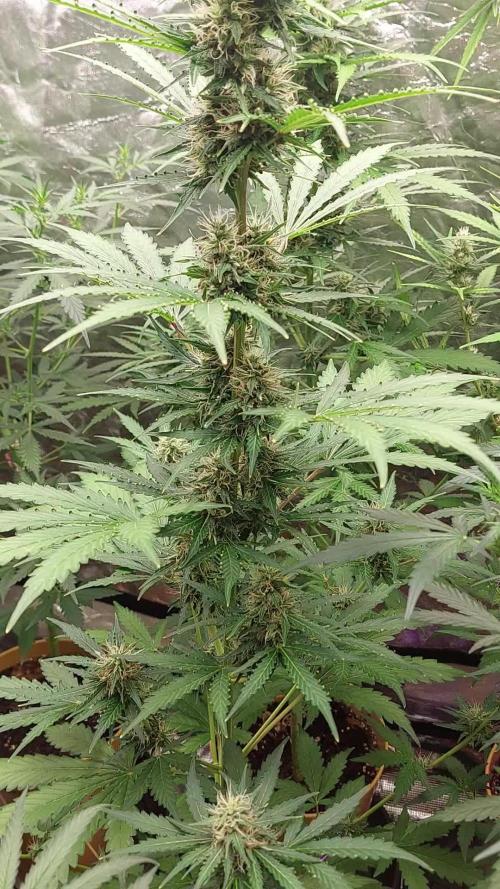
Autoflowers Update 🌱⚡
One of the autos is clearly ahead of the others, showing faster progress in its flowering stage 🌸. It’s exciting to see the difference in growth rates between them!
I had a small issue with the light, which caused some slight leaf burn 🔥🍃 — you can see it in the video too. Nothing serious, though, and the plants are still looking healthy and happy overall. 💪🌿
Can’t wait to see how they develop over the next couple of weeks! 🚀.
Likes
87
Share


@Roberts
Follow
Auto Banana Kush has a lot of damage from ph fluctuations. She is bulking now and smells good. She has grown under the Medic Grow Mini Sun-2, in Athena blended line nutrition. This wasn't my best grow by any means. She was a lot hungrier then I expected. Thank you Medic Grow, Athena, and Weed Seeds Express. 🤜🏻🤛🏻🌱🌱🌱
Thank you grow diaries community for the 👇likes👇, follows, comments, and subscriptions on my YouTube channel👇. ❄️🌱🍻
Happy Growing 🌱🌱🌱
https://youtube.com/channel/UCAhN7yRzWLpcaRHhMIQ7X4g

Likes
26
Share


@donutgrower
Follow
Big week! I got my new EarthBoxes and a bunch of goodies. I picked up the Probiotic Farmer's Alliance kit from BuildASoil, so I also got some EM-1, Kashi Blend, dolomite lime and Malibu compost. Alongside that I picked up Colorado Worm Compost (vermicompost), Gnarley Barley (malted barley, corn and hemp) and Craft Blend (aprox 3-5-2 organic mix). Unfortunately there was a bag of soil missing, so I ended up using my own mix though I am somewhat scared of it being too clay-heavy for the SIP. I inoculated with EM-1 and began fermenting a batch of activated EM-1 to make the bottle last longer.
It looks about a week from LST, after that I hope to set up a two-tier SCROG setup and begin growing the bushes. I will begin spraying AEM-1/EM-FPE/EM-5 alternatively once a week for IPM, I will try to avoid using neem this round (unless I find this approach lacking). I also brewed a batch of EM-FPE with aloe that smells incredible, I can't wait to give it a go.


Likes
10
Share


@Stickygreens420
Follow
1/29/2024 - Day 29 - Week 1 Flower: She started showing preflower last week, but I'm calling this week 1 of flower. She is only 1 ft tall at the moment, which is much smaller than I'd like, so I'm hoping she will stretch over the next couple weeks. This is why I'm not a big fan of autos. I made one mistake with the heavy fouler feed, and my yield is going to be significantly impacted my that one mistake. It's my fault, but still frustrating.
