


Likes
Comments
Share

@Mannirumpel420
Follow
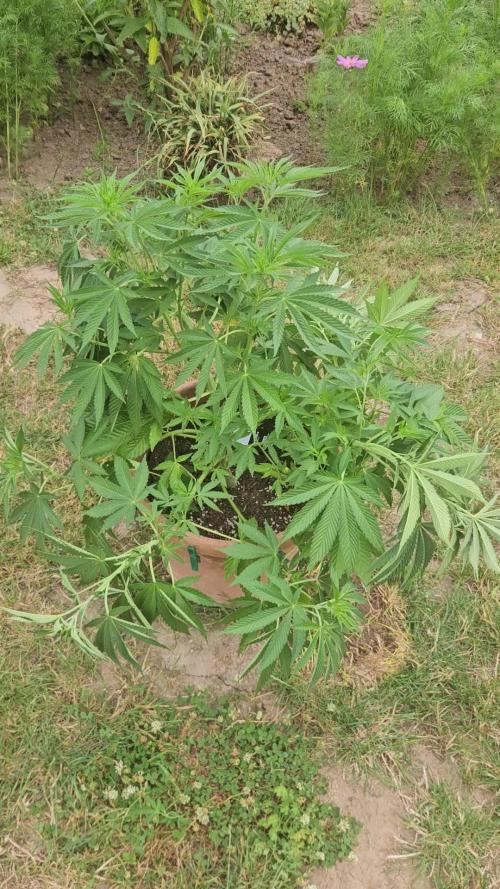
Sie wächst unaufhaltsam und ich habe sie nun supercropt,um die Fläche besser auszunutzen.Ich werde sie bald in einen größeren Topf stecken müssen,da sie schon durchewurzelt ist.

Likes
Comments
Share


@Cyabro
Follow
Yo wassup guys, starting little bit late the diary but this you cant miss flowering day 19 and they are crazy snow!

Likes
7
Share

@DeepRootsGrowTrees
Follow
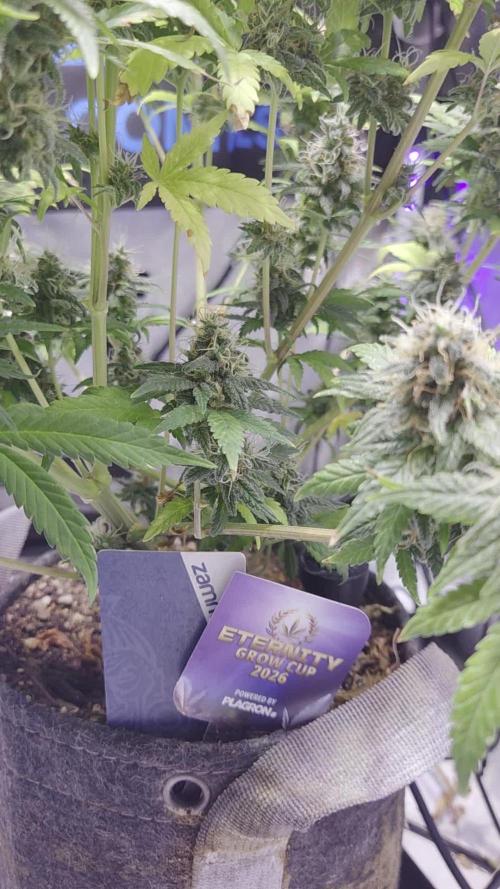
STICKY BROCCOLI 🥦 / ZAMNESIA & PLAGRON WEEK #15 OVERALL
WEEK #9 FLOWER
She's getting closer to being done as this week she's gotten more dense and sticky. Her buds are looking good and frosty. STAY GROWING MY FRIENDS 🧡!!
THANK YOU 😊 FOR STOPPING BY AND TAKING A LOOK IT'S MUCH APPRECIATED!!
THANK YOU 😊 ZAMNESIA AND PLAGRON!!
STICKY BROCCOLI 🥦 / ZAMNESIA SEEDS

Likes
Comments
Share

@Samsationalseeds
Follow
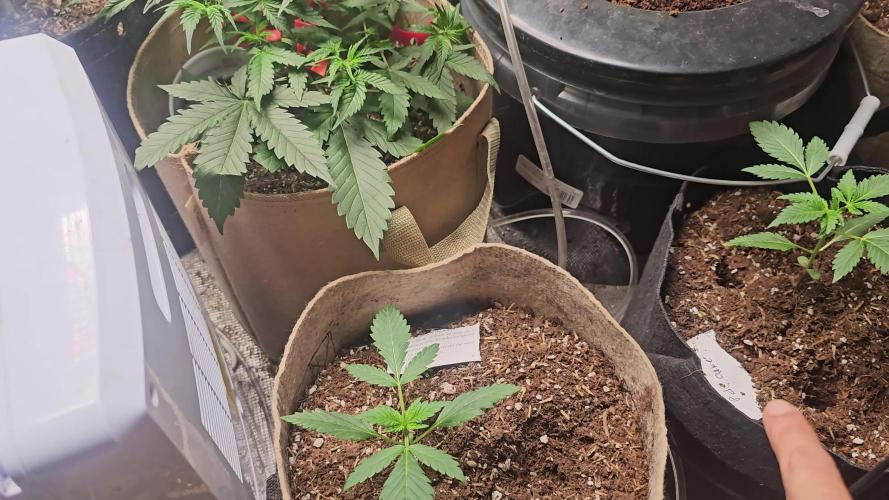
the two BPP R3 in soil went into bloom. the dwc are starting to enter bloom slowly as well
36-42
The veg and seedling cycle on the three gallon pot was short and it's gone into bloom with very little stretching. All of the plants look healthy, they look fine, no nutrient. Or PH issues
Likes
Comments
Share


@Comfrey
Follow
23.-30.07.
Die Woche verging wie im Fluge. Strawberry Haze Auto duftet mittlerweile sehr fruchtig mit Zitrusnoten.
Die Blüten schwellen nach einem krassen Stretch an. Das intensive LST und das Entfernen störender Blätter hat dazu geführt, dass die Blüten sehr gleichmäßig Sonnenlicht bekommen und später in der Blüte die Luft gut zirkulieren kann.
Zwei Tage der Woche standen die Pflanzen unter der Markise, es hat über Stunden heftig geregnet.
Das Gießen läuft wie gewohnt nach Gefühl. An heißen Sonnentagen bis zu 1,5 Liter.

Likes
83
Share


@Southwest_budders21
Follow
Well Gsc is very close now the colours are so nice 😍 lots of pink, purple and green 😍 aiming for chop very soon 🤞🏻 skywalker seems to be nearing to the end but I'm sure still putting some weight on so will give 1-2 weeks flush now. Purple kush is packing on some weight now leaves look pretty but also stressed 😬 she's growing and the buds are looking stunning (JUST MY PERSONAL OPINION) so that's a good thing. I would definitely be thinking of adding the bakery seedco Gsc into the seed bank for future grows

Likes
72
Share


@TheOutlawBubbaKush
Follow
I have been worried for a while about how close the plant grew to my led lights. The usual recommendation is like 16-20" above , but I can't raise my lights and this plant stretched so fast a couple colas got away from me. As you can see in the photos and video, some are as close as 6-12 inches and because this plant is a slow developer, I think it's starting to Foxtail. In response to this and preparation for upcoming harvest, I lowered the intensity of my light and changed the light schedule from 19/5 to 16/8. I've been lowering the nutrients all week and will be flushing all next week. I've been preparing for trimming and drying, only worry is keeping the correct humidity, but we'll see.

Likes
5
Share


@Mr_nugs_lover_David
Follow
Very enjoyable grow, awesome cultivar, this is what I work for, my nuggets have been grown with love and dedication and the final result is a a plant that has been very thankful and she has provided me amazing sticky flower with those red hairs that I love so much, very strong cerebral buzz, sativa high definitely, makes me remember a lot sour diesel, definitely super pungent loud 🔊 aroma coming from the jars but she was stinking the grow tent when she was there, amazing strain!

Likes
24
Share


@1Right_Angle
Follow
Mar 20,
- These plants are putting on a show, about how to fill a Bud.
The Maui Wowie are stuffing the buds into hard little nuggets. First-time I have seen true Nuggets indoors. Week 9 is going to be fun.
- White Pistils have begun to turn Brown/Amber and are getting “crinkly”.
- not to mention sticky as hell
- final Flower meal (Sunday) posted above = 8L
- TDS = 1125ppm for the final feeding.
Mar 22nd
- some fresh air for a few Pictures in Daylight and a thorough Flushing; 15 gal pot w/ 2 plants and it took 35 gallons of prepared h20 to get the TDS below 130ppm
- Drip-dry in the Sun for a couple of hours then back inside before any insects find us. Early spring warmth here in southern Ontario.
Mar 24
- it’s an amazing plant with the canopy looking like it’s full of Buttons. But in reality each of these buds are getting Longer every day, all at the same time.
Harvest will be a real Surprise.
I’ve not been poking around too much, these girls have simply run their course without needing any Help !
Great work Beaver Seeds!!!
When the time comes, I look forward to seeing what an Outdoor one produces. And how the plants would look without 1 aggressive LST session.
- Trichome-check tonight = large number of cloudy, with very few Amber. Still some clear with ~ 70% cloudy
26th,
- A gallon of Molasses / Rezin / H20 tonight to keep the juices flowing. Plant rotation etc. Day 5 since flush. Fluff the plants and arrange for Max exposure for the final couple of weeks.
No A/C in the small tent, humidity is just over 50%.
Air is being kept moving

Likes
13
Share


@Hazeberg
Follow
I will update the report after it has dried, to give a number and also later with a smoke report. Stay tuned!


Likes
55
Share


@Max1973
Follow
Well, this was a interesting first journey.... the buds finished drying today, 5 days drying, added pics and vids.
Just curing to go.... ah nice buds :)
Edit: i forgot to mention i went over the buds when i harvested them, and checked / removed any impurities, like
gnats caught in the sticky bud.... picked em clean with tweezers... 👍
Edit: needed to air/dry out the buds abit more, and get some Boveda Humidipak for curing.... it's looking good...
i'll update with some pics of trimmed, cured buds 😎
The buds turned out beautiful, pungent, pine, berry, citrusy, daytime, medical..... this has theoretical 1:1 - 21% THC, 19% CBD, so it's not going to give u a knockout high.... its medical grade 1:1 ....... side effects - happy, relaxed.
haha :)
I weighed it dry and came up with about 123.32g (4.35oz) ... i used abit of guesswork in the weight, not to concerned with weight, as to
quality.... (that weight is with the test buds added in, +-15g.) .... you can guess the weight from the pics and vids, haha
I really enjoyed growing this.... i found the website by looking up the seeds, decided to start a grow diary,
it's my first grow, i made alot of mistakes and growdiaries really helped alot, joined a chat group with some other really good growers.
Edit - Day 111 - added vid/pic, Been curing for a week, burp and roll em abit twice a day....... smell and taste nicer each day, 👍
Edit - Day 112 - added good vid of trimmed up test bud, beautiful ......
I hope You enjoyed the Diary..... Good Buds 😎
Processing
Likes
22
Share


@Silverback_Guerilla
Follow
5/4:
Her two tops suddenly stretched a few inches. I'll tie them down in the next couple of days and when they get to the third node, I'll top them again.
I gave her a little water with myco, kelp, molasses, cal-mag, silica, and humic acid.
5/6:
I fed her about a gallon of water with boomerang, grow big, big bloom, cal-mag, silica, and humic acid. This was the last time I'll give her any grow big or boomerang...there's plenty of good stuff to support good growth for at least a month in the Happy Frog dry fertilizer I'm using.
I did a little LST on her today...split those two main colas really well and tied them into horizontal positions on opposite sides of the pot. I used gorilla wood glue to seal the split.
5/7:
I foliar fed with big bloom, grow big, silica, fulvic acid, and molasses.
5/8:
I did a foliar application of Axiom harpin proteins.
5/9:
I did a foliar application of boom boom spray.
5/10:
She's growing very well now, so I topped all her main shoots and tied them them down to encourage the lower branches to compete for apical dominance.
I'll water her tomorrow if it doesn't rain.
That's it for week 5

Likes
22
Share


@Ace_Algorithm
Follow
This is my first grow and I'm following the canuck method because it's the easiest . Eventually I would like to get into high frequency fertigation with a coco medium but I want to produce a great smoke in soil first to get some experience.
Likes
14
Share


@Naujas
Follow
Week 8 is over :) the girl is suffering, maybe it's my mistake that I made, :( I used biotabs nutrients throughout the growth, and at one point, she even received two waterings with advancednutrients macro, after which she started to deteriorate, from now on only pure water :) looking at it from the other side, the flowers themselves really don't look like they will be small, the flowers are already getting a pink color, which is very beautiful to me :) in general, the girl is maturing quite well :) good luck to everyone.


Likes
3
Share

@Hren_Morjovii
Follow
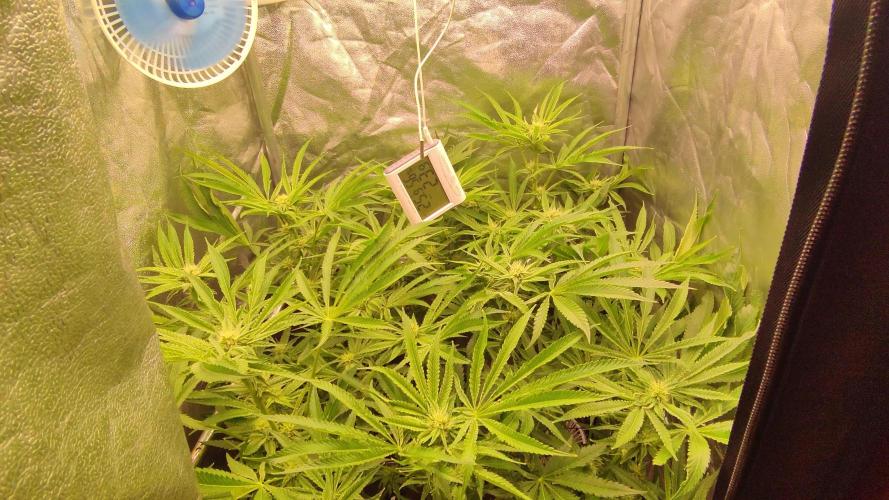
20 дней 12/12. Поменял питание, добавил 1 мл блума от Т.А. и снизил Б на 0.5, это для того что бы не было сильного перерасхода Б относительно А. Можно было просто сделать 3-3.5 Б, или взять например биг бад коко 1 мл. Убрал дополнительный магний т.к. примерно такое же количество магния содержится в 1 мл блум трипарт. Есть проблемы с климатом, на улице уже жарко, а батареи еще топят как зимой. Надеюсь скоро отключат отопление, а иначе первым завяну я.
Кстати, клоны отлично себя чувствуют на веге при питании 2 А. 1 Б. Обычно не даю больше двух мл А. Просто А остается лишнее какое-то количество, вот иногда и экспериментирую. Если на цвете давать 3 мл А, то мелкие листики на шишке набирают многовато азота, от чего шишки становятся жёстче на вкус, это личное наблюдение, могу ошибаться. Даже давал 1.5 мл А. сразу с перевода и все равно хватало азота(растение забирало его с нижней листвы, которая и так потом отрежется) и микры, но лил больше кальция-магния.
На 4й неделе растиха начала очень много пить, литра по 4 в день, не успеваю подстраивать полив и пару раз пропустил наполнение бака.
Растиха начала ООООчень сильно пахнуть. Сначала в боксе стоял запах молока, а потом резко сменился на кислый запах цитруса.
Поменял полив на раз в час в течении светового дня.
C 20 по 28 день с перевода на 1212.

Processing
Likes
35
Share


@BarrieGrower
Follow
Looks like this is it, last week of flower and into the darkness they go.

Likes
15
Share

@Chubbs
Follow
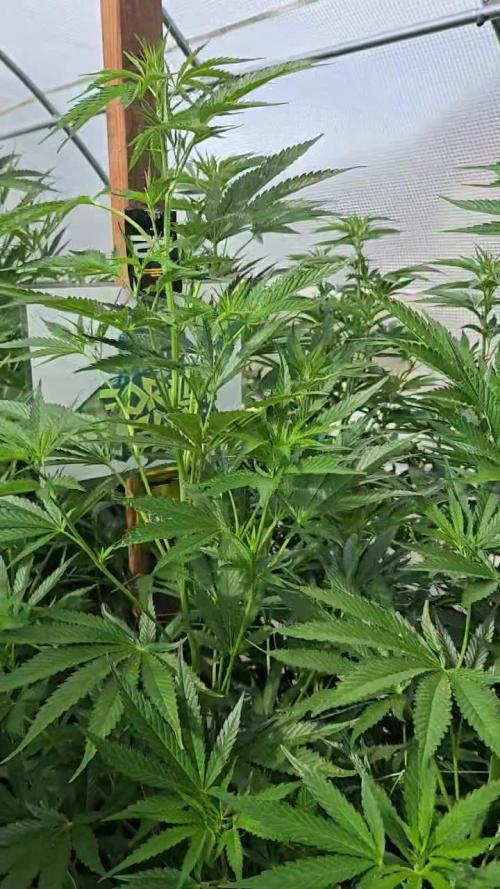
Weekly update for these lovely ladies. They've grown and grown since the last update so much I had to raise the greenhouse. Cinder blocks under the frame gave me an extra 16in. They're growing probably a foot of week and still reaching for the stars. I did switch to Athena's Bloom A & B and P&K booster this week giving 5-10ml per gallon. I really couldn't be happier with how they've grown up to this point.
All in all Happy Growing
Likes
9
Share


@Just_Weed
Follow
Upside down 1.1.2023
Drying 5 days at the moment in perfect conditions, 60% humidity and 18-20 C temps.
All my previous drying was too harsh and fast so I hope I can prolong this one to 2 weeks or close to that.
Plants shrinked a lot in last day but still nowhere near snapping of stems. They got at least few days more before I can start trimming.
To prolong the dry I have humidifier on in drying room and I reduced extract fan from 1 min on 1 min off ( same like it was for grow) to 1 min on 2 min off and I will prolly reduce that even more next few days.
Dry weight will be reported after trimming is complete which will be in around 1-2 weeks depending how drying goes.
Trimming complete after 14 days of drying. 337 g of Peyote Wifi and 194 g of Cheese Dry weight.
Some pics of dried buds will be posted in next few days.
I didn't weigh trim yet but there is a lot of it currently in trim bin. I expect around 100-200 g more of very potent sugar leaf trim.
Pictures of dried buds never arrived, but buds were enjoyed in the last year after carefully storing them at correct humidity in the jars and put in a cool place. There is only 2 top buds left and a bit of kief. What can you say. It was a delight.
Pic of last bud after 11 months in harvest photos.
