


Likes
Comments
Share

@Abendkraut
Follow
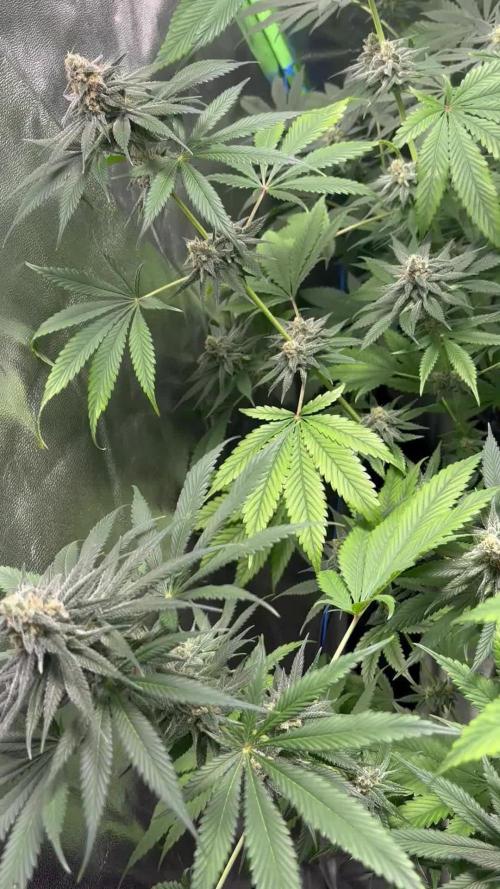
Great week, all is going well. I'm glad that I keep these in my basement where it stays nice cool 25°C during this year's heatwave.
I'll reduce some of the nutrients from next week on. Power buds in late flowering stage doesn't really do anything.

Processing
Likes
Comments
Share


@Steviegrows
Follow
By end of week was watering every other day with about 300 ml/plant and adjusting PH to between 6.0-7.0. Turned on the SF-1000 QB this week.

Likes
2
Share


@Atalant
Follow
9.7
D85
Harvest day✂️
Last flush
10L Water
PH 6.5 EC 0.3
Return
PH 5.9 EC 3.4
Very high EC of soil.
Above 15% amber. Triochoms at top cola start degradation.
Defoliation&wet trim.
23inch tall. No training.
121g wet (but now freaking stems and leafs like people do 😂)
32.2g (73% return)

Likes
Comments
Share


@Alice_in_Wonderland
Follow
Ladies are growing tall quickly - much quicker than the other seedlings in DWC systems at the moment. Rather unexpected actually.
No additional nutrients added, only adding water to wet the surface when it looked really dry. Repotting next week into larger pots.

Likes
Comments
Share


@Canabisseurs
Follow
Tart Pops is powering through week 4 of veg looking strong and vibrant! ✅ I gave her a clean FIM job this week to encourage some lateral growth and bushier structure. She's bounced back well and is showing no signs of stress — nice, tight internodes and solid color throughout.
Started preventive IPM routine after spotting spider mites on the Blue Cheese in flower. Spraying Neudosan and Bioneem every few days as a protective measure — so far, Tart Pops is unaffected and looking mint 🍃.
The soil’s holding moisture well with good drainage thanks to the perlite mix, and the airflow and spacing are keeping the lower growth healthy too. Looking forward to training her further next week as the new tops take shape.
Let’s go Tart Pops! 🚀
#VegLife #FIMSuccess #IPMSchedule #TartPops #HealthyGrowth #PreventPests



Likes
9
Share


@GoldenArrow
Follow
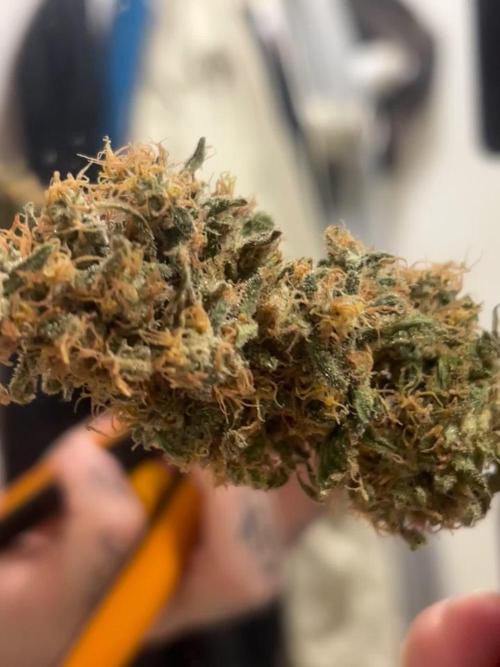
Kok gubresi sonlandirildi. Big bud ve b 52 ye 2 hafta aranin ardindan baslandi evet azot biraz fazla geldigini farkindayim fosfor ve potasyum agirlikli ilerlemeye devam ve bebeklerin bulunduklari ortam geregi boceklenme olmamasi icin duzenli sekilde neem yagi takviyesine devam ediyoruz emegimizin karsiligini alicagimiz bir hasat olucak kalite hic bir zaman tesaduf degildir..

Likes
16
Share


@Ieiogrow94
Follow
Eccoci qui...
Si iniziano a formare le cime che sono già molto grandi, da questa settimana inizieremo con i video!!
Grazie a @OriginalSensibleSeeds e a @Xpertnutrients per la collab e a tutti per il supporto🔥🌲❤️

Likes
2
Share


@dwotTV
Follow
Transplanted in the afternoon of 10/23 because they were rooting out of the pucks. Got some humidity dome cups coming tomorrow and another inline fan to handle intake to try to dial in things a bit more. Fugue State #2, in the black pot is still a bit shell shocked, hopefully it opens up soon.
Well both #2 and #3 damped off / shell shocked to death, so there's just one left, c'est la vie. #1 is trucking along well and ready for week 2.
Sprayed with Neem Oil on 10/24
Fed Light Fox Farms Blend on 10/25
Treated with NemAttack on 10/26
Likes
2
Share

@smoking_hills9
Follow
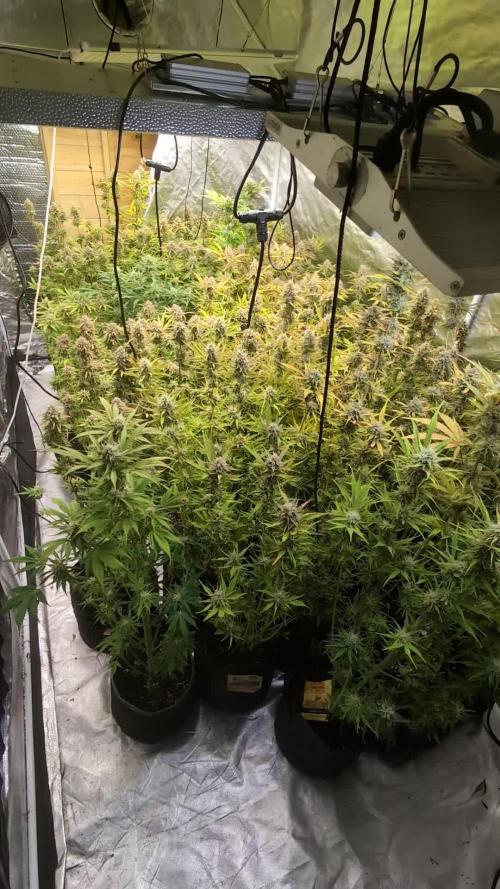
These cali genetics are blowing my mind 🤯 super sticky, very frosty rock dence buds with extra strong smells. All 3 strains are 10 out of 10, very impressed. Done last defoliation few days ago, preparing for the harvest so it's much easier. Stalks are super fat, same as buds.
Got big surprise from Atami, plant food, and many extras. Crazy. Thanks a lot guys. 💚 Start adding you Bloombastic food already. They love it. Smell is mad. I think most of plants ready in week or so.
Likes
6
Share


@momsbasement_exotics
Follow
tent is starting to get nice a smelly and is giving off a fruity kushy smell.

Likes
27
Share


@Hydronaut
Follow
Big healthy plant for the most part, but the flowering just won’t kick in! This is the week that says she’s running behind or that she’s going to be on a cocaine diet till the end? Need some bulk, it’s week 8 already. I don’t like my girls fast anyways, so I’ll be a patient gent.
Day 51: Early AM: It seems that the flowers are starting to fatten up at a familiar rate now. Stretch is definitely over to boot. Feels like a week or so behind my other Auto grows, but I am gathering from the peeps on GD that grow times can be all over the place with Autos; even with seeds front the same plant. I won't be a Debbie-downer, but I cant help but think what this thing would have done in a bigger space. I left her alone a couple days ago as her stretch slowed noticeably. A pluck here and there moving forward, but that's about it for the sadistic stuff.
Day 51: Late Afternoon: She's about to take off in the flower it feels. 6 hours passed, and I was like "oh, hello there!" If nothing goes too crazy, I'm hoping she'll be a good one regardless of her 3.8 sf living quarters. I never did move the top shelf, so the light is less than 8 inches from the canopy. I'll keep an eye on the "crispy effect" out of complete laziness and fear of dropping the light on the plant! Tallest branches are around the perimeter and still hitting their DLI. The center/down the plant is getting blasted by the light, so I suspect about 6 or so runners to hit the canopy and hang out with the FIM family in the next week or so?
Day 51: Evening: Bigger bucket = bigger plant in hydro? One heck of a root mass going on in her trough. I tried pushing the roots to the back of the bucket so I could ph without getting roots directly. Nope! That bucket is filled with roots, and its an 8 gallon bucket. I would have never thought an auto would have enough time to grow into an 8 gallon bucket. I was banking on some extra nutrient volume, so I could go out of town for 4-5 days. Hard to say on bucket size though, I have grown 10 foot tomato monsters in 3 gallon Ebb/Flow pots so maybe she would have grown the same in a 5 gallon bucket? I don't think that much root volume could grown in an 5 gallon bucket, so bigger bucket = bigger plant here? Things that make you go "hmmm..."
Day 53: A lot of undesirable undergrowth that blew up during stretch. Like a ton of it, but I’m done messing with her.
Took out the top shelf and reconfigured exhaust. What a pain. I didn’t drop the light but the IP cam took a nose dive on a branch. Now the light is about 12-14” from canary instead of 6-8'. She started to get some light burn so I had to do the deed. Wider IP camera view with added distance so that's a plus! Plant is very happy at 550-575ppm. 600ppm seems to be the number without burning plants? Humidity, temp, and ppm AND light distance in check. Raising the light opened the focal point of this light quite a bit; especially in the center where the PPFD was over 2500 at the center and light less than 8 inches from the canopy. Feeling good. All is in check with some room to grow. She will gain another 2" in height I presume through flower.
Day 54: The jury is out of this light. I hits my dli from veg to harvest with it's fixed position design, but wondering if 50watts more would have been the number. I'm going to keep the light in there to keep the data flow congruent to its original design. I hit my DLI right now from the top of the canopy to about 10-12" down the plant. Lighter specs from my last grow, but its hard to tell what is getting what once you leave top of the canopy. Hopefully it will suffice!
I moved the light a few inches closer as my DLI was getting light in some of the corners/perimeter. She right 10-11" and is about as good as she is going to get given150watts. I am realizing that 200 watt is probably the optimized wattage here if some canopy penetration is desired, but light these dimensions are not plentiful[. 250 watt and that would be max with managing heat and exhaust sound levels. 250 watt would accommodate a fix state design no problem. I hate to change the light variable but I only have the luxury of one-at-a-time grows, so everything counts on some levels.
Been using the PAR meter on and off throughout the day. Penetration needs to be about 25% stronger. Its a perfect light for your average auto grow, but if these results repeat themselves a 250 watt is probably in order. I am making the executive decision to install a 250 watt bar light. I found one with a small footprint at 240watts. Hard find, specs are more than adequate for 4 sf.
Will maybe get down a bit deeper but things are looking really crammed with the bottom half. It is PACKED with bud sites and likely not enough light. Questioning the light change, but will definitly thin some lower stuff and "officially" let her be.
Since in bumped up the CalMag to about 1.5 ml/gal the reservoir has been running ph equilibrium for 6 days now at 600ppm. I’m guessing this deficiency was driving down ph instead of the usual up/equilibrium in week 7. My first auto to eat at 600ppm for a week with no tip burn. She looks fit, I’ll keep her diet here as the max.
I have never cut MicroGro out completely in a grow before. I have been faithful to GH 7 part series since for long time. This grow I took the GH feeding chart and worked backwards to a ppm level I found on the web to be an acceptable range for Autos. These ratios have traditionally been acceptable and without issue. Beautiful plants every time. On the last two runs with this concocted feeding schedule Cal/Magic was very light until week 7, and exactly when I started to see rust spots, etc. in this grow. After a 2ml/gal dose of CaliMagic plus addbacks on watering, that issue disappeared overnight. I mean zero issues with any new or progressing growth. Here's the take away with this. Although CalMag issues are easy to spot and resolve, I did learn is that in both runs they HAD A PERSISTANT DROP IN PH IN MY RESERVOIR in late veg/tranistion. Another wards, if you PH is dropping and your ppm are not doing anything, it very well could be a CalMag deficiency. An indication know before the leaves start getting spotted, etc. I guess if one were perceptive enough, you could resolve this issue as it happens, and never see the effect on the leaves?
On this current run, as soon as I dosed the bucket good with Cal/Mag and kept my add/backs a 1.5/ml/gal the PH locked in big. Going on 7 days at 600ppm, 6.0 and the ph is steadily rising. Maybe another bump in ppm. No sign of tip burn yet, why the heck not!:)
Not really the expected progress this week but she may just need time. I don’t think she’ll really bulk up until the end of week 9 / week 10. New light to arrive Tuesday but not sure a stronger light will get much further down. It’s almost a roadblock to get beyond the main tops and they are getting well more than they can handle light wise. Bigger light may only mean more heat.

Likes
4
Share

@L8bloomr1008
Follow
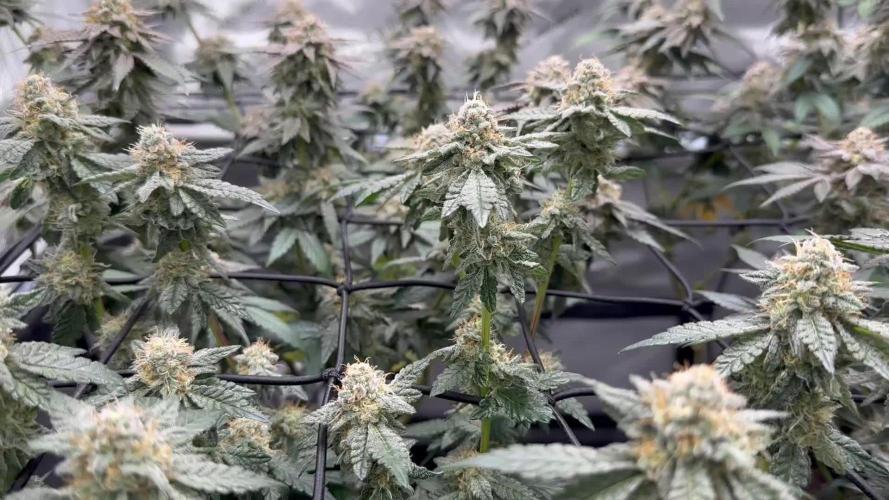
Day 49- This week I think we cut out the nutes and let them finish, atleast for the mbrxgp. The Pablo’s revenge looks to be about a week or so behind so we’ll go until they’re finished. Smells on the mbrxgp is heavy citrus, lemon almost, slight gas. Pablo’s are very earthy, I’m expecting a hashy, dank finish for them.
Likes
3
Share


@CRIPPYGROWS
Follow
Work in progress however I finally was able to get the girls into the drip system. They have recovered nicely from the light burn but unfortunately I lost one of the girls. Now I am working with 4 and so far happy with the results. I am waiting on a better light, I ordered a 720 watt bar style light from Alibaba which will arrive in just a few weeks hopefully before flower. Still need to get the room in order so more to come on improvements. Switched to Gen Hydro Maxi Series just for the simplicity. We will see how this goes.

Likes
26
Share

@MistaOC
Follow
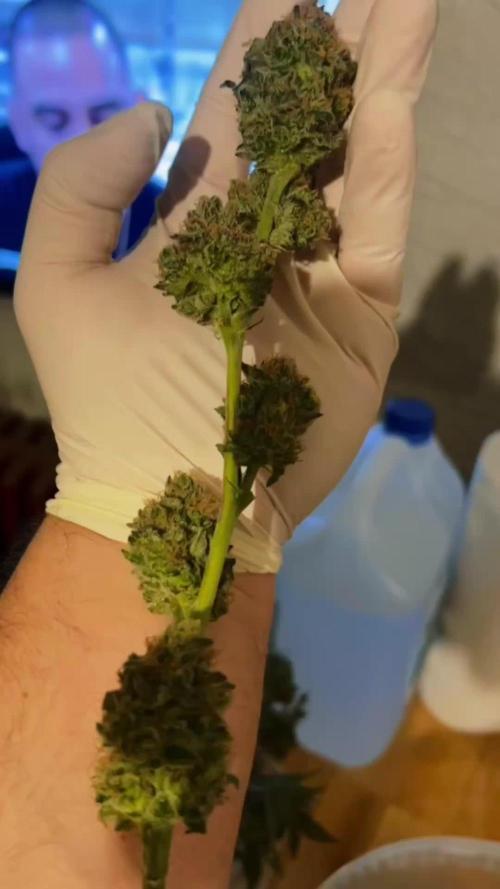
Final Week – Late Flower
The final week was essentially a clean finish to the run. The buds swelled further, becoming dense and well structured. Despite the ongoing mildew issue, the situation remained controlled and never spiraled out of hand.
Lowering nighttime humidity below 50 % clearly helped slow down further spread. The focus was on maintaining stable conditions and consistently removing affected leaves.
Overall, the positives clearly outweigh the negatives: strong plants, solid bud development, and very relaxed handling thanks to Biotabs and the automatic irrigation system.
Now it’s simply about finishing strong and harvesting.
Likes
1
Share

@deseed_uy
Follow
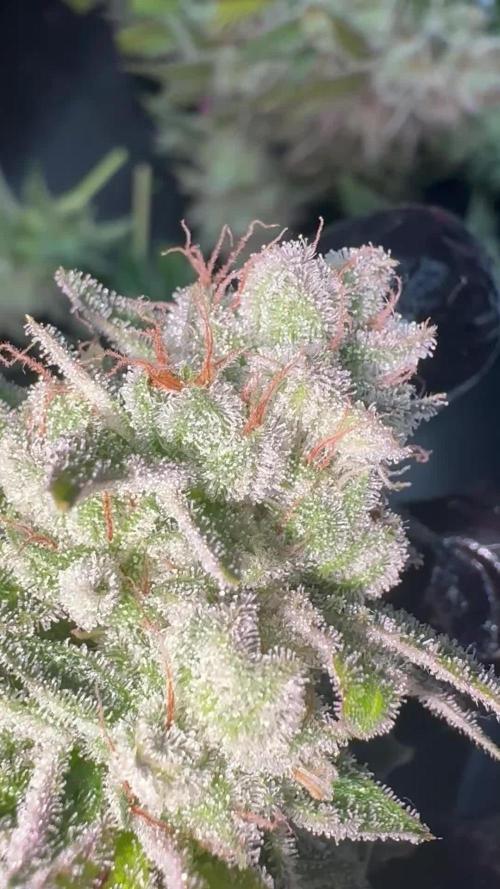
Este feno no fue de los mejores pero quedo mucho mejor con led que en exterior, una locura lo bañado en resina, las flores son mucho mas finitas y aireadas q el feno 1 y 2 pero muy linda genetica.


Likes
11
Share


@4_Pro2Bono_0
Follow
Flipped these ladies 06 Oct 23 (Friday). After watering 09 Oct 23 (Monday) I walked in and the before SOG photos are what it looked like, I put up the new net and tied a few tops down to spread the canopy out. With the new trellis in place I'm going to let theses ladies rip and add another trellis once they outgrow their current one.
Likes
12
Share


@603grower
Follow
Birthday doughnut by equilibrium genetics is a excellent strain.very easy to grow and a good yeilder. I really only vegged these plants for like 4-5 weeks and pulled 7 ounces off 3 plants. On a 200 watt light mf2000
Likes
49
Share


@MadeInGermany
Follow
Hi folks :-)
This week it has developed very nicely 👍 The shoots are starting to grow again, and will soon be ready to be tied down again 👍
I wish you all a nice weekend and let it grow 🍀🌱🙏🏻

Likes
26
Share


@GrowGuy97
Follow
All of the ladies are now starting to flower except the NHL I think it’s a little behind but all in all they are growing great!
Day 31 - Everything seems to be going great, fed the ladies yesterday havnt had any more issues yet (Thankfully) thanks for following & happy growing friends✌️🏼🌱
Day 33- A few of the ladies have some dead leaves not sure if it’s normal or if something is wrong.. they all seem pretty healthy other wise!

