Likes
Comments
Share
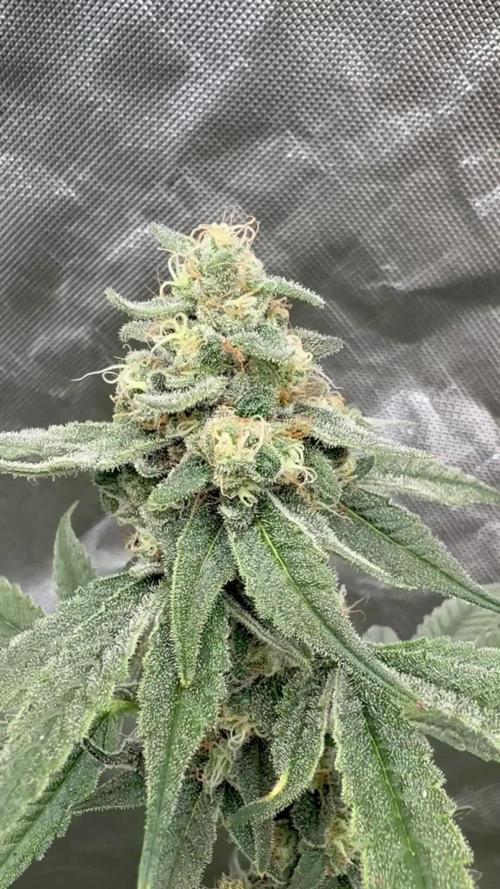
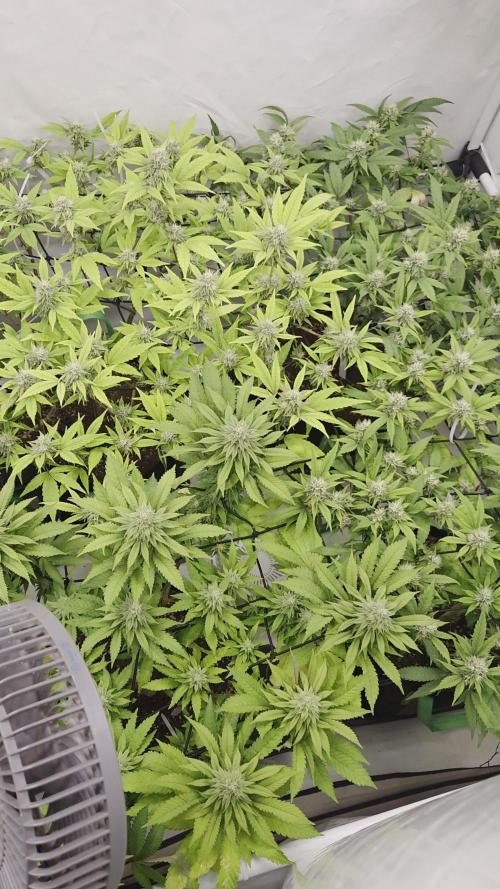
She’s getting fat! Smells berry and gassy , gonna def be some good smoke. Gonna go 65 days I think 🍓🌲💨⛽️🤟🏻
Likes
32
Share
@EBPbyEVD
Follow
Hey folks! ✌️ I was sick for a whole week and skipped last week's update, but I've got some exciting things to share with you now. At the time of this post, we're on day 53 of flowering. While I was down with a fever, the plants suffered a bit due to drying out. The big one was hit the hardest. As soon as I started feeling better, I watered them, but the big plant experienced some gnarly salt buildup. Both plants were emergency flushed, and now the situation is more than good. During this time, the male plants were actively producing pollen, which I collected. I've decided that I have enough pollen for future experiments, so today I culled the males to ease the workload. In my small tent, the LSD auto by Barney's Farm is flowering. I might pollinate one branch to see what happens. The big plant is struggling with the weight of its branches, knocking its neighbors' heads (it even broke off some male branches!). I've tied the heavy branches to wire supports attached to the main stem. Now I can clearly see the seeds forming and maturing. I'll keep the plants until the seeds start dropping onto the floor. The plants have fully recovered and are feeling great. For nutrients, I'm using AB at 40ml per 5l with an PPM of 1695 and pH of 6.1. I'm giving around 10 liters to the big one and 3-4 liters to the small one. And now, I invite you to admire this beauty. Take care, my friends! Sending you all my love ❤️❤️❤️
Processing
Likes
8
Share
Likes
25
Share
ANTHOCYANIN production is primarily controlled by the Cryptochrome (CR1) Photoreceptor ( !! UV and Blue Spectrums are primary drivers in the production of the pigment that replaces chlorophyll, isn't that awesome! 1. Diverse photoreceptors in plants Many civilizations, including the sun god of ancient Egypt, thought that the blessings of sunlight were the source of life. In fact, the survival of all life, including humans, is supported by the photosynthesis of plants that capture solar energy. Plants that perform photosynthesis have no means of transportation except for some algae. Therefore, it is necessary to monitor various changes in the external environment and respond appropriately to the place to survive. Among various environmental information, light is especially important information for plants that perform photosynthesis. In the process of evolution, plants acquired phytochrome, which mainly receives light in the red light region, and multiple blue light receptors, including his hytropin and phototropin, in order to sense the light environment. .. In addition to these, an ultraviolet light receptor named UVR8 was recently discovered. The latest image of the molecular structure and function of these various plant photoreceptors (Fig. 1), focusing on phytochrome and phototropin. Figure 1 Ultraviolet-visible absorption spectra of phytochrome, cryptochrome, phototropin, and UVR8. The dashed line represents each bioactive absorption spectrum. 2. Phytochrome; red-far red photoreversible molecular switch What is phytochrome? Phytochrome is a photochromic photoreceptor, and has two absorption types, a red light absorption type Pr (absorption maximum wavelength of about 665 nm) and a far-red light absorption type Pfr (730 nm). Reversible light conversion between the two by red light and far-red light, respectively(Fig. 1A, solid line and broken line). In general, Pfr is the active form that causes a physiological response. With some exceptions, phytochrome can be said to function as a photoreversible molecular switch. The background of the discovery is as follows. There are some types of plants that require light for germination (light seed germination). From that study, it was found that germination was induced by red light, the effect was inhibited by subsequent far-red light irradiation, and this could be repeated, and the existence of photoreceptors that reversibly photoconvert was predicted. In 1959, its existence was confirmed by the absorption spectrum measurement of the yellow sprout tissue, and it was named phytochrome. Why does the plant have a sensor to distinguish between such red light and far-red light? There is no big difference between the red and far-red light regions in the open-field spectrum of sunlight, but the proportion of red light is greatly reduced due to the absorption of chloroplasts in the shade of plants. Similar changes in light quality occur in the evening sunlight. Plants perceive this difference in light quality as the ratio of Pr and Pfr, recognize the light environment, and respond to it. Subsequent studies have revealed that it is responsible for various photomorphogenic reactions such as photoperiodic flowering induction, shade repellent, and deyellowing (greening). Furthermore, with the introduction of the model plant Arabidopsis thaliana (At) and the development of molecular biological analysis methods, research has progressed dramatically, and his five types of phytochromes (phyA-E) are present in Arabidopsis thaliana. all right. With the progress of the genome project, Fi’s tochrome-like photoreceptors were found in cyanobacteria, a photosynthetic prokaryotes other than plants. Furthermore, in non-photosynthetic bacteria, a homologue molecule called bacteriophytochrome photoreceptor (BphP) was found in Pseudomonas aeruginosa (Pa) and radiation-resistant bacteria (Deinococcus radiodurans, Dr). Domain structure of phytochrome molecule Phytochrome molecule can be roughly divided into N-terminal side and C-terminal side region. PAS (Per / Arndt / Sim: blue), GAF (cGMP phosphodiesterase / adenylyl cyclase / FhlA: green), PHY (phyto-chrome: purple) 3 in the N-terminal region of plant phytochrome (Fig. 2A) There are two domains and an N-terminal extension region (NTE: dark blue), and phytochromobilin (PΦB), which is one of the ring-opening tetrapyrroles, is thioether-bonded to the system stored in GAF as a chromophore. ing. PAS is a domain involved in the interaction between signal transduction-related proteins, and PHY is a phytochrome-specific domain. There are two PASs and her histidine kinase-related (HKR) domain (red) in the C-terminal region, but the histidine essential for kinase activity is not conserved. 3. Phototropin; photosynthetic efficiency optimized blue light receptor What is phototropin? Charles Darwin, who is famous for his theory of evolution, wrote in his book “The power of move-ment in plants” published in 1882 that plants bend toward blue light. Approximately 100 years later, the protein nph1 (nonphoto-tropic hypocotyl 1) encoded by one of the causative genes of Arabidopsis mutants causing phototropic abnormalities was identified as a blue photoreceptor. Later, another isotype npl1 was found and renamed phototropin 1 (phot1) and 2 (phot2), respectively. In addition to phototropism, phototropin is damaged by chloroplast photolocalization (chloroplasts move through the epidermal cells of the leaves and gather on the cell surface under appropriate light intensity for photosynthesis. As a photoreceptor for reactions such as escaping to the side of cells under dangerous strong light) and stomata (reactions that open stomata to optimize the uptake of carbon dioxide, which is the rate-determining process of photosynthetic reactions). It became clear that it worked. In this way, phototropin can be said to be a blue light receptor responsible for optimizing photosynthetic efficiency. Domain structure and LOV photoreaction of phototropin molecule Phototropin molecule has two photoreceptive domains (LOV1 and LOV2) called LOV (Light-Oxygen-Voltage sensing) on the N-terminal side, and serine / on the C-terminal side. It is a protein kinase that forms threonine kinase (STK) (Fig. 4Aa) and whose activity is regulated by light. LOV is one molecule as a chromophore, he binds FMN (flavin mononucleotide) non-covalently. The LOV forms an α/βfold, and the FMN is located on a β-sheet consisting of five antiparallel β-strands (Fig. 4B). The FMN in the ground state LOV shows the absorption spectrum of a typical oxidized flavin protein with a triplet oscillation structure and an absorption maximum wavelength of 450 nm, and is called D450 (Fig. 1C and Fig. 4E). After being excited to the singlet excited state by blue light, the FMN shifts to the triplet excited state (L660t *) due to intersystem crossing, and then the C4 (Fig. 4C) of the isoaroxazine ring of the FMN is conserved in the vicinity. It forms a transient accretionary prism with the tain (red part in Fig. 4B Eα) (S390I). When this cysteine is replaced with alanine (C / A substitution), the addition reaction does not occur. The effect of adduct formation propagates to the protein moiety, causing kinase activation (S390II). After that, the formed cysteine-flavin adduct spontaneously dissociates and returns to the original D450 (Fig. 4E, dark regression reaction). Phototropin kinase activity control mechanism by LOV2 Why does phototropin have two LOVs? Atphot1 was found as a protein that is rapidly autophosphorylated when irradiated with blue light. The effect of the above C / A substitution on this self-phosphorylation reaction and phototropism was investigated, and LOV2 is the main photomolecular switch in both self-phosphorylation and phototropism. It turns out that it functions as. After that, from experiments using artificial substrates, STK has a constitutive activity, LOV2 functions as an inhibitory domain of this activity, and the inhibition is eliminated by photoreaction, while LOV1 is kinase light. It was shown to modify the photosensitivity of the activation reaction. In addition to this, LOV1 was found to act as a dimerization site from the crystal structure and his SAXS. What kind of molecular mechanism does LOV2 use to photoregulate kinase activity? The following two modules play important roles in this intramolecular signal transduction. Figure 4 (A) Domain structure of LOV photoreceptors. a: Phototropin b: Neochrome c: FKF1 family protein d: Aureochrome (B) Crystal structure of auto barley phot1 LOV2. (C) Structure of FMN isoaroxazine ring. (D) Schematic diagram of the functional domain and module of Arabidopsis thaliana phot1. L, A’α, and Jα represent linker, A’α helix, and Jα helix, respectively. (E) LOV photoreaction. (F) Molecular structure model (mesh) of the LOV2-STK sample (black line) containing A’α of phot2 obtained based on SAXS under dark (top) and under bright (bottom). The yellow, red, and green space-filled models represent the crystal structures of LOV2-Jα, protein kinase A N-lobe, and C-robe, respectively, and black represents FMN. See the text for details. 1) Jα. LOV2 C of oat phot1-to α immediately after the terminus Rix (Jα) is present (Fig. 4D), which interacts with the β-sheet (Fig. 4B) that forms the FMN-bound scaffold of LOV2 in the dark, but unfolds and dissociates from the β-sheet with photoreaction. It was shown by NMR that it does. According to the crystal structure of LOV2-Jα, this Jα is located on the back surface of the β sheet and mainly has a hydrophobic interaction. The formation of S390II causes twisting of the isoaroxazine ring and protonation of N5 (Fig. 4C). As a result, the glutamine side chain present on his Iβ strand (Fig. 4B) in the β-sheet rotates to form a hydrogen bond with this protonated N5. Jα interacts with this his Iβ strand, and these changes are thought to cause the unfold-ing of Jα and dissociation from the β-sheet described above. Experiments such as amino acid substitution of Iβ strands revealed that kinases exhibit constitutive activity when this interaction is eliminated, and that Jα plays an important role in photoactivation of kinases. 2) A’α / Aβ gap. Recently, several results have been reported showing the involvement of amino acids near the A’α helix (Fig. 4D) located upstream of the N-terminal of LOV2 in kinase photoactivation. Therefore, he investigated the role of this A’α and its neighboring amino acids in kinase photoactivation, photoreaction, and Jα structural change for Atphot1. The LOV2-STK polypeptide (Fig. 4D, underlined in black) was used as a photocontrollable kinase for kinase activity analysis. As a result, it was found that the photoactivation of the kinase was abolished when amino acid substitution was introduced into the A’α / Aβ gap between A’α and Aβ of the LOV2 core. Interestingly, he had no effect on the structural changes in Jα examined on the peptide map due to the photoreaction of LOV2 or trypsin degradation. Therefore, the A’α / Aβ gap is considered to play an important role in intramolecular signal transduction after Jα. Structural changes detected by SAXS Structural changes of Jα have been detected by various biophysical methods other than NMR, but structural information on samples including up to STK is reported only by his results to his SAXS. Not. The SAXS measurement of the Atphot2 LOV2-STK polypeptide showed that the radius of inertia increased from 32.4 Å to 34.8 Å, and the molecular model (Fig. 4F) obtained by the ab initio modeling software GASBOR is that of LOV2 and STK. It was shown that the N lobes and C lobes lined up in tandem, and the relative position of LOV2 with respect to STK shifted by about 13 Å under light irradiation. The difference in the molecular model between the two is considered to reflect the structural changes that occur in the Jα and A’α / Aβ gaps mentioned above. Two phototropins with different photosensitivity In the phototropic reaction of Arabidopsis Arabidopsis, Arabidopsis responds to a very wide range of light intensities from 10–4 to 102 μmol photon / sec / m2. At that time, phot1 functions as an optical sensor in a wide range from low light to strong light, while phot2 reacts with light stronger than 1 μmol photon / sec / m2. What is the origin of these differences? As is well known, animal photoreceptors have a high photosensitivity due to the abundance of rhodopsin and the presence of biochemical amplification mechanisms. The exact abundance of phot1 and phot2 in vivo is unknown, but interesting results have been obtained in terms of amplification. The light intensity dependence of the photoactivation of the LOV2-STK polypeptide used in the above kinase analysis was investigated. It was found that phot1 was about 10 times more photosensitive than phot2. On the other hand, when the photochemical reactions of both were examined, it was found that the rate of the dark return reaction of phot1 was about 10 times slower than that of phot2. This result indicates that the longer the lifetime of S390II, which is in the kinase-activated state, the higher the photosensitivity of kinase activation. This correlation was further confirmed by extending the lifespan of her S390II with amino acid substitutions. This alone cannot explain the widespread differences in photosensitivity between phot1 and phot2, but it may explain some of them. Furthermore, it is necessary to investigate in detail protein modifications such as phosphorylation and the effects of phot interacting factors on photosensitivity. Other LOV photoreceptors Among fern plants and green algae, phytochrome ɾphotosensory module (PSM) on the N-terminal side and chimera photoreceptor with full-length phototropin on the C-terminal side, neochrome (Fig. There are types with 4Ab). It has been reported that some neochromes play a role in chloroplast photolocalization as a red light receiver. It is considered that fern plants have such a chimera photoreceptor in order to survive in a habitat such as undergrowth in a jungle where only red light reaches. In addition to this, plants have only one LOV domain, and three proteins involved in the degradation of photomorphogenesis-related proteins, FKF1 (Flavin-binding, Kelch repeat, F-box 1, ZTL (ZEITLUPE)), LKP2 ( There are LOV Kelch Protein2) (Fig. 4Ac) and aureochrome (Fig. 4Ad), which has a bZip domain on the N-terminal side of LOV and functions as a gene transcription factor. 4. Cryptochrome and UVR8 Cryptochrome is one of the blue photoreceptors and forms a superfamily with the DNA photoreceptor photolyase. It has FAD (flavin adenine dinucle-otide) as a chromophore and tetrahydrofolic acid, which is a condensing pigment. The ground state of FAD is considered to be the oxidized type, and the radical type (broken line in Fig. 1B) generated by blue light irradiation is considered to be the signaling state. The radical type also absorbs in the green to orange light region, and may widen the wavelength region of the plant morphogenesis reaction spectrum. Cryptochrome uses blue light to control physiological functions similar to phytochrome. It was identified as a photoreceptor from one of the causative genes of UVR8 Arabidopsis thaliana, and the chromophore is absorbed in the UVB region by a Trp triad consisting of three tryptophans (Fig. 1D). It is involved in the biosynthesis of flavonoids and anthocyanins that function as UV scavengers in plants. Conclusion It is thought that plants have acquired various photoreceptors necessary for their survival during a long evolutionary process. The photoreceptors that cover the existing far-red light to UVB mentioned here are considered to be some of them. More and more diverse photoreceptor genes are conserved in cyanobacteria and marine plankton. By examining these, it is thought that the understanding of plant photoreceptors will be further deepened.
Likes
43
Share
@Just_Weed
Follow
Last week of veg, Ppm runoff 1800 and ph 6.6 I don't like this SCROG net very much, I am thinking about removing it for the flower but we will see. Also noticed some pests ( thrips, spider mites) but very little on some leaves at the bottom so I sprayed her with neem diluted in water with soap used as an emulsifier ( made 5 l solution, sprayed around 0.75l until she was soaking wet and with rest of the solution watered water)
Likes
132
Share
@rhodes68
Follow
Week 6 and still veg, they are knocking on Flowering's door but not there yet. Happy with growth and between the Coco Tek and the weekly foliar (just for good measure) no problems. Water slowly rising but keeping nuets reasonable. Increasing the bloom nuet ratio slightly as when it does go its gonna want lots of PK Side note: Cant really drop the new FFT-7/5 seeds till these go into flower (never seen it go this long) and I can move them under the HPS so... good and bad. 12/21 New pics hope they are better 12/22 Beginning to transition into flower now, colas beginning to form, so half and half on the nuets. Time for the last Kangaroots drench to get those roots as large as possible. 10ml with feeding at lights on tonight Ripley went into the Flowering tent as they just need more room, think it will be ok as Ripley could use some stretch, Tara remains in veg tent until Stardawg final harvest. 12/23 pics 12/24 All is good but think I am going to continue reducing the nuets 10% and checking EC of runoff as still getting some small issues on leaf tips. Maybe I am chasing ghosts we will see 12/25 White tip under control, tested runoff at 1450 adjusted out and 700 adjusted in, within limits Last day in veg tent for Belle, she joins the Flowering tent after Stardawg harvest. Water needs increasing steadily, up to almost 3 quarts/ feed for good runoff. Good sign the roots took to the Kangaroots drench well.
Likes
7
Share
Overall, the Girls are doing great. #2 is still showing some nitrogen excess, but is doing well. I’ve adjusted her feeding specifically in hopes to correct. #1 is not showing the same issue, and is motoring along. Both are stacking nicely, and are bringing on some smell now, and are sticky to the touch. I estimate about 3 weeks more, but who really knows with Autoflowers? Happy Gardening 🇨🇦❤️🌱😎💨
Likes
8
Share
@evAq22
Follow
The plant is doing really fine, I'm going to top it this week 03.04. Da plant needs to grow. At least one more node 05.04 Got toped, now training for 4 mains Edit: 3mains the right branch died
Likes
46
Share
Vamos familia que ya actualizamos la cosecha de estas Candy Rain de Zamnesia, para el concurso POWER BUDS Plagron x Zamnesia CONTEST. Ya era hora de cosechar, estoy bastante contento con los resultados. Vaya flores que se han marcado repletas de tricomas, y las flores se marcan aromas dulces y afrutados. Es una variedad bastante fácil de cultivar y muy resistente, crecieron desde el principio bien vigorosas, sin problemas y al final de todo recompensó. Las condiciones ambiéntales han sido máximas en 25 y mínimas en 20 y una humedad estable en torno al 36% al final de floración y en el secado. Os comento que tengo un descuento y para que compréis en la web de Zamnesia de un 20%, el código es ZAMMIGD2023 The discount 20% and the code is ZAMMIGD2023 https://www.zamnesia.com/ Espero que disfruteis este diario, buenos humos 💨💨
Likes
10
Share
Likes
3
Share
@Aqua1
Follow
Loved growing both. Will definitely be getting more of these 2 strains. Sorry I do not currently have a weight.
Likes
15
Share
@For2itous
Follow
Super dense and vigorous plant the whole time. Really sweet fruity smell and getting extremely frosty these last weeks. Probably get cut sometime this week but gonna keep checking trichomes till there'd just a bit more amber. Super easy grow but still not sure what genetics it is lol Happy growing 🌴
Likes
56
Share
@nonick123
Follow
Día 8 (28/10) Subo a DLI 20 Spray solo H2O RO en el top del sustrato Retiro la cúpula de humedad, porque una de las CBD Auto 20:1 tenia el tallo ligeramente doblado por falta de resistencia Sin la cúpula y con el ventilador a la potencia mínima (1/10), van a tener una suave brisa que va a hacer que se fortalezca el tallo! Día 9 (29/10) Las plantas se han estirado mucho y se tambalean un poco Creo que deberían haber tenido un DLI más alto desde el principio! Día 10 (30/10) CBD Auto 20:1 y LSD-25 Auto se encuentran "tumbadas" porque el tallo se ha estirado mucho! Hago un soporte casero con una brocheta de madera + alambre + clip de enrejado para mantener los tallos verticales! Spray solo H2O RO en el top del sustrato Día 11 (31/10) Las plántulas se muestran verticales y felices! Una de las CBD Auto 20:1 está mostrando un desarrollo muy rápido! Spray solo H2O RO en el top del sustrato Día 12 (01/11) Spray solo H2O RO en el top del sustrato Día 13 (02/11) Las plántulas se están estirando mucho! Creo que las falta DLI Subo el DLI a 30 Spray solo H2O RO en el top del sustrato Día 14 (03/11) Introduzco la 1ª BioTab a 5 cm de profundidad, lado derecho 1er Riego! 750 ml de H2O RO + ORGATREX 5 ml/L + BACTREX 1 g/L 💦Nutrients by Bio Tabs - www.biotabs.nl/en/ 🌱Substrate PRO-MIX HP BACILLUS + MYCORRHIZAE - www.pthorticulture.com/en-us/products/pro-mix-hp-biofungicide-plus-mycorrhizae "GDBT420" 15% DISCOUNT code for the BIOTABS Webshop https://biotabs.nl/en/shop/
Likes
34
Share
@rhodes68
Follow
11/8 Week 12 Situation is changing FF11s advanced to front to await incoming instructions, followed by FFT9s and FFT10s in the rear. 11s getting close moved to front and they will be on own feed now to finish up. Plants in order of harvest 11 first then 9 then 10. Eval tomorrow before feed 11/9 New Feeds FF10/FF9 will get above listed FF11 gets 10ml/gal Peak PK in PHed water twice a day to 20% runoff till she within 3 days of chop, water only then. FF11 trics white but some amber appearing still needs some time to fill those heads completely, 10% amber is limit, Still learning how to use the peak just about got it now 11/11 nothing visually has change all growing well. FF11s on a decreasing nuet schedule, down to only 5ml Peak at 6.0ph 2 gal/day 20% runoff About a week remains on the 11s 11/12 All doing well FF10 and FF9 Building bud like crazy as well as the FF11 though less so. FF11s on Ph 6-ish water only 1 gal/day looking and smelling fantastic, few more days like the snow to pass before drying 11/13 Pics - some lights out so the trics show Replaced Koolbloom with Peak for last push Raised lights couple of inches for more even coverage everything is finishing up FF11 Still on water FF9 getting close of course FF10 still building 11/14 FF9 on Peak only time to move on water next
Likes
27
Share
@LSchnabel
Follow
I use clear cups to see when the roots are hitting the side wall so I know when to transplant. (Cups are inside another dark cup so no light hits the root zone) They were pretty well rooted up by day 9 and I was able to transplant into my 5 gallon AC Infinity Fabric Pot. Still going super light on the nutrient mix because the soil is mixed well with additives. When I transplanted I was sure to hit the root zone throughly with Mykos Mycorrhizae Granular and Great White. Soil mix: 25% Fox Farm Happy Frog 25% Worm Castings 25% Fox Farm Ocean Forest 25% Peralite 1/4 cup of Mykos Mycorrhizae Granular mixed into soil. This little plant is now 100% into this soil blend and hopefully starts to explode! That’s why I’m going so light on my feedings.
Likes
30
Share
@Hashy
Follow
******************************************** Week 14 Ripen (flower week 8) ******************************************** Light cycle=12/12 Light Power=125w 52% Extractor controller settings High temp= Day 26c, Night 20c Low temp= c Temp step=0c High Rh= Day 50%, Night 55% Low Rh= % Rh step=0% Speed max=10 Speed min=2 Smart controller settings (during lights on). Lights on=9.00am Top fan on=+22.5c Top fan off=-22.0c Dehumidifier on=+50% and -26c Dehumidifier off=-50% or +26c Smart controller settings (during lights off). Lights off=9.00pm Dehumidifier on=+55% and -20c Dehumidifier off=-55% or +20c VPD aim=0.6-1.4 DLI aim=30-45 EC aim=0.2-2.0 PH aim=6.0-6.5 NPK(3.6/24.8/18.4) 💧💧💧💧💧💧💧💧💧💧💧💧💧💧💧💧 Method= Autofeed 6 drippers. Feed=Ripen Nutes. Neutralise=0.1ml/L Dragon force=4ml/L Boost=1ml/L Volume=12L Easy Ph up= 0.166ml/L Ec=1.42 PH=6.3/6.4 Runs=16 Run times=5min (250ml each) Gap times=15min×14, 45min×2 Total runtime=80mins (4.0L each) Total flowrate= 100ml/min (50ml/min each) Auto start time=10.00am Auto stop time=4.05pm 💧💧💧💧💧💧💧💧💧💧💧💧💧💧💧💧 ******************************************** ******************************************** 📅18/8/24 Sunday (day 92, day 50 flower) 📋 💧 Method= automatic Feed=Nutes Ripen Volume=12L Easy Ph up= 0.166ml/L Ec=1.4 PH=6.3/6.4 Volume left=3.3L Volume used=8.7L (108ml/min) Volume each=4.35L (54ml/min) Runoff. Runoff=1.8L Ec=3.5 PH=/6.1 @5.15pm manually 0.4L each Total left=2.5L Total used=9.5L Total each=4.75L Extra runoff=0.4L Ec=2.8 PH=/6.2 💧 📅19/8/24 Monday (day 93, day 51 flower) 📋 temps should be cooling off for about a week. 📅20/8/24 Tuesday (day 94, day 52 flower) 📋 Rotated pot slightly. Pot is quite light. 📅21/8/24 Wednesday (day 95, day 53 flower) 📋 💧 Method= automatic Feed=Nutes Ripen Volume=6.0L Easy Ph up= 0.166ml/L Ec=1.5 PH=6.4/6.3 Volume left=2L Volume used=4L (50ml/min) Volume each=4L (50ml/min) Runoff. Runoff=0.1L Ec=3.6 PH=/6.0 @7.50pm manually 0.5L Total left=1.5L Total used=4.5L Total each=4.5L Extra runoff=L Ec=0 PH=/ 💧 📅22/8/24 Thursday (day 96, day 54 flower) 📋 📅23/8/24 Friday (day 97, day 55 flower) 📋 📅24/8/24 Saturday (day 98, day 56 flower) 📋Defoliation ******************************************** Weekly roundup. 📋 Great week really, bulking up fine, trichomes maturing. Stems are struggling with weight. Environment has been kind. I feel that's it for nutes and I'll be able to just plain water for the remainder of her life. Take it easy. Back soon. ********************************************
Likes
15
Share
Pineapple express auto has been absolutely one of the most exciting plans I’ve ever grown. The growth is explosive. Once it goes into flower the highest yield I’ve ever had on a auto nice dense: cola even the lower nugs are nice and firm as her leaves fall off one by one she Starts looking like a Christmas tree of nugs The Terps are outstanding truly smells like a pineapple she fades kinda looks like a pineapple I love how fastbuds420 names, All right on point truly pineapple express auto🔥💯
Likes
6
Share
Well they are still here and plodding through eith no issues considering the sudden change in wheather 🌱 Need keep these critters at bay thoug they're out in search of these fruity flowers... Not really exfoliating to be honest just letting them do their thing now ✌️💚
Likes
6
Share
@Lazuli
Follow
Not much to say ive grown 35 of these now lol
Processing
Likes
2
Share
Growth was damn fast and high. She's up to 115 cm. Day 5 in Flower