


Likes
Comments
Share

@hassehujasse
Follow
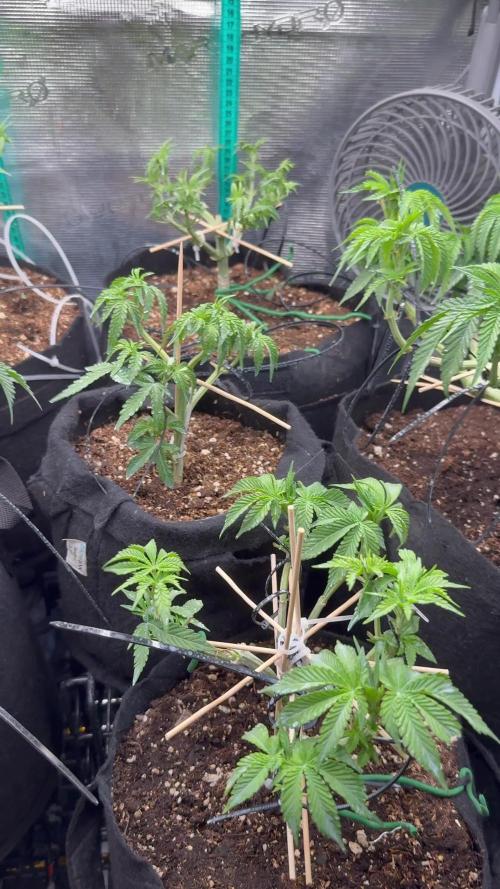
24/7 Dedication 10000000% Involvement Future is Here
Exploreer Level. Have to bring it to All Community
Peace

Likes
1
Share


@InDiviDoOm
Follow
К началу 3 недели снизил влажность до 60%. По листу добавил Б52 на 1 литр 1 миллилитр. Опрыскиваю по мере высыхания листьев. полив ежедневный под корень.

Likes
165
Share


@Tropicannibis_Todd
Follow
💩Holy Crap Growmies We Are Back💩
So what do you say we have some fun 👈 We got some EXOTIC SEEDS 👉 👻👻👻MONSTERMASH👻👻👻 😛
Well my friends we are just at the 28 day mark and as you can see shes doing great 👈
👉 So now i felt i need to start training her over to maximize her growth by doing some LST 👈 Just noticed she's starting to preflower 😛
Lights being readjusted and chart updated .........👍
👉I used NutriNPK for nutrients for my grows and welcome anyone to give them a try .👈
👉 www.nutrinpk.com 👈
NutriNPK Cal MAG 14-0-14
NutriNPK Grow 28-14-14
NutriNPK Bloom 8-20-30
NutriNPK Bloom Booster 0-52-34
I GOT MULTIPLE DIARIES ON THE GO 😱 please check them out 😎
👉THANKS FOR TAKING THE TIME TO GO OVER MY DIARIES 👈

Likes
92
Share


@DogDoctorOfficial
Follow
Week 3: TrolMaster Chronicles – Transplanting, Growing Strong, and Thriving in PRO-MIX HP 🌱✨
Hey Grow Fam! Another exciting week has flown by in the grow room, and I’m thrilled with the progress! We kicked off Week 3 with our first set of transplants. The Gorilla Melon was transplanted at the end of the week, while the Papaya Zoap is still patiently waiting for its turn to shine. Each plant that’s been transplanted is now comfortably settled in 15-liter Autopots, filled with PRO-MIX HP BIOFUNGICIDE + MYCORRHIZAE, and wow, I’m loving this mix!
🌱 Why PRO-MIX HP is a Game-Changer
For those of you unfamiliar with PRO-MIX HP, let’s take a closer look. This soil provides superior drainage and aeration, thanks to its high porosity. The addition of fibrous peat moss and coarse perlite creates an ideal environment for water flexibility. It’s been perfect for the girls as they transition into their final homes. Plus, the biofungicide and mycorrhizae are doing wonders for root development, giving them all the support they need for vigorous growth. The plants are showing off a beautiful, vibrant green, each with its own unique characteristics—no two plants are the same, and I love that!
🌡️ Environment Update: Temps, RH, and More
Let’s talk about the conditions the girls are thriving in! We’re sitting at:
• Temperature: 26.7°C
• Relative Humidity: 62.9%
• VPD: 1.30 (I know it’s a bit high, but they’re handling it like champs)
• CO2: 800 ppm
• pH: 6.18
• TDS: 215 ppm
• Solution Temperature: 23.2°C
To make things even more efficient, I’ve adjusted the light height, keeping the PPFD around 360 to 400 to save on energy. These beauties are still soaking in the light perfectly, and I couldn’t be happier with how they’re responding.
💧 Watering and Feeding
At this stage, the plants are thriving with just enough nutrients to keep them happy. I’ve kept things simple with a balanced solution, ensuring everything stays within the perfect range. The PRO-MIX HP, with its mycorrhizal fungi, is really helping with nutrient uptake and boosting overall health. It’s amazing to see how quickly they’ve adapted!
🌟 Transplants Complete – Progress Feels Incredible!
I’m super excited with how everything is shaping up! Most of the transplants went smoothly, and the growth we’re seeing is just amazing. The Papaya Zoap is still waiting for its final move, but it’s growing strong, getting ready for the next step. It’s an honor to work with these genetics—they’re each unique, yet all thriving in their own way. 🌱💚
🌍 Shoutouts and What’s Coming Next
I couldn’t do this without the support of my amazing sponsors and all of you, Grow Fam! A huge shoutout to TrolMaster and Aptus Holland for their top-notch gear and nutrients, and of course, to all my followers—whether you’ve been here from the start or are new to the journey, thank you for the love and support! 💚🙏
Don’t forget to check out my Instagram and YouTube, where the Seed to Harvest Series just kicked off! I’m going deep into all the gear, techniques, and day-to-day grow updates you see here. Exclusive content and more are waiting for you on those platforms, so come by and join the fun!
Growers Love to everyone, and here’s to another epic week of growth! 💚🌱 Let’s keep pushing the limits and making magic happen.
• Nutrition: @aptusholland @aptus_world @aptus_es @aptusbrasil @aptus_thailand @aptus_portugal @aptususa_official @aptusplanttechnz @aptusplanttechaus
• Controls: @trolmaster.eu @trolmaster.eu.support @trolmaster.support @trolmaster.agro
• Soil: @promix_growers_eur @promix_cannabis @promixmitch
P.S. Let’s talk about these new Model One LED bars I’m running. 🌿💡 They’re not just any lights—these are full-spectrum beasts designed to give my plants exactly what they need at every stage of growth. The real magic, though? The dimming feature. With just a quick adjustment, I can dial down the intensity without sacrificing the quality of the light. This means I’m saving on energy costs while still delivering top-tier PAR and maintaining a balanced spectrum. It’s not just about blasting plants with light; it’s about giving them the right light at the right time. By fine-tuning the PPFD (Photosynthetic Photon Flux Density), I’m hitting that sweet spot where the plants thrive, and I don’t have to run the LEDs at full power. So, while I save a bit on electricity, my plants still get the perfect environment to reach their full potential. 🌱✨
This level of control lets me optimize the growth, and trust me, my plants are loving it—just another reason I’m thrilled with the Model One setup.
💚💚💚 Growers Love everyone 💚💚💚


Likes
16
Share


@TooQuiikk
Follow
The hardest part of growing, is the time for harvest...
I didn't do the norm, no 12/12 I do 10/14.. Do I harvest? I flushed her out, its only week 6 of flower, and I feel like there is plenty of time for these babies to bulk up... things are on cruise control, moon mintz is a 9 week flowering plant. She is looking absolutely BEAUTIFUL.
This whole grow, except the hermie... has been a blessing. I love this plant, seeing my efforts going into these huge buds is very very amazing.


Likes
2
Share

@Allybearx3
Follow
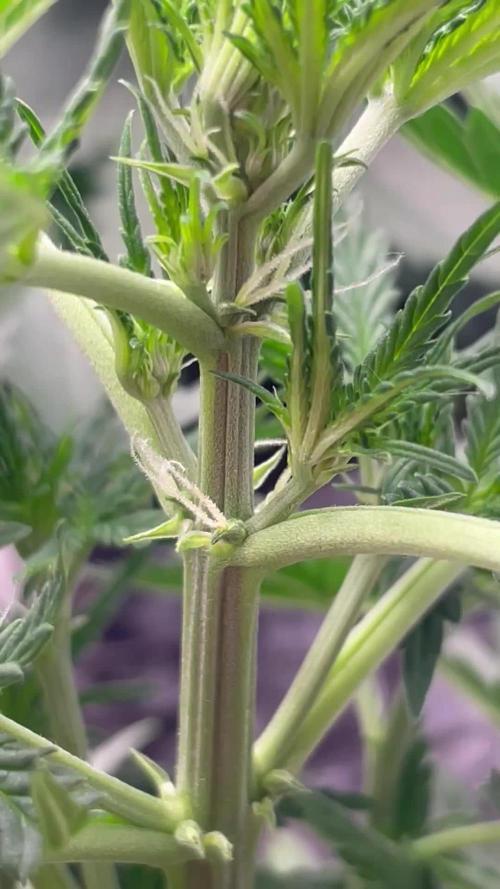
I think they are going to start flowering soon, the little white hairs are going crazy now lol, didnt realize I wasn’t giving them nutrients 😭 so stared them on it hopefully they’ll grow even bigger. Been learning a lot for my next grow but all in all these babies are doing very well
Likes
8
Share

@Marijuanaut
Follow
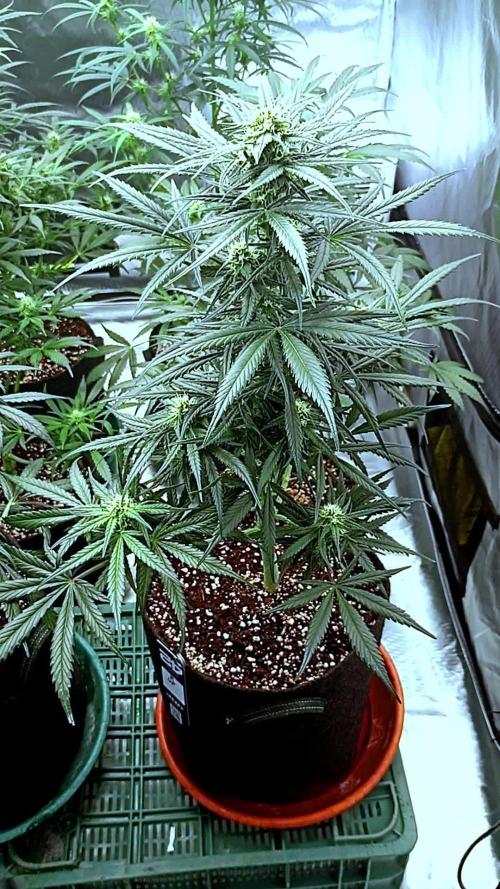
Another week has passed! 😎
Everything seems stable and healthy... no signs of deficiencies or nut lockout so far! 😋
Slowly changing the feeding into plagron with the bloom this week and green sensation on the next one. 💪
💚💛❤️

Likes
6
Share


@Gardens_of_Of
Follow
Both ladies are growing frosty buds smelling grapes as its name suggests.
Both seem to have about 7-10 days left to finish.
Next week, I will start flushing.

Likes
4
Share


@DmbTexasRanger
Follow
I think I did okay here. Harvest of indoor strawberry cheesecake by Humboldt seed co.
I’m going to run the diary through cookies comparison.
Cookies elephant trunk to run week 15-18. Going to flower in veg tent until these are done hanging


Likes
23
Share


@ILoVeThiSpLaNt
Follow
Giorno 49
Qualche pianta (Crystal Candy XL) mostra carenze di cal-mag o un mancato assortimento di nutrienti dovuto a ph sballato (lo so devo essere più preciso e misurare sempre acqua soluzione e scopo) devo ancora cercare di capire questa puntinatura marrone con necrosi fogliare da cosa sia dovuto
La Grape Rolex V2 anche lei mostra qualche segno con un ricurvamento verso il basso di alcune foglie ma tutto sommato sta bene.
Ci vediamo settimana prossima 🖐️ 🤞
Likes
1
Share


@mauigrown
Follow
As week 5 came to a close and we move into week 6 of flowering, I am having really high hopes for the end result. The buds started to get some light orange hairs which is really nice and they are really starting to thicken up!
Towards the end of week 5 the plants started to show early signs of burn on their leaf tips, so I started the week 6 feeding a little early. In week 6 we bring the EC down quite a bit as we get into the late stages of flower. I also recently switch to measuring with EC vs PPM for ease and accuracy.
Also at the end of week 5 I did a calibration on my coco for each plant as week 6 nutrients are much lighter.
Coco Calibration Method
1. Mix up nutrients.
2. Water plants as normal and measure runoff.
3. If runoff EC is not at or close to the inflow EC
a. Water more and keep measuring runoff until the runoff is at or close to the inflow EC
4. Do steps 1-3 for all plants (One at a time)
Tips:
- I use a shop vacuum that I stick the end in the bottom of the pot saucers and leave it on while I water so it sucks the runoff as soon as it drains out the pots. Then I measure, empty and water again until I hit my targets)
For this calibration, I ended up using around 6 gallons of nutrient solution.
Watering technique used is to measure runoff at every watering and make sure we are staying as close as possible to the inflow EC. It does not matter how much water you need to put through the pots to get to the desired EC on runoff as that is a benefit of Coco. My main goal is to keep my runoff in check and the plants seem to do better than I have ever grown before!
The smell off these ladies are amazing and strong. I don't have a carbon filter and enjoy her smells and aromas all day long as my desk is right next to my tent.
There were no issues in Week 5. Plants continue to look amazing and the buds are continuing to bud up and structure very nice! I'm excited to see the end result after the ripening and flush stages. Also the colors that are soon to come! Stay tuned!
______________
We are 5 days into week 6 and the buds continue to grow fatter and fatter on a daily basis.
I'm really dialing in my EC and making sure to mix it at 1.1 EC and making sure my runoff is from 1.1-1.4.
I started playing with the mix as I am getting used to the grow schedule and how the base nutrients effect the EC.
I have found that doing 50% of the low strength calendar hits me right at my target EC and I don't have to dilute my mixture after.
The smells continue to be strong and fill my house up.
The weight is starting to make the colas lean over which is nice because it's opening up the canopy to get more light in.
I'm very excited to see what the buds look like in week 7 and then we are on to ripening stage, flush, and then finally harvest!!


Processing
Likes
Comments
Share


Likes
91
Share


@Drgreen13
Follow
Hi guys, Another week gone, these DC cures are tanking along. These are gonna be pretty big considering the size of the pot and the fact there's three of them in there. Started feeding nutrients a few days ago and it's showing 😁👍🏼.
Please check out my other diaries and feel free to leave a like, maybe even a follow and I'll be sure to check out your diaries to.
The light being used Is the Mars hydro SP150, its a great quality light and is very bright, ideal for a rectangular space.
Drgreen13#6724 (discord)
Stay high, stay fly, #420everyday. 🥃

Likes
8
Share


@HeartStrong_Garden
Follow
Plant two is doing a little better color wise. Something is going on with the leaves of plant one mostly. Maybe it is because i was using overflow water straight from the air conditioning unit instead of the tap? I'm having to pull a lot of dead leaves off
Likes
27
Share


@OldDabKing
Follow
Just watering the soil when dry in this final week of flower. Untied all LST ties in final days of growth, also defoliating dried up and dying fan leaves. A very piney and berry aroma coming off of this plant.
Likes
18
Share


@raulmoat123
Follow
Quick update week 3 flower these girls are putting on weight very very quickly. The blue gelato buds are already becoming dense like stones . Watermelon punch literally is the most satisfying smell I have smelt in a while . Wedding cake is the biggest in my tent and most gassiest plant. The terple inhouse genetics are also massive will show the inhouse section next week , just takes to long to take them out of tent


Likes
16
Share


@GrowerGaz
Follow
This week are repotted the plants and will move the four in BAC lava soil up to my Dr120 this week. I have just cleaned it and like to leave it empty for a week , move the food source for any bugs. They have just had water this week and are bouncing back from being topped.
The two in dwc are staying in this tent.


