



shorts_status_processing


@andyandy
Volgen
Week 5 started off a bit rough. Continuing to over nute the plant babies, I realised I should flush and step back a little.
The flush helped a lot. I keep the plants outside on days where the weather was good, and put them back inside to maintain 20/4 light schedule.
I defoliated a large fan leaves at the bottom of the plants, as well as any of the yellowing leaves. This, coupled with the flushing, really seemed to perk them up. I trained some more of the branches and tucked away fan leaves blocking bud sites.
All 5 plants are flowering, with B#2 (the untopped one), leading the charge with a solid main cola.
I'm surprised by how little they stretched, but perhaps that has something to do with me nuking them with fertiliser at a critical point. Eh.


@AsNoriu
Volgen
Day 128. It took me almost 48 hours with two short naps to sort all 8 girls.
Result not bad, think easy will brake 1g/W, I have 720 setup, but one light is limping, so it's closer to 600. Think harvest will be in 900 area. It's 90 W per plant only and I think one girl will go above 150 easy !
I doubt I will post Tangies weight in statistics, don't want to screw that strain, she could be way way WAY bigger !!!
Happy Growing !!!



@IslandTerps
Volgen
Strain: Fast Buds – Purple Lemonade FF
Grow Type: Indoor
Pot Size: 13 Gallon Pot
Medium: Peat Moss & Perlite
Nutrient Line: Athena
Week 16 Update
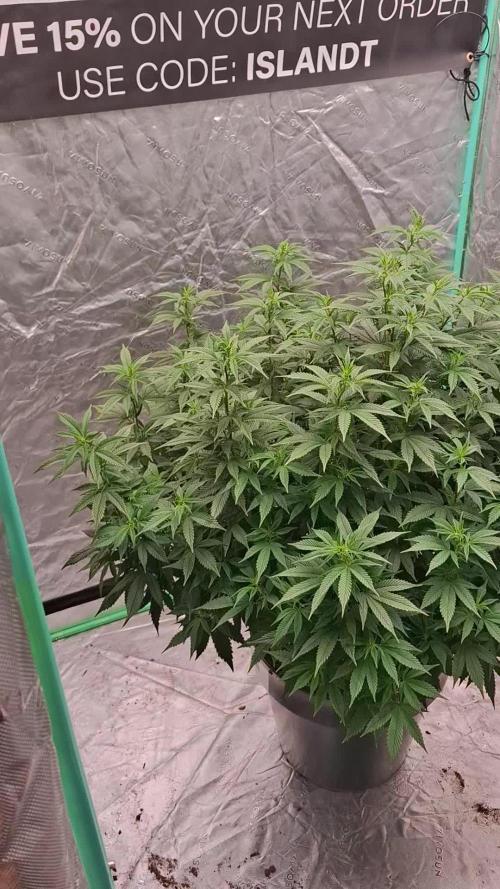
LOL, she's alive y'all! 🤣 And not only alive… this girl is really fucking huge 😆🌿. She has officially reached the point where moving her around just to take photos has become a whole task by itself.
She's an absolute beast now. All that extra veg time and training has definitely added up, and she's grown into a seriously big plant with a wide canopy. It's been a while between updates simply because she's gotten so awkward to move around, but from here on out there'll be constant updates right through flower.
Health wise, she's doing perfectly fine, so I'm not changing anything with the feeding. I'll continue with the regular Athena routine and let her keep doing her thing until I'm ready for the flip.
About one week before switching to 12/12, I'll give her a proper defoliation and open everything back up. With a plant this size, I definitely want to get some airflow and light through that canopy before the flower stretch kicks in.
We've been vegging this girl for a longgg time… now I'm ready to see what this monster does in flower 😏🔥.
Feeding
Volume: 6L
Athena Grow: 45ml/gal
Athena Core: 25ml/gal
pH: 6.2
PPM: 750–850 ppm
Frequency: As needed
Indoor Climate Conditions (Vegetative)
🌡️ Temperature: 20–25°C
💧 Humidity: 55–60%
📈 VPD: 0.9–1.1 kPa
ISLANDT – 15% off Fast Buds strains 🌿🔥




@discopriest379
Volgen
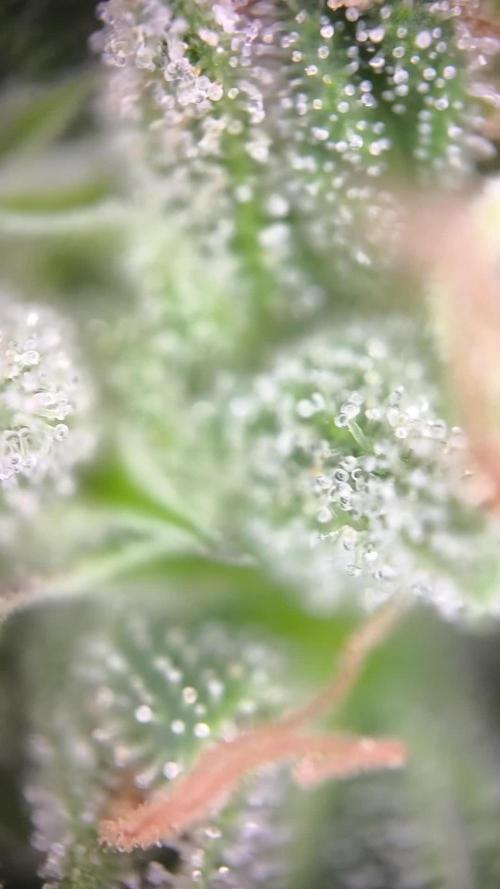
Everything still looks good this week. The leaves are healthy, and the buds continue to develop nicely 🌸✨
I watered twice this week — on September 16th and September 19th. Each time I used 10 L of water with 3 ml of Alga Bloom and new added 1 ml of Green Sensation 💧🌿.
The plants currently get direct sunlight from around 12:30 until about 15:00, depending on the weather ☀️. After that, the house starts shading them.
This week I also did quite a lot of defoliation again, mainly to prevent the leaves from shading the buds and to improve airflow through the plants 🌿✂️💨
So far, the weather has actually been quite favorable. The mornings aren’t as humid anymore, and there’s still a nice amount of airflow around the plants. Even though it rained during the night, the plants were already completely dry by 8 AM. It was also quite windy on Saturday — you can see it in the video 😄💨🌿
Hopefully this weather will last. I need at least another three weeks of reasonably dry conditions to get them safely to the finish line 😄🌸☀️
Fingers crossed! 🤞🌿


@BalconyBoy
Volgen
24.09.25 due to the weather outlook and fear of a powdery mildew revival it was time to harvest. I wet trimmed everything down to the buds and discarted all stems right away. The reason being that I want to accelerated drying and see each nug closely before putting it into the multi tier drying screen im using. In this process some smalls with mildew were identified and sent to compost. After a week flowers were placed in closed plastic buckets to get even moisture content. Further processing awaits.





@Staffedition
Volgen
Всем привет друзья!
Как я и говрил, попалась прекрасная генетика.
Растние растёт не по дням а по часам.
Цветёт и пахнет
Всем мира и добра!


@BudBrewerz
Volgen
This beautiful hazey lady looked ready for the take down, and since I had some time on my hands , thats exactly what I did, she was smelling very nice and rich , Ive got her hanging to dry atm, but im looking very forward of giving her a taste once she's dried and cured. I'll be back for a weigh in once her buds are dried and seperated from the stems etc.



@Ultraviolet_
Volgen
18 hours in seconds, 60x60x18 = 64,800 seconds, now multiply by the 833μMol/s reading off the PAR metre. μMol/s (micromol) is the unit in which P.A.R. is expressed.
64,800x833=53,784,000μMol
53,784,000μMol = 54 Mol
54 DLI @ 800ppm, powerful combination. Pushing photosynthesis to peak capacity, accelerated growth and increased biomass. Applied net, stretching her around for a week. Maintaining a minimum air velocity of 0.3m/s within the inner canopy.
E=MC2 looks like a simple multiplication problem; it describes a fundamental physical truth: mass and energy are the same thing. The equation doesn't just calculate a value; it reveals that mass is effectively "congealed" energy. Energy is just numbers. Energy isn't a physical "substance" you can hold or touch. It is essentially an abstract, calculated number that we assign to a system to predict how it will change, interact, or move. A numerical label we attach to matter to track how it behaves. Because the universe runs on laws of symmetry (specifically, that the laws of physics don't change over time), a single global number must be conserved. We call that number "energy".
How well a seedling grows is down to how much knowledge one can acquire to increase the level of conversion to occur. Applying knowledge effectively requires intuition, which comes from hands-on experience. A seasoned stoner learns to read subtle signs—like a slight change in leaf turgor (stiffness), subtle color shifts, or the specific texture of the soil—before a textbook diagnosis can be made. Ultimately, growing is the application of botanical science blended with active observation. Knowledge dictates your potential, but adaptability and attentiveness to the plant's immediate environment determine your results. The human eye is capable of distinguishing more shades of green than any other color in the visible spectrum.
1.618
Nature mathematically optimizes quantum energy transfer and light absorption efficiency within the photosynthetic machinery, as it naturally dictates energy scaling hierarchies and resonance dynamics. External vibration or electromagnetic wave that perfectly matches a plant's natural frequency directly influences plant growth. Low-frequency sound waves and targeted electromagnetic fields stimulate cellular processes and boost photosynthetic efficiency. An angular frequency aligned with the Golden Ratio is often used in wave mechanics and quantum physics to optimize energy transfer.
Alignment with what already exists.
Law of nature, not my opinion: Constructive interference occurs when two or more overlapping waves meet in phase, meaning their crests and troughs perfectly align. Their amplitudes add together, creating a new, amplified wave with greater intensity than the individual components.
Constructive interference is the foundational mechanism that establishes a resonance hierarchy across physical, structural, and acoustic systems.
"Frequencies utilizing this ratio naturally minimize resistance (or impedance) and allow for highly efficient resonance, which can facilitate an increase in Electron Transfer Reactions (ETR) or energy pathways in molecular structures."
Quantum coherence in photosynthesis occurs when a photon of sunlight strikes a leaf; the energy it carries must travel to a reaction center to be converted into chemical energy. This process operates at nearly 100% efficiency. If the energy moved in a traditional "bunching" or random hopping manner, a large portion of it would be lost as heat. Instead, plants utilize quantum superposition. The energy particle (exciton) doesn't just take one path; it exists in a wave state and explores multiple pathways simultaneously. It essentially "chooses" the most efficient route to the reaction center simultaneously.
Research shows that molecular vibrations and the specific network arrangements of chlorophyll molecules (like the naturally evolved Chlorophyll A & B ratios) actively protect against energy overflow, optimizing light capture across different light intensities. Enzymes are the biological catalysts that speed up chemical reactions within a plant's cells, allowing them to grow, metabolize, and repair. Rather than relying solely on the classical kinetic energy of molecules colliding, plants use quantum tunneling. Subatomic particles like electrons and protons (hydrogen ions) can literally "teleport" through energy barriers that they normally wouldn’t have the energy to climb over. This makes vital metabolic reactions happen far faster than classical physics could ever explain!
Effective quantum efficiency of photosystem II, often denoted as ΦPSII, represents the proportion of light absorbed by Photosystem II (ΦPSII) that is actually used in photosynthetic electron transport. It is a key indicator of how efficiently a plant is using light for photosynthesis, as opposed to losing it as heat or fluorescence. ΦPSII (effective quantum yield of photosystem II) functions primarily as a "multiplier" (a coefficient of efficiency) rather than an additive factor when estimating the overall photosynthetic electron transport rate (ETR). Multipliers are considered far more beneficial than additions because they generate exponential growth, leverage existing resources to their full potential, and create sustainable, self-multiplying capacity, rather than just incremental, linear increases. This fascinating observation is rooted in the intersection of subatomic geometry, fractal scaling, and quantum dynamics. In specific molecular arrangements—such as in conjugated polymer networks or biomolecular architectures—the Golden Ratio (PHI) naturally dictates energy scaling hierarchies and resonance dynamics. Mathematically tied to the fine-structure constant, which defines the strength of the electromagnetic interaction. The Golden Ratio can be mapped geometrically as the Golden Angle (137.5 degrees) in atomic structures, linking the charge of the electron to fundamental quantum constants like Planck's constant.
An electromagnetic wave is neither electric nor magnetic, but a combination of both. 137.5
The Golden Angle (137.5) This angle is derived from the Golden Ratio (1.618). It is the smaller of two angles created when a circle is divided such that the ratio of the arcs equals the Golden Ratio.
In quantum physics, Alpha (Α/α) is the approximate denominator of the fine-structure constant (often represented by the Greek letter Alpha (Α/α). It is a fundamental, dimensionless number that dictates how strongly charged particles (like electrons) interact with the electromagnetic field. Its value has puzzled physicists for over a century, as it bridges quantum mechanics, electromagnetism, and relativity.
In quantum mechanics, Omega (Ω/ω) usually represents angular frequency. When applied to "quantum coherence"—the ability of particles to exist in overlapping states without immediately degrading—is key to calculating how long these states last.
The Golden Angle, the value 137.5° is the geometric Golden Angle. It is derived from the Golden Ratio (1.618) and is famously responsible for the beautiful, mathematically optimized spiral patterns found in nature (such as sunflower seeds, pinecones, and leaf arrangements). Because of this, theoretical physicists and mathematicians have long speculated about why nature relies so heavily on the number 137 and the golden angle to govern everything from subatomic light interactions to the macroscopic geometry of the universe.


@MO_PureLeaf
Volgen
Ja läuft genau so wie die anderen ?🏻
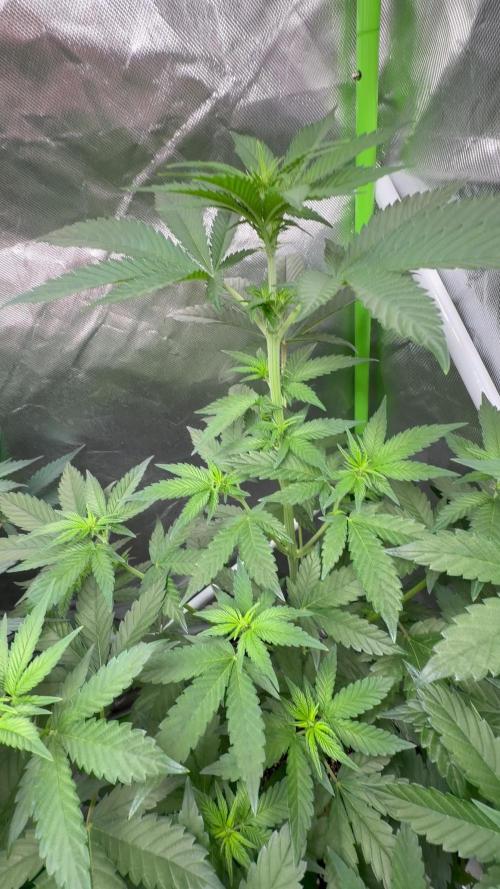
Edit: Ich habe heute mal vorsichtig das habfband abgemacht.. mir ist meine Lampe runter gerutscht von der Stange… richtig miese Aktion.. Schock Moment des Todes gewesen.. aber ohne Scheiß. Die Pflanze hat es Mega gut gemacht. Top die Genetiken von Sweet Seeds! Sie sind Stress frei im growen und zeigen dir wirklich was power bedeutet und das coole ist, die danken es dir wenn man sie toppt! Die haben da ordentlich Bock drauf!

@Ultraviolet_
Volgen
67 days since April 16th, 2026
We become aware at such times of man's wonderful ability to bring seemingly unrelated elements into harmonic balance, and receive a glimpse into a world where everything exists in conscious sympathetic attunement to everything else. When we listen to a piece of music that seems to strike a beautiful chord somewhere inside us, or view a painting that simply glows with harmonic awareness well executed, we probably do not spare much time to contemplate the wonderfully intricate combination of vibrations that our sensors make it possible for us to perceive. We tend to appreciate the relationship between the parts of something by an awareness of the harmony or dissonance of the whole. This ability enables us to say "what a beautiful house!" instead of "analysis has proven that this collection of building materials exhibits certain elements of harmonic proportion." While this ability to instinctively appreciate the beauty of true harmony has an important role to play in evolution, a more analytical understanding of the laws involved can be most useful. This is especially so if we wish to create works of art where each part exists in true harmony, not only with the other part of that particular whole, but with the universe within which the creator and the created exist.
Everything vibrates. From the most dense matter to the most subtle cosmic rays, everything which our senses allow our thoughts to become aware of, can be specified in terms of wavelength or frequency of vibration. These two terms define the same thing, but from different points of view.
The following are the approximate wavelengths of various energy carriers:
Cosmic rays 0.000,000,001 mm
Gamma rays 0.000,000,1 mm
X rays 0.000,500 mm
Ultraviolet rays 0.003 mm
Visible light 0.006 mm
Infrared 0.01 mm
Sound waves 1 meter
Radio waves 300 meters
Violet light 400 nm to 450 nm
Blue light 450 nm to 500 nm
Green light 500 nm to 570 nm
Yellow light 570 nm to 590 nm
Orange light 590 nm to 610 nm
Red light 610 to 700 nm
1 nanometer (nm) = 0.000,000,1 cm = 1/10,000,000 cm
If a guitar string is plucked and we hear a sound, it is not too difficult for the human mind to associate this sound with the vibration of the guitar string. With color it is quite different. It is difficult for us to conceive that the color of a substance is not an inherent property of the substance itself, but an indication picked up by our senses of that substance's ability to absorb or reflect the light which happens to be shining on it at that moment. Neither the matter nor the light is colored. What happens is that the brain learns to differentiate between the frequencies reflected or transmitted by the substance the eyes are focused on. The same thing happens with sound. When we say "Oh! Listen, they're playing my favorite song," what we really mean is: "My brain has stored within it a particular pattern of frequencies. I have compared the new information being received with this stored pattern and have deduced the answer that the two patterns are similar within certain specified tolerances." The 'pleasure' involved could have something to do with our running the pre-recorded pattern at the same time, in 'sympathy' with the new pattern as it is received.
The word sympathy describes very well our ability to appreciate color and sound. It also describes the reason behind certain elements of harmony. For instance, if a substance vibrating at 100 cycles per second (tone 1) is in the proximity of another substance vibrating at 200 cycles per second (tone 2), we could perceive, if we had the right equipment, a certain sympathetic relationship between the two.
We will see from this that there is a uniform doubling of the first tone seen in the second. At various points along the waves, the two are the same in amplitude. At other points, they are at opposite poles to each other. This doubled frequency has more points of similarity to the original than any other frequency except the original itself. If the equipment we had available for measuring these two frequencies was a soundboard amplifier and a pair of ears, then we would hear what would sound to us like one tone. If we had the opportunity to hear one at a time, we would hear that although they sound the same, one is higher in pitch than the other. This characteristic of 'the same but different in pitch', musicians have called the octave. Any two tones produced where one has exactly doubled the frequency of the other is called an octave. Speaking in ratios, an octave would appear then as the ratio 2:1 or 1:2, depending on whether we are talking of an octave up or down.
A single note produced by almost any instrument will contain more than one wavelength or frequency. It will have a dominant frequency, the wavelength of which we would call the note's 'fundamental' or 1st harmonic. It will also have a varying number of upper harmonics, gradually fading in intensity into infinity or silence.
Natural harmonics always have the same pattern of intervals between them. The interval between the 1st and 2nd harmonic is a perfect octave; between the 2nd and 3rd a perfect fifth; between the 3rd and 4th a perfect 4th; and so on, the intervals becoming smaller and smaller until they lose any relationship with the western 12 tone scale as it exists at the moment. Just as an octave has certain elements of sympathy with its fundamental, so some intervals have been noted to be more perfectly in sympathy with the fundamental than others. The ratio of the 'perfect 5th' or interval of 7 semitones, as it occurs in the harmonic series, is 3:2 or 2:3, while that of the 'perfect fourth" is 4:3 or 3:4. All the tones in the western 12 tone scale can be expressed in terms of the ratio between the upper tone and its fundamental. This would seem to be an ideal way of generating a scale from any given fundamental and several attempts have been made to do this, the Pythagorean system being probably the most well known. Although when working with a single tone instrument playing on its own, the Pythagorean formula works wonderfully well, if we had several instruments tuned this way together and asked them to play almost any western music, we would find that at times they sounded quite out of tune to each other.
The lack of flexibility of the various scale systems based on the harmonic series has led to what is known as the 'tempered' scale. This uses as its primary unit of interval the ratio of the octave or 2:1. It then proceeds to divide the interval between any fundamental and its upper octave into 12 smaller intervals by applying the ratio: two to the one-twelfth power, to one (21/12:1). This equals 1.059463094, so by multiplying any frequency by this number, we will obtain the tempered semitone next up from our fundamental. We will also find that any tone twelve semitones up from any other tone, in a scale generated in this way, will have exactly double the frequency.
If we took the note middle C on a piano and halved the wavelength, we would have the note C one octave above. If we halved this, we would have the C above, and so on. However, within about 6 octaves, we would find that although a 'sound' was being produced, no human ear could perceive it. If we kept on going, halving and producing upper octaves of our fundamental C, we would proceed through the infrared band, into the visible light spectrum. If we happened to be outside during the day, we would, for one octave only, see the note C with our eyes. The next octave above would already be in the ultraviolet band, and outside the eye's sensitivity range. If we can think of color as being an indication of a substance's vibratory rate or wavelength, we may begin to see a relationship that could exist between the color and sound spectrums.
The logical extension of what has so far been said is that there exists a scale in the color spectrum that corresponds exactly to the scale in the sound spectrum, each color tone being an octave of the equivalent note in the sound range.
This is not the end of the story but only the beginning. If we can for the moment accept that any wavelength in one band has upper and lower octave stretching out to infinity, then the next question is 'fine, but what shall we use as our fundamental? A particular color? A particular sound frequency?' The musicians among us will probably say 'A 440'. This means that the note A should vibrate at 440 Hertz, or 440 times per second. They would tell us that this is standard pitch has been adopted by most orchestras around the world; pianos are tuned to it, instruments are constructed to formulas based on it, and so to them it would probably seem the most appropriate place to begin. Some of these musicians may know of the battle that is still raging with regards to this being the standard, but few would know why A = 440 Hz was chosen except that it worked when it was set to be a suitable compromise between the many different pitches in use at the time.
432 Hz is said to be mathematically consistent with the patterns of the universe. Studies reveal that 432 Hz tuning vibrates with the universe’s golden mean PHI and unifies the properties of light, time, space, matter, gravity, and magnetism with biology, the DNA code, and consciousness. When our atoms and DNA start to resonate in harmony with the spiraling pattern of nature, our sense of connection to nature is said to be magnified.
Another interesting factor to consider is that the A=432 Hz tuning correlates with the color spectrum, while the A=440 Hz is off. Audiophiles have also stated that A = 432 Hz music seems to be non-local and can fill an entire room, whereas A=440 Hz can be perceived as directional or linear in sound propagation.
Once you adopt the idea that sound (or vibration in general) can have an equalizing and harmonizing effect (as well as a disturbing effect), the science of harmony can be applied to bring greater harmony into one's life or tune to specific energies. There is a form of absolute and relative harmony. Absolute harmony can, for example, be determined by the tuning of an instrument. The ancients tuned their instruments at an A of 432 Hz instead of 440 Hz - and for a good reason. There are plenty of music examples on the internet that you can listen to in order to establish the difference for yourself.
Attuning the instrument to 432 Hz results in a more relaxing sound, while 440 Hz slightly tenses up the body. This is because 440 Hz is out of tune with both macro and micro cosmos. On the contrary, 432 Hz is in tune. To give an example of how this is manifested microcosmically: our breath (0,3 Hz) and our pulse (1,2 Hz) relate to the frequency of the lower octave of an A of 432 Hz (108 Hz) as 1:360 and 1:90.
It is interesting to note that 432 Hz was the standard pitch of many old instruments and that it was only recently (19th and 20th century) the standard pitch was increased. This was done in order to be able to play for bigger audiences. Bigger audiences (more bodies) absorb more of the lower frequencies, so the higher pitch was more likely to “cut through”. One of the oldest instruments of the world is the bell ensemble of Yi Zeng (dated 423 BC), tuned to a standard F4 of 345 Hz, which gives an A= 432 Hz. The frequency of 345 Hz is that of the platonic year! Similarly, many old organs are tuned in A=432 as well; for example, St. Peter’s Capella Gregoriana, St. Peter’s Capella Giulia, S. Maria Maggiore in Rome.
Maria Renold’s book “Intervals Scales Tones and the Concert Pitch C=128 Hz” claims conclusive evidence that 440 Hz and raising concert pitch above scientific “C” Prime=128 Hz (Concert A=432 Hz) disassociates the connection of consciousness to the body and creates anti-social conditions in humanity.
The difference between concert pitch A=440 Hz and Concert A=432 Hz is only 8 cycles per second, but it is a perceptible difference of awareness in the human consciousness experience of the dream we share called existence.
shorts_status_processing


@TexasJack0418
Volgen
Week 5, Day 37 sprout, Day 7 bloom, Watered 1-1/2gal/ea. 5ml/gal Cal/Mag, 10ml/gal Seaweed/Fish extract. Removed some leaves. Day 38 LST. Day 40/10bloom I moved a MarsHydro Pro II Epistar 400W beside the TS-1000 and set both to 14" Installed 2 6" fans above plants to feed air and CO2. Day 41 made 3gal PH 6.3 Worm Tea; 2tbsp Molasses, 1-1/2cup Worm Castings, 1/2cup coffee chaff, 3-packs Green Tea, 4ml/gal Cal/Mag, 10ml/gal Seaweed/Fish extract, 0.5ml/gal Orca. Day41/11bloom watered 1-1/2gal/ea 1275PPM Worm Tea. Re-LST w/outrigger stakes keeping the canopy as close to the pot as possible.


@bsplayerone
Volgen
I used both the soaking in a cup and paper towel method to germinate. I’m using fox farms ocean with no other fertilizers until week 3 or 4. I let it finish germinating in the window indoors. I water with R/O water PH 6.0-6.2


shorts_status_processing


@AK1210
Volgen
Another week of decent weather including the hottest day on record for July in the U.K. It was not last as we have had several shitty showery days but this will hopefully clear to the glorious blue skies we have been having. No problems to report this week but I'm sure the fecking slugs will show there slimy heads at some point so I'll be on guard for the buggers. 😂


@DogDoctorOfficial
Volgen
💚 Amnesia Haze Auto by Zamnesia – Pheno B
Week 11 | She Does What She Wants 😂👑🔥
Welcome back to another chapter of the 8×8 Adventure! 🌱💚
And this girl...
😂
Honestly...
She's doing whatever the fuck she wants.
And I love it.
😂👑🌿
She's growing tall.
She's growing beautifully.
She's stacking.
She's building those flowers exactly the way she wants to build them.
And we're basically standing here watching her work while occasionally saying:
"Okay, girl... do your thing."
😂
Because that's really what it feels like with this phenotype now.
She's found her rhythm.
She's moving.
She's developing.
She's getting heavier.
And she's doing it without asking for permission.
And honestly?
That's exactly what I want to see.
So let's give this beautiful girl the spotlight again.
Because there are only good things to talk about this week.
🌸🔥👑
────────────────────────
🌱 WEEK 11 – SHE'S MOVING
────────────────────────
Last week we talked about this girl being the little plant that refused to stay little.
Well...
I think we've officially moved past that conversation.
😂
She's tall.
She's substantial.
She's carrying a beautiful amount of flowering structure.
And she's moving at a really nice pace.
Not the fastest plant in the room.
Not the slowest.
She's right there in the middle of the rhythm we've created.
Some girls are moving a little faster.
Some are taking a little more time.
And Pheno B?
She's somewhere comfortably in the middle.
And honestly...
she looks fantastic.
That's something I really appreciate about this stage of the 8×8 Adventure.
The plants aren't all moving at exactly the same speed.
But they're all moving.
They're all developing.
They're all expressing themselves.
And this girl is doing it beautifully.
────────────────────────
👑 DOING WHAT THE FUCK SHE WANTS
────────────────────────
I'm going to keep the language this week because honestly...
there's no better description.
😂
She's doing what the fuck she wants.
The branches are growing where they want.
The flowers are developing where they want.
The structure is becoming what she wants it to become.
And we're not trying to force her into some perfect shape.
We're assisting.
That's it.
The plant is doing the work.
We're providing the environment.
We're providing the support when she needs it.
We're keeping the system running.
We're observing.
And when she tells us:
"Okay, I need a little help here..."
we help.
But we're not trying to tell her how to be Amnesia Haze Pheno B.
She already knows.
😂🌿
────────────────────────
🌸 THE FLOWERS ARE THE STORY
────────────────────────
And honestly...
this is what I love most about her right now.
The flower structure.
😍🌸
Look at the way those flowers are developing throughout the plant.
They're not just sitting there as individual little flowering points anymore.
They're becoming structures.
They're stacking.
They're gaining volume.
They're creating those beautiful vertical lines of development that make this girl so enjoyable to look at.
And the more she develops...
the more obvious her architecture becomes.
You can see the plant's rhythm in the flowers.
You can see where she's decided to build.
You can see how the branches are carrying those developing structures.
And I really like what she's doing.
Very much.
She's creating her own design.
We're simply lucky enough to document it.
📸🌸💚
────────────────────────
🔥 THE STACKING IS BEAUTIFUL
────────────────────────
This is probably my favourite part of her this week.
The stacking.
🔥🌸🔥
There is something incredibly satisfying about watching flowers begin to build on top of one another along the branches.
Week by week...
you start seeing more structure.
More definition.
More density.
More presence.
And with Pheno B, I really like the way the flowers are developing along her architecture.
She's not trying to make one giant statement.
She's building a whole series of beautiful flowering structures throughout the plant.
And that gives her a really interesting appearance.
You can follow a branch with your eyes...
and discover flower after flower after flower.
It's beautiful.
It's becoming substantial.
And she's still got plenty of story left to write.
────────────────────────
🌿 TALL, BEAUTIFUL & COMPLETELY HERSELF
────────────────────────
One of the things I really enjoy about this girl is that she doesn't feel like she's trying to imitate anybody else.
She's tall.
She's around 135 cm.
She's got her own architecture.
She's got her own branching pattern.
She's got her own way of stacking.
And she's completely comfortable being herself.
That's what I want to see.
Because if every plant in this room looked identical...
we'd lose half the fun.
😂
Instead...
we have different heights.
Different structures.
Different flower shapes.
Different rates of development.
Different personalities.
And Amnesia Haze Pheno B has definitely established hers.
She's the girl who looked at an 11-litre pot and apparently decided:
"Yeah, that's plenty."
😂🌱
Then proceeded to grow into a beautiful, tall flowering plant anyway.
────────────────────────
? THE LITTLE POT THAT NEVER GOT THE MEMO
────────────────────────
And yes...
the 11-litre pot is still there.
😂
I still look at it sometimes and think:
"How are you doing all of this in there?"
Because the plant doesn't look like she's trying to fit into a small container.
She looks like she simply decided the container was irrelevant.
😂🌿
She's built herself above it.
She's filled the space.
She's created substantial flowering structure.
And she's continuing to move.
The pot may have been one of the experiments...
but the plant is clearly writing the results.
And her result so far is:
"I'll be fine."
😂👑
────────────────────────
💡 SAME ROOM. SAME PHOTONS. HER OWN STORY.
────────────────────────
And once again, this is where the 8×8 Adventure becomes so interesting.
We're treating the room as one ecosystem.
The same general environment.
The same lighting philosophy.
The same irrigation system.
The same nutritional foundation.
The same 12/12 schedule.
And yet...
every plant interprets it differently.
Pheno B is receiving the same photons as her neighbours.
But she's building her own architecture with them.
She's taking that light...
and turning it into leaves.
Branches.
Flowers.
Structure.
And eventually...
hopefully...
a beautiful finished plant.
That's the experiment.
Same stage.
Different performers.
😂🌿💡
────────────────────────
☀️ THE NEW LIGHTING SETUP
────────────────────────
The upgraded lighting setup remains one of the big changes in the room.
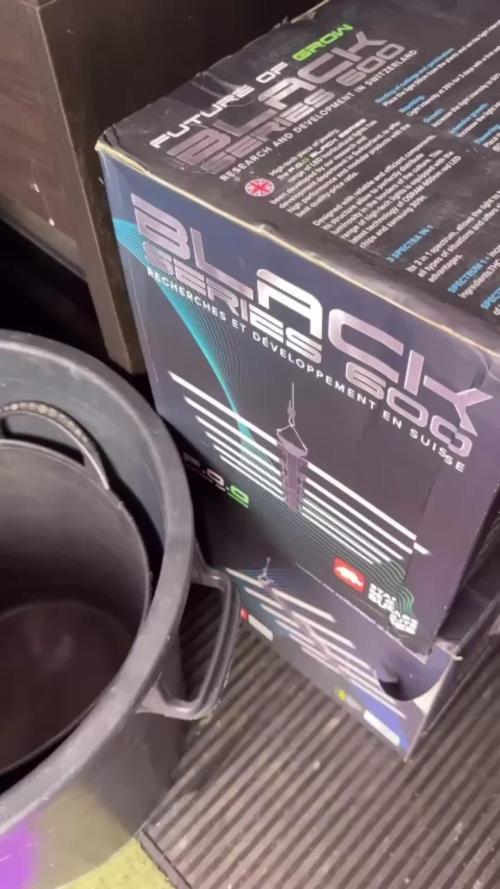
We now have two additional Future of Grow Black Series 600W fixtures helping expand the lighting capability.
Rather than running everything at maximum output, we're controlling the intensity.
Approximately:
💡 ~59% power from the plug
giving us around:
☀️ ~1,500 PPFD across the upper canopy
with the actual intensity naturally varying according to plant height and position.
And this girl is clearly making use of that environment.
She's developing.
She's stacking.
She's filling her structure.
She's catching photons...
and apparently turning them into more flowers.
😂💡🌸
────────────────────────
🌿 THE PLANT DOES THE WORK
────────────────────────
I think this is something I've really learned through this project.
Sometimes we growers get too focused on what we're doing.
We changed this.
We adjusted that.
We moved this.
We added that.
We trained here.
We trimmed there.
But eventually...
there comes a point where the plant takes over.
And that's where I feel we are with Pheno B.
The major structural work has already been done.
The framework is there.
The branches are there.
The flowers are there.
Now she's building.
And our job is mostly to keep the system around her stable.
Good environment.
Consistent irrigation.
Appropriate nutrition.
Light.
Air movement.
Observation.
And support when necessary.
The plant does the rest.
🌱💚
────────────────────────
💨 LET HER GROW
────────────────────────
That's why I don't feel the need to constantly intervene with this girl.
She's doing beautifully.
She's not asking us to reinvent the room.
She's not asking us to change everything.
She's simply growing.
And honestly?
Sometimes the best thing you can do is get out of the way.
😂
Let her grow.
Let her stack.
Let her build.
Let her decide where those flowers are going.
We're here to assist.
Not to micromanage every millimetre of the plant.
And Pheno B seems perfectly happy with that arrangement.
────────────────────────
❄️ AND THE FROST IS STILL COMING
────────────────────────
Of course...
we can't forget the frost.
😂❄️
She's continuing to develop beautiful resin coverage throughout the flowering structures.
And as those flowers build, the frost becomes increasingly noticeable.
This is another characteristic I really enjoy watching on her.
The structure is beautiful.
The stacking is beautiful.
But then you get closer...
and suddenly the flowers have another layer of detail.
Tiny crystalline structures.
Resin-covered surfaces.
Frost catching the light.
And that's when the camera starts becoming dangerous again.
😂📸
Because one photograph becomes ten.
Ten becomes thirty.
And suddenly you're standing there photographing one flower from every possible angle.
────────────────────────
📸 THE CAMERA IS FOLLOWING THE DEVELOPMENT
────────────────────────
And that's exactly why I love having these weekly reports.
Because if you only looked at her today, you'd say:
"Beautiful plant."
But when you compare her with the earlier weeks...
you see the journey.
The structure is more developed.
The flowers are larger.
The stacking is clearer.
The plant has more presence.
The whole thing feels more substantial.
Photography gives us the snapshots.
The diary connects those snapshots.
And together...
we get the story.
That's what makes this project so enjoyable.
We're not simply looking at the finished plant.
We're watching her become it.
────────────────────────
⚗️ NUTRITION – SAME ROOM, SAME UPDATE
────────────────────────
As with the rest of the room, we've increased the nutrition this week.
🌱 Plagron Terra Bloom – 2.3 ml/L
🌱 Power Buds – 1 ml/L
🌱 Green Sensation – 1 ml/L
🌱 Sugar Royal – 1 ml/L
⚗️ pH adjustment as required
Current solution values are around:
⚗️ pH – ~6.02
⚡ EC – ~2.14 mS/cm
And again...
we're not creating a completely separate world for her.
She's part of the same room.
Same overall feeding strategy.
Same environmental foundation.
And she's responding beautifully.
No complaints.
No drama.
Just growth.
────────────────────────
🌡️ WEEK 11 ROOM CONDITIONS
────────────────────────
The room continues around:
🌡️ Day temperature: ~26.5°C
🌙 Night temperature: ~26°C
💧 RH: ~61%
⚗️ pH: ~6.02
⚡ EC: ~2.14 mS/cm
💦 Nutrient solution: ~25°C
🌱 Substrate temperature: ~25°C
💨 CO₂: ~693 ppm
💡 Light schedule: 12/12
? Pot size: 11 L
💧 Irrigation: ~1.45 L/plant/24h
Same room.
Same conditions.
Different plant.
And that's exactly what we're watching.
────────────────────────
🌸 A BEAUTIFUL RHYTHM
────────────────────────
I think the best word for her this week is:
Rhythm.
She's moving at a very comfortable pace.
Some girls are moving faster.
Some are moving slower.
And Pheno B?
She's right there.
Doing her thing.
Growing.
Stacking.
Developing.
Getting heavier.
Getting frostier.
And doing it without making the room complicated.
She's simply following her own rhythm.
And I really like the rhythm she's chosen.
────────────────────────
👑 SHE DOESN'T NEED TO BE THE FASTEST
────────────────────────
This is another thing I appreciate about this project.
We don't need every plant to be the fastest.
We don't need every plant to be the tallest.
We don't need every plant to produce the biggest flowers.
We need them to show us who they are.
And Pheno B has done exactly that.
She's not necessarily trying to win the race.
She's simply running her own race.
And right now...
she's running it beautifully.
😂🌿👑
────────────────────────
🔬 ANOTHER PHENOTYPE REVEAL
────────────────────────
Every week, I feel like we're getting a little more information about who she really is.
At first:
"Small pot."
Then:
"Wait... she's getting tall."
Then:
"Okay... she's really flowering."
Then:
"Look at that stacking."
And now:
"Wow... this is a beautiful plant."
😂💚
That's the journey.
The phenotype gradually reveals itself.
And I think Pheno B is becoming increasingly easy to recognize.
Beautiful structure.
Beautiful flowers.
Strong vertical development.
A really nice stacking pattern.
And an overall appearance that makes you want to stop and look.
────────────────────────
🔮 WHAT AM I WATCHING NOW?
────────────────────────
At this point...
I'm simply watching.
😂
I'm watching those flowers build.
I'm watching the stacking.
I'm watching the resin.
I'm watching the plant handle its increasing weight.
I'm watching the branches.
And I'm watching what she decides to do next.
Because honestly...
she's already shown us that she's perfectly capable of surprising us.
So I'm not going to try to predict every step.
Let's just see what she does.
She's been making good decisions so far.
😂👑🌿
────────────────────────
💭 FINAL THOUGHTS – LET HER DO HER THING
────────────────────────
Week 11.
Amnesia Haze Auto Pheno B.
And honestly...
I love this girl.
💚🌿👑
She's tall.
She's beautiful.
She's moving.
She's stacking.
She's building.
She's getting heavier.
She's getting frostier.
And she's doing all of it at her own rhythm.
She's not the fastest girl in the room.
She's not the slowest.
She's right there in the middle...
and she's doing beautifully.
And perhaps the thing I like most is that we're not really telling her what to do anymore.
We're assisting.
We're supporting.
We're keeping the environment stable.
We're providing the photons.
We're providing the nutrition.
And then...
she does the rest.
She's growing where she wants.
She's stacking where she wants.
She's building flowers the way she wants.
She's doing what the fuck she wants.
😂🌿🔥
And I wouldn't have it any other way.
Because that's the beauty of growing.
You can create the environment.
You can provide the tools.
You can observe.
You can support.
But ultimately...
the plant is going to be the plant.
And Pheno B?
She's being a beautiful one.
💚👑🌸🔥
So let's give her the spotlight.
Let's let her shine.
Let's keep those photons flying.
Let's keep watching those flowers stack.
And let's see what this beautiful girl decides to do next.
Because if the last few weeks have taught us anything...
it's that she's going to do exactly what she wants.
😂👑
────────────────────────
🙏 THANK YOU
────────────────────────
As always, thank you so much to everyone following the 8×8 Adventure. 💚🌱
Thank you to GrowDiaries for giving us the space to document these individual journeys and share them with growers around the world.
Thank you to Zamnesia for the Amnesia Haze genetics and for giving us this beautiful phenotype to follow.
Thank you to Plagron for the growing media and nutrition supporting the room.
A huge thank you to Future of Grow for supplying the additional Black Series 600W fixtures and allowing us to explore this expanded lighting setup. 💡☀️🌿
Thank you to Lumiflora for helping bring additional light into the deeper and lower areas of the canopy.
Thank you to TrolMaster for helping keep the environment stable behind the scenes.
And finally...
thank you to everyone following along.
Every comment.
Every question.
Every message.
Every person stopping by to see what the girls are doing.
It genuinely means a lot. 💚
This 8×8 Adventure continues to remind me that plants don't need us to write their entire story.
We create the stage.
They perform.
😂🌿🎭
And Amnesia Haze Pheno B?
She's putting on a beautiful show.
Tall.
Beautiful.
Flower-loaded.
Frosty.
Stacking.
Growing.
And completely comfortable doing things her own way.
So this week...
the spotlight belongs to her.
👑💚🌸🔥
Let her shine.
Let her stack.
Let her grow.
And let her do whatever the fuck she wants.
😂🌿👑
Growers Love, my friends. 💚🌱
See you next week in the 8×8 jungle...
where the plants make the decisions,
we provide the stage,
and somehow...
everything keeps getting more beautiful. 🌿💚👑🔥





@Chubbs
Volgen
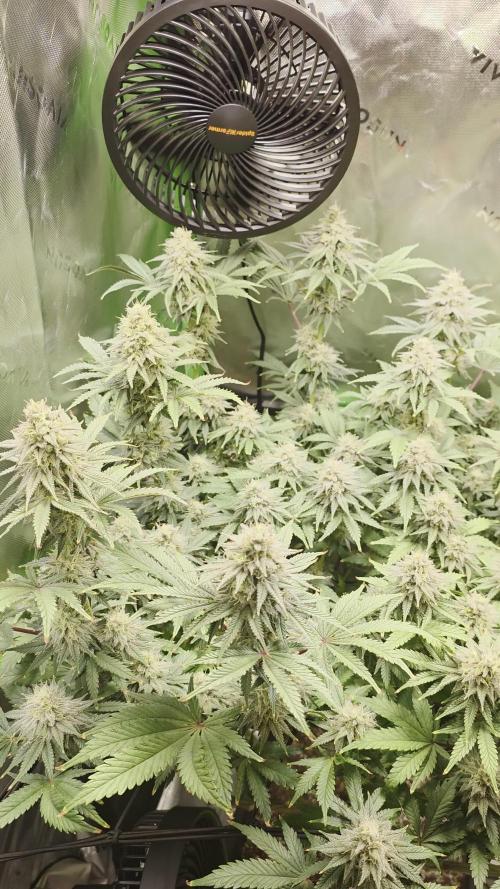
Weekly update for these gorgeous girls. They've definitely started taking off and doubled in size over the past week. I started feeding nutes at 5ml/gal of Athena Calmag,Grow A & Grow B. Ppfd still at 350-400 at the canopy level and watered 250-500ml daily. All in all Happy Growing


@Rock_n_Roll_Randy
Volgen
FOR EVERYTHING MARS HYDRO VISIT:
www.mars-hydro.com
www.marshydroled.ca
PROMO CODE: rocknroll
VISIT THE ALIEXPRESS STORE:
@marshydro_aliexpress
Instagram: @marshydropenny
Thanks for taking the time to read and check out my diary🤜🤛
TS3000 FEATURES:
WIDEBAND SUNLIGHT FULL SPECTRUM LED GROW, Infinite close to natural sun light, suit for all plants whole stages indoor growing, rapid plant response from seed to flower, achieve maximum quality and quantity, much better than traditional HPS grow systems.
HIGH REFLECTIVE & NOISE FREE-Fanless LIGHT BOARDS design will make your growing life easy and quiet, quickly heat dispersing material aluminum reducing light lost to aisles and walls, increase the light intensity up to 20%, allowing your plants receive more energy and without burning your plants for maximum headroom.
HIGH EFFICIENCY ENERGY SAVING PLANT LIGHT, high-power NEW LED grow, Compares to traditional 3000 watt HPS lamp and other brand led grow light while only 450 watts true output with 1016 LEDs, more scientifically and energy-efficient! Perfect for 5' x 5' veg stage, 4' x 4' bloom stage, higher intensity in a MARS HYDRO grow tent, reflective area, or by crossing over using multiple TS3000.
BOOM YIELD LARGE GROW LIGHT, NEWEST SMD LED technology provide highest PAR/LUMEN output(1095.6umol/), makes you get 30% higher yield compare OLD led lights, can get max yield at 2.5g/watt, less pay but get more yield, bring a amazing grow trip to any home grower as it beams huge amounts of light energy to plants below.
COMMERCIAL LED GROW LIGHT, Updated easy dimming & daisy chain function, main light controlled, especially come with two waterproof and dimmable Mean Well Drivers, auto sensing power supply works on both 120VAC and 240VAC and 277VAC, suit for Large Rooms and Commercial Setups.
Low Energy-Consuming LED Grow Light: Consuming 300w and also mounted with 1016 chips, TS3000 has the ability to replace a 450w HPS light while reducing 40% power intake.
High Efficiency LED Grow Light: With overall light output PPF 343umol/S as well as amazing PPE 2.3 umol/j, it's 50% even more photon efficient and can assure a 30% more return than the old HPS/MH lights.
Patent Highly-Reflective Hood Shape: The reflector design on TS3000 is patented, which can effectively gather the light dispersed in all directions to enhance its light intensity as well as assist plants in absorbing more light.
Full Spectrum Plants Favorite Spectra: By the unique mix of spectra that makes most light in the 400-700nm waveband, incredibly conducive to plant photosynthesis. Adequate IR(730-740nm) is additionally consisted of in the range to generate larger buds.
Dimming And Daisy Chain Feature Available: Upon an independent dimming button on the external driver, backing 0-100% settings adaptation and up to 30 LEDs daisy-chained in a group, it supplies different light levels for various plant stages meanwhile saving energy.
Safety Certifications And Service Warranty: CE, ETL, RoHS, UKCA security certifications accepted, 50,000 hours durability, 5-year service warranty, and local after-sales repair
5x5 GROW TENT:
LOCK ALL LIGHT INSIDE MARS HYDRO Indoor Grow Tent interior is made of diamond mylar which is highly reflective. (Other brand's mylar and reflective rate is as low as 50%, won't provide efficient light. )MARS HYDRO 1680D canvas, being double stitched, it is tear proof and has perfect light locking. Mars Hydro's grow tent keeps 100% lighting beams inside and helps your plant absorb more lights. EXTRA-THICK --No light leaks or rips at all
DURABILITY GROW TENT Stable metal corner adapters and poles are the trustful supporters of the tent, standing sturdy, neither rusting nor paint-falling, quick easy tool-free installation. Mars Hydro's heavy-duty metal zippers, with double layer black lining, are the best on the market which create a light-proof seal
EASY OBSERVATION FOR YOUR PLANTS. Special observation windows are made by double layers of cloth. Observe the growing conditions of your plants without opening the tent and avoid disturbing plants. The observation window also serves to dissipate heat and ventilate air
AUTOMATIC 6 INCH EXHAUST FAN KIT W/ CONTROLLER:
Mars Hydro 6'' Inline Fan uses a mixed-flow design to maintain peak performance in a high static pressure environment.
GROW TENT FAN: MARS HYDRO inline fans are designed to ventilate hydroponic grow rooms, transfer heating/cooling, cool AV closets, and exhaust odors.
EFFECTIVE VENTILATION: Variable speed controller for easy fan speed adjustment. Optimal ventilation for your planting.
LOW NOISE LEVEL: Durable plastic fan housing and blades for extremely low noise(32dB-A); create a truly quiet growth environment.
EASY INSTALLATION: Removable duct ends with locking tabs for quick removal and easy maintenance and a cord length of 4.9 feet for hassle-free setup. This grows tent fan with a controller for easy fan speed adjustment.
BASIC PARAMETERS: Ventilation exhaust fan size: 6” | Dimensions: 315mm*225mm*210mm. | Weight: 2.7. | Airflow: 402CFM | Noise: 32dB-A | Bearings: Dual Ball.


@sleekneek
Volgen
Temps got to 88 degrees as the highest. Night time temps ranged from 70-75 degrees. Leaves show small nutrient burn but nothing major. Still green. Bottom leaves are somewhat yellowing. Light defoliation at the beginning of week 3


@BasedBuds_89
Volgen
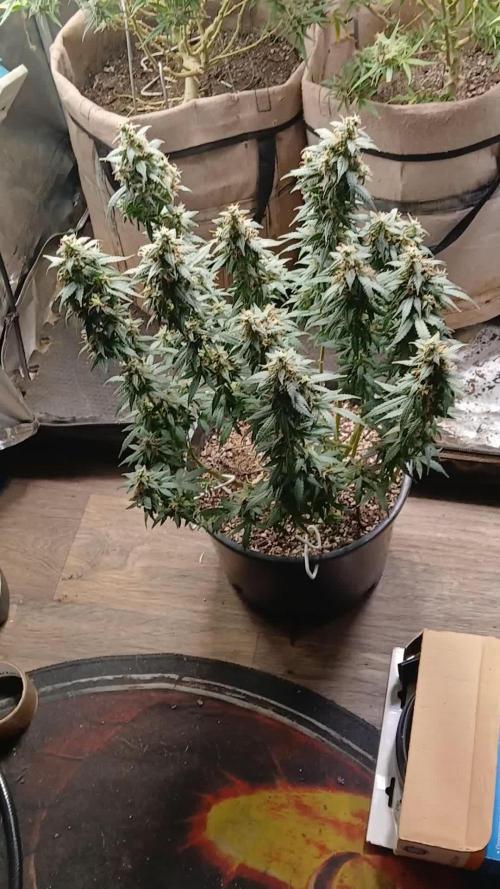
This plant was fairly easy to grow, I know I can get better results with the strain but I need to go bigger. Im going to pop another Red Devil Auto seed from WSE and redo this diary right away.
