Likes
Comments
Share
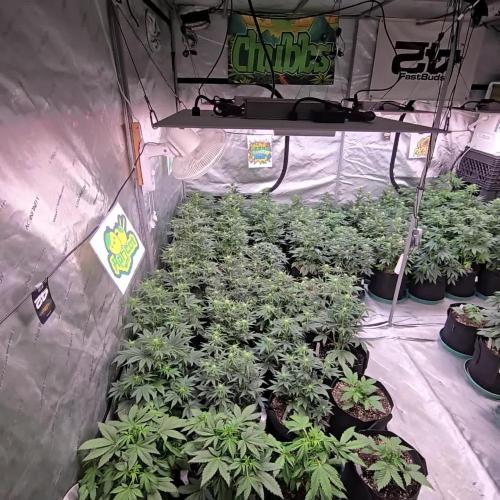
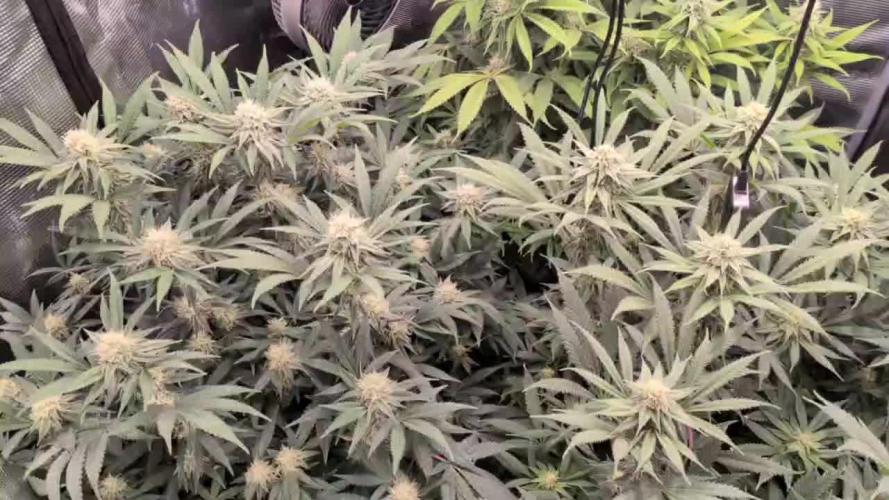
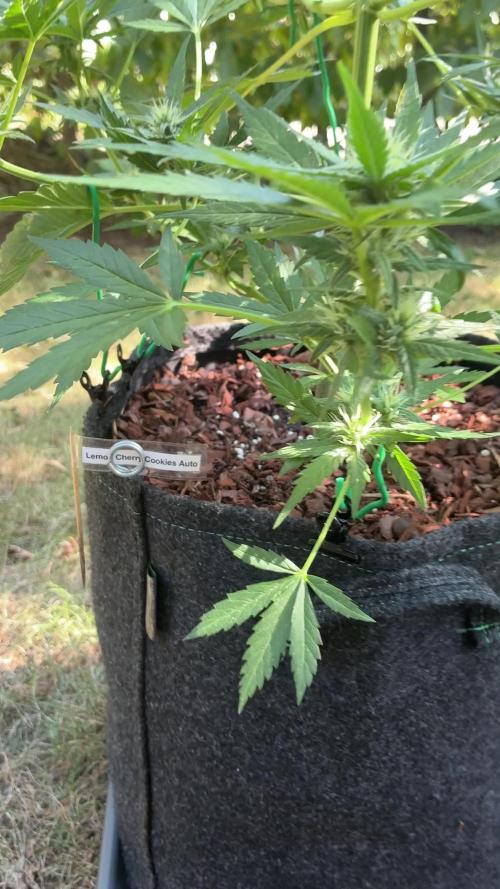
What a massive turnaround from last week! Mother Nature finally stopped teasing us and brought the summer heat. We had glorious, non-stop sunshine all week, with temperatures climbing all the way up to around 30°C. Training & The Stretch: 🌿 I’ve officially put the LST ties away. I didn't touch them at all this week. Looking at them, it feels like the majority of the flowering stretch is finally wrapping up. Now it’s all about stacking those buds! Feeding Update – Dialing in the Recipes: With the plants working overtime under the hot sun, the feeding schedule has been quite busy: Team Organic (Banana Purple Punch & Amnesia Haze): They got a full-course meal this week to support peak bloom. Alongside the tap water and CalMag, I added BioBizz Bio Bloom, Top-Max, and just a tiny dash of Fish-Mix to give the microbes a nice little energy boost. Team Mineral (Lemon Cherry Cookies & Bruce Banner): They are cruising along nicely on a steady diet of Hesi Bloom Complex paired with CalMag to keep everything perfectly green and balanced. Current Standings: 📏 Lemon Cherry Cookies: Still holding her crown as the undisputed giant at 70cm. She seems to have settled into her final height and is looking incredibly majestic. The Rest: Bruce Banner, Amnesia Haze, and Banana Purple Punch have used the sunshine to catch up beautifully. They are all sitting right around the 50cm mark now, looking sturdy, healthy, and ready for a spectacular show. The energy in the garden is amazing right now. Let’s hope this beautiful weather stays with us as the buds start filling out!
Likes
9
Share
@Tmasm
Follow
Zamnésia, obrigado por fornecer genética para testes. Entrega segura, dentro do prazo e muito discreta, como você pode ver nas fotos. Experiência para possível plantio em massa, dependendo dos resolvidos. 1 BISCOTTI (SEMENTES DE ZAMNESIA) FEMINIZADO Conforme diário já na 3 semana. 1 JEALOUSY (SEMENTES DE ZAMNESIA) Conforme diário já na 3 semana. 1 SUNSET SHERBET AUTOMATIC (SEMENTES DE ZAMNESIA) FEMINIZADO Já germinada, e com 1cm Panta está linda, crescendo bem. Gosto muito do desempenho dela, barraca com condições mínimas, mas para ela tudo bem. Primeiras fábricas da Zamnésia, estou impressionado com a qualidade dos produtos. Visite www.zamnesia.com, você ficará surpreso com a variedade de produtos, todos da mais alta qualidade. O diário será atualizado toda semana, espero que gostem (eu também).
Likes
9
Share
@Hempcules
Follow
WEEK 9 My Fume Pop is doing so-so. Because of the trembling, I had to remove quite a bit for safety, and the plant has partially pollinated itself. I can already spot a few seeds. Other than that, it looks healthy, and I’ll see what I can still make out of it. PPFD: 750µmol/m²/s Water: 3x water 2x nutrient solution Vpd: 1,6Kpa
Likes
35
Share
@valiotoro
Follow
Hello everyone 😎 Week 9 of flower for the Gorilla Cookies auto from Fast Buds 💥🍪 She grew fast with a beautiful green color,for the nutrient 4ml/L terra bloom & 1ml/L power buds & Green sensation 1ml/L from Plagron Weight is coming 🦍 Now only plain water💧all the top buds are ready for harvest Amazing smell of citrus & nuts🍋🌰 Spider Farmer SE-7000 100% Have a nice day 😋
Likes
Comments
Share
Flowering Week 6 – Fading Leaves, Persistent Flies The sixth week of flowering brought a mix of progress and persistent problems. The whitefly issue unfortunately hasn’t gone away. I replaced both yellow sticky traps at the end of the week, and within minutes, two new whiteflies were already spotted on the fresh left trap. The old one had four additional flies on the back. This pest pressure remains a concern, but I’ve decided to hold off on further neem oil sprays for now, given how far along we are in flowering. I’ll keep monitoring closely. Nutrient-wise, I stayed cautious this week due to ongoing signs of overfeeding. Leaf tips are still showing yellowing and some burn, especially on the lower leaves. Many leaves have pronounced yellow spots and curled tips — a clear sign of excess nutrients earlier on. To reduce stress, I watered with plain pH-adjusted water (5.5–6.0). Total watering volume was approximately 29 liters This week I also did a second round of lollipopping, focusing on removing all small popcorn buds and lower growth under the net that wouldn’t develop well. Despite the nutrient stress and the ongoing whitefly presence, the plants are still developing well. Buds are getting chunkier, trichome production is visibly increasing, and the overall structure is solid. Still, I’ll be keeping a close eye on both leaf health and pest activity in the coming days. ⸻ TL;DR – Week 6: • New whiteflies still showing up – 7 total seen this week. Both sticky traps replaced. • Additional lollipopping done: removed popcorn buds and shaded growth under SCROG. • Leaf symptoms (tip burn, spotting) persist – watered with plain pH water, once with half HESI dose. • Watered 3x this week: 9.5 L (pH only) • Light stayed at intensity level 7
Likes
17
Share
9/13 Took the last special Kush today. I had too. Those fucking locusts were eating more and more. At least the trichs looked good. The second plant is straight fire! They're ALL good. I'll have to do the review. Tenth planet is swelling up and trichs are getting cloudier. They are starting to eat the chem dog too but it needs to bulk up and the trichs aren't there yet. Mk ultra natural may be some of the best quality this year. I'm losing SOME to the locusts but it seems they avoid the frostier stuff. At least I'm hoping. This is a great plantvand despite the nugs being so tight and stuff it just needs more time and im going to give it to her. Pink kush is actually look9ng like it might finish. But the locusts have STRIPPED a lot of that. I'll keep an eye on them and keep this uuodated. I got a notification saying congratulations on a harvester diary. I know these outdoor seasons are long but what difference does it make? Hopefully I can still add week later. 9/14 Weather is good bit it's so dry that the locusts are deafening. Thrips are still around and there's not much I can do about it. Looking at the tenth planet I isolated I can see that locusts stripped the middle some and it was stunted from the thrips. The pink kush looks good but I'm losing g some to locusts. The 10th planet, Chem Dog #4 and the MK Ultra I left natural are bulking up and trichs are exploding! Since I safely have some quality cannabis I'm go8mg to let these ride. Unless I continue to lose substantial amounts. Then my hand may be forced. The pink kush is nowhere near ready though. The others would still be good taken now. Smell is strong and I've looked them all. 9/15 Rained last night. Plants were wet. I probably should've watered. Had to remove two branches due to mold. I also removed a couple small buds that had molded. These 40 degree nights don't do well with rain. I'm losing more and more cannabis daily from those locusts and from some mold that comes with the damage. I've never had a year like this. The sounds the make are deafening. And it's not just at night, or a specific part of the day. It's ALL. THE. TIME. I'm not growing again without floating row covers. I'll loon for some today bur that's like closing the barn door after the horses got out. Oh well. That big 10th planet is ready. I was just waiting for more amber bur I'm not taking a chance losing more branches. I'll think about it and I'll update what I decide to do. I might take that today. Chem dog had thr most damage but last I looked it wasn't where I needed it to be. EDIT: DIDN'T TAKE ANYTHING. IVE GOT MY HANDS FULL TRIMMING AND DRYING ANYWAY. SURPRISINGLY THE TRICHS WERE ALL MILKY! THEY EVEN HAD SOME AMBER! CHEM DOG WENT CLEAR TO MILKY REAL FAST AND THE NATURAL MK ULTRA HAS BUDS THAT THE STIGMAS HAVECTOTALLY RETRACTED AND THE LOOK COMPLETELY DONE. AGAIN. TRICHS ARE ALL MILKY. IT THE BUDS ARE EXTREMELY DENSE AND I WORRY ABOUT ROT. BOTH THESE PLANTS COULD COME DOWN ANYTIME AND IM SURE ID BE HAPPY. I JUST HAVE A LOT RO DO AND THE WEAYHER LOOKS GREAT SO AS LONG AS THE LOCUSTS STAY AWAY THINGS WILL BE FINE. I ALSO watered everything a gallon. I may have been underwatering for fear of overwatering. Tomorrow's a new day. We'll see what it holds. 11% chance of rain. But after that it looks like it will be good. 9/16 Guess I didn't do a video. Went over this morning and then again around one. I brought my loupe and checked everything. Suprisingly some of the pink kush are MILKY already and legit hard as a marble. I won't get much from them but I bet it will be good. The tenth planet I probably should've taken. I was tired though and another day or so isn't going to hurt it. I took off a few of the fan leaves that were left but most have dropped already. The strain SAYS it takes longer but the loupe doesn't lie and the buds arent increasing in size anymore. The chem dog has caught up to it by now and the 10th planet WAS much further ahead. They both have been through the same stressors. This cold weather has sped shit up. I've got all MILKY with amber on thatl tenth planet and I don't want to keep losing more shit. The chemdog has swelled to almost the size of the 10th planet and are all MILKY as hell!. The mk ultra's stigmas have retracted on half the buds and are very dense. It has a few ENORMOUS calyxes on it. The only reason its still standing is that ive noticed A FEW clear tricombs and the plant is healthy. It can survive a little longer but its a September strain and we've had some cold weather already. Some have some stigmas still reaching upward (mostly on the cola) but other flowers have no visible stigma on the top. Theyve reached what looks like perfection and are all milky. That plant it frosty. It might be my best quality. Only time will tell. That plant doesn't have as much damage but I'd like to see a little more amber and see if the buds decide to connect. This strain is on time according to the breeder and ive just decided to oush it. I hope I dont regret I have a bud that rotted off a tenth planet branch so at least i can try it before i take it. Same with the chem dog but it's not dry yet. I'd would be good to try a tester bud before I made my decision on pulling the plant. 9/17 I did a video and took the tenth planet after finding a few buds that had molded and a small branch with mold on it. Should've followed my intuition and took it yesterday but I was sick. Still am. I found some mold on the chem dog and more stem mold. I also found some buds that had completely rotted and died. The plants have been through at least one frost. If I wasn't so tired and ill I would've taken the chem dog too. The buds were swelk8ng though and had caught the tenth planet that had stopped growing. I almost just cut it at the base and hung it upside down because I'm worried about the mold and whatever I'd eating it. It smells great, trichs areall MILKY with a little amber. I was just hoping for more size but it's been a strange year climate wise. I still have another 10th planet out but it has a few issues. The natural mk ultra will probably be the best quality out of the garden. It is rock hard and frosty as hell. I can still see some clear trichs or I would've snatched it. It LOOKS totally done. That's what's weird this year. Advanced trichs on small bud, trichs staying clear on big buds that appear finished. It has MILKY and amber so I coukd take it anytime but it looks healthy so I'll give it a little more time. The pink kush surprisingly has grown extremely trichome heavy rock hard buds. I'll get a harvest from them and it will probably be good quality bit it won't be much. I was able to sample the mk ultra and was extremely impressed. After I do the physical shit and take time for myself ill take pictures and put more up on the harvest reports. Hopfully the chem dog does ok tonight. I'm sure she'll be fine. 9/18 WATERED EVERYTHING LEFT. Checked the trichs and flowering time on the chem dog #4 and pulled it. Should've yesterday. Lost a few small branches and a couple buds to rot but this stuff is extremely frosty! I left the mk ultra and the pink kushes and the other 10th planet. I could've taken the mk ultra but I think I can push it a bit further. It's a beautiful plant. I'm sick and of course I come across this plant that NEEDED to be harvested. We've got a frost warning tonight too. I won't get much from the pink kushes but it looks like it's going to be some killer smoke. I wasn't planning on doing this and I'm tired as fuck. I'm in trim jail and I'm ive got shit hanging everywhere. I'll take pictures and shit and do reviews after I get the work done. 9/19 Boy that mk ultra is pretty. I've got a bunch of stuff drying and a bunch of stuff curing. I'll do reviews later but I'm very impressed with the quality. Not anywhere near what I normally get but the quality makes of for that. Every year can't be a home run. But the quality.......wow. I'm impressed and the vest is yet to come! I dodnt wet trim the chem dog. I pulled the fans but that was about it. I was tired. I've got A LOT of work ahead of me. I cannot believe the change in those pink kush plants. The size, density, smell and the amount of tricomes is unreal.
Likes
6
Share
@Ferenc
Follow
Hey! Just back well I started a diary but stopped growing so placed to my friend's house. Now I decided to be back and yeah here we go.... They are nice fertilization happens 3x a week with the mixture of Biobizz family (Biobloom, Topmax, BioGrow, Epsom salt, Gunokalong extract.) They grow as hell. 600W LED, 18 hours on 6 hours off, 200 ml water per plant a day, humidity approx 35 percent. Day 49: More LST has been done they grow unbelievably fast...
Likes
11
Share
@Frank89
Follow
Floración avanzada con carencia de NpK.
Likes
Comments
Share

Week 2 - Vegetation | Black Diamond Auto Pheno A Hello everyone, and welcome back to another update from the 12/12 From Seed adventure. This week we continue following Black Diamond Auto Pheno A as she settles into her new environment and continues building momentum for the journey ahead. As always, before diving into this week’s observations, a quick recap for anyone joining the diary for the first time. This project follows a 12/12 From Seed approach, where plants receive a flowering photoperiod from the moment they emerge. The goal is not only to explore different genetic expressions but also to document how each cultivar responds to this unique cultivation style from germination all the way through harvest. Week 2 has been another very positive chapter for this phenotype. The first thing that continues to catch my attention is a particularly interesting leaf expression that appeared during early growth. One of the leaves displayed a beautiful two-tone coloration, almost resembling natural camouflage, with lighter and darker shades of green sharing the same leaf blade. While unusual, the plant never showed any signs of stress or deficiency, and as newer growth continues to emerge, the effect appears to be gradually fading away. Sometimes plants gift us these little moments of individuality, and this one certainly managed to put a smile on my face every time I checked the tent. Beyond that unique characteristic, the overall development has been excellent. Throughout the week the plant continued building structure steadily and efficiently, finishing the period with seven established nodes. Growth remains compact and controlled, with tight internodal spacing and a strong symmetrical shape developing from the center outward. Every new set of leaves appears healthy and vigorous, and the overall architecture suggests a plant that is settling comfortably into its environment. The transplant performed previously appears to have been accepted without hesitation. Rather than slowing down, the plant responded by increasing growth speed and producing consistent new development across the entire canopy. The stem continues strengthening, leaf size continues increasing, and the root zone is clearly supporting healthy above-ground growth. Coloration remains vibrant throughout the plant. The foliage displays healthy green tones, leaf posture remains confident, and the canopy is beginning to take on the layered appearance that becomes increasingly noticeable as additional nodes develop. Nutritionally, the plants continue receiving a simple but effective feeding program consisting of Plagron Terra Grow, Power Roots, Pure Zym, and Sugar Royal. At this stage the goal is not aggressive feeding but rather providing a stable foundation for healthy root expansion, microbial activity, and steady vegetative development. Power Roots supports continued root establishment following transplant, Pure Zym helps maintain a healthy rhizosphere by assisting in the breakdown of dead organic matter, while Terra Grow provides the primary nutritional support required for vigorous vegetative growth. Sugar Royal is included early as part of the overall cultivation strategy, helping support plant metabolism throughout the cycle. One lesson that becomes increasingly clear during these early weeks is that consistency often outperforms complexity. Stable environmental conditions, proper watering practices, balanced nutrition, and patience continue to be the most valuable tools available to any grower. Overall, Week 2 has been a very successful week for Black Diamond Auto Pheno A. The plant is healthy, vigorous, structurally balanced, and developing exactly the way we hope to see at this stage of growth. The unique camouflage leaf may eventually disappear completely, but it will remain one of the first memorable characteristics recorded in this phenotype’s journey. Thank you to everyone following along, supporting the diary, sharing advice, and contributing to the amazing growing community that makes projects like this so enjoyable to document. A special thank you as always to Zamnesia for the genetics, Plagron for the nutrition, and to all growers who continue sharing their knowledge, successes, lessons, and experiences with the community. Until next week, growers love and happy growing everyone. 🌱💚
Likes
62
Share
So this is how things are looking for both the Cheese at the end of Week 7 of Flower, I have uploaded a video for you guys with all the information. Any questions just ask away 👊🏾🌱💚
Likes
7
Share
Likes
24
Share
GORILLA COOKIES 🍪 FF / FASTBUDS WEEK #15 OVERALL WEEK #7 FLOWER This week she's really started to pack on the weight as her buds continued to dense up and she's smelling great as she's got about 3 weeks left before harvest! Stay Growing!! Thank you for stopping by and taking a look it's much appreciated!! Thank you to FASTBUDS!! GORILLA COOKIES 🍪 FF / FASTBUDS
Likes
5
Share
Likes
91
Share
@Salokin
Follow
Hi Growmies, So far she is developing very nicely. Had someone from the community suggest plant success orca and Rezin to me, sp these were added for the next weeks feed to prepare the pre flower. The roots have started to nest themselves right above the airstone. As of now I think I’ll give her two more weeks and then flip her, as she is stretching a bit slower than I thought she would. Thank you all for passing by and see you next week.
Processing
Likes
3
Share
Likes
30
Share
@GoodBudz
Follow
Another week of waiting!! We have AMBER!! Flower times according to TNSB Purple Kush est. Flower time - 8 weeks Cheese est. Flower time - 8-9 weeks The Purple should be done next week and is only getting water when she is thirsty.... lift the pot technique works great!! Like previous Purple Kush grows I've done she is very popcorn like nugs and might be a little tricky to trim. The Cheese still has a few weeks left. Nice bud structure with the smallest nug being the size of a golf ball.... LOVE IT!! This was the last week for nutrient feeds and was still on a Nute, Water, Water schedule. (950 PPM on nutrient feeds)
Processing
Likes
41
Share
This auto ghost of is at day 21 and she has been growing like crazy since she broke the surface. She has the potential to be a real work of art if I can keep her happy. I upped the maxigro to .5 tsp per gallon and started them on a little armor si so they can build some strong branches. Still running them on 24 hour light and 24 hour irrigation. They are going to stay under the blurple lights for a few more weeks until I can get them in the big room under the quantum boards. I'm hoping they will flower around 4 weeks but my autos seem to enjoy staying in veg so we will see what happens.
Likes
60
Share
@SooSan
Follow
12/12 + 137 jours Vu qu’il y a 16 plantes mais que sur growdiaries on ne peut mettre que 8 variétés j'ai divisé en 2 diaries pour le bas de la tente 1️⃣ 🏠 90x60x90 ☀️ FC-E 4800 => puissance a 60% 🍁 Black Bomb / Philosopher Seed Amnesia Lemon / PEV Seeds Amnesia Lemon /PEV Seeds Blueberry / PEV Seeds = 17g Blueberry / 00 Seeds = 17g Wappa / Paradise Seed = 11g Dark Phoenix / Green House Seed Quick Sherbet / Exotic Seeds = 14,5 Mango Cream / Exotic Seeds Banana Frosting / Sensi Seed = 11g Hindu Kush / Sensi Seed 10,5g Mix 1 / Sweet Seed = 26,5g Mix 2 / Sweet Seed = 15g Mix 3 / Sweet Seed = 22,5g Mix 4 / Sweet Seed = 14,5g 📎 https://growdiaries.com/diaries/122084-grow-journal-by-soosan 📎https://growdiaries.com/diaries/124052-grow-journal-by-soosan 2️⃣ 🏠 30x60x50 ☀️TS1000 => 100w = 54g 🍁 Quick Sherbet - Exotic Seed = 12g Quick Sherbet - Exotic Seed = 12g Quick Sherbet - Exotic Seed = 17,5g Quick Sherbet - Exotic Seed = 12,5g 📎 https://growdiaries.com/diaries/122080-grow-journal-by-soosan
Likes
52
Share
Once again she passes my expectations, late to the show with trichome production. I'm surprised there is purple on the bud, maybe Purpinator does work. I thought I could see hints under the grow lights and thought my eyes were deceiving me, I was just being hopeful. But nah 2 of the 3(under the UV) have developed a beautiful tone of purple. I was never going to bother with a deep freeze but maybe the whole bud will change given conditions, that would be something, fingers crossed. 🤔 was a little skeptical that reducing temps humidity would change density, but it does, buds are solid something I've not been able to achieve before. Rule of thumb is never to surpass 60% RH in the flowering phase and try to progressively reduce it down to 40% in the last 2–3 weeks before harvest. The plant will react as it seeks to protect its flowers, responding by producing denser buds and a higher concentration of resin. Cannabis plants are sensitive to sudden temperature changes, especially in the flowering stage. Extreme heat or cold can impact bud density and overall yields. In nature as a defense mechanism from cold, the plant sensing sudden dips in temperature will attempt to remove the pockets of air within the bud, it achieves this by compacting itself in doing so to better protect itself from cold snaps which are normally indicators in nature that worse weather is on the way. Terpene levels are the highest just before the sun comes out. Ideally, you want as many terpenes present in your plants as possible when you harvest. Cannabis plants soak up the sun during the day and produce resin and other goodies at night. The plant is at its emptiest from "harvest undesirables" so to speak right before the lights on. Boiling cannabis roots during harvesting slows down the drying process. When you boil cannabis roots, it shocks the plant, closing the stomata on the leaves. This prevents massive moisture loss through the leaves, leaving only the floral clusters actively losing moisture at a reduced pace. I've always run a strict 60/60 and it took almost twice as long to dry to a snap than previous grows where I didn't boil for what it's worth. Chlorophyll is good for the plant but not for you. When you harvest the buds, even after you flush them, if you flush them, they’re still filled with chlorophyll. Freshly cut buds are greener than dried buds because they still contain loads of chlorophyll. However, when rushed through the drying process, the buds dry but retain some chlorophyll, and when you smoke it, you will taste it. Chlorophyll-filled buds are smokable, but they aren’t clean. Slow drying gives the buds enough time and favorable conditions to lose the chlorophyll and sugars, giving you a smoother smoke. How the plant disposes of the chlorophyll and sugars by a process of chemically breaking them down and attaching the decomposed matter once small enough to water molecules which then evaporate back into the ether. Time must be given to the process to break down the chlorophyll and sugars. Think of it like optimizing the environment for decay. All the nutrients it could ever need are in abundance, it eats nutrients based on its demand for growth, which is dictated primarily by available light. Plant growth and geographic distribution (where the plant can grow) are greatly affected by the environment. If any environmental factor is less than ideal, it limits a plant's growth and/or distribution. For example, only plants adapted to limited amounts of water can live in deserts. Either directly or indirectly, most plant problems are caused by environmental stress. In some cases, poor environmental conditions (e.g., too little water) damage a plant directly. In other cases, environmental stress weakens a plant and makes it more susceptible to disease or insect attack. Environmental factors that affect plant growth include light, temperature, water, humidity, and nutrition. It's important to understand how these factors affect plant growth and development. With a basic understanding of these factors, you may be able to manipulate plants to meet your needs, whether for increased leaf, flower, or fruit production. By recognizing the roles of these factors, you'll also be better able to diagnose plant problems caused by environmental stress. Water and humidity *Most growing plants contain about 90 percent water. Water plays many roles in plants. It is:* A primary component in photosynthesis and respiration Responsible for turgor pressure in cells (Like the air in an inflated balloon, water is responsible for the fullness and firmness of plant tissue. Turgor is needed to maintain cell shape and ensure cell growth.) A solvent for minerals and carbohydrates moving through the plant Responsible for cooling leaves as it evaporates from leaf tissue during transpiration A regulator of stomatal opening and closing, thus controlling transpiration and, to some degree, photosynthesis The source of pressure to move roots through the soil The medium in which most biochemical reactions take place Relative humidity is the ratio of water vapor in the air to the amount of water the air could hold at the current temperature and pressure. Warm air can hold more water vapor than cold air. Relative humidity (RH) is expressed by the following equation: RH = water in air ÷ water air could hold (at constant temperature and pressure) The relative humidity is given as a percent. For example, if a pound of air at 75°F could hold 4 grams of water vapor, and there are only 3 grams of water in the air, then the relative humidity (RH) is: 3 ÷ 4 = 0.75 = 75% Water vapor moves from an area of high relative humidity to one of low relative humidity. The greater the difference in humidity, the faster water moves. This factor is important because the rate of water movement directly affects a plant's transpiration rate. The relative humidity in the air spaces between leaf cells approaches 100 percent. When a stoma opens, water vapor inside the leaf rushes out into the surrounding air (Figure 2), and a bubble of high humidity forms around the stoma. By saturating this small area of air, the bubble reduces the difference in relative humidity between the air spaces within the leaf and the air adjacent to the leaf. As a result, transpiration slows down. If the wind blows the humidity bubble away, however, transpiration increases. Thus, transpiration usually is at its peak on hot, dry, windy days. On the other hand, transpiration generally is quite slow when temperatures are cool, humidity is high, and there is no wind. Hot, dry conditions generally occur during the summer, which partially explains why plants wilt quickly in the summer. If a constant supply of water is not available to be absorbed by the roots and moved to the leaves, turgor pressure is lost and leaves go limp. Plant Nutrition Plant nutrition often is confused with fertilization. Plant nutrition refers to a plant's need for and use of basic chemical elements. Fertilization is the term used when these materials are added to the environment around a plant. A lot must happen before a chemical element in a fertilizer can be used by a plant. Plants need 17 elements for normal growth. Three of them--carbon, hydrogen, and oxygen--are found in air and water. The rest are found in the soil. Six soil elements are called macronutrients because they are used in relatively large amounts by plants. They are nitrogen, potassium, magnesium, calcium, phosphorus, and sulfur. Eight other soil elements are used in much smaller amounts and are called micronutrients or trace elements. They are iron, zinc, molybdenum, manganese, boron, copper, cobalt, and chlorine. They make up less than 1% of total but are none the less vital. Most of the nutrients a plant needs are dissolved in water and then absorbed by its roots. In fact, 98 percent are absorbed from the soil-water solution, and only about 2 percent are actually extracted from soil particles. Fertilizers Fertilizers are materials containing plant nutrients that are added to the environment around a plant. Generally, they are added to the water or soil, but some can be sprayed on leaves. This method is called foliar fertilization. It should be done carefully with a dilute solution because a high fertilizer concentration can injure leaf cells. The nutrient, however, does need to pass through the thin layer of wax (cutin) on the leaf surface. It is to be noted applying a immobile nutrient via foliar application it will remain immobile within the leaf it was absorbed through. Fertilizers are not plant food! Plants produce their own food from water, carbon dioxide, and solar energy through photosynthesis. This food (sugars and carbohydrates) is combined with plant nutrients to produce proteins, enzymes, vitamins, and other elements essential to growth. Nutrient absorption Anything that reduces or stops sugar production in leaves can lower nutrient absorption. Thus, if a plant is under stress because of low light or extreme temperatures, nutrient deficiency may develop. A plant's developmental stage or rate of growth also may affect the amount of nutrients absorbed. Many plants have a rest (dormant) period during part of the year. During this time, few nutrients are absorbed. Plants also may absorb different nutrients as flower buds begin to develop than they do during periods of rapid vegetative growth. 432 Hz is said to be mathematically consistent with the patterns of the universe. Studies reveal that 432 Hz tuning vibrates with the universe’s golden mean PHI and unifies the properties of light, time, space, matter, gravity and magnetism with biology, the DNA code and consciousness. When our atoms and DNA start to resonate in harmony with the spiraling pattern of nature, our sense of connection to nature is said to be magnified. Another interesting factor to consider is that the A=432 Hz tuning correlates with the color spectrum while the A=440 Hz is off. Audiophiles have also stated that A = 432 Hz music seems to be non-local and can fill an entire room, whereas A=440 Hz can be perceived as directional or linear in sound propagation. Once you adopt the idea that sound (or vibration in general) can have an equalizing and harmonizing effect (as well as a disturbing effect), the science of harmony can be applied to bring greater harmony into ones life or a tune to specific energies. There is a form of absolute and of relative harmony. Absolute harmony can for example be determined by the tuning of an instrument. The ancients tuned their instruments at an A of 432 Hz instead of 440 Hz - and for a good reason. There are plenty of music examples on the internet that you can listen to in order to establish the difference for yourself. Attuning the instrument to 432 Hz results in a more relaxing sound, while 440 Hz slightly tenses up to body. This is because 440 Hz is out of tune with both macro and micro cosmos. On the contrary, 432 Hz is in tune. To give an example of how this is manifested micro cosmically: our breath (0,3 Hz) and our pulse (1,2 Hz) relate to the frequency of the lower octave of an A of 432 Hz (108 Hz) as 1:360 and 1:90. It is interesting to note that 432 Hz was the standard pitch of many old instruments, and that it was only recently (19th and 20th century) the standard pitch was increased. This was done in order to be able to play for bigger audiences. Bigger audiences (more bodies) absorb more of the lower frequencies, so the higher pitch was more likely to “cut through”. One of the oldest instruments of the world is the bell ensemble of Yi Zeng (dated 423 BC), tuned to a standard F4 of 345 Hz which gives an A= 432 Hz. The frequency of 345 Hz is that of the platonic year! Similarly many old organs are tuned in an A=432 as well; for example: St. Peter’s Capella Gregoriana, St. Peter’s Capella Giulia, S. Maria Maggiore in Rome. Maria Renold’s book “Intervals Scales Tones and the Concert Pitch C=128 Hz” claims conclusive evidence that 440 Hz and raising concert pitch above scientific “C” Prime=128 Hz (Concert A=432 Hz) disassociates the connection of consciousness to the body and creates anti-social conditions in humanity. The difference between concert pitch A=440 Hz and Concert A=432 Hz is only 8 cycles per second, but it is a perceptible difference of awareness in the human consciousness experience of the dream we share called existence.