


Likes
Comments
Share

@SkunkyDog420
Follow
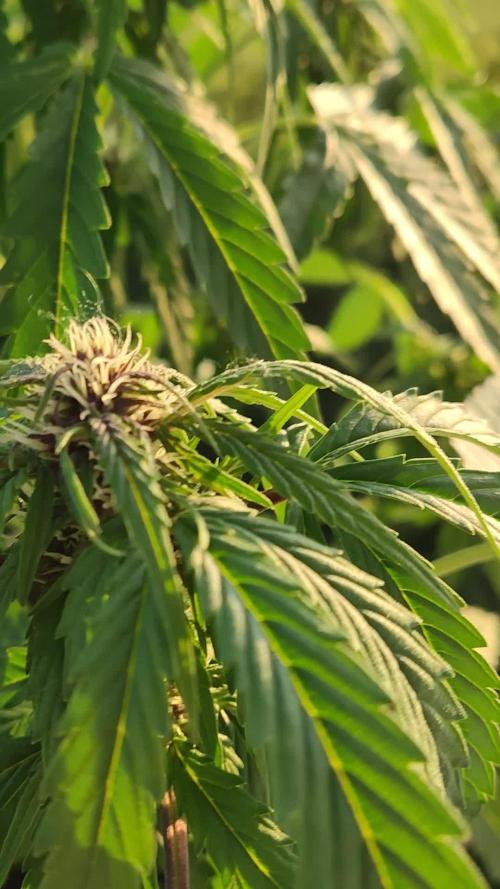
Hallo zusammen 🤙.
Sie wächst sehr schön und macht keine Umstände

Likes
201
Share


@Hattiwatti
Follow
Time to move on. There might be hints what company seeds im trying next.


Likes
3
Share


@Organic_Jim
Follow
28 days in the bag, great structure this MephistOreoz what a beautiful plant.
Greenhouse feeding 2g bloom and 1g grow per litre pre mixed into the soil and that will keep them happy until week 6. And Dynomyco a gram per litre.
Get 10% off Mephisto Genetics ⚡
Use code: ORGANICJIM
Or go to: mephistogenetics.com/organicjim
Thanks for reading and see you next week. Peace 🙏

Likes
8
Share


@mikearon
Follow
April 1st - Day 44 : All good nothing to declare
April 6th - Day 50 : Growing good.


Likes
5
Share


@Dr-Automatic
Follow
Every single seed popped — we’re off to the races! Using my custom organic mix: Back to the Roots potting soil, worm castings, coco coir for airflow, and top-dressed with a mild manure blend. Temps hovering around 78°F, RH around 60% (shoutout to the damp towel trick 🙌). No domes anymore, just letting them adjust naturally. Cotyledons look strong, first set of leaves coming in hot. Watching like a hawk — and yeah, maybe talking to them a little. We’re growing bud, not just plants. Let’s gooo
Likes
76
Share


@Canna96
Follow
Hey now, this week went pretty good, the buds are about done bulking up, and just waiting on the trichomes, I was really hoping she would be about ready, but I think she needs another week to week and a half total. The buds are rock hard, and super sticky. I have no clue what she will yield because the colas are not that thick, but there are definitely alot of them. I plan to squeeze her into rosin, and hopefully I can break the 25% mark for the first time with her, but we will see. Thanks for stopping by, I hope you enjoy the videos, Happy Memorial Day Family, Stay Safe and Blaze On!!!

Likes
3
Share


@RainerWinklerGrow
Follow
Harvested Around 220 Grams from 3 Plants, terps were there slightly, smoked fine, its alright, went with a differnent breeder after.

Likes
23
Share


@adam_pawloski87
Follow
Today is day 57 for these Wedding Cheesecakes and they are looking great ! 2 of them decided to stretch out on me so had to tie one of them down even more an looks like she might be a little stressed out from it or might lacking something I’m not too sure if anybody can tell please let me know if anything I would really appreciate it ! Other then that we are going into week 8 and these ladies are putting off some delicious smells can’t wait to see what they do this week! Hope you all enjoy ! Keep them eyes peeled for next week!! ✌️Cheers
Likes
14
Share


@Auto_lover
Follow
She’s starting to stretch and flower nicely. I removed a few leaves for better light penetration. On day 29 another small defoliation day 34
Likes
5
Share

@Gingobeaz
Follow
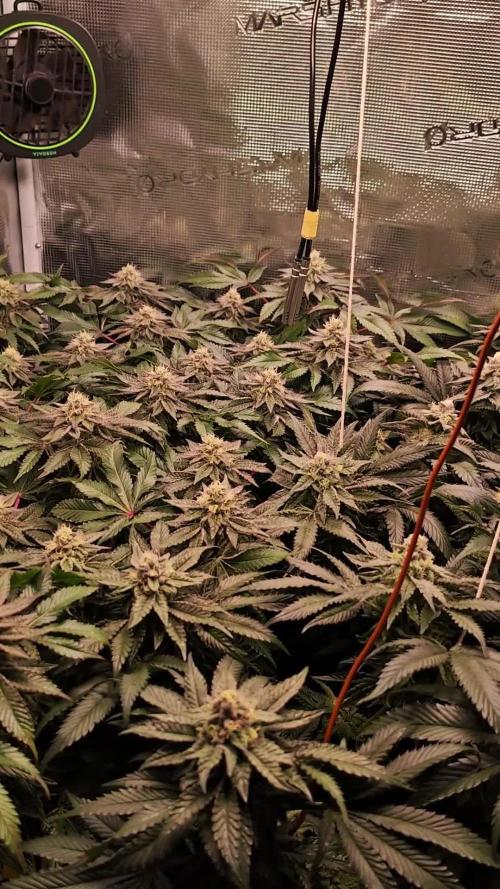
BT42Die Entwicklung der Blüten ist etwas langsamer als ich mir gewünscht habe. Die 8-9 Wochen Blüte die bei den Strains angegeben sind werden sie wohl nicht schaffen.
Sind trotzdem gut mit Trichomen besetzt und so kompakt, dass ich einige schon stützen musste wegen des Gewichtes trotz aptus Regulator (Silizium).
Ansonsten bekommen sie beide langsam einen sehr fruchtigen Geruch der an Nimm2 Bonbons erinnert.
Zwei Buds haben leichtes Bleeching durch zu viel Licht, doch das Licht bleibt auf ca. 40cm Abstand um auch die unteren Buds mit genug Licht zu versorgen.
__
BT42
The flowers are developing a little slower than I would have liked. They probably won't make it to the 8-9 weeks of flowering specified for these strains.
Nevertheless, they are well covered with trichomes and so compact that I already had to support some of them due to their weight, despite using Aptus Regulator (silicon).
Otherwise, they are both slowly developing a very fruity smell reminiscent of Nimm2 candies.
Two buds have slight bleaching due to too much light, but the light remains at a distance of about 40 cm to provide enough light to the lower buds as well.

Likes
6
Share


@Tiozin
Follow
Hi!
As expected I harvest both plants on the same day. I removed the biggest leaves and now their drying inside the same tent they grew. Humidity is about 62%, which is an very good humidity level, I’m not using humidifier nor ac unit, temperature are between 25-28 degrees Celsius.
I amended the soil with wormcasting, some to dust and organic nutrients to prepare for the next cycle, the bed is covered waiting the plants to finish drying and the new light panel to be installed.
I’m expecting a drying period of 10 days since humidity is stable at a good range.
Thanks for the comments and followers on this cycle. Stay tuned for the next one!
Peace!



Likes
81
Share


@UnorthadoxDude
Follow
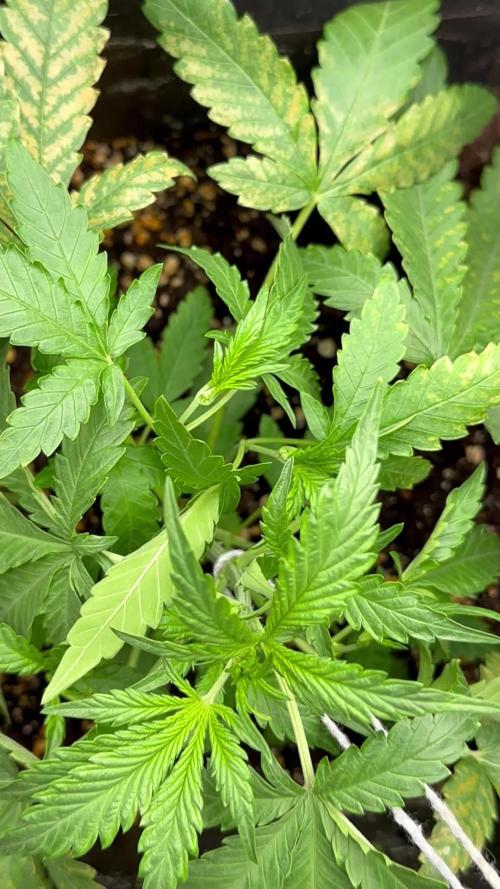
Hey! Welcome to week 9 for Karen! Week 8 is now complete so please go and check it out 🙏. Big week last week... massive.
Day 57: Fertigated 6l. Height 40cm.
Day 58: Scent has stepped up again and I'm noticing some of bud sites starting to develop frost.
Day 58.5 Flushed with 20l of PH & CalMag.
Day 59: reorganised tent
Day 60: Fertigated 3l. Karen has put on a load of frost in the last 24h. I mean seriously. Smell stepped up again. Height 44cm.
Day 60.5: I have had a really good look at other KKA grows. I think Karen is going to need a few extra weeks. I think she will be ready for harvest in about week 14. So I think we have about another 4-5 weeks to go.
Day 61: Adjusted the LST a bit. She's frosting rapidly now. 😍😍🤩 Height 45cm. Width: 60cm x 70cm
Day 61.5: It is only 8 days since I *heavily* defoliated and I think I probably should do it again already. Things are progressing well at the moment though so I am trying to resist doing it too soon. She is still stretching.
Day 61.75: Right, I have done some research and I have made a decision,. I'm going to give Karen 2 full weeks from the last defoliation on day 53, so on day 67 (i.e half way through next week) I will defoliate and perform final LST just to space out the colas a bite more at the "top" of the plant.
Incidentally, Nesia is now easily the same spread as Karen.. Nesia is going to be much bigger than Karen. Check out Nesia here: https://growdiaries.com/diaries/161801-grow-journal-by-unorthodoxdude
If you are interested in the stunted Big Bang Auto - Bertha - who is 2 days younger than Karen, check her out here: https://growdiaries.com/diaries/158111-grow-journal-by-unorthodoxdude - in the current week I have added various photos of the non-cannabis plants in my tent. Who knew basil flowers were so pretty? 😊
Day 62: Fertigated 3l
Day 63: Height 47cm width 65cm x 75cm
Week Summary: Another big week with a plant barely recognisable from herself a week ago. As well as the ongoing stretch she has started to frost over this week and I am hoping this continues because more and more is appearing all over the place.

Likes
Comments
Share

@3rnest
Follow
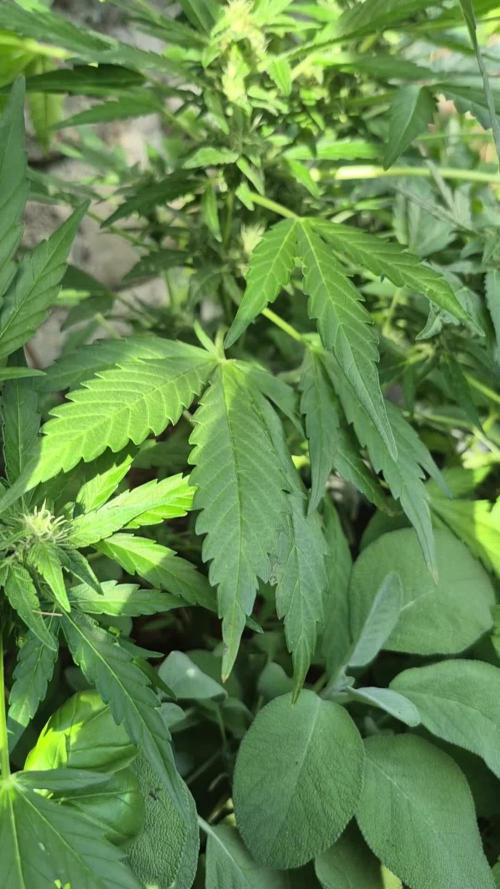
Diese Woche startet mit reichlich Sonne und Temperaturen über 30⁰C
Langsam gibt die Blüte gas und die Pflanze hat ordentlich aufgeholt.
Die Ernte dauert wohl nicht mehr lange.


Likes
49
Share


@masterofsmeagol
Follow
MAY 17th I'll water the 10th planet again tomorrow. Things are going amazing! I topped one of the blueberry cheeses and fimmed another. I'm not seeing any stress. If they seem good I'll hst some of the others. This doing ONE thing at a time helps figure out problems. It's 75 right now but it was 39 this morning.
UPDATE: IT STARTED FUCKING SNOWING TODAY. Forecast looks good and others are putting plants out. I'll hold off. They'll go to the garage soon for hardening off. Looking at other diaries I had much bigger "clones" but they always come full of problems (see last year). These plants are the healthiest ivecever grown. I'd rather have a healthy plant half the size than a clone with a bunch of issues. Tomorrow I'm planning to wash my stakes and grow bags. I'll get the palletts in position and move my cage. I also am considering either putting a small pvc cover on my cage or finding a way to attack something to the trellis system for heavy rains. If anybody has ideas I'm all ears.
5/18 DIDN'T WATER TODAY. Soil was dry but the pots were heavy. I could feel some moisture through the drain holes. I think it would've been alright either way but I'm erring on the side of caution. I'll check again later in the day. I topped one and fimmed anotger of the blueberry cheese. The purple punch is quickly catching g up to her sisters. I HAD to add a small ring around one of the purple pounce plants as it was WAAAAY lighter than the others. It's possible it could've gotten less water than the others last time due to its positioning. I'm also considering adding silica next feeding. So much left to do before they go outside. Oh and it was fucking snowing here yesterday! May 17 and it was snowing middle of the day. Morning temp wad 31 this morning so I'm staying cautious and making sure I have all my ducks I'm a row before I go outside. I'm also weighing options to either add a pvc hoop on top of my cage or look into protecting plants individually come late fall with our horrible weather. I'm leaning towards the pvc top. I think that would greatly help things.
UPDATE: Went back over at four and everything's looked great. Leaves praying to the sun. Topsoil is dry as fuck but I can still feel a little bit of moisture through the drain holes plus they have a little heft left to them. I plan on watering tomorrow and see how that goes. I wanted to add silica but I'm afraid of changing to much or raising the ph of the soil.
5/19 Found out that my scale will actually weigh the three gallon pots! I don't have an empty one to fill with dry soil to compare though. WATERED everything today. Topsoil was totally dry. Some plants had some heft to them. However I last watered on the 15th so I decided to cut back on the amount of water and see how that goes. Instead of the full 28oz powerade bottle I gave them a little over half. I tried for approx 16fl Oz per plant. Everything is looking great. Other than the little runt. I don't know whatcthecdeal is with that one bit it may get given away or culled. I also FIMed a purple punch.
UPDATE: Went back over around 11 and boy weren't the plants looking good. I'm moving my cage and sanitizing my pallets tomorrow. I sanitized my grow bags. I vleaned them with the baking soda and water and a scrub brush but since I had that problem with fusarium last year I then soaked them in a h2o2 solution for 20 mins before rinsing them off and letting them dry. I am so stoked for this season. Wondering about the pvc top and whether it's necessary 🤔. I have TONS of heavy equipment (well dad does) but the smallest thing we have is a backhoe and a bulldozer neither which I'm to inclined to use to move big plants. I thought that since the door to that garage is large enough to drive a front end loader in than if I could find a way to make my pallets mobile I could bring them in if storms are coming. I worry to much. I also got rid of anything that could gave spires on it. Ilk need to wash my plastic trellis netting and the bamboo as well but better safe than sorry.
5/20 Plants are still growing like weeds and are the ones I HST are recovering nicely. Soon they'll go out to the garage and spend their days outside in the sunshine and their nights inside the garage while I harden them off. Having trouble uploading stuff right now.
5/21 Topped two blueberry cheese and one purple punch. Plants are still doing great. We are getting close to go8ng outside in tye forever homes in smart pots ranging from 10gal to 50 gals. I still need to sanitize the pallets but this week I plan on hardening these girls off fully.
5/22 I weighed a couple of the plants and they were different. I think I got a couple 7lbs one that was 6 something and a heavier one that was 8. Looks like I've found the right amount. I plan to water tomorrow. They'll be moved in the next couple days to the garage and I'll let them fill the 3's before they go in their final homes. Plants are recovering from HST great. Still getting cold nights here. Honestly if I didn't have a major life event happen they'd be outside hardening off now
5/23 Watered everything with approximately 18oz of water. I am either going to move plants outside today to indirect sun (even though they've handled full sunlight from an open window) in the garage and keep the light going for a little longer. They need to fill their pots before they go in their forever homes. I've got some work to do but it will pay off.
EDIT: Cage has been moved to its new home. A huge pallet takes up most of it but I have littler ones that will fit in. I just haven't had a chance to disinfect these. I'm probably going overboard but I'm not fucking around with that fusarium or other any pathogens this year. I'm going to use the systemic organocide once I go outside. It's going to rain tomorrow amd might be cold but I still move the plants to the garage in the morning.

Likes
59
Share


@Neo09
Follow
Finaly, they started to build some buds.. im sorry guys for prety weak updates,.. hopefuly ll change it in close future :) 💚