


Likes
Comments
Share

@cdxxbuds
Follow
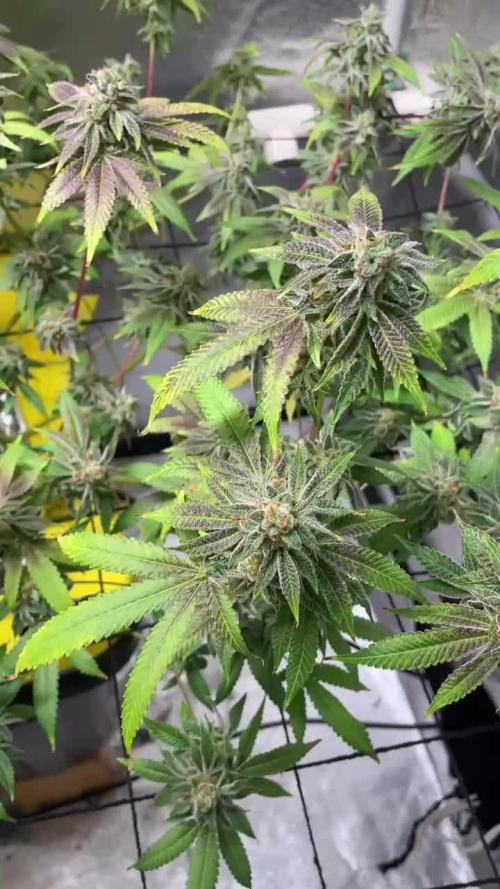
These ladies are crazy. Iced. Flushing underway. Colored up nicely.

Likes
21
Share


@MG2009
Follow
01/27/2021
Flowering going well
Flowering #2,#3,#6 #6 is a week ahead of#2,#3 will put others in on week 4 for a staggered harvesting
01/30/2022
watered with fungal tea and some aloe mixed in for amino acids and other goodness. Well see how she progresses in 4 days
Also working on some banana peel tea to give a boost of potassium if I do next week it should be available for week 6-7.
Ps.
Fuzzy Mellon (bag seed male)
I will pollinate one lucky branch on #6 as she is my favorite. But number 3(tall and lanky one) will get pollination of one branch as well.
I can't wait to see how they recombine with fuzzy melon smell mixed with burnt rubber and model glue and pine.
#2 no pollination (smaller one) #5 (bonsai) and #8 are males. So 3 female out of 8 seeds. Going to make some feminized seeds next time,so I'll have plenty of female's for a staggard harvest.
Likes
11
Share


@Rko41
Follow
Temps gris cette semaine température matin aux alentours de14 degrés et entre 24et 28 degrés les après midis la floraison commence à bien se développer


Likes
10
Share


@PolezGardn
Follow
week seven flower everything looks crazy so far :D
buds are filling out & terps going crazy!!
the fade comes through!!
I water them with 1.5l every 48h
the light I use was set to 100% and it hangs 80cm away from the tops
CherryPie 1: smells fresh like minty
CherryPie 2: smells like cherrys very fruity


Likes
10
Share

@OrionSparkles
Follow
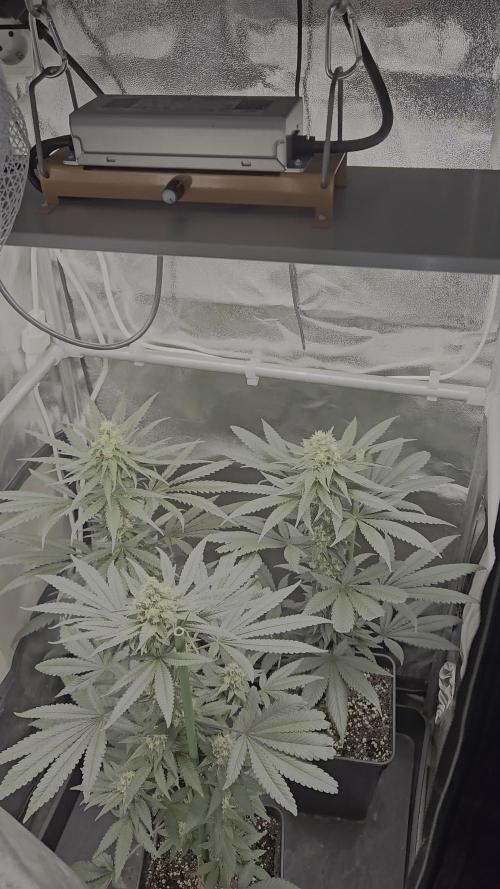
It is very low for harvest; I have been applying overdrive,3ml per 1,5L, three times in the last waterings, I will apply again one last time and proceed to washing roots. Then I will continue watering only with water until the end, I estimate there will be about two weeks or less left for harvest.👌🏻🐦
Likes
23
Share


@lemonairlines
Follow
I washed Moby's soil with 20L water and the leaves started to turn yellow. Ready to cut when dry the soil🙏. The trichomes are almost ready, I can't take a photo of them , i tried and she is so strong 😏
Silver's middle branches are falling, I have to find a solution for that, the branches should not touch each other. She drinks a lot of water and has consumed my fertilizers she always hungry 😅 , 4.5 liters in 3 days but its okey .Looks like it needs at least 10-12 more days but will be alone 😎
Bloom 61: Silver is lonely right now but i untied her to strech sideways . Maybe it was not good idea :)) All branches are falling down , i have to tie up to plastic string but it was too hard . I think i got this


Processing
Likes
16
Share


@Divs_darkroom
Follow
Been feeding the nectar for the gods sample pack. Plus impello biologics inoculant. Experimenting with lst. Hasn't been topped or defoliated at all. Just tying down and tucking leaves. I cut my pot as well to allow more lower air circulation. There are 9 visible "tops" at the top of the canopy. And a couple more that are underneath. Day 32 and everything is looking good to me.

Likes
8
Share

@MaryJaneJo
Follow
Apologies for my extended break in reporting. I missed a good few weeks __time is skipping on my part of Earth, I swear. There must be some local distortion in the timeline.
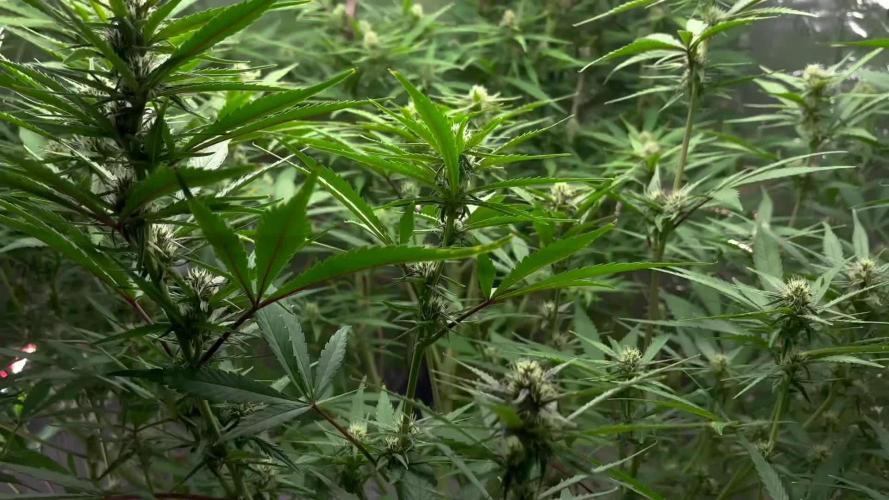
Strawberry Gorilla, despite the hot planetary conditions, is doing just fine. When the temperature hit 32°C, she definitely struggled.
She gets fed every 8 hours at pH 5.8. No leaf discolouration or other plagues detected so far — only a few minor burns from the side lighting.
She is definitely too big for my grow wardrobe now. I defoliated her yesterday, but handling her is becoming a proper space_walk operation.
Mission continues __stay cool, Growers.👽

Likes
11
Share


@Lawlwtf
Follow
Heavy defoliation taking place this week as I am trying to expose the bud sites to more lights. I am taking out most major fan leaves and leaves that are blocking bug sights. I also somewhat lilipopped these plants to remove the larfy bud sites that we being produced at the bottom of the plant to focus more top bud site growth.

Processing
Likes
9
Share


@JerMeds
Follow
Update: I made a Flowering feed guide for myself so I figured I would share it. I'm going to do a small flush on them soon to remove nutrient buildup. I'm sure it will help finished quality.
The first girl has been stretching all week. I have had to LST branches to keep her short. I hope she is done stretching but if not I will just keep tying branches down. She did make it too close to a light and it burned one of her buds. It did not cause any issues tho.
On the second girl I was tying down the main stem and damn near snapped it off. I freaked out and cried IRL. 😭
I braced the top broken half and taped it up then I gave her a large dose of Silica and Recharge to help her recover. Only the broken top of the main stem went a droopy for 4 days and she almost stopped growing.
She developed some rust spots on some of her fan leafs. I gave her Cal-Mag the second I saw the spots developing but they developed regardless.
My guess is that she used energy in her fan leafs to help her recover.
The good news is she looks fully recovered. 👊 I can feel a knot where the break is, very fast recovery for such a bad break. For sure this was my worst LTS accident to date. I will get a pictures of the break when I feel comfortable removing the tape.
I upgraded there lights with 2x 100w 3000k flood lights with the lens plate removed. I have had really good results with these lights in previous grows and they are thin so they fit perfectly.
I now have:
2x Castnoo 300s (really 100w)
1 Grow Star 150 UFO(really 70w)
2x Viugreum 100w 3000k thin flood lights (really 60w)
2x MAIICY 45w (really 30w)
That's a total of 450 true watts. 225w for each of these girls. Very bright inside. Maybe over kill?

Processing
Likes
63
Share


@AsNoriu
Follow
Day 65. Girls are okish, calmag mini def is still after me, now even Gorillas show off some reddish leaves stems, hope they just cant keep up with speed and amount...
In flowering its bad to have unhealthy plants, so CalMag today and full bloom tommorrow eve. Girls started to drink really fast.
Control garden is my joy now, Outside Cookie is a pity tho....
We shall see....
In plans to raise lights back to 60 cm from canopy, girls stretched a bit, need to adjust and i just cant wait couple more weeks till first round of defoliation :))) hope to do it on day 18 of flower latest.. Canopy is too packed, need better air and light.
Thinking to get heavy artillery out, epsom salt dresing :)) thats my last hope to fight that reddish-violet and make it green again. It takes two weeks to kick inn, but works always for me...
Day 66. Girls are happy, hungry and in full blast. Control garden has such healthy green its hard to describe...
Cookies on other hand streched as f@%k, will have to lolitop them really high, so no proper grow and small harvest, taste is the only thing that can save them... Worthless for now....
All girls streched like 5 cm in one day, they loved CalMag. Lights been raised like 7 cm. Lets see...
Day 68. Changed plans a bit, girls got silica acid with plain water and they loved it!
They are happy campers and grow really fast, now only to have patience till defoliation. Girls are super packed, will have to care about them 2x more than avarage, thinking to plug in conditioner, but its still coldish weather outside, so hope to last two more weeks without that beast, no tv or orher aplaincies while this beast runs :))))
Day 68, evening.
First time checked my girls after light switch to flower and i am lost, will they make it? Canopy height is like 30-35 cm, they had small lolitopings on lower levels during vegetation ( see week 8 first video just mute it, they where striped like this on week 5 as well) in video its even hard to see, but its jungles!!!!
Have one fresh air fan, double fan set with carbon out, inside two standing fans and powerful conditioner, will i make it with only defoliation or should i clear them hard aswell?
Never growed such low and dence plants before.
Please advice or show diary to read.
Plus a 30 days old Incredible Bulk, almost no feed, no germination or transplanting, straight to soil and no direct light above. Hope you will see this same strain grower :) Peace.
Likes
159
Share


@BarrieGrower
Follow
Did not get up to see the plants this week, been watching the weather though. The weather was fine, next week looks a bit cooler and three day of rain, not great.
First plant was hung a week and trimmed the first oz and a half. Looks like I may get five or six off this plant.
The trimmed buds look fine. They were squished bringing them back. In my wisdom I bagged it inside five bags to avoid the smell and complaints driving back and that happened. Well I did not get any complaints though. Trimming is a bit of a chore now, oh well. Won't do that again. Buds look good and all is well.
I may try to get up next week to see them.
Cheers.

Likes
15
Share


@Saltoa
Follow
Are there any signs of stress in plants? Is it pruned correctly?
Day 31 trimming
Day 31 call mag + water
Day 33 call mag big bud sensi bloom ab carboload
Likes
10
Share

@GERGrowDesigns
Follow
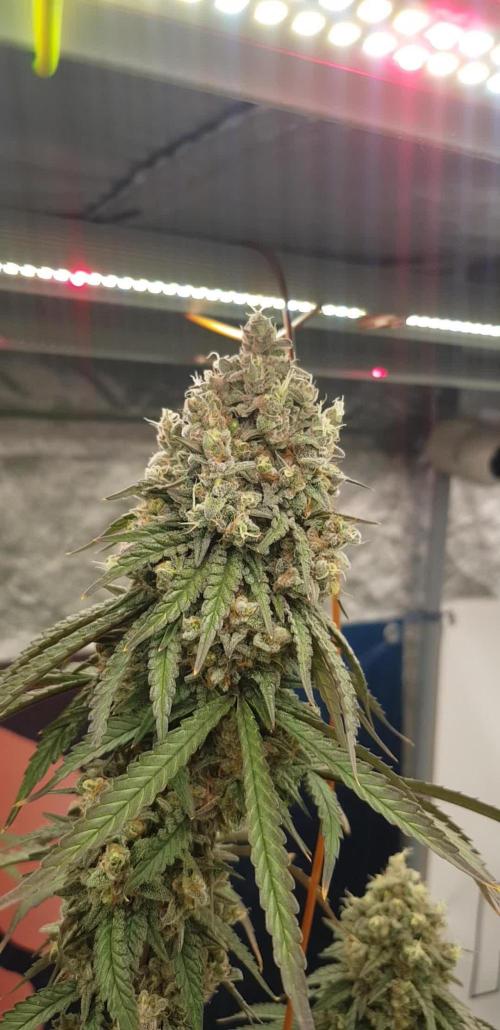
Welcome to Flower week 8 of Sweet Seeds Mental Rainbow F1
I'm excited to share my grow journey with you from my
Sweet Seeds Project . It's going to be an incredible ride, full of learning, growing, and connecting with fellow growers from all around the world!
For this Project , I’ve chosen the Feminized Photo strain Mental Rainbow F1 :
Here’s what I’m working with:
• 🌱 Tent: 120x60x80
• 🧑🌾 Breeder Company: Sweet Seeds
• 💧 Humidity Range: 40
• ⏳ Flowering Time: 7-8weeks
• Strain Info: 22-30%THC
• 🌡️ Temperature: 26
• 🍵 Pot Size: 16
• Nutrient Brand: Narcos
• ⚡ Lights : 600W x 2
A huge thank you to Sweet Seeds for allowing me to try my Best with this amazing collection from Photo Strains they managed to Sponsore . Big thanks for supporting the grower community worldwide! Your genetics and passion speak for themselves!
I would truly appreciate every bit of feedback, help, questions, or discussions – and of course, your likes and interactions mean the world to me as I try to stand out in this exciting competition!
Let’s grow together – and don’t forget to stop by again to see the latest updates!
Happy growing!
Stay lifted and stay curious!
Likes
2
Share

@zenderman
Follow
1.10.26.
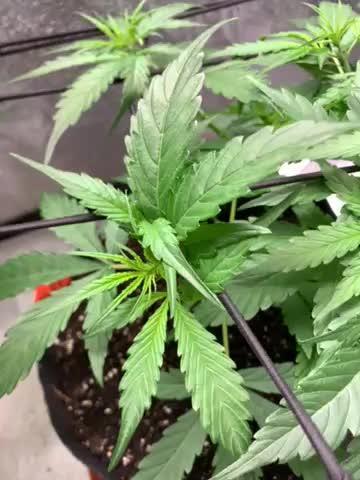
day 22 from shedding the shell -under the SCROG mesh.
I understand, of course, that photoperiod plants are much more productive, but the growth and maturation rate of auto flowering plants is very impressive!👍

Likes
25
Share


@festaOG
Follow
I have checked the plants and one plant is now showing about 10% amber trichomes on old growth. New growth clear.
Starting to see some nice colour changes across the canopy.
Have fed them a weaker feed to start the week but included a microbe tea.

Processing
Likes
10
Share


@Teamdirtbag2
Follow
So the end is here. Its time, only damage from this point on, in this case.. I chopped her. She is hanging... strong pine smell with a little lemon. Not my favorite that's for sure.


Likes
2
Share


@Ultraviolet_
Follow
Remember that, however you are played, or by whom, your soul is in your keeping alone. Even though those who presume to play you be kings or men of power, when you stand before God, you cannot say, 'But I was told by others to do thus,' or that virtue was not convenient at the time. This will not suffice. Remember that.
Day:18
84°F and 65% RH (VPD) for the vegetative stage. Approximately 1.15kPa(assuming leaf temperature is about 2°F cooler than the air), which falls right into the ideal vegetative sweet spot (0.8kPa to 1.2kPa). At 1.15kPa, plants can draw water and nutrients efficiently without risking stress or wilting. It keeps the leaf pores (stomata) open, allowing for ideal carbon dioxide intake and maximizing vegetative growth. VPD is determined by the leaf's temperature, not just the ambient air. Because leaves usually run 1° to 3°F cooler than room air under bright grow lights, my actual VPD will be slightly lower, closer to the 1.0kPa mark. As she transitions from vegetative growth to flowering, one can gradually lower the humidity (to around 45–60%) and drop temperatures slightly to prevent disease from settling inside dense buds when they appear.
Night:6
At 70°F and 60% relative humidity, Vapor Pressure Deficit (VPD) is 0.86 kPa. This is right on the cusp of whats optimal for the vegetative stage. During the nighttime, plants generally close their stomata and undergo cellular respiration rather than photosynthesis. Transpiration slows to a near stop, making VPD less critical at night than during the day. However, maintaining a nighttime VPD between 0.8 and 1.0 kPa is highly beneficial in that it ensures the air is dry enough to prevent powdery mildew or bud rot, but moist enough to keep the plant from undergoing unnecessary stress. This range keeps the environment comfortable for cellular processes and prevents large atmospheric swings. Keeping it all flowing.
(Not pushing them yet, these are photoperiods)
The optimal soil (root zone) temperature for cellular root respiration and nutrient uptake in cannabis is between 68F & 72F This narrow range balances biological energy production (cellular respiration) with the dissolved oxygen levels in the soil, maximizing plant growth and health. Warmer soils hold significantly less dissolved oxygen. When soil temperature exceeds 74F oxygen depletion occurs, inhibiting cellular respiration almost entirely, At 68-72F root cells generate optimal adenosine triphosphate (ATP) via respiration to power root-tip elongation and the active transport of water and nutrients.
Too Hot (Above 78F) Root respiration increases, demanding more oxygen, while the water's oxygen-carrying capacity drops. This creates a prime environment for anaerobic pathogens and Pythium (root rot).
Too Cold (Below 60F) Root metabolism and cellular respiration slow to a crawl. This severely impairs nutrient and water absorption, leading to yellowing, wilting, and phosphorus deficiencies.
A lot depends on whether it's automatic or photoperiod; with photoperiod, there is not as much of a need to push "hard" as the real countdown only begins once the flower is initiated. Automatics, on the other hand, the chronological "clock" begins ticking the moment the seed germinates. It is of critical importance that the seedling growth gets off to the races, understanding that early growth is like compound interest, which will pay off come harvest. This reality is why getting autoflowers "off to the races" early on yields such exponential benefits. The "compound interest" is directly related to the surface area of the leaves. Larger, faster-growing seedlings process more light and build bigger root networks early on, which translates into an explosion of vertical and lateral growth during their short vegetative window.
The margins for error are so thin with autoflowers; this early-stage momentum depends on several critical practices. Seedlings exposed to increased atmospheric CO2 levels early in life will develop at an increased rate. To effectively "extend" or optimize the capacity of Photosystem II (PSII) for increased photosynthetic efficiency. In standard oxygenic photosynthesis, Photosystem II (PSII) is naturally limited to the red-light spectrum, peaking at 680nm. Extending its light-harvesting capacity past 700nm into the far-red region requires bypassing the natural limits of standard chlorophyll a. Adding 730 nm (far-red) LEDs alongside standard red/blue lights has been shown to increase canopy photosynthesis by 20–30% in several crops by acting synergistically with shorter wavelengths. However, the limitation is that excessive, pure IR/Far-red light (without accompanying red light) can trigger the "shade avoidance response," causing plants to grow tall, weak, and spindly rather than robust. Utilizing infrared light (specifically the 700-750 nm far-red range) is a viable method to boost photosynthetic efficiency. It acts as a bridge to allow PSII to utilize a broader spectrum of light, breaking the traditional 700 nm barrier. UVR8-mediated signaling (often in conjunction with CRY proteins) triggers protective mechanisms that maintain the stability of the photosynthetic apparatus (including LHCII and reaction center proteins), thus ensuring that the efficiency of Photosystem II remains higher in UV-B-exposed plants compared to plants lacking this receptor. ΦPSII indictates the rate of electron transfer from water to plastoquinone, which drives the production of ATP and NADPH. There is a close link between ΦPSII and the true rate of CO2 fixation (Φ*co2).
ETR stands for Electron Transport Rate. It measures the speed at which electrons are moved through the thylakoid membranes in a plant's chloroplasts during the light-dependent reactions of photosynthesis. Infrared light (particularly Near-Infrared or NIR) improves cellular energy by interacting directly with the electron transport chain (ETC) in mitochondria. This process boosts adenosine triphosphate production, which acts as a metabolic coefficient multiplier by accelerating enzyme activity dramatically.
Extend then multiply.
Far-Red photons interact with plant photoreceptors to accelerate the plant’s biological "clock" or trigger a shade-avoidance response. Autoflowers don't use the plant's biological clock, although the IR will initiate a shade avoidance and make them stretchy. You can just add equal measures of 660nm-680nm to negate the shade avoidance effect. Replacing nights' "darkness" with a combination of IR+ and 660nm. Because autoflowers don't require a dark period to flower, many growers just blast them with light. 18/6 24/0. However, this ignores the plant's metabolic rhythms, where daytime photosynthesis (light reactions) must be perfectly balanced with nighttime carbon fixation and assimilation (Calvin cycle) to avoid bottlenecking plant development. Cellular respiration is a 24/7 process, but it can only function while the plant has the free oxidative capacity to do so. A 100% photosynthetically active leaf cannot perform cellular respiration. The viral trend of defoliation of every leaf that isn't "getting enough light" is of great detriment overall, putting 100% of the cellular respiratory "workload" and responsibility on the 0/4/6 hours of darkness in sub-optimal conditions for enzymatic activity. Photosynthesis captures nearly 100% of the initial energy as carbon, while cellular respiration is the process that unlocks 90% of that captured energy into usable ATP so the plant can use it. Respiration is considered only roughly 30% to 40% efficient. It captures enough of the potential energy in glucose to synthesize around 30 to 38 ATP molecules per glucose molecule. The remaining 60% to 70% of the energy in the sugar is not captured in ATP; instead, it naturally escapes into the environment as heat, which helps regulate plant temperature. In plants, the primary enzymes of the Electron Transport Chain (ETC) and the ATP synthase complexes are typically adapted to function optimally in warmer temperatures (roughly 77°F to 95°F, depending on the specific plant strain). As temperatures rise within this physiological range, molecular collisions increase, speeding up respiration and ATP production. The cannabis plant has a branched respiratory pathway. During heat or cold stress, plants activate Alternative Oxidase (AOX). AOX burns sugars to dissipate energy as heat rather than coupling it to ATP production. This pathway actually functions optimally at elevated temperatures to help protect the cell from the damaging build-up of Reactive Oxygen Species (ROS) during heat stress. Enzyme activity generally scales with heat; there is a strict biological limit. If canopy temperatures in a grow room exceed 104°F, the enzymes and their supporting lipid membranes lose stability. Not saying you need to go crazy, just optimize nights the same as we optimize days.
Phosphorus is the driving force behind early seedling development. It acts as the "energy hub" of the plant, directly driving cell division, robust root growth, and the creation of DNA. Without an adequate, easily accessible supply early on, the plant's overall growth potential and final yield can suffer permanently.