




Likes
286
Share


@Tropicannibis_Todd
Follow
Alrighty My Friend
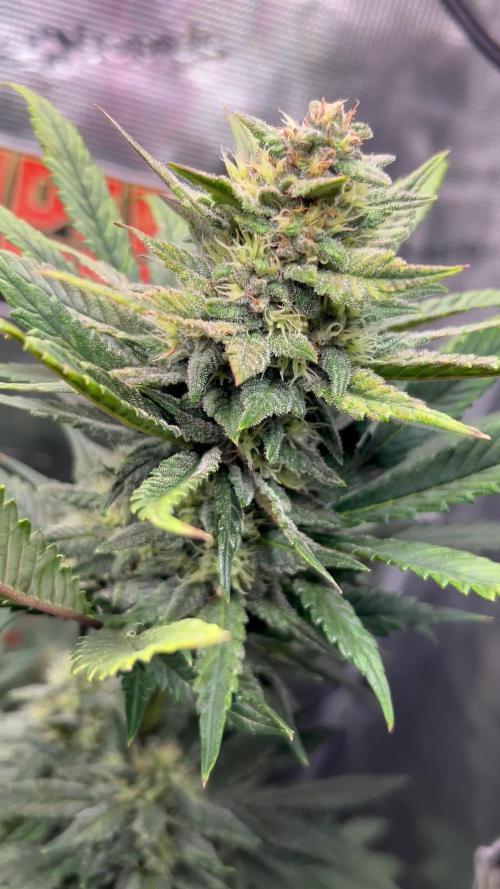
well this was one hell of a grow , i had a blast , the SugarLarry exceeded my expectations in everyway ....
I would definitely recommend 👌
👉Soil Provided by ProMix.ca
👉Nutrients Provided by Agrogardens
👉Lighting Provided by MarsHydro.ca
Thanks my friends for the great support over the years 🙏 Happy Growing


Likes
6
Share

@GERGrowDesigns
Follow
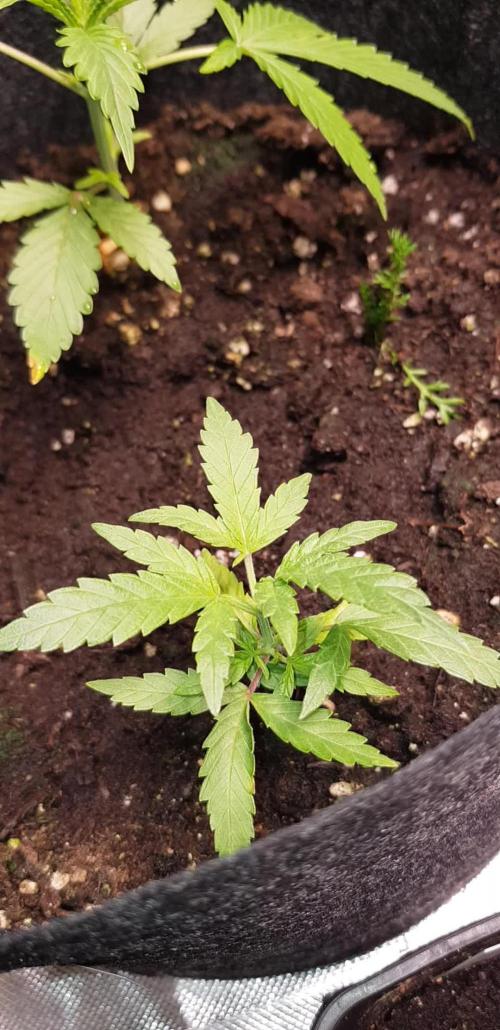
Welcome to Veg Week 3 of Fast Buds Z-Up Auto
I'm excited to share my grow journey with you from my
FastBuds Project . It's going to be an incredible ride, full of learning, growing, and connecting with fellow growers from all around the world!
For this Project , I’ve chosen the Feminized Auto strain Z-Up :
Here’s what I’m working with:
• 🌱 Tent: 120x60x80
• 🧑🌾 Breeder Company: Fast buds
• 💧 Humidity Range: 60
• ⏳ Flowering Time: 8-9 Weeks
• Strain Info: 29%THC
• 🌡️ Temperature: 26
• 🍵 Pot Size: 0.1
• Nutrient Brand: Hy-Pro
• ⚡ Lights : 600W x 2
A huge thank you to Fast Buds for allowing me to try my Best with this amazing collection from Automatic and Photo Strains they managed to Sponsore . Big thanks for supporting the grower community worldwide! Your genetics and passion speak for themselves!
I would truly appreciate every bit of feedback, help, questions, or discussions – and of course, your likes and interactions mean the world to me as I try to stand out in this exciting competition!
Let’s grow together – and don’t forget to stop by again to see the latest updates!
Happy growing!
Stay lifted and stay curious!
Peace & Buds!
Likes
10
Share


@bazgrow
Follow
I develop an application that measures the THC levels of cannabis
and the result comes from 3 photos of buds...
Godfather OG measured relatively well, it also measured other
strains such as Fat Banana Automatic, Gorilla Cookies Automatic,
Northern Lights Automatic,White Widow Automatic
and Gelato Auto...
See how it works in the video THC Meter...
-----------------------------------------------------
Day50 :
-----------------------------------------------------
Day air temperature: 28c
Night air temperature: 24c
Air humidity: 46%
No Watering
-----------------------------------------------------
Day51 :
-----------------------------------------------------
Day air temperature: 27c
Night air temperature: 24c
Air humidity: 39%
PH : 6.4
Watering : 0.4 l
Bio Bloom 1 ml / l
-----------------------------------------------------
Day52 :
-----------------------------------------------------
Day air temperature: 27c
Night air temperature: 23c
Air humidity: 43%
No Watering
-----------------------------------------------------
Day53 :
-----------------------------------------------------
Day air temperature: 29c
Night air temperature: 25c
Air humidity: 39%
PH : 6.4
Watering : 0.4 l
Bio Bloom 1 ml / l
-----------------------------------------------------
Day54 :
-----------------------------------------------------
Day air temperature: 30c
Night air temperature: 26c
Air humidity: 45%
PH : 6.5
Watering : 0.4 l
Bio Bloom 1 ml / l
-----------------------------------------------------
Day55 :
-----------------------------------------------------
Day air temperature: 30c
Night air temperature: 26c
Air humidity: 38%
PH : 6.4
Watering : 0.4 l
Bio Bloom 1 ml / l
-----------------------------------------------------
Day56 :
-----------------------------------------------------
Day air temperature: 28c
Night air temperature: 24c
Air humidity: 40%
Flushing Before Harvest


Likes
25
Share


@eldruida_lamota
Follow
Ya estoy de vuelta y esta vez se trae la quinta semana de crecimiento de estas Casey’s rollex O.G. de Dutchfem. Están fenómeno los 3 ejemplares van al mismo ritmo y entre nudos tenemos muy poca distancia, se nota su genética indica, la temperatura va de 21/23 grados ya sea de día o de noche.
.
La humedad anda entre 50% y el ph está en 5,8/6,0.
.
AgroBeta:
1 ml x L Growth black line , vía radicular.
0,2 ml x L Tucán , vía radicular.
0,2 ml x L Flash Root , vía radicular.
0,05 ml x L Gold Joker, vía radicular.
.
Hasta aquí es todo familia, espero que os vaya gustando el proceso tanto de crecimiento como la futura floración 💨💨💨 buenos humos.

Likes
16
Share


@Mo_Powers
Follow
the 9th week. she's slowly starting to smell. when i open the door to the greenhouse, i get a sweet smell. but it's a really faint odour. the pistils are still white. i think she'll be ready for harvest in 2 to 3 weeks. she still has a few weeks to form proper buds. she still looks very healthy. i hope the next few weeks will be really sunny again. unfortunately it's very changeable weather at the moment.

Likes
47
Share


@Ultraviolet
Follow
All content on this diary is for inspirational and educational purposes only. The ideas shared are not a substitute for professional advice. This diary/account is not officially affiliated with Alan Watts or his estate. All materials are used under the principles of fair use. I honor the legacy of Alan Watts by sharing his wisdom respectfully and with the intention of inspiring awareness and self-understanding.
2nd net is up. Early bud formations are promising. holding up to the extremes pretty well, some leaves taking minor damage, but overall, she is holding up, gave her 1 night at 50F see how she would react, stressful. Not advised as it messes with her metabolism, but I want to see if it triggers any anthocyanin response. Love to see her purp up but no signs yet. Remember, For every molecule of glucose produced during photosynthesis, a plant needs to split six molecules of water. This process provides the hydrogen needed for synthesizing glucose and other organic compounds, while oxygen is released as a byproduct.
Homework.
If Rubisco activity is impaired and it cannot properly function or regenerate its substrate, the plant's leaves are likely to turn a pale green or lime green, a condition known as chlorosis. Essentially, Rubisco activity is highly regulated and susceptible to various environmental and metabolic factors that can cause it to become inhibited, leading to an apparent failure in RuBP regeneration due to a lack of consumption.
Rubisco regeneration is intrinsically linked to nitrogen supply because Rubisco is a major sink for nitrogen in plants, typically accounting for 15% to over 25% of total leaf nitrogen. The regeneration phase itself consumes nitrogen through the synthesis of the Rubisco enzyme and associated proteins (like Rubisco activase), and overall nitrogen status heavily influences the efficiency of RuBP regeneration. RuBisCO is a very large enzyme that constitutes a significant proportion (up to 50%) of leaf soluble protein and requires large investments in nitrogen. Insufficient nitrogen supply limits the plant's ability to produce adequate amounts of RuBisCO, thereby limiting the overall capacity for photosynthesis and carbon fixation. Maintaining the optimal, slightly alkaline pH is crucial for the proper function and regeneration of Rubisco. Deviations in either direction (too high or too low) disrupt the enzyme's structure, activation state, and interaction with its substrates, leading to decreased activity and impaired RuBP regeneration. (Lime/yellowing)
Structural Component: Nitrogen is an essential building block for all proteins, and the sheer abundance of the Rubisco protein makes it the single largest storage of nitrogen in the leaf.
Synthesis and Activity: Adequate nitrogen supply is crucial for the synthesis and maintenance of sufficient Rubisco enzyme and Rubisco activase (Rca), the regulatory protein responsible for maintaining Rubisco's active state. Nitrogen deficiency leads to a decrease in the content and activity of both Rubisco and Rca, which in turn limits the maximum carboxylation rate, Vmax, and the rate of RuBP regeneration Jmax, thus reducing overall photosynthetic capacity.
Nitrogen Storage and Remobilization: Rubisco can act as a temporary nitrogen storage protein, which is degraded to remobilize nitrogen to other growing parts of the plant, especially under conditions of nitrogen deficiency or senescence.
Nitrogen Use Efficiency (NUE): The allocation of nitrogen to Rubisco is a key determinant of a plant's photosynthetic nitrogen use efficiency (PNUE). In high-nitrogen conditions, plants may accumulate a surplus of Rubisco, which may not be fully activated, leading to a lower PNUE. Optimizing the amount and activity of Rubisco relative to nitrogen availability is a target for improving crop NUE.
Photorespiration and Nitrogen Metabolism: Nitrogen metabolism is also linked to the photorespiration pathway (which competes with carboxylation at the Rubisco active site), particularly in the reassimilation of ammonia released during the process.
To increase RuBisCO regeneration, which refers to the process of forming the CO2 acceptor molecule Ribulose-1,5-bisphosphate (RuBP) during photosynthesis, the primary methods involve optimizing the levels and activity of Rubisco activase (Rca) and enhancing the performance of other Calvin-Benson-Bassham (CBB) cycle enzymes.
Biochemical and Environmental Approaches:
Optimize Rubisco Activase (Rca) activity: Rca is a crucial chaperone protein that removes inhibitory sugar phosphates, such as CA1P (2-carboxy-D-arabinitol 1-phosphate), from the Rubisco active site, thus maintaining its catalytic competence.
•Ensure optimal light conditions: Rca is light-activated via the chloroplast's redox status. Adequate light intensity ensures Rca can effectively maintain Rubisco in its active, carbamylated state.
•Maintain optimal temperature: Rca is highly temperature-sensitive and can become unstable at moderately high temperatures (e.g., above 35°C/95F° in many C3 plants), which decreases its ability to activate Rubisco. Maintaining temperatures within the optimal range for a specific plant species is important.
•Optimize Mg2+ concentration: Mg2+ is a key cofactor for both Rubisco carbamylation and Rca activity. In the light, Mg2+ concentration in the chloroplast stroma increases, promoting activation.
•Manage ATP/ADP ratio: Rca activity depends on ATP hydrolysis and is inhibited by ADP. Conditions that maintain a high ATP/ADP ratio in the chloroplast stroma favor Rca activity.
Enhance Calvin-Benson-Bassham (CBB) cycle enzyme activity: The overall rate of RuBP regeneration can be limited by other enzymes in the cycle.
•Increase SBPase activity: Sedoheptulose-1,7-bisphosphatase (SBPase) is a key regulatory enzyme in the regeneration pathway, and increasing its activity can enhance RuBP regeneration and overall photosynthesis.
•Optimize other enzymes: Overexpression of other CBB cycle enzymes such as fructose-1,6-bisphosphate aldolase (FBA) and triose phosphate isomerase (TPI) can also help to balance the metabolic flux and improve RuBP regeneration capacity.
Magnesium ions, Mg2+, are specifically required for Rubisco activation because the cation plays a critical structural and chemical role in forming the active site: A specific lysine residue in the active site must be carbamylated by a CO2 molecule to activate the enzyme. The resulting negatively charged carbamyl group then facilitates the binding of the positively charged Mg2+ion. While other divalent metal ions like Mn2+ can bind to Rubisco, they alter the enzyme's substrate specificity and lead to dramatically lower activity or a higher rate of the non-productive oxygenation reaction compared to Mg2+, making them biologically unfavorable in the context of efficient carbon fixation. The concentration of Mg2+ in the chloroplast stroma naturally increases in the light due to ion potential balancing during ATP synthesis, providing a physiological mechanism to ensure the enzyme is activated when photosynthesis is possible. At the center of the porphyrin ring, nestled within its nitrogen atoms, is a Magnesium ion (Mg2+). This magnesium ion is crucial for the function of chlorophyll, and without it, the pigment cannot effectively capture and transfer light energy.
Mg acts as a cofactor: Mg2+ binds to Rubisco after an activator CO2 molecule, forming a catalytically competent complex (Enzyme-CO2-Mg2+). High light + CO2) increases demand: Under high light (60 DLI is a very high intensity, potentially saturating) and high CO2, the plant's capacity for photosynthesis is high, and thus the demand for activated Rubisco and the necessary Mg2+ cofactor increases. Mg deficiency becomes limiting: If Mg2+ is deficient under these conditions, the higher levels of Rubisco and Rubisco activase produced cannot be fully activated, leading to lower photosynthetic rates and potential photo-oxidative damage.
Optimal range: Studies show that adequate Mg2+ application can enhance Rubisco activation and stabilize net photosynthetic rates under stress conditions, but the required concentration is specific to the experimental setup.
Monitoring is key: The most effective approach in a controlled environment is to monitor the plant's physiological responses e.g., leaf Mg2+ concentration, photosynthetic rate, Rubisco activation state, and adjust the nutrient solution/fertilizer to maintain adequate levels, rather than supplementing a fixed "extra" amount.
In practice, this means ensuring that Mg2+ is not a limiting factor in the plant's standard nutrient solution when pushing the limits with high light and CO2.
Applying Mg2+ through foliar spray is beneficial to Rubisco regeneration, particularly in alleviating the negative effects of magnesium (Mg) deficiency and high-temperature stress (HTS). While Mg can be leached from soil, within the plant it is considered a mobile nutrient, particularly in the phloem. Foliar-applied Mg is quickly absorbed by the leaves and can be translocate to other plant parts, including new growth and sink organs.
Foliar application of: NATURES VERY OWN MgSO4 @ 15.0g L-1 in a spray bottle. For those high-intensity workouts when 1 meal a day is just not enough!
Foliar sprays are often recommended as a rapid rescue measure for existing deficiencies or as a supplement during critical growth stages, when demand for Mg is high. Application in the early morning or late evening can improve absorption and prevent leaf burn. The plant was getting a little limey yellow in the centre. Shortly thereafter, she was back in business, green mostly regenerated. The starting point [of creativity] is curiosity: pondering why the default exists in the first place. We’re driven to question defaults when we experience vuja de, the opposite of déjà vu. Déjà vu occurs when we encounter something new, but it feels as if we’ve seen it before. Vuja de is the reverse—we face something familiar, but we see it with a fresh perspective that enables us to gain new insights into old problems.
Confidence is evidence... nothing more. You are confident because you have driven 10,000 times, you are confident because you have spoken 10,000 times. People think confidence is a feeling, but it's not. If you want more confidence, then you need to create evidence, take more shots, collect more data, build more experiences, take more risks; fail, confidence doesn't come first; it is the reward you get for doing the work. no one else wants to do.
Likes
11
Share


@Vegasgrowermx
Follow
So i had some some confusion going on i though it turn out to be a male since there was no white hairs so i kind of just let it go thinking of breeding it with 2 clones of NYCD was kind of busy to put up pics but to my surprice turn out to be a female so was kind of happy but mad lmao 😂🤦♂️AND ITS ACTUALLY DAY 19 OF FLOWERING
Likes
4
Share

@GoodKarmaCannabis
Follow
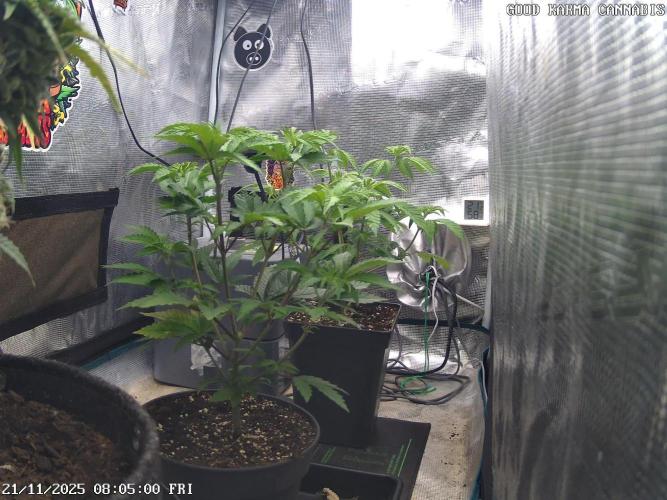
The one that xploded was labeled Automatic and hat to go
Time raffke is fro 14.12 ti 22.12.
Likes
4
Share


@Budking420
Follow
This is hands down the tallest I have ever seen an auto flower get this fast. I have a feeling this is going to have a rather large yield given the container size. I hope you enjoy the pictures and videos I have added. The data is nice to collect on the cloudcom thermo-hygrometer. I hope you come back next week to check just how fast she grows! & remember its 4:20 somewhere!!!

Processing
Likes
5
Share


@PETEROG
Follow
Hey guys everything is going great with these ladies all 6 germinated and popped up in 3 days after planting 1 of the six shooters is a lot smaller than its sisters so I've order LEMON PIE from FASTBUDS should be here tomorrow to take its place and I'm going to move the six shooter outside so if you would like to see its journey comment and like bellow ⤵️
The only thing I wish I did differently would of been starting these girls under a cfl or a cheap led to stop stretching but lesson learned if anyone has any question's please comment and thank-you all for your support ✌️
Likes
3
Share


@SecretC8keSociety
Follow
This the last day of them been in vegetative stage. End of 8 th week. Did defoliation , going grow pass the net trellis I am sure. But they manage to handle the cutting & bouncing back… it do get cold in here when the light is not on. Hope that it doesn’t affect her growth….
Processing
Likes
5
Share


@MELs_Garden
Follow
Semana 5
Del 30 de noviembre al 6 de diciembre
Seguimos con el mismo sistema que hemos utilizando hasta ahora.
3 de diciembre
Realizamos transplantes a macetas de 7l. Como podeis ver en las fotos las raices son una locura y tienen todo el sutrato colonizado.
Utilizaremos cocogen de la marca progen (que es el que hemos utilizado en todo el cultivo hasta hora) para el transplante a maceta definitiva, 100% coco, previamente humedecido con agua + ryzofuel.
Aprovechamos para quitar algunas hojas de la parte de abajo y eliminar algun nudo.
5 de diciembre
Cambiamos el periodo a 15 h y 30 min para que vayan sexando.
Realizamos riego, esta vez le metemos agua + 1gr•10l de vegetative growth de grotek porque es algo que me gusta mucho como funciona, le da mucha fuerza de cara a floracion a la planta. Regamos con 0.5l por planta
PH: 6.2
EC: 0.4ms
Sera el ultimo riego antes de pasar a floracion que sera el 7 de diciembre.
Processing
Likes
7
Share


@Dunk_Junk
Follow
Wow very good growth on her this week, doing VERY well in her tiny 1L airpot!
She has a really thick stem already.
I am worried she's not an autoflower though...
Let's leave her for a few more weeks and see if she enters flowering.


Processing
Likes
1
Share


@Dooda_mf
Follow
Grown outdoors no nutrients just tap water (about 1Gal/day) on the days with no rain... usually around noon when I can see them sag and the weather forecast doesn't predict rain for the rest of the day.
I add Terpinator (30mL/Gal) when I water manually.
2020 was an exceptionally warm summer in Quebec.
Seeded on May 20th
Sprouted on May 23rd
Kept in nursery (watered with tap water + B1 vitamin (3ml/L) until
Transplanted outside June 16th
No Technique applied, she grows as she feels the needs.

Likes
25
Share

@Kirsten
Follow
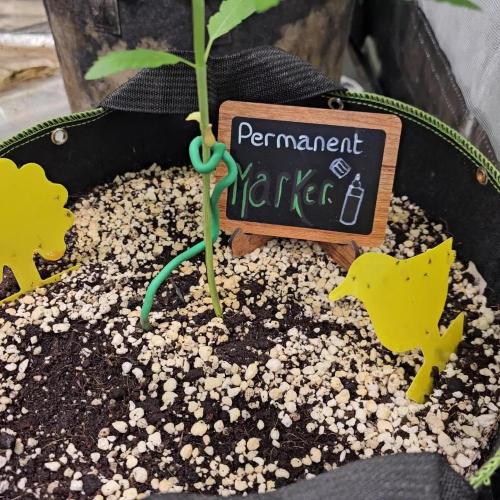
Permanent Marker has stalled in growth a little.
I think it has had a bit too much nitrogen. I'm not worried as I'm sure it'll all work out in the end 😅
5.9.25:
I decided the plant was ready for some training, I FIM'ed her. Hopefully I can just tie the odd branch down, when we get to that stage.
Here is what I did this week.
4.9.25:
I watered with 1L of dechlorinated water PH'd to 6.5 with;
💜 1ml Trace
💜 . 25 TSP Biosys
PH: 6.5
PPM: 365
9.9.25:
I watered with 1.5L of dechlorinated water PH'd to 6.4, with;
💜 1ml Trace
PH: 6.4
PPM: 361
Thanks for stopping by this week and hanging out 😁💚✌️🌱🧡🤞

Likes
6
Share


@SlingShot
Follow
Had to move them from one tent to another. This is the start of week 3 of flower.
Likes
105
Share


@PEAKYPLANTERS
Follow
ladies and gentlemen
Welcome to peaky house gardens
One of the four strains is undergoing an over ... but the strange thing is that they all do the same feeds .... we'll see ... The others are enchanting
