


Likes
Comments
Share

@GREENPHOENIX6262
Follow
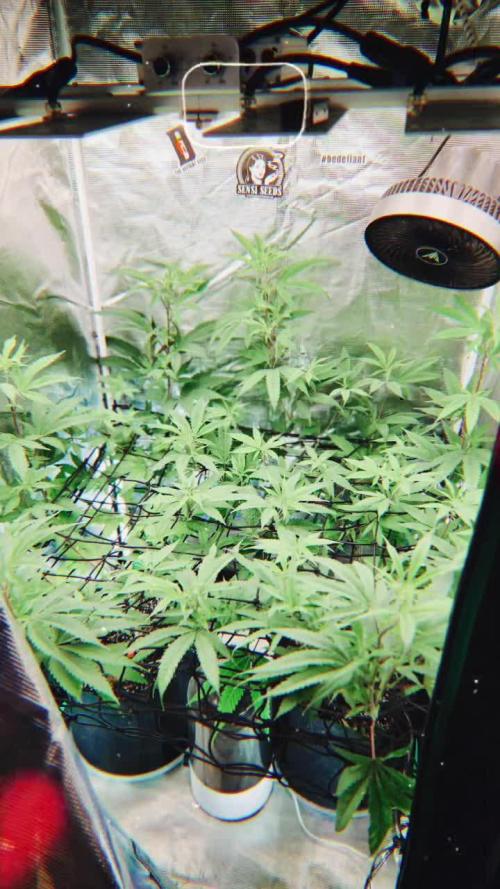
06/06 - As per the most recent update both ladies are thriving accordingly - I will be dropping a 3rd net for added canopy/light coverage throughout the colas and rootzone - I will also be increasing the nutrient ingredient dosage on the Silica to assist with feed intake - I will be flipping them both into flower about in about 2 maybe 3 weeks. 😎😎😎😎😎.. Follow me on IG:Greenphoenix6262
06/07 - These are thus far the biggest plants of grown (VEG) (Much love to @SensiSeeds for the genetics) to date - With consistent feeding using the @VIVOSUN smart drip emitters and the phenomenal @ACINFINITYINC CLOUDRAY S9 grow tent fan I have been able to increase plant development by at least 40% - They are approx. 3ft width thanks to the LST and dropping the net I have been able to open them up for better light exposure - Another piece of equipment that has been vital are the @ACINFINITYINC IONBEAM S11, 11” Supplemental LED Grow Light Bars, they provide the middle/bottom half of the plant with light in which would be a lost because of the canopy of the plants blocking the light from above. With proper genetics, dependable and effective equipment with patience growing monsters is now a part of my routine. 😎😎😎😎😎😎😎😎😎😎😎
06/10 - I laid down a 3rd net for extra coverage though out the plant and did some light trimming underneath to remove sucker steams and larf - Running the hunidifier on high (82%) to help the plant recover from the pull down and light defol - I have also increased the nutrient feed (Nitro Silica) to also assist with rebound and recovery - I will be giving the res about 1 maybe 2 more Veg feeds before clean water flush before flipping. 😎😎😎😎😎😎😎😎😎😎😎.. Peace and Bud!!
06/12 - Ending week 8 Veg on a good note - Both ladies have stretched out beautifully and are coming along without any issues - The plan was to grow them out a bit in the 3x3 but they have grown larger then expected so they will be run through harvest in the 3x3 - Gave them a lite defol yesterday and pumped up the humidifier all in preparation for the flip. Flushing out this weekend with clean water while they transition into pre-flower.

Likes
13
Share


@Hroma
Follow
Semana del 4 al 10 Marzo
Semana 9 Floración
Abonado Floración (Top Bud) —
— Pineapple
— Franco's Lemon Cheese
— American Purple
Final Solution —
— Razuberi
— Critical 2.0
— Liberty Haze
— White Widow
— DC Kush


Likes
43
Share


@Esoteric_growing
Follow
Light is at its maximum height and could do with being raised another inch or so, going to try and tie the reflector directly to the top of the tent. Stretched more than anticipated lol.
Slight tip burn so backed off the nitrogen and added the pk, I think they are a touch too dark green but will rectify during this week. Surprising considering the EC is only 1.4
Likes
14
Share

@Bizarrr
Follow
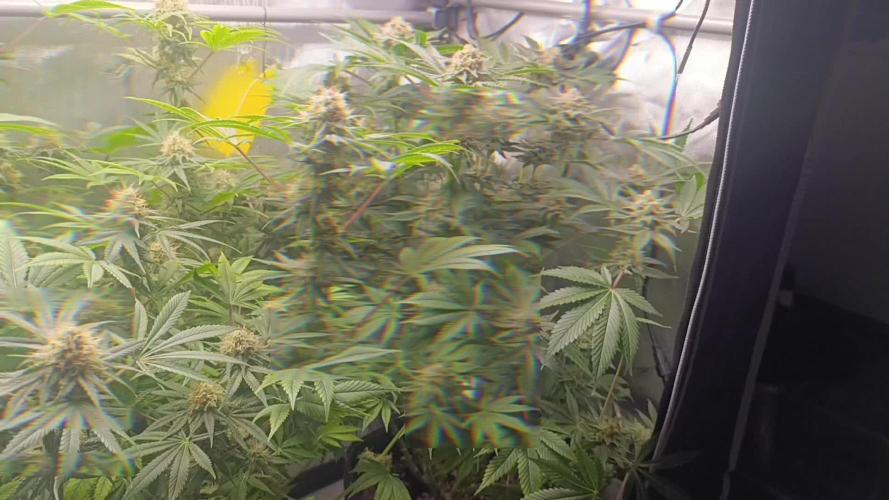
Zdravím.Dnes 49. den květu.Tak mi to nedalo a i když jsem nechtěl,holky šly na focení a prohlídku ze stanu.Neni to prdel je tam pak naskládat nazpět,člověk tam dá dvě a říká si kam s tou třetí.A stalo se to čeho jsem se bál,dvě větvičky jsem zlomil,takže si nechtěně zkusím i supercropping.Ale už je to dva dny a větvičky vypadají živě,takže myslim že to rozchodi.Jinak vše ok a pomálu se blížíme ke konci 💚Za týden na viděnou ?

Processing
Likes
7
Share


@x_grower
Follow
Last week, first of flowering, was outstanding, I could water the girls regulary and the work paid off they stretched a lot and are looking super healthy. The girl right below the upper fan is suffering a bit with the shadows and is notoriously shorter than her sisters, I will need to rethink the air circulation for the next grow. Another concern of mine is their height, hoping they dont stretch anymore as the lights are already at maximum possible height inside tent and there is only 20cm gap between it and the plants.
Likes
12
Share


@Tazard
Follow
I’m really happy with the development she’s shown. I suspect she will probably top a half pound (226g) pretty easily! I like big plants…

Likes
3
Share


@JuanPablo5280
Follow
Final week before chop. She is looking and smelling incredible at this point.
Likes
Comments
Share

@PharmaZ
Follow
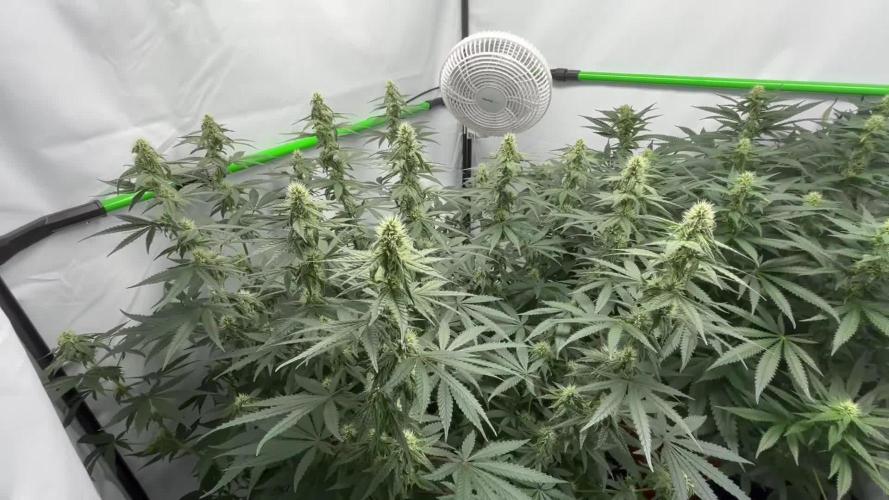
Saturday 25th July (day 28) 9pm
This time I could be home at lights on so they will have a mixed feed with a little PK.
EC still low and will be upping the base nutrients starting tomorrow.
0.5ml/L - Nirvana
0.5ml/L - Calmag
1ml/L - Canna A&B
0.5ml/L - Big Bud
0.5ml/L - Big Fruits
0.5ml/L - Growzyme
PH5.8 EC1.1
Run off BBM PH6.5 EC0.9
Run off Cheese PH6.5 EC0.7
Sunday 26th July (day 29) 9pm
5L of nutrients made.
It is nice to be able to feed when the lights come on makes a massive difference in my management of this grow.
Hopefully fingers crossed and praying to God we can get to harvest.
In a few weeks i have some time off so i can really try to dial it all in.
1ml/L - Nirvana
0.5ml/L - Calmag
1.5ml/L - Canna A&B
0.2ml/L - Big Bud
0.5ml/L - Big Fruits
1ml/L - Humic Acid Plus
PH5.8 EC1.2
Run off BBM PH6.5 EC1.3
Run off Cheese PH6.5 EC0.9

Likes
1
Share

@Rogel
Follow
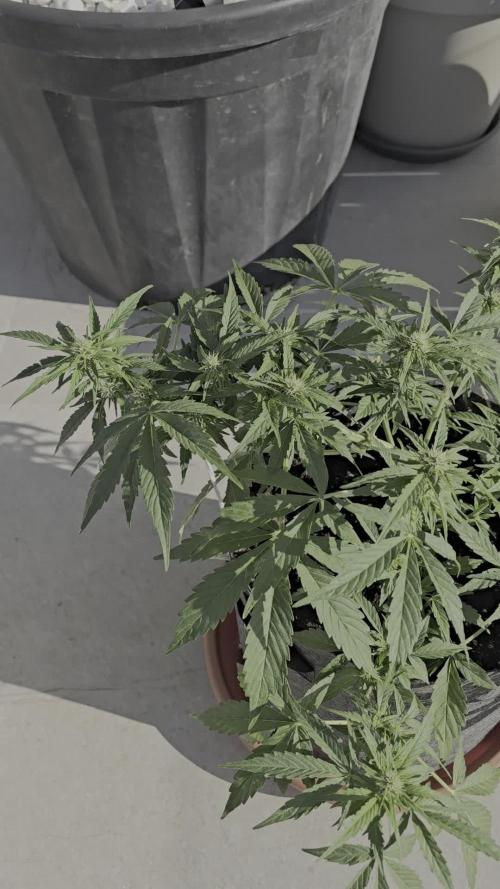
Primera vez que pongo esta cepa, ni si quiera aparece en el buscador. Día 34 y ya tiene buen perfil de floración. Dispuesta en Lst con una altura total actual de 95Cm, lógicamente contando todo el tallo, todavía parece seguir creciendo. He abierto el lst todo lo que he podido.
Likes
25
Share


@Ultraviolet
Follow
ANTHOCYANIN production is primarily controlled by the Cryptochrome (CR1) Photoreceptor ( !! UV and Blue Spectrums are primary drivers in the production of the pigment that replaces chlorophyll, isn't that awesome!
1. Diverse photoreceptors in plants
Many civilizations, including the sun god of ancient Egypt, thought that the blessings of sunlight were the source of life. In fact, the survival of all life, including humans, is supported by the photosynthesis of plants that capture solar energy. Plants that perform photosynthesis have no means of transportation except for some algae. Therefore, it is necessary to monitor various changes in the external environment and respond appropriately to the place to survive. Among various environmental information, light is especially important information for plants that perform photosynthesis.
In the process of evolution, plants acquired phytochrome, which mainly receives light in the red light region, and multiple blue light receptors, including his hytropin and phototropin, in order to sense the light environment. .. In addition to these, an ultraviolet light receptor named UVR8 was recently discovered. The latest image of the molecular structure and function of these various plant photoreceptors (Fig. 1), focusing on phytochrome and phototropin.
Figure 1
Ultraviolet-visible absorption spectra of phytochrome, cryptochrome, phototropin, and UVR8. The dashed line represents each bioactive absorption spectrum.
2. Phytochrome; red-far red photoreversible molecular switch
What is phytochrome?
Phytochrome is a photochromic photoreceptor, and has two absorption types, a red light absorption type Pr (absorption maximum wavelength of about 665 nm) and a far-red light absorption type Pfr (730 nm). Reversible light conversion between the two by red light and far-red light, respectively(Fig. 1A, solid line and broken line). In general, Pfr is the active form that causes a physiological response. With some exceptions, phytochrome can be said to function as a photoreversible molecular switch. The background of the discovery is as follows. There are some types of plants that require light for germination (light seed germination). From that study, it was found that germination was induced by red light, the effect was inhibited by subsequent far-red light irradiation, and this could be repeated, and the existence of photoreceptors that reversibly photoconvert was predicted. In 1959, its existence was confirmed by the absorption spectrum measurement of the yellow sprout tissue, and it was named phytochrome. Why does the plant have a sensor to distinguish between such red light and far-red light? There is no big difference between the red and far-red light regions in the open-field spectrum of sunlight, but the proportion of red light is greatly reduced due to the absorption of chloroplasts in the shade of plants. Similar changes in light quality occur in the evening sunlight. Plants perceive this difference in light quality as the ratio of Pr and Pfr, recognize the light environment, and respond to it.
Subsequent studies have revealed that it is responsible for various photomorphogenic reactions such as photoperiodic flowering induction, shade repellent, and deyellowing (greening). Furthermore, with the introduction of the model plant Arabidopsis thaliana (At) and the development of molecular biological analysis methods, research has progressed dramatically, and his five types of phytochromes (phyA-E) are present in Arabidopsis thaliana. all right. With the progress of the genome project, Fi’s tochrome-like photoreceptors were found in cyanobacteria, a photosynthetic prokaryotes other than plants. Furthermore, in non-photosynthetic bacteria, a homologue molecule called bacteriophytochrome photoreceptor (BphP) was found in Pseudomonas aeruginosa (Pa) and radiation-resistant bacteria (Deinococcus radiodurans, Dr).
Domain structure of phytochrome molecule
Phytochrome molecule can be roughly divided into N-terminal side and C-terminal side region. PAS (Per / Arndt / Sim: blue), GAF (cGMP phosphodiesterase / adenylyl cyclase / FhlA: green), PHY (phyto-chrome: purple) 3 in the N-terminal region of plant phytochrome (Fig. 2A) There are two domains and an N-terminal extension region (NTE: dark blue), and phytochromobilin (PΦB), which is one of the ring-opening tetrapyrroles, is thioether-bonded to the system stored in GAF as a chromophore. ing. PAS is a domain involved in the interaction between signal transduction-related proteins, and PHY is a phytochrome-specific domain. There are two PASs and her histidine kinase-related (HKR) domain (red) in the C-terminal region, but the histidine essential for kinase activity is not conserved.
3. Phototropin; photosynthetic efficiency optimized blue light receptor
What is phototropin?
Charles Darwin, who is famous for his theory of evolution, wrote in his book “The power of move-ment in plants” published in 1882 that plants bend toward blue light. Approximately 100 years later, the protein nph1 (nonphoto-tropic hypocotyl 1) encoded by one of the causative genes of Arabidopsis mutants causing phototropic abnormalities was identified as a blue photoreceptor. Later, another isotype npl1 was found and renamed phototropin 1 (phot1) and 2 (phot2), respectively. In addition to phototropism, phototropin is damaged by chloroplast photolocalization (chloroplasts move through the epidermal cells of the leaves and gather on the cell surface under appropriate light intensity for photosynthesis. As a photoreceptor for reactions such as escaping to the side of cells under dangerous strong light) and stomata (reactions that open stomata to optimize the uptake of carbon dioxide, which is the rate-determining process of photosynthetic reactions). It became clear that it worked. In this way, phototropin can be said to be a blue light receptor responsible for optimizing photosynthetic efficiency.
Domain structure and LOV photoreaction of phototropin molecule
Phototropin molecule has two photoreceptive domains (LOV1 and LOV2) called LOV (Light-Oxygen-Voltage sensing) on the N-terminal side, and serine / on the C-terminal side. It is a protein kinase that forms threonine kinase (STK) (Fig. 4Aa) and whose activity is regulated by light. LOV is one molecule as a chromophore, he binds FMN (flavin mononucleotide) non-covalently. The LOV forms an α/βfold, and the FMN is located on a β-sheet consisting of five antiparallel β-strands (Fig. 4B). The FMN in the ground state LOV shows the absorption spectrum of a typical oxidized flavin protein with a triplet oscillation structure and an absorption maximum wavelength of 450 nm, and is called D450 (Fig. 1C and Fig. 4E). After being excited to the singlet excited state by blue light, the FMN shifts to the triplet excited state (L660t *) due to intersystem crossing, and then the C4 (Fig. 4C) of the isoaroxazine ring of the FMN is conserved in the vicinity. It forms a transient accretionary prism with the tain (red part in Fig. 4B Eα) (S390I). When this cysteine is replaced with alanine (C / A substitution), the addition reaction does not occur. The effect of adduct formation propagates to the protein moiety, causing kinase activation (S390II). After that, the formed cysteine-flavin adduct spontaneously dissociates and returns to the original D450 (Fig. 4E, dark regression reaction).
Phototropin kinase activity control mechanism by LOV2
Why does phototropin have two LOVs? Atphot1 was found as a protein that is rapidly autophosphorylated when irradiated with blue light.
The effect of the above C / A substitution on this self-phosphorylation reaction and phototropism was investigated, and LOV2 is the main photomolecular switch in both self-phosphorylation and phototropism. It turns out that it functions as. After that, from experiments using artificial substrates, STK has a constitutive activity, LOV2 functions as an inhibitory domain of this activity, and the inhibition is eliminated by photoreaction, while LOV1 is kinase light. It was shown to modify the photosensitivity of the activation reaction. In addition to this, LOV1 was found to act as a dimerization site from the crystal structure and his SAXS. What kind of molecular mechanism does LOV2 use to photoregulate kinase activity? The following two modules play important roles in this intramolecular signal transduction.
Figure 4
(A) Domain structure of LOV photoreceptors. a: Phototropin b: Neochrome c: FKF1 family protein d: Aureochrome (B) Crystal structure of auto barley phot1 LOV2. (C) Structure of FMN isoaroxazine ring. (D) Schematic diagram of the functional domain and module of Arabidopsis thaliana phot1. L, A’α, and Jα represent linker, A’α helix, and Jα helix, respectively. (E) LOV photoreaction. (F) Molecular structure model (mesh) of the LOV2-STK sample (black line) containing A’α of phot2 obtained based on SAXS under dark (top) and under bright (bottom). The yellow, red, and green space-filled models represent the crystal structures of LOV2-Jα, protein kinase A N-lobe, and C-robe, respectively, and black represents FMN. See the text for details.
1) Jα. LOV2 C of oat phot1-to α immediately after the terminus
Rix (Jα) is present (Fig. 4D), which interacts with the β-sheet (Fig. 4B) that forms the FMN-bound scaffold of LOV2 in the dark, but unfolds and dissociates from the β-sheet with photoreaction. It was shown by NMR that it does. According to the crystal structure of LOV2-Jα, this Jα is located on the back surface of the β sheet and mainly has a hydrophobic interaction. The formation of S390II causes twisting of the isoaroxazine ring and protonation of N5 (Fig. 4C).
As a result, the glutamine side chain present on his Iβ strand (Fig. 4B) in the β-sheet rotates to form a hydrogen bond with this protonated N5. Jα interacts with this his Iβ strand, and these changes are thought to cause the unfold-ing of Jα and dissociation from the β-sheet described above. Experiments such as amino acid substitution of Iβ strands revealed that kinases exhibit constitutive activity when this interaction is eliminated, and that Jα plays an important role in photoactivation of kinases.
2) A’α / Aβ gap.
Recently, several results have been reported showing the involvement of amino acids near the A’α helix (Fig. 4D) located upstream of the N-terminal of LOV2 in kinase photoactivation. Therefore, he investigated the role of this A’α and its neighboring amino acids in kinase photoactivation, photoreaction, and Jα structural change for Atphot1. The LOV2-STK polypeptide (Fig. 4D, underlined in black) was used as a photocontrollable kinase for kinase activity analysis. As a result, it was found that the photoactivation of the kinase was abolished when amino acid substitution was introduced into the A’α / Aβ gap between A’α and Aβ of the LOV2 core. Interestingly, he had no effect on the structural changes in Jα examined on the peptide map due to the photoreaction of LOV2 or trypsin degradation. Therefore, the A’α / Aβ gap is considered to play an important role in intramolecular signal transduction after Jα.
Structural changes detected by SAXS
Structural changes of Jα have been detected by various biophysical methods other than NMR, but structural information on samples including up to STK is reported only by his results to his SAXS. Not. The SAXS measurement of the Atphot2 LOV2-STK polypeptide showed that the radius of inertia increased from 32.4 Å to 34.8 Å, and the molecular model (Fig. 4F) obtained by the ab initio modeling software GASBOR is that of LOV2 and STK. It was shown that the N lobes and C lobes lined up in tandem, and the relative position of LOV2 with respect to STK shifted by about 13 Å under light irradiation. The difference in the molecular model between the two is considered to reflect the structural changes that occur in the Jα and A’α / Aβ gaps mentioned above.
Two phototropins with different photosensitivity
In the phototropic reaction of Arabidopsis Arabidopsis, Arabidopsis responds to a very wide range of light intensities from 10–4 to 102 μmol photon / sec / m2. At that time, phot1 functions as an optical sensor in a wide range from low light to strong light, while phot2 reacts with light stronger than 1 μmol photon / sec / m2. What is the origin of these differences? As is well known, animal photoreceptors have a high photosensitivity due to the abundance of rhodopsin and the presence of biochemical amplification mechanisms. The exact abundance of phot1 and phot2 in vivo is unknown, but interesting results have been obtained in terms of amplification.
The light intensity dependence of the photoactivation of the LOV2-STK polypeptide used in the above kinase analysis was investigated.
It was found that phot1 was about 10 times more photosensitive than phot2. On the other hand, when the photochemical reactions of both were examined, it was found that the rate of the dark return reaction of phot1 was about 10 times slower than that of phot2. This result indicates that the longer the lifetime of S390II, which is in the kinase-activated state, the higher the photosensitivity of kinase activation. This correlation was further confirmed by extending the lifespan of her S390II with amino acid substitutions. This alone cannot explain the widespread differences in photosensitivity between phot1 and phot2, but it may explain some of them. Furthermore, it is necessary to investigate in detail protein modifications such as phosphorylation and the effects of phot interacting factors on photosensitivity.
Other LOV photoreceptors Among fern plants and green algae, phytochrome ɾphotosensory module (PSM) on the N-terminal side and chimera photoreceptor with full-length phototropin on the C-terminal side, neochrome (Fig. There are types with 4Ab). It has been reported that some neochromes play a role in chloroplast photolocalization as a red light receiver. It is considered that fern plants have such a chimera photoreceptor in order to survive in a habitat such as undergrowth in a jungle where only red light reaches.
In addition to this, plants have only one LOV domain, and three proteins involved in the degradation of photomorphogenesis-related proteins, FKF1 (Flavin-binding, Kelch repeat, F-box 1, ZTL (ZEITLUPE)), LKP2 ( There are LOV Kelch Protein2) (Fig. 4Ac) and aureochrome (Fig. 4Ad), which has a bZip domain on the N-terminal side of LOV and functions as a gene transcription factor.
4. Cryptochrome and UVR8
Cryptochrome is one of the blue photoreceptors and forms a superfamily with the DNA photoreceptor photolyase. It has FAD (flavin adenine dinucle-otide) as a chromophore and tetrahydrofolic acid, which is a condensing pigment. The ground state of FAD is considered to be the oxidized type, and the radical type (broken line in Fig. 1B) generated by blue light irradiation is considered to be the signaling state. The radical type also absorbs in the green to orange light region, and may widen the wavelength region of the plant morphogenesis reaction spectrum. Cryptochrome uses blue light to control physiological functions similar to phytochrome.
It was identified as a photoreceptor from one of the causative genes of UVR8 Arabidopsis thaliana, and the chromophore is absorbed in the UVB region by a Trp triad consisting of three tryptophans (Fig. 1D). It is involved in the biosynthesis of flavonoids and anthocyanins that function as UV scavengers in plants.
Conclusion
It is thought that plants have acquired various photoreceptors necessary for their survival during a long evolutionary process. The photoreceptors that cover the existing far-red light to UVB mentioned here are considered to be some of them. More and more diverse photoreceptor genes are conserved in cyanobacteria and marine plankton. By examining these, it is thought that the understanding of plant photoreceptors will be further deepened.

Likes
10
Share


Likes
12
Share


@SpliffDoc
Follow
(UPDATE- Apple Strudel got the chop on Day 72)
Week 10 starts on Thursday so I'm jumping the gun by a couple of days in terms of uploading as I'm going away.
Things are coming along nicely with the Apple Strudel, I can just smell sweet creamy scent with a bit of apple and funnily enough it smells a bit like the old cheese strain from about 20 years ago, very unique, I like it .😁👌🏻
Some purple colours are starting to show too, trichomes are 80/20 cloudy/clear. I'm going to give her another week then she's getting the chop. Will update further once harvested and dried. Thank you for following this journey with me, there's so much more to come, I'm still learning. Peace 🏻 💚


Likes
7
Share


@pakpak
Follow
I added a humidifier, set between 60 and 65% humidity. The work in the room is almost complete.
On December 27, day 19, I start the Biobizz fish mix with 2ml per litre

Likes
459
Share


@Ju_Bps
Follow
Hello my friends 👩🌾👨🌾,
This 7th flowering week was good, maturation Buds continue 🌲, Buds continue to bump 😋.
I think I'll have some surprises hidden behind the leaves 🍃 😁.
The end is close, matbe for the end week, Trichromes are more and more milky, I'll start to check them each 2
💦 1 Watering this week 1.8l/plant .
Water + Cannazym + Sugar Royal
PH@6
Lamp @100%
Thanks community for follow, likes, comments, always a pleasure 👩🌾👨🌾❤️🌲
See you next week 👊👊
Mars Hydro - TS 1000
https://www.mars-hydro.com/ts-1000-led-grow-light
Mars Hydro - FC3000
https://www.mars-hydro.com/fc-3000-samsung-lm301b-led-grow-light
Mars Hydro - SP3000
https://www.mars-hydro.com/sp-3000-samsung-lm301b-greenhouse-led-grow-light
The High Chameleon - Vannila T
https://www.thehighchameleon.com/shop/vanilla-t-5

Likes
7
Share


@BushDoctor740
Follow
Day 49 smells amazing anywhere near the tent. I have done a ton of defoliation to allow some more air flow and added another small fan and also a dehumidifier.Going to drop humidity to 55 percent and I have increased the light intensity to 70 percent power.These girls have been very thirsty and drinking around a half a gallon of water every 24-48 hours.
Day 50 I added a 4 inch inline fan to add some cool air from outside the tent to help cool things down a bit.Got some curl on some of the fan leaves which it’s time for more of them to go.Buds are starting to develop nicely and I added a dose of Plagron green sensation and a dose of cal mag in tonight’s watering.
Likes
Comments
Share


@cultivateorganic420
Follow
An incredible sweet cheesy smell and taste with amazing depth no mould very strong smoke covered in thc so yummy
Likes
59
Share


@Ganjagrandaddy
Follow
Day 40 ( 3 in flower) : These girls are amazing and deserve some star status for their growing ability. From the off these girls have given full attention to their growth , even the 2 girls that were suffering under the intensity of the lights ( moved to 24 "now.) It gave 2 of them tip curl like too much Nitrogen does so had me head scratching on the new Mega crop and dosages. Now figured they are continuing to outgrow most of the other strains running. They have been easy to work with on their lst and pin down and far extend the pots edges.
#1 The living organic girl is loving her spot in the room and paying me back in her spurts of growth. # needs a little thinning out but happy .#3 Is a willing bush in the making but a good defol will open her up.
Likes
105
Share


@BioBuds
Follow
One was more bushy and was a little behind. As I said, they had some heat stress and I think the 15-liter pots are too small when the environment is hotter.
Still, they are totally worth growing and joy to smoke. They don't need much curing and the weed is very very strong.
Going to try this strain again very soon!!
Likes
43
Share


@Pearl
Follow
Mixing a ratio of
4ml start
5ml Katana
/ 1 litre water at PH of 6.2
Mix well and spray onto paper towels to soak,
Fold paper towel in half & place seed inside & fold to cover so the seed is in darkness,
Place damp paper towels with the seed inside a zip lock sandwich bag.
I only had to wait 28 Hours and the seed had split
She was planted into her 1st pot last night.
Happy days, looks like a very good start 🏆
😵💫🤘🏼

Likes
3
Share

@Drtomb
Follow
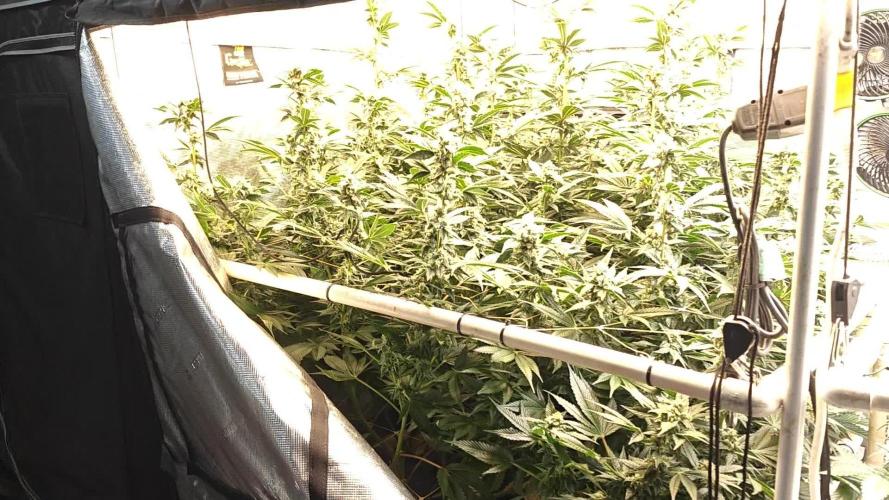
41 days into flower at 12/12. I started to flush the plants yesterday for the 2 weeks leading up to harvest.
Smells have really come out and buds are starting to harden up.