




Likes
5
Share


@Burneracct
Follow
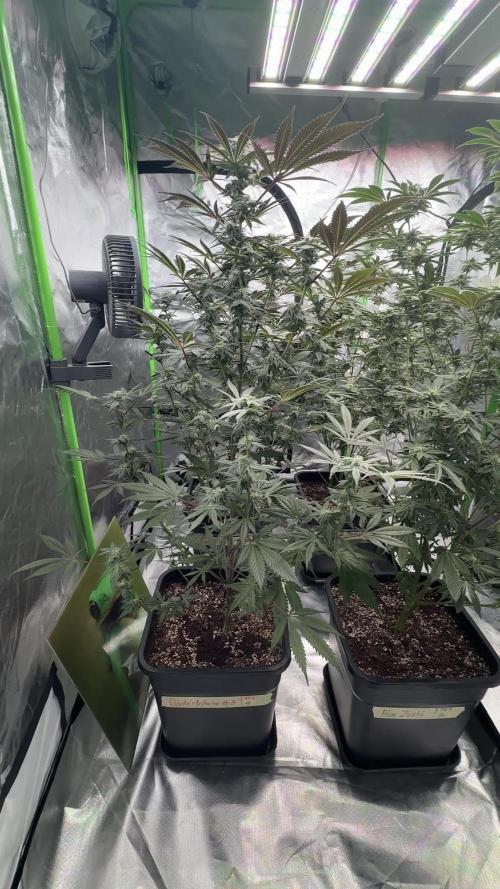
I’ve been LST into a spiral so I defoliated pretty heavily to get more light to the lower buds.
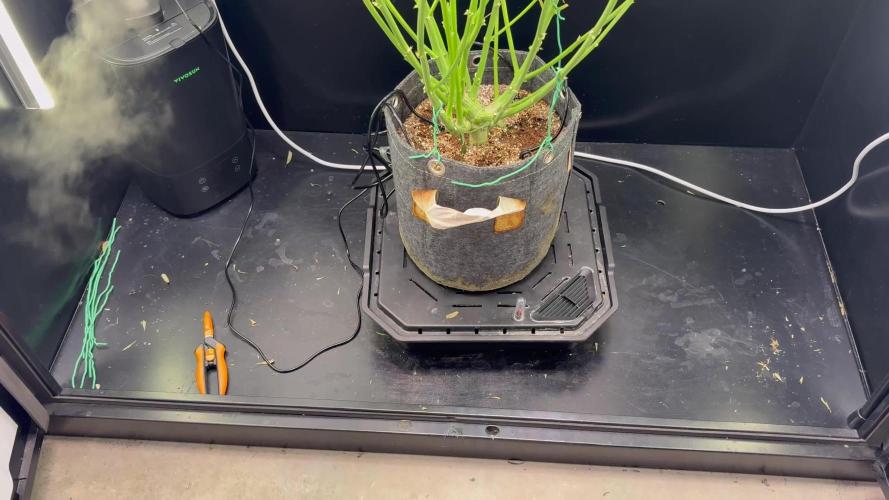
CBD Star is well on its way with many buds developing. I’ve been keeping it outside during the day and bringing it in to my new space bucket at night. I outfitted the bucket with an 8 inch fan, DIY carbon filter and a 250W Amazon Commercial PAR38 LED bulb. The filter is doing a great job removing the smell. Link for the bulb at the bottom.
Cheese is stretching like crazy with some pistils forming.
AmazonCommercial 250 Watt Equivalent, 25000 Hours, Non-Dimmable, 2500 Lumens, E26 Base, High Output PAR30 LED Light Bulb - Pack of 1, Soft White https://a.co/d/gh8qkUj

Likes
33
Share


@Hawkbo
Follow
Lookin good, no more herms so far as I’ve tightened things up hopefully that’s the last of them for good. I installed a 4Inch AC infinity fan and filter as an intake so I have been able to close all of the vents. At this point the leaf strip has proven to be a solid method, I have nothing to compare bud size at this point but just the extra space it opened up is a plus. I’m sure the lowers will be a little more firm and the plants obviously haven’t had to be fed as often as usual so its saving time, water and nutrients. The added microbes have also allowed me to keep my ppm around 1000 instead of 1080ish without any sign of deficiencies. The Mandarin cookies x Dionysus has a little cal-mag issue but that was a trait from the mother which out of 10+ grows all had a cal-mag deficency. I gave everything a little flush last watering and took measurements then a good feed today
REMEMBER , IF YOUR SHOPPING FOR GEAR YOU CAN USE THE CODE “BANGDANG” FOR 10% OFF YOUR ENTIRE PURCHASE FROM ANY OF THE FOLLOWING COMPANIES.
@greenbuzzliquids
@rainscience_growbags
@gorilla_grow_tent
@growlightscience.led
*****Gorilla grow tent discounts extend to all companies affiliated with grow strong industries which include..*****
@super.closet
Lotus Nutrients
Kind LED grow lights

Likes
6
Share


@eldruida_lamota
Follow
Que pasa familia, empezamos la primera semana de floración de estas Original de GrowBarato.
Y es que no veáis de un momento a otro se quedaron sin espacio, vaya estirón esta última semana.
Están bastante sanas , tienen muy buen color, se practicó una limpia de bajos y ramas que no eran necesarias porque no llegaran a la luz.
Hasta ahora todo bien y ya superamos esta primera semana.
Agrobeta:
https://www.agrobeta.com/agrobetatiendaonline/36-abonos-canamo
Mars hydro:
Code discount: EL420
https://www.mars-hydro.com/
Las maximas de temperatura no superan los 26 grados y las mínimas no bajan 20, así que no me puedo quejar.
Los niveles de humedad también son los correctos van entre 50%/65% de humedad relativa.
Por supuesto el Ph lo estamos dejando alrededor de 6.
Hasta aquí es todo, buenos humos 💨💨💨.

Likes
Comments
Share


@gottagrowsometime
Follow
Overall she grew good. No harsh reactions so I'm happy to put some bud in the jar. She vegged out 20cm and got to 35-38cm and finished with a lovely fade. Amazing scents. (More to come after some review next month. This pheno gets 9☆ the other 10☆ as the yield on my last Highcloudz was like 3-4x. But the buds are of a much higher grade. So, its a very high rating. Just sad there's not much of it. In saying that, now that you can change the rating I've no doubts I'll be giving it a 10 upon my smoke review..
I've fems left so ill be doing a SOG soon and this fem will defo be in it.
15+3-4 grams i quick dried. This defo needs a cure. The taste is so confusing, I get the scents of watermelon, typical zkittlez smell with a twist, the confusing part. Is f there's different smells coming from different buds. Smoking there is a very light panty taste. Very stoney, uplifting, very happy with when I harvested. Has much more of an energetic buzz with a nice mellow high. Very strong but not couch locking so things can be done. It kinda puts me in the zone. Been one of my smaller harvests. I have 2g left to keep out for 2moro day, I'll be putting this on 4-6 week cure. I'm gonna leave it out for another 12hrs or so. The stuff that came off the stems just now is very very slightly till wet. It would be able to put into the cure jar, but would need a lot more burping. So, id rather leave it to dry out properly and I'll burp every 12hrs, leave lid of for 4-5m and after a week, I'll slowly start burping it less. Knowing how weed dries you really can't set times on curing you go with how the weed feels. There is no hay smell. (I didn't have any worries about a hay smell. My drying room is 15c and 60-63% RH.

Likes
48
Share

@CCSAUTOGROW
Follow
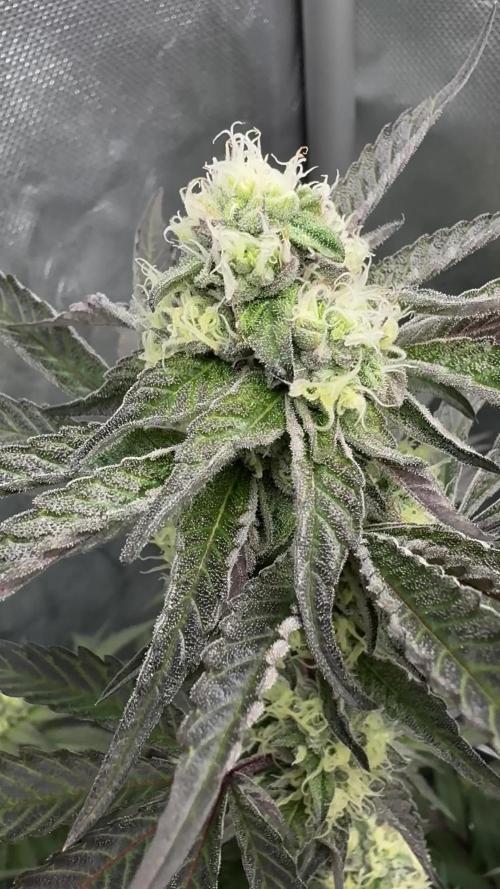
Oh yeah!!!! Apple Strudel is finishing strong 💪. Her buds have swollen up nicely, are a beautiful lime green & super frosty. She smells really potent! Started to flush her a couple days ago so she'll be getting the chop here in a few days. Excited to see how she taste after a dry & cure.



Likes
15
Share


@Dunk_Junk
Follow
Day 56 - She grew 10cm this week. Plenty of flower sites forming. She is a really bushy plant!
Day 56 - Tent configuration changed: 4x more CREE CXB3590's have been added and 4x blurple LED things removed. Lights now consist of 8x CXB3590's & 1x 1000W HID with flower bulb.
Likes
6
Share


@Yukon_Pico
Follow
Topping has gone extremely well.
I expected to see more signs of flowering by now, certainly nothing definitive yet. Starting to wonder if it might be a photo and not an auto. Time will tell.
Added an organic CO² producer on day 37 after noticing signs of deficiency.
Likes
13
Share


@JoeyGonz
Follow
Well they are healthy thank god. Both leafs are aiming up tips too and beautiful green. Just pull a few leafs off here and there.. Nothing to upset them just for light purposes. Tossed the scrog on to help pull stuff apart get some light to those lowers for the heck of it. Both sucking down water.. I give them 1.5L each everyday. Nothing but this Mantis still. Going to toss in that Bembe every two weeks though, when I see some flowers. Not for Anything other then what it does for the flower. Cause the Mantis alone has been very stable and successful for growth. I have little white hairs developing in the flowering areas. ..I’ll get pics when I open tent tomorrow. Very happy with everything..


Likes
14
Share


@jacarezin
Follow
💀I ended up going offline for a few weeks because of a lot of work, but here I am to update the diary.
👽Im going to harvest tomorrow. His sister was harvested last week, with a total of 70 days since the sprout. This one has 62 now. I think i over waited for the first one and i dont want to miss timing with this one. Shes smelling GOOD, and most of her trichomes are cloudy. So lets go to the final observations.
I lost time with the LST and this affected her growth. Was a good experience to see it happening in real life, anyway. Learning is my first objective here. 👊
I didn't flush neither stopped feeding her as i want to see what happens, but today i gave her last watering with pure water.
Got trouble with aphids n the last week, and maybe spidermites too. Was using only Neen oil but now considering i should increase the filtering at my tent windows, as i cant close bc its too hot here. 😢
So wish me lucky guys, im feeling good about this one as its looking and smelling really good. 😍
Ill be back to give the full harvest feedback later, thank you all.

Processing
Likes
2
Share


@lupitalolita
Follow
I have been using eggshells and coffee grounds as fertilizer / it is indoors but i am growing out of a pot. I am trying to not use lamps (as I’m poor) or store bought fertilizer. Any suggestions or comments would be very helpful. The internode stems that are currently growing have odd shaped fingers / are not symmetrical. You can kind of see what I mean by the video. The leaves are wilting a little and are a little yellow ish. I have topped it and repotted in the last 11 days and it has looked healthy (no pests, no other abnormalities except for one leaf that came out a little screwed) since germination. Currently know it is a GG4 seedling/plant.

Likes
9
Share


@andrewkeed
Follow
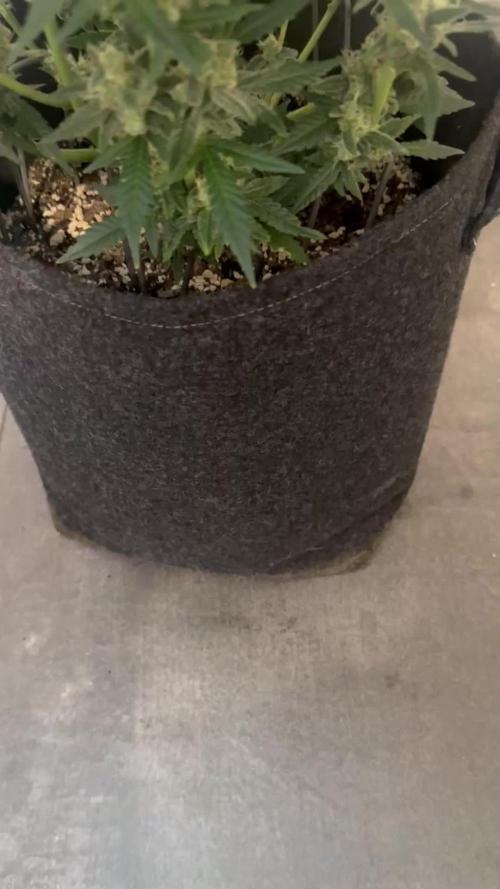
Everything goin very smooth. will update soon on other changes that may come up

Likes
31
Share


@MMSC16
Follow
Nov 13 - Day 94 - More bulking up, girls are holding water longer. Watered Older plant at 7.45PM. Started defoliating withered leaves with trichomes, I'm keeping those for now, and will combine with bubble hash trim.
Nov 14 - Day 95 - Both pots aren't super light so I'll wait until tomorrow and water both at the same time. Starting to think about drying and harvest, I suspect there to be a fortnight between each harvest - but unsure if I can afford the tent space with next run growing. I think I'll water either as lights turn off (if humidity wont rise) or first thing on Nov 15.
Nov 14 - Trichomes are milky with the speckle of clear and amber. Lets hope the lagging cola fattens up in the week to come.
Nov 14 - WATERED Younger plant at 10.30PM.
Nov 15 - Watered Older plant at 3PM
Nov 16 - Watered Younger plant at 5PM
Nov 17 - Woke up to 80F. Likely at higher temp for 1 hour before noticing. Defoliated a few leaves, including one or two with trichomes, of which I've saved.
Nov 18 - Watered Older plant at 6AM. Younger plant pot is light at lights off- will water first thing in the morning. Also removed dead tips and accidentally chopped a healthy fan leaf. I was hoping to chop today, but it might be another week before the younger plant is ready.
Nov 19 - DAY 100 - Watered Younger plant at 10.30AM. Trichomes are developing nicely, I suspect 1 more week with younger plant which makes me wonder when to chop older plant.


Likes
2
Share

@BrothersInBudFarms
Follow
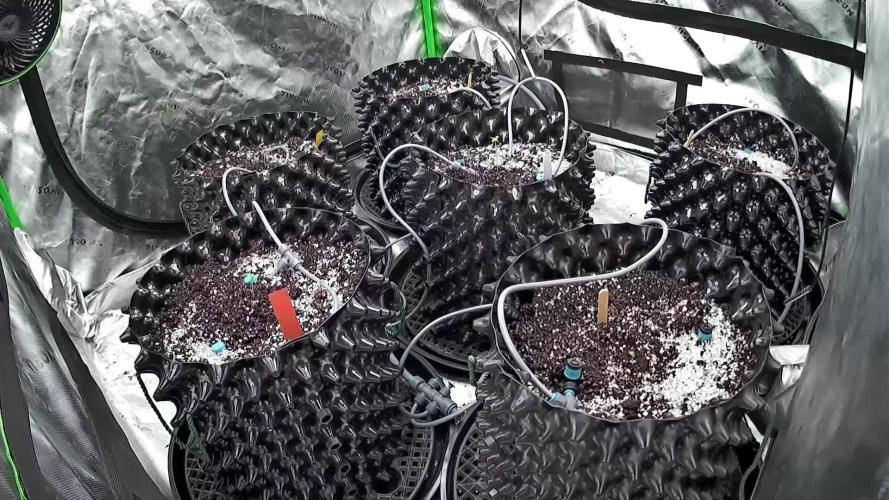
Hello my fellow growers I hope you are all having a wonderful holidays and a wonderful day in general! Anyways I have been very busy recently so I couldn’t post a weekly update but I will be posting some more pictures later this week as I will be manipulating the plant a bit more to maximize my cola potential but beyond that nothing much is happening just watering her on the Monday/Wednesday/Friday schedule and letting her grow
Likes
11
Share


@Thaiclee
Follow
I think you know what it’s like. You made a mistake now you have to live with the results.
They girl in the back is just angry and I get it. Most of her leaves dried up and are now very brown but we are near the end of the grow so I’m just waiting.
The blue dream on the right is hanging in there also. Looking a little worse for wear but not as crispy as the wild Thai.
Now you know the one I mentioned last week? The one plant that was slower to do everything and has always been a runt and a bit odd. It didn’t care if I overwatered it or under watered or it got too hot. It’s still growing as if nothing ever happened, soooooo I decided to take a clone… you know… for science.
Maybe I should make it a bonsai or something with its gnarly leaves and stunted growth?
Really I just can’t wait to smoke these.
I’ll get some up close and personal 😉microscope pics for your viewing soon and you can let me know what you think.
Thanks for coming to my tedtalks.
See you soon growmie. 😉


Likes
2
Share


@GoodTimesOrganics
Follow
Welcome Back!💚
Die Sleepy Joe geht aktuell gut in die Breite und unter den buschigen breiten Blättern beginnen sie die Seitentriebe allmählich nach oben zu bohren. Allerdings liegen die Seitentriebe sehr eng an, so dass ich dies nun langsam zur Seite biege.
Auch kommt nun die nächsten Tage noch das Topping hinzu, da die Seitentriebe nicht ausreichend beleuchtet werden.
Die Pflanze wirkt relativ kompakt und gut beieinander, was so typisch für eine starken Indicawuchs ist.
Die Umgebungsgegebenheiten sind weiterhin optimal:
—————
🌞 Temp: 24°C bis 26°C
🌚 Temp: 18°C bis 19°C
💨 RH: 68%
VPD: 0,7 kPa👍
—————
Grüne Grüße 🥦

Likes
79
Share


@JUNGLE_B4RNS
Follow
Week 14, week 4 of flowering,
Looking at the Buds and telling myself they still have a full month left to get fatter and fatter and fatter ... 😄
Lemon Cream Kush ... look at it, big massive donkey dicks buds. Hopefully they finished their stretch by growing 3 x times in size and not more. This plant is perfect to fill up a ScrOG very quickly.
Bubblegum, compact structure with vey dense and big buds, the pictures talk by themselves. Stretch controllable, doesn’t goes higher than the common 2 x in size 👍
Moon Walker Kush, is a proper Kush, Indica phenotype, stays short 1.8 x in size, with compact and dense colas. Perfect for growing Indoor in a tent.
Strawberry is a very delicate Sativa, must be fed correctly. Fast flowering Sativa, proper Sativa leaves and structure with the size and a flowering period typical to Indica’s.
Switching nutrients Bio 8-2-2 for the Alga-Max. Reaching maximum feeding solution, plants and buds development are doing very well as you can see by the pictures and the video.
Growing my shitty ones in the middle, not feeding them since the beginning when the EC of the soil was too high for them, now going into some deficiency as shown in the pictures. It’s always good to keep the shitty plants for your experiments 😉
Stay tuned folks, we might catch Tarzan or Moogly on camera next week... we never know 🤣
(I’m looking for a job in the Cannabis industry as Master Grower, Mineralogist, Quality Control)

Likes
18
Share


@Lady_NugWitch
Follow
Both girls are frosty but only 1 is showing the reds.. Funny how that is with these autos 😂😂😒 .. I still love how they are structured. Enjoy the video.. And thanks for checking her out!
