


Likes
Comments
Share

@Mo_Powers
Follow
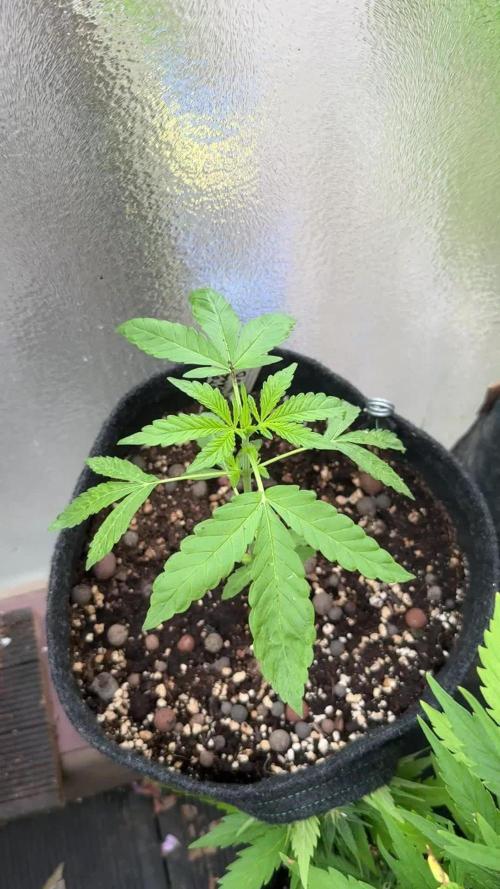
Nothing much is happening this week. The weather has been brilliant. Lots of sunshine. It’s grown a good 10 cm and looks healthy. Maybe I’ll do a bit LST on her.

Likes
7
Share


@BushDoctor740
Follow
The girls are moving along nicely just watering with water ph to 6.4 this week as I top dressed with Gaia green 4-4-4.Spider farmer Se7000 dialed in at 30 percent and to the ceiling.Noticed some minor deficiencies Day 12 and check soil slurry 50/50 soil/water and the ppm was at 780 lil high at this early stage and the culprit.Going to work on lowering that a bit this week.I did add a top layer of fox farm ocean forest as well which runs a little hot with nutrients rather than the pro mix.I have to remember with these beautiful auto flowers less is better :)


Likes
9
Share


@Spirit4i20
Follow
Plant suffering from mite attack! Isolated awaiting the arrival of the Boveril (Beauveria bassiana). 😔
Processing
Likes
12
Share


@Therbalist
Follow
Last few white hairs left, fan leaves have yellowed off nicely beautiful pink purple colours coming through!
Absolutely stinks cheesy kush smell.
At one point I thought it smelled like prawn cocktail crisps 😉😂 let me know if you agree and I'm not imagining it!!
Great strain would defo run it again!!!

Likes
30
Share


@Growgirl1114
Follow
A great week for my Northern Lights she seemed to slow down on growth a bit the first couple weeks of flowering. This was actually the scrappy looking one that I didn’t think would turn out so pretty,,,, but she looks beautiful today ✌️🌱✌️

Processing
Likes
1
Share


@magicjohnson
Follow
The Girls are EXPLODING
Switch to Bloom nutes has been made, The Stardawgs have absolutely taken off. The runt which was discoloured and small seems to be stacking up nicely behind the rest.
The Two which have been mainlined are now showing their potential with the main two colas looking like 2 fat bum cheeks! 1 has been untrained as an experiment for my own conclusion to the old age question.. 'can you train an AUTO?'
The GG's are still growing rapidly but seem to be slowing down and bud sites have gone from a few pistils to little crumbs of furry goodness!
Likes
5
Share

@Bread_n_Buds
Follow
Merry Christmas and happy holidays to everyone, and above all, a fantastic new year of growth with monsters, plants, unicorns, and all the magical beings we love.
** This week, mostly just grow tent photos, so you don't miss any updates over the holidays.
Our Nectar Drip #3 is growing beautifully and healthily. It's not a giant in terms of characteristics or technique, but it looks very interesting. It's been trimmed and will be flowering in 7-10 days.
Selected Techniques - This plant will grow with a classic main lining but without the traditional lst application that spreads the plant across the pot. This is only because the plant, or rather this phenotype, has very short internodal spacing and hardens quickly, risking cracking. So, a healthy classic main lining (topping mainfolding 3 internodes topping x2 and then x4, maybe if the plant goes well).
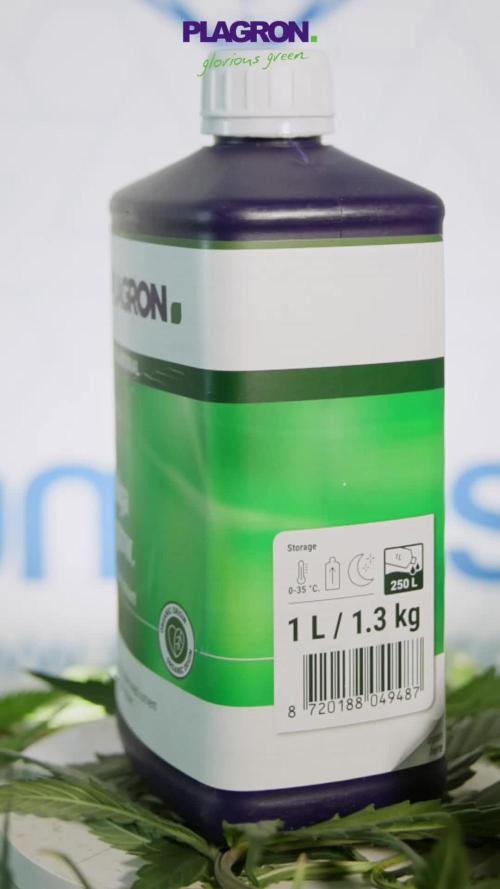
We're 100% organic and 1000% Plagron, as always.
The soil we've chosen is the recently launched Plagron Bio LightMix, which will allow us to get our growing process off to a smoother and more reliable start, without the sudden changes that liquid fertilizers can cause. A week is more than enough, so don't overdo it.
We're in the early stages of the vegetative phase, but we're well-equipped with nutrients and additives. We've added:
- Power Roots 1 ml/l
- Pure Zym 1 ml/l
- Silic Rock 1 ml/l
- CalMag Pro 1 ml/l
- Sugar Royal 1 ml/l
- Alga Grow 5 ml/l
Once a week as a foliar spray:
- Vita Race 5 ml/l
Choose your preferred style and calculate the results on the website:
www.plagron.com
Our new 720W Spider King lamp from Vanguard Hydroponics is still set to the lowest setting. Visit the new Growshop area on the Zamnesia website:
Z - https://www.zamnesia.io/it/531-growshop
Crazy, it was sold out, it was a limited edition! Try another one: the shop is full!
Z - https://www.zamnesia.io/it/35-semi-cannabis
T - https://www.zamnesia.io/it/35-semi-cannabis/745-tical
Z - Nectar Drip is a unique cannabis hybrid created in collaboration between Zamnesia Seeds and TICAL. These flowers are pure power, with up to 26% THC and effects that stimulate the mind and stabilize the body. But if you want to try them, you'll have to hurry: only 750 packs are available!
There's nothing better than a good collaboration: we know that better than anyone! For this partnership, we joined forces with TICAL to create a strain packed with flavor and potency. We brought our delicious Apple Fritter, while TICAL contributed its 24K Gold Fangs. After perfecting the result, Nectar Drip was born. This strain produces potent flowers with a THC content of up to 26%, accompanied by delicious fruity and skunky aromas.
Considering one of its parents is Apple Fritter, you can be sure that Nectar Drip has inherited a burst of fruity aromas and flavors. Skunky notes are also noticeable, creating a rich and intriguing profile. When you smoke this beauty, you'll feel relaxed, with a pleasant cerebral buzz accompanying the experience. It's definitely a great evening smoke, perfect for when you want to take a moment for yourself.
You know it, but I recommend it. You'll find so many wonderful things here, essentially "all the best that nature has to offer."
Z - www.zamnesia.com //
Music //
www.radionula.com
+ Feng Shui Music
+ Frequencies 432 Hz
Likes
15
Share


@Ronin716
Follow
(I’m starting to try timelapsed videos of growth so lmk what you think)
So I’ve added a little lst to #1(the one I topped) just to capitalize on it I guess. But they’re all doing really well at the end of week 4. I’m trying to get better with photos and documenting so bare with me but as for #3, I’m really impressed with how fast she’s gotten bushy and with how she’s taken to lst. I’m doing different things to different plants to see what I like and what works for me. #4 is my control and I’ve done nothing but water and feed and honestly, she’s still doing just fine 💪🏻




Likes
22
Share


@DeepRootsGrowTrees
Follow
GSC BY KANNABIA
Week #20 MAR 22nd-29th
Week #9 Flower
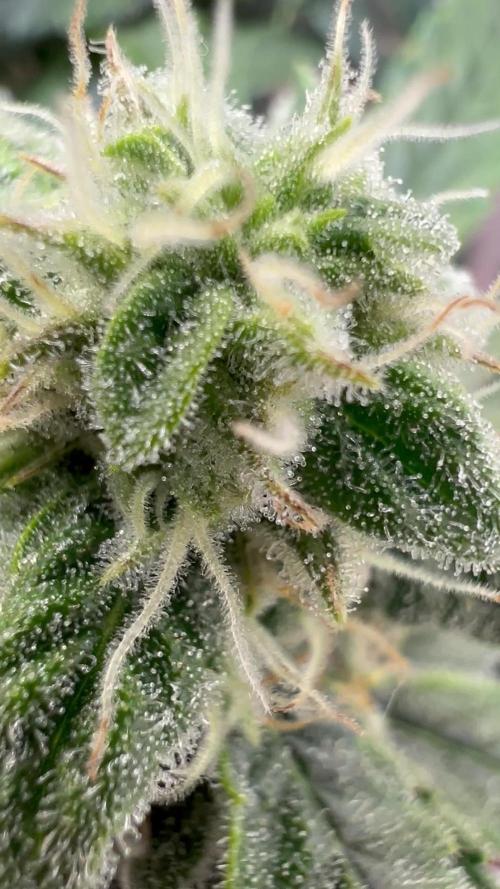
This week her buds really started to pack on the weight and are super sticky. Her trichomes are mostly still translucent still. She really is a beautiful plant and she smells great👍!! I'm thinking about 2-3 more weeks before harvest!! Thanks for stopping by!! Stay Growing!!
Likes
11
Share


@Swoky
Follow
hello growers
again I will be growing sixteen Critical mass Mr.Nice clones in the same setup as last time.
the light is Sunpro 315w cmh.
my goal is to have 400+ grams (375 last time) but with an old bulb that I now have a brand new one.
I use the same fertilizers again, namely advanced nutrient ph perfect.
I will be using the SOG technique and a bit of LST.
I would like to have this grow ready in 10-11 weeks from planting the clones.
Please wish me luck.
Thanks ✌️

Likes
8
Share


@Jotake
Follow
They have staterted flowering 3 days ago,most of them have reach a good measure so we expect to have good flowers always giving good food and fuel jeje,the vídeo is zkittles only they are going the faster Also northen light and micromachine( quite big and vigorous).we gived them a watering with honey yesterday

LSD Auto · Barney's Farm
Purple Punch Auto · Barney's Farm

Dark Devil Auto · Sweet Seeds
Bloody Skunk Auto® · Sweet Seeds

Baby Boom Auto CBD · Kannabia Seed Company
Mikromachine Auto · Kannabia Seed Company

Northern Light Automatic · Royal Queen Seeds
Royal Creamatic · Royal Queen Seeds

Z Auto · Fast Buds
Gorilla Auto · Fast Buds
Lemon AK Auto · Fast Buds
Likes
9
Share


@Cultivators_Dream
Follow
Week 6 was another good week for my lady. She has started showing some discoloration on some leaves at different sections of the plant so I'm thinking it came from my battle with fungus gnats, ( little bastards 😠 🤬), I had to use a good bit of neem oil and FF Force of Nature Spray so I think it burnt the leaves a little because PH is good and keeping all solutions ph'd so I truly don't know what else it could be.. But I gotta say FastBuds really have great strains man I mean this lady is just packing on the pounds and her growth is just stunning daily 🙌 😍 👌 👏 I honestly love growing it. Will be checking out more FastBud strains
1/4 The size that this lady has gotten in just a few days is nuts its been 4 days since I added the Recharge to her and in that time the growth is ridiculous 🙄 😀 she's gonna be a pretty good yield and buds are going to be perfect 👌 😌
Likes
5
Share


@buzbun
Follow
Well its was not the easiest cycle.I make some mistakes and cant deleaf plants as clean as i want cause scrog.so thats not the highiest result for this strain.

Likes
Comments
Share


@Lucidite
Follow
Sat 7/8:
- Transplanted a runted Purple Lemonade auto into a small plastic pot (1/2 litre), from 3 gal fabric pot. Put it back in the veg tent where there is more room. It is wasting space in the flowering tent. Suspect over watering early on as issue.
- Shifted a Grapefruit auto from the veg tent to the flowering tent to replace the Purple Lemonade. A little early, so it is on a pedestal to reach the canopy.
- Planted a Fastberry and a Gorilla Cookie auto.
- Harvested 20g wet from the CBD20:1 (8w).
Sun 8/8:
- Changed light cycle from 18/6 to 20/4.
- Fed plants, varying mixture by plant age. CBD20:1 is now only on water at every feed.
- Tied main stem down on Grapefruit auto (3w).
- Set up endoscope camera to capture the Grapefruit response to LST.
- Continued lollipopping Strawberry Pie (5w) and Kosher Cake(4w).
Tues 10/8:
- both the Gorilla Cookie and the Fastberry seeds popped. I’ve put them under icecream containers in the veg tent so they don’t dry out too quickly.
Wed 11/8:
- Small targeted watering with no feed.
Thurs 12/8:
- feed plants that needed to be watered.
Sat 14/8:
- Harvested the remaining CBD20:1 at 9 weeks, 73g wet
- Harvested undersized Lemon Pie at 8 weeks, 26g wet.
- Planted a Gelato auto and a Wedding Cheesecake auto from Fast Buds.
Next weeks diary: https://growdiaries.com/diaries/118288-grow-journal-by-lucidite
Likes
17
Share


@JonnyKush
Follow
day 73
I was not ready for all this! 🤣🤣 they literally exploded, even though the buds of El Patron are much thinner than the purple queen I have in my tent, I had to tie them up so that the weight of the flowers didn't break the branches. I have to say that 6 photoperiods are too many for my 1m x 1m x 2m tent. in addition to this I have noticed that they are very hungry. like me and give me some advice. thanks for stopping by, have a nice day and happy cultivation 💚🌳💚🌳💚🌳
Likes
18
Share


@bono420
Follow
DAY 53
Had to take out of the room the Amnesia XXL hermaphrodite; cant take the risk of turning the rest into males too.
DAY 54
FUUUCKKK!! The wind dropped a piece of heavy wood onto the plants!!!
1 of the Moby Dick was totally broken. Some branches of the neighbour plants were affected too.
So that's 2 plants lost at the moment (the hermaphrodite and the broken one).
Day 56
Two days after the tragedy. Had to reorganize the room to prevent similar accidents in the future 🖤😢 Saved the most I could but definately this stressing event will influence the plant’s development.
Also, considering taking out the claw leaved plant, which has signs of hermaphroditism (FML again 😫).
Hope these 7 make it till the end.
PS: Also, there’s 1 Moby Dick which has no signs of flowering at day 56, cant figure out what’s happening with it. I’m starting to think that it’s an Regular Feminized seed instead of an autoflowering.

Likes
1
Share


@Ti_BR
Follow
now we are on last feeding week. Very low EC. Tomorrow I will start the flushing week. Og kushs are almost ready to harvest (you can see the yellowing leaves), the Gorilla ghosts need some more days to be mature.
