


Likes
Comments
Share

@GoodTimesOrganics
Follow
Hi liebe Community and Welcome Back! 💚
Weiter geht's im Vergleichsgrow!
Bio Tabs NL. vs. Weedefix (Stuttgart/ Germany)
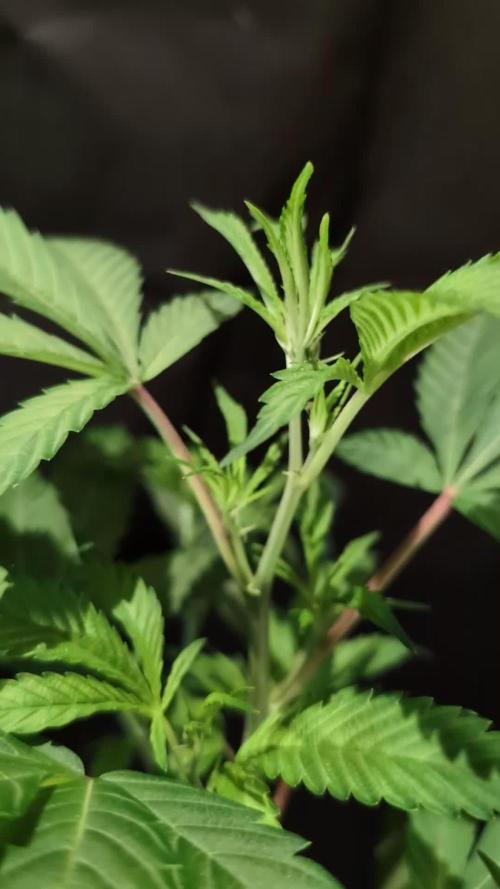
Hier im Weedefix Grow haben wir nun nach 29 Tagen des Einpflanzens eine Höhe von 45 cm Erreicht.
Im Wachtum lässt sich vermutlich beobachten, dass die Weedefix Komponenten etwas mehr performen, da die Pflanze insgesamt etwas buschiger und schneller im Wuchs ist.
Das nur Mal zum jetzt feststellen.
Dadurch dass mir bei der anderen Pflanze ein Seitentrieb abgebrochen ist, habe ich der Fairness wegen bei dieser Pflanze den Trieb an der gleichen Stelle ebenfalls abgeschnittenen.
Diese Woche, habe ich mit Wasser und 5ml Wachstum (Ferment mit Melasse und Hefeextrakten) gegossen.
Und es zeichnet sich bereits ein stärker werdendes Aroma ab.
Die Bedingungen im Growschrank sind Top!
—————
🌞 Temp: 21
🌚 Temp: 18°C bis 19°C
💨 RH: 58%
VPD: 0,75 kPa
💡ppfd: 330 mpm
—————

Likes
4
Share

@billycardine0420king
Follow
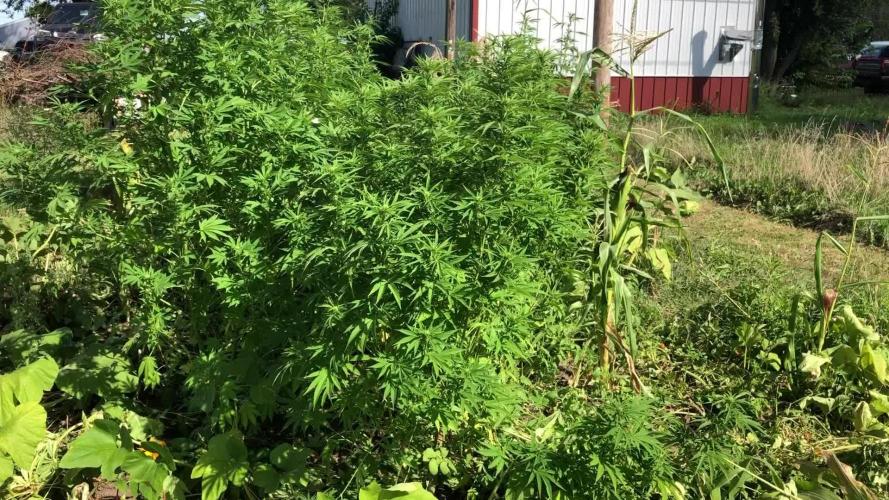
Did some defoliation now that they are solid into flower, to keep air flow to cut down on chances of mold and to expose lower bud sites to sunlight. I also fertilized again with about 2 buckets of 14 total gallons of water with above nutes minus flora gro, at 1300 ppms aprox.

Likes
37
Share


@Smoking_Joe_Frasier
Follow
The grow was a rollercoaster of highs and lows.
My Blue Dream plant developed mold in the buds, so I decided to harvest my Banana purple punch earlier to stay on the safe side. The trichomes exhibited a good balance of amber and milky colors, but unfortunately, there was no time for a proper flush period.
Banana Purple Punch encountered the most challenges among the strains. It struggled with aphids, nitrogen toxicity, and thrips, which affected its overall health and bud development. This strain seemed particularly sensitive to high nutrient levels, which likely contributed to these issues.
Despite these setbacks, I’m hopeful for a decent harvest. Each problem provided valuable lessons on pest management and nutrient balance, which will be beneficial for future grows.
Update 09.08.
Today, I brought the Banana Purple Punch into my apartment for a trim session. Since I didn’t trim her wet, this took a bit more effort compared to the Blue Dream harvest. The buds are quite airy and fluffy, but they have a fantastic aroma. The vibrant purple color of the buds is stunning, and I can't wait to give them a proper cure and eventually taste them—I’m confident they’ll be delicious.
Unfortunately, I had to discard a few buds due to mold spots again. The rich purple hues of the buds make it challenging to distinguish between mold and the natural coloration, but once they're fully dry and cured, the smell should reveal any lingering issues.
The dry weight was 24 gramm.


Likes
62
Share


@nonick123
Follow
Día 50 (09/12) Busy time
Solo riego!
Día 51 (10/12) CBD Auto 20:1 #1 no para de crecer! ¿Parará el stretch? 💥
OG Kush Auto avanzan las manchas en las hojas... ¿Será deficiencia o carencia?
Día 52 (11/12) CBD Auto 20:1 #1 está demandado más agua. Subo a 1500 ml / día de H2O RO
CBD Auto #2 está ralentizando el consumo de agua (el top se muestra húmedo). ¿Estará entrando en la fase final de floración?. Según FastBuds le quedan 11 a 18 días!
OG Kush Auto también demanda más agua! Subo a 1250 ml / día de H2O RO
Día 53 (12/12) CBD Auto 20:1 #1 es increíble como no para de estirarse y de formar nudos y hojas! Parece una Sativa pura que nunca para de crecer en floración!
CBD Auto #2 empieza a mostrar algunas hojas con senescencia. Se acerca la cosecha!
LSD-25 Auto está haciendo unos cogollos densos y duros como rocas 😍💥 No está tampoco lejos de la cosecha! 💥💨😁
OG Kush Auto produciendo una resina brutal en las hojas de azúcar! 😍
Día 54 (13/12) CBD Auto 20:1 #1 no para el stretch. Le hago una poda de bajos y ligera defoliación
OG Kush Auto está generando una cantidad de tricomas increíble. Además huele a Kush deliciosamente 😍😍😍
Día 55 (14/12) CBD Auto 20:1 #1 para un poco el consumo de agua en ¿Fin del stretch? Casi toca la lámpara de nuevo!
CBD Auto 20:1 #2 empieza a mostrar la senescencia.
Reviso los tricomas con muchos turbios y alguno transparente. ¿Estará en una semana más aproximadamente? 🤔
Día 56 (15/12) OG Kush Auto ha bajado un poco el consumo de agua
La cantidad de tricomas que está haciendo es insana e increíble. Y como huele! 😍
LSD-25 Auto muestra los tricomas trasparentes y algunos turbios. ¿Quizás dos semanas para la cosecha?
💦Nutrients by Bio Tabs - www.biotabs.nl/en/
🌱Substrate PRO-MIX HP BACILLUS + MYCORRHIZAE - www.pthorticulture.com/en-us/products/pro-mix-hp-biofungicide-plus-mycorrhizae
"GDBT420" 15% DISCOUNT code for the BIOTABS Webshop https://biotabs.nl/en/shop/
Likes
Comments
Share


@Kannisho
Follow
No para de sorprendernos esta variedad, ahora estamos seguros de que fue una excelente idea llevar esta variedad al limite en este proceso de vegetativo extenso. La Nutrición colombiana de @c21nutrients esta dando mejores resultados de lo esperado. 🇨🇴💚
Likes
12
Share


@StonedandSteady
Follow
AutoBlueberry 4th-5th W/ Veg breed by #DivineSeeds #DivineSeedsSquad #DivineSeedsBreedingCompany
Origin:Afghani/Thai
Type:50% Indica/ 40% Sativa/ 10% Ruderalis
Flowering:56 days
THC:22%
Harvest:400-550 g/m2
Height:110-150 cm
They were Growing under the #Growatt600w and in my #TopoLite 24×24×48 Grow Tent but I've Upgraded and Updated it to my #OsreeQB100W I'm also using #TNBNaturals #TheEnhancer Co2 Despersal Canister and using thier Ph⬆️⬇️ for my Decolinated Tap Water!
Green and Growing Up Great! She's Growing into her 5th week of Veg! She's Growing in my special blend of ProMix potting mix, a 1/2 bag of Earthworm castings and 2 light handfuls of Diatomaceous Earth mixed Up well for before transplanted! Diatomaceous Earth: Diatomaceous earth is made from the fossilized remains of tiny, aquatic organisms called diatoms. Their skeletons are made of a natural substance called silica. WHAT IS DIATOMACEOUS EARTH?
In a nutshell, DE comes from the fossilised remains of small marine organisms called diatoms. Over a 30 million year period, these hard-shelled algae collected on the bottom of bodies of water, eventually forming into a type of sedimentary rock. Fast forwarding, it wasn’t until around 1836 that a German peasant Peter Kasten discovered the ivory-coloured, powdery substance while drilling a well in northern Germany. Ever since, the usefulness of DE for multiple purposes, including industrial and horticultural applications, has been well-reported. Just sprinkle some diatomaceous earth on top of your soil and watch mother nature's secret weapon work its magic.CONDITIONS THE SOIL
When it comes to growing cannabis, everyone strives to provide the best soil to grow the best plants—but there’s always a way to make it even better. Making the soil a better medium is called soil conditioning, which is exactly what diatomaceous earth does. It works by improving the retention of moisture in your potting soil, holding a large amount of fluid and drying at a rate that’s much slower. This natural soil additive also helps to retain nutrients and allows for better oxygenation of the substrate. NATURALLY CONTROLS PESTS
DE is an all-natural, safe-to-use substance that doesn’t harm the cannabis plant with toxic chemicals. The nature of diatomaceous earth makes it useful against most types of insect infestation you might be experiencing; and unlike chemical insecticides, insects can’t develop a resistance to the effects of DE. So once they’re gone, they’re gone for good. DE is an abrasive. and when used as an insecticide, it gradually scrapes away an insect’s exoskeleton, absorbs the fluids, and dehydrates insects and other critters to eventual death. IMPROVES PLANT STABILITY
When using DE in your soil, it can be especially beneficial as it frees up nutrients so that they are made available to the plants as needed. This works via the silica content of DE being absorbed into the plant tissue, which helps improve the plant’s ability to respond and receive more nutrients as DE activates. This in turn results in greater yields and better stability under small pH fluctuations!
https://divineseeds.net/
https://instagram.com/divine.seeds?igshid=osxe2v7en33v https://divineseeds.net/
Thanks Again to All my Friends, Family's, Teams, Sponsors, Followers and Subscribers!!! Your Genetics are Merry Magnificent, Mega Marvelous and Mighty Medical! Love um!!! I really Can't stress enough how Thankful and Grateful I am of All of you and what you've Shared with Us! Means the World!!! It's definitely a Pleasure being able to Grow with these Phenomenal Grow Lights! Please Enjoy! BudBrothers4-Life! Cheers Famz!!! Much Props and Much Topz!💯🔥 #Osree #GrowStarStore #Growatt #TNBNaturals #TNBTeam #GrowYourOwn #Bliss
https://instagram.com/as420.ca?igshid=1f116alw054wp
The Grow Bags: https://www.as420

Likes
1
Share


Likes
1
Share

@Black_Widow
Follow
Привет садоводы
Началась новая неделя
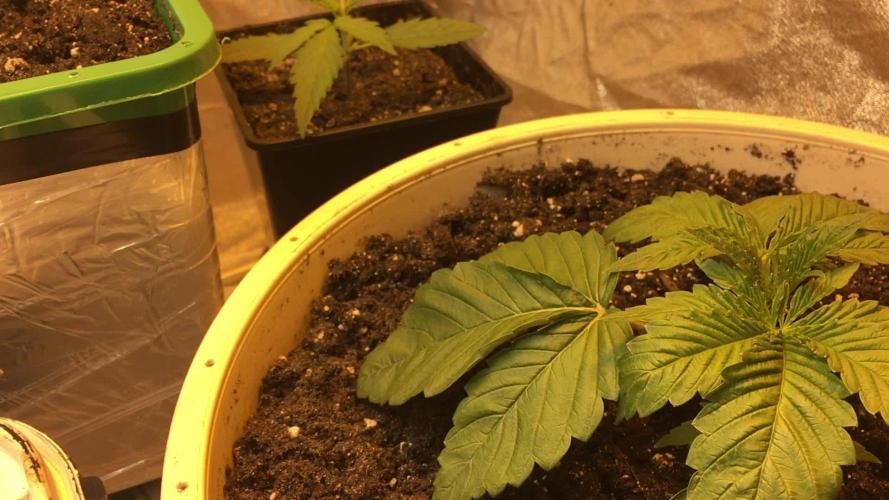
растения прошли начальную стадию роста и уже пересажены в свои горшки
растения чувствуют себя хорошо
в гидропонике раствор разведен на 600 ppm
в нем поддерживается ph 5.6
хочу еще немного подождать когда растения подрастут и начать их тренировать LST

Likes
14
Share


@BOMbolenath
Follow
the weather still very hot but it is doing well.
Terpene is very strong now. Very sweet and fruity, but have some wood in it. Amazing. Keep growing.

Likes
1
Share

@JuiceboxTerps
Follow
Hey guys,
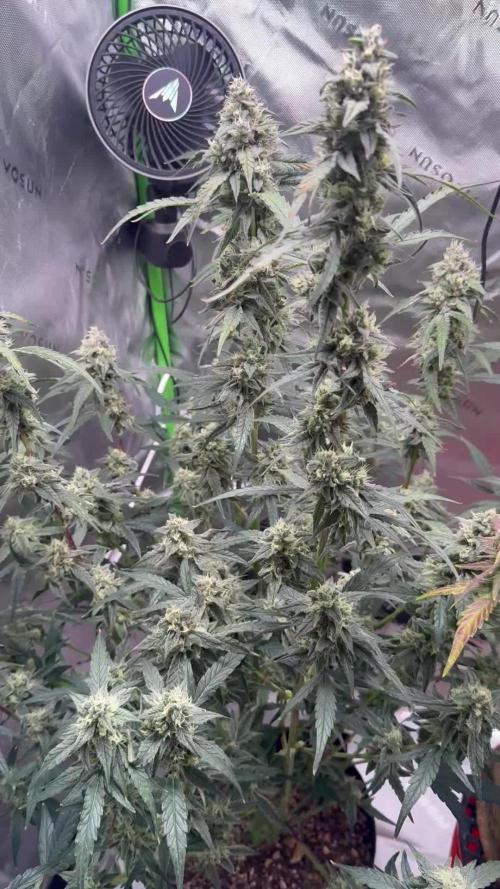
Looks like we have an early chop on the puur organics side. Not sure if I did anything different but this is a bit ahead of the Bonnie Clyde autopot plant.
Same reservoir as last week so she’s drinking a lot less. Time to start getting her ready for ripening.
Purr organics fed has been flushed the past two watering days about 3 days apart. Going to chop her this weekend after she gets a day of darkness.
Vpd - 1.3
Ppfd - 800

Likes
18
Share


@JeyGanesha
Follow
Seconda settimana di fioritura si è allungata la mia bella. Iniziano a profumare bene...sto notando che i nutrienti di Advance nutrient dati per via fogliare funzionano davvero bene... complimenti anche ad Advanced nutrient
Likes
24
Share


@CanarianGrow92
Follow
Week 5 already 😁 but bad luck this week, the whole week we had rain on my island and very cloudy weather, which is obviously bad for the plant 😢🌱 hopefully the weather change soon as its already summer and it never rains in june here so it really screwed a week of flowering, specially the week 4-5-6 as the plant gets fatter.
The smell is amazing, this strain is incredible, cant wait to try some, im thinking about using this plant in an extraction 😁
Likes
7
Share


@Cannabeast40
Follow
Week 3 and a repot is done and now in day 3. Finally it’s settling down after the repot, which was not pretty at all😂
Hope to get some massive plants this run 🌱
________________________________________________________________________________________
Light from @MedicGrowLED 😎
NEO 780 LED🔥
780 Watt⚡️💥
PPF of 2184 μmol/s & 2.8 μmol/J🔥
Full Spectrum V1/F1 🌈
WiFi smart connection & Smart Aura Control 😱



Likes
6
Share


@Kinary
Follow
day 15 - nothing
day 16 - nothing
day 17 - nothing
day 18 - nothing
day 19 - topping at 5 knot and defoliation the first 4 leaves
day 20 - nothing
day 21 - nothing

Likes
2
Share


@Ultraviolet_
Follow
18 hours in seconds, 60x60x18 = 64,800 seconds, now multiply by the 833μMol/s reading off the PAR metre. μMol/s (micromol) is the unit in which P.A.R. is expressed.
64,800x833=53,784,000μMol
53,784,000μMol = 54 Mol
54 DLI @ 800ppm, powerful combination. Pushing photosynthesis to peak capacity, accelerated growth and increased biomass. Applied net, stretching her around for a week. Maintaining a minimum air velocity of 0.3m/s within the inner canopy.
E=MC2 looks like a simple multiplication problem; it describes a fundamental physical truth: mass and energy are the same thing. The equation doesn't just calculate a value; it reveals that mass is effectively "congealed" energy. Energy is just numbers. Energy isn't a physical "substance" you can hold or touch. It is essentially an abstract, calculated number that we assign to a system to predict how it will change, interact, or move. A numerical label we attach to matter to track how it behaves. Because the universe runs on laws of symmetry (specifically, that the laws of physics don't change over time), a single global number must be conserved. We call that number "energy".
How well a seedling grows is down to how much knowledge one can acquire to increase the level of conversion to occur. Applying knowledge effectively requires intuition, which comes from hands-on experience. A seasoned stoner learns to read subtle signs—like a slight change in leaf turgor (stiffness), subtle color shifts, or the specific texture of the soil—before a textbook diagnosis can be made. Ultimately, growing is the application of botanical science blended with active observation. Knowledge dictates your potential, but adaptability and attentiveness to the plant's immediate environment determine your results. The human eye is capable of distinguishing more shades of green than any other color in the visible spectrum.
1.618
Nature mathematically optimizes quantum energy transfer and light absorption efficiency within the photosynthetic machinery, as it naturally dictates energy scaling hierarchies and resonance dynamics. External vibration or electromagnetic wave that perfectly matches a plant's natural frequency directly influences plant growth. Low-frequency sound waves and targeted electromagnetic fields stimulate cellular processes and boost photosynthetic efficiency. An angular frequency aligned with the Golden Ratio is often used in wave mechanics and quantum physics to optimize energy transfer.
Does it produce better yields? All I know is the IVM loves being aligned with it. Here is how I "think" of it to simplify it for myself when I give it thought. Quantum is the firmware, DNA is the software read/write expression.
Alignment with that of which already exists.
Law of nature, not my opinion: Constructive interference occurs when two or more overlapping waves meet in phase, meaning their crests and troughs perfectly align. Their amplitudes add together, creating a new, amplified wave with greater intensity than the individual components.
Constructive interference is the foundational mechanism that establishes a resonance hierarchy across physical, structural, and acoustic systems.
"Frequencies utilizing this ratio naturally minimize resistance (or impedance) and allow for highly efficient resonance, which can facilitate an increase in Electron Transfer Reactions (ETR) or energy pathways in molecular structures."
Quantum coherence in photosynthesis occurs when a photon of sunlight strikes a leaf; the energy it carries must travel to a reaction center to be converted into chemical energy. This process operates at nearly 100% efficiency. If the energy moved in a traditional "bunching" or random hopping manner, a large portion of it would be lost as heat. Instead, plants utilize quantum superposition. The energy particle (exciton) doesn't just take one path; it exists in a wave state and explores multiple pathways simultaneously. It essentially "chooses" the most efficient route to the reaction center simultaneously.
Research shows that molecular vibrations and the specific network arrangements of chlorophyll molecules (like the naturally evolved Chlorophyll A & B ratios) actively protect against energy overflow, optimizing light capture across different light intensities. Enzymes are the biological catalysts that speed up chemical reactions within a plant's cells, allowing them to grow, metabolize, and repair. Rather than relying solely on the classical kinetic energy of molecules colliding, plants use quantum tunneling. Subatomic particles like electrons and protons (hydrogen ions) can literally "teleport" through energy barriers that they normally wouldn’t have the energy to climb over. This makes vital metabolic reactions happen far faster than classical physics could ever explain!
Chloryphyll b has peak absorption at 460nm (Blue) and at 647nm(Red). If we take the blue peak wavelength 460nm and a UV-B, UVR8 peak absorption wavelength 285nm, Tryptophan-285 (W285) Sensing protein. 460/285=1.618 Φ If we take chlorypyhll b's Red absorption peak 647nm and a UV-A of 400nm, we get 647/400=1.618 Φ. "Structure of light". The cryptochrome photoreceptor (CRY) is a UV-A/blue light receptor that shares this dual sensitivity with several other biological structures and functions, including significant sequence similarity and a common evolutionary ancestor with DNA photolyase enzymes. These are light-activated enzymes that use blue/UV-A light to repair DNA damage caused by UV-B radiation in plants. Synergistic.
Effective quantum efficiency of photosystem II, often denoted as ΦPSII, represents the proportion of light absorbed by Photosystem II (ΦPSII) that is actually used in photosynthetic electron transport. It is a key indicator of how efficiently a plant is using light for photosynthesis, as opposed to losing it as heat or fluorescence. ΦPSII (effective quantum yield of photosystem II) functions primarily as a "multiplier" (a coefficient of efficiency) rather than an additive factor when estimating the overall photosynthetic electron transport rate (ETR). Multipliers are considered far more beneficial than additions because they generate exponential growth, leverage existing resources to their full potential, and create sustainable, self-multiplying capacity, rather than just incremental, linear increases. This fascinating observation is rooted in the intersection of subatomic geometry, fractal scaling, and quantum dynamics. In specific molecular arrangements—such as in conjugated polymer networks or biomolecular architectures—the Golden Ratio (PHI) naturally dictates energy scaling hierarchies and resonance dynamics. Mathematically tied to the fine-structure constant, which defines the strength of the electromagnetic interaction. The Golden Ratio can be mapped geometrically as the Golden Angle (137.5 degrees) in atomic structures, linking the charge of the electron to fundamental quantum constants like Planck's constant.
An electromagnetic wave is neither electric nor magnetic, but a combination of both. 137.5
The Golden Angle (137.5) This angle is derived from the Golden Ratio (1.618). It is the smaller of two angles created when a circle is divided such that the ratio of the arcs equals the Golden Ratio.
An electromagnetic wave (like light or radio waves) is not a static electric field or a static magnetic field, it is a self-propagating combination of both. An oscillating electric field creates an oscillating magnetic field, which then regenerates the electric field. They feed off each other and travel together through space at the speed of light, carrying energy without needing a material medium.
The Fine-Structure Constant Alpha (Α/α): In quantum physics, is the approximate denominator of the fine-structure constant (often represented by the Greek letter Alpha (Α/α). It is a fundamental, dimensionless number that dictates how strongly charged particles (like electrons) interact with the electromagnetic field. Its value has puzzled physicists for over a century, as it bridges quantum mechanics, electromagnetism, and relativity.
In quantum mechanics, Omega (Ω/ω) usually represents angular frequency. When applied to "quantum coherence"—the ability of particles to exist in overlapping states without immediately degrading—is key to calculating how long these states last.
The Golden Angle, the value 137.5° is the geometric Golden Angle. It is derived from the Golden Ratio (1.618) and is famously responsible for the beautiful, mathematically optimized spiral patterns found in nature (such as sunflower seeds, pinecones, and leaf arrangements). Because of this, theoretical physicists and mathematicians have long speculated about why nature relies so heavily on the number 137 and the golden angle to govern everything from subatomic light interactions to the macroscopic geometry of the universe.
Quantum coherence allows particles to maintain superposition and entanglement. In realistic, open environments, interactions with a noisy background typically cause decoherence, destroying the system's quantum information. A major challenge in quantum physics and quantum computing is preventing this decoherence at large scales. In quantum optics and driven systems, the Greek letter Omega (Ω/ω) often represents the Rabi frequency, which dictates the strength of the coherent driving laser or electromagnetic field interacting with the quantum system.
The interaction of light and water generates specific Coherent Domains. Trapped electromagnetic fields cause water molecules to vibrate in unison at a coherent frequency, separating the liquid into structured quantum areas and an unstructured phase. When water interacts with hydrophilic (water-attracting) surfaces, the energy from UV and Infrared light can drive the formation of larger, structured layers known as Exclusion Zone (EZ) water. Exclusion Zone (EZ) water represents a structured, negatively charged phase of water critical to cellular biology. Driven by light energy and hydrophilic surfaces, this ordered state acts as a natural biological battery, with far-reaching implications for cell function and human health. In this domain, water molecules arrange themselves into a highly ordered, negatively charged lattice that excludes solutes and particles. At higher energy levels, UV light acts as a catalyst for photochemical reactions. Photons can provide enough energy to break the hydrogen and oxygen bonds in molecules, resulting in free radicals and a plasma of quasi-free electrons. This transfer of electrons forms the fundamental basis for redox reactions and energy metabolism in ALL biological systems.
Input: The energy, time, and focus you dedicate.
Process: Continuous growing, refining, and learning.
Output: A superior, highly polished final product.

Likes
17
Share


@Plantinator
Follow
This week I’ve noticed a couple of fungus gnats on site. Not so happy, but I will keep my eye on the situation.

Processing
Likes
7
Share


@NorthernFrostCannabis
Follow
Really exploding the first week of flower. I lollypop the bottom before bud.
Likes
6
Share

