


Likes
Comments
Share

@GasoGrow
Follow
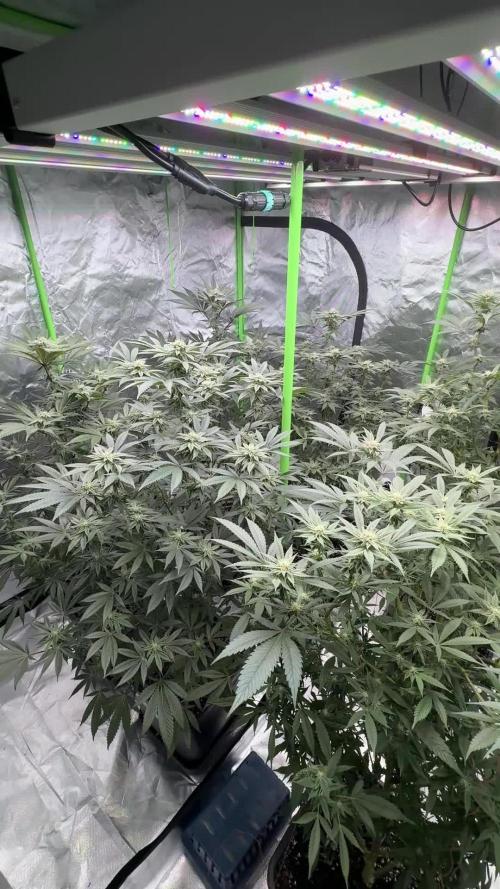
The girls push in to the flower and next week we start whit UV light in the night


Likes
15
Share


@Marshydrots1000
Follow
Used dragon force now for 2 feedings then start flushing ! There almost there

Likes
10
Share


@Dr_Green_Thumb87
Follow
9/1 Day 79
She is in Stretch gaining height, consuming 2l water every other day at PH 6 . Drain PH @6.9

Likes
7
Share


@ChitownCannaChica
Follow
I can’t say enough! Terpy piney gas, frosty, yield, beautiful bud structure! Just a perfect plant all around. 🏻💚


Likes
23
Share


@SmokinToney9
Follow
Germination stage was kicked off fairly quick. After 1 complete day the seeds had cracked and produced small tap roots. The very next day(April 27th which was a Wednesday) I planted about an inch - inch and a half into the soil. A few days later (Saturday morning April 30th) the Lemon Shining Silver Haze was the first to come above soil. Bluematic came up later in the day/evening.

Likes
Comments
Share

@WMinerva007
Follow
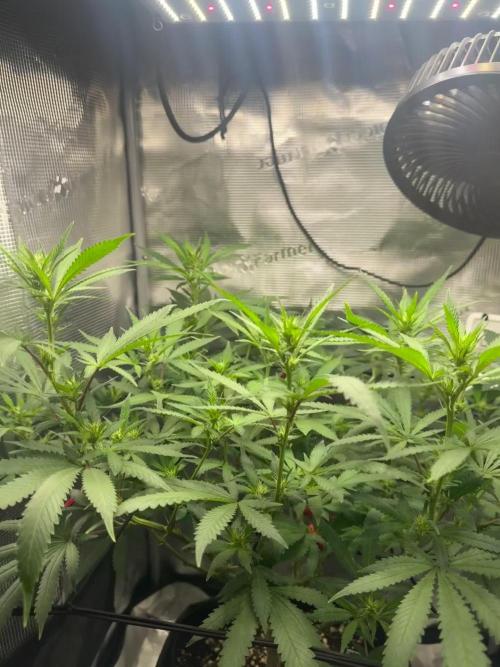
Wow… she stretched really really well and shes gonna start her bulking phase soon.
Shes growing vigorously with lush green color and great node spacing so I’m expecting a really good harvest!
Likes
36
Share


@Bread_n_Buds
Follow
Dear Francos' Lemon Cheese,
as usual it was difficult to let you go, every time I touched you when you were in the grow you made me crazy just thinking about tasting you. But in fact I have to taste you and almost a we have to proceed with the harvest.
Stunning plant has swollen quickly and matured in just under 8 weeks declared, it releases a truly spectacular Greek handmaid's pussy scent of Zeus.
We know it doesn't have the highest THC and we can't wait to try it in action in the morning when we work in our creative works it must be fantastic.
The amount of resin is moving I was about to call friends to take my fingers off.
I seem to see Franco behind the counter of the main coffee house in Greenhouse in Amsterdam, who immediately realizes my nationality, smiles at me and responds in kind, telling me choose this <3
Franco Loja Rest in Peace <3
p.s. The first time I cried while writing a diary.
LIGHT >> MARSHYDRO SP3000 AT 100% OF POWER ..
TENT >> MARSHYDRO 120x60x180
CHECK IG >> https://www.instagram.com/marshydro_aliexpress2/
Buy >> marshydroled.aliexpress.com

Likes
10
Share


@DrDuhboto
Follow
Plants have recovered well from the cold snap,
Small calcium def still but it isnt getting worse.
The buds are large and fairly dense already.
Smell is amazing like citrus and melon.




Likes
15
Share


@PiusWaxis
Follow
Here we are at the end of my plant's wonderful eleventh week of flowering, another week full of exciting developments and new discoveries.
The constant and unstoppable growth of the plant has come to an end, showing a beauty and vitality that are a true spectacle for the eyes. 😎
The abundant layer of resin that has formed is a clear sign of the health and well-being of the plant, once again confirming the benefits of the premium nutrients used throughout the entire growth cycle.
TrollMaster's "TENT-X" environmental control system continues to prove its worth, precisely maintaining optimal temperature and humidity levels to promote vigorous plant growth.
The combination of advanced and precision technologies ensures that plants can thrive in a controlled and conducive environment😎
I am thrilled to share with you the latest video showing the temperature, humidity and VPD trends of this last week of flowering, providing further demonstration of the extraordinary performance of the TrollMaster control system and its synergy with the other elements of the grow room.
With each week that passes, the anticipation for the new discoveries and challenges that await us continues to grow.
With the constant support of Plagron nutrients, trust in the TrollMaster control system and the excellence of MEDIC GROW LED lighting, I am sure that I am always ready to face any challenge!
Thank you again for being by my side in this extraordinary adventure, dedicated to exploring the wonders of plant cultivation. Together we continue to look to the future with confidence and enthusiastically anticipate the successes that each new week holds for us. 💪👽🌱✨
REVIEW TENT-X:
I was pleasantly surprised by the effectiveness and functionality of the TROL MASTER!
This device is simply amazing, as it has allowed me to monitor the environments I use it in accurately and efficiently.
One of the most impressive features of this device is its ability to operate LED lights easily and intuitively. Thanks to its user-friendly interface, I could easily customize the lighting of my rooms according to my tastes and different situations. I particularly appreciated the possibility of programming the sunrise/sunset simulation, thus creating a more natural situation.
But that's not all: the device goes further and manages to keep me constantly informed about the humidity and temperature of the surrounding environment. This feature has proven to be very useful, especially in times when I am not present.
I was able to set humidity limits, so that the device would immediately alert me if the levels exceeded the desired threshold. This allowed me to intervene promptly and avoid excessive oscillations.
The accuracy of the temperature measurements was another welcome surprise. The device is equipped with a high precision sensor that allows me to constantly monitor the temperature of the rooms. Here too I was able to set temperature limits, allowing me to be notified immediately if they were exceeded.
Overall, I was really satisfied.
The TENT-X exceeded all my expectations. Its ease of use, precision of measurements and possibility of customization make it an indispensable tool for those seeking to monitor and optimize environmental conditions.

Likes
2
Share


@MG2009
Follow
08/16/2020
This is my first clone from Red Sky, the mom of all these clones in the tent, (video #1).
All others are at different stages of flowering, she is beginning week number 3 of flowering.
Likes
19
Share


@Ferinky
Follow
Hola y gracias por pasarte a ver mi diario.
Ya he cultivado esta variedad anteriormente y siempre me ha gustado su sabor especiado.
La planta creció sin ningún problema pero con carencia de nitrógeno desde mitad de la fase de crecimiento.
Al ser un cultivo 100% orgánico y únicamente con riegos de agua del grifo sin añadir abonos líquidos era esperable, creo que con unos ajustes en la mezcla del sustrato hubiese obtenido mejores resultados aunque el hecho de añadir todos los nutrientes al sustrato me ha permitido facilitar la tarea del riego y no tener que realizar el lavado de raíces.
La planta se desarrolló en una maceta de 50L y ha producido 230g de cogollos secos, esponjosos y con una relación flores/hojas no muy buena.
El olor de las flores húmedas era intenso con toques especiados.
Respecto a plagas y enfermedades ha sido muy resistente, no he apreciado signos de araña roja, pulgón ni trips gracias al aporte de harina de Neem en el sustrato.
Tampoco he sufrido el temido y habitual ataque de las orugas (ni la oruga de las hojas ni la del cogollo) gracias a las pulverizaciones en las fechas clave con Bacillus Thuringiensis.
Tampoco se ha visto afectada por el Oídio que normalmente aparece al final de la floración en la zona donde vivo, ni botrytis
El clima también me ha acompañado este año, vivo en una zona cálida donde la temperatura suele ser óptima para el cultivo de exterior de cannabis, el mes de mayo llovió algún día de forma agradable, junio, julio y agosto fueron especialmente secos, solo llovió un par de noches a finales de agosto, y septiembre también ha sido muy respetuoso lloviendo solo 2 veces.
Por todo esto, siendo la primera vez que elaboro un supersoil, estoy seguro que para la temporada 2022 repetiré el sistema, haciendo algunos ajustes a la mezcla para evitar estas carencias que he comentado.
Quiero agradecer a Growdiaries.com la herramienta que nos brinda a los cultivadores (en mi caso cultivador clandestino) para poder realizar el seguimiento de nuestros cultivos y como, en mi caso particular, ha hecho que mi motivación y trabajo hayan sido una constante semana tras semana, por lo que ha influido directamente en el buen resultado final de la cosecha.
También agradecer a todo el que pasó por aquí durante el seguimiento ya que me dieron el apoyo necesario para mejorar en mi cultivo.
Un saludo.
Ferinky

Likes
6
Share


@Lordviper28
Follow
All the girls looking good all have bud forming on their tops this strain has been really with no problems at all. All except one has staid short and bushy the one topped stretched up and fanned out real nice


Likes
14
Share


@GoldenWeedGrower
Follow
D92/F48 - 01/07/23 - 👉👉👉 First Havest, I cutted the main buds and left the others for one more week. Now I'm going to put only the timelapse video and then all details in the next week
D93/F49 - 02/07/23 - Secondary grow with flushing
D94/F50 - 03/07/23 - Secondary grow with flushing
D95/F51 - 04/07/23 - Secondary grow with flushing
D96/F52 - 05/07/23 - Secondary grow with flushing
D97/F53 - 06/07/23 - Secondary grow with flushing
D98/F54 - 07/07/23 - Secondary grow with flushing
Likes
6
Share


@Weedganja420
Follow
Estas cepas son las mas avanzadas con diferencia, estan engordando las flores super rapidas y vaya pinta que tiene!! Estoy casi seguro que van a ser las mas productivas. A partir de ahora las regare solo con agua con un PH de 6

Likes
1
Share


@theVotanaGarden
Follow
Didn’t post some of the final weeks but this is the end. It was a tough grow - I don’t love 100% coco in the autopots and will be doing a 70/30 mix moving forward. Got a pound of great smoke from this one. Hadn’t gotten a pound off a plant before so it was nice to get this yield
Likes
91
Share


@MrCOCO
Follow
On day 15, I defoliated the girls. The girls are growing up like crazy, they have already doubled their height. Everything is going well, I'll probably have to do supercroping in the following days ...

Likes
7
Share


@Wheatbread420
Follow
This Strain is something, the beans popped the radical in 5-6 hours after submerging in water . No paper towel needed here ;) ..

Likes
15
Share


@Dirty_rich
Follow
A 2 días de la cosecha
Llegando al tiempo de cosecha en su semana 12 desde semilla, olor muy diferentes a otros cultivos.
Tricomas 70% lechosos 30% ámbar en las flores.
Buena producción, ya veremos la cosecha.