




Likes
19
Share


@valiotoro
Follow
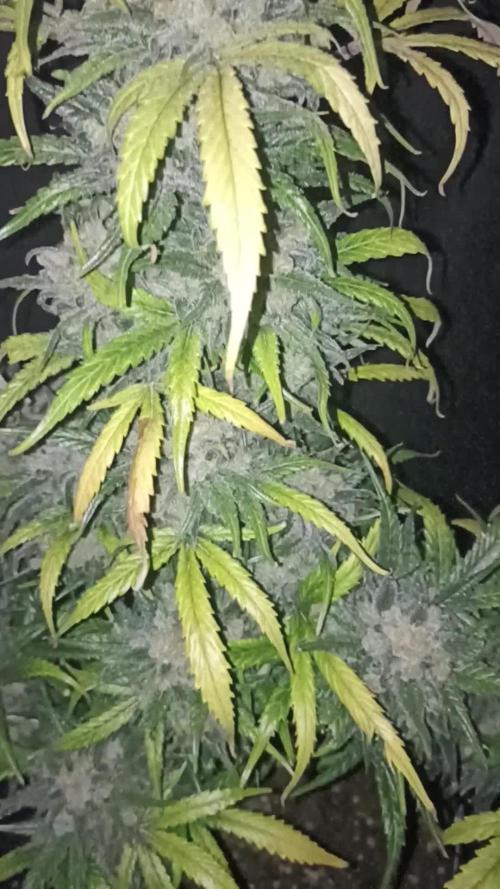
Hello everyone 😎
Week 4 for my girl
She is doing very well,growing at fast pace and with a beautiful green colour on the leaves.
For the feeding schedule half grow half bloom + 1ml/L power buds
Have a nice day 😎
Likes
220
Share


@CRiSPrGrow
Follow
These had a pretty good life. I actually only fed NPK the one time . Germinated them in a Zambeza propagator, i really recommend getting one of those propagators, they're reusable and really take the heat off those first days when you're sweating. Pooped them into their plugs they sprouted out strong, germinated 5 kept 3. transplanted them no problem. Veged these for 4 weeks, then they shot up. during veg they stretched out a bit early on i should have been giving some specialised micro i had on had but for some reason on the other i didnt. They needed extra support for their first three weeks, so i decided to LST them around week 2. Two camping hooks one anchor for the main stem and one to keep the plant down. Once i dialed in my lamp to plant distance they benefitted by slowing down on the stretch a bit. they all took to LST extremely well, bushing out and creating an nice even canopy. They pushedout these thick indica leaves, one of my plants was a lighter colored leaf pheno, the vertafort one. The Six Shooter genetic really stretches, if just off the top of my head it seems that the plants quadrupled in size over an 8 week period, completely eclipsing their neighbours and creating a thick dense canopy throwing shade down below. Each turned into a bush with three or more mains sticking out the top by week 6. IThe results start to look real pro around week 8. Before that though I hadn't been defoliating. This and simple lack of light means that I had loads of undevellopped colas. If I'm honest I should have tried to harvest in stages but by colas. Anyway these kind of grew like a gorilla glue but with much different and much better flower structure. The plants started pushing out flowers and pistils and preflowers etc early, but then took a while to gear up towards towards getting fat. The flower branch out in a spiral pattern up and down the main and secondary colas evenly, creating this misssile shaped colas, but they branch out once sometimes twice, which means less branch to nug ratio than a gorrilla glue by a full multiple. They started smelling like lemons around the time they were fattening up. Then they started getting buff, really little by little, what did rippen rippened evenly. Some colas was basically waste especially the colas stuck on the sides of the tent and some of the colas where for some reason or another there was no light there due to the dense canopy. Truly a BEAST OF A PLANT, HIGH POTENTIAL, great BRANCHING, if you look carefully each plant has more than a dozen colas,
Timed it so the harvest was on a day the plants were chock full for plain water after ten day's worth of additive aided flushing. hung to dry slowly in the tent, got it around 55RH inside the buds over 12 days then trimmed and jarred in miron glass with boveda 62. The trim was a great experience, took a while but not that long because the flowers were so nice in the way they are. you do have to trim every sugar leaf one by one though if you're doing it by hand, broke these sizzors that @Mrs_Larimar sent me because of the resin lol. so I pull these plants out my tent and I just kinda look at them and they're basically dark green because of all the sugar leafs, i'm thinking to myself "shit i messed up this isnt even that frosty". well, what i found out is every time i clipped one of those trademark long sugar leafs off it revealed absolutely resious white frost. That's what can keep someone motivated. ! Once jared, if there's boveda in your jar, you dont really need to burp it daily, or even weekly i just let it sit there, obviously i've been smoking it and following the cure, let me tell you this one needs longer to cure than you're used to maybe, at least two more weeks of cure after a slow dry. Four weeks after the chop , it's a strong weed !
Didn't smell all that loud, but I have a 1300M3/H exhaust so... i'm not surprised. I will say though that my neihbour said she could smell weed even when I wasnt home and she could smell weed in the corridor, from the times I was trimming and basically every time I open my jar. Gonna need a new carbon filter for the next grow. I retired my lightbulb too. Hard to put my finger on the taste because the smoke is so smooth, and when i saw GD had a tag for Woody, i knew right away this was that taste i felt. I will say this though, cure this correctly, dont rush, dry it real slow, then cure it, citrussy tastes, usually those will evaporate, leaving this distinguished terpene heavy hitter much better tasting. So what can i tell you, this weed is white weed, so frosty. Bag appeal is great too, this strain pushes out pistills like no other, maybe even more than the gorilla glue. that means this is a chill weed right? One of the phenos I grew had more pistils than the other two. Mr. B's did, but i dont know if you can really tell from the close ups, i'll try to put some more pictures up. I got two maybe three phenotypes in terms of taste. Mr. B’s is much pine-ier than the others, and when the joint goes out and you light it again, it’s even more piney … I’m actually really happy about that reminds me of white rhino from the east coast back in the day but way piney-ier than that even. When you smoke the other phenos the smell is incense and the taste is really really smooth & woody. Sometimes I find different after tastes on the exhale like coffee, pepper, and maybe sweet/fruity sometimes too depends on the pheno I'm toking on. It is LOUD THOUGH, always have a spare filter on hand IT’S NOT WORTH IT get it !
Well at the end of my first grow, i'd like to quickly review all of Bulbi's own :
Bulbi"s Own Early VegMicro: Fine green powder with calcium and all the rare metals in it. I didnt use it ! Damn, next time I'll amend my soil with it like i did this time on the FBT1
Bulbi's Own Cal Mag : Organic fine white powder with calcium and magnesium, i used it in the feed and sometimes as a spray. I didnt know how much to put in because these things dont come with instructions so i ended up putting 1/4 doses most of time. The correct amount should have been 2.5G/L.
Bulbi's Own Flower Micro : Organic fine beige powder that I used mixed in with the sulfur. I think this one's a keeper, really helped my plants make it through the stress of bottom feeding and all that heat.
Bulbi's Own Mag Sulfur : Organic fine red powder that I used mixed in with the Flower Micro I used this one in my spray too , to great effect, in my opinion
Bulbi's Own Beneficials Trio : This was the base beneficials mix I had, you need to put 7.5 to 15g/l , watch out for clumps, use at the night fall, or when still dark.
Bulbi's Own Anti Afid : I threw it in there i think just in time to protect my plants when I intentionally overwatered when I went on my trip. There were some white flies that emerged, because... well that's what they do isnt it. but there were just a few of them and they ended up flying around wierdly, and within four days, no more white flies, didnt even use yellow sticky tape ! You mix this one with the trio for even more effect. I used these in a spray I think , also.
Bulbi's own Anti-Worm : This one is more directed against larvae, and can be combined with the base trio. I was weary of using it, but I'm glad i did to give my soil matrix that full spectrum of biological protection.
Bulbi's own Humic Acid : This one i loved, looking back I'm regretful not having used it more. the dry humic acid is a great experience, the quality of it was impressive, clumps would seperated into more clumps ad infitum the feed slowly turning completely ink black. definituely using this once a week from now on
Bulbi's own Amino Acids : this one is just amino acids, maybe next time I'll use it at the same time as the humic acid, but I'm not 100% on that. What i did do was spray the top layer of the soil with amino acids when I accidently ran into some issues from spraying kelp all over the place. So in that sense it's an absolute life saver and a must to have on hand.
Bulbi's Own Kelp Extract Concentrate. Loved this one too haha, so thick, and green, check out the video of when i pour it lol. Worked great, raises the pH some so be careful, i used this one as a sprat aswell to get those plant growth hormones pumping during the seeding and veg stage.
Bulbi's Own CO2 : well part of what I set out to do was to test the CO2 theory. Like roots do absorb CO2 but at a lower efficiency than leaves say 15% vs. 85% the theory being enriching your water or feed with CO2 would ultimately benefit the plant. So i enriched water with these ceramic based co2 tablets, because CO2 is a soluble gas, it stays in water. Then i fed the plants in this manner in the feed and also as a spray. The idea behind that was that co2 enriched water would come in direct contact with the plant allowing for absorption of some quantity of CO2 through the leafs. Someone explained to me that these are actually old school techniques. Well I know i started late and didnt follow a regular schedule like i wished for but the plants didn t die, or show any immediate negative upon innoculation, so what can I say? I'm doing this again, perhaps. Only problem is that these things are really a pain to pH correctly
General Hydroponics Dry pH Down : GREAT PRODUCT, hard to find but amazing – not registed on GD for some reason
I still have to make my bubble hash so any advice welcome ! 🚀
Likes
11
Share


@Glizzy420
Follow
buds are getting ready , planning on harvesting in 2 weeks... can't wait to taste the sweetness! Buds are looking compact so im already happy with the good results. 😁

Likes
17
Share


@ArtisticGrown
Follow
This plant is taking well to the training and im in love! Lets see how rapidly she grows within the next week or so!!! Lets go papaya

Likes
4
Share

@DE_BW
Follow
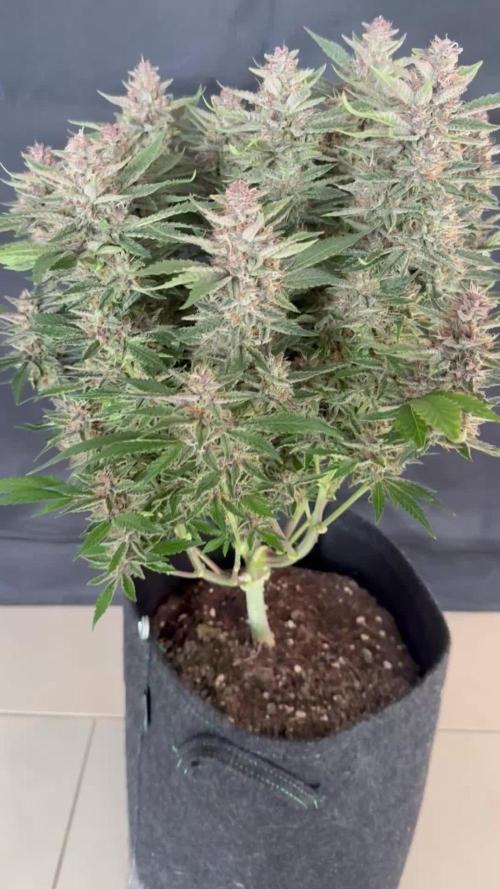
The plant continues to develop beautifully and is clearly hitting its stride now. Buds are visibly stacking and gaining density with every passing day. The fruit aroma is absolutely incredible, smelling intensely like fresh apricot jam and filling the room instantly. A real highlight is the stunning pink coloration, which is now spreading steadily from the top buds downward. Overall, this run is shaping up to be something very special.
Likes
15
Share


@SweetheartOG
Follow
Girls are doing well with the LST. Kosher cake was topped last week and now has what looks like 8 heads.
3rd of June have given the girls living soil veg.
Likes
37
Share


@GreenHouseLab
Follow
Stunning smell on this one, great nose and potent smoke to enjoy over the holidays
Likes
7
Share

@OzarkCannaGrower
Follow
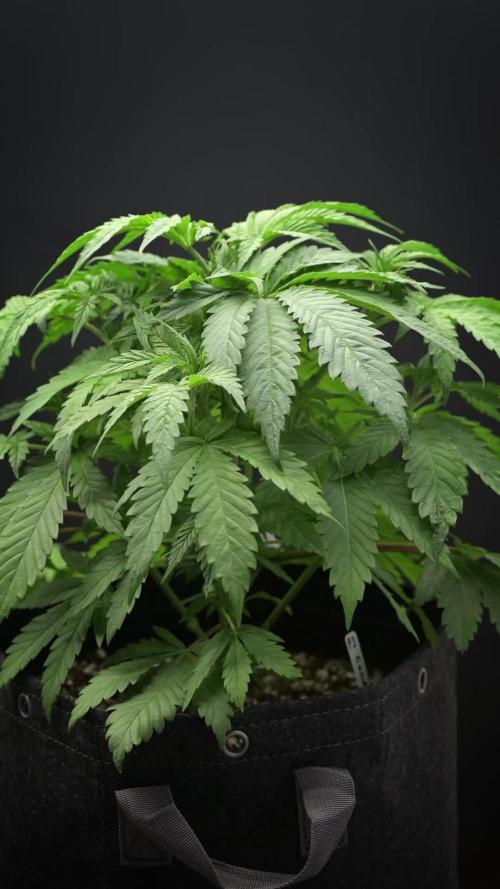
The Candyland girls from @Herbies_USA_Express are looking good.
Tried recording some video of them this week for upload here. I think they came out alright with my manual DIY lazy susan.... LOL
They had another good week and are now over 12 inches.
I did top them between the 8th and 9th node yesterday. Going to give them another week maybe two, then do some training and flip them to flower.
They are looking a little droopy right now since they are in dry back. But they are starting to drink heavier and seem to been handling the increase in nutrients.
Currently running
- 600 PPFD at the canopy with light
- 1.1 kPa VPD with room temps staying between 72-76 F
- Nutrients are up to 900 ppm and PH 6.0
Likes
1
Share

@Dr_Med_Rasen
Follow
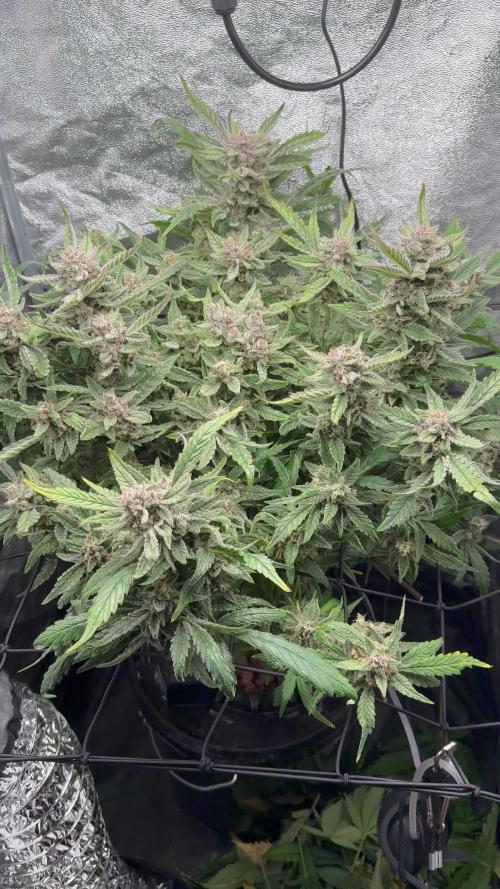
Removed nearly all big fan leafs to get maximum of light penetration to the lower buds and more airflow to prevent mold. Should have weared gloves because it was a sticky mess :D getting more and more smell. I think i will start filling up the bucket only with clear water for one or two more weeks to flush. Think its harvest time soon. Eventually i will swap the whole solution to clear water coming week.
———————
Nahezu alle großen Blätter entfernt, um den unteren buds so viel Licht wie möglich zu geben. Hätte Handschuhe tragen sollen war auf jeden Fall ne klebrige Sauerei :D Stinkt jetzt langsam auch ordentlich die Pflanze. Denke ich werde die nächsten Wochen nur noch mit klarem Wasser ohne Nährstoffe auffüllen um ein bisschen zu spülen. Denke in ein bis zwei Wochen kann geerntet werden. Eventuell tausche ich auch die ganze Nährlösung gegen klares Wasser aus im Laufe der Woche.
Likes
4
Share


@CanarianGrow92
Follow
First week for our apricot from fastbuds 420
We are using the whole feeding schedule from Xpert Nutrients!! Lets see the results from this amazing nutrients!!!
We are using 7 liter pots and doing some defoliation and lollipop the next weeks
Likes
32
Share


@Platinouuu
Follow
El secado fgue bantante rapido, olorosas, sabrosas al comsumo y asotan como toda una verdadera indica. la cosecha es poca, pero la sepa es exotica. Muchos terpenos, los colores de la sepa son violetosos y verde flourecente. La recomiendo altamente, solo que su cosecha por planta es poca.

Likes
26
Share


@Ilovekush17
Follow
Same regime i did add rose bloom for a 1 time feed. Dug a inch or so around the root and 1 inch or so hole by the pots edge. Recovered with soil then watered. I did not like the effects tho. It made a bunch of leaves change colors like they had p and k deficiencies. Stalks and viens got red but went back to normal after another watering with just 6.3 ph water
Likes
26
Share


@GroloCup
Follow
She's absolutely taking off. Every time I swap the reservoir, she shows her appreciation with another growth spurt. I pulled a couple single leaves off of her and will begin ponytail training this week to push a little energy to the lowers and start getting some side branching. We're getting to that time in an Autoflowers grow cycle where things go crazy, and I'm here for it. Thanks again to Zamnesia and Plagron for letting me throw down in this grow off.

Likes
11
Share


@GrowerGaz
Follow
Just water and a little bio bizz flower feed this week , the blackberry gum really showing the potential of the spider farmer. Smell really sweet , dutch kush cake is still not showing any trichomes and is slow and a little runty.


Likes
44
Share


@UKauto
Follow
She's a beauty.
Absolutely stinking 👌🏻
Getting frostier each day now, hopefully start packing some weight on.
Smells like really sour nose burning haha citrus is there but overpower does by the stinkkk 😂

Likes
63
Share


@AsNoriu
Follow
Day 126. She is down.
That girl lived 90 days from seed touching soil. Its part of my Control Garden for proving/finding RQS strain issue.
For 3 weeks veged bag seed plant who spent 75% of his life not under direct light, sometimes even in shade and under most intense air fan , she is GOLD !
Cure day. She could go two weeks longer, but ... 96 g ;))) again, i can only look and admire. Crazy strain. Update on night shift ;)


Likes
7
Share


@Ganjin
Follow
The wait is finally over, I harvested on 07/01/25. Dried very slowly for almost 2 weeks inside the tent at 60% humidity and 18 - 21 °C.
Smells very sweet, it reminds me strongly of the Purple Punch. Only in direct comparison, the Purple Punch leans more to berries while the GSC leans more to something, I can't smell out. But very tasty.
Likes
120
Share


@StarLorr
Follow
Welcome to my Strawberry Pie diary.🍓🥧
In this Diary:
Seeds: [420 Fast Buds]from my growmie Tropicannibis_Todd 👊🏻😎
Media: Pro~Mix HP Open Top Grow Bag, Connect.
Nutrients: Green Planet Nutrients,
2 Part Dual Fuel starter kit.
RealGrowers: Recharge.
Diablo nutrients: Ripping.
Feeding :
Tue 26Mar: 2L Nutes/Recharge pH'd 6.5
Fri 29Mar: 2L Monster K pH'd 6.5
___________________________
The buds are ripping smelly good😋
Trichomes are white and the amber should be at my satisfaction by next weekend, sorry for the quality of the trichomes video... i know it looks like the same cameraman who captured UFO🛸on a pogo stick... will try harder next time😅😂............ i can see the finish line🏁👀1 more lap😎
___________________________
Thanks for stopping by, likes and comments are appreciated.👊🏻😎
Keep on growin!
Keep on tokin!!!
😙💨💨💨💨💨


