




Likes
23
Share


@Ganjagrandaddy
Follow
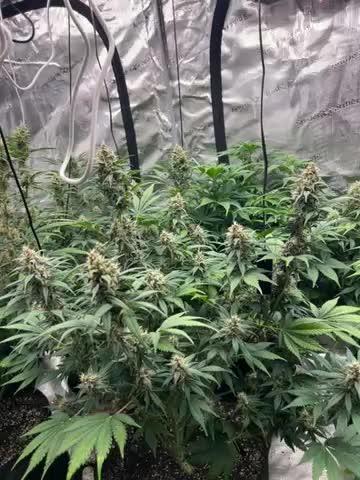
Flowering Day 2: Hope the video shows them well enough. These girls are amazing growers. #1 has gone big with the stretch. i expect her to be the best yield. #2 and 4 are more squat in structure so lean on the indica side i think. #3 is similar in height to 1 but is nowhere near as big.
Now the stretch is done i can plan the day 7 defol and strip out of all the small whispy rubbish that will just steal nutes and energy away from the worthy ones. i plan to keep some lower fans without their buds to give extra photosynthesis to assist the others.

Likes
4
Share

@Jardin33ro
Follow
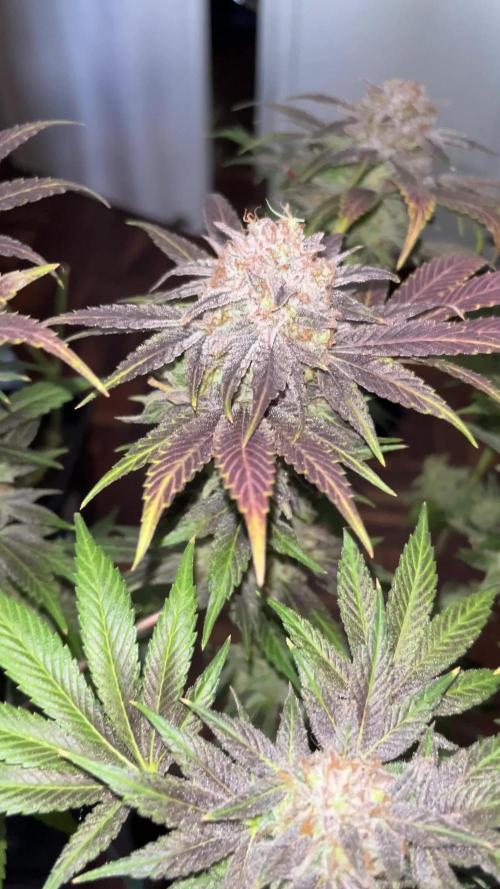
Cosechamos, luego cuando seque les comento cuanto sacamos de esta planta. Un buena experiencia de cultivo invernal, complicado pero luego le encontramos la vuelta. Mimosa no le gusta mucha intensidad de luz en vegetativo, y le gusta poca agua. En flora si come un monton y banca bastante.


Likes
Comments
Share

@Elguacho420
Follow
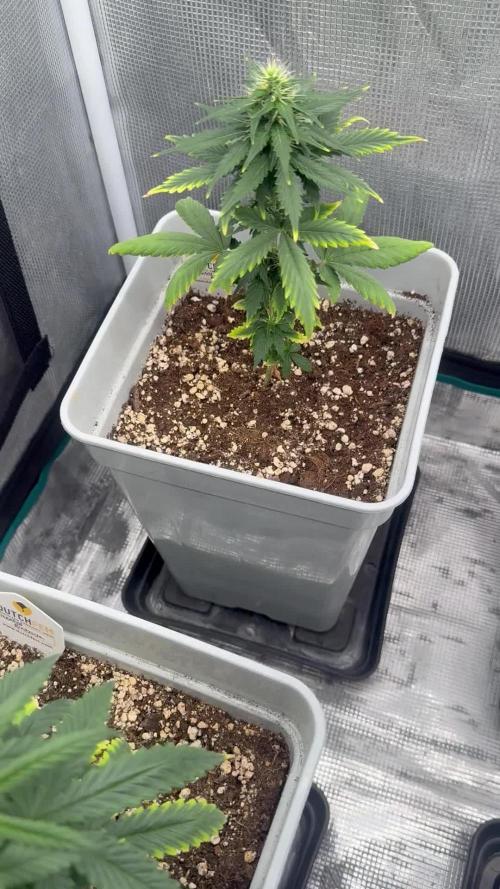
Buenos buenos días a todos, ya estamos de nuevo aquí para comentar una semana más como van nuestras plantas. 🍁🏻
Esta semana hemos visto una mejoría notable en cuanto a las anteriores semanas y eso nos pone felices.
Tras pasar un par de semanas administrando de nuevo los nutrientes que ya conocíamos , nos hemos dado cuenta de que estos son los que realmente nos funcionan ya sea por conocimiento o por seguridad nuestra de lo conocido, aún así seguimos pendientes de lo que nos quieren decir las plantas con sus diferentes signos
Los riegos por el momento son como la semana pasada 350 por planta y más o menos se riegan cada 3 días una con nutriente y la otra solo con agua, ambas dos equilibradas de PH al 6.0 como hemos hecho siempre.
Estamos contentos de poder seguir con nuestro cultivo aún que hemos sufrido algún inconveniente siempre seguimos activos y con ganas de aprender y mejorar.
Muchas gracias a todos por su atención , estamos contentos de pertenecer esta comunidad tan amable y llena de aprendizaje
Buenos humos a todos y nos vemos la próxima semana 💨🌱💀
Likes
Comments
Share

@TactiLost
Follow
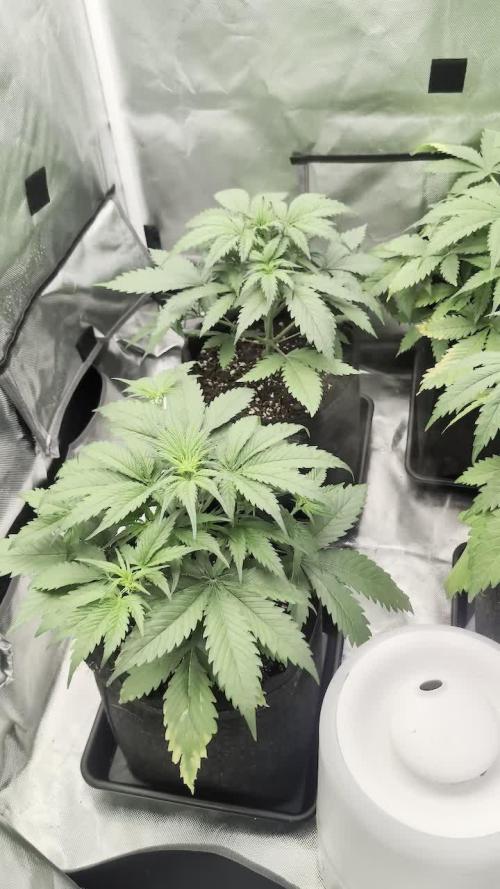
I'd been watering by weight this whole time, aiming for 50% of the pot's dry weight. Big mistake — the soil was absolutely bone dry at times and had shrunk like crazy. One of the girls never bounced back and had to go.
The biggest plant in the run started throwing nanners from all the stress. I pulled the pollen sac off wet and decided to keep her in the tent for now, doing daily checks. If she goes full hermie on me... well, at least there'll be some hash at the end of it


Likes
6
Share

@JeyGanesha
Follow
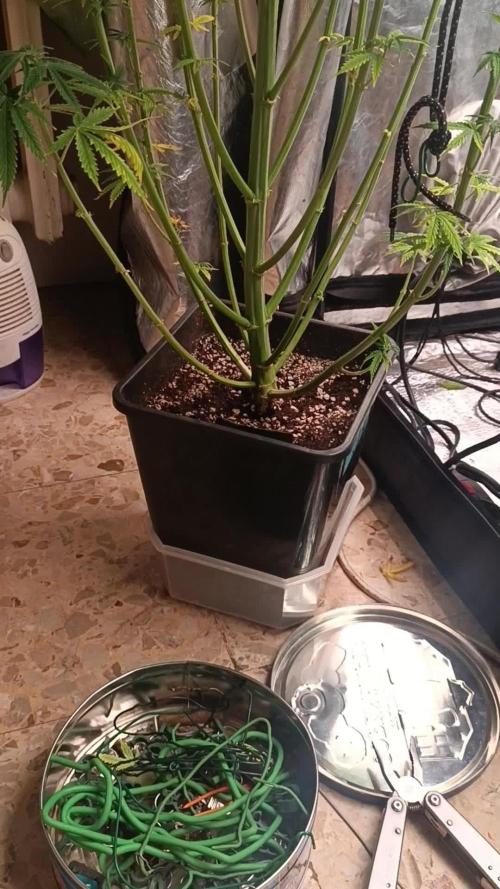
Questa runtz continua a crescere in altezza,. Oggi lunedì 22 dic. L'ho dovuta ripiegare ancora.. gli ho fatto un altro HST sennò passa i 2 metri di altezza 😉🤣😂😘
Likes
14
Share


@GrowBuv
Follow
I knew I was right not to give up on her. Wow what a transformation since I last seen her before catching Covid! She looks healthy as can be. Fingers crossed she can produce something nice for me.
Likes
1
Share


@Not_a_tutorial1990
Follow
She's growing well, did some more defoliation and lollipop.. won't do any more topping at this point, keeping the 8 main colas. The other blue monster pheno has 16 colas, experimenting on yield and quality comparison.
Happy growing
Likes
17
Share


@CanadianFillmore
Follow
Welcome growfessors to week 4F in the 4x8.
LSD, Green Crack and Divine storm are showing the most discoloration, however the bud sites continue to bulk up and frost is showing.
Both Mandarin dreams strains, 4 of pheno 1 and 2 of pheno 2 all look good, with a bit of discoloration starting to show.
A bit of defoliation and removal of any dead leaves. Not much else to say, they look happy and a bulking up nicely.
Tune in next week growfessors for another episode 👽🌳💚


Likes
3
Share

@ElCapitol
Follow
Doubled in size in a week, nice shape to her and deep green leaves. Only thing to note is she has put pistols out already, I thought it would be in vegetive stage longer. She needs to fill out some before flowering. This could be normal for autos I don't know, perhaps someone can say?
Nice strong genetics.
Likes
22
Share


@FlavoursUk
Follow
Green Gelato was chopped on day 75, this pheno has a strong aroma of sunset sherbet which is divine to the nose. Dense boulders from top to bottom of the stems. So far I’m happy with the gelato, she will get a dry and a really slow cure finished with a boveda humidity pack at 62%. Looking forward to the finished product. Harvest report will be written on the next update. Thanks for following along people

Likes
41
Share


@BOMbolenath
Follow
The plant is ready to flower. I covered the soil with inputs and did a little defoliation. It is developing well. I needed to do supercropping to match the height with the other plants in the grow.

Likes
5
Share

@Sundancers
Follow
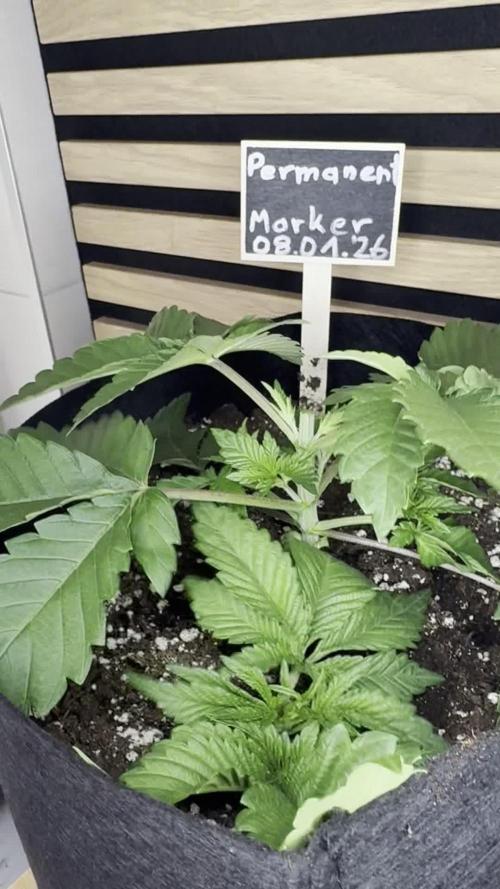
Überraschung der Woche: Die Permanent Marker zeigt eine erstaunlich dominante Indica-Struktur, kompakt, kräftig und mit ordentlich Selbstbewusstsein. Die Blätter sind groß, sattgrün und sehen so gesund aus, als hätten sie einen Fitnessvertrag abgeschlossen. Das Wachstum läuft rund, mit einem angenehm kurzen Nodienabstand, der schon jetzt Lust auf die nächsten Wochen macht. Insgesamt wirkt die Pflanze stabil und gut im Saft, keinerlei Zicken oder Stresssignale. Beim Beschneiden wurde es dann plötzlich sehr geruchsintensiv, ein erstes olfaktorisches Versprechen auf das, was noch kommt. Getoppt wurde sie ebenfalls, um die Energie etwas besser zu verteilen. Dabei haben wir gleich die untersten zwei Triebe entfernt, die ohnehin nur Zuschauer gewesen wären.
Sehr starker Auftritt in Woche 3, diese Dame meint es ernst.

Likes
21
Share


@Compassionate_Gardener
Follow
The flowering of my TRICHOME WONDERS continues through week 12 and they have grown to an AMAZING size now. The main branches form HUGE colas and some of the plants have started their fade (=the leaves start to get yellow and/or purple), which shows they are getting ripe now and that the BIO-Tabs nutrients in the soil are almost used up. Perfect timing until the end of the cycle. The amount of TRICHOMES on some of my babies is FLABBERGASTING! 😱😍 The topbuds are ENCRUSTED with a WHITE LAYER of trichomes and the plants are GLISTENING now. Especially the Mr. Big Candy from Mr. Hide Seeds is a VERY BEAUTIFUL specimen...she has hues of purple and red in the buds and is FULL OF CRYSTALS! The aroma is a sweet candy like smell, which makes my mouth water every time. The biggest colas are formed on the Mr. Jekyll Kush from Mr. Hide Seeds, she is HUGE! Unfortunately one of the HUGE top-buds has developed bud-rot, therefore I ha to cut off the invested top part of the plant. (see in pics) The SANlight EVO5-150 and Q5W-Gen.2 LED-lamps are doing an OUTSTANDING JOB, they are hanging at appr. 80 cm from the top of the plants and running at 100% (=not dimmed) now. The intensity and spectrum of the LEDs is perfectly designed for the development of Cannabis plants and the results speak for themselves. THOSE LEDs WORK MUCH BETTER THAN HPS-LIGHTS!!! 👍😃 I LOVE THEM!


Likes
34
Share


@Mom74
Follow
Die Pflanzen haben sich auch in dieser Woche gut gemacht. Man kann den unterschied zwischen sativa und indika gut erkennen. Die beiden hinteren pflanzen sind Girl scout Cookie und Sweet Candy und die vorderen super Silver haze und Berry bomb . Der Weinballon blubbert noch mäßig vor sich hin und jeden zweiten Tag stelle ich ein Gefäß mit Wasser und 4 CO2 Tabletten mit ins Zelt. Ich bin sehr zufrieden mit dem gegenwärtigen Wachstum und Entwicklung der Pflanzen.
Ich spiele mit dem Gedanken ein zweites Zelt zu kaufen und im Wechsel auch Automatik anzupflanzen um die Wartezeit zur Ernte mit einem kurzfristigen Grow zu belohnen.
Dafür rauche ich nicht einmal. Dieses Hobby habe ich meinem Sohn zu verdanken. Er ist so selbstlos und testet die Ergebnisse für mich. Dann wird er sie bewerten ,da ich das leider nicht kann.
Habe überlegt vielleicht Edibles herzustellen. Candys, Pralinen oder Gebäck.
Wäre dankbar für Erfahrungen und Rezepte .
Aber bis dahin werde ich den Mädels noch beim Wachsen zusehen.
Ich wünsche euch noch eine schöne Zeit und halte euch weiterhin auf dem Laufenden.
Bis nächsten Sonntag.


Likes
47
Share


@KA_LE
Follow
I decided this week to start adding nutrients at a very low dose at 1/8th of the recommended dose. I'm quite happy with how growth is progressing so far. There is a slight deformation in one of the first leaves but i'm not worried about it at this stage.
Likes
Comments
Share

@eldruida_lamota
Follow
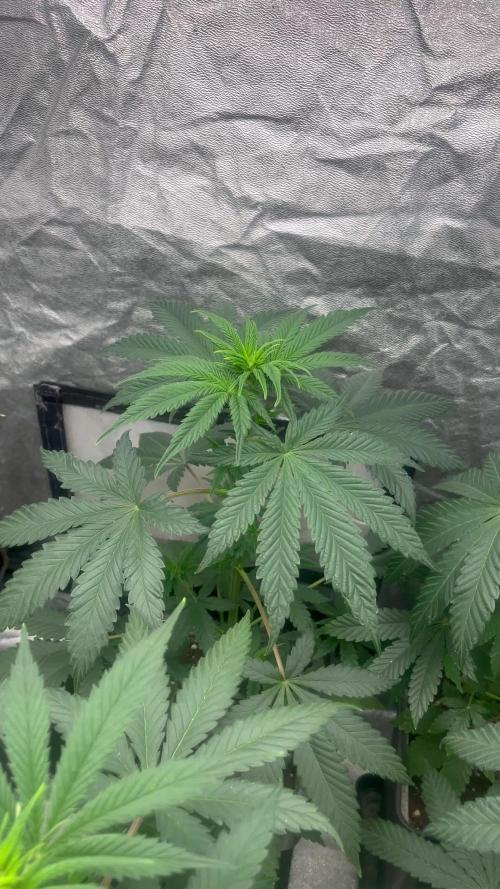
Que pasa familia, vamos con la primera semana de floración de estas Forbidden Mochi feminizadas de Seedstockers.
Vamos al lío, las plantas se trasplantaron a macetas de 7 litros.
El ph se controla en 6.5, la temperatura la tenemos entre 24/22 grados y la humedad ronda el 50%.
El ciclo de crecimiento puse 12h de luz, el foco está al 50% de potencia.
Me gustaría estar más encima este cultivo pero la salud me está impidiendo un poco este 100% con el proyecto. Con suerte la semana que viene andaré mejor.
- os dejo por aquí un CÓDIGO: Eldruida
Descuento para la tienda de MARS HYDRO.
https://www.mars-hydro.com
Hasta aquí todo, Buenos humos 💨💨💨