


Likes
Comments
Share

@AlphaVortex
Follow
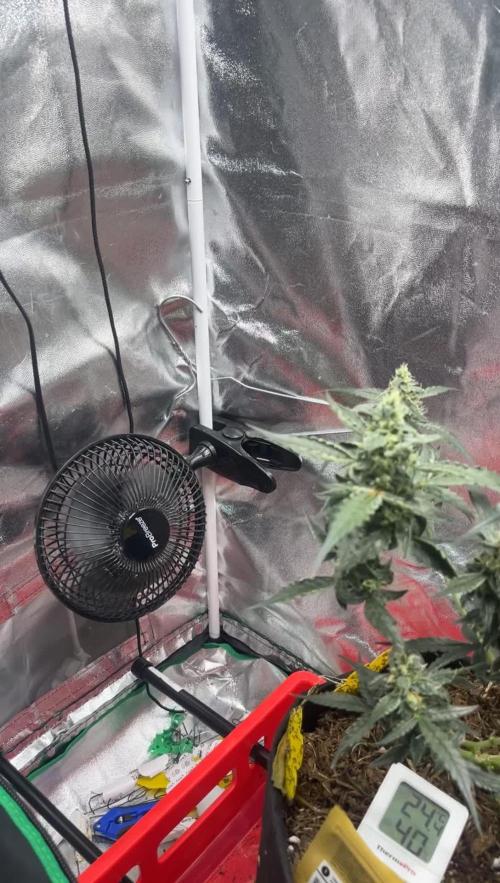
Tag 73, Lollipopping wurde sehr gut aufgenommen. War jetzt knapp 1 Woche im Urlaub, die Buds haben gut zugelegt.

Likes
6
Share


@IamCy
Follow
Week 6...........
Getting frosty
Edit: on day 41,I already have amber but it's still packing on weight. I don't know what to do at this point.
Likes
35
Share


@farahweed
Follow
I flushed the pots once this week.
And use once with enhancer and a very small dose of shrot flowering fertilizer.
And I tried very hard to lower the humidity and make the daytime temperature not more than 25 degrees
💐🛸👽💥1


Likes
8
Share


@Weedganja420
Follow
Ha sido una de las mas productivas de las 8 que tenia en el pequeño armario.
Voy a repetir esta cepa en mi siguiente cultivo ya que me ha encantado.

Likes
5
Share


@Brosciencegrowmie
Follow
Plant did great. The final product looks great and smells good too. Very easy going grow with great results.


Likes
3
Share

@Jessi576
Follow
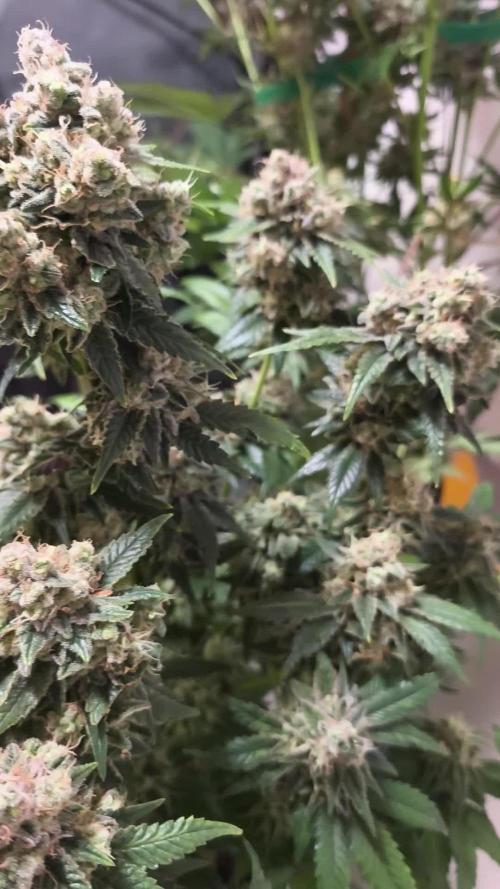
👉 Week 9 Bloom👈
👉01.05.2026 - 07.05.2026👈
👉 Days bloom: 57-63👈
The end is near !
This is my most beautiful grow for me, until now. Very beautiful nuggets and very few leaves.


Likes
5
Share

@Stork
Follow
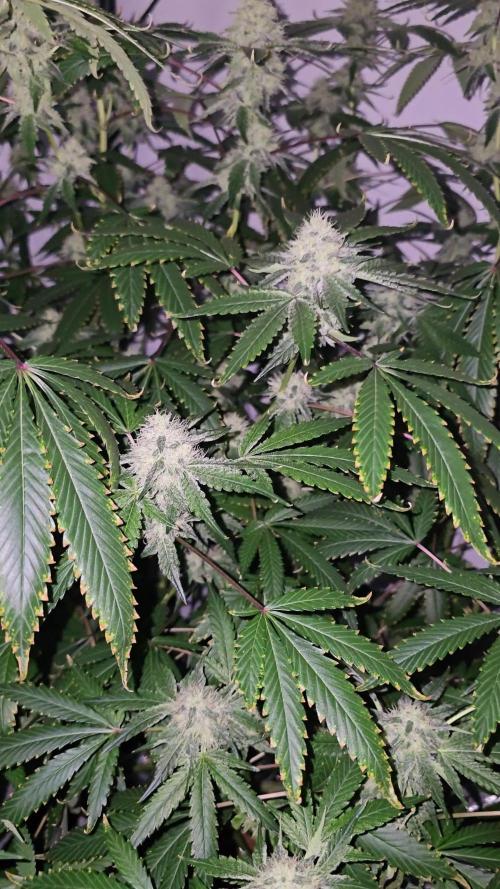
Day 84 Mon
PH 5.7
EC 0.6
DLI 12h
PPFD
Water 23
Day 86 Wed
PH 5.8
EC 0.6
DLI 12h
PPFD
Water 18c
Day 87 Fri
PH 6.1
EC 0.6
DLI 12h
PPFD
Water 19c
Day 88 Sat
Add Water and ph down
PH 6.2 - 5.7
EC 0.7 - 0.4
DLI 12h
PPFD
Water 20c

Likes
2
Share


@Ultraviolet_
Follow
Remember that, however you are played, or by whom, your soul is in your keeping alone. Even though those who presume to play you be kings or men of power, when you stand before God, you cannot say, 'But I was told by others to do thus,' or that virtue was not convenient at the time. This will not suffice. Remember that.
Day:18
84°F and 65% RH (VPD) for the vegetative stage. Approximately 1.15kPa(assuming leaf temperature is about 2°F cooler than the air), which falls right into the ideal vegetative sweet spot (0.8kPa to 1.2kPa). At 1.15kPa, plants can draw water and nutrients efficiently without risking stress or wilting. It keeps the leaf pores (stomata) open, allowing for ideal carbon dioxide intake and maximizing vegetative growth. VPD is determined by the leaf's temperature, not just the ambient air. Because leaves usually run 1° to 3°F cooler than room air under bright grow lights, my actual VPD will be slightly lower, closer to the 1.0kPa mark. As she transitions from vegetative growth to flowering, one can gradually lower the humidity (to around 45–60%) and drop temperatures slightly to prevent disease from settling inside dense buds when they appear.
Night:6
At 70°F and 60% relative humidity, Vapor Pressure Deficit (VPD) is 0.86 kPa. This is right on the cusp of whats optimal for the vegetative stage. During the nighttime, plants generally close their stomata and undergo cellular respiration rather than photosynthesis. Transpiration slows to a near stop, making VPD less critical at night than during the day. However, maintaining a nighttime VPD between 0.8 and 1.0 kPa is highly beneficial in that it ensures the air is dry enough to prevent powdery mildew or bud rot, but moist enough to keep the plant from undergoing unnecessary stress. This range keeps the environment comfortable for cellular processes and prevents large atmospheric swings. Keeping it all flowing.
(Not pushing them yet, these are photoperiods)
The optimal soil (root zone) temperature for cellular root respiration and nutrient uptake in cannabis is between 68F & 72F This narrow range balances biological energy production (cellular respiration) with the dissolved oxygen levels in the soil, maximizing plant growth and health. Warmer soils hold significantly less dissolved oxygen. When soil temperature exceeds 74F oxygen depletion occurs, inhibiting cellular respiration almost entirely, At 68-72F root cells generate optimal adenosine triphosphate (ATP) via respiration to power root-tip elongation and the active transport of water and nutrients.
Too Hot (Above 78F) Root respiration increases, demanding more oxygen, while the water's oxygen-carrying capacity drops. This creates a prime environment for anaerobic pathogens and Pythium (root rot).
Too Cold (Below 60F) Root metabolism and cellular respiration slow to a crawl. This severely impairs nutrient and water absorption, leading to yellowing, wilting, and phosphorus deficiencies.
A lot depends on whether it's automatic or photoperiod; with photoperiod, there is not as much of a need to push "hard" as the real countdown only begins once the flower is initiated. Automatics, on the other hand, the chronological "clock" begins ticking the moment the seed germinates. It is of critical importance that the seedling growth gets off to the races, understanding that early growth is like compound interest, which will pay off come harvest. This reality is why getting autoflowers "off to the races" early on yields such exponential benefits. The "compound interest" is directly related to the surface area of the leaves. Larger, faster-growing seedlings process more light and build bigger root networks early on, which translates into an explosion of vertical and lateral growth during their short vegetative window.
The margins for error are so thin with autoflowers; this early-stage momentum depends on several critical practices. Seedlings exposed to increased atmospheric CO2 levels early in life will develop at an increased rate. To effectively "extend" or optimize the capacity of Photosystem II (PSII) for increased photosynthetic efficiency. In standard oxygenic photosynthesis, Photosystem II (PSII) is naturally limited to the red-light spectrum, peaking at 680nm. Extending its light-harvesting capacity past 700nm into the far-red region requires bypassing the natural limits of standard chlorophyll a. Adding 730 nm (far-red) LEDs alongside standard red/blue lights has been shown to increase canopy photosynthesis by 20–30% in several crops by acting synergistically with shorter wavelengths. However, the limitation is that excessive, pure IR/Far-red light (without accompanying red light) can trigger the "shade avoidance response," causing plants to grow tall, weak, and spindly rather than robust. Utilizing infrared light (specifically the 700-750 nm far-red range) is a viable method to boost photosynthetic efficiency. It acts as a bridge to allow PSII to utilize a broader spectrum of light, breaking the traditional 700 nm barrier. UVR8-mediated signaling (often in conjunction with CRY proteins) triggers protective mechanisms that maintain the stability of the photosynthetic apparatus (including LHCII and reaction center proteins), thus ensuring that the efficiency of Photosystem II remains higher in UV-B-exposed plants compared to plants lacking this receptor. ΦPSII indictates the rate of electron transfer from water to plastoquinone, which drives the production of ATP and NADPH. There is a close link between ΦPSII and the true rate of CO2 fixation (Φ*co2).
ETR stands for Electron Transport Rate. It measures the speed at which electrons are moved through the thylakoid membranes in a plant's chloroplasts during the light-dependent reactions of photosynthesis. Infrared light (particularly Near-Infrared or NIR) improves cellular energy by interacting directly with the electron transport chain (ETC) in mitochondria. This process boosts adenosine triphosphate production, which acts as a metabolic coefficient multiplier by accelerating enzyme activity dramatically.
Extend then multiply.
Far-Red photons interact with plant photoreceptors to accelerate the plant’s biological "clock" or trigger a shade-avoidance response. Autoflowers don't use the plant's biological clock, although the IR will initiate a shade avoidance and make them stretchy. You can just add equal measures of 660nm-680nm to negate the shade avoidance effect. Replacing nights' "darkness" with a combination of IR+ and 660nm. Because autoflowers don't require a dark period to flower, many growers just blast them with light. 18/6 24/0. However, this ignores the plant's metabolic rhythms, where daytime photosynthesis (light reactions) must be perfectly balanced with nighttime carbon fixation and assimilation (Calvin cycle) to avoid bottlenecking plant development. Cellular respiration is a 24/7 process, but it can only function while the plant has the free oxidative capacity to do so. A 100% photosynthetically active leaf cannot perform cellular respiration. The viral trend of defoliation of every leaf that isn't "getting enough light" is of great detriment overall, putting 100% of the cellular respiratory "workload" and responsibility on the 0/4/6 hours of darkness in sub-optimal conditions for enzymatic activity. Photosynthesis captures nearly 100% of the initial energy as carbon, while cellular respiration is the process that unlocks 90% of that captured energy into usable ATP so the plant can use it. Respiration is considered only roughly 30% to 40% efficient. It captures enough of the potential energy in glucose to synthesize around 30 to 38 ATP molecules per glucose molecule. The remaining 60% to 70% of the energy in the sugar is not captured in ATP; instead, it naturally escapes into the environment as heat, which helps regulate plant temperature. In plants, the primary enzymes of the Electron Transport Chain (ETC) and the ATP synthase complexes are typically adapted to function optimally in warmer temperatures (roughly 77°F to 95°F, depending on the specific plant strain). As temperatures rise within this physiological range, molecular collisions increase, speeding up respiration and ATP production. The cannabis plant has a branched respiratory pathway. During heat or cold stress, plants activate Alternative Oxidase (AOX). AOX burns sugars to dissipate energy as heat rather than coupling it to ATP production. This pathway actually functions optimally at elevated temperatures to help protect the cell from the damaging build-up of Reactive Oxygen Species (ROS) during heat stress. Enzyme activity generally scales with heat; there is a strict biological limit. If canopy temperatures in a grow room exceed 104°F, the enzymes and their supporting lipid membranes lose stability. Not saying you need to go crazy, just optimize nights the same as we optimize days.
Phosphorus is the driving force behind early seedling development. It acts as the "energy hub" of the plant, directly driving cell division, robust root growth, and the creation of DNA. Without an adequate, easily accessible supply early on, the plant's overall growth potential and final yield can suffer permanently.
Likes
40
Share


@xbrico
Follow
Day 107 - Day late and a dollar short on my Update! :P Haven't added any new nutes...just topping up with water on the current base and then will flush around Thursday. The Cookies Kush all look done...pistils been brown and shrunk for days now. The Purple punch still showing a lot of white pistils though and its the oldest of the 4 plants and should be done the quickest (Per Barneys Flower Time Expectations). Am well over the 8 weeks now and will play the flush by ear, like I say, expecting Thursday for a 4 day flush in Hydro but may stretch the current nutes out the end week to see if the Punch Browns (It is fox-tailing slightly...but this can be expected with Purple strains). Apart from that, nothing else to do but wait til harvest! :)
Also, have to note...can't say I have sen an increase in frosting using the 10K bulb from where they were before I introduced it a week ago but could be something that's been that gradual, its really been unnoticeable! What I have noticed with it is Cola Leaves starting to Pray, so they're getting some light intensity without bleaching or burning so it has done something...if its beneficial, I can't really say!

Processing
Likes
6
Share


@Mr_nugs_lover_David
Follow
She's responding super good to lst method she looks absolutely gorgeous I would have loved to be able to grow her since march however It was not posible but I keep this wonderful indica in my list. This wonderful pheno of Alien gorilla has started flower the 3rd of August.

Likes
3
Share


@RainerWinklerGrow
Follow
Forgot to document further, this is all i had before harvest, harvested around week 11 of flower

Likes
243
Share

@Natrona
Follow
NYC Diesel Auto (Was Hey Abby)
W20 F9 2/1-7
New York City Diesel is ready for harvest. I plan to harvest this weekend, time permitting. I flushed her with 5.5 gal of water since 1/24. Not as much as I would have liked. 2/5 trichome pics show a moderate amount of amber but in some colas, nearly 80%. This maturation was very fast as I was planning for the 15th.
Given the amount of amber now showing, I have grown past what I prefer for maturity, this will now lean more indica.
We had our first big snow this week following a light dusting last week.
Pics show my kitties investigating ( but not for long)
Stay green, growers love 💚🌿
💫Natrona💫

Processing
Likes
29
Share


@Reaper
Follow
day 15 (december 19)
start of week 3
roots everywhere plant starts to take of now, the hydro is slightly bigger then the soil plant
day 17:
the hydro plant made a new set of leaves in just 2 days!
day 19:
i cut off the lowest leaves of both plants. i do this because on any autoflower these leaves produce a stem that wastes a lot of energy on small nugs.
day 20: hydro plant got topped (3nodes)
day 21: soil plant got topped (3nodes)
same strategy with the topping, i do this early (i could pinch them off with my fingers) to reduce the time to recover. the plants bounce back like they didnt feel it and with the lowest leaf and small tiny stems cut off, these plants will produce 6 main stems with nice big and dense buds instead of a huge christmass tree with more leaves than bud.
Likes
30
Share


@EdsterGrows
Follow
Alright ladies and gents, finished shooting the last scenes for my Christmas video contest 😅 I had a couple of divas on set, and you'll see who I'm talking about.. lol
Alright; all three girls are getting ready for chop, it has been a lovely time and I've been patient, but I also wanted to make sure that I'm harvesting at the correct time. I purchased a jewel loupe off of Amazon and to my surprise all three girls had amber trichromes mixed with milky trichs. I went ahead and fed lightly and will be harvesting by day 75. I'll update with pictures of the trimmed flower before hanging. Blessing fellow cultivators! 🙌✌️
Edit:12-18-2017
I've finally uploaded my contest video, I really hope to win, and hope you all enjoy! 😸

Likes
32
Share


@Dunk_Junk
Follow
Wow she almost doubled her height this week!
She grew 29cm!!!!!
I think she's doing OK 💪
Likes
4
Share


@Birthdaycakeuk
Follow
Week 3 started off well. Gave my plants nutrients for the first time. Lowered the water dose compared to last week and noticed more growth so sticking to less is more until the flower stage. The temperature has been consistent. This week also allowed me to top my plants. And I have seen the new stems coming out the plant. I’ve added a co2 bag hoping to see some difference. I did add a second fan in to just keep the leaves wafting but it reduced the temp so I took it out


Likes
12
Share


@Trippin66
Follow
Hi to every one i hope you enjoing my diaries
The video uploaded is just before the girls wake up and after i did some defoliation on pheno2 and heavy one on pheno 1 hoping start showing some flower formation whitaout all that littel leaf
The pass ed week i start main lining on runtz xl she responds too good and shown healty new growth i Also defoliated the littel zenzation she litteraly have two weeks less to the other sisters she doing great
I watered only the big gyal couse she drinking all things faster obiviusly then her sisters
By to everyone see ya in the next episode
Stay safe and never stop grow


Likes
5
Share


@Samsemilla
Follow
Gute letze Woche.
Ich bin mit dem Ergebnis im großen und ganzen sehr zufrieden.
Ich habe einiges für zukünftige grows gelernt.
In Zukunft werde ich mich auf weniger Triebe und einen sauberen unteren Bereich konzentrieren.
Dann könnte ich sie eventuell auch noch ein paar Tage länger stehen lassen.