Check the winners The Grow Awards 2026 🏆 











Likes
Comments
Share
@Ultraviolet_
Follow
Nirvana is interpreted as awakening from the illusion of separation and the limitations of time and space, effectively "seeing" the underlying code of existence. In Buddhism, Nirvana is described as the "unconditioned" (asankhata), a reality beyond dependent origination (cause and effect). This aligns with the concept of a fundamental, timeless "code" that exists before material manifestation. Some interpretations equate the stillness of Nirvana with the quantum vacuum, a state of "zero energy" which, however, holds unlimited potential for manifestation.
In quantum mechanics, a quantum system remains a "wave" of possibilities until observed. The "on-demand" aspect is often linked to the ability of a highly developed, enlightened consciousness (a "pure observer") to collapse this wave into a desired state, interacting directly with the underlying quantum reality. This view implies that by breaking free from the ego and mental conditioning, one gains mastery over the energetic, or vibrational, foundation of reality. The feeling of oneness in nirvana is explained through [quantum entanglement], suggesting all things are connected, and therefore, an enlightened mind can interact with any point in the universe. Traditionalists might argue that Nirvana is not about gaining control or having the power to "manifest on demand" (which can be a function of ego), but rather the total cessation of craving and the surrender of the ego, bringing an end to the desire to control reality.
The spiritual path is an evolution from being controlled by the "code" (samsara/suffering) to understanding the code and, eventually, becoming the author of one's own. With the awareness of how "code" functions, one takes full responsibility for their life, making conscious choices rather than reacting impulsively. Thoughts, words, and actions are purposefully aligned with higher values (truth, love, purpose), effectively rewriting one's destiny.
Doesn't make sense now, but it will. Wait and see, hear and know.
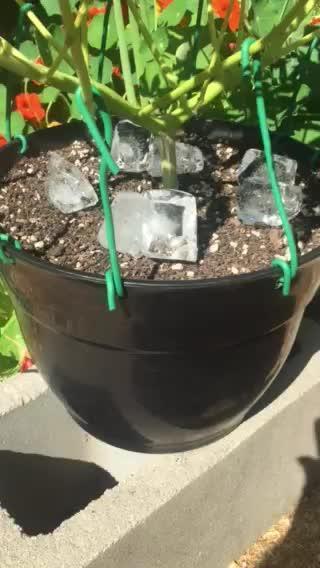
Humidity of the air dictates the moisture in the medium, which dictates the rate of pull from the terracotta stakes, 16 in total.
Soil-Plant-Atmosphere Continuum (SPAC): An ecological concept referring to the pathway of water moving from the soil, through the plant, and into the atmosphere.
Terracotta (unglazed, low-fired clay) is highly porous, acting as a breathable, permeable membrane that transports water based on the moisture gradient between the potting medium (soil) and the surrounding air. White terracotta and brown terracotta often have different pore sizes and overall porosity, primarily driven by differences in clay composition, impurities, and firing temperatures. While both are considered porous, brown terracotta often has higher iron content and impurities that behave as fluxes, affecting how the pores form during firing, while white terracotta is generally derived from more refined clays, with smaller pores making it more suited to pure water.
This mechanism is driven by capillary action and evaporation. When the surrounding soil is dry, the terracotta acts as a wick, pulling water out of the pot and into the soil. If the soil is very saturated, the terracotta absorbs water from the soil and allows it to evaporate from its outer surface, increasing the drying rate of the soil. Terracotta tends to keep the potting mix at an optimal saturation point, wicking up more water when the outside surface evaporates water into the air. The greater the difference in moisture between the soil and the outside air, the faster the water transfers through the ceramic. In low humidity and hot weather, the evaporation rate from the terracotta surface is high, creating a rapid drying effect. Newer terracotta pots often have a denser, lighter-toned structure that is less porous than traditional, red-orange terracotta, slowing down the moisture transfer rate. Over time, dissolved salts from fertilizer or tap water build up and block the pores, reducing the permeability of the clay. No worries here, though, as water is all that is used or needed, thanks to the biochar and the massive storage bank of nutrients.
Clay pot irrigation (Ollas), an ancient farming practice, utilizes this property by burying unglazed jars in the soil, allowing water to slowly seep into the surrounding soil only when the soil dries out.

Likes
8
Share
@KratkyGrow
Follow
So, absolutely against the recommendation I received from a friend of mine who's been growing for 20+ years, I pruned/defoliated my plants up a bit this week.
I decided to for a few reasons.
- the plants were really dense with foliage, many leaves overlapping and pushing other leaves
- most of the bud sites were shaded under several layers of leaves
- the leaves pilling up would have been restricting airflow quite a lot, I want to prevent budrot or mold by increasing aeration
- I wanted to control where the plants were growing, and focus their energy into the buds
- with this being an outdoor grow late in the season with less sun I felt it was more important to expose the developing buds to the sun
With all that said, I think my plants have responded extremely well to the pruning in the last few days.
I've never pruned or defoliated before so this is going to serve as a test for me. I like doing new things and seeing what happens. No matter what, these plants look really good right now and I'm sure I'll get a decent harvest, I'm trying to push it from decent to fantastic.
My PPM is a bit high, though none of the plants look like they're being hindered by it. I did a partial water change on 2 of the 3 (the one in the 3 gallon bucket and the one that looks more like and indica). The 3 gallon bucket plant was at a PPM of 5000ish so I made sure to get it more in line with the other two, and with the partial water change I got it to around 2000. The other plants are sitting at right about 3000. I will continue to monitor the plants and check PPM, if it doesn't go down next week I think I'll do another partial water change. I want to keep pumping in nutrient while preventing any burn or lockout.
Trichomes are no observable on the two plants in larger buckets. The smaller bucket plant was the last to sprout, so it's about a week or two behind the others.
This week has been pretty poor weather where I'm at. Lots of rain and clouds. I've kept the plants under cover but still in direct sunlight. This coming week is supposed to be clear sky again so I'll move them to capture the most light once the rain stops.
I know defoliation is debatable, especially with outdoor grows, but I like to push boundaries.
Here's a list of the things I've done with this grow:
- kratky method hydroponics (other than a partial water change I have added no water since starting in buckets, no airstone, no pump)
- Winter grow (shortest light period of the year here)
- Topping (and it looks like one is more like FIMing, also one grew as if it were topped without my input)
- Dense nutrient load (I've added more nutrient in this grow than any grow I have previously done. Mostly because I never achieved super large buds and I'm really aiming for that this time)
- Water change (like an aquarium, I've never done a water change other than flush before, this week called for it with the high PPM which I think was residual from nutrient loading in veg so I wanted to make sure there's room for the flower nutes)
- Defoliation/pruning (nothing too crazy or drastic, started this week and don't plan to trim again unless I see a need to)
Likes
66
Share
@Earthling37
Follow
51 Days in flower have passed.
This week i got myself an upgrade, new light the FC-E3000 and a 120x60 grow tent so i can grow some bigger and better medicine.
I love the specs on the light, the price was right and so i have high expectations from looking at other peoples reviews of the light.
We will see if im able to hit the jackpot with this! 🤠
The girls are looking great!
Cheese left, Gorilla Girl right.
the pictures and videos are self explanatory, its looking awesome!!!
If you ever wondered where i stashed the Runtz and Bruce Banner; i took them out of the grow tent and just put them in the corner of my house without light only surviving off the light in the shadow from the sun, they have been neglected for a while but they still went on super strong, they started flowering 3 weeks ago so i had to put them into reveg so they look a little odd now but its all good.
it was either that or i would have to throw them in the trash, and im not gonna waste some nice strains like that.
Im impressed how they have survived with almost no light and water.
---1st time growing with FLO - Florian Living Organics.---
They claim that there is no need to pH when watering and that their living fertilizer is the only thing that i will need throughout the whole grow so i only need to mix with soil and just water with plain water.
If this stuff works then it can simplify my future grows ALOT!
Happy growing. 😎


Likes
184
Share
@Still_Smoq
Follow
#seedsman420growoff and #SeedsmanSeeds
📆 Week 4, 18-24 May 2024
18 May - Observed and let the plant grow.
19 May - Cut off lower suckers from main branches (see video).
20-24 May - Observed and let the plant grow.
📑 This plant is growing remarkably even and fast with very little training. Next week a scrog ring will be going on to spread and open her up just before flowering.
🍶 18 May nutrient solution changed
🍽️ 18 May feeding schedule updated
💧 Using reverse osmosis water with EC/TDS at 0
🐉 Nutrient Solution EC 2.1 at 72 degree F
🔆 Light power at 60%, DLI 25 canopy coverage at 18hrs
😤 Using General Hydroponics, HGC728040, Dual Diaphragm Air Pump, 320 GPH
That is it for this week. Thanks for the look, read and stopping by.

Likes
68
Share
@Hawkbo
Follow
Running bunch of clones with the Floraflex microdrip/platforms. Everything from clone, going to be learning the drip system throughout the grow so could go either way. Check out my Instagram to get discounts and info on the system. The platforms are fuckin awesome they make life so much easier whether your hand watering or running the drip system. I have made a list of products to help those who want to try it out get started. A 6 plant platform setup is under $100 (not including pump $61) and 6 plant platform/microdrip is around $150 BEFORE THE DISCOUNT! Please feel free to contact me with any questions and to get the list, my Instagram dms is prob the best way to reach me I check them every couple days @bangdangbuds.
There's 2 gorilla grow tents 4x8 and 5x9, 22 plants total, will be running co2 tanks for the first time on the autopilot monitor, trellis for the first time, floraflex base nutrients, product called oxyphos to keep lines clear and will mix in some samples aptus sent me when possible (cant use with oxyphos due to h2o2. Clones for 5x9 are already in final pots, clones for 4x8 are in the incubator.
Strains
Seed junky- Cherry Kush mints (mobilejay cut)
In house genetics- Trop Juice 1 and 4
Polar Vortex 4 and 6
Garlicane 1, 2 and 3
Platinum Gushers (Stickynicky cut)
Frosted Apricots (Stickynicky cut)
Ethos- Mandarin Cookies r1v2 3 and 4
Marion Berry 1
Rocbudinc- Purple Candy Paint 3 (bangdang cut)


Likes
68
Share
@Teamdirtbag2
Follow
Making holes.... Farmageddon is here. 15 plants....
5 - Kush Mints
4 - Sundae Driver
1 - Tangerine Slurpee
2 - Ice Cream Cake
2 - 818 Headband
1 - Platinum Alien Orange Cookies
Six plants are going into the ground.. 😈 I hope??

Likes
16
Share
@OwnWayGoodWay
Follow
It's growing really fast !
The temperature was colder this week.
The LST is not what I wanted but every single bud gets light.
No monster bud mix for this week, I gave to much 😅.
Likes
33
Share
@HinduGod
Follow
WOW LOOK AT DAT!!!! DAT PLANT IS STARTING TO GET DA FADE ON!!!! IT SHOULD BE DONE IN DA NEXT 10-14 DAYS!!!! TODAY I SET UP DA HINDU DRIP IRRIGATION YOU CAN SEE IT IN DA VIDEO IT WORKS VERY VERY GOOD!!!!!!😎

Likes
25
Share
@Kakui
Follow
Cosecha:
-632 gramos secos, mucho más de lo que esperaba.
-buen sabor, olor potente, efecto muy cerebral.
-me atrase en varios procesos, lo que alargó al menos en unas 2 semanas el cultivo, sin cometer los mismos errores creo que se puede lograr más cantidad y más rápido.
-Advanced nutrients siempre me ha dado buen resultado, aunque los productos son caros, en el segundo cultivo estoy probando otro fertilizante más barato y hasta ahora con excelentes resultados.
-seguiré usando el mismo sustrato(turba + vermiculita en proporción 50/50).
-en el segundo cultivo(Jamaican Dream 2) es posible que la cosecha sea más grande y más rápida, ya que voy aprendiendo de los errores cometidos y voy refinando el método.
Muchas gracias por los comentarios, saludos.
Likes
3
Share
@JuiceboxTerps
Follow
Summer around the corner and the temps are rising. Tough to keep my small room temps down so we’re rocking a solid 78 and 55%.
Great week of stacking and bud development. All 3 plants are starting to take shape. Each feed was all on separate days and no top dressing this week.
Using the build a soil schedule I will be switching to 11/13 but keeping a solid DLI.
Ppfd- 850
Vpd- 1.3

Processing
Likes
15
Share
@Silverback_Guerilla
Follow
SUNDAY 5/5:
Rearranged the gardens..have 17 plants in the 4 x 5 now...yowsa!
MONDAY:
Plucked some dead leaves and did a trichrome check on them both...about half cloudy now..👌
TUESDAY:
I observed some white spots(maybe powdery mildew) on a few leaves here and there, so I sprayed them today with Trifecta Crop Cure, a concoction of a bunch of natural plant oils. I already decreased the humidity in the room to 45% with my new 70L dehumidifier, so I think they'll be fine. I'll spray them again tomorrow and the next day, then I'll have to hope that did the trick, because they are entering the harvest window.
WEDNESDAY:
I watered them today and included a bunch of terpinator, bud candy, bembe, and cha ching. It was their last dose of any nutes...flushing with spring water from here on out.
THURSDAY:
Took a couple of photos and tried installing my new Solacure FlowerPower UVB light, but it was dead on arrival.😢..back to the 15.0 reptile UVB lights for now I guess...
FRIDAY:
The guy at Solacure is awesome! He immediately Fedex'd a replacement!👍
SATURDAY:
I took a few photos and inspected trichromes...I guess that's it for them both! I'll start flushing tomorrow.
Likes
25
Share
@Kakui
Follow
Veg22, riego con 3.0 EC y pH 5.9, drenaje promedio de 5.8 pH y 2.6 EC(muy bien), primer riego con Sensizym para limpiar un poco las raíces, y este será el último riego de vegetación con Voodoo Juice, Tarantula y Piranha.
Se hizo una pequeña defoliación de las hojas abanico más bajas y se volvió a ajustar el LST, ya van tomando la forma final.
Veg23, creciendo bien.
Veg24, se mide la temperatura de las hojas 22°C y se compara con la temperatura del indoor 23°C, con una humedad de 50% RH, la calculadora arroja un valor de VPD=1.24 kpa, lo que está dentro del rango óptimo.
Veg25, hoy toca una pequeña defoliación y probaré también hacer un último apical en 2 o 3 plantas a modo de prueba.
Al final, tomé un gran riesgo, y hice varios apicales extra y una defoliación más grande de lo que tenía en mente, tengo fe que resultará bien 😎👌
Veg27, riego con 0.8 EC y pH 6.0, drenaje de 6.0 pH y EC 2.0, se están alimentando y creciendo bien, quedan casi 2 semanas para pasar el fotoperiodo a 12/12, espero que crezcan suficiente para esa fecha.
Veg28, un par de hojas de 2 plantas presentan mordidas tipo oruga, revise y no encontré nada, aplique spray insecticida, espero no siga pasando. A parte de eso siguen creciendo bien, quedan un poco más de 10 días para el paso a 12/12.
Likes
46
Share
@AutoGOAT
Follow
I planned to give another week at least, but a powdery mildew kinda thing appeard so i decided to chop her.

Likes
25
Share
@PrairieFrostGrow
Follow
*****Week 17 growth – March 27 to Apr 2, 2021 – Week 8 flower ******
We are in the first full week of flush now. Color change time and more swelling😃👍 GDP x GSC should have some purple in her......there certainly is in both. I have missed CL1 though, due to my actions. Pushing the nutes and lights is showing signs this week and both are fox tailing now. CL2 is holding it together though better than CL1........she said F you and shot her tips way up. Tails coming up the side of the bud as well, not excessive but they are prominent. They feel dense, yeah I squished a couple😏, so they should still have a good finish.
CL2 is the looker right now and will have more dense buds I suspect but CL1 is showing that she can make some chunky LARGE buds if given what she wants.......without excess🙂 Frost levels on both girls is very high and looking sparkly😎 Aromas have been coming out more now and I pick up sweet and kind of floral......F I don’t know fully on these ones right now but it’s freaking good......smells like good weed!!! Running these both again I think. I was going to let CL1 go but color isn’t everything....CL1 should have fatter buds and I think she deserves another chance👍 CL2 is a given she will be run another time as well🔥❄️ 🔥❄️🔥❄️🔥
The girls are drinking well with being watered almost everyday. Moving into the phase of letting the pots dry right out before adding more water to ensure they are finishing all the nutrients in the media. Again, really just keeping them watered when they want it and taking pictures at this point😎
Little more detail…..
Mar 27/21, Day 50
- 4L plain water at 6.0pH
-
Mar 28/21, Day 51
- 4L watering today with RO water.
- 30ppm and 6.1pH
Mar 29/21, Day 52
- cold in the tent today so turned the heater back on to brin up to 77 degrees. It was holding at 74, a little low.
- nothing watered.
Mar 30/21, Day 53
- 4L watering with tap water at 5.8pH
-
Mar 31/21, Day 54
- watered late in the day with only 3L of RO water
- 25ppm and 6.1 pH
Apr 1/21, Day 55
- dry out day
Apr 2/21, Day 56
- light power reduced again and down to 300 watts.
- plain water with tap.
- 3L each 280ppm and 6.1pH
Through week 8 and going into 9 now. Still some nutrient to keep working on in the leaves......give them a little more time💪

Likes
4
Share
@milchshake289
Follow
Week 2 day 1
plant is just happy but I would love to see some faster vegging.
Day 2
Fan adjustment today, felt like the plant was getting little windburn ( slight curling on the edge and dry/rough leaves)
Day 3
Added Horn- Bonemeal mix as Top dress today. It’s really fine grained so I hope this is going to help out with N + P in flower stage
Day 4
Plant still not ramping up. My guess is the roots are not developed well enough to get to the edge of the pot where the majority of the pre fertilized soil is at
Day 5
Drained the whole pot with 1l rainwater and tested run off water. It’s at 6.3ph. Hopefully the plant can reach all the nutrients now. I will add compost tea in about 3weeks. I need to wait for the compost to finish first at least partly.
Next grow will be better for sure when I’m more prepared.
Day 7
LST

Likes
16
Share
@ChewiesGrow420
Follow
Plant 1 has 2 sets of cotyledon leaves. Which is a neat mutation. Anyone else grow stardawg and seen this? I really tried getting the temperature up a little more this week. Worked a little too well and things coulda went south quick. Thankfully everything’s good. I do not have access to my grow as much as I would like? As I do not have sufficient space in my apartment for my grow, Iam forced to do so in my parents basement. Big shout out to my mom! For watering these girls for me. She actually shot some of the videos, and it is her voice you are sometimes hearing. Till next time. ✌️
Likes
32
Share
@GODSGIFT_2005_JM
Follow
🍼Greenhouse Feeding BioGrow & BioBloom
⛺️MARSHYDRO
The ⛺️ has a small door 🚪 on the sides which is useful for mid section groom room work. 🤩
☀️ by VIPARSPECTRA (models: P2000 & XS 2000)
🌱 DUTCH HEADSHOP SEEDS:
www.dutch-headshop.eu
www.dutch-headshop.nl
ONE STOP SHOP
. 100% germination success on first try! with HUGE seed selection!
. Very friendly customer service
. Best bio-seed packaging
. Sells other products @ best prices:
. Nutrients
. Vaporizers
. Smoking accessories (grinders, cones)
. CBD Tinctures
. Resin Extracts
. Boveda humidity packs
. Ziplock bags
. Other health supplements such as:
. Lion’s Mane Organic Capsules
. Hemp Seed coffee

Likes
11
Share
@Fcm_Grow
Follow
Una buena semana, ya van por el dia 13 dhe fase vegetativa en unos 10 dias aprox hare el cambio 12/12

