


Likes
Comments
Share
@paetel
Follow
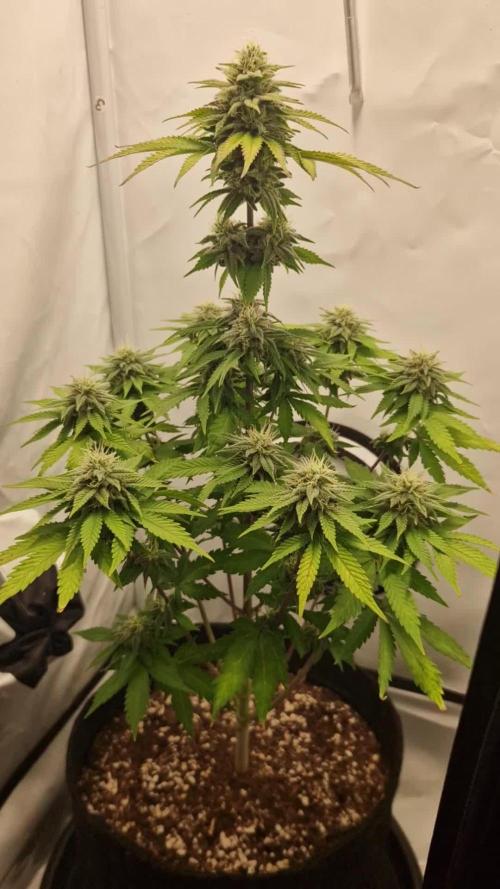
Bought Epsom salt to counter the developing magnesium deficiency. Removed a few fan leaves that didn’t recover. During Week 9 the aroma intensified significantly. Opening the tent now fills the entire room with a strong sour scent.

Likes
5
Share

@GERGrowDesigns
Follow
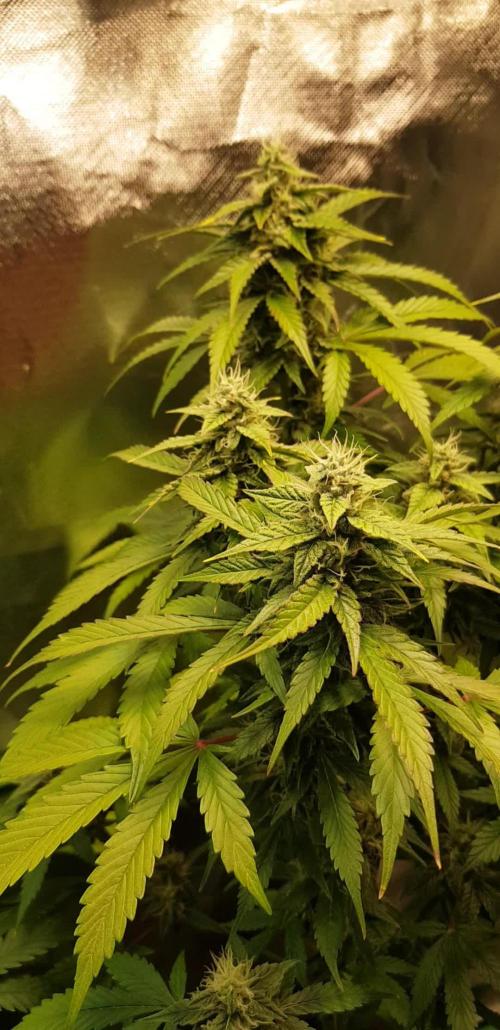
GERGrowDesigns Welcome to Flower Week 2-3 of Divine Seeds Auto AK-47 XL
I'm excited to share my grow journey with you all as part of the Divine Seeds Autoflowering Competition 2025. It's going to be an incredible ride, full of learning, growing, and connecting with fellow growers from all around the world!
For this competition, I’ve chosen the Feminized Automatic strain: Auto AK-47 XL
Here’s what I’m working with:
• 🌱 Tent: 120x60x80
• 🧑🌾 Breeder Company: Divine Seeds
• 💧 Humidity Range: 60
• ⏳ Flowering Time: 59Days
• Strain Info: 21-24%THC
• 🌡️ Temperature: 26
• 🍵 Pot Size: 0.5l
• Nutrient Brand: Narcos
• ⚡ Lights : 200W x 2
A huge thank you to Divine Seeds for allowing me to be a part of this amazing competition and Sponsoring the Strains. Big thanks for supporting the grower community worldwide! Your genetics and passion speak for themselves!
I would truly appreciate every bit of feedback, help, questions, or discussions – and of course, your likes and interactions mean the world to me as I try to stand out in this exciting competition!
Let’s grow together – and don’t forget to stop by again to see the latest updates!
Happy growing!
Stay lifted and stay curious!
Peace & Buds!


Likes
2
Share


@Scannr
Follow
It was harvested slowly. First up bud and 3-4 days later down bud harvested. Very nice harvested
Likes
9
Share


@SoulGrownBotanicals
Follow
Another good week. She started to flower. I missed a watering or 2 but she came right back. She's happy so I'm happy.

Likes
1
Share


@Skinnytalls420
Follow
#1-03/02/23 the first one to come down!!! Will update as I chop them down!!!
Likes
19
Share


@GR0WER
Follow
Hello, my growing friend! I'm downloading new photos and day comments every new day, so go back and see full last week diary right now!
---------------
New week starts.
🌞12.12.2022
My girls looks healthier then ever after I flushed them both with 'GHE Clean' solution and gave them 75% of nutrient's 'Pre flowering' doze. I hope this trend will last till the very end of this run. Flowering in progress!
I sprayed them with 'SeaWeed' as usual and that's all for today's treat.
🌞13.12.2022
Today I watered my babies with 75% of 'GHE' nutrients plus 'Advanced PK' in a half of recommended doze. Their leaves looking downwards after the lights was ON and i think it's because of poore watering cycle or it's overheating. I increased lamp to plant distance to 40cm. I'll try to water them more often from now.
I sprayed them with 'GHE Protect' solution to stimulate immune system and it's a last time i using this nutrient.
Upd: 10hrs after watering they looks fantastic. It was water deficit. Flowers developing and smell increased.
🌞14.12.2022
I think my ladies like PK complex i gave them yesturday. Plus 2cm per 24hrs. More stigmas. Healthier look.
Ph don't want to go down, it stays ~7 ignoring sulfur I putted in substrate two waterings ago.
'SeaWeed' spraying today and nothing more.
🌞15.12.2022
+1cm today.
I changed girls diet.
Now they'll take 'GHE SeaWeed' with water directly. Plus 'Advanced PK' in a 80% of recommended dose. Also I stopped giving them 'GHE Mineral Magic' and 'GHE Diamond Nectar'. They aren't necessery when flowering in progress. All other nutrients ('GHE Flora TriPart', 'GHE O.G.Bloom') - goes in amount of 75% from recommended doze. I don't want to overfeed my babies. Also, EC of solution is ~1.2 as well. PPM is 830. I think this are max numbers to reach.
They were good sprayed with 'GHE Protect' once more. I'll spray them with pure water from now.
Upd: Before watering all leaves are bent down (I watering my plants every 48hrs) and they are rising up in a couple hours after the procedure. I need to water them more often, but I have my job wich cause me to hold some steady watering periods. I'll wait some time more and then will shorten watering time to once per day graphic.
🌞16.12.2022
And again +1cm per 24hrs.
It's nothing planned for today, only clean water spraing.
Watering stays for tomorrow.
I turned ON my main ventilation with two charcoal filters. There is no signs of a smell now, but it's too noisy. It's like a car engine running near my bed all the time. Well, I need to sacrifice something to get good results...
I love how my BPPa#2 looks. It's big and bushy. Now You can clearly see it's future bud brunches and I'm really satisfied with it growth. #1 is much smaller and it forming not so much yields. There are signs of overfeeding on it's leaves and that's why it goes like this. I think #1 was too small when i started feed them bouth in a 'pre flowering' mode. #2 swallowed it, but #1 couldn't.
I think she'll made it, with slightly smaller size, but as delicious as #2 will be.
🌞17.12.2022
I fed my girls with a seme mixture without 'G.H.Bloom' since it is bloom activator. It was really hard, because I got ill yesturday and have 38° temperature. But feeding is feeding. And clean water spraying, of course.
Upd: +4cm per 36hrs (I forgot to do mesurments in the morning).
🌞18.12.2022
Nothing special today, only fresh water spraing.
+1cm per 12hrs (almost 2cm)
My BPPa#1 and #2 looks different. #2 already has violet colour in its stigmas nodes. #1 all white and it has smaller hight (20cm, and #2 has 28cm). It looks like different strain. I don't think it is so, but interested, why.
------------------------
Week ends.

Processing
Likes
4
Share


Likes
123
Share


@MrHightimes
Follow
I just cant get over how well things are going!!!! I've come so far in only 3 generations of plants!
Today I did my FIRST DEFOLIATION EVER!!!!! It went so well!!! Shout out to Bill Ward for having some good views to brush up on!
My first grow I didnt have enough leaves to defol and last grow I was to scared to lol. This time I made them my bitch!!!! It was EASY!
NEVER BE AFRAID OF YOUR PLANTS!!!!
I'm tinkering with the light so they aren't super happy atm. I turned on the exhaust and the Vaporizer. I also raised the light to 2ft and will try to consistently keep the light at that distance.
I bumped up the nuets to 2ml. I'm a little lower than my schedule called for but i might bump it this week. Gonna watch the ladies!
I tested the runoff and its 6.1, perfect. Starting to see how the plant is gonna look.
__________________________________________________________________________________________
The plants came down with some spots. i did some reading and i came to the conclusion that they needed a bit more cal-mag. I also had noticed some of the newer growth had reddish stems too. I checked my discords and that's what they thought too!!! I was going to bump it anyway bc I've seen alot of diaries on here with ALOT more Cal-mag than me.
Otherwise they look great! I got them out tonight for a light watering and noticed they had grown like 4or5 inches! Go Baby Go!
__________________________________________________________________________________________
I fed them this evening and gave them a small haircut for some light penetration. I put a few spacers in that I printed and they seemed to help salvage my LST. I think the stakes dont hold up to the plant. Next Grow I will use wire. Still monitoring the leaves and while its slowly spreading I don't think I will see the effects of the extra calmag for a while. I have double downed on my videos, working on editing and hope to really develop my dairies!
__________________________________________________________________
Things are going great as we wrap up the week. The plants are almost fighting for space in the tent, and i'm dialing in how much water the pots hold, I think this is the sweet spot size. Defoliated about 20 leaves, just a trim and tuck. I didn't do well at LST at all this round, i noticed all the main stems are ramrod straight, but using the spacers seems to be making the plants into pretty nice lil trees. I think the best part is right around the corner!!! Its about to get very pretty up in there!
Likes
101
Share


@biggreens420
Follow
Just started showing hairs she's doing well and looking like she's gonna be a nice yielder hope the nodes keep tight during stretch did a bit of defoliation added sumo boost to the mix a good week so far will upload some better pics soon thanks for reading happy growing guys ....more pics on 10/10


Likes
10
Share


@HeartStrong_Garden
Follow
This really is a beast. I just defoliated the bottom third or so and a set of the top fan leaves every week. She got put on 12/12 a few days ago and now I'm seeing flowering hairs

Likes
5
Share


@GrownyStark
Follow
This one tall. I'm bending the branches so it doesn't get so close to light. I think it is done stretching. I was a bit rough getting the scrog on. There was a major split along the trunk. One of the tops snapped over but it didn't break off while another is holding on by threads. The canopy is a lil over 2x2 feet. I'm ordering grow tent fans because this one is taking too much space in tent. It is now within 24 inches from the light and no light or heat stress.
On the last dwy this week I added two 6 inch spiderfarmer oscillating fans: see video insert. They're literally blowing my canadian tire specials away.
Likes
24
Share


@DeepRootsGrowTrees
Follow
GORILLA COOKIES 🍪 FF/ FASTBUDS
WEEK #9 OVERALL
WEEK #8 VEG
This her last week of veg she getting flipped to 12/12 to start the flower phase is that's time. She didn't have any issues during the VEG cycle!! Stay Growing!!
Thanks for stopping by and taking a look!!
Thank you FASTBUDS!!
GORILLA COOKIES 🍪 FF/FASTBUDS
Likes
95
Share


@Natrona
Follow
Auto Black Opium
👉Sponsored Grow👈
W6 F1
Black Opium grew 3 inches again this week and is now 11 inches tall. Because I have iridium and copper in the water, the ph meter fluctuates due to breaking bonds between the hydrogen and oxygen. The fluctuation range I see is between 6.4 and 6.9 so I’m reporting 6.6. So far, I don’t see any negative effects of the iridium & copper on the plant.
The soil base is Happy Frog, Coast of Maine, Mushroom Compost and Super Soil. I’m giving only ph water to her for this grow. I defoliated 8 large fan leaves to open up the center. I gave 2 liters of ph 6.6 PPM 376 at 66.7f twice this week
As always, thank you all for stopping by, for the likes and most of all growers’ love and support.
Stay green, growers love 💚🌿
💫Natrona💫
Likes
2
Share


@Hydro_sweetness
Follow
Hey welcome back in the 7th week of flowering with the Dutch Passion’s Brooklyn Sunrise.
This week the ladies are doing pretty well after giving giving them some PK 13-14 extra.
You can really see that they are also finaly swelling and some of them just exploded!
I will continue the normal feeding schedule from now on again.
That’s it for now see you all next week!

Likes
14
Share


@danwho
Follow
10/6/2024
Starting to reduce PPM in the reservoir with just pH-adjusted water. Buds are putting on some weight now! Lights are turned up to 95% and raised the one directly over the plant to another inch or so. Recorded daytime air temperature in the tent is around 83F, leaf temperature is 78F. Keeping humidity around 50-55% in the tent. Lung room is set to 45% humidity.
10/8/2024
Noticed some potential light bleaching from the lights likely being too close at too high of an intensity. Backed them down to 90% and will likely remain there for the rest of the week. Some minor nutrient issues showing up with black tips and mild rust spotting on larger fan leaves, maybe early fade, but likely a slight deficiency with a slight p/k excess.
Pumped off 2 gallons of reservoir to replace with fresh nutrient solution.
10/9/2024
Plants are showing signs of fade already as mentioned yesterday. Daytime air temps are rising in the tent due to outdoor temps falling and indoor AC not running consistently. I am ok with daytime temps rising to about 82-84F as long as the bud/leaf temperatures stay closer to 80F. Running humidity as low as I am (40-50%) is increasing the VPD (up to 1.8-2.0) on the plants considerably during the daytime. I am glad I left as much plant material as I did as it is helping considerably during these high VPD windows.
The smell is amazingly strong with notes of fruit, pine, and a few notes of diesel coming through. Super pungent!


Likes
141
Share


@1Right_Angle
Follow
July 4th
*** PurpsBerry is in Flower ***
- calling this week-2 Flower because her Branches are covered in them. Yes it brings questions into the genetics… here in week 14 of Veg… at least we will have something to smoke while Harvesting the rest
- on July 2 purpsberry had the soil amended to Bloom Fertilizers, Compost, worm castings etc and her next meal is Bloom nutes
- rOOF95, CloudWalker will drink on some Root Boost when they are next thirsty (6th, fed)
8th
- PurpsBerry was fed 2 gallons and Bloom Microbes were used for the first time. Diet change here we go

Likes
30
Share


@Togoutouseg
Follow
Variété parfaite pour les débutants. Les plantes sont très résistantes aux chocs de température et d'humidité. Elles donnent des rendements satisfaisants et un goût agréable. La runtz a une odeur très sucrée, presque comme un gâteau, je n'avais jamais senti une plante avec une odeur pareille, c'est très agréable. Les plants étaient tous petit, 50 centimètres environ, et n'avaient pas beaucoup d'odeur pendant la floraison, c'est parfait si vous voulez être discret. Concernant les effets, on voit bien que c'est une souche 50% sativa 50% indica. Au début les effets sont euphorisants, elle provoque des rires, mais par la suite et donne un bon effet analgésique, parfait pour aller dormir, je n'ai pas trop de flow de pensé avec et c'est très agréable pour se détendre. J'ai obtenu 34g et 45g sachant que j'ai eu pas mal de problèmes.
