






@Jays_Not_Here_Man
Volgen
Girls have exploded into flower! They had a big stretch and have started stacking very nicely. Flower came so fast, they are showing a slight phosphorus need, and perhaps a bit more cal/Mag to help with uptake and such. I’ve been introducing the Clyde nutrients slowly to try and avoid burn, but I clearly need a bit more. I am liking the results overall though. Happy Gardening 🇨🇦❤️🌱😎💨


@Maggie_de_Block
Volgen
Recovered nicely from last week's defoliation, defoliated a lil again to expose top bud sites.
Think she's completely finished stretching now
Starting to smell a little bit as well

shorts_status_processing


@MG2009
Volgen
These girls sprouted and then had no light for 2 and a half days, so a little leggy. Put them under 25% power LED to see how they respond will increase as needed over next few days, to 100% blue spectrum.. The genetics are either, selfed (G T H), or stray Skywalker that also selfed.. Soo a selfed GTH or sky ghost train. I think I like the possibilities.🙏
03/27/2018 Day 6, 100% blue spectrum, 25% red, perking up watered.


@lotero
Volgen
Las amnesia están malitas. Ns exactamente por qué es. El único fallo que creo haber cometido ha sido regar de más, supurando por abajo un par de veces.
He regado cada 4-5 días (muy poco) así q ns si el sustrato está muy compacto y por eso no traga ni como airearlo




@eldruida_lamota
Volgen
Vamos familia, actualizamos la segunda semana de floración de estas Sagrada amnesia de Seedstockers, salieron las 5 de 5, 100% ratio éxito.
Aplicamos varios productos de Agrobeta, que son increíbles para aportar una buena alimentación a las plantas.
Temperatura y humedad dentro de los rangos correctos dentro de la etapa de floración.
La tierra utilizada es al mix top crop, por cambiar.
De 5 ejemplares seleccioné los 3 mejores para completar el indoor y trasplanté directamente a macetas de 7 litros, el fotoperiodo a 12/12, también aplique una buena poda de bajos, se ven bien sanas las plantas, tienen un buen color y progresan a muy buen ritmo por el momento, ya empiezan a formarse las flores.
Agrobeta:
https://www.agrobeta.com/agrobetatiendaonline/36-abonos-canamo
Hasta aquí todo, Buenos humos 💨💨💨


@maelxich
Volgen
Photo/video dump. Week 8 of flower. The GSC and Durban Poison are coming along slowly in the back but the Runtz X Layer Cake and London Pound D Wedding Tree are dominating the front.
Can’t wait to chop these. Few more weeks… gonna be a lovely 4th of July🔥






@Ultraviolet
Volgen
What's in the soil? What's not in the soil would be an easier question to answer. 16-18 DLI @ the minute. +++ as she grows.
Probably not recommended, but to get to where it needs to be, I need to start now.
Vegetative @1400ppm 0.8–1.2 kPa 80–86°F (26.7–30°C) 65–75%, LST Day 10, Fim'd Day 11
CEC (Cation Exchange Capacity):
This is a measure of a soil's ability to hold and exchange positively charged nutrients, like calcium, magnesium, and potassium. Soils with high CEC (more clay and organic matter) have more negative charges that attract and hold these essential nutrients, preventing them from leaching away.
Biochar is highly efficient at increasing cation exchange capacity (CEC) compared to many other amendments. Biochar's high CEC potential stems from its negatively charged functional groups, and studies show it can increase CEC by over 90%. Amendments like compost also increase CEC but are often more prone to rapid biodegradation, which can make biochar's effect more long-lasting. biochar acts as a long-lasting Cation Exchange Capacity (CEC) enhancer because its porous, carbon-rich structure provides sites for nutrients to bind to, effectively improving nutrient retention in soil without relying on the short-term benefits of fresh organic matter like compost or manure. Biochar's stability means these benefits last much longer than those from traditional organic amendments, making it a sustainable way to improve soil fertility, water retention, and structure over time. Needs to be charged first, similar to Coco, or it will immobilize cations, but at a much higher ratio.
a high cation exchange capacity (CEC) results in a high buffer protection, meaning the soil can better resist changes in pH and nutrient availability. This is because a high CEC soil has more negatively charged sites to hold onto essential positively charged nutrients, like calcium and magnesium, and to buffer against acid ions, such as hydrogen.
EC (Electrical Conductivity):
This measures the amount of soluble salts in the soil. High EC levels indicate a high concentration of dissolved salts and can be a sign of potential salinity issues that can harm plants.
The stored cations associated with a medium's cation exchange capacity (CEC) do not directly contribute to a real-time electrical conductivity (EC) reading. A real-time EC measurement reflects only the concentration of free, dissolved salt ions in the water solution within the medium.
98% of a plants nutrients comes directly from the water solution.
2% come directly from soil particles.
CEC is a mediums storage capacity for cations. These stored cations do not contribute to a mediums EC directly.
Electrical Conductivity (EC) does not measure salt ions adsorbed (stored) onto a Cation Exchange Capacity (CEC) site, as EC measures the conductivity of ions in solution within a soil or water sample, not those held on soil particles.
A medium releases stored cations to water by ion exchange, where a new, more desirable ion from the water solution temporarily displaces the stored cation from the medium's surface, a process also seen in plants absorbing nutrients via mass flow. For example, in water softeners, sodium ions are released from resin beads to bond with the medium's surface, displacing calcium and magnesium ions which then enter the water. This same principle applies when plants take up nutrients from the soil solution: the cations are released from the soil particles into the water in response to a concentration equilibrium, and then moved to the root surface via mass flow.
An example of ion exchange within the context of Cation Exchange Capacity (CEC) is a soil particle with a negative charge attracting and holding positively charged nutrient ions, like potassium (K+) or calcium (Ca2+), and then exchanging them for other positive ions present in the soil solution. For instance, a negatively charged clay particle in soil can hold a K+ ion and later release it to a plant's roots when a different cation, such as calcium (Ca2+), is abundant and replaces the potassium. This process of holding and swapping positively charged ions is fundamental to soil fertility, as it provides plants with essential nutrients.
Negative charges on soil particles: Soil particles, particularly clay and organic matter, have negatively charged surfaces due to their chemical structure.
Attraction of cations: These negative charges attract and hold positively charged ions, or cations, such as:
Potassium (K+)
Calcium (Ca2+)
Magnesium (Mg2+)
Sodium (Na+)
Ammonium (NH4+)
Plant roots excrete hydrogen ions (H+) through the action of proton pumps embedded in the root cell membranes, which use ATP (energy) to actively transport H+ ions from inside the root cell into the surrounding soil. This process lowers the pH of the soil, which helps to make certain mineral nutrients, such as iron, more available for uptake by the plant.
Mechanism of H+ Excretion
Proton Pumps: Root cells contain specialized proteins called proton pumps (H+-ATPases) in their cell membranes.
Active Transport: These proton pumps use energy from ATP to actively move H+ ions from the cytoplasm of the root cell into the soil, against their concentration gradient.
Role in pH Regulation: This active excretion of H+ is a major way plants regulate their internal cytoplasmic pH.
Nutrient Availability: The resulting decrease in soil pH makes certain essential mineral nutrients, like iron, more soluble and available for the root cells to absorb.
Ion Exchange: The H+ ions also displace positively charged mineral cations from the soil particles, making them available for uptake.
Iron Uptake: In response to iron deficiency stress, plants enhance H+ excretion and reductant release to lower the pH and convert Fe3+ to the more available form Fe2+. The altered pH can influence the activity and composition of beneficial microbes in the soil. The H+ gradient created by the proton pumps can also be used for other vital cell functions, such as ATP synthesis and the transport of other solutes. The hydrogen ions (H+) excreted during photosynthesis come from the splitting of water molecules. This splitting, called photolysis, occurs in Photosystem II to replace the electrons used in the light-dependent reactions. The released hydrogen ions are then pumped into the thylakoid lumen, creating a proton gradient that drives ATP synthesis.
Plants release hydrogen ions (H+) from their roots into the soil, a process that occurs in conjunction with nutrient uptake and photosynthesis. These H+ ions compete with mineral cations for the negatively charged sites on soil particles, a phenomenon known as cation exchange. By displacing beneficial mineral cations, the excreted H+ ions make these nutrients available for the plant to absorb, which can also lower the soil pH and indirectly affect its Cation Exchange Capacity (CEC) by altering the pool of exchangeable cations in the soil solution.
Plants use proton (H+) exudation, driven by the H+-ATPase enzyme, to release H+ ions into the soil, creating a more acidic rhizosphere, which enhances nutrient availability and influences nutrient cycling processes. This acidification mobilizes insoluble nutrients like iron (Fe) by breaking them down, while also facilitating the activity of beneficial microbes involved in the nutrient cycle. Therefore, H+ exudation is a critical plant strategy for nutrient acquisition and management, allowing plants to improve their access to essential elements from the soil.
A lack of water splitting during photosynthesis can affect iron uptake because the resulting energy imbalance disrupts the plant's ability to produce ATP and NADPH, which are crucial for overall photosynthetic energy conversion and can trigger a deficiency in iron homeostasis pathways. While photosynthesis uses hydrogen ions produced from water splitting for the Calvin cycle, not to create a hydrogen gas deficiency, the overall process is sensitive to nutrient availability, and iron is essential for chloroplast function.
In photosynthesis, water is split to provide electrons to replace those lost in Photosystem II, which is triggered by light absorption. These electrons then travel along a transport chain to generate ATP (energy currency) and NADPH (reducing power). Carbon Fixation: The generated ATP and NADPH are then used to convert carbon dioxide into carbohydrates in the Calvin cycle. Impaired water splitting (via water in or out) breaks the chain reaction of photosynthesis. This leads to an imbalance in ATP and NADPH levels, which disrupts the Calvin cycle and overall energy production in the plant. Plants require a sufficient supply of essential mineral elements like iron for photosynthesis. Iron is vital for chlorophyll formation and plays a crucial role in electron transport within the chloroplasts. The complex relationship between nutrient status and photosynthesis is evident when iron deficiency can be reverted by depleting other micronutrients like manganese. This highlights how nutrient homeostasis influences photosynthetic function. A lack of adequate energy and reducing power from photosynthesis, which is directly linked to water splitting, can trigger complex adaptive responses in the plant's iron uptake and distribution systems.
Plants possess receptors called transceptors that can directly detect specific nutrient concentrations in the soil or within the plant's tissues. These receptors trigger signaling pathways, sometimes involving calcium influx or changes in protein complex activity, that then influence nutrient uptake by the roots. Plants use this information to make long-term adjustments, such as Increasing root biomass to explore more soil for nutrients. Modifying metabolic pathways to make better use of available resources. Adjusting the rate of nutrient transport into the roots. That's why I keep a high EC. Abundance resonates Abundance.


@Troll60x60
Volgen
Otra semana más de floración y las plantas presentan un evidente engorde en ellas, por el momento el clima está bastante frío y hay bastante humedad como para una fase de floración pero fuera de eso las plantas lo han sabido llevar de buena forma, ya culminamos con las fertilizaciones y solo estamos aplicando agua de bidón. Próximo semana vendré con otro informe de cómo va el cultivo, espero cosechar en unas 2 semana aproximadamente🧑🔬


@Tropicannibis_Todd
Volgen
Well growmies ive been looking forward to the bubblegum for sometime now , as the last time i grew it was like 09 and there both keeper that's for sure 👈 couldn't of asked for better Genetics 😉
The smell coming from both plants during the entire grow was just dreamy 👈....
Amazing Plants
👉 Big thanks to all my Growmies out there in GD land 👈 Much appreciated 🙏
Thanks To MarsHydro for the TS1000
👉I used NutriNPK for nutrients for my grows and welcome anyone to give them a try .👈
👉 www.nutrinpk.com 👈
NutriNPK Cal MAG 14-0-14
NutriNPK Grow 28-14-14
NutriNPK Bloom 8-20-30
NutriNPK Bloom Booster 0-52-34



@grimm420
Volgen
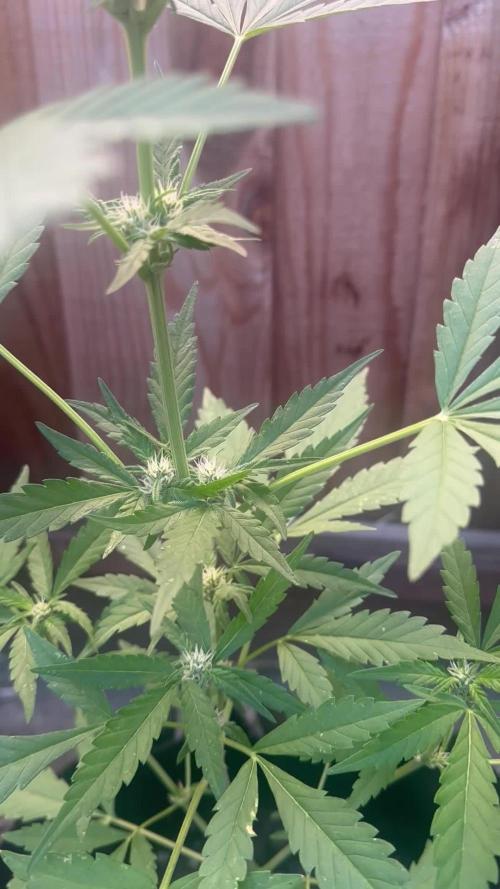
Damn, this plant is different from all the other FB autos I grew, smells nice, buds look like they will be stupid frosty. Gave it another bit of flower girl, and only r.o water for the rest of the grow!


@Mrg7667
Volgen
Still see nitrogen toxicity so im going cut biogrow down to half dose and see how it goes! Besides that all looks well
Smells are stepping it up in a couple pheno!
On the Chocolate Marshmallow side we have a intense sour fruity pebbles on a pheno that is just unreal
And on the double d side we have some rotten tooth chem smells coming through!


@carjos
Volgen
48 hours in wet paper towel, after to the coco peat pellet.
the pellets really expand, hydrate them first.
I am not trying to be an example of coco medium, this is my first time working with it, diary for documentation.
Once I had a good menu of nutrients I started to look at the coco. spent a good couple of weeks with free time to read about the coco, not as easy as prepared potting soil but a few have said it is good results once you get the hang of it. so i am set to go.
I also have one seed from a retail cannabis package. It is from GAGE - Strawberry fire OG, Packaged AUG 2020, Purchased Sept 2021. One seed inside. I will see, it is in the wet paper towel at the moment.
thanks and best to you's'
day 7 from number one sprout: I am omitting the pH down 2 feedings now, little yellow tone in the first two seedling, going to balance straight forward from now on. number one seedling has now pushed up, ready for calmag tomorrow , number two is 7 days on thursday but looking like a good push start still a bit tall although straight. i will be rotating calmag - root booster for the first week of feeding. the pH down is a powerful concentrate, 6.5 to a hard 4 with a few drops in a 4L. wow! so I am using one 4L as a pH down to get a rusty orange (that is on pH water drops for the feedings). I have not tested but I think the root booster and calmag will pH down as is, so I am looking to pre-mix each in separate 4L. (20-12-21 4:20PM)
** interesting observation - I am used to wet paper towel to (as some say ) "pop the seed" which in my experience results in a tail like growth, (that is a few drops of water on seed between paper towel between saucers). but with a cup of slightly warmer than room temperature water covered in foil, the result was a seed split down the middle like a clam looks. ok thanks! - number three was germinated in cup of water.


@mikheil007
Volgen
In my opinion it's last week for Girl Scout Cookies Auto and for Power Plant Auto tilll harvest, how do you think?? Vanilla Latte Auto is on it's 3rd week of flowering period and is very strong and beautifull plant


@DrBud420
Volgen
02.11.'24
After 5 days of drying, this little girl who was a little bigger than a meter gave 950 grams and a little bit of popcorn...this picking was 870 and a little bit of popcorn, and 4-5 weeks ago during a storm, one branch broke, which yielded about 100, but let's say 80 for sure, a total of 950 grams of beautiful, huge, potent buds


@Nuggetnerd_420
Volgen
She has already tripled in size during stretch and is still going in getting pretty excited about this pheno …
My own blended recycled living soil water passion love & respect only.
...... added soil biology includes Wallace wonder organics myco fungi .. extreme gardening AZOS ... and synergro ... along with my own farmed castings also inoculated
500wQB running at 300w


@GODSGIFT_2005_JM
Volgen
🥊
🍼Greenhouse Feeding BioGrow & Bio Enhancer
⛺️MARSHYDRO
The ⛺️ has a small door 🚪 on the sides which is useful for mid section groom room work. 🤩
☀️ MARSHYDRO FC 3000 LED 300W
☀️Also special thanks to VIPERSPECTRA P2000 (200W) & XS2000(240w) LED growlights
🌱 FASTBUDS 420



@WhiteboyCanGrow
Volgen
Week 6 of flower. The tent smells exactly the same as my Jelly donutz smell. Literal identical smell so far. I love it but I’m excited to smell something new in the tent 👏👏


@HoddZ
Volgen
Not much happening this week. Unfortunately i may have overfed PK as thought the bottle said 7ml per L but instead was 0.7ml. Noticed tips of leaves the next day browning so checked the feed chart again and pretty much shit myself. Flushed all 3 plants for about 5 mins and now they seem ok hopefully.