Check the winners The Grow Awards 2026 🏆
Likes
Comments
Share
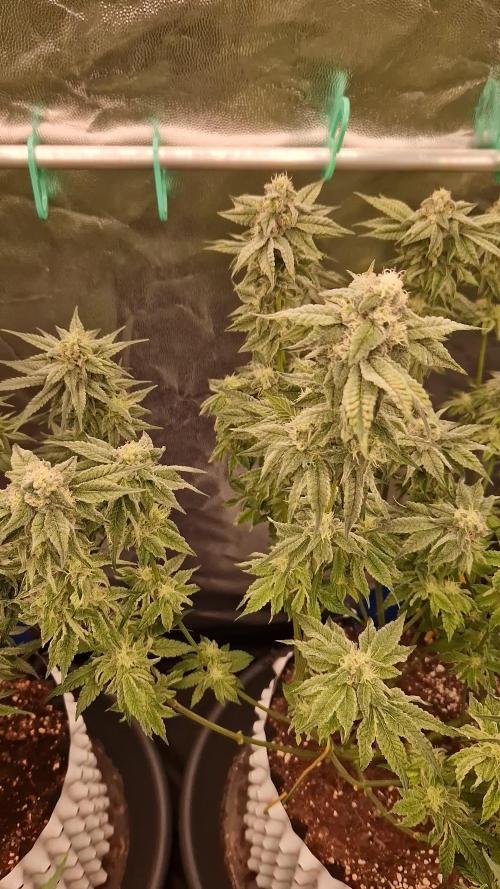
Da die Ladys echt viel Biomasse hatten, hab ich das Netz rausgenommen, um alle Ladys nochmal zu defolieren. Die Punch Pie... mein neues Problemkind. Der Pheno scheint versagt zu haben.... ein Bud fängt an zu bleachen... und ich hab 9x Nanner-Säcke gefunden. Eine Zwitterdame... an sich war ich echt zufrieden mit ihren Wuchs und ihren Buds... aber sowas ist natürlich wieder scheiße.
Processing
Likes
7
Share
Welcome to my FastBuds GSC grow-off diary! I plan on growing 2 seeds from the same package - one using a 950ml Gatorade bottle dwc system, and the other sharing a 64L reservior DWC. I'll grow them both while trying to be as simiar in techique as i can, but i'm more interested in how the 950ml does, so might not be super picky about doing things exactly the same, heh. I'm making this all up as I go! Enjoy the ride! Week 0 ====== Day 0.1 - 2 seeds in water for 24hrs Day 0.2- 2 Seeds in wet paper towel, in a plastic bag for 24-48hrs until taproot is out Day 0.3 - 24hrs later - one seed has sprouted a tail Day 0.4 - 2nd seed sprouted tail; put both seeds into rockwool Day 0.5 - 1st seed sprouted from rockwool Day 0.6 - 1st seed doing well, 2nd seed no change Day 0.7 - Checked 2nd seed and hasn't budged, so it's a dud. Started a new seed (had 3 GSC, so all good!) Day 0.8 - 1st seed into the 1L DWC bottle! Day 0.10 - 3rd seed germinated - into rockwool to sprout. DWC Prototype ----------------- - 950ml Gatorade Bottle - 2x small air stones - 1/2" overflow tube where i want the water level to be - Nutrient top-feed line The reservoir below is 19L (~15L of solution) with a small 80gph water pump on lowest setting, which will be on a timer for 15 mins every 3 hours (at first - we'll see how that goes). The water pumps nutrient solution up to the Gatorade bottle and the overflow goes back down into the reservoir.
Likes
Comments
Share

Tag 44 : - Umzug ins neue Zelt - VPD auf 1,0 gestellt Tag 45 : - gegossen mit 4,5 Liter (Grow-Mischung) - erster Drain = 2,9 EC 5,95 PH - ins Scrognetz eingearbeitet Tag 47 : - Untere Triebe + Sonnenblätter entfernt - IPW Anwendung (1ml auf 1 Liter) - gegossen mit 4,5 Liter (Grow Mischung) - Drain = 3,63 EC 5,61 PH Tag 48 : (450 PPFD) - Blätter und Triebe entfernt
Likes
27
Share
Hallo Growlegen, wir zählen Blüte Tag 10 und den Blümchen geht's soweit sehr gut 😁 Sie messen jetzt ca 85 cm 📏 Beide wachsen ähnlich, die Gushers hat etwas längere Internodien und Frau Kush ist etwas kompakter und buschiger. Beide haben leichte gelbe Spitzen, aber mein VPD ist auch nicht ideal. 😞 Der PPFD liegt erst bei ca.650 und Lampe bei 60 %- da müsste eigentlich noch was gehen, oder was meint ihr ? ☀️🌤️⛅🌥️ Ein einziges Blatt der Gushers zeigt etwas Calmag Mangel - aber sonst nix zu sehen außer die typische Blüteaufhellung. Der Stretch der letzten Tage war schon ordentlich, aber noch passt die Höhe ✅ Wir freuen uns alle schon auf den Friseur Termin in nächster Zeit (noch 11 Tage Geduld), da muss dringend gestutzt werden im Unterholz ✂️ Grüne Grüße Rocko 💚
Likes
6
Share
@Thckaos
Follow
19-08-20 Se cambia de solución y se lava las raíces. Se baja 0.2 ms y PH 6.5. Luego se vuelve alimentar con una solución como hay en los datos de esta semana. Se realiza los siguientes entrenamientos: Planta 1: Supercroping, LST y scrog Planta 2: Apical, Scrog y LST Planta 3: LST y Scrog 21-08-20: PH: 5.8 Conduc: 1.35 ms 23-08-20: PH: 6.03 Conduc: 1.61 ms Sigo aplicando LST para intentar cubrir la mayor superficie
Likes
19
Share
Day 55 ( corrected) : Wow these ladies like to grow. This last week has them all packing their bud sites , ready for the burst of building them. I have included the pk warrior to the Mc feeds to see how it affects them. It is a complete feed bit you can add things if you balance them properly. I am hoping about 4 weeks left but think they will be done by mid January , day 77 mark. Their bud development is where I would expect it to be in a photoperiod grow so i dont feel so out of my zone now. They smell amazingly like their names says they do and at this early stage , i cannot wait to smell them near their finish. The odd girl who was mottled green has gone crazy for bud developments and has them from base to her whole 1.2m heights. Their look doesnt seem to be affecting her ability to grow buds. The small girl is looking cramped in and when I take the 2 finishing strains out , she will get prime position and a staking out for her last 3 weeks of pure light. The LOS girl is the clear leader with this strains side by side and I wonder how much the damage to number 2 has impaired its keeping up with the LOS.
Likes
8
Share
Estamos cursando el día 11 desde el brote. Tienen buena pinta. Sin duda revisaré el Ph del agua de riego.. tengo la impresión de que está un poco alto. Continuamos fertilizando lo mínimo. 100 ml en cada maceta cada riego. Buenos humos 💨
Likes
11
Share
Our Zamnesia photoperiod plants have also started their journey into the magical flowering period, this is the first week. ---- The general environmental conditions are good, the heat has increased a bit again but for the first weeks of flowering it is not a big problem, let's remember to never exceed 27 degrees centigrade in the last 4 weeks to avoid jeopardizing the quality of the flowers. If necessary, open the growbox but never let it exceed 27-30 degrees where 30 is already a lot. The good thing is that as soon as the lights are turned off the change is already visible a bit and as autumn progresses we will also improve. The humidity is fluctuating but we try to control it with two dehumidifiers when necessary, pushing both possibly not into the growbox but directly into the room. (I dehumidify the room and the air in the growbox should also be dehumidified) - Here we are at a top secret level so I can tell you that she is called XXX Test 1 and we really like how she climbs up. In fact they are because one is climbing up straight nice and fast too, the other was worked with a topping and let's see how it ends. --- Feeding Program - The fertilizers are always Plagron and I am following the table that I generated on the site depending on the substrate chosen. Create your card and follow it, never be presumptuous my friend as I have been in the past, follow the card and look at the plants, not all need the same amount of fertilizer. We have arrived at the moment to give a good dose of ferrò in the first weeks of flowering, already of race life not sprayed but mixed with fertilizers. ---- https://plagron.com/en - Power Roots - 1ml/l - Alga Bloom - 4 ml/l - Pure Zym - 1 ml/l - Sugar Royal - 1ml/l - Vita Race - 5 ml/l --- Dehumidifier is now running between 50% - 55 % --- The 100% Organic pack by Plagron can be found on Zamnesia at the link: https://www.zamnesia.io/it/11457 -pla gron-easy-pack-natural.html --- We have removed the deumi diifier and now the values ​​​​range from 45 to 60% we will put the dehumidifiers into operation in the 3/4 week of bloom - Get a seed of this fantastic strain --- new strain coming soon no strain description becouse is a secret - Soil and Fertilizers entirely organic -- https://plagron.com/en buy on www.zamnesia.io - air system --- https://www.secretjardin.com/ - Growbox & Light —— www.Marshydro.eu - Music and sound --- I made my girls listen to 432hz frequencies and music from www.radionula.com - Z --- You can find these seeds, much more from the world of cannabis, mushrooms and an incredible series of accessories and gadgets on the reference site not only mine but of many growers —— https://www .zamnesia.io
Likes
3
Share
Transplanted her to a 5 gallon pot. Gave her some root stimulator, fed her some nitrogen and just look how lovely they are taking off, my plans are to veg her for a very long time.
Likes
11
Share
Likes
5
Share
@Rizza78
Follow
Smooth few days after the defoliations. They seem to be happy. Malted Milk can be very temperamental but I have been catching on to her ways. Still wary with my feedings tho. Want to give all these different nutes and unknown what the results will be? Installed ac units in each room to ensure good temperatures and RH outside the tents. Hoping for another good week!
Processing
Likes
15
Share
@MG2009
Follow
06/02/2020 Gonna feed them today 1tbls of blood meal. I snapped a branch on #2 (see video) her stems, I don't like break to easy so I will give some micro nutrients to help stems from breaking. Unless she is the HOLY GRAIL. I will cull her clone. All others handed super cropping well. 🙏 #4 in hydro is in it's own diary called Small Batch Seed making some F1 #1 showed her sex today, clones well took cut on 05/20/2020 is rooting well outside in coco coir, in humidity dome just cut and scrape the stem,once rooted I cut off yellowing leaves i hope her smoke is as good as she looks. 5 days into week 10 and #2, and #4 are male so indoors they go for pollen collection. Will dust one bud of each female with each male and hunt for what I want. Also see what each passes on in the cross.
Likes
5
Share
Boy with the temperatures being so good in my basement I had a tough few weeks with this girl . She still faired better then her friend gelato41 , I had ph issues and temps fluctuating , and the lack of time as my kids and wife have been sick with the flu for a week and I'm full time Midnight's ...dam never thought growing could be such a challenge sometimes both physically and mentally... With things back on track in my home life and growing world I can't wait to see how my first few weeks of flowering goes wish us luck canna family cheers ...
Likes
151
Share
@CANNASIM
Follow
------GENERAL COMMENT------ As planed I lowered the base nutrient to 2ml, and took a break from Cal Mag, to release the N a bit, green is on point now. Tomorrow will catch up with the Cal Mag schedule as usual. Time for some overdrive, for the rest all good, girls are developing well and buds are getting bigger, no issues. Smelling delicious! Hope I had some Terpinator to give a go... ------SM.BB COMMENT------ BB is maturing faster you already can see I have cloudy Trichomes, she will be a fast finisher as it looks like...
Likes
2
Share
@dwotTV
Follow
Into Week 8 now and really filling out. A good solid healthy outdoor plant with little to no extra care or intervention so far, really happy with it and excited to see how it finishes out. Scratched in some Coast of Maine Fish Bone Meal toward the end of the week and then lightly watered in for a little feed.
Likes
49
Share
@Roberts
Follow
I had a horrible germination rate then the seedling I finally got was very weak. So I made the best of it, and finished the grow. Frosty buds nice color. Great smell. The Gen 1:11 nutrition works good. Was just the first time using it in DWC. Good looking nugs. Just not one of my best grows. Thank you Mars Hydro, Gen1:11, and Humboldt seed company. 🤜🏻🤛🏻🌱🌱🌱 Thank you grow diaries community for the 👇likes👇, follows, comments, and subscriptions on my YouTube channel👇. ❄️🌱🍻 Happy Growing 🌱🌱🌱 https://youtube.com/channel/UCAhN7yRzWLpcaRHhMIQ7X4g
Likes
3
Share
@PapaTerps
Follow
Black Cherry Gushers - Barney's Farm x Backpack Boyz Day 80 - Watered with 3 litres of RO tap water, with defined nutrients, pH'd to 6.3. She has stopped stretching and is now focusing on developing her flower, and her smell is starting to shine; sweet floral. She has a a nice structure, but she is a little bushy as the top, which will reduce the light penetration just below the canopy, so I have added under canopy lighting to supplement this. Notes: - She has been moved into the 3x3 on a 12 hour light schedule, to give her more space. - I have added under canopy lights to help increase the PPFD at the lower bud sites.
Likes
5
Share
@CalGonJim
Follow
9/15 12AM MONDAY!!! THEY ARE ALL DOING GREAT!!! VERY HEAVY AMINOS YESTERDAY, NO DAMAGE. 9/15 11:24PM. In plant cells, glutathione S-transferases (GSTs) act as transporters, facilitating the movement of anthocyanins from the endoplasmic reticulum (ER) to the vacuole for storage, though their exact mechanism is still being studied. The synthesis of glutathione (GSH) itself occurs in the cytosol of mammalian cells through two ATP-requiring enzymatic steps, while anthocyanins are synthesized via a separate phenylpropanoid pathway 9/15 11:42PM glutathione metabolism glutathione S-transferases plantsThinkingKicking off 5 searchesLooking at 71 sitesPutting it all together In plants, glutathione S-transferases (GSTs) are a diverse family of enzymes integral to glutathione (GSH) metabolism, primarily functioning in detoxification and stress response. The core of this process involves GSTs catalyzing the conjugation of the tripeptide GSH with various toxic compounds, or xenobiotics, making them less harmful and easier to sequester or transport. Glutathione (GSH) metabolism in plants GSH metabolism is a tightly regulated process that maintains cellular redox balance and protects against stress. Biosynthesis: GSH is synthesized in two adenosine triphosphate (ATP)-dependent steps:(gamma )-Glutamylcysteine synthetase (GSH1) joins L-glutamate and L-cysteine to form (gamma )-glutamylcysteine. In Arabidopsis, this enzyme is located exclusively in the chloroplasts.Glutathione synthetase (GSH2) adds glycine to (gamma )-glutamylcysteine to produce GSH. This enzyme is found in both the cytosol and the chloroplasts.Oxidation and reduction: GSH exists in two forms: a reduced monomer (GSH) and an oxidized disulfide dimer (GSSG).Oxidation: In the process of scavenging reactive oxygen species (ROS), GSH is oxidized to GSSG.Reduction: Glutathione reductase (GR) uses NADPH to reduce GSSG back into active GSH, which is essential for maintaining a high GSH-to-GSSG ratio inside the cell.Degradation: Glutathione can be degraded in the cytosol, apoplast, and vacuoles by (gamma )-glutamyltransferases (GGTs) and other peptidases, allowing for recycling of its amino acid components.Transport and compartmentalization: While synthesis occurs in the chloroplasts and cytosol, transporters move GSH and its conjugates throughout the cell, including to the mitochondria, peroxisomes, and vacuoles. Functions of glutathione S-transferases (GSTs) GSTs are a large, ancient gene family with diverse roles that extend beyond detoxification. The primary functions involving GSH are: Detoxification of xenobiotics and heavy metals: GSTs catalyze the conjugation of the thiol group of GSH to a wide range of electrophilic and hydrophobic substrates, including herbicides, pesticides, and heavy metals. The resulting GSH-conjugates are then recognized by ATP-binding cassette (ABC) transporters and sequestered in the vacuole, reducing their cellular toxicity.Protection from oxidative stress: Stress conditions like drought, salinity, and high light increase levels of ROS, which cause lipid peroxidation. 🚨Some GST isoforms have glutathione peroxidase (GPOX) activity, using GSH to reduce toxic lipid hydroperoxides to less damaging alcohols, thereby protecting cell membranes.Defense against pathogens: During pathogen attacks, GST activity increases to detoxify microbial toxins and secondary defense-related compounds. This helps to bolster the plant's resistance response.Metabolism of endogenous compounds: GSTs play roles beyond immediate stress response by participating in the normal metabolic processes of plants. Examples include:Hormone transport: Some GSTs act as binding proteins (ligandins) that transport plant hormones like auxins within the cell.Metabolite transport: Specific GSTs facilitate the transport of important compounds like flavonoids and anthocyanin pigments into the vacuole.Tyrosine degradation: The zeta GST class (GSTZ) catalyzes a critical step in the breakdown of the amino acid tyrosine.Redox signaling: By influencing the GSH/GSSG ratio and interacting with plant hormones, GSTs can regulate cellular signaling pathways that control growth and stress response. 🚨GSTs and plant stress response The expression of many GST genes is highly inducible by various environmental and endogenous cues, making them key players in a plant's ability to adapt to adverse conditions. Abiotic stress: Drought, salinity, heavy metals, and extreme temperatures all trigger increased GST expression, which helps plants manage resulting oxidative damage. Overexpression of specific GST genes has been shown to enhance stress tolerance in transgenic plants.Herbicide resistance: The ability of crops and weeds to detoxify herbicides through GST-catalyzed conjugation is a well-studied example of GSTs in stress adaptation. Herbicide safeners, chemical agents that protect crops from herbicide injury, work by boosting the activity of these GST enzymes.Developmental processes: Studies have linked the expression of certain GST genes to specific stages of plant development, such as fruit ripening, root and stem development, and flower formation. "" 9/16 12:32am AI Overview In plants, phenylalanine is the precursor for anthocyanin synthesis, a process that involves a multistep pathway in which glutathione (GSH) plays a critical role in the transport of the final pigment to the cell vacuole. Phenylalanine initiates anthocyanin synthesis The biosynthesis of anthocyanins begins with the amino acid phenylalanine, which is produced via the shikimate pathway. The conversion process, known as the phenylpropanoid pathway, involves a series of enzymatic reactions: 1. Phenylalanine ammonia-lyase (PAL): This enzyme catalyzes the first committed step of the pathway, converting L-phenylalanine into trans-cinnamic acid. 2. Downstream enzymatic reactions: A series of additional enzymes, such as chalcone synthase and chalcone isomerase, convert the intermediate compounds into unstable anthocyanidins. 3. Glycosylation: Glycosyltransferase enzymes stabilize the anthocyanidins by adding sugar molecules, creating the final, stable anthocyanin pigments. 4. Glutathione is crucial for anthocyanin transport After synthesis, glutathione is essential for transporting anthocyanins for storage. * Glutathione S-transferases (GSTs): These enzymes bind to the newly formed anthocyanins in the cytoplasm. This binding is a key step that facilitates the transport of the anthocyanin-GST complex across the tonoplast (the vacuolar membrane) and into the vacuole. * Vacuolar storage: Once inside the vacuole, the anthocyanins accumulate and provide color to plant parts, such as flowers, fruits, and leaves. * Catalytic role: Recent research has also found that certain GSTs have a catalytic role in anthocyanin synthesis. They can catalyze a dehydration step to form specific anthocyanidins, significantly boosting production in engineered systems. * The process in summary The synthesis and accumulation of anthocyanins involve a coordinated process of multiple steps: 1. Production from phenylalanine: The amino acid phenylalanine enters the phenylpropanoid pathway, where enzymes convert it into the basic flavonoid structures. 2. Formation of anthocyanidins: Further enzymatic modifications produce the colored but unstable anthocyanidins. 3. Stabilization and transport with glutathione: These anthocyanidins are stabilized by glycosylation and then bound by GSTs (which use glutathione). This binding enables their transport into the vacuole for storage and visible pigmentation. 9/15 12:46AM https://pmc.ncbi.nlm.nih.gov/articles/PMC7238016/ 9/16 1:30AM BKO is looking great!!! Conclusion The “butter frosting” resin on Cookie Apple F1, healthy yellow-green fusiform, and Blueberry KO’s pigmented cotyledons show your anthocyanin-glutathione-phenylalanine strategy is working—phenylalanine drives synthesis, glutathione ensures transport. Tweak amino acids to 100–150 mg/L to reduce tip burn. 9/16 3:34am 9/16 4:31AM Anthocyanin glutathione synthesis phenylalanine proline tmg powder relating current project: * Phenylalanine is a precursor: Phenylalanine is an amino acid and the starting point for the phenylpropanoid pathway in plants. * Anthocyanin synthesis: This pathway creates various secondary metabolites, including the flavonoid pigments known as anthocyanins, which give plants their red, purple, and blue colors. * Pathway activation: Multiple enzymes, such as phenylalanine ammonia-lyase (PAL), catalyze the conversion of phenylalanine into the building blocks for anthocyanin. * Anthocyanin and glutathione synthesis * Glutathione S-transferase (GST): This enzyme is crucial for synthesizing anthocyanins in plants. It transports anthocyanins into the cell's vacuole for storage. * Glutathione (GSH) production: Anthocyanins can promote glutathione synthesis in certain cells. For instance, the anthocyanin cyanidin-3-O-β-glucoside (C3G) has been shown to increase the expression of glutamate-cysteine ligase (Gclc), a key enzyme in GSH synthesis. * Antioxidant effect: By upregulating GSH production, anthocyanins contribute to the antioxidant defense system, protecting cells from oxidative stress. * Proline and glutathione synthesis * Shared precursor: In some organisms, the synthesis pathways for proline and glutathione share a precursor molecule called γ-glutamyl phosphate. * Alternative pathway: Research on bacteria and yeast has revealed an alternative, trace pathway where γ-glutamyl phosphate from the proline synthesis pathway can be diverted to produce the glutathione precursor γ-glutamylcysteine. * Oxidative stress response: Studies in mouse oocytes show that supplementing with proline upregulates genes related to glutathione synthesis (Gclc and Gclm), increases glutathione levels, and reduces oxidative stress. * TMG powder, methylation, and homocysteine * Methyl donor: Trimethylglycine (TMG), or betaine, is a potent methyl donor, meaning it provides methyl groups needed for various biochemical processes in the body, including the methylation cycle. * Homocysteine regulation: One of TMG's primary functions is to convert the amino acid homocysteine into methionine. This helps regulate homocysteine levels, which is important for cardiovascular health. * TMG and proline interaction: In plants and some organisms, TMG and proline act as compatible solutes or osmoprotectants, helping cells stabilize against osmotic stress like drought or salinity. However, in human biology, TMG mainly functions through methylation, while proline is involved in different metabolic and antioxidant roles. * How they all relate The listed components are connected through several overlapping metabolic and regulatory pathways: * Anthocyanin synthesis starts with phenylalanine. * Anthocyanins can promote glutathione synthesis via upregulation of key enzymes like Gclc. * Glutathione synthesis can be influenced by the proline synthesis pathway, as they share an intermediate in some contexts. * TMG powder supports the methylation cycle, which helps regulate homocysteine levels. While TMG and proline serve similar protective roles in some organisms, their primary human metabolic functions differ, with TMG focusing on methylation and proline having distinct roles in antioxidant response and metabolism 9/17 217am Die Hard Christmas Grow 9/18, 11:34 AM. I ordered some square saucers that were cartoonishly too small but they fit inside the AC infinity germination kit and they fit with the Bud Cups perfectly really nice so it’s not a total loss. 9/18 11:45AM mix. Foliar Spray, the rest of the mix ec 0.46 Mixed up Aminos first and separate and use 16 oz for foliar spray. Then mixed up: Root: 1 mL/L Connoisseur A & B GROW, .2 mL/L CaliMagic, .2 mL/L Purpinator. Setria Glutathione: 150 mg/L(Brand: Emerald 250mg capsule.) TMG: 150 mg/L = (Brand Nutricost) Phenylalanine: 150 mg/L (Brand Nutricost) Proline: 150 mg/L (Brand Nutricost). 9/18 228PM AI Overview Glutathione influences plant colors by regulating the accumulation of pigmented compounds, primarily anthocyanins. The tripeptide accomplishes this through its role in transporting pigments within plant cells and in protecting against environmental stresses like UV radiation that can cause oxidative damage. Transporting pigments into plant cell vacuoles Glutathione works with a class of enzymes called Glutathione S-transferases (GSTs) to transport pigments like anthocyanins into the vacuole for storage. Anthocyanin transport: In plants with pigmented tissues, such as purple grapes or red flowers, glutathione-conjugated pigments are transported by GSTs across the tonoplast membrane into the vacuole. This process is crucial for the stable accumulation of pigments. Genetic manipulation: Research shows that manipulating specific GST genes can alter a plant's pigmentation. For instance, silencing a particular GST gene in purple grape hyacinths caused their petal color to shift to a lighter shade of purple. Similarly, defective GST genes in carnations resulted in pale-colored flowers. Protecting against UV light and stress Glutathione helps regulate plant pigmentation in response to environmental factors, especially UV-B radiation. Activating flavonoid production: When plants are exposed to UV light, a surge in glutathione triggers the expression of genes involved in producing flavonoids. Flavonoids, including anthocyanins, can act as protective sunscreens for the plant, and their increased synthesis and accumulation can alter visible coloration. Balancing oxidative stress: Intense UV-B radiation increases reactive oxygen species (ROS) in plants, which can cause oxidative damage. Glutathione is a master antioxidant that helps detoxify these ROS, preventing cellular damage that can affect a plant's pigment-producing mechanisms. Indirectly influencing plant colors By regulating cellular redox status and interacting with other molecules, glutathione also affects pigment expression in more indirect ways. The xanthophyll cycle: As part of a plant's antioxidant system, glutathione helps maintain the reduced state of other protective antioxidants like tocopherol and zeaxanthin. Zeaxanthin is a carotenoid pigment involved in the xanthophyll cycle, which helps dissipate excess light energy. Redox signaling: The balance between reduced glutathione (GSH) and oxidized glutathione (GSSG) is a key cellular signal for stress response. A shift in this ratio during environmental stress can influence the production of secondary metabolites like pigments, allowing the plant to adapt. " 9/19 1:41AM AI Overview The key difference is that anthocyanins are the sugar-containing form (glycosides) of pigments, while anthocyanidins are the sugar-free form (aglycones). Anthocyanidins are the foundational molecules, and when a sugar molecule attaches to them, they become anthocyanins, which are more stable and water-soluble, making them the forms found naturally in plants, such as berries and purple vegetables. Anthocyanidin (Aglycone) Structure: The basic, sugar-free molecule of the anthocyanin structure. Location: Not found freely in nature but is the core component that is then glycosylated. Properties: Color changes with pH, being visible in acidic conditions but colorless in basic conditions. Examples: Cyanidin, delphinidin, pelargonidin, peonidin, petunidin, and malvidin. Anthocyanin (Glycoside) Structure: Consists of an anthocyanidin linked to one or more sugar molecules. Location: Found in the vacuoles of plant cells. Properties: Water-soluble and are the pigments responsible for the red, purple, and blue colors in plants. Function: The sugar attached provides stability, allowing for accumulation in plants and providing antioxidant properties. Examples: Cyanidin-3-glucoside and other derivatives like acylated anthocyanins. " 9/19 2:43AM I also saw a good mans immediate accent into Heaven, that perspective matters too. no less angry about it though. 9/19 10AM Heavy Amino spray 250mg each in 1L of Setria Glutathione and Phenylalanine 9/19 10:10PM The sons and daughters of americas real terror organization carried out the last horror show, and the one before that and before that. It's not a foreign country, it's always the anti white anti human black sheets and badges that did this. 9/19 10:43PM AI Overview Phenylalanine and glutathione contribute to plant colors through different biochemical pathways . Phenylalanine is a precursor for the pigments themselves, primarily anthocyanins, while glutathione is involved in the transport and stabilization of these pigments within the plant cell. Phenylalanine: The pigment precursor The source of aromatic compounds: Phenylalanine is an aromatic amino acid and the starting compound for the phenylpropanoid pathway in plants. This pathway produces a vast number of secondary metabolites, including anthocyanins, which give many plants their red, purple, and blue colors. Color enhancement: Research has shown that increasing the amount of available phenylalanine can lead to more intense red coloration in some fruits, such as mangoes and apples. Pathway stimulation: Phenylalanine ammonia-lyase (PAL) is a key enzyme in this pathway that converts phenylalanine into precursors for anthocyanin biosynthesis. An increase in phenylalanine levels stimulates this entire process. Glutathione: The pigment transporter Anthocyanin transport: After anthocyanin pigments are synthesized in the cell's cytoplasm, they must be transported into the central vacuole for storage. Glutathione S-transferases (GSTs) are a family of enzymes that facilitate this process. Color intensity: A functional GST is essential for proper anthocyanin accumulation. Mutations in GST genes can result in a significant decrease in color intensity, as seen in the pale or white flowers of certain gentian mutants. Mechanism of action: The GST binds to the anthocyanin pigment and moves it from the cytoplasm into the vacuole. If the GST is defective, the pigment cannot be transported correctly, leading to a loss of coloration. Summary of interactions The roles of phenylalanine and glutathione are distinct but cooperative in producing plant colors: Phenylalanine provides the essential building blocks for creating the colored compounds (anthocyanins). Glutathione, with the help of GSTs, ensures these colored compounds are correctly moved to their storage location (the vacuole). This cooperative system explains why mutations or deficiencies in either process can lead to reduced or altered coloration in plants." 9/19 10:51PM AI Overview. Trimethylglycine (TMG) supports the production of glutathione, a vital antioxidant . However, there is no evidence to suggest a direct relationship between these supplements, the amino acid phenylalanine, and the colors of plants. The concepts are linked indirectly via complex biological processes. Trimethylglycine (TMG) and glutathione TMG and glutathione are connected through the body's methylation cycle. TMG as a methyl donor: TMG plays a critical role in the methylation process by donating a methyl group, which helps convert the harmful amino acid homocysteine back into methionine. Support for glutathione production: This methylation cycle, which is supported by TMG, is essential for producing glutathione. Glutathione is a powerful antioxidant that protects against cellular damage and is crucial for detoxification. Supplementation considerations: TMG supplements are sometimes taken alongside other supplements to support health, though consultation with a healthcare provider is recommended. Phenylalanine and the methylation cycle Phenylalanine is an essential amino acid, but its role is distinct from the TMG-glutathione process. Essential nutrient: Phenylalanine is a key nutrient for cellular metabolism. Potential interactions: A separate medical study on experimental hyperphenylalaninemia (abnormally high phenylalanine levels) in chicks observed a decrease in other amino acids in the brain, including those involved in the glutathione pathway. This demonstrates how excessive levels of one amino acid can potentially influence others, though this does not represent a typical interaction. Plant colors The connection between the supplements and plant colors is purely conceptual, as the colors are determined by completely different biological processes. Anthocyanins: The colors of many plants, including red, purple, and blue flowers, come from pigments called anthocyanins. Glutathione in plants: While plants contain glutathione as an antioxidant to combat stress, it influences color by regulating the transport and accumulation of anthocyanin pigments, not by being a pigment itself. TMG and phenylalanine in plants: Plants contain TMG, which functions as an osmoprotectant (protecting against osmotic stress). They also contain phenylalanine, but these substances do not directly determine the plant's visible color." 9/19 11:21PM. !!!!!! this was pointless and im dumber for having read it. !!! Light intensity and spectrum affect metabolism of glutathione and amino acids at transcriptional level: https://pmc.ncbi.nlm.nih.gov/articles/PMC6938384/ 9/20 11:08 AM the seedlings and the four autos are doing just great. The amino spray with phenylene and glutathione really had nice effects no burning nice solid growth even seedlings from basil lavender various lettuce all are perfect.🚨🚨🚨👍👍👍👍👍 9/21 2AM I AM BECOME ANTHOCYANID!!! ITS WORKING AND ON A SEEDLING I SEE THE GELATO COLLORS IN BLUEBERRY KO AND THE LEAF SHAPE OF BUBBLES BLUEBERRY,!!!
Likes
262
Share
@Ju_Bps
Follow
Hello my friends growers!👨‍🌾👨‍🌾, All was fine this week, Buds continue to grow up well 🌲, Plant look healthy and happy, I start to have a nice sweet/fruity smeel, look nice for the future weeks 😍. I give water each 2/3 days, Water + bloom tabs rqs + sugar royal 2.25l/plant Water + cannaboost 2.25l/plant Water + bloom tabs rqs PH@6 I grow in underground so, sometimes it's really difficult to regulate humidity. Average RH 65%, not really well in blooming, sometimes 50%, sometimes 80%, Hope next week will be more stables. Have a good week mate, and see you next week 🌲👊👨‍🌾💨💨
Likes
93
Share
@DreamIT
Follow
Purple Berry Kush by Spliff Seeds 🏜️23.5 As is good practice, I start by sincerely thanking Spliff Seeds for sponsoring this journal. The graphics of the seeds are very nice, I hope to hear "Timon" singing when I smoke this plant 😆 Today I put it in water for 24 hours, starting a new cycle, yeah! 🏜️24.5 I move the seed to a damp napkin. 🏜️25.5 The seed has broken and the root begins to come out. 🏜️26.5 we are about 4 millimeters. 🏜️27.5 About one centimeter 🏜️28.5 We are at 3 centimeters, tomorrow I'll put it on the ground, yeah! 🏜️29.5 I put in 0.4 liters of soil, wait for it to pop out of the ground and cover it with a plastic bag, yeah! 🤘 __________________________________________ ❓ Are you new to the world of the cultivation and don't know where to safely buy your seeds? 🦄Fast and anonymous shipping. Take a look at their very nice graphics ✅https://www.spliffseeds.nl _________________________________________________________________ 👀 Are you looking for a good lamp to start with? 👀 🌞Viparspectra has something more than the others, take a look at their site. ✅ https://bit.ly/ViparspectraXSSeries ⏩ Use "GDVIP" for an extra discount or "DREAMIT" for an extra 5 %% discount 👀 Search for it on Amazon ✅https://amzn.to/3ttb2j9 ⏩ Use the code - lt10gdvip - for an extra 10% discount 👀 Watch my ViparSpectra XS1000 unboxing on YouTube, leave a like and write to the channel 🦄 ✅http://bit.ly/UnboxingViparSpectraDreamIT __________________________________________________________________ 📷🥇 Follow the best photos on Instagram 🥇📷 https://www.instagram.com/dreamit420/ 🔻🔻Leave a comment with your opinion if you pass by here🔻🔻 🤟🦄💚 Thank you and enjoy the growth 💚🦄🤟
Processing
Likes
62
Share
Week 6 - The Purple Power Is No Longer The Tallest In The Forest But It’s Still The Prettiest. The Purple Power Has Been Dethroned By 4 Of The Other Plants. Everyone Except For The Gorilla Glue Is On Bloom Nutrients. Height: Gorilla Glue: 19 Inches Purple Power: 28 1/2 inches Girls Scout Cookies(3gal): 30 inches Lemon OG: 34 1/2 inches Girls Scout Cookies(5gal): 34 1/2 inches Stardawg: 33 1/2 inches These Plants Are All Correct Measurements Size May Look Different In Picture Because Of Pot Size.