



shorts_status_processing


@MasterB
Volgen
Had issues with wind burn on the seedlings, so adjusted the fan and seems to be much better. Also keeping an eye on ph drift and adjusting as needed. Topped up nutes to growing stage. Looking good! Topped all the total paralysis day 21





@Seedler
Volgen
WELL! What an experience.
I made some mistakes, learned a lot and still got some excellent weed out of it.
Super frosty, LOUD and SO dense it's ridiculous 😂
Sadly i got some (a lot for me) mold, i encountered for the very first time. With it being almost winter in Germany, the temps dropped really hard for some days and then even 60% humidity was too much for the strain. I also would say it isn't that resistant against mold, so just keep that in mind, the buds are so dense, it's really easy for them to trap water.
I had to throw away like 1/4 of the yield, mostly the top buds 💀 That kinda sucked, but it could be worse, it's fire weed tho, i'll add pictures of the buds later.


@NSCanna
Volgen
Compost tea turned out well, let it go for 26 hours total and geared it towards fungal. Also took some soil samples several days later around the stalks and found a lot of nematodes and protozoa which is what you want to see. Lots of different types of nematodes so what your looking for are the bacterial feeders (there are charts online that show you how to identify them). Mycorrhizae can be identified by it's dark colour, uniformity and segmented nature. Testate amoebas live in a translucent shell like a snail and are easy to spot but hard to spot moving due to my shitty microscope, but look for the tentacles. Also found some eggs with movement inside, no idea what they are but they have vacuoles and flagella.
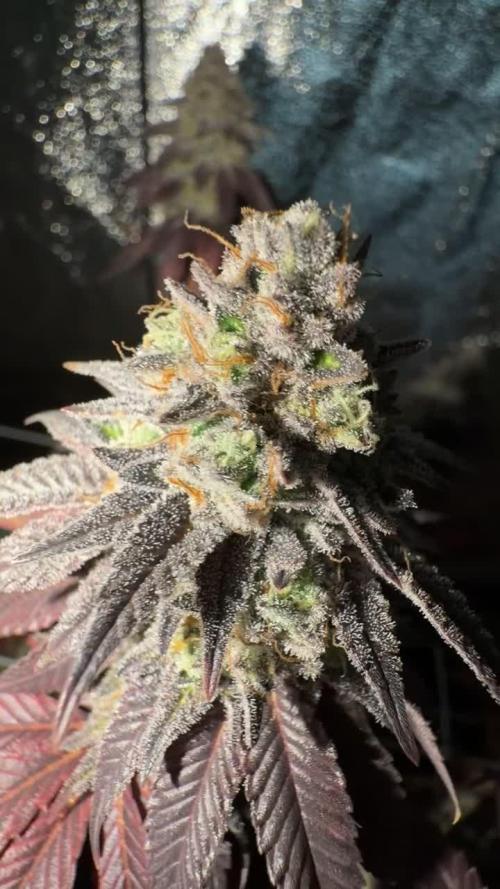
She is really getting sticky and smelly now; berries with herb notes. You can see the resin stretching over the trichomes in the last pic.
No signs of senescence yet so I'm not going to feed them, they should have plenty of food anyway as this is a second run of the same soil.


@Flixus
Volgen
Willkommen zur BW1, die Pflanzen befinden sich mittlerweile im Stretch und haben das SCROG Netz fast erreicht. Ab nächster Woche werde ich dann beginnen müssen, die Triebe nach und nach ein zu Flechten. Leider hat #2 nicht die selbe Höhe, aber da kann ich mit leben. Die ältere Pflanze zeigt leichte Anzeichen von Überdüngung, auch das ist nicht so tragisch aber wertvoll für die nächsten Grows. Mittlerweile hat GHF auf ihrer Seite die Empfehlung auf 3G/L Substrat angepasst, ich würde jedem empfehlen erst einen Teil und ab Blütenbildung den Rest der gesamten Düngermenge zu geben. Mittlerweile lässt sich auch ein leichter Geruch im Zelt vernehmen.


@UnorthadoxDude
Volgen
Good morning growmies! I am finally back online after moving house and being without internet for weeks.
These ladies took a battering and bruising in transit, and were left in the dark for 4 days, starved of water and food for 9 days TWICE inside 3 weeks.
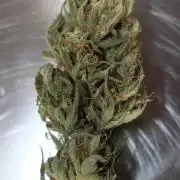
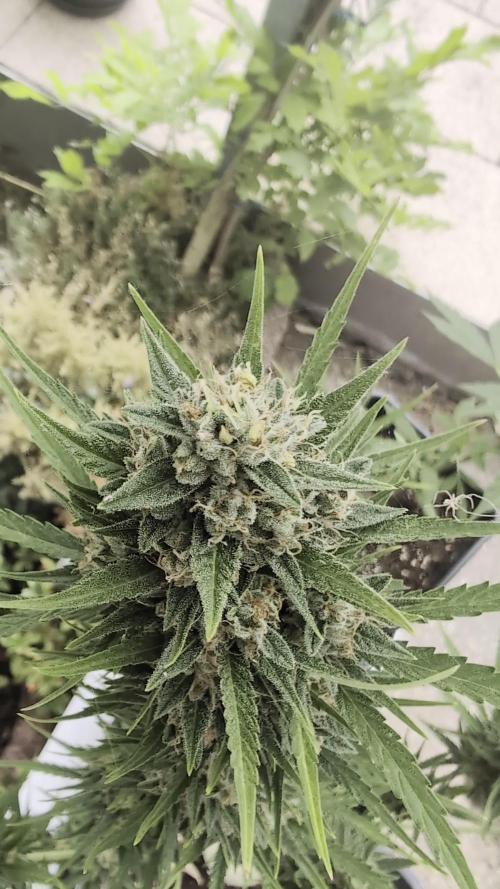
Still, can you believe the progress despite all that? Wowza, when RQS say these Epsilon F1s are fast they are NOT JOKING, and OH MY the smell is soooooooooooooooooo good. It's really a complex sweet and fruity scent with delicate notes of spice and sandalwood. I am super curious now. All five plants are within a couple of inches of each other, the tallest being 72cm currently (Dinah!).
I am so very impressed with these plants that I am considering running a full tent of Epsilon F1s for my next grow! I wonder if I can get a bulk discount?! 😬😁
Day 54: Fertigated 10l
Day 56: They are not slowing down. Ally, Normani, Lauren, and Dinah are all similar size, Camila is a bit smaller but in terms of development they are all very very close to each other. I am really impressed by the uniformity here, more impressed by the speed, and most impressed by the scent. They are not strong smelling, but if you get close or have a squeeze it wafts over you like an exquisite perfume. It is the most complex cannabis scent I have experienced yet. Really really interesting, I am really excited for the eventual smoke review so that I can properly understand the complexity at play here. The breeder and sponsor of this grow Royal Queen Seeds have offered to sponsor a full tent of this strain, if that works out then I will be doing another grow series right after this one. Fingers crossed!


@Pheno_Minds
Volgen
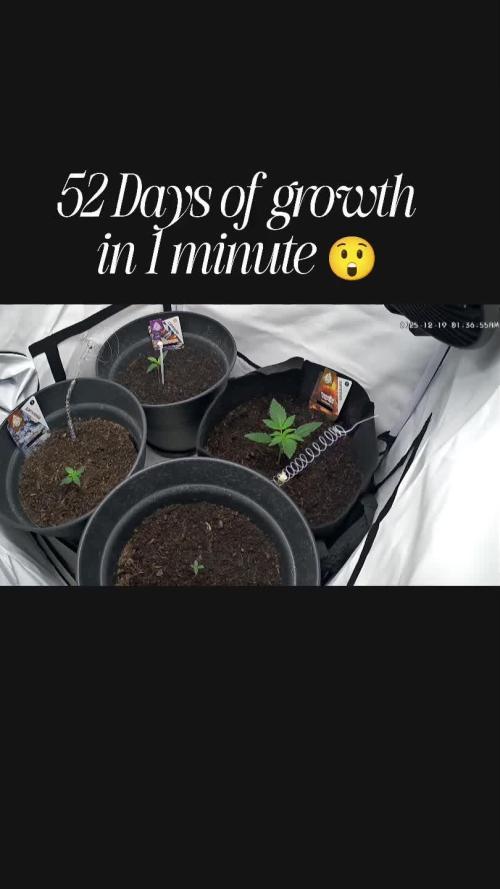
✂️ Die Strawberry Banana von Fastbuds hat ihr Ziel erreicht. Nach 13 Wochen ist die Zeit der Blüte vorbei und der Übergang zur Ernte vollzogen. Die Pflanze wurde erfolgreich umgelegt und befindet sich nun im Trocknungsprozess.
📋Mit einer finalen Höhe von 58 cm ist die Pflanze zwar kompakt geblieben, hat aber eine solide Blütenstruktur entwickelt. Auf den Bildern zeigen sich gesund ausgebildete Buds mit einer insgesamt grünen Blattfärbung, die in den letzten Tagen der Reife natürlich leicht verblasst ist. Die Struktur ist offen und luftig, was bei der Trocknung definitiv von Vorteil ist, da so die Luft gut zirkulieren kann und Schimmel kaum eine Chance hat.
📸 Der Blick auf die Details bestätigt die Entscheidung zur Ernte: Die Blütenstände sind dicht und zeigen eine ordentliche Harzbesatzung. Die Pflanze wurde im Ganzen aufgehängt, um eine gleichmäßige Trocknung zu gewährleisten. Jetzt heißt es Geduld haben, bis die Stängel beim Biegen brechen statt sich nur zu biegen. Dann geht es ab in die Gläser zum Curing, um das Terpenprofil der Strawberry Banana richtig zur Geltung zu bringen. Ein solider Abschluss für diesen Run.


@wolfvb
Volgen
Week 7: The Frost is Taking Over! ❄️🌀
We’ve officially hit the half-century mark, and the tent is looking like a psychedelic dream. These F1 hybrids from Zamnesia are stacking heavy and the terpene profile is getting louder by the hour. 🍍🧀
The Pineapple Express is bringing the tropical heat, while the Blue Cheese is bringing that classic funk. I’m seeing resin production I didn’t think was possible this early!
HELP ME CHOOSE: If you could only grow ONE for the rest of your life—would you go for Sweet & Fruity or Gassy & Funky ⛽? Drop your vote in the comments! 👇
We’re officially in the home stretch. Patience is a virtue, but the smell is making it hard to wait! 🍍🧀


@eldruida_lamota
Volgen
Vamos familia que ya actualizamos la cosecha de estas Candy Rain de Zamnesia, para el concurso POWER BUDS Plagron x Zamnesia CONTEST.
Ya era hora de cosechar, estoy bastante contento con los resultados.
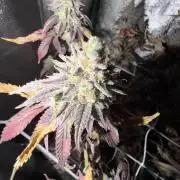
Vaya flores que se han marcado repletas de tricomas, y las flores se marcan aromas dulces y afrutados.
Es una variedad bastante fácil de cultivar y muy resistente, crecieron desde el principio bien vigorosas, sin problemas y al final de todo recompensó.
Las condiciones ambiéntales han sido máximas en 25 y mínimas en 20 y una humedad estable en torno al 36% al final de floración y en el secado.
Os comento que tengo un descuento y para que compréis en la web de Zamnesia de un 20%, el código es ZAMMIGD2023
The discount 20% and the code is ZAMMIGD2023
https://www.zamnesia.com/
Espero que disfruteis este diario, buenos humos 💨💨





@DogDoctorOfficial
Volgen
🌱 Nut Cracker by Humboldt Seed Company x Zamnesia | Pheno A | Germination – The 8×8 Adventure: The Last 2026 Run | Legends of the Galaxy
A Special Collaboration Joins the Galaxy! 🚀
Welcome, everyone, to another chapter of our new adventure!
After everything we've experienced, learned, tested and documented in previous runs, it's time to open another chapter. A new season, a new collection of genetics, new experiments and, as always, plenty of opportunities to learn something along the way.
This is the 8×8 Adventure – The Last 2026 Run | Legends of the Galaxy!
I'm just a humble home grower with a passion for experimenting with different genetics, observing how they develop side by side, and documenting the journey as honestly and thoroughly as possible. I don't believe every plant needs to be the biggest or the fastest. Every phenotype has its own personality, and that's exactly what makes these experiments so interesting.
And this time, we have something particularly special joining the adventure!
────────────────────────
⭐ MEET NUT CRACKER – A SPECIAL COLLABORATION
🌿 NUT CRACKER BY HUMBOLDT SEED COMPANY x ZAMNESIA SEEDS
This one deserves a little introduction before we get our hands dirty!
Nut Cracker is a special-edition collaboration between two names I'm already familiar with: Humboldt Seed Company and Zamnesia Seeds.
I've had the pleasure of working with genetics from both seed banks before, and I've had some great experiences along the way. So when I saw that these two were joining forces, my curiosity immediately kicked in.
Both companies have their own experience, breeding work and genetic backgrounds. Bringing them together for a collaboration like this makes me particularly interested in discovering what they've created.
And, of course, I couldn't resist the presentation!
The package includes a Certificate of Authenticity, and ours is numbered:
🏅 Number 370 / 750
That's right! According to the certificate, this limited edition consists of only 750 packs. A lovely little detail that makes this genetic even more interesting to document.
Let's take a look at the information provided with the release:
Breeders: Humboldt Seed Company x Zamnesia Seeds
🌱 Parents: Nutter Budder x Motorbreath
⚖️ Genetic balance: 50% Indica / 50% Sativa
🔥 Advertised potency: 29%
📅 Year of release: 2025
🏅 Limited release: 750 packs
The accompanying description presents Nut Cracker as a balanced hybrid with rich nutty flavours, strong effects and generous yields.
Of course, those are the expectations and descriptions provided with the release. Now it's our turn to grow her, observe her development and discover what she actually brings to the table.
I'm genuinely curious to see what happens when these two breeders combine forces.
Let's find out together!
────────────────────────
🌞 THE 12/12 FROM SEED EXPERIMENT (not so much after a few runs start to be the normal here but...)
Every plant in this run will start under a 12/12 light schedule from day one.
That's right: no traditional vegetative lighting period!
Of course, the plants still go through their vegetative development. We're not eliminating the vegetative stage itself; we're simply removing the separate long-day vegetative period that growers traditionally use before switching to flowering.
They will develop under a 12-hour light and 12-hour dark cycle from the very beginning. This means observing how different genetics respond to the same schedule, how they develop, and how each phenotype expresses its own characteristics.
Same environment, same light schedule, different genetics and potentially very different stories.
And that's precisely what we're here to discover. 🌱
────────────────────────
GERMINATION – MEET THE CANNAKAN
For this first stage, we're starting with a piece of equipment that has become one of our favourite tools: The CannaKan!
I like to call it our germination station. It's a simple, practical system that allows us to organise several seeds independently while keeping everything together.
The CannaKan has eight individual compartments, giving us the possibility to germinate different seeds separately, identify each one clearly, and follow their progress without mixing anything up.
For this run, we're using compartment number 1.
And our next guest is…
🌿 NUT CRACKER – PHENO A
A special collaboration, a limited-edition release and a new genetic joining the adventure!
Each seed in this run will have its own diary, allowing us to follow its development individually and give every plant the attention it deserves.
Let's see what this special lady has planned for us!
────────────────────────
💧 OUR GERMINATION PROCESS
The process is straightforward.
First, we fill the CannaKan with water up to the indicated level. Each seed gets its own compartment, and we carefully label everything so we know exactly which genetics are where.
Once the seeds are in position, we close the germination station and let them begin their journey.
After approximately 18 hours, and in any case in less than 24 hours, we remove the initial water and refill the system up to the second marked level.
We then place the seeds back in their compartments, close the CannaKan, and let moisture and time do their work.
No complicated procedures, no unnecessary handling. Just a simple and organised approach.
⏱️ Around 36 hours after starting the process, it was time to open the CannaKan and check our little passengers.
And there they were!
Most of the seeds had already developed visible taproots. Seeing those first little tails is always a special moment. A tiny beginning, but the start of an entire journey.
For us, this was the right moment to move on to the next stage.
────────────────────────
🌱 FROM THE CANNAKAN TO SOIL
For this initial stage, we're using Plagron Lightmix.
Once the seeds were ready, we carefully removed them using the small handling tools supplied with the CannaKan. I like to take a moment to observe each seed, check its development and capture a few photographs before moving it into its new home.
We then placed each seed into the soil with the taproot pointing down.
For the initial moisture, we're using a spray bottle filled with distilled water only.
No nutrients, no additives, nothing extra at this stage.
We gently mist the soil around the seed and the surrounding area, making sure the medium receives moisture without saturating it.
Why do we prefer this approach?
My personal reasoning is that I want to keep the soil structure as open as possible during these first moments. Rather than soaking the entire medium before planting, I prefer to introduce moisture gently and locally around the seed.
In my experience, this approach helps me avoid unnecessarily saturating the soil while allowing the seed to develop in a suitably moist environment.
This is simply the method I prefer to use. There are many different ways to germinate seeds, and this is not intended to be the only correct method. Every grower develops their own routine through experience and experimentation.
And that's part of the fun: learning, testing and sharing what works for us.
────────────────────────
🏡 THE FIRST HOME – ZAMNESIA ECOSYSTEM
For these first few days, the young plants are staying inside the Zamnesia ecosystem.
The smaller tent was empty, with no other plants growing inside, making it a convenient environment for this initial stage. It's also easier to manage a smaller space while the seeds are just getting started.
Our main 8×8 tent is already prepared, with the same LED lighting system waiting above.
We're keeping the lighting gentle at this stage. There's no reason to blast tiny seedlings with unnecessary intensity. We want to give them a comfortable beginning and allow them to develop naturally.
Very soon, however, they'll move into the big tent.
That's where they'll spend the rest of their journey, and that's the environment they'll eventually need to become accustomed to.
We'll also be introducing under-canopy lighting later in the run, but for now, the lighting comes from above.
One step at a time. There's plenty more coming! 😁
────────────────────────
📸 DOCUMENTING EVERY LITTLE STEP
As always, photography is a big part of this adventure.
From the first seed to the first visible root, every stage deserves to be documented. Sometimes the most interesting details are the ones that are easiest to overlook.
We'll be following each phenotype individually, giving every plant its own diary and its own spotlight.
Remember, this is only the beginning. We'll keep adding information as the plants develop, including their individual characteristics, growth patterns and observations.
And because GrowDiaries has its photo limit per update, some stages may be divided into multiple updates. We want to share as much of the journey as possible without sacrificing the details.
────────────────────────
EQUIPMENT, PRODUCTS & PARTNERS
Here are the products and equipment involved in this first stage:
🌱 Genetics: Nut Cracker – Humboldt Seed Company x Zamnesia Seeds
🏅 Special edition: Certificate of Authenticity No. 370 / 750
Parents: Nutter Budder x Motorbreath
Germination station: The CannaKan
https://cannakan.eu/
🌿 Growing medium: Plagron Lightmix
https://plagron.com/en
💧 Initial moisture: Distilled water
🎥 Germination documentation: Photographs and video updates throughout the process.
🎟️ Discount code:
CannaKan – DOGDOCTOR – 10% off
We'll keep the product links and applicable discount codes available here so anyone following along can find the equipment used in this experiment.
────────────────────────
💚 A BIG THANK YOU!
A new adventure is also an opportunity to thank the people and companies who continue to support our work.
A huge thank-you to Zamnesia, Plagron, Future of Grow and Lumiflora for being part of our growing journey.
A special thank-you to Humboldt Seed Company and Zamnesia Seeds for bringing this collaboration to life. I'm genuinely looking forward to discovering what Nut Cracker has to offer!
Thank you to GrowDiaries for providing this platform, and to everyone in the community who follows, comments, shares experiences and contributes to the knowledge we all build together.
And, of course, thank you to everyone who keeps supporting DogDoctorOfficial. Your encouragement means a lot!
────────────────────────
🐕 JOIN THE DOG DOCTOR COMMUNITY!
If you'd like to follow the adventure beyond GrowDiaries, you're more than welcome to join us on Discord!
We have a growing community where old-school and new-school growers meet, share experiences, ask questions, discuss techniques, participate in giveaways and competitions, and most importantly, learn from one another.
You don't need to be an expert. You don't need years of experience. You don't even need to know where to start.
Everybody is welcome. We're there to share knowledge, help each other and enjoy the journey together.
💬 Join us here:
https://discord.gg/dogdoctorofficial
────────────────────────
🚀 A SPECIAL GENETIC JOINS THE GALAXY!
And there we have it!
Nut Cracker, Pheno A, is officially another individual diary in our 8×8 Adventure – The Last 2026 Run | Legends of the Galaxy.
A special collaboration between two breeders, a limited-edition release, and a certificate marking this particular pack as number 370 of 750.
There's plenty to be curious about, but now it's time to put the expectations aside and let the plant tell her own story.
Let's document every little detail, follow her development and discover what Humboldt Seed Company and Zamnesia have created together.
Thank you for joining us at the beginning of another adventure.
Growers Love, everyone! 💚🐕🌱



@Kirsten
Volgen
14.3.25:
FastBuds Mystery seed grow #1 🌱
We're looking good, nice, strong, and healthy seedling. She started praying after the feeding today.
I watered a couple of litres over the last week. I've been watering around the whole pot to encourage root stretching and kick-start the dry amendments and feed the Mycorrhizae.
I left the first 2 inches around the seedling until today 🌱
Today, I watered with 500mls of dechlorinated water PH'd to 6.2 with:
♡ Black strap molasses
♡ Ecothrive Biosys
18.3.25:
FastBuds Mystery seed #1 is 15 days old today.
She is 3 days ahead of my RQS Northern Lights, which I have topped or fimmed.
I planned to do this one, too, but it's not quite ready yet. Otherwise, she's looking very good.
We'll see how this week goes and hopefully get it done by the end of the week.
23.3.25:
FastBuds Mystery seed #1 is ready to be topped today. I went ahead with alcohol sterilised scissors and cut the two tiny leaves from the centre of the plant.
Everything went very well and a clean cut was made. The plant is looking great afterwards.
Thanks for checking in
✌️🌱🤞💚


@FrostyBudZGenetics
Volgen
The germination i forgot to take pictures so i just have a video of the first 3 strains i started before the other seeds arrived.
I used the same metod for all of them
24h in the glass of water after that 48h in the cotton pads in the zip lock bag with 3 sprays of water on the cotton pads and 1 spray when inside the zip lock bag is closed untill 80% leaving a small gap for them to breath.
I decided to plant them after that in the final resting pot for this strain in a 5 gallon fabric pot.
I used the following media on the bottom of the fabric pot i used 10% of Goldlabel HydroCorn after filled up with Advanced Nutrients coco cultivator (50% coco 30% perelite 20% pebbles) and i mixed on the media some Azos , Mykos and Great White
The light schedule for the first 5 days was 24/0 and after that i change for 18/06 schedule.
Just water the plants on the 15/06 i think all my seedlings are stuned because my light is too strong for them and the light is dimed to 25% waiting on my new seedling light the Spider Farmer SF1000EVO LED should arrive just on wednesday because they are stunned i decided to call week 1 veg on the 16/06. And my light meter for lux is saying i have 8600Lux converted is 148 and my dli on meter from the phone is saying 150 so its 3x times more the recomended i just dont understand if this phone app is working correctly.
Update on the order from spider farmer from Ebay (Order the item on a thursday and the order was not updated on ebay on the following Monday so decided to contact them to understand when i am gonna receive my order i was told true ebay that my item as been shipped and i will receive an update within 1 hour to tell what time the item will be delivered. So never received any message giving my time slot delivery. Never received the item and at 21pm the tracking updeted on Ebay saying delivered so i contected them next day to be told that the courrier actually lost my order and that they will reshippe the order again but was told i need to wait 2 buiness days for the warehouse to processe my order beacuse they are busy what i replied that why should be me the costumer that needs to wait 5 or 6 more days for the order to arrive to me that they should send me the item on the same day and send me with one day delivery. The ansewer was they could not do it so i cancell the order asked for a refund and never more use their products appailing costumer service)



@Esoteric_growing
Volgen
End of the first week of using the shooting powder and the plants are loving it and took the higher EC level with no problems, running slightly higher PH levels to help with the uptake of P and K.
Looking like it’s going to be a really good run


@Ferenc
Volgen
Okay, so the plants were still in seedling stage only thing I changed was the environment that I have placed them to the grow tent. They started growing faster and from the 2nd week, I started watering with 30ml water 2 times a day in the morning and in the evening, so one plant gets 15 ml 2 times approximately 12 hours difference the first 3 days and then 100ml (50ml morning, 50ml at night) so 25 ml/plant 2 times a day in the next 4 days. I also used the trigger spray to keep the soil moist and the humidity high as the seedling stage requires. No ventilation yet. No fertilization. It looks they feel okay, so far everything is alright. :)


@Ultraviolet
Volgen
Green light is radiation with wavelengths between 520 and 560 nm and it affects photosynthesis, plant height, and flowering. Plants reflect green light and this is why they appear green to our eyes. As a result, some growers think that plants don’t use green wavelengths, but they actually do!
In fact, only around 5 – 10% of green light is reflected from leaves and the rest (90 – 95 %) is absorbed or transmitted to lower leaves [1].
Green wavelengths get used in photosynthesis. Chlorophyll pigments absorb small amounts of green wavelengths. Light that doesn’t get absorbed is transmitted to leaves that are shaded out from direct light. This means that leaves at the bottom of the canopy get more green light than leaves at the top. A high proportion of green wavelengths compared to other colors tells lower leaves that they are being shaded out, so they are able to react accordingly. Lower leaves may react by opening or closing their stomata or growing longer stems that help the leaves reach brighter light [1, 2, 3].
When it comes to growing cannabis, many cultivators are interested in the quality of light used for the flowering stage. In many plants, flowering is regulated by two main photoreceptors: cryptochrome and phytochrome. Both photoreceptors primarily respond to blue light but can also respond to green, although to a lesser extent. Green can accelerate the start of flowering in several species (although cannabis has yet to be tested) [1, 4, 5]. However, once flowering has begun, it’s important to provide plants with a “full spectrum” light that has high amounts of blue and red light, and moderate amounts of green, in order for photosynthesis to be optimized.
Green light mediates seed germination in some species. Seeds use green wavelengths to decide whether the environment is good for germination. Shade environments are enriched in green relative to red and blue light, so a plant can tell if it is shady or sunny. A seed that senses a shaded environment may stay dormant to avoid poor growing conditions [1]. Some examples of plant species where researchers have documented this response are: ryegrass (a grass that grows in tufts) and Chondrilla (a plant related to dandelion) [1, 6].
Although green wavelengths generally tell plants NOT to germinate, there are some exceptions! Surprisingly, green wavelengths can stimulate seed germination in some species like Aeschynomene, Tephrosia, Solidago, Cyrtopodium, and Atriplex [1, 6, 7].
Of course, light is not the only factor affecting seed germination – it’s a combination of many factors, such as soil moisture, soil type, temperature, photoperiod, and light quality.
When combined with red and blue light, green can really enhance plant growth [1, 8]. However, too much green light (more than 50% of the total light) can actually reduce plant growth [8]. Based on the most current research, the ideal ratio of green, red, and blue light is thought to be around 1:2:1 for green:blue:red [9]. When choosing a horticultural light, choose one that has high amounts of blue and red light and moderate amounts of green and other colors of light.
Not many studies can be found about the effect of green light on cannabis growth or metabolism. However, if one reads carefully, there are clues and data available even from the very early papers.
Mahlberg and Hemphill (1983) used colored filters in their study to alter the sunlight spectrum and study green light among others. They concluded that the green filter, which makes the environment green by cutting other wavelengths out, reduced the THC concentration significantly compared to the daylight control treatment. It has been demonstrated that green color can reduce secondary metabolite activity with other species as well. For example, the addition of green to a light spectrum decreases anthocyanin concentration in lettuce (Zhang and Folta 2012).
If green light only reverses the biosynthesis of some secondary metabolites, then why put green light into a growth spectrum at all? Well, there are a couple of good reasons. One is that green penetrates leaf layers effectively. Conversely red and blue light is almost completely absorbed by the first leaf layer.
Green travels through the first, second, and even third layers effectively (Figure 2). Lower leaf layers can utilize green light in photosynthesis and therefore produce yields as well.
Even though a green light-specific photoreceptor has not yet been found, it is known that green light has effects independent from the cryptochrome but then again, also cryptochrome-dependent ones, just like blue light. It is known that green light in low light intensity conditions can enhance far red stimulating secondary metabolite production in microgreens and then again, counteracts the production of these compounds in high-intensity light conditions (Kim et al. 2004). In many cases, green light promoted physiological changes in plants that are opposite to the actions of blue light. In the study by Kim et al. blue light-induced anthocyanin accumulation was inhibited by green light. In another study it has been found that blue light promotes stomatal opening whereas green light promotes stomatal closure (Frechilla et al. 2000). Blue light inhibits the early stem elongation in the seedling stage whereas green light promotes it (Folta 2004). Also, blue light results in flowering induction, and green light inhibits it (Banerjee et al., 2007). As you can see, green light works very closely with blue light, and therefore not only the amount of these two wavelengths separately is important but also the ratio (Blue: Green) between these two in the designed spectrum. Furthermore, green light has been found to affect the elongation of petioles and upward leaf reorientation with the model plant Arabidopsis thaliana both of which are a sign of shade avoidance symptoms (Zhang et al. 2011) and also gene expression in the same plant (Dhingra et al. 2006).
As mentioned before, green light produces shade avoidance symptoms which are quite intuitive if you consider the natural conditions where the plants grow. Not all the green light is reflected from the highest canopy leaves in nature but a lot of it (50-90%) has been estimated to penetrate the upper leaves at the plant level ((Terashima et al., 2009; Nishio, 2000). For the plant growing in the understory of the forest green light is a signal for the plant of being in the shade of a bigger plant. Then again, the plants growing under unobstructed sunlight can take advantage of the green photons that can more easily penetrate the upper leaves than the red and blue photons. From the photosynthetic pigments in higher plants, chlorophyll is crucial for plant growth. Dissolved chlorophyll and absorb maximally in the red (λ600–700 nm) and blue (λ400–500 nm) regions of the spectrum and not as easily in the green (λ500–600 nm) regions. Up to 80% of all green light is thought to be transmitted through the chloroplast (Terashima et al., 2009) and this allows more green photons to pass deeper into the leaf mesophyll layer than red and blue photons. When the green light is scattered in the vertical leaf profile its journey is lengthened and therefore photons have a higher chance of hitting and being absorbed by chloroplasts on their passage through the leaf to the lower leaves of the plant.
Photons of PPFD (photosynthetic photon flux density) are captured by chlorophyll causing an excitation of an electron to enter a higher energy state in which the energy is immediately passed on to the neighboring chlorophyll molecule by resonance transfer or released to the electron transport chain (PSII and PSI). Despite the low extinction coefficient of chlorophyll in the green 500–600 nm region it needs to be noted that the absorbance can be significant if the pigment (chlorophyll) concentration in the leaf is high enough.
The research available clearly shows that plants use green wavelengths to promote higher biomass and yield (photosynthetic activity), and that it is a crucial signal for long-term developmental and short-term dynamic acclimation (Blue:Green ratio) to the environment. It should not be dismissed but studied more because it brings more opportunities to control plant gene expression and physiology in plant production.
REFERENCES
Banerjee R., Schleicher E., Meier S. Viana R. M., Pokorny R., Ahmad M., Bittl R., Batschauer. 2007. The signaling state of Arabidopsis cryptochrome 2 contains flavin semiquinone. The Journal of Biological Chemistry 282, 14916–14922.
Dhingra, A., Bies, D. H., Lehner, K. R., and Folta, K. M. 2006. Green light adjusts the plastic transcriptome during early photomorphogenic development. Plant Physiol. 142, 1256-1266.
Folta, K. M. 2004. Green light stimulates early stem elongation, antagonizing light-mediated growth inhibition. Plant Physiol. 135, 1407-1416.
Frechilla, S., Talbott, L. D., Bogomolmi, R. A., and Zeiger, E. 2000. Reversal of blue light -stimulated stomatal opening by green light. Plant Cell Physiol. 41, 171-176.
Kim, H.H., Goins, G. D., Wheeler, R. M., and Sager, J. C. 2004.Green-light supplementation for enhanced lettuce growth under red- and blue-light emitting diodes. HortScience 39, 1617-1622.
Nishio, J.N. 2000. Why are higher plants green? Evolution of the higher plant photosynthetic pigment complement. Plant Cell and Environment 23, 539–548.
Terashima I., Fujita T., Inoue T., Chow W.S., Oguchi R. 2009. Green light drives leaf photosynthesis more efficiently than red light in strong white light: revisiting the enigmatic question of why leaves are green. Plant & Cell Physiology 50, 684–697.
Zhang, T., Maruhnich, S. A., and Folta, K. M. 2011. Green light induces shade avoidance symptoms. Plant Physiol. 157, 1528-156.
Wang, Y. & Folta, K. M. Contributions of green light to plant growth and development. Am. J. Bot. 100, 70–78 (2013).
Zhang, T. & Folta, K. M. Green light signaling and adaptive response. Plant Signal. Behav. 7, 75–78 (2012).
Johkan, M. et al. Blue light-emitting diode light irradiation of seedlings improves seedling quality and growth after transplanting in red leaf lettuce. HortScience 45, 1809–1814 (2010).
Kasajima, S., et al. Effect of Light Quality on Developmental Rate of Wheat under Continuous Light at a Constant Temperature. Plant Prod. Sci. 10, 286–291 (2007).
Banerjee, R. et al. The signaling state of Arabidopsis cryptochrome 2 contains flavin semiquinone. J. Biol. Chem. 282, 14916–14922 (2007).
Goggin, D. E. & Steadman, K. J. Blue and green are frequently seen: responses of seeds to short- and mid-wavelength light. Seed Sci. Res. 22, 27–35 (2012).
Mandák, B. & Pyšek, P. The effects of light quality, nitrate concentration and presence of bracteoles on germination of different fruit types in the heterocarpous Atriplex sagittata. J. Ecol. 89, 149–158 (2001).
Darko, E. et al. Photosynthesis under artificial light: the shift in primary and secondary metabolism. Philos. Trans. R. Soc. B Biol. Sci. 369 (2014).
Lu, N. et al. Effects of Supplemental Lighting with Light-Emitting Diodes (LEDs) on Tomato Yield and Quality of Single-Truss Tomato Plants Grown at High Planting Density. Environ. Control Biol. 50, 63–74 (2012).


@Damonkey
Volgen
Was a really nice plant to grow, though odd from day 1. Very strange leaf formations from the start and very slow during vegetation but still, very beautiful to look at, kind of weird awesome. The taste and smell are outstanding. Without a doubt a true beauty, this part of the harvest will be smoked alone and secretly, it just really is too good to share😂


shorts_status_processing


@ladyjane
Volgen
9/1 - Start of week four and all four of my Purple Microdots are female! That means I got 100% feminine seeds from this round and they are looking strong. One of the ladies is split at the main cola as if she had been topped...even though she hasn't. Can't wait to see how she turns out. Watered all today with RO water and molasses.
9/4 - Just a light water and some LST today. Still no nutrients and they are looking fabulous. Moving them just about a quarter of the way around the pot. They are really starting to become bushy and branch out.. They are all very green and looking great.
9/6 - First signs of flower! Each of the four have little pistils coming in and they look beautiful. I come in each day and water and do a little LST on all the ladies and that's about it. Will feed at the end of the week.


@Growjrim
Volgen
Lets see how she develops in flower 😊
If u can criticice some things I'm doing, I'd be happy and up for conversations and tips.