


Likes
Comments
Share
@SchubsenS
Follow
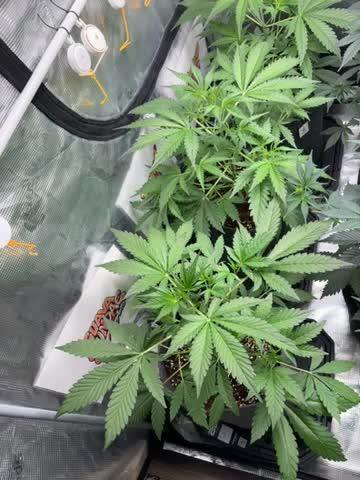
Hey Growmies, been on day 29. the Champions line is pure fun to watch. The mendo guava stretched already completely in the last week. Near on the height of the strawberry which is one week older. Did only some Daily leaf tucking. Watered till drain. Very smooth run.

Processing
Likes
13
Share


@Canadian
Follow
Finally I discovered why is my critical girl and my blue cheese having such a hard time is because we have more gardening in this property tomatoes and other vegetables and my brother decided to add bat guano to all of the plants including the cannabis plant this happened a few months ago without me knowing so I continue to feed liquid nutrients without realizing they was already food in it and not any food slow-release fertilizer so after seeing my critical going south I was worried for the blue cheese cookies but they seem to be more resilient to higher doses of nutrient nevertheless I was scratching my head trying to figure out where she's getting nutrients from and boom that my brother told me by the way I add bat guano to all of the plans some months ago and I guess now is becoming available to the plans and causing all sort of problems hopefully with water only she can make it through to the end of the season but she is actually holding on pretty good still stretching and still growing .so for everybody out there please do not mix slow-release fertilizer with liquid fertilizer because you going to cause yourself so much headache and problems because there is no way to control what is in the soil.
And the reason you use Liquid Fertilizer its to have complete control in their intake of nutrients and customize it to their need something my brother does not understand yet thank you for reading I will continue to update have a happy grow.


Likes
17
Share


@Stupenico
Follow
So harvest time finally.
Only 2 plants at the end but still I am happy with the result.
After cutting them I placed them for 4 days inside the dark tent.
I struggle a bit with the humidity as the air was really dry.
So now its time for curring.
I have placed the bud inside jars.
Lets wait for a few weeks to have a first try !
See you for the smoke review.

Likes
3
Share


@KushKingOrganics
Follow
Easy to grow. Only issue I ran into was the other strain being a male. If I grew this strain alone I would’ve filled out the tent with just this strain the yield would’ve reflected that. Keep in mind if the other plant didn’t get the chop this yield would be almost double. I will grow this cut again.


Likes
44
Share


@Cogollo_eu
Follow
With no doubt these plants have not produced much more quantity and density of buds due to the 2 serious mistakes I've made (those who have read the weeks will know what I mean). However, I can say that I am happy with the production obtained given the mistakes made.
Between the 2 plants, the one that has produced more and generated the most dense buds has been the Gorilla with the Man-lining technique applied, it has also loosed a bit less weight drying than the non man-lining one.
In comparison with the Money Makers with which they have grown the result is the same. Both Gorillas have each produced more than any of the Moneys comparing them 1 to 1. Also buds are a bit dense than the moneys, but none of them is really desde at all.
*****ESPAÑOL*****
Sin duda estas plantas no han producido mucha mas cantidad y densidad de cogollos debido a los 2 graves errores que he cometido (quien se haya leído las semanas sabrá a que me refiero). No obstante, puedo decir que estoy contento con la producción obtenida dados los errores cometidos.
Entre las 2 plantas, la que más a producido y ha generado cogollos más densos ha sido la Gorilla con la técnica de Man-lining aplicada, y también ha perdido un poquito menos de peso en el secado que la otra.
En comparación con las Money Maker junto a las que han crecido el resultado es el mismo. Las Gorillas han producido cada una más que cualquiera de las Moneys comparándolas 1 a 1. Así mismo, los cogollos de las Gorillas presentan un pelín más densidad que el de las Moneys, aunque realmente ninguna de las 4 plantas ha generado cogollos densos del todo.

Likes
6
Share


@Shefman93
Follow
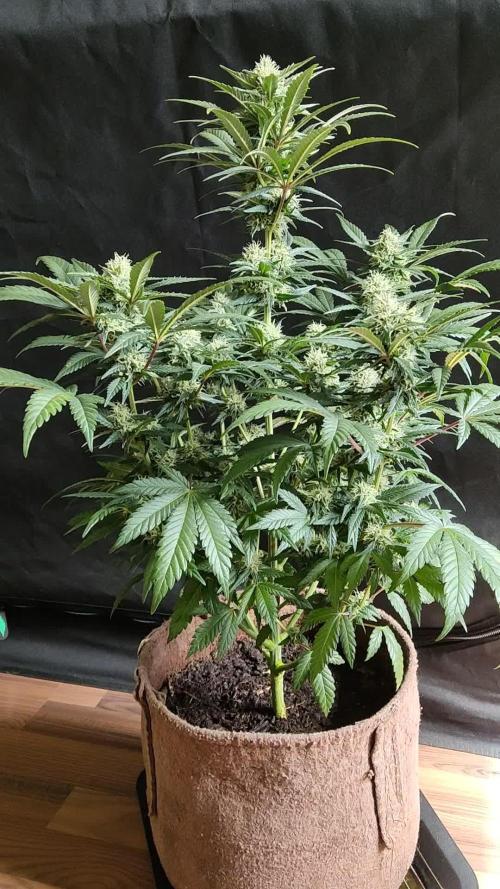
Day 3 of flower now and stretching has been minimal. Expect weekly updates. Day 7, plant stretch has been even and manageable, foliage is dens tho, so at day 21 it will get an heavy defoliation and the lower growth cleaned up again.





Processing
Likes
9
Share


@High_Grade_Dadli
Follow
Growth stun abit in #1 due to snap in the stem but still manage to grow half inch. n push new growth........#2 main growth stun but directed to lower branches n still grow about 2 inch......#3 double it growth with 4.5 inch. didn't need lst was showing good growth in lower branches from early


Likes
21
Share


@Ultraviolet
Follow
Heyoka.
12x12=144, A dodecahedron is a polyhedron with 12 faces, and in coordination chemistry, it refers to a geometry where ligands surround a central metal atom (in this case, Magnesium) in a specific, 8-coordinate arrangement. Dodecahedrane is a hydrocarbon, meaning it's composed solely of carbon and hydrogen atoms. The carbon atoms are arranged at the corners of a dodecahedron, a 3D shape with 12 pentagonal faces. The water molecules in the dodecahedron form hydrogen bonds that are individually slightly weaker than in either the dimer or the tetramer. However, because three-quarters of the O -H groups in the dodecahedron form hydrogen bonds, it has a more negative energy per molecule than has either the dimer or the tetramer. Magnesium (Mg2+) is the essential, central metal ion in the chlorophyll molecule, crucial for photosynthesis by enabling light absorption and energy transfer. It is chelated by four nitrogen atoms within the porphyrin (or chlorin) ring structure. Chlorophyll appears green because it reflects light in the green region of the visible spectrum, specifically between 490 and 570 nm. The main resonance electronic frequency of a neutral Magnesium (Mg) atom corresponds to the transition from the ground state to the first excited state. Resonance Line Wavelength of Mg2+: 285.1nm (UVB light). The central atom of the chlorophyll molecule is Magnesium (Mg2+), which is coordinated within a porphyrin ring. The electronic "resonance frequency" of this central atom—meaning the frequency at which its electrons absorb energy—is primarily driven by the electronic transitions (ETR) of the surrounding conjugated chlorin ring structure, rather than a discrete atomic transition of the Magnesium atom itself. The resonant electronic frequencies of the chlorophyll porphyrin (technically, a chlorin) ring are determined by the energy required to promote π-electrons within its conjugated system, primarily appearing in the blue and red regions of the visible spectrum.
In standard physics, Chloryphyll b has peak absorption at 460nm (Blue). If we take the peak wavelength 460nm and a UV-B, UVR8 peak absorption wavelength 285nm Tryptophan-285 (W285) Sensing protein. 460/285=1.618 Φ, "natural harmony" and the "structure of light". The cryptochrome photoreceptor (CRY) is a UV-A/blue light receptor that shares this dual sensitivity with several other biological structures and functions, including significant sequence similarity and a common evolutionary ancestor with DNA photolyase enzymes. These are light-activated enzymes that use blue/UV-A light to repair DNA damage caused by UV-B radiation in plants.
Dodecahedrane (C20H20) is a hydrocarbon with a cage-like structure where carbon atoms form 12 pentagonal faces (a regular dodecahedron). It is highly symmetric (icosahedral), contains no delocalized electrons (no aromaticity), and has minimal angle strain, but significant torsional strain. Water Dodecahedron (H2O) forms hydrogen-bonded cages. While individual hydrogen bonds in this structure are weaker than in the linear dimer or tetramer, it has a more negative total energy per molecule. This is because three-quarters (75%) of the groups are involved in hydrogen bonding, creating a very stable, closed-shell configuration. a 3D carbon hydrocarbon (C20H20) to stable water clusters in hydrate, while the Magnesium ion acts as the central activator within a conjugated ring in biological systems, with its electronic absorption dominated by the ring, not the atom itself.
Effective quantum efficiency of photosystem II, often denoted as ΦPSII
In horticultural lighting, adding 730 nm (far-red) LEDs alongside standard red/blue lights has been shown to increase canopy photosynthesis by 20–30% in several crops by acting synergistically with shorter wavelengths. However, the limitation is that excessive, pure IR/Far-red light (without accompanying red light) can trigger the "shade avoidance response," causing plants to grow tall, weak, and spindly rather than robust. Knowing is half the battle however, engineering or utilizing infrared light (specifically the 700-750 nm far-red range) is a viable method to boost photosynthetic efficiency. It acts as a bridge to allow PSII to utilize a broader spectrum of light, breaking the traditional 700 nm barrier.
Extend, then multiply.
UVR8-mediated signaling (often in conjunction with CRY proteins) triggers protective mechanisms that maintain the stability of the photosynthetic apparatus (including LHCII and reaction center proteins), thus ensuring that the efficiency of Photosystem II remains higher in UV-B-exposed plants compared to plants lacking this receptor. ΦPSII indictates the rate of electron transfer from water to plastoquinone, which drives the production of ATP and NADPH. There is a close link between ΦPSII and the true rate of CO2 fixation (Φ*co2), particularly in C4 plants.
Effective quantum efficiency of photosystem II, often denoted as ΦPSII, represents the proportion of light absorbed by Photosystem II (ΦPSII) that is actually used in photosynthetic electron transport. It is a key indicator of how efficiently a plant is using light for photosynthesis, as opposed to losing it as heat or fluorescence. ΦPSII (effective quantum yield of photosystem II) functions primarily as a "multiplier" (a coefficient of efficiency) rather than an additive factor when estimating the overall photosynthetic electron transport rate (ETR). Multipliers are considered far more beneficial than additions because they generate exponential growth, leverage existing resources to their full potential, and create sustainable, self-multiplying capacity, rather than just incremental, linear increases.
Humans, and most other mammals, rely on other mechanisms, such as nucleotide excision repair, to manage and repair UV-induced DNA damage. As such, humans do not have the direct, light-driven repair mechanism that photolyase offers in plants.

Likes
5
Share


@CarpediemOK
Follow
Out of water for 3 days and when I arrive she looks with all her leads facing down.
As soon I put her water she refused but after few hours she becomes very healthy.
I had to cut few yellow leeds

Likes
3
Share

@Brandenbluete
Follow
English below
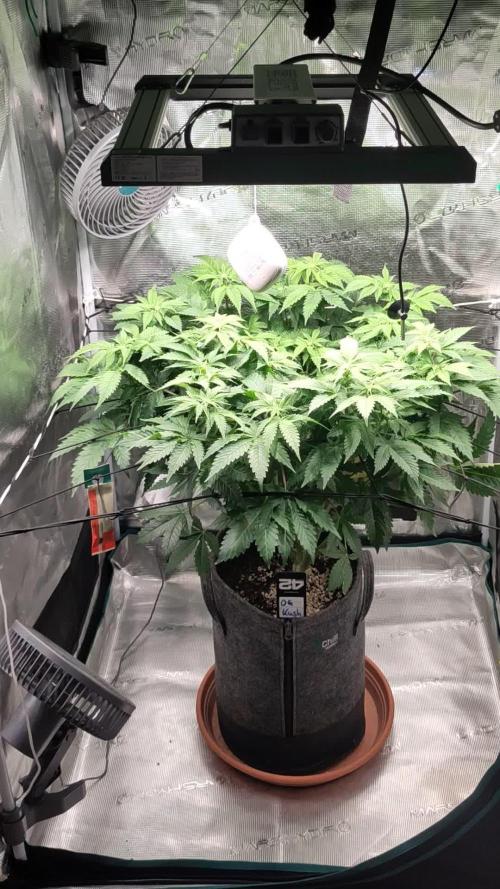
Nach einem stressigen Wochenende wollte ich eigentlich gestern noch präventiv gegen Schädlinge sprühen aber hatte Vergessen nachzukaufen also muss dass noch bis morgen warten.
Ansonsten hat sich die Pflanze größtenteils von der Unterdüngung während dem Urlaub erholt, die neuen Triebe haben wieder schön grüne Stängel. Ende der Woche steht dann auch die Entlaubung an. Ich bin gespannt wie es weiter geht.
------+
After a stressful weekend, I actually wanted to do a preventive pest spray yesterday, but I forgot to restock — so that’ll have to wait until tomorrow.
Other than that, the plant has mostly recovered from the underfeeding during my vacation. The new shoots now have nice, green stems again. Defoliation is planned for the end of the week, and I’m excited to see how things develop from here.
After a busy weekend

Likes
4
Share


@Franco123
Follow
The two plants this week look like they are turning green again and the yellowing is going away so I think all is well


Likes
9
Share


@Wenz004
Follow
experiment explanation see week1
This week Gelato (No1) did grow slowly...
there is massive Mg defficiency and today (not on pictures yet) also Ca
I think I did too often PH between 5.9 and 6.2 That was bad idea...let see how much I can repair
Nutrients same as mentioned last week
Likes
32
Share


@AsNoriu
Follow
Day 77. Maybe a bit early, but no space and one Smoothie went for a date with bud rot ;))) didn't want to loose that nice top. Very frosty, nice gassy smell surrounded by fruits.
Day 82. Second girl is down. Both small as you see, but with few branches will produce seed packaging cover type plant. Maybe second got some purple fade ... First was very nice by structure.
Day 85. First went to jar. How lovely it sparkles and smells !!! Solid strain, even being so small by structure.
Day 89. Second is in jars too !
Happy Growing !!!
Processing
Likes
11
Share


@Sctanley007
Follow
11/10/18. Shes finishing really strong. Not sure if the Cha Ching doesn’t I’d much much but the Beastie Bloomz definitely helped.
I think my feeding schedule was off by a week or two because I’m unfamiliar with autos. Next run I will begin the soluables at least a week earlier to allow for two feedings of each along with a flush. Right now im not sure if i will have enough time before finish. It’s my only concern.
11/12/18. Watered fully to runoff. Plain water at 6.5
11/13/18. She is finishing very nicely. Decent frost, tri’s are still milky with only a few beginning to turn amber.
I ditched the cha Ching. IT didn’t do much and I think it burned the leaves....and that was a 1/8 teaspoon / gallon so users be cautious. I do feel the Beastie Bloomz did help.
