


Likes
Comments
Share

@Manball
Follow
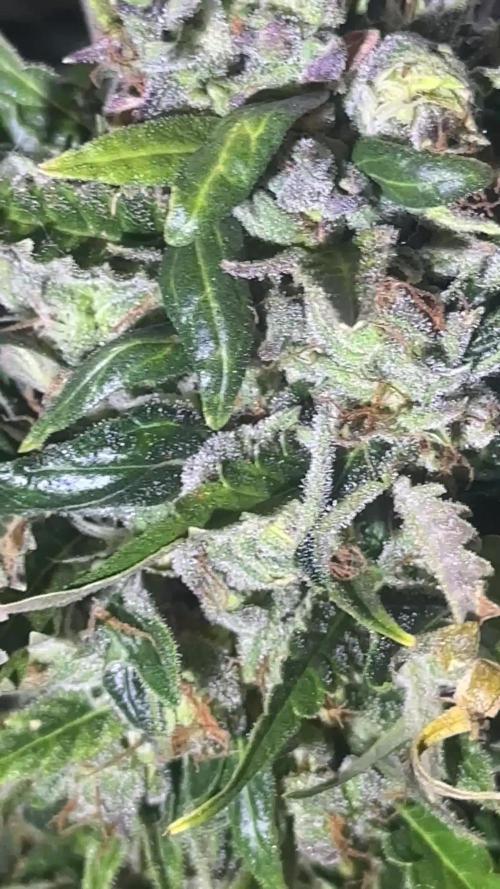
We surely are in flowering phase after some great veg stage.
The 20/4 cycle had a great impact in terms of their height, next 8/10 days the Gorrila Z will leave the tent; so they will be able to gather more light and hopefully continue thriving :3
Also, Did some measures and here are the sizes:
-Critical mass 90cm
-Moby 1 - 60 cm
-Moby 2 71cm
-Moby 3 63cm
-Lsd 01 80cn
-Lsd 02 70cm


Likes
11
Share


@TiRobotProds
Follow
Plein de résine sur les Bud se développe bien tu grosse odeurs de bonbon au fruit rouge.🎄🌅🌡️
Likes
13
Share


@IQuSX
Follow
Hi, topman!
This week report is add-the next week, and this happened, because between 10 and 11 weeks, i didn’t can reloading media-content!
System KiT 1:
Delivering Efficiency To Growers Everywhere.
Compatible with all 8" rockwool cubes; also used with smartpots and fabric pots.
26 flower-designed louvers.
Stakes on the bottom add extra stability.
Holes in all four corners allow for leftover water drainage.
Made from BPA and lead-free plastic.
Dishwasher safe, stackable and reusable.(c)
KiT2 System:
With the FloraFlex Matrix System water and nutrients travel into the Circulator, hit the slope of the Matrix and are pushed outward into eight maze sections that have individual holes dripping the water and nutrients onto the Wicking Pad. The Circulator has two barbed nozzles to attach 1/4" OD FloraTubing that allows you to automate the Matrix System.
Place the Matrix Pad on the surface of your plant, the Matrix Unit on top of it, press down, fit the Circulator into the center holes, and connect your 1/4" OD tubing to the Circulator.
(C)
Check next week now, because there are will be continuous!


Likes
36
Share


@TaterheadJohnson
Follow
Saddest week by far! 😞 Feeling like a bad dad smh should’ve got her a new home sooner than later. Don’t go for the deal in the end all the time, stick with what you know! “This is the lesson I learned this week.” Not many pics this week due to my disappointment in myself. She got way to close to LEDs and in some spots she was touching the diodes. 🤦♂️🏿 Burnt spots. Will be giving her a lot of TLC from hear on out. Will she bounce back?!?!
9/10: Bigger tent finally arrived! Tried ordering from Growbuds.com the Spider Farmer Grow Tent 2x4, paid for 2 day shipping. Wasted a week waiting for it before merchant advised the item would not be shipped til September 17th and I would’ve had to wait 4-5 business days for delivery. SMH. Thank goodness for Amazon Prime! Canceled my order immediately and ordered from Amazon.
NEW TENT: Spider Farmer Grow Tent 2x4, Indoor Plant Growing Tents 55"x28"x80"
Likes
25
Share


@eldruida_lamota
Follow
Que pasa familia, actualizamos de nuevo estos ejemplares de dutchfem, Casey’s rollex O.G. es una variedad 100% indica.
Temperatura va de 21/23 grados ya sea de día o de noche.
.
La humedad anda entre 50% y como siempre el ph , ya que es de lo más importante,está en 5,8/6,0.
.
AgroBeta:
1 ml x L Growth black line , vía radicular.
0,2 ml x L Tucán , vía radicular.
0,2 ml x L Flash Root , vía radicular.
0,05 ml x L Gold Joker, vía radicular.
.
Hasta aquí es todo familia, espero que os vaya gustando el proceso tanto de crecimiento como la futura floración 💨💨💨 buenos humos.

Likes
17
Share

@IberianRootcraft
Follow
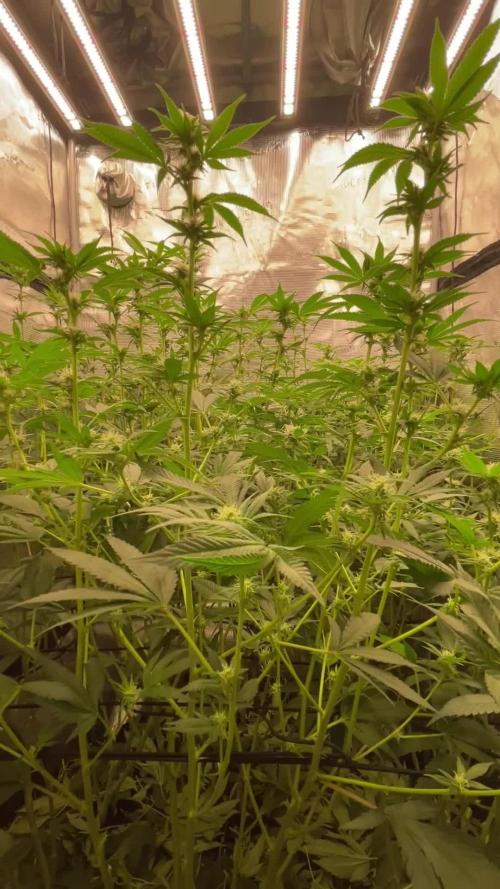
Day 21 is here! Last defoliation done, let’s start to bulk!
37º-40º already outdoor, things getting hard…





Likes
13
Share


@420DeepGrow
Follow
Gracias al equipo de AnesiaSeeds y XpertNutrients sin ellos esto no sería posible.
💐🍁 Frozen Face Auto
Nueva variedad autofloreciente, tan refrescante como una mañana helada con un toque de cereza y lavanda. Esta variedad es una auténtica obra maestra de la cría, con un linaje dominante 70% Sativa que aporta una vibración edificante y energizante a tu cultivo. Perfecta para los que aprecian la belleza veloz de las semillas autofeminizadas y la mezcla única de dicha aromática.
Con un contenido de THC del 30%, Frozen Face Auto promete una experiencia tan estimulante como una zambullida en un lago fresco, dejándote fresco y vigorizado.
Ofrece rendimientos impresionantes de 550 g/m² en interior y hasta 300 g por planta en exterior. Con un ciclo de 70-75 días.
🚀🌻 Consigue aqui tus semillas:
🍣🍦🌴 Xpert Nutrients es una empresa especializada en la producción y comercialización de fertilizantes líquidos y tierras, que garantizan excelentes cosechas y un crecimiento activo para sus plantas durante todas las fases de cultivo.
Consigue aqui tus Nutrientes:
https://xpertnutrients.com/es/shop/
📆 Semana 9:
No ha sido una gran semana debido al mal tiempo, me hubiera gustado que desarrolle mas cogollos pero el clima no lo ha permitido.
Comienza el engorde de los cogollos los cuales se estan llenando de resina y destacan por su color blanquecino.

Likes
17
Share


@soloczek
Follow
Terpenes are exploding. Never smelled something this strong like the Cherry Mac muffin
Cherry MAC Muffin gets only water ph 6,1

Likes
12
Share


@Skunkiest_bender39
Follow
Eine Knolle der shaman hatte budfäule musste entfernt werden. Hab dann viel entlaubt. Habe Betonplatten organisiert kann jetzt Gewächshaus aufbauen hoffe steht bis nächste Woche. Hoffe Wetter wird besser/trockener + windiger 🐝

Likes
2
Share


@SamDo
Follow
Journal de Culture – Semaine 1 : Transplantation du Clone
La culture démarre avec une bouture de Mother Gorilla (Royal Queen Seeds), prélevée sur mon pied-mère. Après un enracinement en douceur, elle a été transplantée dans son nouvel environnement de croissance. Bonne nouvelle : le système racinaire s’est bien développé, signe que la transition s’est faite correctement !
Cette fois, j’ai bien veillé à maintenir une hygrométrie stable à 80 %, ce qui avait été un souci lors de ma précédente culture. Pour ça, j’ai investi dans un humidificateur AC Infinity qui fait très bien le job.
Côté paramètres :
• Éclairage : 18h de lumière
• Humidité : 80 %
• pH : 5,5 - 5,8 (légères corrections à faire)
• Température de l’eau : 18°C
Pour l’instant, la plante est encore en phase d’enracinement, mais ça se passe bien. On va voir comment elle évolue la semaine prochaine ! J’espère que cette variété réagira bien en hydroponie. Hâte de voir la suite !
🇺🇸Grow Journal – Week 1: Clone Transplantation
This grow cycle kicks off with a Mother Gorilla (Royal Queen Seeds) clone taken from my mother plant. After a smooth rooting process, she’s been transplanted into her new grow environment. Good news: the root system has developed well, which means the transition went smoothly!
This time, I made sure to maintain a steady 80% humidity, something I struggled with in my last grow. To help with that, I picked up an AC Infinity humidifie and it’s working great.
Key parameters:
• Lighting: 18 hours
• Humidity: 80%
• pH: 5.5 - 5.8 (minor adjustments needed)
• Water temperature: 18°C
Right now, the plant is still in its rooting phase, but everything looks good so far. Let’s see how she progresses next week! I’m curious to see how this strain performs in hydro. Excited for what’s next!

Likes
199
Share


@Teamdirtbag2
Follow
Things are going good.... POOL is FULL..... I have transplanted everything in the greenhouse. Some in soil.... I know soil??? Wtf have I lost my mind....
Banner 1,2, and 3 have not shown sex... so we will wait...
Slurricane is pretty... but small... her clone's 2 are in soil.. 1 is in perlite, and it is in a circle. I did it for fun because she is a B***H... Haha no strings attached.....
We wait on Fire OG, and Foul Mouth both are female... we are waiting for some flowers to arrive.
I'm starting to flush Shiskaberry and Blue Gelato 41. Today ...
I'm smoking the Gorilla Zkittles.... I am really pleased with taste and high.
In the greenhouse flowering right now is 6 strains.... mostly clones... but 8 separate pheno's... fuck I'm even confused... hahaha..everything is labled.... most have dates on them... I will have to try to go back on foul mouth and fire OG to find out when I started flowering them..... shit.... I will know when there done... hahahahahaha
I have so much in veg... 25 plants.. 14 strains... so like I said... "The Pool is Full"...... I transplanted all my sprouts... which adds the following:
Citrus Farmer .... 3
Critical Kush .... 1
Tahoe Kush .... 2 so far.. 1 may still sprout 🙏
Spliff's Strawberry ....2
CBD Spliff Berry.... 2
Everyone else is fine... I might have missed someone...
Oh..... Diesel Fire OG, and Sour Fire Kush are all fine.
And the other Spliff's are coming along.... Purple Berry Kush and Moon Walker Kush.
Also Strawberry Lemonade..
Shit there is too much..... 👊😎
Dam this is a little to much... LMFAO

Blue Gelato 41 · Barney's Farm
Gorilla Zkittlez · Barney's Farm
ShiskaBerry · Barney's Farm
CBD Lemon Potion Auto · Barney's Farm
Pineapple Express Auto · Barney's Farm

Cream Mandarine Auto® · Sweet Seeds

Foul Mouth · Dungeons Vault Genetics

Fire OG · Custom Breeder & Strain

Slurricane · In House Genetics

Moon Walker Kush · Spliff Seeds
Strawberry Lemonade · Barney's Farm
Purple Berry Kush · Spliff Seeds

Diesel Fire OG · Relentless Genetics
Spliffs Strawberry · Spliff Seeds
CBD Spliff Berry · Spliff Seeds
Citrus Farmer · Dungeons Vault Genetics
Tahoe Kush · In House Genetics
Likes
Comments
Share

@Yamamoto420
Follow
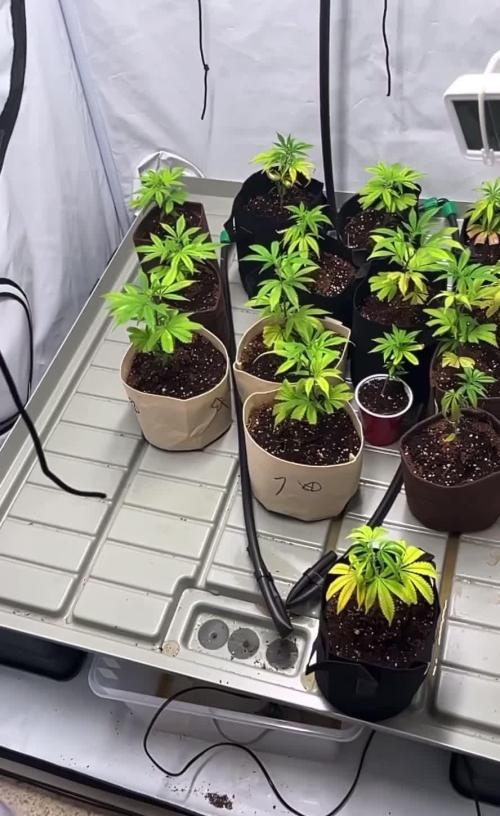
After a weeks that I took the clones from the other solo cups and transplanted from cups to 1 gallons fabric coco and cior, and install the water pipe and the irrigation system and all the systems that control the reservoir


Likes
146
Share


@Natrona
Follow
Apollo is coming along nicely and enjoying new friends, zkittles, gorilla cookies and granddaddy purple. All autos. Godzilla cookies is the runt.
Apollos schedule : Water & feed Tues, Thurs, and Sunday.
Increased TPS to early bloom at 9ml/g and Signal to 3ml/g. I think she could use more fertilizer but I'm gun shy on feeding too much.
I noticed the new leafs are thinner than veg leaves indicating early flower.
No pics on 10/12. My special day.
10/13 pics and video outside before first defoliation. And after defoliation.
Note to reduce impact of stress, I ground up 1 of my B vitamins and dispersed in water after feeding on Friday 13th.
Apollo is strong. Once I did definition you can really see her.
1)Very thick strong stem.
2) Very tight node structure. There was no space between the first and 2nd leaf group.
3) Side shoots almost as thick as the mail stem
4) roots at the soil top. I used MycoBliss in the soil and planting hole.
Friends, Royal Queen Seeds Is offering a discount on purchases
👉**GROWERS20** for 20% 👈
Https://www.royalqueenseeds.com
Link to Apollo
https://www.royalqueenseeds.com/us/56-f1-hybrid-cannabis-seeds
Variety: F1 Hybrid auto
Genetic Background: Lemon x Black Domina x Sugar Mangolia
THC: Very high
Yield: XXL
Height: 55 - 75 cm
Flowering time: 45 - 50 days
Harvest: 75 - 80 days after sprouting
Effect: Calming, Creative, Motivating , Physically Relaxing
Flavor: Citrus, Herbal, Lavender, Pine, Vanilla
Major terpenes: Caryophyllene, Farnesene, Myrcene, Terpinolene
Climate: Short Summers
====================================
Equipment: AC Infinity
CLOUDLAB 844 – Advance Grow Tent 48”x48”x80”
CONTROLLER 69 PRO – Grow Tent Controller
CLOUDLINE LITE 6 - Inline Fan 6"
IONBOARD S44 – LED Grow Light Board 400W
CLOUDRAY S6 – Oscillating Circulation Clip Fan
Carbon Filter 6”
Pots: 5 gallon Air pots
Soil Fox Farm Happy Frog amended with worm castings, dolomite lime and mycorrhiza.
Seeds provided by Royal Queen Seeds Check them out 😎
Https://www.royalqueenseeds.com
Link to the seeds
https://www.royalqueenseeds.com/us/56-f1-hybrid-cannabis-seeds
use Discount Code
👉 **GROWERS20** for 20% discount 👈
Nutrients: Total Plant Solution
>TPS1
>Canopy
>Signal
Amended soil recipe #2 used for soil prep.
https://www.paramountseedfarms.com/super-soil-recipes/


Likes
17
Share

@Chucky324
Follow
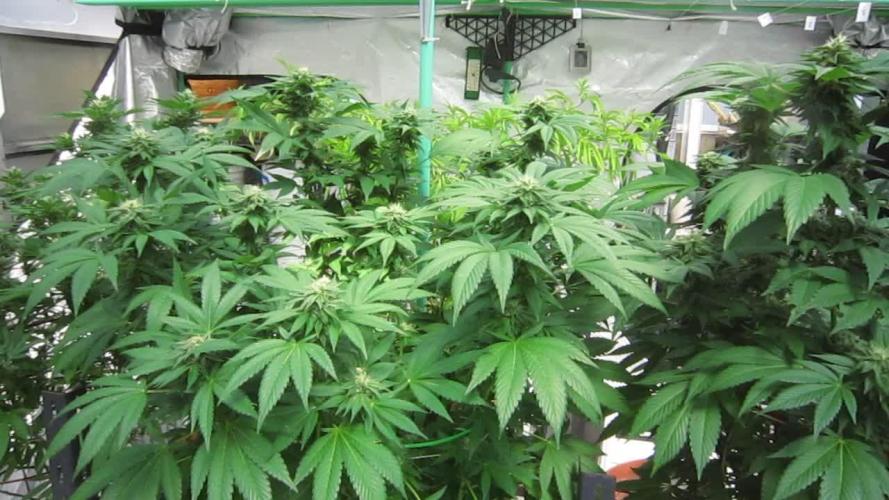
Hello. This is the end of week 5 and the beginning of week 6 of flowering.
Man what a marathon. Did a big harvest last week and didn't want to stop till it was done... So I didn't report last week.
Since I was finished the harvest... I vacuumed in here, and brought the 3 plants from the northside of this greenhouse, and put them in here.
This plant is growing well and looking good. It's got a few thrips marks on some of the lower leaves.
Still thinking about harvesting around Sept 1 or so, unless there's a problem with pests or mold.
OK. Keep Growing Straight.
Chuck.
Likes
10
Share


@BodyByVio
Follow
After 21 days in turbo cloner I transplanted 4 Sweet seeds Green Poison into 1 gallon plastic pots filled with Cana coco. Few days later I transplanted another 4 clones into DWC!
Stay tuned!
Coco feed at 700ppm
Dwc feed at 480ppm
Likes
2
Share


@Weedwithwes
Follow
16 day perfect slow dry.
Starting cure. You can smell the purple in this strain. Will update after a short cure and smoke test and getting an accurate smell description.
40 grams total of dry weight nice sized buds and structure. Super natural and pretty looking.
Likes
2
Share
@420DeepGrow
Follow
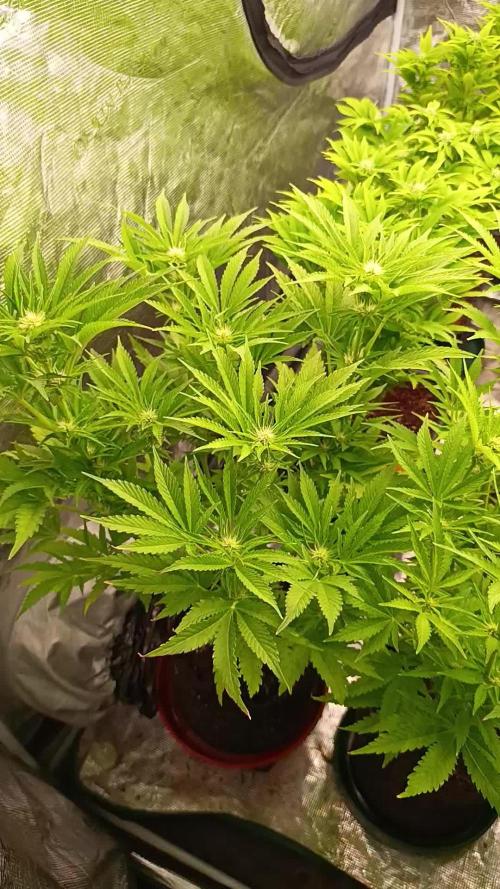
📆 Semana 4
El estiramiento se detiene y la estructura queda fijada. Las puntas comienzan a engrosar y los pistilos se densifican, marcando el paso a floración funcional.
La asimilación se mantiene estable, con hojas activas y sin excesos. Sticky Finger acompaña el cuajado sin saturar, mientras la planta entra en dinámica de engorde.
Semana de fijación y arranque floral.
Seguimos creciendo fuerte 💪!
Likes
4
Share


@NuttyYeti
Follow
She's coming along. I wish I could top it but being it's an auto that's probably not a good idea.
