Check the winners The Grow Awards 2026 🏆 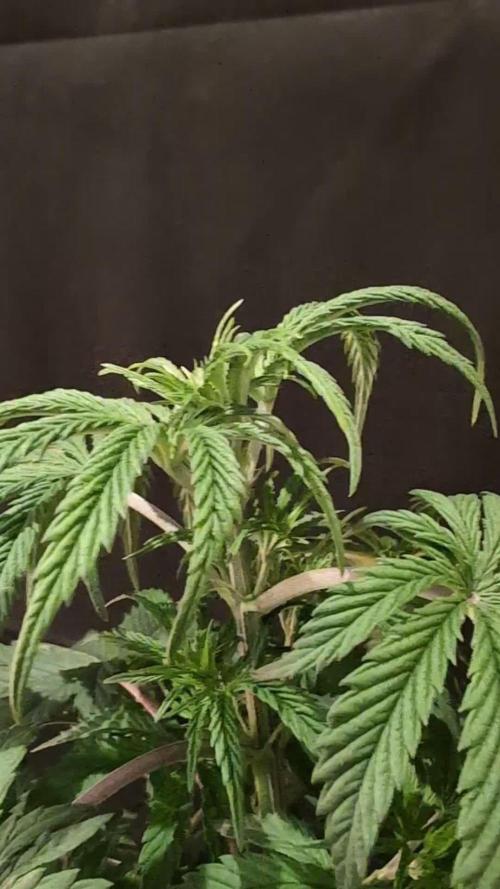










Likes
Comments
Share
@GoodTimesOrganics
Follow
Hi liebe Community and Welcome Back! 🌿💚
Die kleinen Äffchen kriegen richtig Fette Blätter! 🌄🐒
Hier im Weedefix Grow, erreichen wir aktuell eine höhe von 33 CM.
Nächste Woche, vermute ich werden die beiden Pflanzen in ihren neuen Topf umziehen und dort sieht Mann den Vergleich dann erst richtig, da dort dann die ganze Palette der organischen Growdünger zum Einsatz kommt.
Für den ultimativen Vergleich kommen bald noch zwei neue Diaries mit zwei identischen Stecklingen um genau zu beobachten wie was performed.
Die Pflanzen entwickeln sich super gut und sind sehr robust.
Die Seitentriebe bilden sich immer weiter aus. Die Blattform ist schön Breit und Buschig.
Die Umgebungsgegebenheiten sind aktuell gut:
—————
🌞 Temp: 24
🌚 Temp: 18°C bis 19°C
💨 RH: 58%
VPD: 0,91 kPa
💡ppfd: 330 mpm
—————
Viele Grüße 👋


Processing
Likes
10
Share
@Barcelona_Farmers710
Follow
Buenas Farmers!
Otra semana más y pasaremos a Flora, esperando a ver si podemos obtener nuevo equipo de @todoGrowled para llevar el verano más llevadero... Después de recuperase de las Plagas empieza coger buen color esto.🍁

Likes
8
Share
@Motaybongs
Follow
Dli 40.
Nice bud forming, loving the Ec 2.2.
Gorilla zkittles seems an indica pheno pretty short.
Mendocino x animal cookies just amazing sativa phenos.
Some weeks to go. Definitely one plant will take longer to mature. So planning to get a small drying tent. Any recommendation?


Likes
52
Share
@Ultraviolet
Follow
You don't become confident by shouting affirmations in the mirror, but by having a stack of undeniable proof that you are who you say you are, outwork your self-doubt.
Nitrogen fixation is a chemical process by which molecular nitrogen (N2), which has a strong triple covalent bond, is converted into ammonia (NH3) or related nitrogenous compounds, typically in soil or aquatic systems but also in industry. The nitrogen in air is molecular dinitrogen, a relatively nonreactive molecule that is metabolically useless to all but a few microorganisms. Biological nitrogen fixation or diazotrophy is an important microbe-mediated process that converts dinitrogen (N2) gas to ammonia (NH3) using the nitrogenase protein complex (Nif).[2][3]
Nitrogen fixation is essential to life because fixed inorganic nitrogen compounds are required for the biosynthesis of all nitrogen-containing organic compounds, such as amino acids and proteins, nucleoside triphosphates and nucleic acids. As part of the nitrogen cycle, it is essential for agriculture and the manufacture of fertilizer. It is also, indirectly, relevant to the manufacture of all nitrogen chemical compounds, which include some explosives, pharmaceuticals, and dyes.
Nitrogen fixation is carried out naturally in soil by microorganisms termed diazotrophs that include bacteria, such as Azotobacter, and archaea. Some nitrogen-fixing bacteria have symbiotic relationships with plant groups, especially legumes.[4] Looser non-symbiotic relationships between diazotrophs and plants are often referred to as associative, as seen in nitrogen fixation on rice roots. Nitrogen fixation occurs between some termites and fungi.[5] It occurs naturally in the air by means of NOx production by lightning.[6][7]
All biological reactions involving the process of nitrogen fixation are catalyzed by enzymes called nitrogenases.[8] These enzymes contain iron, often with a second metal, usually molybdenum but sometimes vanadium.
Green clover (Fixation)
White clover (Fixation)
Red Clover. (Fixation)
Yellow Clover. (Fixation, deeper roots)
Sweet Thai Basil. (Terpenes)
Italian Basil. (Terpenes)
Chamomile.(Oil production)
Borage.(Pest attraction taste)
Lavender.(Pest attraction smell)
Marigold(Pest attraction visual)
Mycorrhizae are beneficial associations between mycorrhizal fungi and a plant’s root system. Mycorrhizal fungi spores germinate in the soil, creating filaments (hyphae) that penetrate the root cells, thus establishing a symbiotic relationship. This collaboration leads to the development of both intra-radical and extra-radical networks of filaments, enabling efficient exploration of the soil for enhanced access to nutrients and water. Consequently, these vital resources are transferred to the plant, resulting in numerous benefits for crop cultivation.
Various mycorrhizal products are available in diverse formulations (powder, granular, and liquid), concentrations, and qualities. Ongoing advancements in products, technologies, and research are reshaping our understanding of mycorrhizae. Despite these positive developments, certain misconceptions persist. In the following discussion, we aim to clarify the truths and dispel the myths surrounding mycorrhizae products.
MYTH #1
A HIGHER NUMBER OF MYCORRHIZAE SPECIES MEANS BETTER RESULTS.
Contrary to common belief, having a higher number of mycorrhizae species in a product does not translate to better results; in fact, it often yields the opposite outcome. A plant can sustain only one association with a particular mycorrhizal fungi species. Introducing multiple species creates competition among them, which is not advantageous for the plant. The initial colonizer does not ensure the highest success; instead, it gains precedence. It is recommended to select a product with a concentrated presence of a single mycorrhizae species known for its effective performance, rather than opting for a product with multiple species at lower concentrations.
MYTH #2
ECTOMYCORRHIZAE ARE EFFECTIVE FOR CANNABIS PLANTS.
Although ectomycorrhizae can colonize five to ten percent of plant species, cannabis is not among them. Ectomycorrhizae do not penetrate the root cells; instead, they develop around the roots and on the exterior. For cannabis plants, it is essential to seek out endomycorrhizae. Endomycorrhizae are capable of colonizing 70% to 90% of plant species, including cannabis. Unlike ectomycorrhizae, endomycorrhizae penetrate the root cells, forming structures like arbuscules for the exchange of nutrients and water with the plant.
MYTH #3
WHOLE INOCULANT (PROPAGULES) PERFORM BETTER THAN ONLY VIABLE SPORES.
The propagule count specified on most mycorrhizae products indicates the presence of spores (viable and unviable), hyphae, and root fragments. However, it is crucial to note that only viable spores, those with the capacity to germinate, can successfully colonize a plant’s root system. Spores are to mycorrhizal fungi what seeds are to cannabis plants—a fundamental component enabling fungi reproduction. Consequently, even if a mycorrhizal product boasts millions of propagules, its effectiveness hinges on the presence of viable spores. Without viable spores, the product will not contribute to plant development. Therefore, the genuine value of a mycorrhizal inoculant lies in the quantity of viable spores it contains, as only viable spores can efficiently initiate symbiosis.
MYTH #4
ALL METHODS OF APPLICATION YIELD IDENTICAL RESULTS.
To establish the symbiosis, mycorrhizal fungi spores must be close to the plant roots. The optimal recommendation is to directly apply mycorrhizal inoculant to the roots, either in powder, granular or slurry form. This method ensures maximum proximity between the spores and the roots, facilitating a rapid establishment of symbiosis. Particularly with crops like cannabis, which have a short growing cycle, employing this technique is the most effective way to obtain optimal benefits. Alternatively, techniques such as blending the inoculant with the soil are effective, but there may be a delay in the establishment of symbiosis. This is because the roots need to grow and come into contact with the dispersed spores throughout the growing media.
MYTH #5
MYCORRHIZAE CAN ONLY BE GROWN ON LIVING PLANTS.
While the predominant method for commercially producing mycorrhizae involves growing them on the root systems of living plants (in vivo production), it is not the exclusive nor the optimal technique. In fact, this production approach has notable drawbacks that the “root organ culture” method just does not have (in vitro production). In vitro production occurs in meticulously controlled, aseptic laboratory conditions, allowing for the consistent generation of products that are viable, highly concentrated, species-specific, and free from pathogens. Achieving such precision and quality is impossible when relying on the cultivation of mycorrhizal fungi on plants exposed to external conditions.
In conclusion, it is crucial to take all these factors into consideration when choosing the appropriate product for your crop to fully harness the wide array of benefits provided by a high-quality mycorrhizal product.
STRONGER PLANT – Stress resistance.
FASTER GROWTH – Improve plant structure and shorter veg time.
INCREASE YIELD – Overall more biomass.
IMPROVED QUALITY – Increase cannabinoids and terpenes content.

Likes
43
Share
@inversi0n
Follow
Hello, readers!
Growing pretty good in general.
She recovered from my precious accident, when I broke a brunch. But she also begin slowly falling sideways. Actually, she started it quiet long time ago, but now, I noticed it's progression day by day, so decided to tie her a little bit, so she'll be more straight.
I cannot upload some videos again. Idk what the problem is, at least I've uploaded video with roots. 😓
I like, that leaves doesn't continue getting burn tips, new leaves looks good, and the previous doesn't get worse, so the solution fits good now.
Want to mention that orthophosphoric acid turns out to be super stable compare to the citric acid.
It may be hard to understand her size by photo, I wanna remind, that my tent is 1m*1m*2m(tall). And she kind of taking almost all of that place with maybe 0-5-10cm gap to the walls.
For the last 4 weeks smell didn't change that much. And now I start to smell something more than just grass or weed.
When I smell it, I feel dry ground->carrots->canned peaches-> skittles. But it's actually the same smell, depends on how long and strong would you inhale.
Feeding:
(Kinda Micro) NPK20, B 0.01, Cu 0.02, Fe 0.04, Mn 0.01, Mo 0.002, Zn 0.002 - 0.36 gr/liter.
(Kinda Grow) N 15.5 CaO 26 - 0.14 gr/liter.
(Kinda Bloom) NPK 0 0 51 + So3 34 - 0.22gr/liter
(Kinda Bloom) NPK 0 52 34 - 0.32 gr/liter.
Orthophosphoric acid 85%(H3PO4) - 0.06 ml/liter
TriPart Grow - 0.25 ml/liter. Added cause I needed Mg, which I doesn't have in a new crystal fertilizer
Sensizym - 1 ml/liter. It's empty now, don't think I'll buy it again.
Processing
Likes
5
Share
@straingang
Follow
8 mains filling out after top and bend, hairs are starting everywhere, every original fan leave has been removed.
Likes
10
Share
@LittleManGrow
Follow
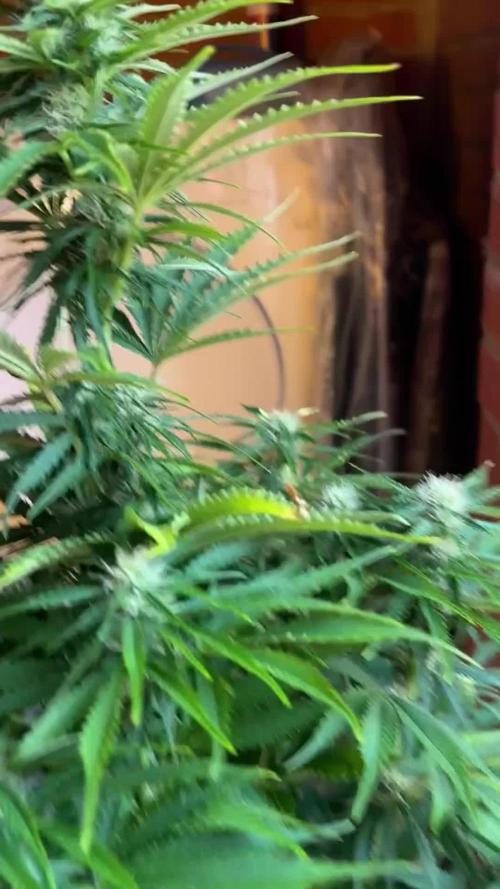
Plants are doing well, The 84" inch tent is a must if your not training or topping. I removed all the sacks that appeared last week and I haven't seen anymore show up so fingers cross, I check daily. Bigger tent also helps with heat control as the air has more room to rise. Hope you all like the pictures, I started to take videos as they provide more detail with less work.


Likes
2
Share
@Alejangrow
Follow
Plucked a few more leaves and rearranged some plants this time around. Other than that just changed the nutrient solution as usual. I like to break the resin heads with my fingers by rubbing a sugar leaf to get a nice smell from the plants and these smell of a very fruity scent with a hint of pine on the end. Hopefully I can bring out some of that profile in the cure. 👍


Likes
65
Share
@Dendegrow
Follow
Week 2 of the flowering phase flew by 🌱💨. Unfortunately, I may have overdone it with potassium or kept the water level too high – the classic signs of clawing leaves were evident. Thankfully, they seem to be recovering now and are back under control 💪🍃.
My IR night experiment is showing clear results 🌌: The plants exposed to infrared radiation at night stretched significantly more. This might be especially beneficial for this indica-dominant strain as it leads to better canopy distribution, improved airflow, and reduced risks of mold and disease. Plus, the light distribution is much more efficient now, which I’m excited to see pay off.
On the downside, my Orange Sherbert turned hermaphroditic 😔. It’s hard to pinpoint the cause – overfertilization seems unlikely since I’m using only organic nutrients. I suspect it might be linked to an E-field experiment I’ve been running. To confirm this theory, I’ll conduct a new grow with a similar strain next year to see if the electric field negatively impacts cannabis development.
Stay tuned for updates! Drop a like and follow along for more grow insights 🌿✨. See you next week!
Woche 2 der Blütephase ist wie im Flug vergangen 🌱💨. Leider habe ich wohl etwas zu viel Kalium gegeben oder den Wasserstand zu hoch gehalten – die typischen Anzeichen von Adlerkrallen waren sichtbar. Zum Glück scheinen sich diese jetzt zurückzubilden und sind wieder unter Kontrolle 💪🍃.
Mein IR-Nachtexperiment zeigt bereits deutliche Ergebnisse 🌌: Die Pflanzen, die nachts mit Infrarotstrahlung bestrahlt wurden, haben deutlich stärker gestretcht. Das ist besonders bei dieser indica-dominanten Sorte wahrscheinlich von Vorteil, da es zu einer besseren Verteilung des Blätterdachs führt. Dadurch verbessert sich die Luftzirkulation, das Risiko von Schimmel und Krankheiten wird minimiert, und die Lichtverteilung wird effizienter. Ich bin gespannt, wie sich das weiter auswirkt!
Leider hat meine Orange Sherbert gezwittert 😔. Woran das genau liegt, kann ich schwer sagen. Eine Überdüngung halte ich für unwahrscheinlich, da ich nur biologischen Dünger verwendet habe. Ich vermute, dass mein E-Feld-Experiment eine Rolle spielt. Um das zu bestätigen, werde ich nächstes Jahr einen neuen Durchlauf mit einer ähnlichen Sorte machen und prüfen, ob das elektrische Feld tatsächlich eine ungünstige Rückentwicklung der Pflanze verursacht.
Bleibt dran, lasst ein Like da und folgt mir für weitere Updates 🌿✨. Bis nächste Woche!

Likes
12
Share
@Sativagrad
Follow
Hi, I have a little problem with powdery mildew after the rain, so I removed a lot of leaves for better ventilation and easier handling, the smell is amazing, while removing the leaves my hands were all in resin.



Likes
1
Share
@Bones_1986
Follow
Day 43
Lowered grow dose
Increased bloom & top max
Replaced rhino skin with big bud
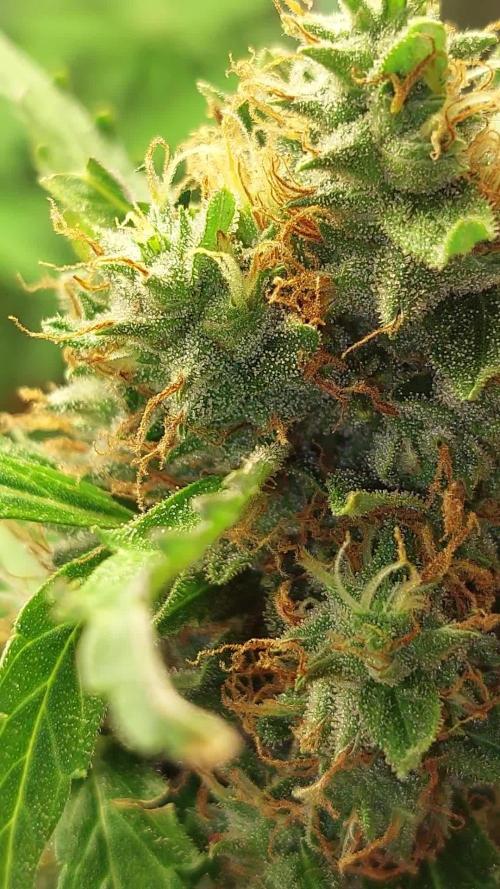
buds are stacking nicely, pistils are exploding, and frost is coming in.
All 3 plants showing slight stress which I believe is from the strong 600w HPS light. Nothing of concern, however not a lot I can do as light is already as full height, however Will Increase air flow more upward.
Day 44
Frost has arrived. Bud sites really started to fill out now. Drinking 3L every 1.5 days. Last feed was no grow as wanna cut back on N, and a 50% feed of other nutrients to reduce nute burn. Very happy with progress so far.
Day 46
Increased bloom dose, and cut back on all other nutes. Very happy so far.


Likes
7
Share
@Jardineiro_Br
Follow
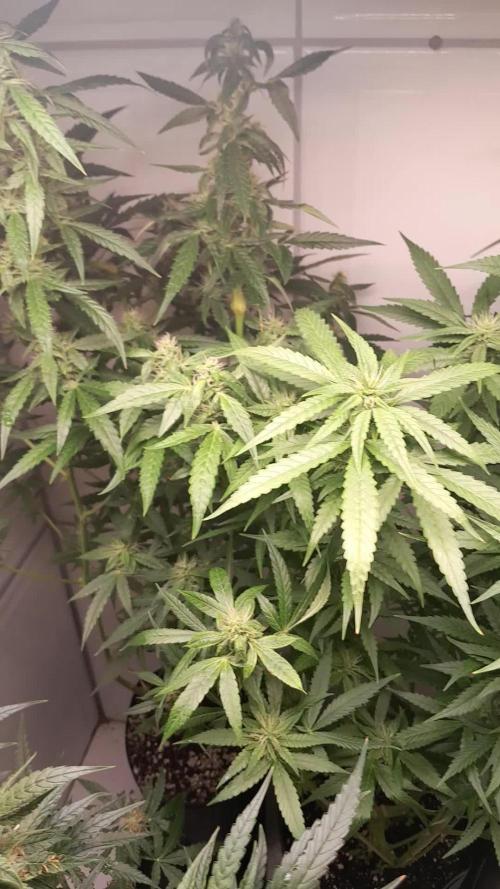
Era pra ser duas plantas, tinha espaço coloquei mais uma , elas estao com uma semande diferença entre elas , da para perceber os estágios nas fotos.


Likes
14
Share
@CURATI_DA_SOLO
Follow
Questa settimana stanno gonfiando moto sono resinosissime e inizia veramente a sentirsi la puzza anche fuori la tenda....ora inizierò a cercare di dare le ultime botte e poi inizierò a risaquare un po'! Le cime sembrano durissime!

Likes
4
Share
@Z420Organics
Follow
Fastbuds Auto Update – Unexpected Harvest 🚨🌱
A major issue came up this week — my dehumidifier broke down! 😱
Until it’s repaired or replaced, it will take several days, and in the meantime, the humidity has been spiking up to 80%. 💦🌫️
With Botrytis (bud rot) lurking in these conditions, I had to take action. Today, I harvested two plants, even though they weren’t fully ready yet. 🌸✂️ Better to be safe than lose everything to mold!
They went straight into the fridge for a slow dry 🌿 — not the original plan, but it’s the best way to protect the quality under these circumstances.
Fingers crossed 🤞 that the rest will make it through until I get the humidity under control! 🌱💚.


