






Likes
5
Share


@GrowDr
Follow
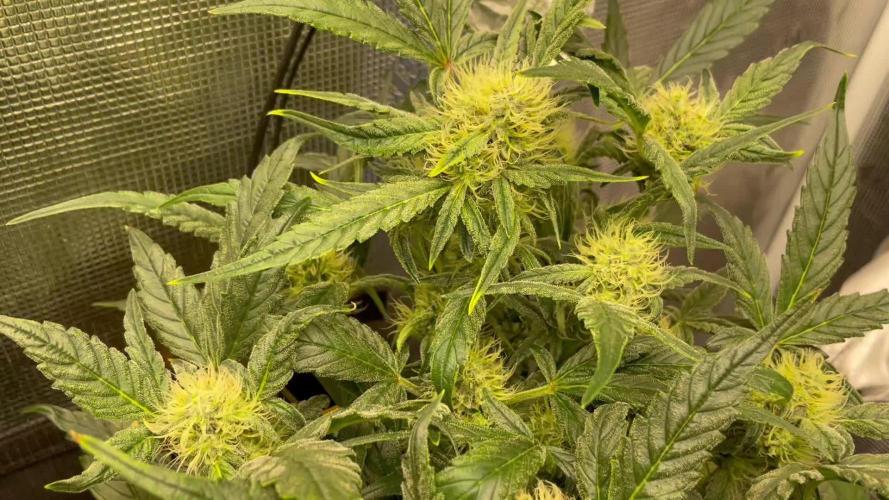
I Pruned all the lower herming sections and lowered the far red % as well.
Lots of trichomes, which is always awesome. Smell is amazing

Likes
18
Share


@MrDainAndToeniAsiaCrew
Follow
6plants So good & one genetic error or I don’t know how
But I care


Likes
2
Share


@Velk1
Follow
Plant grew out doing its thing , med feeder can handle rough conditions and heat ! Great for beginners

Likes
52
Share


@Ultraviolet
Follow
You don't become confident by shouting affirmations in the mirror, but by having a stack of undeniable proof that you are who you say you are, outwork your self-doubt.
Nitrogen fixation is a chemical process by which molecular nitrogen (N2), which has a strong triple covalent bond, is converted into ammonia (NH3) or related nitrogenous compounds, typically in soil or aquatic systems but also in industry. The nitrogen in air is molecular dinitrogen, a relatively nonreactive molecule that is metabolically useless to all but a few microorganisms. Biological nitrogen fixation or diazotrophy is an important microbe-mediated process that converts dinitrogen (N2) gas to ammonia (NH3) using the nitrogenase protein complex (Nif).[2][3]
Nitrogen fixation is essential to life because fixed inorganic nitrogen compounds are required for the biosynthesis of all nitrogen-containing organic compounds, such as amino acids and proteins, nucleoside triphosphates and nucleic acids. As part of the nitrogen cycle, it is essential for agriculture and the manufacture of fertilizer. It is also, indirectly, relevant to the manufacture of all nitrogen chemical compounds, which include some explosives, pharmaceuticals, and dyes.
Nitrogen fixation is carried out naturally in soil by microorganisms termed diazotrophs that include bacteria, such as Azotobacter, and archaea. Some nitrogen-fixing bacteria have symbiotic relationships with plant groups, especially legumes.[4] Looser non-symbiotic relationships between diazotrophs and plants are often referred to as associative, as seen in nitrogen fixation on rice roots. Nitrogen fixation occurs between some termites and fungi.[5] It occurs naturally in the air by means of NOx production by lightning.[6][7]
All biological reactions involving the process of nitrogen fixation are catalyzed by enzymes called nitrogenases.[8] These enzymes contain iron, often with a second metal, usually molybdenum but sometimes vanadium.
Green clover (Fixation)
White clover (Fixation)
Red Clover. (Fixation)
Yellow Clover. (Fixation, deeper roots)
Sweet Thai Basil. (Terpenes)
Italian Basil. (Terpenes)
Chamomile.(Oil production)
Borage.(Pest attraction taste)
Lavender.(Pest attraction smell)
Marigold(Pest attraction visual)
Mycorrhizae are beneficial associations between mycorrhizal fungi and a plant’s root system. Mycorrhizal fungi spores germinate in the soil, creating filaments (hyphae) that penetrate the root cells, thus establishing a symbiotic relationship. This collaboration leads to the development of both intra-radical and extra-radical networks of filaments, enabling efficient exploration of the soil for enhanced access to nutrients and water. Consequently, these vital resources are transferred to the plant, resulting in numerous benefits for crop cultivation.
Various mycorrhizal products are available in diverse formulations (powder, granular, and liquid), concentrations, and qualities. Ongoing advancements in products, technologies, and research are reshaping our understanding of mycorrhizae. Despite these positive developments, certain misconceptions persist. In the following discussion, we aim to clarify the truths and dispel the myths surrounding mycorrhizae products.
MYTH #1
A HIGHER NUMBER OF MYCORRHIZAE SPECIES MEANS BETTER RESULTS.
Contrary to common belief, having a higher number of mycorrhizae species in a product does not translate to better results; in fact, it often yields the opposite outcome. A plant can sustain only one association with a particular mycorrhizal fungi species. Introducing multiple species creates competition among them, which is not advantageous for the plant. The initial colonizer does not ensure the highest success; instead, it gains precedence. It is recommended to select a product with a concentrated presence of a single mycorrhizae species known for its effective performance, rather than opting for a product with multiple species at lower concentrations.
MYTH #2
ECTOMYCORRHIZAE ARE EFFECTIVE FOR CANNABIS PLANTS.
Although ectomycorrhizae can colonize five to ten percent of plant species, cannabis is not among them. Ectomycorrhizae do not penetrate the root cells; instead, they develop around the roots and on the exterior. For cannabis plants, it is essential to seek out endomycorrhizae. Endomycorrhizae are capable of colonizing 70% to 90% of plant species, including cannabis. Unlike ectomycorrhizae, endomycorrhizae penetrate the root cells, forming structures like arbuscules for the exchange of nutrients and water with the plant.
MYTH #3
WHOLE INOCULANT (PROPAGULES) PERFORM BETTER THAN ONLY VIABLE SPORES.
The propagule count specified on most mycorrhizae products indicates the presence of spores (viable and unviable), hyphae, and root fragments. However, it is crucial to note that only viable spores, those with the capacity to germinate, can successfully colonize a plant’s root system. Spores are to mycorrhizal fungi what seeds are to cannabis plants—a fundamental component enabling fungi reproduction. Consequently, even if a mycorrhizal product boasts millions of propagules, its effectiveness hinges on the presence of viable spores. Without viable spores, the product will not contribute to plant development. Therefore, the genuine value of a mycorrhizal inoculant lies in the quantity of viable spores it contains, as only viable spores can efficiently initiate symbiosis.
MYTH #4
ALL METHODS OF APPLICATION YIELD IDENTICAL RESULTS.
To establish the symbiosis, mycorrhizal fungi spores must be close to the plant roots. The optimal recommendation is to directly apply mycorrhizal inoculant to the roots, either in powder, granular or slurry form. This method ensures maximum proximity between the spores and the roots, facilitating a rapid establishment of symbiosis. Particularly with crops like cannabis, which have a short growing cycle, employing this technique is the most effective way to obtain optimal benefits. Alternatively, techniques such as blending the inoculant with the soil are effective, but there may be a delay in the establishment of symbiosis. This is because the roots need to grow and come into contact with the dispersed spores throughout the growing media.
MYTH #5
MYCORRHIZAE CAN ONLY BE GROWN ON LIVING PLANTS.
While the predominant method for commercially producing mycorrhizae involves growing them on the root systems of living plants (in vivo production), it is not the exclusive nor the optimal technique. In fact, this production approach has notable drawbacks that the “root organ culture” method just does not have (in vitro production). In vitro production occurs in meticulously controlled, aseptic laboratory conditions, allowing for the consistent generation of products that are viable, highly concentrated, species-specific, and free from pathogens. Achieving such precision and quality is impossible when relying on the cultivation of mycorrhizal fungi on plants exposed to external conditions.
In conclusion, it is crucial to take all these factors into consideration when choosing the appropriate product for your crop to fully harness the wide array of benefits provided by a high-quality mycorrhizal product.
STRONGER PLANT – Stress resistance.
FASTER GROWTH – Improve plant structure and shorter veg time.
INCREASE YIELD – Overall more biomass.
IMPROVED QUALITY – Increase cannabinoids and terpenes content.

Processing
Likes
21
Share


@LittleBigTrees
Follow
I started Flushing two plants as there nearing the end of there days. I'll start Flushing the others this week apart from the kalimist indica pheno as it started flowering 3 or so weeks after the others even though they were all forced together. (alkward bugger)
Some of the plants are showing red /purple colours a little bit 👍
Likes
41
Share


@TerpTurtle
Follow
-Set up a 4x4 with the mars hydro FC6500 and planning to do a more hands off grow style the first run with clones in auto pots
-Swapped my older model AC Infiniti T4 exhaust with the cloudline T6 equipped with the new controller 69 for complete grow automation.
-Ordered the adapter to connect my HLG 350R with the controller 69 allowing automated light control dim switches between RH & temperature and sunrise/sunset effect.
-Flipping to flower
-Heavy selective defoliation /start lollipop cleanup
-Foliar fed
Likes
5
Share


@TJHeadley
Follow
Jack herer still never popped. Wedding Cake growing the fastest out of the 3. Cherry Cola in second place and Bruce Banner in third
Likes
126
Share


@nonick123
Follow
Dia 20 (05/02) Han pasado 8 días desde el ultimo riego. El sustrato de PRO-MIX HP se encuentra esponjoso al tacto a pesar de que está seca la parte superior
Riego 1 Litro H20 + Wholly Base 1,25 ml/l + Solid Green 0,5 ml/l + Rise Up 1 ml/l de Gen1:11 - pH 6,23 TDS 660 PPMs
Día 22 (07/02) Vamos a probar a hacer este ciclo con LST
Día 23 (08/02) A +24 horas la planta ha reaccionado muy bien al LST. Se han estirado las ramas inferiores y la rama apical se sigue estirando
Día 25 (10/02) Sigo con ajustes de LST para abrir la canopia. La planta está reaccionando con mucho vigor 😍💥
Día 26 (11/02). Riego 1 Litro H20 + Wholly Base 1,5 ml/l + Solid Green 0,75 ml/l + Rise Up 1,25 ml/l de Gen1:11
TDS 780 PPMs - pH 6,36 (mínimo ajuste con pH+ para subirlo desde 6,2)
La planta avanza vigorosa. En una semana pasamos a 12/12 😁
Nutrients by Gen1:11 - www.genoneeleven.com
Substrate PRO-MIX HP BACILLUS + MYCORRHIZAE - www.pthorticulture.com/en/products/pro-mix-hp-biostimulant-plus-mycorrhizae
Likes
11
Share

@Radagast_
Follow
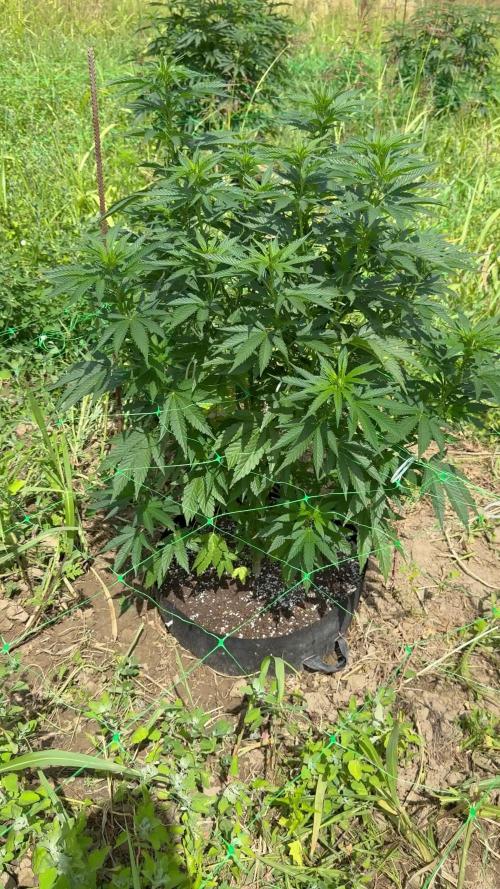
11.07.
Girl Scout Cookies
Day 77#
Today is the end of the eleventh week for the plants.
There were storms all week and with the fact that they spent almost the whole week under stress (they were also under heat stress a couple of days before), I am certainly satisfied with the progress.
On Tuesday, they were watered for the last time, with clean water, then it rained, and the next day it rained all day, since then they have not been watered, as soon as the soil dries I will feed them.
Below in the table is the food that they received last time, but it is included in this week, and I introduced that as well.
Stay High and Keep Growing!!!


Likes
46
Share


@UnorthadoxDude
Follow
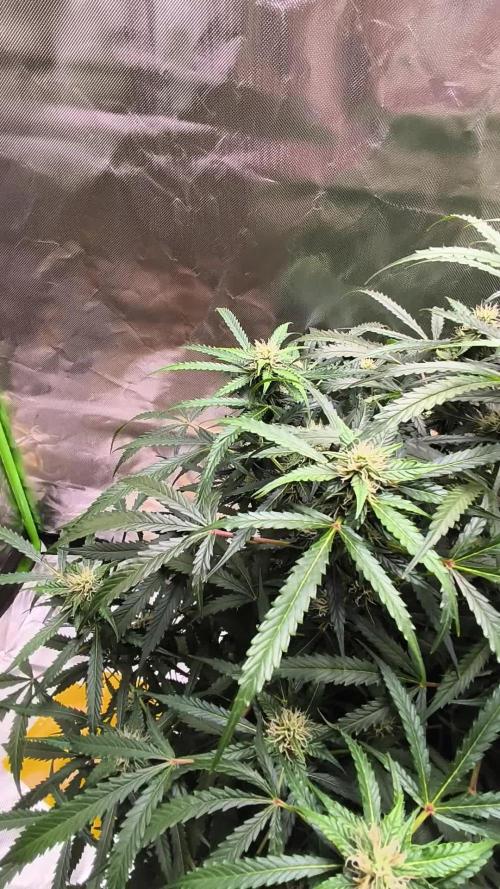
Hello growmies! Welcome to week 19 the final week for Nesia, this Amnesia Haze Auto by Fast Buds.
She was harvested on day 132.
Harvest and report to follow.


Likes
7
Share


@Purplewaterline
Follow
this is during week 3. gave the plants a sprouted seed tea and thats why they look so happy.

Likes
10
Share


@shwable
Follow
It's an amazing journey and flowering time has started! Welcome to week 7💚
They are stretching really good I am excited to see how tall they get


Likes
1
Share


@Elguacho420
Follow
Buenas a tod@s!!! Curta semana de floración de las red cookie gelato , la verdad que la variedad va creciendo bien, la veo fuerte más allá alguna caga...da que habré hecho x eso lagunas hojas amarillas y algunos errores más de novato, es mi primer indoor así q pegas, muchas, como x ej el "exceso" de nutrientes q marcan las hojas, como tanbm la "falta de nutrientes" q marcan las hojas( no todas las hojas ni todas las variedades), esty un poco confuso con ese tema, no me excedo en los ml del producto, hay riegos de agua de x medio tanbm 🤷🏻♂️ es obvió que esto me pasaría, pero siempre con la buena onda y con la positiva... 🙌🏻👍🏻 Se las ve fuerte y en nada veremos qué tal sale todo, hay una que se adelantó bastante, las demás van bien y x lo q queda de tiempo creo q saldran justo a tiempo... Buen finde para tod@s y buenos humos a seguir aprendiendo... 💨💨🇦🇷🤝🏻🇪🇦🏻♂️
Processing
Likes
10
Share


