


Likes
Comments
Share


@all_about_420
Follow
Der Moment der Ernte ist gekommen und die drei Amnesia Haze von @GanjaFarmerSeeds haben das Zelt mit einem betörenden Aroma verlassen. Die Qualität der Blüten ist durchweg beeindruckend: Während die mittlere und die große Pflanze mit ihren tiefen Purpletönen und massiven Bud-Strukturen bestechen, hat die kleinste Lady durch die drei zusätzlichen Tage Reifezeit massiv an Dichte und Trichombesatz aufgeholt. Alle drei Phänotypen sind nun perfekt ausgereift und zeigen eine klebrige, schwere Harzschicht, die die Scheren ordentlich fordert. Um die gesamte Reise dieser Genetik festzuhalten, habe ich ein Zeitraffer-Video von Tag 1 bis zum Ende hochgeladen, das die beeindruckende Transformation und Vitalität dieser Sorte dokumentiert. Jetzt geht es in die kontrollierte Trocknung, um die Terpenprofile optimal zu konservieren.

Likes
16
Share


@GreeneScene
Follow
This week was a good one . Stellar initial growth this round after upgrading lights & using homemade super soil. My 3 day old plants looked like 9 day old plants of my last run to give an idea . I watered for the first time since planting on 5/17 .
I had to itch to test the runoff since it’d only take a sec right? All the ph’s came out almost 2 points lower than when they went in so I decided on a flush even though I’m using Dry amendments.
Honestly I didn’t have the problem of fluctuating ph’s before I added that Peat Moss to my supersoil in hindsight I wish I would have just ordered 1 more 11lb brick of CoCo Coir .
I had the idea that I may need to flush a day or two prior to watering when I noticed all my stems purple.
I get it could be genetics but ALL of them where purple . Here today it is 1 full day since I flushed & all of the stems are now Green with the exception of my Runtz seedling.
3/17 will make day 7 for Runtz & #1 of the GDP
3/18 will make day 7 for Zkittlez & the 3 remaining GDP.
I intended to transplant these ladies day 13 preferably into their forever homes of 3g fabric pots . Fingers crossed day 14 they’ll be ready to start some LST.

Likes
8
Share


@AustinRon
Follow
Week 9 - Flower 5
Sangria - by Twenty20 Mendocino
4Q 2022
Flower Week 5: Wednesday 01 March - Tuesday 07 March 2023
Start of Week: [ 2022-03-01, SA20 64:F:9:1]
End of Week:
[ 2023-03-07, SA20 70:F:9:7]
HeightWeekStart: [ 14, in]
HeightWeekEnd: [14, in]
Start Date: 28.12.2022 # Seeds Wet
Harvest Window: 17 - 27 March 2023, 79 - 89 Days
EnvironmentGermination
- LightDistance: [ 14.5, in]
- LightStrength: [911, 505, µmol/m2/s]
- Temp: [ 79, 85, °F]
- RH: [ 73, pct]
- HumidifierTrigger: [ 69, %]
Fertigation
(BioAg, Mammoth-P)
__________________________
Wednesday 01 March 2023
SA20 64:F:9:1
- BluMat dumped, Temperature lowered (Chilled Water), humidity stabilized. Showing water stress, expect to fade by tonight.
Thursday 02 March 2023
SA20 65:F:9:2
Friday 03 March 2023
SA30 66:F:9:3
- USB Fans Failing - either the connectors (Hate USB-B!) - rotating replacements. Need a long term solution.
Saturday 04 March 2023
SA20 67:F:9:4
- LightIntensity: [ 898, 549, µmol/m2/s]
- Replaced fan - charging two others. Minor defoliation to remove fans blocking mains.
- Pot still has MAJOR HEFT


Sunday 05 March 2023
SA20 68:F:9:5
- [ ] Refill Reservoir: [1.5, gal]
- [ ] Mammoth-P: [ 9, drops]
- [ ] Ful-Power: [ 30, ml]
- [ ] SLF-100: [7 .5, ml]
Monday 06 March 2023
SA20 69:F:9:6
- Still struggling w/ Fans
- Temp Reached 85 °F - Raised Fan to 4 (from 2)
- Set BluMat 1/2 pt back - Petiole droop. Let’s see if cooler better . . .
Tuesday 07 March 2023
SA20 70:F:9:7
- BluMats Dumped Overnight (1.5 Gal)
- Removed some fans blocking airflow
- No Humidifier Runoff
- Reduced Light to Reduce MAX TEMP
- LightStrengthPeakMin: [ 1031, 534, µmol/m2/s]
_____________________

Next week (Nominal Flower 10)
Wednesday 22 March 2023
SA20 71:F:10:1

Likes
4
Share


@Maximilian1234
Follow
Blütewoche 6
Was soll ich sagen die Blüten werden immer fetter und fester. Ich bin eigentlich nur noch alle zwei Tage am gießen. Mehr ist nicht zu tun. Gut das die Gemüseanzucht wieder los geht sonst wäre es fast langweilig 😉
Die Pflanzen sehen nach wie vor sehr gesund aus, lediglich im unteren Bereich merkt man langsam das Nährstoffe verlagert werden. Trauermücken sind kaum noch zu sehen. Da haben die fressfeinde sich wohl gelohnt.
Die Skywalker ist eine sehr einfach anzubauende Sorte.
Bei mir haben sich meiner Meinung nach 4 unterschiedliche Phenos gezeigt.
Lasst mir dazu aber gerne eure Meinung da!
Liebe Grüße 🖖

Likes
21
Share


@Noma420
Follow
Day 100 - 39 flowering
I am getting worried about temp inside the tent. Yeaterday when i check, it was heating 30Celsius. And outside was 24... i dont know what could be... i put a new fan inside, maybe it is making more heat!!
On the other hand, plants are looking nice. Frosting, buds are developing, smell is great...


Processing
Likes
1
Share


@SGCFarms
Follow
Showing pistils like crazy only 7 days in. Will be switching her into the main flower tent and release her from all LST tie downs. I will defoliate if there becomes too much fan leaves covering lower potential.

Likes
26
Share


@deepsheeba
Follow
Ok my dear fellows. I've upgraded my tent in a 1m X 2m. With this setup and a high potent dehumidifier I should be able to keep the humidity low.
Unfortunately this high humidity was going too kill two other crops. With this setup I should reduce that risk again.
So the RHC is now together with the others. She is bulking a lot. There have been a little discoloration on the upper leaves. It might have been the light too strong. This is weird because I'm providing 1500 ppm CO2. All the other parameters are ok so it must have been a little lack of water some days ago. Smell starts to be very noticeable BUT it doesn't reminds me weed but instead citronella. I thought that's why I don't see mosquitos in the room.
To the next week
*Changed nutrients ratio to meet to lower the EC but keeping PK at the level of (40ppm - 100 ppm).
*Next upgrade will be a tower fan to increase the airflow


Likes
7
Share


@KannaKullektiv
Follow
Hiiigh friends 🙌
Welcome to week 4. 😍
They have grown well in size and the one on the far left has overtaken her two sisters although she shows signs of a deficiency. 😊
I have noticed a calcium magnesium deficiency because I only water with osmosis water. What to you think?
See you next week. 👋
Arturo for KannaKullektiv
🙏


Likes
45
Share


@Ultraviolet
Follow
2nd net is up. Early bud formations are promising. holding up to the extremes pretty well, some leaves taking minor damage, but overall, she is holding up, gave her 1 night at 50F see how she would react, stressful. Not advised as it messes with her metabolism, but I want to see if it triggers any anthocyanin response. Love to see her purp up but no signs yet.
My homework.
Rubisco regeneration is intrinsically linked to nitrogen supply because Rubisco is a major sink for nitrogen in plants, typically accounting for 15% to over 25% of total leaf nitrogen. The regeneration phase itself consumes nitrogen through the synthesis of the Rubisco enzyme and associated proteins (like Rubisco activase), and overall nitrogen status heavily influences the efficiency of RuBP regeneration.Structural Component: Nitrogen is an essential building block for all proteins, and the sheer abundance of the Rubisco protein makes it the single largest storage of nitrogen in the leaf.
Synthesis and Activity: Adequate nitrogen supply is crucial for the synthesis and maintenance of sufficient Rubisco enzyme and Rubisco activase (Rca), the regulatory protein responsible for maintaining Rubisco's active state. Nitrogen deficiency leads to a decrease in the content and activity of both Rubisco and Rca, which in turn limits the maximum carboxylation rate, Vmax, and the rate of RuBP regeneration Jmax, thus reducing overall photosynthetic capacity.
Nitrogen Storage and Remobilization: Rubisco can act as a temporary nitrogen storage protein, which is degraded to remobilize nitrogen to other growing parts of the plant, especially under conditions of nitrogen deficiency or senescence.
Nitrogen Use Efficiency (NUE): The allocation of nitrogen to Rubisco is a key determinant of a plant's photosynthetic nitrogen use efficiency (PNUE). In high-nitrogen conditions, plants may accumulate a surplus of Rubisco, which may not be fully activated, leading to a lower PNUE. Optimizing the amount and activity of Rubisco relative to nitrogen availability is a target for improving crop NUE.
Photorespiration and Nitrogen Metabolism: Nitrogen metabolism is also linked to the photorespiration pathway (which competes with carboxylation at the Rubisco active site), particularly in the reassimilation of ammonia released during the process.
To increase RuBisCO regeneration, which refers to the process of forming the CO2 acceptor molecule Ribulose-1,5-bisphosphate (RuBP) during photosynthesis, the primary methods involve optimizing the levels and activity of Rubisco activase (Rca) and enhancing the performance of other Calvin-Benson-Bassham (CBB) cycle enzymes.
Biochemical and Environmental Approaches:
Optimize Rubisco Activase (Rca) activity: Rca is a crucial chaperone protein that removes inhibitory sugar phosphates, such as CA1P (2-carboxy-D-arabinitol 1-phosphate), from the Rubisco active site, thus maintaining its catalytic competence.
•Ensure optimal light conditions: Rca is light-activated via the chloroplast's redox status. Adequate light intensity ensures Rca can effectively maintain Rubisco in its active, carbamylated state.
•Maintain optimal temperature: Rca is highly temperature-sensitive and can become unstable at moderately high temperatures (e.g., above 35°C/95F° in many C3 plants), which decreases its ability to activate Rubisco. Maintaining temperatures within the optimal range for a specific plant species is important.
•Optimize Mg2+ concentration: Mg2+ is a key cofactor for both Rubisco carbamylation and Rca activity. In the light, Mg2+ concentration in the chloroplast stroma increases, promoting activation.
•Manage ATP/ADP ratio: Rca activity depends on ATP hydrolysis and is inhibited by ADP. Conditions that maintain a high ATP/ADP ratio in the chloroplast stroma favor Rca activity.
Enhance Calvin-Benson-Bassham (CBB) cycle enzyme activity: The overall rate of RuBP regeneration can be limited by other enzymes in the cycle.
•Increase SBPase activity: Sedoheptulose-1,7-bisphosphatase (SBPase) is a key regulatory enzyme in the regeneration pathway, and increasing its activity can enhance RuBP regeneration and overall photosynthesis.
•Optimize other enzymes: Overexpression of other CBB cycle enzymes such as fructose-1,6-bisphosphate aldolase (FBA) and triose phosphate isomerase (TPI) can also help to balance the metabolic flux and improve RuBP regeneration capacity.
Magnesium ions, Mg2+, are specifically required for Rubisco activation because the cation plays a critical structural and chemical role in forming the active site: A specific lysine residue in the active site must be carbamylated by a CO2 molecule to activate the enzyme. The resulting negatively charged carbamyl group then facilitates the binding of the positively charged Mg2+ion. While other divalent metal ions like Mn2+ can bind to Rubisco, they alter the enzyme's substrate specificity and lead to dramatically lower activity or a higher rate of the non-productive oxygenation reaction compared to Mg2+, making them biologically unfavorable in the context of efficient carbon fixation. The concentration of Mg2+ in the chloroplast stroma naturally increases in the light due to ion potential balancing during ATP synthesis, providing a physiological mechanism to ensure the enzyme is activated when photosynthesis is possible. At the center of the porphyrin ring, nestled within its nitrogen atoms, is a Magnesium ion (Mg2+). This magnesium ion is crucial for the function of chlorophyll, and without it, the pigment cannot effectively capture and transfer light energy.
Mg acts as a cofactor: Mg2+ binds to Rubisco after an activator CO2 molecule, forming a catalytically competent complex (Enzyme-CO2-Mg2+). High light + CO2) increases demand: Under high light (60 DLI is a very high intensity, potentially saturating) and high CO2, the plant's capacity for photosynthesis is high, and thus the demand for activated Rubisco and the necessary Mg2+ cofactor increases. Mg deficiency becomes limiting: If Mg2+ is deficient under these conditions, the higher levels of Rubisco and Rubisco activase produced cannot be fully activated, leading to lower photosynthetic rates and potential photo-oxidative damage.
Optimal range: Studies show that adequate Mg2+ application can enhance Rubisco activation and stabilize net photosynthetic rates under stress conditions, but the required concentration is specific to the experimental setup.
Monitoring is key: The most effective approach in a controlled environment is to monitor the plant's physiological responses e.g., leaf Mg2+ concentration, photosynthetic rate, Rubisco activation state, and adjust the nutrient solution/fertilizer to maintain adequate levels, rather than supplementing a fixed "extra" amount.
In practice, this means ensuring that Mg2+ is not a limiting factor in the plant's standard nutrient solution when pushing the limits with high light and CO2.
Applying Mg2+ through foliar spray is beneficial to Rubisco regeneration, particularly in alleviating the negative effects of magnesium (Mg) deficiency and high-temperature stress (HTS). While Mg can be leached from soil, within the plant it is considered a mobile nutrient, particularly in the phloem. Foliar-applied Mg is quickly absorbed by the leaves and can be translocate to other plant parts, including new growth and sink organs.
Foliar application of: NATURES VERY OWN MgSO4 @ 15.0g L-1 in a spray bottle.
Foliar sprays are often recommended as a rapid rescue measure for existing deficiencies or as a supplement during critical growth stages, when demand for Mg is high. Application in the early morning or late evening can improve absorption and prevent leaf burn.
The starting point [of creativity] is curiosity: pondering why the default exists in the first place. We’re driven to question defaults when we experience vuja de, the opposite of déjà vu. Déjà vu occurs when we encounter something new, but it feels as if we’ve seen it before. Vuja de is the reverse—we face something familiar, but we see it with a fresh perspective that enables us to gain new insights into old problems. Come walk in the enchanted forest.


Likes
Comments
Share

@DogDoctorOfficial
Follow
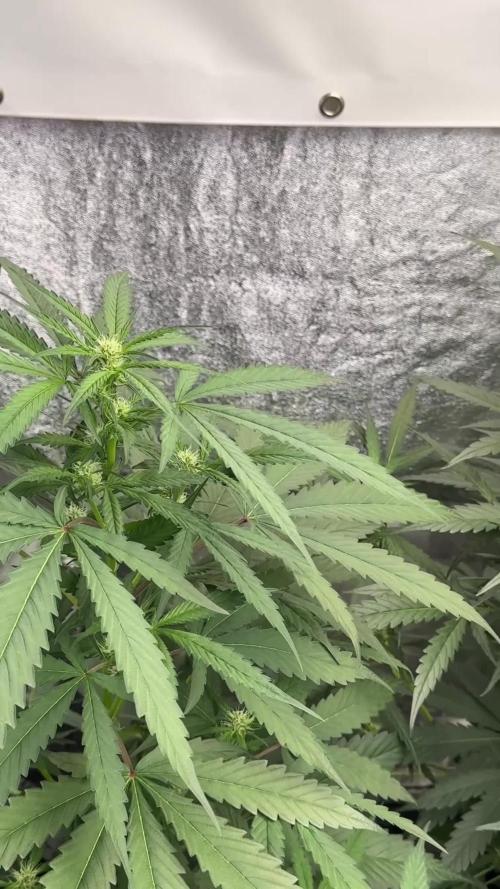
🌸 Pink Rosay Auto by Zamnesia | Pheno B | Week 6 (Early Flower)
🌱 Small in Size, Huge in Character
Not every plant dreams of touching the ceiling.
Some choose a different path.
While her sister reached upward with remarkable speed, this little Pink Rosay has quietly remained true to herself, growing into one of the most compact plants inside the entire Project Blue Tent.
At first glance, some growers might overlook her.
I certainly won't.
Sometimes the smallest plant ends up telling the biggest story.
Running under my ongoing 12/12 From Seed experiment, she has spent her entire life making every decision beneath flowering hours. Instead of investing energy into vertical growth, she has poured everything into building a sturdy framework filled with healthy branches, tight internodes, and an abundance of developing flower sites.
She's proof that size has never been the only measure of success.
🌸 Week 6 – Every Flower Has Its Place
This week her flowering really began to shine.
Those brilliant white pistils are everywhere.
Every branch is crowned with fresh clusters that seem to grow larger each day, creating dozens of little stars scattered throughout the canopy. These delicate white hairs are the plant's first invitation to reproduction, reaching outward in search of pollen in nature. Indoors, without pollination, they become the foundation upon which each flower will continue to build.
Watching them emerge is always one of my favourite stages.
It's the moment when potential becomes visible.
The buds are still young, but they already carry that wonderful promise of everything that's still to come.
🌿 Structure & Growth
Standing at approximately 55 cm, Pink Rosay remains the smallest plant in the tent.
Yet nothing about her feels underdeveloped.
Quite the opposite.
Her compact architecture has produced incredibly tight node spacing, allowing flower sites to form almost one above another. Instead of long stretches between branches, nearly every centimetre of stem contributes to future flower production.
Gentle Low Stress Training has opened the canopy just enough for light to reach deep into the plant while maintaining her naturally balanced form.
She isn't trying to become the tallest.
She's simply becoming herself.
🍃 Plant Health
Health continues to be absolutely exceptional.
The foliage displays a rich emerald-green colour from top to bottom, with beautiful leaf posture and excellent turgor throughout the plant.
There are no signs of nutrient stress, deficiencies or excesses.
Everything looks relaxed.
Comfortable.
Balanced.
Even with rapid flower formation underway, she continues producing vigorous new growth while maintaining the kind of healthy appearance every grower hopes to see when opening the tent each morning.
Sometimes perfect health is quiet.
This plant is a wonderful example of that.
💧 Hand Watering & Nutrition
Like her sister, Pink Rosay continues to be hand-watered rather than connected to the AutoPot system, allowing close daily observation and precise control over her feeding.
Current feeding:
• Terra Bloom — 1.9 ml/L
• Pure Zym — 1 ml/L
• Sugar Royal — 1 ml/L
• Power Buds — 1 ml/L
• Green Sensation — 1 ml/L
Maintaining:
• EC: 1.78 mS/cm
• pH: 6.0
She's responding beautifully, maintaining outstanding colour and steady flower development without asking for anything more than consistency.
🌡️ Environment
The environment remains stable, allowing every phenotype to express its own personality without unnecessary stress.
Current conditions:
• Day temperature: 29°C
• Night temperature: 25°C
• Relative humidity: 60%
• Solution temperature: 21°C
• Root zone temperature: 21°C
• CO₂: approximately 639 ppm
Even during the warmer summer days, the room continues providing the consistency that allows healthy genetics to perform at their best.
🌼 A Lesson in Phenotypes
One of my favourite parts of growing multiple plants from the same strain is watching nature write different stories from the same genetic book.
If I had only grown this Pink Rosay, I might describe the variety as naturally compact.
If I had only grown her sister, I might say she stretches enthusiastically.
Both observations would be true.
Neither would tell the whole story.
That's the beauty of phenotypes.
Every seed carries the same family name, but each one develops its own personality, its own rhythm, and its own way of expressing those shared genetics.
This little lady reminds me that sometimes the quietest plants have the most interesting stories to tell.
👀 Looking Ahead
With the stretch now largely behind her, the next few weeks should be all about building flowers.
Her incredibly tight node spacing could become one of her greatest strengths, allowing individual flower sites to merge into dense, beautifully stacked colas.
She may never be the largest harvest in the room.
But I have a feeling she'll produce something very special.
Sometimes the plants that ask for the least attention end up becoming the jars you reach for most often.
🙏 Final Thoughts
This little Pink Rosay has become one of my favourite reminders that gardening isn't about chasing uniformity.
It's about giving every plant the opportunity to become exactly what it was meant to be.
She may be the smallest plant inside the tent, but every day she stands there with remarkable health, vibrant colour, flawless structure and flowers that continue to multiply beneath a crown of brilliant white pistils.
Some growers measure success in height.
Others measure it in yield.
I'm learning, once again, that true success is watching a plant express its own personality while thriving from beginning to end.
A huge thank you to Zamnesia for these wonderful genetics, Plagron for providing the nutrition that keeps these plants thriving, Future of Grow for the outstanding lighting, TrolMaster for maintaining such a stable environment, and to everyone following this journey here on GrowDiaries.
Your support, encouragement, questions, and shared passion for growing continue to make this adventure even more rewarding.
Small in stature.
Beautiful in every detail.
And quietly preparing to surprise us all.
Growers Love and happy growing! 🌱💚

Likes
29
Share


@Zurban_Poison
Follow
Hi all!
The plant develops excellently! everything is just perfect for her. shape color scent of trichomes! all !

Likes
45
Share


Likes
2
Share

@420abbybox
Follow
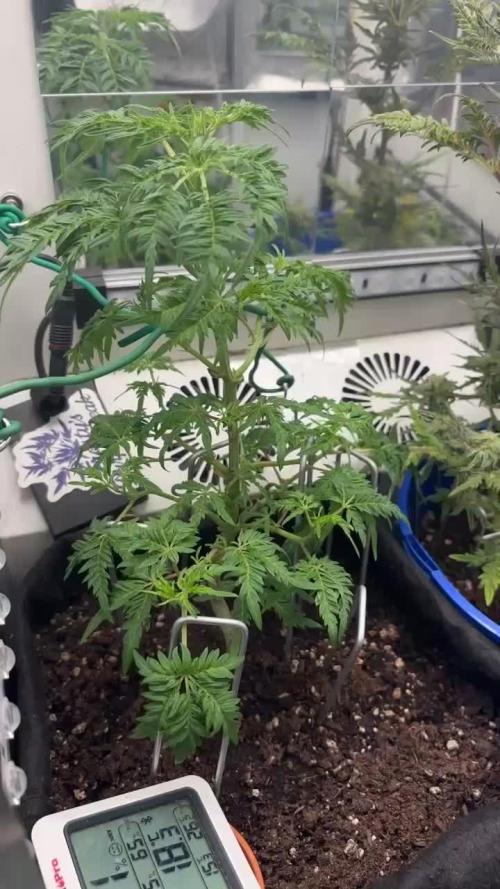
Frosty’s purple freak is now on from on the 2nd week of preflower with multiple side branches stretching upwards and outwards with secondary side branches emerging off of each side branch as well as for top node stretching upwards

Likes
28
Share


@TeamQuality420
Follow
My pictures seem to have re organized themselves, just give me a few here and I'll get the full rundown .
So this week ( day 21-23) was MAJOR defoliating.
What my first step is to start taking the largest fan leaves . My next step is about halfway through the canopy I'll stop and then I'll start working on the very bottom of the plant now at this stage in the game anything that doesn't even have a nice Bud site so a nice white hair sticking bud at the very bottom like shoots I'll just cut them right off.
This is the first steps of a main line but I don't complete the actual full main line I probably will try it sometime soon just not this time.
So you take off anything that is a small shoot coming off the main stems and then your next step is .
STOP. It might be a minute it might be 10 minutes, 20 min , it might be an hour or more ( my tip is don't wait a full day I try and do it within the first 12 hours of starting it) but I always stop just to look at what I've done sometimes if you get going too quickly you can end up doing way too much.
Stand to talk to canopy and look what sites are getting hit by light what places are these families beneficial to use for photosynthesis. Anything that is not doing as much good will be taken off and at that point I'll probably do another you know 5-10 minutes of defoliation maybe take one or two more shoots at the bottom to ensure what's left there is a huge fat cola that's going to give you those huge buds .
After this you're going to want to do your best to support those stems that are going to hold a lot more weight as if the plant would have been with all the shoots so you're going to want to just make sure that you have staking in place or some sort of support system to keep them from flopping over a breaking them in the future because that's one thing yeah it's great but then it'll get to a point where oh no stuff falling over and then it's just more hassle than it is helpful.
I got alot more pictures to follow this week so stay tuned !!!
