


Likes
Comments
Share

@Organic473
Follow
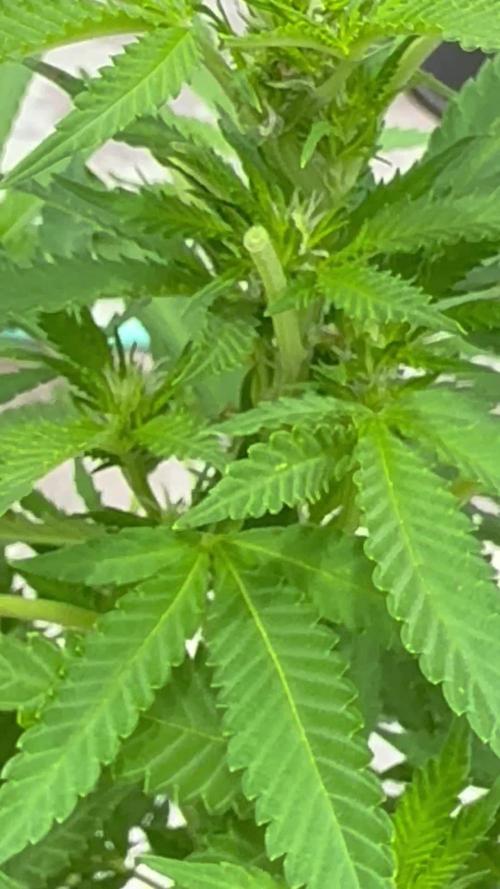
Here comes the pre-flowers… next time I would grow her taller I like the structure of this strain very much.

Likes
6
Share


@GanjaFarmer101
Follow
Smooth week - final harvest. Plant 5 was a surprisingly quick trim :)

Likes
10
Share


@Prop207
Follow
3 GAL RO Starting PMM 111
CAL MAG, 10ML
SILICA BLAST, 15ML
PURE Blend Pro Grow 40ml
No issues. Ppm meter shitted, maybe that's why ppm is sick and off the charts.
Likes
4
Share

@Jardin33ro
Follow
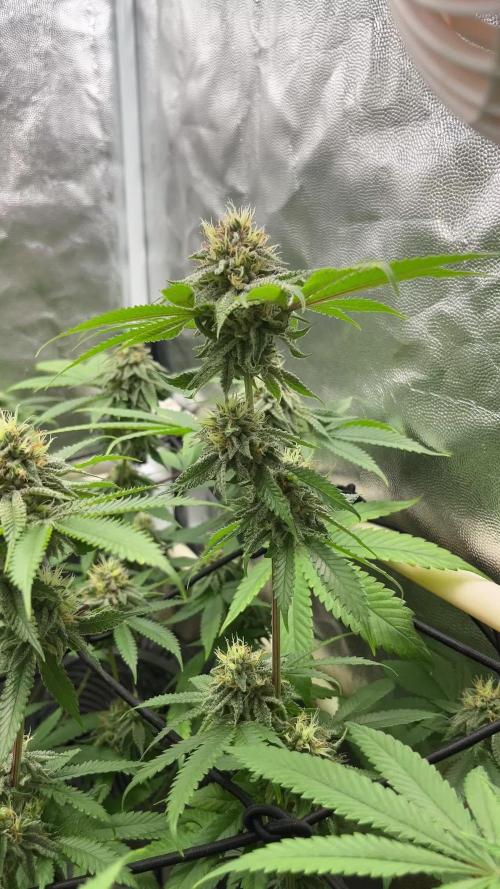
Buenas! Todos los sabados comienza otra semana, normalmente subo los martes. Pero me estoy haciendo un tiempito hoy para contarles como vienen los 4 clones de toronjaz-Blacktuna.
Esta semana ya se nota el engorde de la flor, ya los calices comienzan a tomar volumen. En cuanto a la resina, se ha formado bastante, en casi todas hasta hojas satelite. Mejoramos el color de las hojas, ya que veniamos alimentando muy de a poco y en estas semanas ya podemos apretarlas un poco. Seguimos igualmente de a poco, controlando de no exceder, siempre prefiero que falte a que se exceda.
En estas fechas comienza a elevar la temperatura, por lo que sin aire acondicionado en la pieza se puede llegar a complicar. Seguimos, cultivando y aprendiendo. Saludos, que tengan buenos humos 😮💨


Likes
71
Share


@DogDoctorOfficial
Follow
Hey there, fellow cultivator! Super stoked to share the deets on my latest pheno hunt sponsored by the awesome Anesia Seeds. Massive shoutout to them for hooking me up with a bunch of killer genetics, including Future#1, Zoomiez, Apricot Oreo, and the almost mythical Red Banana Pudding. It's like Christmas came early with those seeds!
So, here's the lowdown on my germination game. I went old-school with the water soak, letting those seeds party for about 42 hours until they cracked and showed off their taproots. Then, I gently transferred them to a cozy root riot in a small pot, sprinkling some Aptus Holland Mycormix magic to give those roots a VIP welcome. All this went down in a mini greenhouse dome, 'cause these babies deserve a superstar entrance.
Now, why the water dance and the root riot ritual? Buckle up for the benefits ride:
Water Soak: This gets those seeds in the mood for germination. It's like a wake-up call for the sleeping beauties, ensuring they're hydrated and ready to kick off their journey.
Root Riot with Aptus Holland Mycormix: Think of this as a five-star hotel for your roots. The mycormix acts as a friendly guide, helping the roots explore the soil universe. It's like giving your plants a GPS for optimal growth.
Greenhouse Dome: It's like a VIP club for your seedlings. This microclimate ensures they stay cozy and protected as they sprout into the world.
Massive thanks to Aptus Holland, my main sponsor and the rockstars behind the only organic mineral line I trust. These guys know their stuff when it comes to plant nutrition, and my green buddies are gonna thrive, no doubt.
Huge gratitude to Future Of Grow for the LED love. Those photons are gonna be like disco lights for my plants, giving them the energy they need to flex and flourish.
And let's not forget Grow Diaries! This is where the magic unfolds, and I'll be documenting every twist and turn of this grow journey. Big shoutout to the community – you guys are the real MVPs!
So, here's to a groovy, green adventure ahead. Thanks, Anesia Seeds, for trusting me with these genetics. Let the grow games begin!
Genetics Red Banana Pudding = RBP
Apricot Oreoz = AO
Zoomiez = Z
Future#1 = F
https://anesiaseeds.com/
Plant nutrition - Aptus Holland - https://aptus-holland.com
LED Photons - Future of Grow - https://www.thefuturofgrow.com/
Controls - Trol Master - https://www.trolmaster.eu/
Watering - Autopot - https://autopot.co.uk/
Tent - Mars Hydro - https://marshydro.eu/
Love and attention - Me, myself and i
As always thank you all for stopping by, for the love and for it all , this journey of mine wold just not be the same without you guys, the love and support is very much appreciated and i fell honored and blessed with you all in my life, With true love comes happiness. Always believe in your self and always do things expecting nothing and with an open heart , be a giver and the universe will give back to you in ways you could not even imagine so
More info, the ocasional give-away and exclusive updates from all my adventures can be found - links in the profile description
Friendly reminder all you see here is pure research and for educational purposes only
Growers Love To you All 💚 💚 💚

Likes
10
Share


@BR1CK_SANCHEZ
Follow
Simply planted the seeds a half inch below soil and watered them in... they each sprouted within 3-4 days.

Likes
3
Share


@MaltaHerbman
Follow
Auto Pablo Escobar – Divine Seeds
Day 1 above soil 🌱
Sprouted yesterday with a nice strong start. Keeping temperature around 26°C and gentle watering around the stem zone only. Light cycle 18/6 from the first day above ground. Curious to see how Pablo performs under this 3-month run.

Likes
40
Share


@TheCannaBrit
Follow
Just time to finish these guys with a flushing agent then we HARVEST!!

Likes
23
Share


@Firepharmer
Follow
Flushed and chopped down!!
Vert impressed with the Futur vert flora max series led’s killer quality killer yield


Likes
43
Share


@MrGrow
Follow
04.06.2023
🌱 136 giorni dal seme
🌼 64 giorni di fioritura
📈 ph 6.0
💦 2.5 litri/48h
Siamo arrivati al capolinea ragazzi✌️🏻
I tricomi stanno iniziando a diventare ambrati, ma sono ancora molto pochi.
Ho intenzione di aspettare ancora 4 5 giorni, fare un'annaffiata con acqua e ghiaccio per dargli l ultimo forte stress termico, e poi 48 h di buio prima di tagliare.
In questi ultimi giorni sto annaffiando solo con acqua, le foglie stanno rapidamente cambiando colore e appassendo leggermente. Credo che la pianta stia prendendo tt i nutrimenti da esse.
Prossimo aggiornamento con il raccolto✌️🏻
A presto ragazzi🙏💚

Likes
14
Share


@Highsince92
Follow
Forgot to take pics for week 9 so here is week 10. All chopped and drying after 48hrs darkness the Cali snow could have probably done with another week but all the rest were looking pretty done with about 20% amber. Drying at 19 degrees with humidity at 50% for the first couple of days then I’ll up it to 62% till there done. Going to be the longest 10 days of my life. Looking good I think for my first grow can’t believe how easy it’s been organic is the way for me I think.
Likes
55
Share


@Ultraviolet
Follow
What's in the soil? What's not in the soil would be an easier question to answer. 16-18 DLI @ the minute. +++ as she grows.
Probably not recommended, but to get to where it needs to be, I need to start now.
Vegetative @1400ppm 0.8–1.2 kPa 80–86°F (26.7–30°C) 65–75%, LST Day 10, Fim'd Day 11
CEC (Cation Exchange Capacity):
This is a measure of a soil's ability to hold and exchange positively charged nutrients, like calcium, magnesium, and potassium. Soils with high CEC (more clay and organic matter) have more negative charges that attract and hold these essential nutrients, preventing them from leaching away.
Biochar is highly efficient at increasing cation exchange capacity (CEC) compared to many other amendments. Biochar's high CEC potential stems from its negatively charged functional groups, and studies show it can increase CEC by over 90%. Amendments like compost also increase CEC but are often more prone to rapid biodegradation, which can make biochar's effect more long-lasting. biochar acts as a long-lasting Cation Exchange Capacity (CEC) enhancer because its porous, carbon-rich structure provides sites for nutrients to bind to, effectively improving nutrient retention in soil without relying on the short-term benefits of fresh organic matter like compost or manure. Biochar's stability means these benefits last much longer than those from traditional organic amendments, making it a sustainable way to improve soil fertility, water retention, and structure over time. Needs to be charged first, similar to Coco, or it will immobilize cations, but at a much higher ratio.
a high cation exchange capacity (CEC) results in a high buffer protection, meaning the soil can better resist changes in pH and nutrient availability. This is because a high CEC soil has more negatively charged sites to hold onto essential positively charged nutrients, like calcium and magnesium, and to buffer against acid ions, such as hydrogen.
EC (Electrical Conductivity):
This measures the amount of soluble salts in the soil. High EC levels indicate a high concentration of dissolved salts and can be a sign of potential salinity issues that can harm plants.
The stored cations associated with a medium's cation exchange capacity (CEC) do not directly contribute to a real-time electrical conductivity (EC) reading. A real-time EC measurement reflects only the concentration of free, dissolved salt ions in the water solution within the medium.
98% of a plants nutrients comes directly from the water solution.
2% come directly from soil particles.
CEC is a mediums storage capacity for cations. These stored cations do not contribute to a mediums EC directly.
Electrical Conductivity (EC) does not measure salt ions adsorbed (stored) onto a Cation Exchange Capacity (CEC) site, as EC measures the conductivity of ions in solution within a soil or water sample, not those held on soil particles.
A medium releases stored cations to water by ion exchange, where a new, more desirable ion from the water solution temporarily displaces the stored cation from the medium's surface, a process also seen in plants absorbing nutrients via mass flow. For example, in water softeners, sodium ions are released from resin beads to bond with the medium's surface, displacing calcium and magnesium ions which then enter the water. This same principle applies when plants take up nutrients from the soil solution: the cations are released from the soil particles into the water in response to a concentration equilibrium, and then moved to the root surface via mass flow.
An example of ion exchange within the context of Cation Exchange Capacity (CEC) is a soil particle with a negative charge attracting and holding positively charged nutrient ions, like potassium (K+) or calcium (Ca2+), and then exchanging them for other positive ions present in the soil solution. For instance, a negatively charged clay particle in soil can hold a K+ ion and later release it to a plant's roots when a different cation, such as calcium (Ca2+), is abundant and replaces the potassium. This process of holding and swapping positively charged ions is fundamental to soil fertility, as it provides plants with essential nutrients.
Negative charges on soil particles: Soil particles, particularly clay and organic matter, have negatively charged surfaces due to their chemical structure.
Attraction of cations: These negative charges attract and hold positively charged ions, or cations, such as:
Potassium (K+)
Calcium (Ca2+)
Magnesium (Mg2+)
Sodium (Na+)
Ammonium (NH4+)
Plant roots excrete hydrogen ions (H+) through the action of proton pumps embedded in the root cell membranes, which use ATP (energy) to actively transport H+ ions from inside the root cell into the surrounding soil. This process lowers the pH of the soil, which helps to make certain mineral nutrients, such as iron, more available for uptake by the plant.
Mechanism of H+ Excretion
Proton Pumps: Root cells contain specialized proteins called proton pumps (H+-ATPases) in their cell membranes.
Active Transport: These proton pumps use energy from ATP to actively move H+ ions from the cytoplasm of the root cell into the soil, against their concentration gradient.
Role in pH Regulation: This active excretion of H+ is a major way plants regulate their internal cytoplasmic pH.
Nutrient Availability: The resulting decrease in soil pH makes certain essential mineral nutrients, like iron, more soluble and available for the root cells to absorb.
Ion Exchange: The H+ ions also displace positively charged mineral cations from the soil particles, making them available for uptake.
Iron Uptake: In response to iron deficiency stress, plants enhance H+ excretion and reductant release to lower the pH and convert Fe3+ to the more available form Fe2+. The altered pH can influence the activity and composition of beneficial microbes in the soil. The H+ gradient created by the proton pumps can also be used for other vital cell functions, such as ATP synthesis and the transport of other solutes. The hydrogen ions (H+) excreted during photosynthesis come from the splitting of water molecules. This splitting, called photolysis, occurs in Photosystem II to replace the electrons used in the light-dependent reactions. The released hydrogen ions are then pumped into the thylakoid lumen, creating a proton gradient that drives ATP synthesis.
Plants release hydrogen ions (H+) from their roots into the soil, a process that occurs in conjunction with nutrient uptake and photosynthesis. These H+ ions compete with mineral cations for the negatively charged sites on soil particles, a phenomenon known as cation exchange. By displacing beneficial mineral cations, the excreted H+ ions make these nutrients available for the plant to absorb, which can also lower the soil pH and indirectly affect its Cation Exchange Capacity (CEC) by altering the pool of exchangeable cations in the soil solution.
Plants use proton (H+) exudation, driven by the H+-ATPase enzyme, to release H+ ions into the soil, creating a more acidic rhizosphere, which enhances nutrient availability and influences nutrient cycling processes. This acidification mobilizes insoluble nutrients like iron (Fe) by breaking them down, while also facilitating the activity of beneficial microbes involved in the nutrient cycle. Therefore, H+ exudation is a critical plant strategy for nutrient acquisition and management, allowing plants to improve their access to essential elements from the soil.
A lack of water splitting during photosynthesis can affect iron uptake because the resulting energy imbalance disrupts the plant's ability to produce ATP and NADPH, which are crucial for overall photosynthetic energy conversion and can trigger a deficiency in iron homeostasis pathways. While photosynthesis uses hydrogen ions produced from water splitting for the Calvin cycle, not to create a hydrogen gas deficiency, the overall process is sensitive to nutrient availability, and iron is essential for chloroplast function.
In photosynthesis, water is split to provide electrons to replace those lost in Photosystem II, which is triggered by light absorption. These electrons then travel along a transport chain to generate ATP (energy currency) and NADPH (reducing power). Carbon Fixation: The generated ATP and NADPH are then used to convert carbon dioxide into carbohydrates in the Calvin cycle. Impaired water splitting (via water in or out) breaks the chain reaction of photosynthesis. This leads to an imbalance in ATP and NADPH levels, which disrupts the Calvin cycle and overall energy production in the plant. Plants require a sufficient supply of essential mineral elements like iron for photosynthesis. Iron is vital for chlorophyll formation and plays a crucial role in electron transport within the chloroplasts. The complex relationship between nutrient status and photosynthesis is evident when iron deficiency can be reverted by depleting other micronutrients like manganese. This highlights how nutrient homeostasis influences photosynthetic function. A lack of adequate energy and reducing power from photosynthesis, which is directly linked to water splitting, can trigger complex adaptive responses in the plant's iron uptake and distribution systems.
Plants possess receptors called transceptors that can directly detect specific nutrient concentrations in the soil or within the plant's tissues. These receptors trigger signaling pathways, sometimes involving calcium influx or changes in protein complex activity, that then influence nutrient uptake by the roots. Plants use this information to make long-term adjustments, such as Increasing root biomass to explore more soil for nutrients. Modifying metabolic pathways to make better use of available resources. Adjusting the rate of nutrient transport into the roots. That's why I keep a high EC. Abundance resonates Abundance.
Likes
8
Share


@KUNST
Follow
Week F3: 11/04/2025 – 17/04/2025
12/04 & 14/04 – 2L nutes. Minor branch LST.
17/04 – Major defoliation. 2L nutes. Risk taken but plant strong.
I was hesitant about this late defoliation, I should of gone harder prior to flowering, my mistake and easily avoidable with experience. All that in mind, there is ample room for airflow. Currently cool air is being brought in through the bottom of the tent, circulated via the internal fan, then pulled up and out through the exhaust fan system, air is then easily vent out of the external rom to manage humidity (also done by using an extractor fan - can you guess where it is yet?). I think the stretching is coming to a close, finally, almost ran out of headroom...
Likes
2
Share

@StartGrowingShxt
Follow
Week 11
August 11
—- Breeding Project—-
We recently had a run of Sour Diesel and I decided to take the only male from that batch and cross it to some clones, one being the Cerezaz strain.
The goal of this cross is to find faster flowering (45-55 days) plants and also increase yield as the Cerezaz is a timid producer and Sour Diesel is generally a medium to high yielded.
Other characteristics we are looking for are: sour, berries, cherries, diesel, gas on the nose ( although unique combinations are welcome), decrease light sensitivity( Sour diesel was sensitive to light intensity) as well as breed in some resistance to heat from the Cerezaz as she did outstanding in 90+ heat indoors.
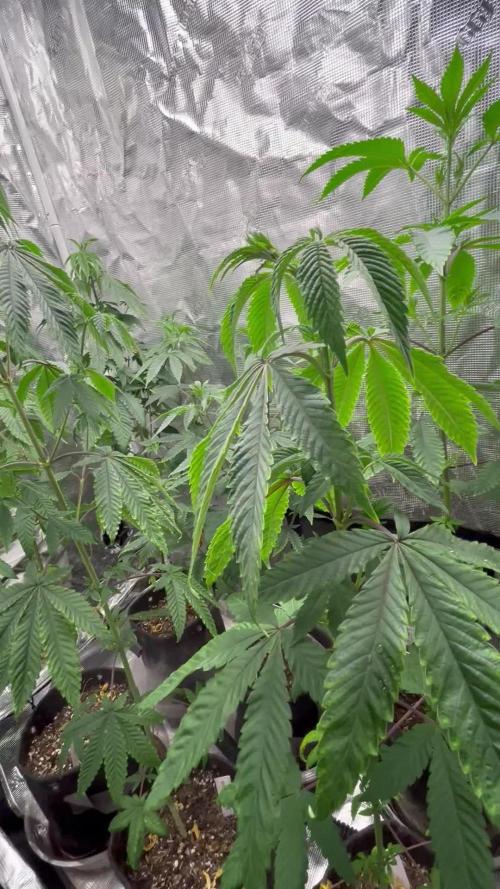
Currently this batch of Polyhybrid F1s are exhibiting mostly the sour diesel traits:
generally more tall and lanky, leaves closer to the main stem and drooping( as seen in some landrace sativas) and the stem rub is chemical, soap astringent with a slight savory berry backend with large fat fingered leaves.
The other pheno is squat with very good lateral side branching and grows slower height wise medium sized leaves and the fingers are neither skinny nor fat but generally on the thicker side. Similar nose on these but more Cerezaz leaning so the berry, cherry sweet is more noticeable.
With all that being said these ladies are top dressed and just got flipped into flower! So come along for the ride! 💪🏾
Likes
2
Share


@stggenetix
Follow
had a great time learning the ropes. thanks to all that helped along the way.

Likes
6
Share

@pHilosophy420
Follow
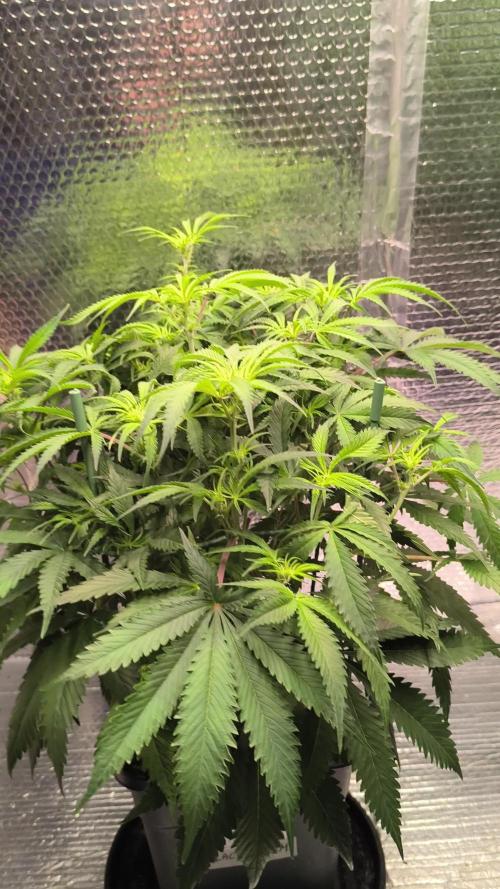
Day 49, She will be very large plant, did some heavy defoliation and trim some bottom steams as she was too bushy.
Likes
33
Share


@Roberts
Follow
Cali crasher is growing great under the Hortibloom Solux 350. She had a solution change today. light defoliation as well. 🤞🏻 she don't stretch too much in the next few weeks. Everything is looking good at the moment. Thank you Hortibloom, and Doctors Choice. 🤜🏻🤛🏻🌱🌱🌱
Thank you grow diaries community for the 👇likes👇, follows, comments, and subscriptions on my YouTube channel👇. ❄️🌱🍻
Happy Growing 🌱🌱🌱
https://youtube.com/channel/UCAhN7yRzWLpcaRHhMIQ7X4g


Processing
Likes
7
Share


@Bills1995
Follow
Looking to move into 4x8 this week just want a little bit more growth before they’re exposed to the 1000 hps.

