Check the winners The Grow Awards 2026 🏆
Likes
Comments
Share
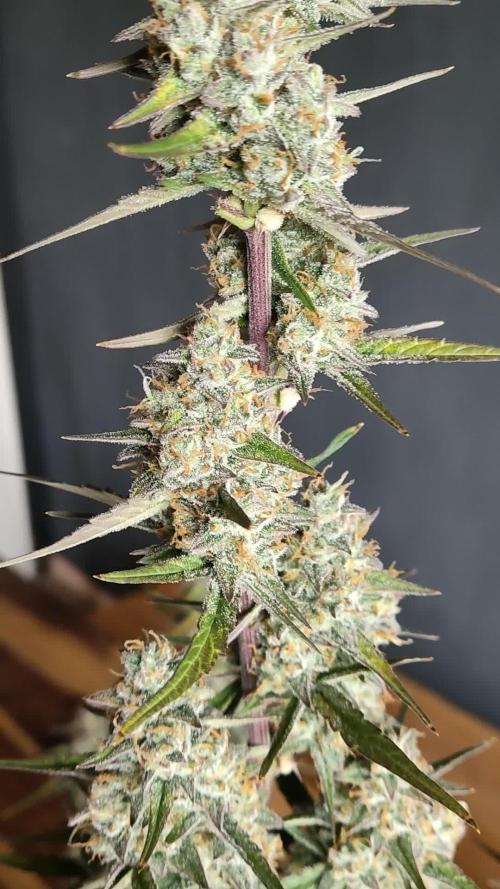
Hallo zusammen 🤙. Habe sie heute geerntet. Wir sehen uns in 3 Wochen mit dem Erntebericht
Processing
Likes
2
Share
@BigHorn
Follow
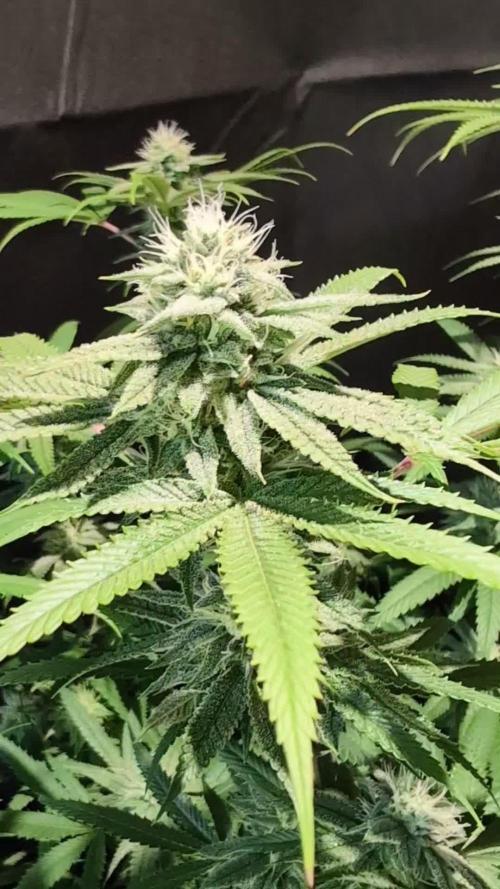
Week has gone very well. Growth has exploded will be trimming back some fan leaves this coming week to help the light reach the bottom stocks that have now come in. You can see the growth explode after I transplanted the plant.
Likes
1
Share
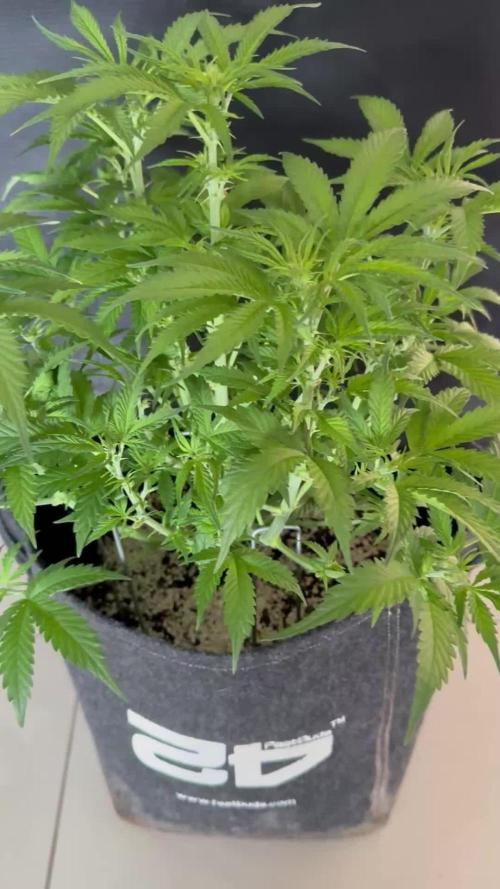
2 weeks into flower guys. Looking real nice stayed really short considering they nearly had a 6 week veg , and the write up on them says they have an explosive stretch during the flip not seen they yet but I'm not complaining . Changed the nutrients from pre flower to full flowering feed as stated on the chart . Picked a few fans of all of them yesterday not to much just anything overlapping.
Likes
16
Share
Vamos familia, actualizamos la cuarta semana de floración de estas Panty Punch de Seedstockers, salieron 3, que van creciendo a buen ritmo aunque marquen una pequeña deficiencia ya estoy solucionandola, veremos cómo progresan. Empezamos añadiendo varios productos de la gama de Agrobeta para la Floración. Temperatura y humedad dentro de los rangos correctos. Vamos viendo cómo avanzan estas próximas semanas. Agrobeta: https://www.agrobeta.com/agrobetatiendaonline/36-abonos-canamo Hasta aquí todo, Buenos humos 💨💨💨
Likes
6
Share
She's getting heavy. Buds are a bit too puffy for my taste. They feel hard and got plenty of mass but inside there are lots of tiny air pockets.
Likes
4
Share
@Kannamar
Follow
25/04/2023 Day 69 I cut the "twins" and finally discovered the inside of the DWC MyPot. I took lots of pics so you can see the unexpected plant of the seed that I lost in the clay and then germinated anyway and found an awkward path to the surface through a tiny hole! Unbelievable! I also found that the watering tube from the pump had moved during manipulation, don't know for how long it has been pressed between the upper and lower parts on the DWC. Pretty sure for that final plants had received less or no feeding solution, and the use of Clean might not have been efficient. I guess it's also the reason why I found the white (?) on the top of the clay, salts and something else, because of lack of watering. Will come back in 3 weeks, will be dry and then I'll can trim and weight. And smoke, yeah! Not expecting much and could be hard to smoke if the cleaning was not efficient. Anyway, the next one will be better!
Likes
14
Share
@Pedro_88
Follow
me fui dos días de la casa y vean cómo estan mis dos bebés
Likes
1
Share
- Purchased an AC Infintity Cloudforge Humidifier - Switched to flower nutes - Installed Trellis Note: - No more apparent deficiencies - Surprisingly there is very little stretch
Likes
10
Share
We enter the second full week of flower. I went and got some nutes to start adding in sparingly to the watering sessions. Mild mix from Foxfarms of their Tiger Bloom formula. I didn't catch that the large plant's leaves were curling pretty tellingly so I didn't realize I was about to overload the nutes for that plant when I should have been flushing for a week. I had supercropped this large plant as it was 6" taller than the others but it bounced back so quickly. Five colas snapped and turned 90 degrees, bounced back in a day or two. It did allow the others to catch up a bit. I find that the one potential male I removed was 100 a male as it now had well developed pollen sacs. I had this plant outside alonside the other two potential herm/males. I put the two questionable ones on the roof and chopped the male down.
Processing
Likes
6
Share
@ProfDoty
Follow
This week flew by. Work had away from the plants kinda didn’t realize the plant were drinking hella water way faster than before so I fell behind a lil with the watering but nothing to major as you can see. The black cream is jus amazing right now , never smelled anything like it it literally smells like candy. There’s also hells buds all around the plant it’s just shining right now definitely running this strain until the seeds are gone. The Green Poison Auto is coming along nicely even though she took hella long to flower from veg but I’m hoping that means she jus going to keep taking her time and beast up . Her trichomes already flooding the plant which is a bright side I’m also I’m patient to so that’s not helping. For the most part I’m pretty sure I’m going to be running the same medium and nutrient line a couple more times Before I venture out And my AC is finally fixed so no more hot days for the ladies. I’m predict the black cream to go another 2-3weeks and the green poison at least another 4 from what I’m seeing my ladies are taking their time with this one . Can’t wait to see the growth this coming week
Likes
3
Share
Our Zamnesia Critical Cheese Automatic has a distinct, predominantly sativa appearance. What a plant guys, I cleaned the ugly flowers very very well and I can really say that I am very happy with this plant. Swollen buds, well aligned and looks super healthy, can't wait to smoke this. Techniques chosen: Here, we applied LST to a plant with short internodal spacing; it's not ideal, but we wanted to give it a try. We're 100% organic and 1000% Plagron, as always. The soil we've chosen is the recently released Plagron Bio LightMix, which will allow us to start flowering more smoothly and reliably, without the sudden changes that liquid fertilizers can cause. A week is more than enough, so don't overdo it. We're in the final flowering stage and things are starting to get serious, so we're adding our legendary bloom booster Green Sensation and starting the late flowering phase. - Green Sensation 1 ml/l - Pure Zym 1 ml/l - Silic Rock 1 ml/l - CalMag Pro 1 ml/l - Sugar Royal 1 ml/l - Power Buds 1 ml/l - Alga Bloom 0 ml/l Just booster and soon in flush Choose your preferred style and calculate your results on the website: www.plagron.com Z - https://www.zamnesia.io/it/531-growshop A great strain, not tall but very bushy! Give it a try! Z - https://www.zamnesia.io/en/3334-zamnesia-seeds-critical-cheese-automatic-feminized.html Z - Not content with what they already had in their hands, the expert breeders at Zamnesia Seeds wanted to embark on a journey into the world of autoflowering genetics, aiming to improve upon a great British classic... the Cheese cannabis strain. They crossed Critical with a high-quality Cheese specimen, enriched with a significant amount of Ruderalis. The result is an extremely potent, therapeutic, and easy-to-grow autoflowering version. This new, improved strain has been named Critical Cheese Automatic. Critical Cheese Automatic embodies everything that made the original Cheese so famous, acclaimed, and loved around the world. We're, of course, talking about the Skunky flavors and pungent aromas this strain releases, not to mention the overwhelming effects it induces. Lovers of the original Cheese will surely appreciate this feminized reincarnation. Smoking Critical Cheese Automatic produces exceptionally potent sensations for an autoflowering strain. Its effects are quite strong and highly physical, both in intensity and duration. With these properties (or "body") in mind, it's no wonder many medical users are the first to want to get their hands on this "skunky" plant. Those suffering from chronic pain, inflammation, stress, anxiety, and migraines (to name just a few of the ailments it can alleviate) will notice their symptoms diminish, if not disappear completely, thanks to the potency of this strain. With this autoflowering "upgrade" of the Cheese strain, even novice growers can achieve excellent results. It's a vigorous plant, incredibly easy to grow, and requires little maintenance. Commercial growers looking to generate income will appreciate Critical Cheese Automatic primarily for its life cycle: from germination to harvest in just 10 weeks. When grown properly, it can produce yields of 120-150g per plant. In addition to its excellent yields, Critical Cheese Automatic reaches a rather compact size (1 m), making it highly suitable for any type of grow. That said, Critical Cheese Automatic only thrives when grown outdoors in warm climates (like those of Spain or Italy). So, in conclusion, whether you're a beginner, veteran, or commercial grower, Critical Cheese Automatic offers great satisfaction to everyone. You know it, but I recommend it: here you'll find so many beautiful things, basically "all the best that nature has to offer." Z - www.zamnesia.com Z - www.zamnesia.com Music // www.radionula.com + Feng Shui Music
Likes
19
Share
So far it seems to be fine even if the high humidity worries me even if the temperatures are still high then they have stopped growing and will finally focus on the flowers and slowly we recover these small deficiencies
Processing
Likes
19
Share
@lukavega
Follow
This is more of an equipment gathering project-first grow so I want to keep it simple and budget friendly, I ordered autos for my first grow but Oregon Elite Seeds sent a free gorilla Girl from Sweet Seeds. Super psyched for my first grow! Day1. Soaked seeds for 4 hours in bottled water, used paper towel method with 100% sprouts within 18 hours inside dark tent at 80 degrees (heater and air purifier) and 40% humidity. Hoping to plant directly into prepared soil (6.9 ph currently) in 24 hours. Day 2. Planted Critical OG Kush and Blackberry Autos 1/4 directly into 8 gallon cloth pots (these are the wrong pots-they are wax lined but the pandemic made getting the aeration pots unavailable-I may have to transfer later). Very lightly watered. i prepared my soil mix and had it acclamated to the grow room. I opened the air vents at each end of the grow room and set heat to 78, placed a bowl of water for humidity and started oscillating fan for airflow. Planted Gorilla Girl in a tupperware dish till i can get something more suitable. I really need another light but shipping just isn't working out. Day 4: 1 OG Critical was culled do to lack of progress. Gorilla Girl hs been repotted and looks fine. The Blackberry are much leggier than the others at this point. I'm watering just enough to get to the roots with bottled spring water. Day5 : the girls just woke up-posted pics. 1 light and 6 plants is not ideal. I'm not sure if I should put the strain that is naturally shorter under the light directly or focus on the tall ones getting enough light to not stretch. Comments appreciated. Day 6: Ligthts off after a 20 hour on cycle. I was concerned that my light insn't adequate spacially. I dropped it down to 15 inches above the seedling and got it tropical in the tent. I also used a 6500k 15 watt shop light for added light color and they enjoyed it, except for 1 had a bit of yellow. I will post photos when they wake up to see how they look after this light/heat/water boost for 20 hours. My Gorilla Girl is the only one that isn't above 2 inches. That one was planted deeper (1 inch instead of1/4th like the others. I did have some "seed helmets" so next time I will go a little over 1/4 inch deep. Qweeby's roots grew like a wad instead of down. I've had to readjust her placement twice because the roots act like they want to be on the surface. I'm excited to see them in 4 hours. I may cull one and start a different seed. The Blackberry Kush is stretchy which seems nice for a new grower like me. I am trying to limit the stretch so they match the Critical OG height but they are hearty toddlers. Day 7: Added a 3000w LED off ebay. I didn't account for the rise in heat but it only got up to 84. Raised it from 18" to 20" and got more air flowing through. One plant has a little yellowing from the inside of the main leaves (inside to out) but it's barely there so I'm going to check PH meter and easy watering since yesterday I did water more then I have thus far-so it could be a little root lock from too much water.
Likes
56
Share
What's in the soil? What's not in the soil would be an easier question to answer. 16-18 DLI @ the minute. +++ as she grows. Probably not recommended, but to get to where it needs to be, I need to start now. Vegetative @1400ppm 0.8–1.2 kPa 80–86°F (26.7–30°C) 65–75%, LST Day 10, Fim'd Day 11 CEC (Cation Exchange Capacity): This is a measure of a soil's ability to hold and exchange positively charged nutrients, like calcium, magnesium, and potassium. Soils with high CEC (more clay and organic matter) have more negative charges that attract and hold these essential nutrients, preventing them from leaching away. Biochar is highly efficient at increasing cation exchange capacity (CEC) compared to many other amendments. Biochar's high CEC potential stems from its negatively charged functional groups, and studies show it can increase CEC by over 90%. Amendments like compost also increase CEC but are often more prone to rapid biodegradation, which can make biochar's effect more long-lasting. biochar acts as a long-lasting Cation Exchange Capacity (CEC) enhancer because its porous, carbon-rich structure provides sites for nutrients to bind to, effectively improving nutrient retention in soil without relying on the short-term benefits of fresh organic matter like compost or manure. Biochar's stability means these benefits last much longer than those from traditional organic amendments, making it a sustainable way to improve soil fertility, water retention, and structure over time. Needs to be charged first, similar to Coco, or it will immobilize cations, but at a much higher ratio. a high cation exchange capacity (CEC) results in a high buffer protection, meaning the soil can better resist changes in pH and nutrient availability. This is because a high CEC soil has more negatively charged sites to hold onto essential positively charged nutrients, like calcium and magnesium, and to buffer against acid ions, such as hydrogen. EC (Electrical Conductivity): This measures the amount of soluble salts in the soil. High EC levels indicate a high concentration of dissolved salts and can be a sign of potential salinity issues that can harm plants. The stored cations associated with a medium's cation exchange capacity (CEC) do not directly contribute to a real-time electrical conductivity (EC) reading. A real-time EC measurement reflects only the concentration of free, dissolved salt ions in the water solution within the medium. 98% of a plants nutrients comes directly from the water solution. 2% come directly from soil particles. CEC is a mediums storage capacity for cations. These stored cations do not contribute to a mediums EC directly. Electrical Conductivity (EC) does not measure salt ions adsorbed (stored) onto a Cation Exchange Capacity (CEC) site, as EC measures the conductivity of ions in solution within a soil or water sample, not those held on soil particles. A medium releases stored cations to water by ion exchange, where a new, more desirable ion from the water solution temporarily displaces the stored cation from the medium's surface, a process also seen in plants absorbing nutrients via mass flow. For example, in water softeners, sodium ions are released from resin beads to bond with the medium's surface, displacing calcium and magnesium ions which then enter the water. This same principle applies when plants take up nutrients from the soil solution: the cations are released from the soil particles into the water in response to a concentration equilibrium, and then moved to the root surface via mass flow. An example of ion exchange within the context of Cation Exchange Capacity (CEC) is a soil particle with a negative charge attracting and holding positively charged nutrient ions, like potassium (K+) or calcium (Ca2+), and then exchanging them for other positive ions present in the soil solution. For instance, a negatively charged clay particle in soil can hold a K+ ion and later release it to a plant's roots when a different cation, such as calcium (Ca2+), is abundant and replaces the potassium. This process of holding and swapping positively charged ions is fundamental to soil fertility, as it provides plants with essential nutrients. Negative charges on soil particles: Soil particles, particularly clay and organic matter, have negatively charged surfaces due to their chemical structure. Attraction of cations: These negative charges attract and hold positively charged ions, or cations, such as: Potassium (K+) Calcium (Ca2+) Magnesium (Mg2+) Sodium (Na+) Ammonium (NH4+) Plant roots excrete hydrogen ions (H+) through the action of proton pumps embedded in the root cell membranes, which use ATP (energy) to actively transport H+ ions from inside the root cell into the surrounding soil. This process lowers the pH of the soil, which helps to make certain mineral nutrients, such as iron, more available for uptake by the plant. Mechanism of H+ Excretion Proton Pumps: Root cells contain specialized proteins called proton pumps (H+-ATPases) in their cell membranes. Active Transport: These proton pumps use energy from ATP to actively move H+ ions from the cytoplasm of the root cell into the soil, against their concentration gradient. Role in pH Regulation: This active excretion of H+ is a major way plants regulate their internal cytoplasmic pH. Nutrient Availability: The resulting decrease in soil pH makes certain essential mineral nutrients, like iron, more soluble and available for the root cells to absorb. Ion Exchange: The H+ ions also displace positively charged mineral cations from the soil particles, making them available for uptake. Iron Uptake: In response to iron deficiency stress, plants enhance H+ excretion and reductant release to lower the pH and convert Fe3+ to the more available form Fe2+. The altered pH can influence the activity and composition of beneficial microbes in the soil. The H+ gradient created by the proton pumps can also be used for other vital cell functions, such as ATP synthesis and the transport of other solutes. The hydrogen ions (H+) excreted during photosynthesis come from the splitting of water molecules. This splitting, called photolysis, occurs in Photosystem II to replace the electrons used in the light-dependent reactions. The released hydrogen ions are then pumped into the thylakoid lumen, creating a proton gradient that drives ATP synthesis. Plants release hydrogen ions (H+) from their roots into the soil, a process that occurs in conjunction with nutrient uptake and photosynthesis. These H+ ions compete with mineral cations for the negatively charged sites on soil particles, a phenomenon known as cation exchange. By displacing beneficial mineral cations, the excreted H+ ions make these nutrients available for the plant to absorb, which can also lower the soil pH and indirectly affect its Cation Exchange Capacity (CEC) by altering the pool of exchangeable cations in the soil solution. Plants use proton (H+) exudation, driven by the H+-ATPase enzyme, to release H+ ions into the soil, creating a more acidic rhizosphere, which enhances nutrient availability and influences nutrient cycling processes. This acidification mobilizes insoluble nutrients like iron (Fe) by breaking them down, while also facilitating the activity of beneficial microbes involved in the nutrient cycle. Therefore, H+ exudation is a critical plant strategy for nutrient acquisition and management, allowing plants to improve their access to essential elements from the soil. A lack of water splitting during photosynthesis can affect iron uptake because the resulting energy imbalance disrupts the plant's ability to produce ATP and NADPH, which are crucial for overall photosynthetic energy conversion and can trigger a deficiency in iron homeostasis pathways. While photosynthesis uses hydrogen ions produced from water splitting for the Calvin cycle, not to create a hydrogen gas deficiency, the overall process is sensitive to nutrient availability, and iron is essential for chloroplast function. In photosynthesis, water is split to provide electrons to replace those lost in Photosystem II, which is triggered by light absorption. These electrons then travel along a transport chain to generate ATP (energy currency) and NADPH (reducing power). Carbon Fixation: The generated ATP and NADPH are then used to convert carbon dioxide into carbohydrates in the Calvin cycle. Impaired water splitting (via water in or out) breaks the chain reaction of photosynthesis. This leads to an imbalance in ATP and NADPH levels, which disrupts the Calvin cycle and overall energy production in the plant. Plants require a sufficient supply of essential mineral elements like iron for photosynthesis. Iron is vital for chlorophyll formation and plays a crucial role in electron transport within the chloroplasts. The complex relationship between nutrient status and photosynthesis is evident when iron deficiency can be reverted by depleting other micronutrients like manganese. This highlights how nutrient homeostasis influences photosynthetic function. A lack of adequate energy and reducing power from photosynthesis, which is directly linked to water splitting, can trigger complex adaptive responses in the plant's iron uptake and distribution systems. Plants possess receptors called transceptors that can directly detect specific nutrient concentrations in the soil or within the plant's tissues. These receptors trigger signaling pathways, sometimes involving calcium influx or changes in protein complex activity, that then influence nutrient uptake by the roots. Plants use this information to make long-term adjustments, such as Increasing root biomass to explore more soil for nutrients. Modifying metabolic pathways to make better use of available resources. Adjusting the rate of nutrient transport into the roots. That's why I keep a high EC. Abundance resonates Abundance.
Likes
60
Share
@Clutch
Follow
Back to moving the plant in and outside. Bad weather coming up😕 This week was average, a few good sunny days but also cold nights. Started up with the green sensation and alga bloom. There are fan leaves that are showing a pretty quick yellowing. Not so healthy and green anymore now 😁This is maximum week 5 of flowering so it's a bit too soon to be losing leaves like that.. I'm Thinking she has a N defenciy because I barely gave grow nutrients since it was in the soil for the first 6 weeks. Second thing is a lack of light for those leaves. the Alga Bloom has N in it so I hope they revocer it a bit. The leaves on the buds themselves look good so it's probably the plant using the leaves for nutrients in this stage. Let me know what u guys think....? Update, look at the video, dirty bugs😠😠😠 caterpillars I think🤔 took away some infested leaves. And some of those fuckers. Hope it doesn't get worse Buds are starting to thickening, she has a little smell on her too by now. They already have some brown pistils on them. Nice plant but I hope the yellowing doesn't go to fast. 1,5L water with 4ml alga bloom and 1ml of green sensation was given this week. Will continue to give this for the next 3 to 4 weeks. Happy growing friends.
Likes
14
Share
D71/F19 - 11.25 - Got them all defoliated. Everything is looking open, lots of light for the flowers, lots of room to grow and good airflow. I've got a couple co2 bags hanging in there too now. D75/F24 - 11.29 - Responded well to defoliation. Getting chunky! <3
Likes
6
Share
The bud‘s smell like lemon and they are small but this was my fail i think. Elsa was doing a Great Job and I will take every product again in Grows in the Future. Thx
Likes
17
Share
Week 1 Day 1 - 8/12/2023 1st Water change Day! Such a special time it is when you remove the little bit of Nutes that you gave them as an appetizer and you give them their first real meal. Added 39 Gallons of Water to my system SILICA= .5mil/Gal = 19.5 = 20mil Root Drip = 1mil/Gal = 39mil Cal Mag= .25mil/Gal = 9.75 = 10mil FLoraMicro= 3.0mil/Gal = 114mil FloraGro = 2.0mil/Gal = 78mil FloraBloom = 2.0mil/Gal =78mil ORCA= .5mil/Gal = 19.5 = 20mil Week 1 Day 2 - 8/13/2023 Everything is looking good the roots are making their way to the water and the new grow is looking nice and green. Week 1 Day 3- 8/14/2023 Everything is right on track, they are looking beautiful and in the praying position all leaves happily lifting towards the light. Week 1 Day 4- 8/15/2023 A little worried today her birth Twin the BA I am growing out is looking great and is raised towards the light and this one is just slightly under.. Will keep an eye on Her. Week 1 Day 5- 8/16/2023 Walked in and the humidity was under 60.... ohh noooooo.. So I added 2 humidifiers to the tent and attached them to my InkBird controller which is set to 62. Also looking at the roots and she has some poking out the bottom but just not in the water yet.. Luckily we are set for 14 days before next water change so the system will stay stable and her sister already has roots in the water so she should only be a day or two behind.. we will just keep tracking but she is delayed. Week 1 Day 6- 8/17/2023 Roots in the Water!!! Huston, we have a successful launch. This grow is on! Humidity was a little low this morning so I refilled the humidifiers. Other than that the temp looks great, the PH looks good, the PPM looks good the plant is in the praying position and all damage from the little drowning from over filling the cloning machine seems to have been fixed. Happy Happy. Week 1 Day 7- 8/18/2023 Yay.. week 1 in the books, roots in the water growth has started. Everything for growth and environment is looking good and on track, there are a couple of mutations with this Lady will keep an eye on those leaves. IMO this grow is going A lot during this week 1 then week 1 of the last grow when I had them drowning. Really excited on how this grow is going to come out.
Likes
8
Share
Ar first when she sprouted grows slowly and in early veg i made many stress and techniques in little pot before transplanted in big pot she grow really faster and get many inside stems whick i cut them all and stay only big n top ones it was very hard to make lst and somethimes i needed to make hst her stems are wildly hard as steel and not easy to give her nice bodybuilding she had many wound and cuts on stem. Flowering phase was amazing beautiful at first it was full white stretching so long middle stems nonstop growing whole 6week and only at last weeks she get many trichomes flavors and starting yellow pistils visually looked pineapple