


Likes
Comments
Share

@TrichoWitchka
Follow
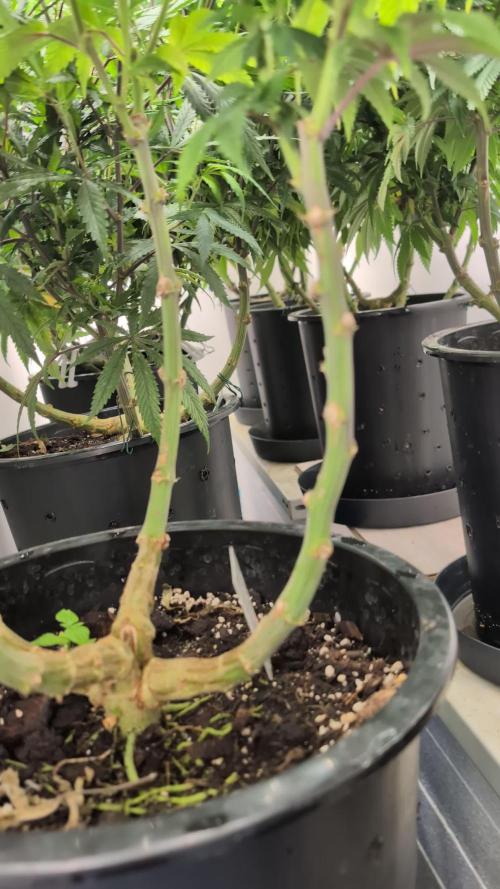
Nazdarek🌱😸. Pravje fcil sem sa rozhodua,ze ta otestujem z nasej slovenskej zahoractiny☝️🤣Co uz k temuto dodat?😆 Dneskaj 29.3. je tyden po prepnuci ,v patek sme dosli dom a skoro sem odpada jaka dzuglabo na mna vyskociua🙈. Najvacej vyskocila za ten tyden Gorila prime 🦍. Secko sem v sobotu polela a do stredu rana si teraz mozem cilit 🤣. Tipujem este dva tydne a donde mi fantazia,jak ich vynasat ven a focit📸. Uz fcileky maju svoju vahu😮💨. Nech sa vam seckym dari a nech vam to rostne🌱. Bay🙂
Streda 1.4.26 sa objavili kvety?🌺


Likes
4
Share


@theswagnificent
Follow
Day 42: first day of 12/12. Plants will only receive 12hrs of light today. Removed any red lst trainers in anticipation for stretch. Left the wire tied ones alone. Fed at about 1700. With R/O water my pH has actually been staying "perfect". I was using the system with tap before and would always have to adjust it a bit with ph up/down. The company recommends r/o water for a reason. Still no signs of PM and it's been over a week. Did a second spray of neem oil yesterday regardless. Looks great. Already did a heavy defol. a week ago so I think I'll be straight going into flower. I'll defol in a few weeks once the colas are noticable.
Day 44: grew over night. Crazy. Responding well to 12/12. Some stems broke free from their LST wires and I had to retrain. Need to keep them short. This is definitely my tallest plant and I'm trying to keep the canopy even.

Likes
37
Share


@UKBUDDOCTOR
Follow
This has properly been the most resilient plant yet I have dealt with. So sticky and smelly... HIGHLY RECOMMENDED!! 🤤

Likes
6
Share


@Flower420
Follow
4/15- Her bud sites are becoming very big and the white pistils are REALLY coming out. I hope she’s done stretching 🤞🏻
Had to move the lighting all the way to the top bar of the tent. She’s now 12 inches from the light. Seeing those spots again on some leaves. I gave her 4ml of calmag instead of 3.13. I’m hoping the calmag will help and the plant enzymes.
Gave her a little hair cut ✂️

Likes
69
Share


@DogDoctorOfficial
Follow
Eternity Grow Cup - Week 1 Flower Report
Welcome to the first week of flower in the Eternity Grow Cup! This is a crucial stage in the cycle, and we’ve made some important moves to set the girls up for success. Let’s dive into all the details and talk about the key elements shaping this transition.
48 Hours Dark Period & Transition to Flower
Before flipping to flower, we implemented a 48-hour dark period. In my experience, this technique helps the plants transition more smoothly and accelerates their hormonal shift into flowering. It’s a method that has consistently worked well for me, and I encourage growers to explore different approaches to find what best suits their setup.
The Power of Reds - Far Red & Deep Red
As part of this transition, we have introduced far red and deep red lighting. These are turned on 15 minutes before the main whites and stay on for 15 minutes after. The reason? This simulates the natural sunrise and sunset effect, which helps optimize the flowering response and enhances overall plant development. The red spectrum plays a crucial role in promoting stretch and enhancing bud formation early on.
Light Schedule - 11/13 Cycle
From the start of flower, we are running an 11 hours light / 13 hours dark schedule. Over the years, I’ve found this lighting strategy beneficial in inducing faster flower onset, increasing terpene production, and ultimately producing better-quality fruits. This is something I personally swear by, but as always, I encourage others to experiment and see what works best for their unique environments.
Spending Time with the Girls
One of my favorite parts of the grow is spending time with the plants, enjoying some good medicine, and simply being present in the garden. The connection we have with our plants is invaluable, and I believe they truly respond to the energy we bring. It’s a labor of love, and every moment spent with them contributes to their health and vitality.
Monitoring with TrolMaster TM + App
All data is being closely monitored using the TrolMaster TM + app, and I highly encourage everyone to check it out. Seeing all the details, tracking trends, and adjusting conditions accordingly is a game-changer. If you love data as much as I do, this is definitely something worth exploring.
Gear Spotlight - AeroFan Extraction
Let’s talk about one of the essential pieces of gear in this setup: the AeroFan Extraction System. This exhaust fan is an absolute beast, keeping the environment perfectly dialed in while looking sleek mounted on the wall. A good extraction system is key to maintaining ideal airflow, temperature, and humidity control, and this one has been doing an incredible job.
Current Environmental & Nutrient Data
Water pH: 6.0
Water EC: 1.36
Water Temperature: 16°C (a bit low, will be adjusting soon)
Soil EC: 1.44
Soil Temperature: 20°C (decent but could be slightly higher)
Maintaining the right balance of temperature, pH, and EC is essential for a successful flowering phase, so I’ll be keeping a close eye on these numbers and making any necessary adjustments as we progress.
Shoutouts & Community Love
A huge thank you to Plagron, Zamnesia, and Grow Diaries for making the Eternity Grow Cup possible! Massive appreciation to the entire community—supporters, competitors, lovers, and even the haters—you all keep this space thriving.
Let’s also take a moment to wish everyone the best of luck in the competition. The level of dedication and skill across the board is truly inspiring. Keep pushing, keep growing, and let’s make this an unforgettable run!
Join the Journey
For those who want the full experience, make sure to check out the YouTube channel! Some of the episodes are too big for Grow Diaries, but they’ll be available in 4K for the best viewing experience. Stay tuned for all the updates, and don’t miss out on the upcoming episodes.
Wishing everyone an outstanding week ahead! Let’s keep the energy high, and let’s keep growing strong! 🌱🔥
See you all in the next update!
Genetics - Runtz https://www.zamnesia.com/6000-zamnesia-seeds-runtz-feminized.html
Nutrients - Plagron https://plagron.com/en/hobby
- Aptus Holland https://aptus-holland.com/
Controls - Trol Master https://www.trolmaster.eu/
LED - https://www.futureofgrow.com/en
LED - https://www.thinkgrowled.com
Soil - https://www.promixgardening.com/en
Germination - Cannakan https://cannakan.com/?srsltid=AfmBOopXr-inLXajXu3QFgKXCXXos4F1oEvScjMKIB5MR5dk8-GJ-F49
DOGDOCTOR 15% off
Smoking Papers - https://ziggioriginal.com/
Terpene saver - https://grovebags.com/
As always thank you all for stopping by, for the love and for it all , this journey of mine wold just not be the same without you guys, the love and support is very much appreciloved and i fell honored with you all in my life
With true love comes happiness Always believe in your self and always do things expecting nothing and with an open heart , be a giver and the universe will give back to you in ways you could not even imagine so
As always, this is shared for educational purposes, aiming to spread understanding and appreciation for this plant. The journey with nature is one of discovery, creativity, and respect. Let’s celebrate it responsibly and continue to learn and grow together!
Growers Love To you All 💚
#EternityGrowCup #RuntzHunt #GrowersLove #CannabisCommunity #AptusHolland #ProMixSoil #TrolMaster #Zamnesia #Plagron #ZiggiPapers #Grovebags

Likes
3
Share

@CadillacGreen_420
Follow
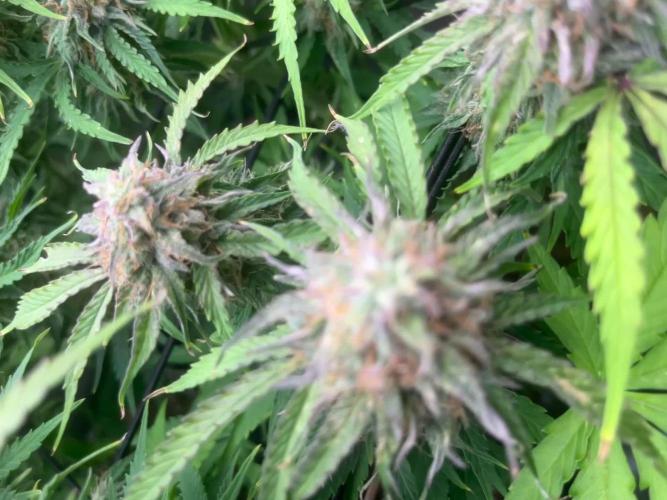
The buds have built up a nice layer of resin, but I’m hoping they’ll bulk up a bit more.
Toward the end of last week, I gradually trimmed off all the fully yellow leaves and some fan leaves that were shading the buds. Some of the chlorosis has gotten worse even with Cal-Mag and no light stress — not sure why, honestly.
The buds haven’t swelled up as much as I was expecting; about 15 days left till harvest, so by the end of the week we’ll see if things take a turn for the better. 🤞
Likes
9
Share


@Prototype0181
Follow
The lady's are 8 weeks old now and ready for flower🌺 i might switch em next week so stay tuned


Likes
56
Share


@Ultraviolet
Follow
What's in the soil? What's not in the soil would be an easier question to answer. 16-18 DLI @ the minute. +++ as she grows.
Probably not recommended, but to get to where it needs to be, I need to start now.
Vegetative @1400ppm 0.8–1.2 kPa 80–86°F (26.7–30°C) 65–75%, LST Day 10, Fim'd Day 11
CEC (Cation Exchange Capacity):
This is a measure of a soil's ability to hold and exchange positively charged nutrients, like calcium, magnesium, and potassium. Soils with high CEC (more clay and organic matter) have more negative charges that attract and hold these essential nutrients, preventing them from leaching away.
Biochar is highly efficient at increasing cation exchange capacity (CEC) compared to many other amendments. Biochar's high CEC potential stems from its negatively charged functional groups, and studies show it can increase CEC by over 90%. Amendments like compost also increase CEC but are often more prone to rapid biodegradation, which can make biochar's effect more long-lasting. biochar acts as a long-lasting Cation Exchange Capacity (CEC) enhancer because its porous, carbon-rich structure provides sites for nutrients to bind to, effectively improving nutrient retention in soil without relying on the short-term benefits of fresh organic matter like compost or manure. Biochar's stability means these benefits last much longer than those from traditional organic amendments, making it a sustainable way to improve soil fertility, water retention, and structure over time. Needs to be charged first, similar to Coco, or it will immobilize cations, but at a much higher ratio.
a high cation exchange capacity (CEC) results in a high buffer protection, meaning the soil can better resist changes in pH and nutrient availability. This is because a high CEC soil has more negatively charged sites to hold onto essential positively charged nutrients, like calcium and magnesium, and to buffer against acid ions, such as hydrogen.
EC (Electrical Conductivity):
This measures the amount of soluble salts in the soil. High EC levels indicate a high concentration of dissolved salts and can be a sign of potential salinity issues that can harm plants.
The stored cations associated with a medium's cation exchange capacity (CEC) do not directly contribute to a real-time electrical conductivity (EC) reading. A real-time EC measurement reflects only the concentration of free, dissolved salt ions in the water solution within the medium.
98% of a plants nutrients comes directly from the water solution.
2% come directly from soil particles.
CEC is a mediums storage capacity for cations. These stored cations do not contribute to a mediums EC directly.
Electrical Conductivity (EC) does not measure salt ions adsorbed (stored) onto a Cation Exchange Capacity (CEC) site, as EC measures the conductivity of ions in solution within a soil or water sample, not those held on soil particles.
A medium releases stored cations to water by ion exchange, where a new, more desirable ion from the water solution temporarily displaces the stored cation from the medium's surface, a process also seen in plants absorbing nutrients via mass flow. For example, in water softeners, sodium ions are released from resin beads to bond with the medium's surface, displacing calcium and magnesium ions which then enter the water. This same principle applies when plants take up nutrients from the soil solution: the cations are released from the soil particles into the water in response to a concentration equilibrium, and then moved to the root surface via mass flow.
An example of ion exchange within the context of Cation Exchange Capacity (CEC) is a soil particle with a negative charge attracting and holding positively charged nutrient ions, like potassium (K+) or calcium (Ca2+), and then exchanging them for other positive ions present in the soil solution. For instance, a negatively charged clay particle in soil can hold a K+ ion and later release it to a plant's roots when a different cation, such as calcium (Ca2+), is abundant and replaces the potassium. This process of holding and swapping positively charged ions is fundamental to soil fertility, as it provides plants with essential nutrients.
Negative charges on soil particles: Soil particles, particularly clay and organic matter, have negatively charged surfaces due to their chemical structure.
Attraction of cations: These negative charges attract and hold positively charged ions, or cations, such as:
Potassium (K+)
Calcium (Ca2+)
Magnesium (Mg2+)
Sodium (Na+)
Ammonium (NH4+)
Plant roots excrete hydrogen ions (H+) through the action of proton pumps embedded in the root cell membranes, which use ATP (energy) to actively transport H+ ions from inside the root cell into the surrounding soil. This process lowers the pH of the soil, which helps to make certain mineral nutrients, such as iron, more available for uptake by the plant.
Mechanism of H+ Excretion
Proton Pumps: Root cells contain specialized proteins called proton pumps (H+-ATPases) in their cell membranes.
Active Transport: These proton pumps use energy from ATP to actively move H+ ions from the cytoplasm of the root cell into the soil, against their concentration gradient.
Role in pH Regulation: This active excretion of H+ is a major way plants regulate their internal cytoplasmic pH.
Nutrient Availability: The resulting decrease in soil pH makes certain essential mineral nutrients, like iron, more soluble and available for the root cells to absorb.
Ion Exchange: The H+ ions also displace positively charged mineral cations from the soil particles, making them available for uptake.
Iron Uptake: In response to iron deficiency stress, plants enhance H+ excretion and reductant release to lower the pH and convert Fe3+ to the more available form Fe2+. The altered pH can influence the activity and composition of beneficial microbes in the soil. The H+ gradient created by the proton pumps can also be used for other vital cell functions, such as ATP synthesis and the transport of other solutes. The hydrogen ions (H+) excreted during photosynthesis come from the splitting of water molecules. This splitting, called photolysis, occurs in Photosystem II to replace the electrons used in the light-dependent reactions. The released hydrogen ions are then pumped into the thylakoid lumen, creating a proton gradient that drives ATP synthesis.
Plants release hydrogen ions (H+) from their roots into the soil, a process that occurs in conjunction with nutrient uptake and photosynthesis. These H+ ions compete with mineral cations for the negatively charged sites on soil particles, a phenomenon known as cation exchange. By displacing beneficial mineral cations, the excreted H+ ions make these nutrients available for the plant to absorb, which can also lower the soil pH and indirectly affect its Cation Exchange Capacity (CEC) by altering the pool of exchangeable cations in the soil solution.
Plants use proton (H+) exudation, driven by the H+-ATPase enzyme, to release H+ ions into the soil, creating a more acidic rhizosphere, which enhances nutrient availability and influences nutrient cycling processes. This acidification mobilizes insoluble nutrients like iron (Fe) by breaking them down, while also facilitating the activity of beneficial microbes involved in the nutrient cycle. Therefore, H+ exudation is a critical plant strategy for nutrient acquisition and management, allowing plants to improve their access to essential elements from the soil.
A lack of water splitting during photosynthesis can affect iron uptake because the resulting energy imbalance disrupts the plant's ability to produce ATP and NADPH, which are crucial for overall photosynthetic energy conversion and can trigger a deficiency in iron homeostasis pathways. While photosynthesis uses hydrogen ions produced from water splitting for the Calvin cycle, not to create a hydrogen gas deficiency, the overall process is sensitive to nutrient availability, and iron is essential for chloroplast function.
In photosynthesis, water is split to provide electrons to replace those lost in Photosystem II, which is triggered by light absorption. These electrons then travel along a transport chain to generate ATP (energy currency) and NADPH (reducing power). Carbon Fixation: The generated ATP and NADPH are then used to convert carbon dioxide into carbohydrates in the Calvin cycle. Impaired water splitting (via water in or out) breaks the chain reaction of photosynthesis. This leads to an imbalance in ATP and NADPH levels, which disrupts the Calvin cycle and overall energy production in the plant. Plants require a sufficient supply of essential mineral elements like iron for photosynthesis. Iron is vital for chlorophyll formation and plays a crucial role in electron transport within the chloroplasts. The complex relationship between nutrient status and photosynthesis is evident when iron deficiency can be reverted by depleting other micronutrients like manganese. This highlights how nutrient homeostasis influences photosynthetic function. A lack of adequate energy and reducing power from photosynthesis, which is directly linked to water splitting, can trigger complex adaptive responses in the plant's iron uptake and distribution systems.
Plants possess receptors called transceptors that can directly detect specific nutrient concentrations in the soil or within the plant's tissues. These receptors trigger signaling pathways, sometimes involving calcium influx or changes in protein complex activity, that then influence nutrient uptake by the roots. Plants use this information to make long-term adjustments, such as Increasing root biomass to explore more soil for nutrients. Modifying metabolic pathways to make better use of available resources. Adjusting the rate of nutrient transport into the roots. That's why I keep a high EC. Abundance resonates Abundance.
Likes
9
Share


@TheBulldozerSicily
Follow
Giovedì 17 ottobre switch a 12/12
Prossimamente cambieremo soluzione.
Rinnoverò anche tutti i nutrienti con la fase vegetativa e loro continueranno a crescere fino a che iniziamo a vedere i prefiori e cui di ricambierò l'acqua con la soluzione e adatta, al momento tutto apposto!
Venerdì 18 ottobre 2024
Svuoto la vasca, cambio soluzione.
Partiamo da 75 lt acqua demineralizzata ec 235 ph 9.5
Aggiungo tutti I nutrienti indicati ottenendo ec 1318 ph 6.2

Likes
10
Share

@PEAKYPLANTERS
Follow
Just one name, PEAKYPLANTERS! AND GOODBYE! Many would lose against me while I still struggle to find a place in this world where you are truly valued as a director that prepares the actor to go on stage, we only work behind the scenes, without merit that very often we don't even want but that we deserve.... ALL OF US ON THIS PLATFORM Every day, I see dozens of idiots trying to do business—from the street-corner types to the "pharmacy" crowd—yet it has become rare to find a truly knowledgeable person in this field. Anyone can sell products... but how many times in your life have you met someone and thought to yourself, "What the hell is this guy doing here?"
You might have walked into a place expecting to learn and exchange ideas, only to end up being the one doing the explaining.
I’ve traveled to meet the right people, but so far, I’ve only found folks who can speak seven or eight languages but don't know how to water a daisy.
At this point, trade shows are the only places left where people like us can have a proper exchange of ideas
Good luck
Likes
3
Share


@Earthsower
Follow
She has received a little water this week a gave her 100 ml of phd balanced water she has been recovering steadily under the natural sunlight so I will keep her there and play it by sight. I will wait until the pot drys a bit before I feed h

Likes
2
Share


@Sleestacker
Follow
Oh man, she hit that supersoil and fucking took off! I went up to my cottage for the forth of July weekend, and she had just exploded into flower. Gave her a good watering when I got home with recharge, the video is a 3 hour timelapse after her watering!

Likes
25
Share


@Kirsten
Follow
17.3.25:
So I watered with 2ltrs of dechlorinated water PH'd to 6.4 with 4ml Xpert Nutrients Cal-Mag amino acids.
I have really overdone the nutrients, I got carried away 😅
To try and rectify the situation, I've cut everything out except Cal-Mag amino acids.
I will try to just stick to this with some Biosys, but I'm running out of that now, too.
Anyway, with Or Without, I'm sure it'll balance out. Fingers crossed 🤞
Likes
2
Share

@Chlor
Follow
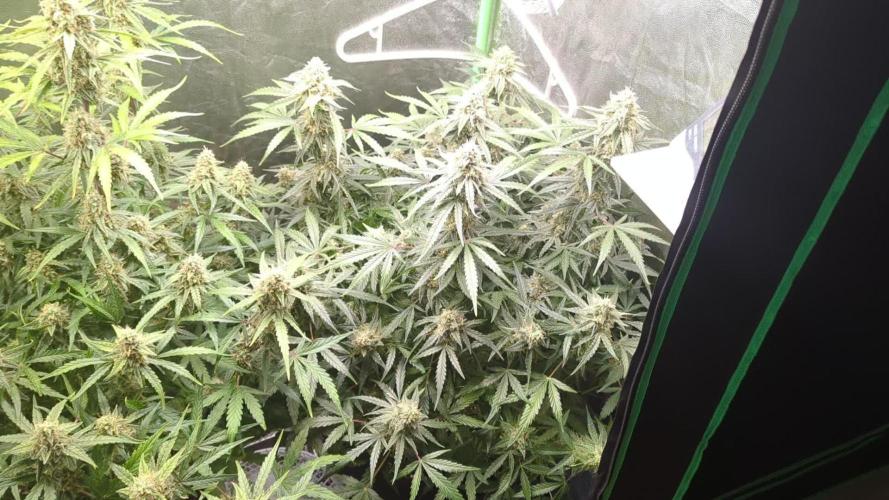
Day 60. Epsilon Buds don't develop big as I want. Well it is what it is. Orions have still a long way to go.
Also I did overdose pk.
Likes
6
Share


@Jrae420
Follow
The defoliation continues and continues. Buds are starting to pack on some weight. Had to start using twist ties to hold up some of the bigger buds. Still giving the bembe on water only days. Everything is progressing nicely

Likes
7
Share


@Hightable420
Follow
Day #21 Defoliation
Not topped (left) Topped (right).
Super impressed so far.
Likes
20
Share


@ukterpdoc
Follow
LST DONE TODAY NEARLY ALL OF THEM 2 JUST SEEM POINTLESS TO PULL AROUND BUT


Likes
8
Share


@Shalma_kush_420
Follow
Muy buenas.
Ya en la primera semana de vida de esta florcita, ha recibido su primer riego hoy mismo con estimulador de raíz (raziel de hype) veremos como cambia la próxima semana.
Con una temperatura entre 23'5/24'5° encendido y 16° apagado con una humedad entre 60/80%.
Con el led de 150w al 75% para poder aprovechar bien los lúmenes en sus diferentes fases.
Está semana le tocará cambio de maceta por una de 3 litros ya que está en 250 centilitros.
Por el momento marcha muy bien con buen color buena forma y asta se le puede ver la capa de glándulas que tiene sobre las hojas.


