Check the winners The Grow Awards 2026 🏆
Likes
Comments
Share
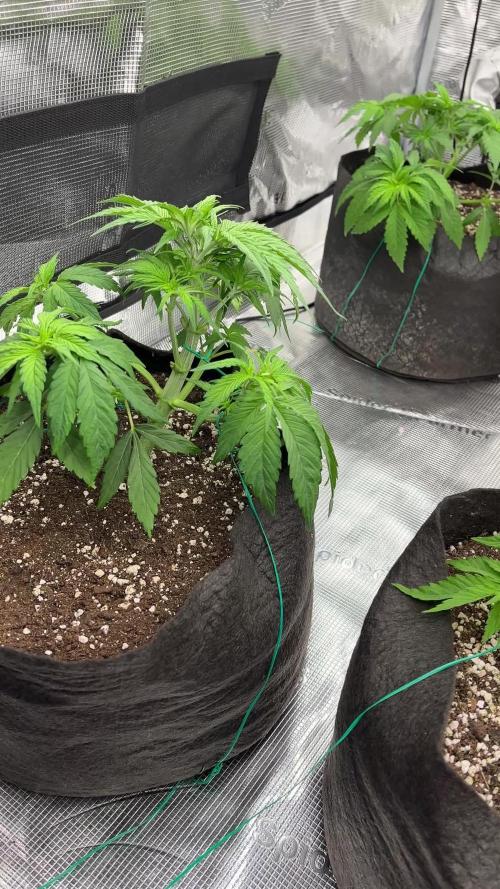
This week was all about structure and control. We focused on progressive LST, opening the canopy properly, reducing apical dominance and spreading the side branches so more tops can start receiving direct light. We also did a selective cleanup of fan leaves, lower leaves and a few that were touching the substrate or creating unnecessary shade, leaving the lower zone cleaner and improving airflow. On the environmental side, we fine-tuned the setup through the week, gradually increasing light intensity until we reached around 500 PPFD and improving the balance between temperature, humidity and VPD to support growth more efficiently. The goal was not to force the plants, but to organize the structure, distribute energy better and build a stronger base before the next step. The difference is already noticeable compared to the start of the week: the plants are more open, side branches are more exposed and light penetration into the center is clearly better. The next goal is to keep watching each plant’s response, continue watering by pot weight, and very soon start topping the most advanced plants, always progressively and with canopy uniformity in mind.
Likes
75
Share
@Pungolian
Follow
Grow itself is going well but weather really sucks heat index of 110+ with oppresive humidity.thunderstorms last night knocked over both outside plants, broke one branch on this girl. Tied her back up and rolling on. Should be fine!
Likes
11
Share
@MistaOC
Follow
Biotabs Interview 1. Tell us a bit about yourself: who are you, where are you from, and what do you do outside of growing? I’m 40 years old and based in the western part of Germany, living a grounded life as a family man. My main profession is in sales within the automotive spare parts industry, operating in a large-scale B2B wholesale environment across Germany. We work with around 7,500 active business clients, and my role is less about day-to-day orders and more about the bigger picture. I’m the first point of contact for business-related matters — handling contracts, partnerships, and acting as the face of our department. It’s a role that requires structure, reliability, and a strong sense for communication. Outside of that, I’ve always been someone who works with his hands. I take on a wide range of manual projects — from tiling and drywall construction to more specialized work like sealing fire protection openings. I enjoy creating things, improving spaces, and paying attention to the small details that make the difference. That mindset follows one simple rule: all or nothing. If I do something, I do it properly. This attitude has shaped me for over 40 years — and it naturally carries over into my grows and the way I document them. I put a lot of care into every step, from the grow itself to how I present it in my diaries. If I had to describe my life in a few pillars, it would be four: my family, my main job, my hands-on side work, and growing. And growing isn’t just a hobby for me — it’s a real passion that ties everything together. 🌱 2. How did you get into growing? Tell us about your very first steps. My first contact with cannabis goes way back to when I was around 14. Back then, there was no WhatsApp or social media — if you wanted to meet people, you’d call them or maybe send a (pretty expensive) text, and then everyone would just hang out in the same spot. For us, that place was simply “the street.” I was one of the younger guys in the group, hanging around with a few older ones, maybe 17 or 18. One of them used to disappear into a nearby field every now and then — everyone knew what he was doing, even if it wasn’t really talked about. At that age, I was curious, but also a bit hesitant. At the same time, I was heavily into football, and most of my circle came from there. One day, during some kind of event at the sports ground, I ended up trying it for the first time with some of the older guys. It wasn’t the smoothest experience, especially mixed with alcohol, but it stayed with me. After that, things developed naturally. Our small circle grew, especially through school, and we became what you’d probably call a typical smoker group. The real turning point, though, was when one of the guys — who had just moved to our area — showed me his hidden grow in the attic. It was a super basic setup with fluorescent tubes, no real climate control, no deep knowledge — but he was growing his own plants. That moment stuck with me. It sparked something. Even back then, I knew I wanted to do it myself one day. That chance came years later. When I was around 22, I moved into my first apartment with my girlfriend — who is now my wife. For the first time, I had my own space, and that’s when I started my first real grow. I converted an IKEA cabinet in a spare room into a small grow space, just big enough for two indica plants. Nothing fancy, but it was mine. I got my seeds from the Netherlands back then, and I kept growing for about two to three years. My setup evolved over time — back then it was all HPS lamps and fluorescent tubes, long before LED became what it is today. I still have my old Homebox tent from that time, and it’s funny — it still looks almost brand new. At some point, life changed and we moved into a place where growing just wasn’t possible anymore. So I had to stop, even though the passion never really left. Then came 2024 and the partial legalization in Germany. For me, that was the moment everything came back. It’s still far from perfect, but for growers like us, it opened the door again to follow this passion a bit more freely — and that’s when I picked it back up. 3. What role does cannabis play in your life – personally and as a grower? Cannabis has fascinated me from the very first moment — whether it was the smell, the experience, or just the whole vibe around it. For me, it was never really about medicine in the beginning. It was more like a way to unwind, almost like a switch that brings you into a different, more relaxed state. What always stood out to me was the feeling — that deep physical relaxation and the sense of connection. It was never something negative in my life. In fact, I’ve always preferred it over alcohol, both back then and still today. It just fits me better. Depending on the situation, it can even sharpen my focus. Of course, it can also do the opposite if you overdo it — but used the right way, it helps me slow down, reset, and find that “end of the day” feeling. Over time, though, my perspective has evolved. As you get older, your body starts reminding you that you’re not 20 anymore. I recently had a shoulder tendon injury, and that was the first time I really experienced the medical side of cannabis in a noticeable way. It helped reduce the pain and even improved my mobility — something I hadn’t really thought about before. But as a grower, cannabis means something even deeper to me. Growing is a true passion. It’s not just about consuming — it’s about the entire process from start to finish. Watching a plant develop, learning from each cycle, improving step by step — that’s what really drives me. It’s not about being better than anyone else. It’s about becoming better than I was before. That mindset carries over into other areas of my life as well — always refining, always learning. At the same time, growing teaches discipline. You can’t just let things run and expect great results. Timing, care, consistency — all of that matters. If you don’t put in the effort at the right moments, the outcome won’t be what you’re aiming for. That’s why I don’t see it as something lazy or passive at all. For me, it’s the opposite. Growing brings structure, focus, and a certain calmness into my life. It grounds me — and that’s what makes it so valuable to me. 🌱 4. What growing method do you prefer and why? I’ve always preferred indoor growing over outdoor. It comes back to my mindset — all or nothing. In my opinion, especially here in Germany, outdoor simply doesn’t give me the level of quality I’m aiming for. Indoor gives me full control, and that’s exactly what I want. At the same time, I’m someone who constantly experiments. Even if I know it might cost me yield, quality, or cause stress to the plants — I still do it. That’s how I improve. I need to see things with my own eyes and learn from my own experience to really understand what works best for me. I’ve always grown in soil. Over time, my setup has evolved a lot. I started with simple plastic pots, switched to fabric pots after legalization, and now I’ve come full circle back to plastic pots — mainly because I moved into an AutoPot system, which fits my current approach better. My goal today is to keep everything as efficient and stable as possible. I run an automated watering system connected to a 50-liter tank, which is filled through an RO system that I can control via app. The water runs through a calcium filter to help stabilize the pH. I’m not chasing perfect numbers anymore — as long as it’s stable and within a good range, that’s what matters more. In general, I prefer working with organic nutrients. For me, it’s important to know that the final product is as clean and natural as possible. I’ve gone through all the typical struggles before — adjusting pH, dealing with deficiencies, spending hours mixing water — and over time I’ve simplified my system more and more. That’s also where Biotabs fits perfectly into my setup. It’s a very natural match — simple, organic, and reliable. It allows me to focus more on the plants themselves instead of constantly adjusting inputs. My standard setup is pretty consistent: a 1.2 × 1.2 m tent, around 480W LED, AC ventilation with a carbon filter, and usually five plants. I top every plant at minimum, veg for about five weeks, and often run a SCROG net to maximize the canopy. But even here, I keep testing things. For example, I’m currently experimenting with and without a SCROG to see how it affects yield — because in the end, I’m not only chasing quality, but also efficiency. That’s really my approach in a nutshell: build a solid system, keep it simple, but never stop refining it. 🌱 5. Which strain is closest to your heart and what fascinates you about it? That’s a tough one — I don’t think there’s just one single answer. In general, I’ve always been a fan of fruity, citrus-forward strains. Every now and then I also enjoy something more gassy, but if I had to go with what naturally comes to mind, it’s actually the very first strain I ever grew. Back in 2012, during my first grow, I ran Super Skunk from Vision Seeds — and to this day, that one stands out. Funny enough, that first grow was probably my best one in terms of how it felt at the time. Everything was new, exciting, and that final product just hit different. Grown under a simple 400W setup, nothing compared to what we have today — but it was, without a doubt, the best weed I had smoked up to that point. It’s not just about the strain itself — it’s about the moment, the experience, and what it represented. At the same time, there’s another one I have to mention: Amnesia Haze (Core Cut). That strain is pure nostalgia for me. It was everywhere when I was younger — that classic haze we all knew. Growing it myself today brings back a lot of memories. It’s like a throwback to those early days, but now with the knowledge and control to really do it justice. So if I had to sum it up: one strain represents where it all started for me, and the other connects me to the roots of the scene I grew up in. 6. What has been your biggest learning moment as a grower – a mistake or a success that helped you grow? One of the biggest lessons I’ve learned as a grower is that routine can become your biggest enemy. When you grow consistently over time, you start to build confidence — and that’s a good thing. But at some point, that confidence can turn into complacency. You think you’ve seen it all, you start skipping small steps, and you tell yourself, “it’ll be fine.” That’s exactly where problems begin. Looking back at my earlier grows, especially before my longer break, my setup simply wasn’t good enough. I was growing under the roof with temperatures easily hitting 30°C, humidity was all over the place, and the environment just wasn’t dialed in. On top of that, I started letting things slide because I thought I had it under control. That combination was my wake-up call. Since getting back into growing after legalization, I’ve taken a completely different approach. I take it seriously now — not just as a hobby, but as something I want to master. And I also recognize that being able to grow under good conditions is a privilege. There are a lot of factors that need to align — your environment, your living situation, responsibility, especially with family — it’s not something you can take for granted. What really keeps me hooked is that growing never gets boring. I’ve had many hobbies in my life, but this is the only one that never lost its appeal. Even the “dirty work” — cleaning the tent, dialing everything in — it’s all part of the process. Of course, I’ve made every mistake you can imagine. Overfeeding, underfeeding, overwatering, underwatering — pests like aphids and thrips, and currently my biggest challenge: powdery mildew. That has been my toughest opponent so far. Even with controlled humidity, it can still show up, and it forces you to really understand your environment and your plants. The difference now is: I know how to deal with it. It’s under control, and that’s what growth is about — not avoiding problems, but learning how to handle them. Every mistake teaches you something. And over time, you build the confidence that no matter what shows up, you’ll find a way to fix it. 7. What does your typical grow routine look like – how much time do you invest and what do you enjoy most? My routine is pretty structured — I like to keep things consistent, but still leave room for adjustments when needed. It all starts with popping seeds. I usually germinate around five to six and then select the strongest five to continue with. They begin in small 0.2L pots under a humidity dome, using Canna Professional soil enriched with Biotabs Startrex according to the feeding schedule. After about two and a half weeks, I transplant them into 15L AutoPot containers. At that point, I water them in manually — first with about one liter of RO water, followed by another liter mixed with nutrients according to the schedule. After that, I give them a few days to settle before watering again — usually around five to six days later, again with RO water. This approach has worked well for me to avoid overwatering and to let the roots establish properly in the new medium. Even though the AutoPot system is already set up, I don’t activate it immediately. During the vegetative phase, I prefer hand-watering to encourage strong root development and avoid overwatering early on. Once I’m close to flowering, I switch the system on — basically just opening a valve, and everything runs automatically from there. From that point on, the workload drops significantly. I don’t really have to worry about watering anymore. Nutrients are kept simple as well — every couple of weeks I add a small top feed, and that’s basically it. Compared to how complicated things used to be, it almost feels like it runs by itself. That allows me to focus on what really matters: the plants. I still check on them regularly, usually every evening when I’m home. Not because I have to, but because I want to. Instead of mixing water or adjusting pH, I can actually observe — the leaves, the structure, the bud development. That’s where the real connection happens. That’s also when I decide what to do next — defoliation, LST, sometimes HST, or working with a SCROG net. It’s not always a fixed plan, more a combination of experience and feeling in the moment. Environmental control has also become a key part of my routine. I start with around 70% humidity during germination, then gradually bring it down — around 65% in early veg, and closer to 55% after transplant. Keeping things stable has made a huge difference for me. After roughly five weeks of veg, I flip to flower. From there, it’s about maintaining the system and letting the plants finish strong. Flowering usually runs around 8–10 weeks, depending on the strain. And then it all starts over again. What I enjoy most is exactly that balance — having a system that runs smoothly in the background, while I can fully focus on the plants themselves and the craft of growing. 🌱 8. What advice would you give beginners who are just stepping into the world of growing? If I had to give one piece of advice, it would be this: The rule is…there is no rule. That’s my mindset, and it’s something I truly believe in. Of course, there are guidelines, best practices, and a lot of information out there — but in the end, every grow is different, every environment is different, and every plant reacts in its own way. So instead of trying to follow everything blindly, sit down, observe, and learn from the plant. Growing is a process. You won’t get everything right from day one — and that’s completely normal. Mistakes are part of it. In fact, they’re one of the most important ways to learn. Today, it’s easier than ever to get into growing. There’s endless information online, tutorials, perfect pictures, and step-by-step guides. But that can also be misleading. You see these flawless results and think that’s the standard — but what you don’t see is the experience behind it. When I started, it was completely different. There were forums, very limited pictures, and you had to figure out a lot on your own. That forced you to really pay attention and understand what was happening in front of you. And that’s still the most important skill today. Look closely at your plants. They will tell you what they need — through their leaves, their structure, their growth. Once you start understanding that, everything else becomes much easier. So don’t chase perfection. Learn, adapt, and enjoy the process. And most importantly — enjoy the grower’s life. 🌱 9. How did you first hear about Biotabs and what made you want to try it? I’ve actually known about Biotabs for a long time. Back when I first started growing, I was running a fully mineral setup — using products like Canna Vega and Flores. At that time, the market wasn’t nearly as saturated as it is today, but brands like Hesi and Biotabs were already around. I remember seeing Biotabs on the shelves back then, but I never really made the switch. I just stuck to what I knew. My first real contact with Biotabs came much later, when I started diving deeper into soil biology — things like mycorrhiza and trichoderma. I became more interested in how the soil itself works and how to build a healthy microbial environment. That’s when I came across Bactrex. Funny enough, looking back now, I was using it completely wrong. I treated it like a different product and just added it straight into the planting hole, thinking that’s how it’s supposed to be used. Whether that was beneficial or not… I guess only the plants know. But that was my entry point into the Biotabs world. From there, I started learning more, testing different approaches, and understanding how the system actually works. Over time, I moved further and further away from mineral feeding and more towards a biological approach. And the more I experimented, the clearer it became to me: the combination of organic growing with a simplified system is exactly what I was looking for. 10. How has Biotabs influenced your grow and what do you appreciate most about the product? Biotabs has made my grow simpler, more stable, and overall more controlled. Before, I spent a lot of time adjusting things — mixing nutrients, checking pH, reacting to problems. With Biotabs, that complexity is reduced to a minimum. The system is straightforward: prepare the soil, add the tabs, water it in properly — and from there, it’s mostly just water. And the surprising part is: it works. Really well. For me, it fits perfectly into my current setup and mindset. I’ve built a system that is as efficient and automated as possible, and Biotabs complements that in the best way. It allows me to focus on the plants themselves instead of constantly managing inputs. That’s what I appreciate the most — the balance between simplicity and performance. You don’t have to chase numbers or overcomplicate things to get great results. At this point, it feels like a natural fit — almost like a symbiosis between my way of growing and the product itself. And once you find something that works reliably on that level, there’s really no reason to change it. For anyone who wants to grow organically and take their setup to the next level, it’s definitely worth exploring. 🌱.
Likes
5
Share
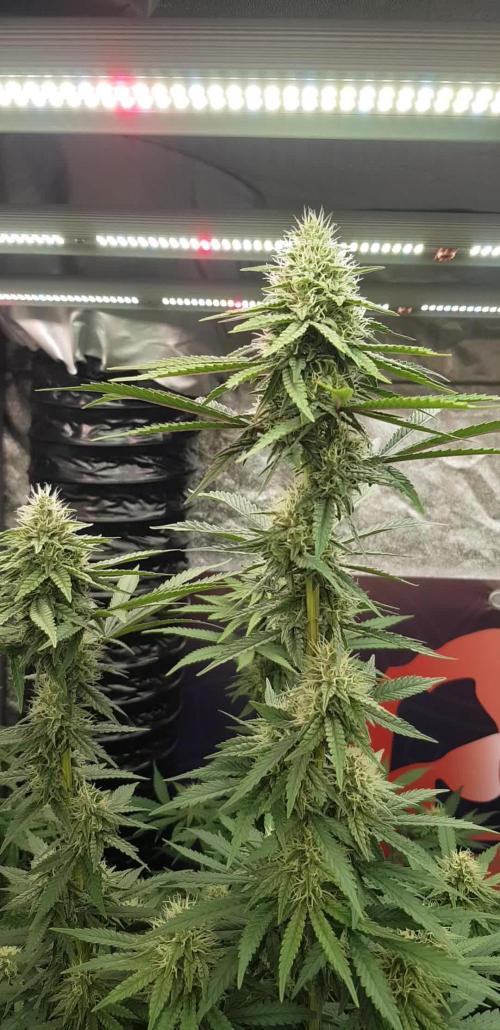
Well this is it, the last week for this little mighty Kushberry. The buds came a long way this week, really darkening in colour and becoming hard as rocks and sticky AF. Oh and the smell?? Absolutely mouth watering purple berries. Trichomes are 100% cloudy and just starting to see reds so she's coming down this afternoon. Nothing really done throughout the week, just tracking the trichomes every few days to try and nail my version of the perfect harvest window.
Likes
11
Share
Early update from week 7. As hoped, she's doing great again. I just put in a lot of nutrients and she loves it. A little LST on the BPP2 and a little defoliation on the BPP.
Likes
Comments
Share

@Hiraeth
Follow
Day 50 Kong’s Krush (7 plants) and 24K Runtz (1 plant) We’ve finally reached the last days of bloom! During week 7, I alternated between plain water and a total flush solution, making sure to wash out all excess nutrients. Now, in week 8, the final phase begins: • Today and tomorrow the plants will remain under their normal light cycle. • After that, I’ll move them into 2–3 days of complete darkness to maximize stress at the end, enhancing resin production and terpenes before harvest. Harvest plan: Kong’s Krush is right on schedule, perfectly matching its estimated 50–56 day window. 24K Runtz, on the other hand, is not 100% mature yet (trichomes still show it), but due to the timing differences between strains, I’ll cut them together to dry and cure at the same time. Aromas: • Kong’s Krush → spicy sweet notes, with hints of cinnamon and banana • 24K Runtz → powerful orange and citrus punch Exciting to be so close to harvest — the next update will be the final cut! ✂️🌱
Likes
20
Share
Vamos familia que ya actualizamos la cosecha de estas lava Cake de Zamnesia . Y es que me han sorprendido para bien , vaya flores que se han marcado repletas de tricomas y las flores se marcan aromas dulces Temperaturas máximas en 28 y mínimas en 25 y una humedad estable en torno al 36%. Os comento que tengo un descuento y para que compréis en la web de Zamnesia de un 20%, el código es ZAMMIGD2023 The discount 20% and the code is ZAMMIGD2023 https://www.zamnesia.com/ Agrobeta: https://www.agrobeta.com/agrobetatiendaonline/36-abonos-canamo Mars hydro: Code discount: EL420 https://www.mars-hydro.com/ Espero que lo disfrutéis, buenos humos 💨💨💨
Likes
13
Share
Nov.8 - Watered girls 250mL each, 0.25mL of each nutrient for each plant Nov.9 - Moved these girls into Vivosun tent under Phlizon 1200w light from a Marz Hydro tent 5x5 with Marz Hydro ts 1000 light. We needed to move these girls to this tent and have our DWC in the bigger tent so the DWC plants don’t get too hot at the bottom *once girls were transported to new tent the leaves turned to curl and lift upwards, the light is on veg and is 24” high Nov.10 - Watered girls 250mL each, 0.25mL of each nutrient for each plant Nov.10 - Decided we don’t like the blurple light and took one of our Mars Hydro lights from our big tent and switched it Nov.11 - Watered each plant, 500mL, 1mL of each nutrient. Our girls drank soo fast so we are bumping it up a bit Nov.12 - Our girl #1’s leaves are a little droopy and are looking a bit weird in some spots (darker green and almost wrinkled). Our girl #2 though is going great and we started some LST training on her today. Let her growww Nov.14 - Started our girl #1 on LST her leaves are much happier now! Ohhh boy #2 is sprouting so nice she’s starting to fill out so well and she just blossomed once we started LST, she was facing upwards in less than 24h!! Nov.15 - Our girls are thriving so I wanted to FIM #2 and my boyfriend wanted to Top girl #1 Let’s see how these girls groooww Nov.15 - Watered each girl 250mL and 0.25 mL of each nutrient we are going to water them just enough to soak into the ground every day for them to soak up as much nutrients and drink as possible without over watering.
Likes
24
Share
Well its day 20 and shes really started to take off 😊 thinking of topping her soon Ended up doing LST
Likes
11
Share
@ibbzy
Follow
Flowers don’t look healthy…but we are getting there. 2nd tent has been bought and half way setup for next grow. Will have 2 tents going for next run. Im addicted to this grow stuff! So I didn't listen to advice of not removing leaves at Week 5 and went and removed and stripped....I regret it now. Bud development definitely slowed down and plants concentrated on growing out more leaves as it seems. Megacrop has been removed from feeding and just Myco Chun as a tea and Plagron 4-in-1 Green Sensation. Giving me an NPK ration of 1-9-11 Hopefully feed this for a week and then follow up with molasses feedings till harvest We shall see if that makes the buds develop a bit more. Buds getting denser and bigger by the day, had to purchase these bud hangers. So nifty. Just auto mode from now I guess
Likes
7
Share
Hiiigh friends 🙌 Welcome to week 9. 😍 The plant's sun protection becomes more and more present and the odor becomes stronger. The tall lady is now the smallest but has the fatter buds. It remains exciting.. 😊 See you next week. 👋 Arturo for KannaKullektiv 🙏
Likes
177
Share
Autumn is here. Weve been setting up the Roof one Day before " Rainingtime" begun. Now every Day we have Rain, Wind and Sunny Times. Up to now everything is OK. They have got a Feeding today Buds are still swelling , Iam hoping for 2 more Weeks of good Weather
Likes
7
Share
​Das Prachtstück hat die Strapazen des Trainings längst weggesteckt und präsentiert sich in der sechsten Woche mit einer beeindruckenden Vitalität. Das Blattwerk ist so dicht gewachsen, dass man kaum noch durchsieht – die Fast Buds Genetik zeigt hier ihre volle Power. Ich bereite meine Hübsche nun mit einer großen Entlaubung auf den nächsten Schritt vor, um die Luftzirkulation zu verbessern und die Lichtwege für die kommenden Blütenstände freizumachen. Sobald die gewünschte Größe erreicht ist, erfolgt die Umstellung auf den 12/12-Zyklus, um das volle Potenzial dieser Lady zu entfesseln.
Likes
32
Share
@D33jW
Follow
🐾🐻🐾 Bros Beast - Breed Bros 🐾🐻🐾 DAY 18 / FLOWER 0 / WEEK 3 Gens: Hulkmania x Muffin Berry You can buy this great genetics on Web side: https://breedbros.com/ I hope it will be a real beast 😄😄 She So far it is doing very well, it has beautiful wide leaves and its lower parts are growing quite well 🙌 I think that next week it will be moved to a large tent and planted in a large pot. Hope all will go this way to the end 🙏 THX for watching and see you next week 👊
Processing
Likes
4
Share
Noticed some slight yellowing and the white blemishes on a couple of the older plant's leaves were getting bigger. I believed the white blemishes were do to a cal-mag deficiency and added that to my feed. Also was using 1/4 nute strength and now bumped up to full to counter the yellowing. Started LST this week too.
Likes
38
Share
WEEK 7/4F // D43/22F - D49/28F Dafür das Lady#2 mit der Blüte ein paar Tage hinterher ist, ist sie mittlerweile aber größer als Lady#1 und ist definitiv stabiler was die Seitentriebe angeht. Beide Ladys werden ordentlich voll sein. Jeweils die unteren vier Seitentriebe wurden mit Bindedraht an der Stange in der Mitte befestigt das die Triebe und dicker werdenden Buds bei starkem Wind etwas gestützt sind. Gegossen wurde an Tag 43/22F, an Tag44/23F, an Tag45/24F, an Tag48/27F und an Tag49/28F. An den Tagen gab es jeweils ca 1L-1.2L. Die Töpfe werden vor dem gießen leicht angehoben um zu abzuschätzen wie viel jede Lady benötigt. Temperatur Tag: 22-28°C Nacht: 13-19° Höhe #1 94cm #2 106cm
Likes
32
Share
Flushing nicely, leaves turning yellow and purple. 7 days from now it will be hung and dried
Likes
Comments
Share
Entrambi le varietà cioè Medical sativa e medicure Cbd 2.0 crescono al massimo delle aspettative sia indoor che outdoor,molto simili ma le differenzia il contenuto di THC e Cbd abbastanza notevoli nella gustosa medical sativa mentre nella medicure Cbd 2.0 troviamo le stesse caratteristiche fruttate e dolciastre della sorella sativa, sono contento di dutchfem seeds che ha creato una varietà di cannabis light legale a CBD in grado da garantire a chi la coltiva in maniera certificata di riuscire a crearsi un vero brand, noi ci abbiamo provato con disjointed CBD ed è stata un esperienza bellissima che probabilmente riprenderemo con nuove varietà Cbd e sperando anche a THC in futuro!