


Likes
Comments
Share

@general_davdek
Follow
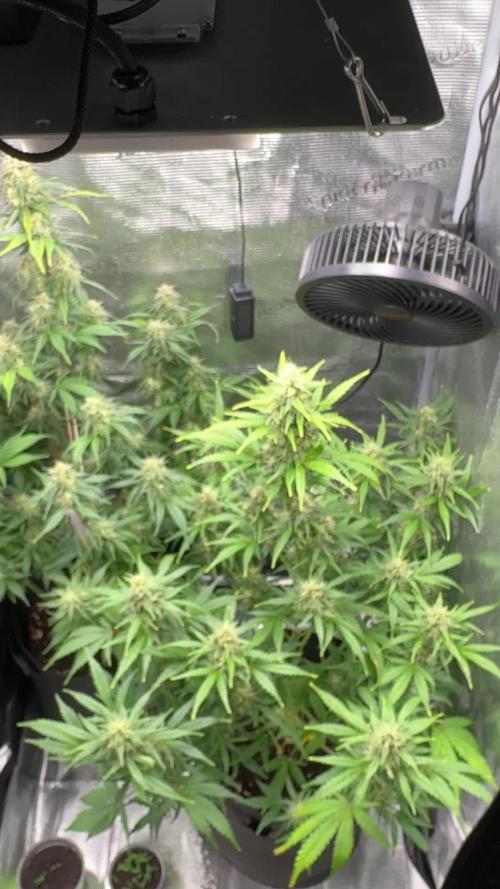
WOCHE 10: ABSOLUTE ESKALATION IM ZELT! 🌿🔥
Leute, ich schwöre, diese Buds haben das System gesprengt! Wir sind offiziell in der Phase angekommen, in der die Genetik einfach nur noch durchdreht. Schaut euch diese Haupt-Cola an – das ist kein Headbud mehr, das ist ein verdammter Wolkenkratzer! 🏙️💨
Mein Controller zeigt perfekte Werte (VPD auf den Punkt!), aber was hier passiert, ist nicht mehr mit Logik zu erklären. Der Frost-Faktor ist so hoch, dass ich fast eine Skibrille brauche, wenn ich das Zelt öffne. ❄️😎 Die Farben werden von Tag zu Tag dunkler und mysteriöser. Wer braucht schon Gold, wenn er dieses Harz hat? 💎
Ein VPD von 0,98 kPa ist in dieser späten Blütephase absolut spot on. Saubere Arbeit am Controller, das Management ist perfekt!

Likes
247
Share


@PremiumBudsEU
Follow
Hello growmies
Buds start fatten up and we like it 👆😎
This week the buds have started gaining weight.
I think it's exactly the right time because I still have a few weeks to go.
From this point on I try to keep the PK content at the same level for the next 2 weeks, then I will increase the fertilizer dose a bit and fertilize like this for another 2 weeks until flowering week 8.
What I noticed with my plants up to now is that they are very sensitive to light and that over 1000 ppfd is not possible without an additional co2 supply.
Otherwise I have only good things to say, they smell delicious, they have a very good defense against pests and mold. Sometimes the humidity was over 70 at night.
I am very excited about the result, the effect and the taste 🙂
I will post a video tomorrow
I wish my Growers Family and Sponsors a pleasant weekend without stress and hectic. Stay healthy 🙏🙏🍀

Likes
17
Share


@Naujas
Follow
wow wow !!!! 404 gr ! from the suitcase!!!!!!!258 gr of wet dried buds!!!!!!! I am impressed with the result, and I don't really believe that I will ever be able to improve it :) It was a truly amazing journey with FastBuds Gorilla cookies auto, my house is filled with a wonderful sweet smell, the buds look really full and very very shiny :) I also collected a lot of sugar leaves from which I will make bubble hash:) the girl coped with high temperatures and high humidity throughout her growth, which is why I was afraid of rot, but everything went well!!!! She is amazing. smoke review and dry weight will be up very soon, good luck to everyone :)!!!
Likes
9
Share


@Miguels_Fuego
Follow
Will be flushing this week and hopefully harvesting next week. Looking good, strong trichomes production and smell is incredible for both.

Likes
22
Share


@ChachoGreenCrown
Follow
Excelente resultado el que hemos obtenido con estas cepas de kannabia, pero esta se lleva la palma.. para mi, es la favorita del cultivo. Ha sido la más fácil de cultivar, la que mejor se adapto en el espacio de cultivo.. bastante productiva y con una resina brutal.
Sabores cítrico y mango muy acentuado.. es una pasada fumar esta cepa.
Con esto damos por terminado el cultivo con kannabia.. disculpad la tardanza en publicar... tarde o temprano siemore cumplimos!
Hasta pronto amigos! Un saludo growers 💚👨🌾🏽

Likes
21
Share


@3lementa1
Follow
So much growth. I had the 1000w light up to 100% for a bit but it's just too hot so I put it back down to 75%.
Dec 19: this one has some burnt leaves. I can't exactly tell if it's nutrient burn or light burn. I switched it into the cooler spot the White Widow was in, and I added a bunch of water. This one drank maybe a third of the water since Friday, at least twice as much as the other one. The pH on this one is still reading really low but my tap water is 7.8 and the White Widow is 7.6. I'm just going to watch it before I start adding pH up. It's very strange. This one is still stretching like crazy at the main cola points. She's starting to bloom but not as much as the white widow.


Processing
Likes
10
Share


@MadeInGermany
Follow
Hey everyone 😃.
First of all, many thanks to Zamnesia for the support 👏🏼👍.
I'll start germinating next week 😋.
Until then, I wish you all the best 😊 stay healthy 🙏🏻 and let it grow 🍀

Processing
Likes
6
Share


@ganjaman24
Follow
All in all every strain is doing great! Blueberry is the closes to finishing followed by chemdawg and lastly the Somango I just flipped little over a week ago so still have a little while to go with her! Blueberry has a pungent and fresh berries/citrus aroma going on while the chemdawg has the infamous og odor no doubt og is related to it haha. Thanks for checking it out! XD ..sorry for the delayed update


Likes
14
Share


Likes
181
Share


@GODSGIFT_2005_JM
Follow
🍼Greenhouse Feeding BioGrow
☀️ by VIPARSPECTRA (models: P2000 & XS 2000)
⛺️MARSHYDRO
The ⛺️ has a small door 🚪 on the sides which is useful for mid section groom room work. 🤩
🌱 by ‘GARDEN OF GREEN’


Likes
47
Share


@GrowGuy97
Follow
Day 49 - Have been having a bit of a high humidity problem in the tent but will be getting a new dehumidifier soon to keep that under control but over all these ladies are growing beautifully & seem to be very healthy! I am extremely impressed at how well they are doing with little to no nutrients, the buds are starting to get thicker & put on some frost! Make sure to check back for more updates, thanks for following & happy growing friends!🙏🏼✌️🏼🌱

Likes
14
Share


@SamDo
Follow
🇺🇸 Week 7 - Grow Journal of Mother Gorilla (Royal Queen Seeds) 🇺🇸
On the Way Back to Full Strength!
After two tough weeks with overfeeding and water stress, I’m finally happy to see my plant bouncing back. The roots had taken a hit, and last week, I noticed my filter was way more clogged than usual. I believe the dead roots were broken down and flushed out, most likely thanks to Cannazym. I added it specifically to help decompose the damaged roots, and it seems to have done its job.
Today, I checked the roots and saw that they have stopped browning and are beginning to return to a more normal color. They were previously quite dark, but now they’re showing signs of improvement. The root mass hasn’t regained volume yet, but I think it’s still eliminating waste. It’ll be interesting to see if more debris accumulates in the filter or if it remains clean from now on.
Another great sign: my nutrient solution level has dropped, meaning the plant is feeding properly again. At the same time, my EC has decreased, confirming that it’s actively absorbing nutrients. This recovery is also visible in the canopy: it has become denser, allowing me to slightly top some central shoots that were growing past the screen and to continue working on the SCROG.
The only minor issue this week was pH fluctuation. Over the weekend, it rose to 6.6, but I recalibrated it to 5.9 today. I suspect this is due to the plant still shedding dead roots, which could be affecting its balance. Either way, I’ll be changing the nutrient solution soon, which should stabilize things further.
Current Grow Parameters:
• Strain: Mother Gorilla (Royal Queen Seeds)
• Light Cycle: 18 hours
• Humidity: 70%
• pH: Adjusted back to 5.9 after peaking at 6.6
• EC: Down to 1.1 after briefly reaching 1.3 - 1.4
• Training: Light topping in the center + SCROG work + selective defoliation for better light penetration
Final Thoughts:
Things are improving, but we’re not fully there yet. The plant is regaining strength, the roots are clearing up, and it’s feeding well again. I’ll keep a close eye on its next developments, especially root mass expansion. Excited to see how things evolve next week!
See you next time for another update!
⸻
🇫🇷 Semaine 7 - Journal de Culture de Mother Gorilla (Royal Queen Seeds) 🇫🇷
On est en train de revenir à la pleine forme !
Après deux semaines compliquées marquées par une surnutrition et un stress hydrique, je suis heureux de voir que la plante repart dans le bon sens. Les racines avaient bien souffert, et en observant mon filtre la semaine dernière, j’ai remarqué qu’il était bien plus encrassé que d’habitude. J’en conclus que les racines mortes ont été détruites et évacuées, sûrement grâce au Cannazym. J’avais ajouté ce produit pour faciliter la décomposition des racines abîmées, et cela semble avoir bien fonctionné.
Aujourd’hui, en observant les racines, j’ai constaté qu’elles ont arrêté de brunir et qu’elles commencent à retrouver une couleur normale. Elles étaient auparavant bien sombres, mais leur état s’améliore nettement. Pour l’instant, la masse racinaire n’a pas encore repris en volume, mais je pense qu’elle élimine encore des déchets. Ce sera intéressant de voir si mon filtre continue à accumuler du dépôt ou si tout est désormais propre.
Autre signe encourageant : le niveau de ma solution nutritive a bien baissé, ce qui indique que la plante se réalimente correctement. En parallèle, mon EC a également diminué, preuve qu’elle absorbe bien les nutriments. Cette reprise se reflète aussi visuellement : la canopée s’est densifiée, ce qui m’a permis de légèrement étêter certaines têtes centrales qui dépassaient du grillage et de continuer mon travail sur le SCROG.
Le seul petit point de vigilance concerne le pH, qui a fluctué. Ce week-end, il est monté jusqu’à 6,6, mais je l’ai recalibré aujourd’hui à 5,9. Je pense que ces variations sont dues au fait qu’elle se débarrasse encore de ses racines mortes et qu’elle n’a pas encore retrouvé un équilibre complet. De toute façon, je vais bientôt renouveler la solution nutritive, ce qui permettra de repartir sur une base stable.
Paramètres de culture actuels :
• Variété : Mother Gorilla (Royal Queen Seeds)
• Photopériode : 18 heures de lumière
• Humidité : 70 %
• pH : ajusté à 5,9 après une fluctuation jusqu’à 6,6
• EC : descendu à 1,1 après être monté à 1,3 - 1,4
• Taille & palissage : léger topping central + travail sur le SCROG + retrait de quelques feuilles pour une meilleure pénétration lumineuse
En conclusion :
Les choses s’améliorent, mais ce n’est pas encore complètement gagné. La plante reprend de la vigueur, les racines s’éclaircissent et elle recommence à bien se nourrir. Je reste attentif aux prochaines évolutions, notamment sur la masse racinaire. Hâte de voir comment ça progresse la semaine prochaine !
À la semaine prochaine pour un nouveau point !
🤘😎

Likes
14
Share


@SebastianFastBuds
Follow
Here we go - My Grow on the Go. I am going to Germinate in the Canna Kan and then transfer directly into the final Pot in my Danf_Box
Likes
23
Share


@greenAF
Follow
Lights 40%
Feed Listed above then PH/EC adjusted
D7 So the girls looks healthy they should blow up after the next feeding. Should be able to shed it's travel scars soon.
D11 starting to pick up the pace 😁

Likes
8
Share


@Limez
Follow
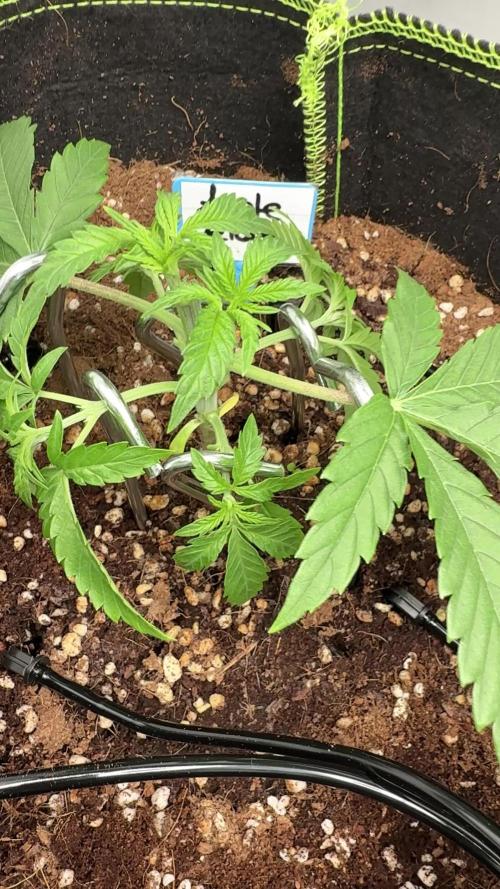
Endlich wieder fit und schön grün. Standen leider lange auf der Stelle aber so langsam läuft es wieder :)



Likes
30
Share

@3lementa1
Follow
I did some defoliation and pruning of lower branches at the start of the week and this plant hasn't recovered as much foliage as the CBD Blue Shark, even though this one was bigger until recently. I think the plants have a preference for being on the left, right underneath the filament part of the light bulb. I also still need to finish the right wall and put white mylar on it. Maybe I will switch the plants for a bit.
