


Likes
Comments
Share


@Compassionate_Gardener
Follow
This cycle was all along a great pleasure. The plants developed MUCH BETTER THAN EXPECTED, the result under the Q6W-Gen. 2 LED lamps from SANlight is FANTASTIC. I have NEVER harvested more from plants of the same strain under HPS and the quality of the bud (trichomes, taste aroma) is MUCH BETTER when grown under LED, my decision is definitely made, I will continue to solemnly grow with LED-lights in the future. I harvested 2250 gram of Shiva Skunk and 3009 gram of Serious Kush, that a total amount of 5259 gram. In relation to the 3000 Watts (incl. dimmed part!) power of the LED-lights thats an AMAZING 1,753 gram per Watt.


Likes
52
Share


@Ultraviolet
Follow
You don't become confident by shouting affirmations in the mirror, but by having a stack of undeniable proof that you are who you say you are, outwork your self-doubt.
Nitrogen fixation is a chemical process by which molecular nitrogen (N2), which has a strong triple covalent bond, is converted into ammonia (NH3) or related nitrogenous compounds, typically in soil or aquatic systems but also in industry. The nitrogen in air is molecular dinitrogen, a relatively nonreactive molecule that is metabolically useless to all but a few microorganisms. Biological nitrogen fixation or diazotrophy is an important microbe-mediated process that converts dinitrogen (N2) gas to ammonia (NH3) using the nitrogenase protein complex (Nif).[2][3]
Nitrogen fixation is essential to life because fixed inorganic nitrogen compounds are required for the biosynthesis of all nitrogen-containing organic compounds, such as amino acids and proteins, nucleoside triphosphates and nucleic acids. As part of the nitrogen cycle, it is essential for agriculture and the manufacture of fertilizer. It is also, indirectly, relevant to the manufacture of all nitrogen chemical compounds, which include some explosives, pharmaceuticals, and dyes.
Nitrogen fixation is carried out naturally in soil by microorganisms termed diazotrophs that include bacteria, such as Azotobacter, and archaea. Some nitrogen-fixing bacteria have symbiotic relationships with plant groups, especially legumes.[4] Looser non-symbiotic relationships between diazotrophs and plants are often referred to as associative, as seen in nitrogen fixation on rice roots. Nitrogen fixation occurs between some termites and fungi.[5] It occurs naturally in the air by means of NOx production by lightning.[6][7]
All biological reactions involving the process of nitrogen fixation are catalyzed by enzymes called nitrogenases.[8] These enzymes contain iron, often with a second metal, usually molybdenum but sometimes vanadium.
Green clover (Fixation)
White clover (Fixation)
Red Clover. (Fixation)
Yellow Clover. (Fixation, deeper roots)
Sweet Thai Basil. (Terpenes)
Italian Basil. (Terpenes)
Chamomile.(Oil production)
Borage.(Pest attraction taste)
Lavender.(Pest attraction smell)
Marigold(Pest attraction visual)
Mycorrhizae are beneficial associations between mycorrhizal fungi and a plant’s root system. Mycorrhizal fungi spores germinate in the soil, creating filaments (hyphae) that penetrate the root cells, thus establishing a symbiotic relationship. This collaboration leads to the development of both intra-radical and extra-radical networks of filaments, enabling efficient exploration of the soil for enhanced access to nutrients and water. Consequently, these vital resources are transferred to the plant, resulting in numerous benefits for crop cultivation.
Various mycorrhizal products are available in diverse formulations (powder, granular, and liquid), concentrations, and qualities. Ongoing advancements in products, technologies, and research are reshaping our understanding of mycorrhizae. Despite these positive developments, certain misconceptions persist. In the following discussion, we aim to clarify the truths and dispel the myths surrounding mycorrhizae products.
MYTH #1
A HIGHER NUMBER OF MYCORRHIZAE SPECIES MEANS BETTER RESULTS.
Contrary to common belief, having a higher number of mycorrhizae species in a product does not translate to better results; in fact, it often yields the opposite outcome. A plant can sustain only one association with a particular mycorrhizal fungi species. Introducing multiple species creates competition among them, which is not advantageous for the plant. The initial colonizer does not ensure the highest success; instead, it gains precedence. It is recommended to select a product with a concentrated presence of a single mycorrhizae species known for its effective performance, rather than opting for a product with multiple species at lower concentrations.
MYTH #2
ECTOMYCORRHIZAE ARE EFFECTIVE FOR CANNABIS PLANTS.
Although ectomycorrhizae can colonize five to ten percent of plant species, cannabis is not among them. Ectomycorrhizae do not penetrate the root cells; instead, they develop around the roots and on the exterior. For cannabis plants, it is essential to seek out endomycorrhizae. Endomycorrhizae are capable of colonizing 70% to 90% of plant species, including cannabis. Unlike ectomycorrhizae, endomycorrhizae penetrate the root cells, forming structures like arbuscules for the exchange of nutrients and water with the plant.
MYTH #3
WHOLE INOCULANT (PROPAGULES) PERFORM BETTER THAN ONLY VIABLE SPORES.
The propagule count specified on most mycorrhizae products indicates the presence of spores (viable and unviable), hyphae, and root fragments. However, it is crucial to note that only viable spores, those with the capacity to germinate, can successfully colonize a plant’s root system. Spores are to mycorrhizal fungi what seeds are to cannabis plants—a fundamental component enabling fungi reproduction. Consequently, even if a mycorrhizal product boasts millions of propagules, its effectiveness hinges on the presence of viable spores. Without viable spores, the product will not contribute to plant development. Therefore, the genuine value of a mycorrhizal inoculant lies in the quantity of viable spores it contains, as only viable spores can efficiently initiate symbiosis.
MYTH #4
ALL METHODS OF APPLICATION YIELD IDENTICAL RESULTS.
To establish the symbiosis, mycorrhizal fungi spores must be close to the plant roots. The optimal recommendation is to directly apply mycorrhizal inoculant to the roots, either in powder, granular or slurry form. This method ensures maximum proximity between the spores and the roots, facilitating a rapid establishment of symbiosis. Particularly with crops like cannabis, which have a short growing cycle, employing this technique is the most effective way to obtain optimal benefits. Alternatively, techniques such as blending the inoculant with the soil are effective, but there may be a delay in the establishment of symbiosis. This is because the roots need to grow and come into contact with the dispersed spores throughout the growing media.
MYTH #5
MYCORRHIZAE CAN ONLY BE GROWN ON LIVING PLANTS.
While the predominant method for commercially producing mycorrhizae involves growing them on the root systems of living plants (in vivo production), it is not the exclusive nor the optimal technique. In fact, this production approach has notable drawbacks that the “root organ culture” method just does not have (in vitro production). In vitro production occurs in meticulously controlled, aseptic laboratory conditions, allowing for the consistent generation of products that are viable, highly concentrated, species-specific, and free from pathogens. Achieving such precision and quality is impossible when relying on the cultivation of mycorrhizal fungi on plants exposed to external conditions.
In conclusion, it is crucial to take all these factors into consideration when choosing the appropriate product for your crop to fully harness the wide array of benefits provided by a high-quality mycorrhizal product.
STRONGER PLANT – Stress resistance.
FASTER GROWTH – Improve plant structure and shorter veg time.
INCREASE YIELD – Overall more biomass.
IMPROVED QUALITY – Increase cannabinoids and terpenes content.

Likes
9
Share


@b_C6969
Follow
Day 74
Harvest time!
She didn't have the best start at life, lost a major limb/side stem early on (my fault, too aggressive with LST), and got a bit stunted from stress I think.
Flushed twice (once was to get her out of being stunted, it worked).
Probably could have left it another couple of days as some of the lower buds were still maturing, not many though, and i needed to get her out of there so I could turn the extractor fan down to bring the humidity up for the young plants. I'm really happy with the result, especially after the small disaster that was Zkittlez (which im pretty sure was actually CBD lemon as its not potent at all).
Not a big yield, would have been a lot bigger had she not lost a limb. I'm not too worried though, quality over quantity right? im pretty certain this is the best stuff i've grown so far, 5th times the charm huh? Trichomes are about 80-90% milky and 10-20% amber, first plant i've actually let get amber, so yeah, finally grew something right lol.
No nutes for about 2-3 weeks before chop, and yeah 2 flushes, so im hoping it'll have a nice taste.
Oh, and i didn't water for 3-5 days before harvest, which could explain why she's so light (not a lot of water weight), visually looks similar to the harvest, size-wise, yet a good 60grams lighter, will be interesting to see what the dry weight is. I'm gonna throw out a guess of 38gms.
Even though she has a great smell, its not very stinky while drying, nor was it in the tent. you have to touch the buds to get any scent, pretty handy tbh.
Currently drying in my wardrobe with a fan blowing underneath (not touching the buds) for airflow.
Happy!
EDIT: not the best trim job, im not very well at the moment so just wanted to get it done. plenty of trim that im going to use to make pain relief balms/lotions
Likes
10
Share


@RFarm21
Follow
1 september - 7 september
1 september -Last feed
5 september - only water - 1.7L

Likes
27
Share


@Stigghiola
Follow
Questa settimana ho montato la lampada hps e l'ho spostata nella zona in cui le piante mi sembrano più pronte, i fiori stanno ingrossando sempre di più e dai filamenti arancioni sembrerebbe che stiano maturando, guardando con il microscopio i terpeni sono ancora trasparenti.
Aggiornamento 27 novembre, ho controllato i terpeni della black cream al microscopio e sembrano quasi pronti prossima settimana tolgo qualche cima delle 2 black cream che sono quasi pronte e lasciando i rami più bassi per che risultano ancora meno pronti rispetto ad alcuni.
Aggiornamento 28 Novembre : Le piante continuano a crescere costantemente le black cream sembrano sempre più pronte per il raccolto.
Aggiornamento 30 Novembre : Oggi ho deciso di raccogliere alcune cime di 2 black cream che erano belle pronte.


Likes
6
Share


@Lastix
Follow
started the third week by tying the gorilla, on the liberty haze I will do nothing but defoliation.
Defoliated the first few leaves to both plants for better aeration.
Tied up the gorilla again by cutting it down a little more to let it catch the light better.
will most likely have to defoliate a lot more since the leaves are very large and completely cover the secondary branches.
added bio bloom and top max to watering and removed root juice.
Continued lst procedure on gorilla and defoliation on both.
On the liberty in addition to defoliating I have also shortened the leaves to get more light I hope it works without bothering them too much.


Likes
46
Share


@GanjaReaper
Follow
Day 53:
Things are going well. I always make pictures before doing work.
As you can see, down below it starts to absord the nutrients our of the leafs( picture 3). This is a good sign that I have not been overfeeding and the plants even want to have more nutrients!
I might raise my EC to 2-2.2 after all.
Yet I don't expect big buds from this grow, Just many buds which is alright to me as well. Hopefully they will grow compact.
They will start to fatten up soon tought.

Likes
7
Share


@BudXs
Follow
Im not filling out the stats on all fucking active diaries. Will do it later.

Likes
7
Share


@L8bloomr1008
Follow
Harvest week for atleast the BG’s. The motor breath looks like it could go a couple more weeks but won’t have the time so….. we rollin with it!
Likes
18
Share


@JO_GROW
Follow
Buds are slowly starting to fatten up, had another rise in ec runoff which I suspect is because she isn't getting enough feeds per day and salts are building as she takes up water. I'm fixing this by feeding more frequently for 24 hours at a lower ec (1.4) to bring her down to 1.9.
Hand watering in coco is not ideal, the next grow will be done on a wilma system to allow for multiple feed per day which should also see even better growth.
She's starting to smell great and there is some serious trichome production. Sugar leaves are sticky and the smell as the name suggests is like sweet blood orange soda. Can't wait to see how the buds smell after curing.

Likes
Comments
Share

@Martin82
Follow
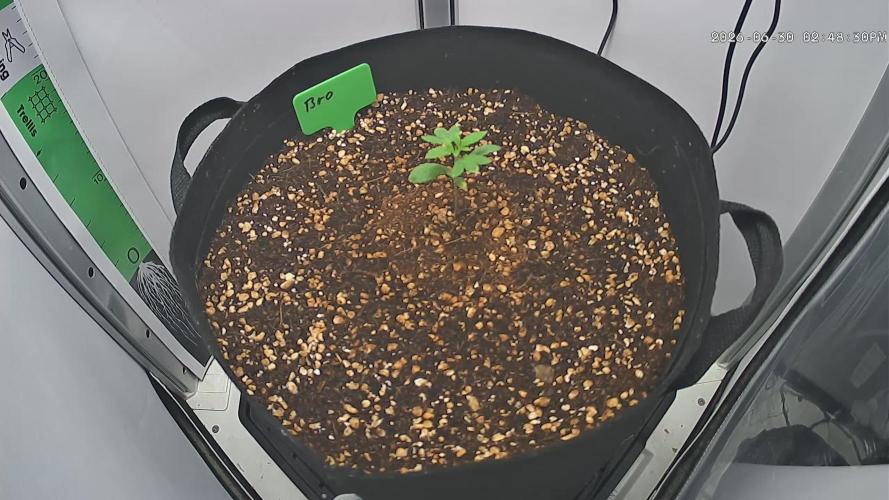
yep, the heatwave is over, for now. As soon as the temperatures dropped the sweating buddha became a growing buddha. Keep growing, little buddha!

Likes
55
Share


@w33dhawk
Follow
09.03.21 die Ladys machen sich gut und erholen sich schnell von dem ganzen entlauben. Mal schauen was diese Woche noch so mit sich bringt bald geht es in die blüte (so ca 2 Wochen noch). Bin Echt froh das ich bis jetzt noch keine gravierenden Fehler gemacht habe zumindest habe ich noch keine bemerkt bis auf den bei der keimung war nix besonderes los bin echt zufrieden mit der Genetik von Growers choice danke schon mal an euch


Likes
26
Share


@elevensixty6
Follow
All went well in the germination process, 100 percent success rate per usual with Seedsman seeds. Dropped the seeds in spring water for 12 hours and then transferred into the paper towel method until the tap roots were a half inch or so. Then planted into solo cups of Jiffy starting mix and watered with RO water with about 150ppm of CalMag.

Likes
2
Share


@Solocultivo
Follow
29 macetas de 20-18 litros aproximadamente
Dia 32 de Floracion Super Suelo
Sin fertilizantes
Apoyado con biortilizantes @bioinsumoschakrana
Melaza
Te de Bokashi
Humato Postasico
Potenciado
@Knactive
Knactive el mejor bioestimulante 100% orgánico para todo tipo de plantas , el cual activa la autodefensa contra el estrés oxidativo y potencia la síntesis interna de todas las fitohormonas.
https://instagram.com/knactive_?igshid=MzRlODBiNWFlZA==
Vital Juice
Es un producto Chileno hecho en base a algas: durvillaea antarctica y ascophyllum nodosum.
Likes
6
Share


@Elfasitoencasa
Follow
Semana 7 Floración.
Día 82(25/09): Ayer 24/09 regamos con Heavy Bud Pro, y como todos los minerales, absorbió muy rápido la comida. Se notaron varios pistilos mas, y un crecimiento en otras colas que no llegaban a la altura de las principales. En las fotos se puede apreciar el crecimiento. 7ma semana, Abby.
Día 87(30/09): A partir de ayer ya empezamos a regar con agua, hacia calor así que probé con agua un poquito mas fría, y no se si será por el frío o por la etapa pero demostró mas tricomas de los comunes, una evolución grande a pasos lentos.


Likes
9
Share


@Bullbulator420
Follow
Week 5
Day 28 to 35
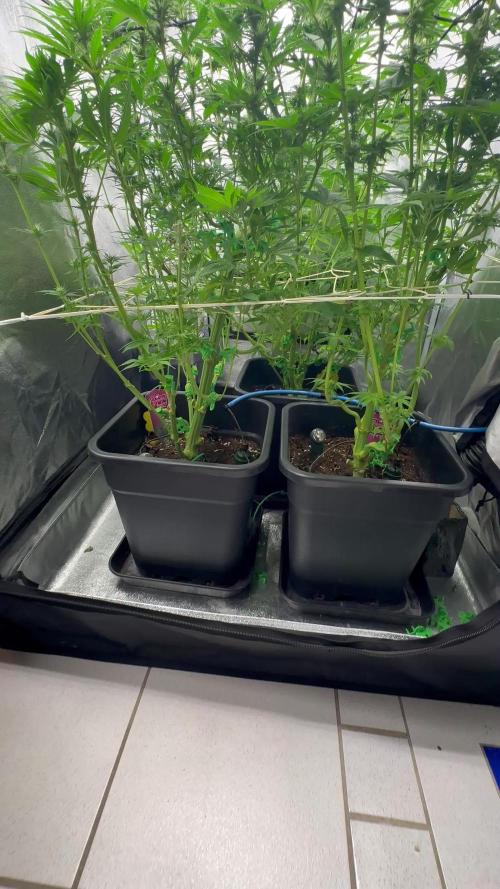
Faster and faster they happily grow!
Only the black berry showed me coupe of spots on some couple of leafs but nothing serious.


Likes
15
Share


@Naujas
Follow
i am very happy :) this was my first cultivation and he succeeded :) i know a lot of mistakes I made wrong or not :) I'll fix it next time :) the yield is not high because my pot is only 4 liters (
Likes
1
Share

@Growfather2
Follow
Hello growers,
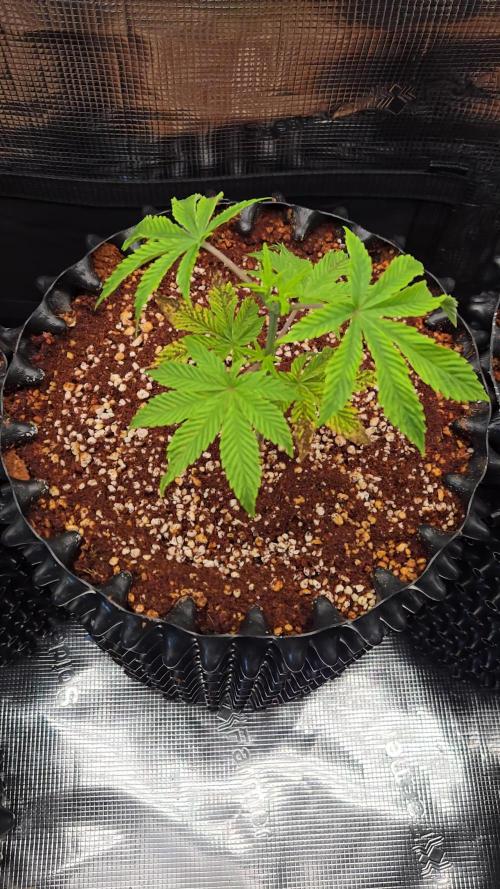
I'm growing 2 peyote cookies from barney's farm they started with problems caused by strong light.
After lowering the light intensity to 25 procent they started to show healthy growth.
Today i changed the light intensity to 35 % and hope they can take it without causing leave burn.
See you next Thursday for the next update.
Thanks for visiting my diary and have a nice day.
Growfather2