


Likes
Comments
Share

@TyRun
Follow
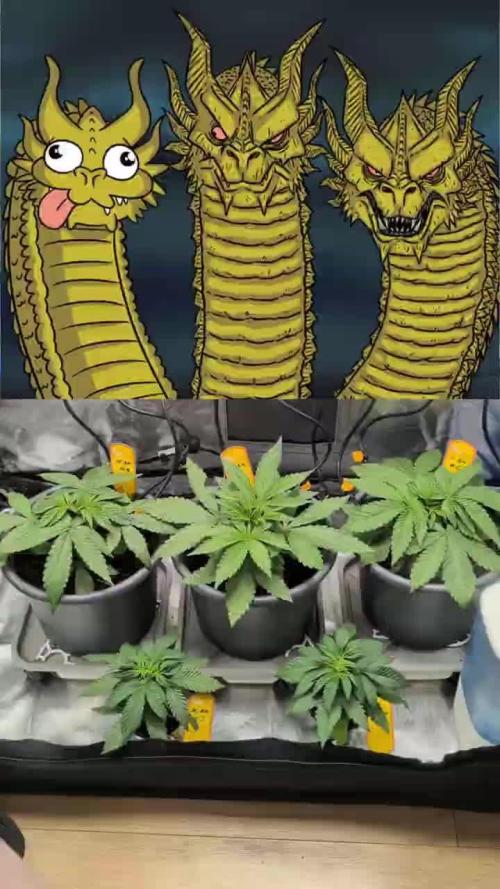
Looks like I fell into the classic coco trap — when it’s still too early to water to runoff. You either overwater, or the pH in the root zone keeps rising every day.
The result is obvious: #4 and #6 got calcium and phosphorus lockout because I didn’t water to runoff right after transplant. They’re still recovering.
#3, on the other hand, is doing great — you can tell by how perky she looks. She was transplanted later, so she got proper runoff earlier than the others. It literally took just 2–3 days without runoff to cause issues.
Overall, these are just early-stage problems that won’t matter later. We’ll probably remove those big leaves anyway since they’ll be in the shade (or maybe not, if they’re still functional when side lighting kicks in — then the marks might stay 😄).
Plants are already adapting to the watering routine, and root zone pH should stabilize soon.
Feed (input): EC 1.5 / pH 5.4 (today tested 4.9 just for fun)
Runoff: EC 1.1–1.2 / pH 6.4–6.7
Experimenting with VPD — was around 1.3–1.35 most of the week, now pushed to 1.5.
Growth rate is decent, leaf color recovered to bright green, no stunting.
Interesting note — plant #6 has a very unusual branch structure, never seen side branches attach like this. Doesn’t want to grow upward at all 😄
Likes
48
Share


@AsNoriu
Follow
Day 71. Girls are still stretching !!! Will supercrop biggest Blue Dream this Monday or maybe Sunday if i am lucky. I think next watering is on Saturday and it takes 2 days , so i can do it only before watering, less damage to plant and hopefully quicker recovery !!!
But they reach sky, so no other way !
This week will be updated after main actions.
Amazing run !
Day 72. Supercrop and watering day, before this - plants look amazing, but they reach sky and will go hermie in shade most of the time.
Will update AFTER ... ;))
Job done ! Moved monster to the corner and supercroped her hard, left two colas untouched. Think Blue Dream #2 could need same drastic measures ;)))
All girls got feed, raised lights to max. Hope stretch is over, otherwise half of harvest larva buds and i already cleared plants heavily ...
One more round of defoliation for sure !
Day 75. Blue Dream took supercroping like nothing, still reduced watering on 25% for two goes, tops already standing up, leaves reverted to new horizont and hopefully no bananas !!! ;))
Girls got water with CalMag and video is straight after last round, i water in 3 rounds, 30 min inbetween, have no run off most of the time.
Happy Growing !

Likes
75
Share


@Reyden
Follow
Ho messo le due bimbe che ormai sono cresciute quasi 50cm nei vasi che mi ha mandato Royal queen Seeds ma dovevo farlo prima quando erano più piccole 🙄
Sto tenendo le ragazze fuori dalla finestra stando attento ai vicini che sono sempre curiosi 😛🔜🤞🔛🕉️🔈
Ho continuato il manifold e adesso gli arrivano circa 14h di luce in tutto….promettono bene questo è sicuro 🤘🏻👨🚀🏻

Likes
104
Share


@RockoCalenberg
Follow
Letzte Tage vor der Ernte
Auch hier in den letzten Tagen kaum noch Entwicklung.
Die Pflanze stand optisch fertig,
hat aber nicht mehr wirklich weitergereift.
Foxtailing lief weiter auf bereits entwickelten Buds,
ohne dass sich die Reife sichtbar nach vorne bewegt hat.
Der Chop erfolgte ebenfalls aus praktischen Gründen,
da ein weiteres Warten keinen klaren Mehrwert gezeigt hätte.
👉 Optisch fertig, aber ohne echten Abschluss.
Kurzfazit:
👉 Unruhiger Finish-Verlauf ohne klaren Reifepunkt.
Grow on 🌱
Last Days Before Harvest
Again, very little development in the final days.
The plant looked finished,
but did not continue ripening in a meaningful way.
Foxtailing continued on developed buds,
without real progress in maturity.
Chopped as well for practical reasons,
since waiting longer showed no clear benefit.
👉 Looks done, but never fully completed.
Quick summary:
👉 Unstable finish without a clearly defined ripening point.
Grow on 🌱


Likes
165
Share


@SlowpokeFuegobud
Follow
Thank you all for growing the fish with me!! 💙 💙 💙
I loved how much fun everybody had!!!
I'm already looking out for the next sweet tiny pot, and recommend you to do so as well, if you have enough time. 😎 It's rewarding, you can learn a lot, and shoot nice pics with nice stories. 🐟 💨
It was maybe lucky coincidence that there were so many holes, so that the roots culd air-prune themselves all the time. 🙏
I watered three times a day, and the sweet smell was my companion. ❤️ It was a bit tough to chop my fish in the end. Sniff. But well, thanks for the great time!! 😘

Likes
85
Share


@Tropicannibis_Todd
Follow
Start of day 49 ...... Nov 27 Start of week 7 ........ 23 DAYS INTO FLOWERING
Check out the full grow video on latest weekly update
Super Exceptional Growth Daily
Still adjusting LST when needed and leaf tucking.......
Water Only when needed but its drinking more every otherday and adjusting lights when needed......
Rain Water Only .......
( DAY 54 AND IT SHOWS ZERO DEFICIENCIES ) IM ALSO DOING VERY LITTLE, SLIGHT DEFOLIATION
( DAY 49 AND RESIN PRODUCTION HAS STARTED )
( DAY 54 AND ALL IS GOOD , THERE FATTING UP )
I hope you enjoy my growlog...

Likes
24
Share


@Jays_Not_Here_Man
Follow
The Apple Betty babies are doing great 😊 I’m very pleased with the results so far, I just wished I would have known they would have such a large stretch, they D almost doubled in size in 14 days.
At day 8 I stopped tucking the branches and allowed them to grow up. In hindsight, I probably should have kept going for another couple of days. They continued to stretch rapidly all the way up to date 12 or so, much more than my other strain that I have going as well.
At day 10 I cleaned up some of the small bud sites and leaves that were below the 1st trellis. These sites do not get enough light to make anything good, and take away energy from the main tops as they grow and compete. A quick snip here and there will really help the end result.
At day 13 I decided to add a second trellis net to provide support to the tops that came up so fast. They seem to have stopped their main stretch faze, and are looking happy and healthy now. I’ve continued my water, water, feed schedule and have not seen any cause for concern. The girls are taking a little over a gallon of water every 72 hours at this point.
Humidity is being controlled automatically with my in-line fan and humidifier. RH is set to 57% and temps hover between 77-80 degrees with lights on, and about 70-72 with light off thanks to my furnace being back on for the cooler temps.
The 2x4 5 gallon girl is doing great as well. 😊During the stretch, she flourished just as the girls in my big tent did as well. She is going to have some great bud, the branch structure is nicely developed with tight node spacing and large tops.
I’ve been plucking off all the lower growth, and tucking leaves as they block bud sites. I will be doing a defoliation next week. Happy Gardening 🇨🇦👊❤️

Likes
9
Share


@SuperSmoker
Follow
Close up of pistil hairs
And only 2 plants for space and what not
Check out YouTube video
SuperSmoker for more!


Likes
2
Share

@Shefman93
Follow
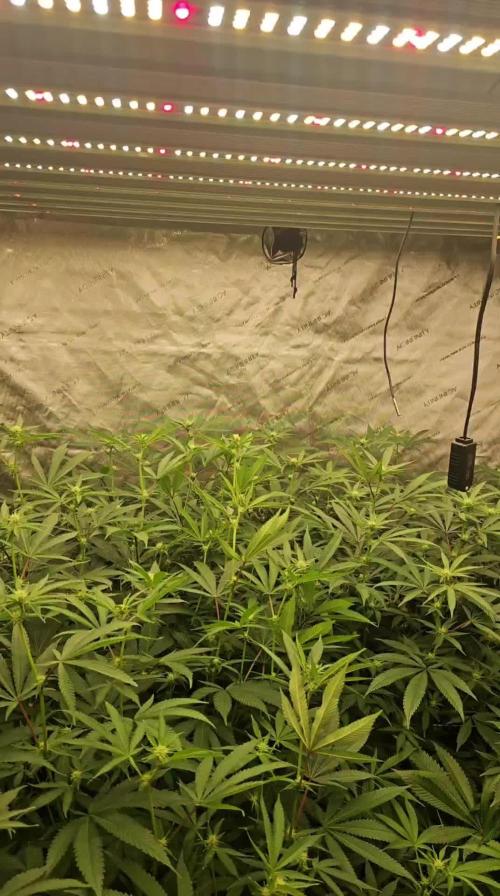
Forgot to take a video of the other tent at day 14, but my day 21 upload will have it. Tent 1 had a short stretch, while tent 2 stretch has been amazing.


Likes
3
Share


@MicroHidroGrow
Follow
Día 32. Esta semana corté los esquejes. El dia 30 de crecimiento. Saqué 8 y los puse a enraizar en lana de roca, dentro de media botella de 6lt tapada con otra mitad. Mantengo la solución de la semana anterior. Hasta ahora la planta se ve muy bien. Ya dentro de una semana espero tener raíces y pasarlas al indoor de arriba con la madre.
La configuración del espacio va a ser un desafío dado que la madre tiene las ramas muy abiertas. A primera idea, supongo que haré que los costados sean ocupados por la madre y guiaré los 4 esquejes para que ocupen el centro del indoor. De todos modos seguro aplique tecnicas de guiado y/o cortes en los esquejes.
Una vez arriba pienso darles una semana de crecimiento y ver, en base al tamaño que tengan, si ya los paso a floración. Quiero aprovechar el primer cultivo para tener una referencia de espacio y tamaño.
El tiempo va pasando más rápido de lo que imaginé y ver los cambios tan rápidos ha ayudado. Debo admitir que soy un poco obsesivo y eso me hace más fanático de la hidroponia, ya que el cultivo es más limpio y mucho más rápido para crecer. Ahora tengo que esperar ver. Subo un video con la configuración terminada, y de esa forma, se puede entender la idea. Sorry for those who don't speak spanish, but I've made the video in spanish. Anyways you can see and understand the configuration.
Estoy orgulloso de lo que pude armar usando maderas de palets y otras que también encontré en la calle. La mayoría de los artefactos los tenía de otros indoors que he tenido. Ya prontl habrá actualizaciones sobre el avance. Pero seguramente para cuando estén enraizados los esquejes, esté en la 6ta semana de crecimiento y llegaré a las 7 sumando lo que haga crecer las plantas arriba. Ya anticipo que el próximo cultivo será con la Black Jack de Sweet Seeds, aunque me queda sólo una, y espero poderla germinar con éxito. Sino habrá que salir a comprar otra variedad y en Argentina no hay variedad. No quisera volver a caer en BSF.
Saludos!
Likes
10
Share


@Chubbs
Follow
Weekly update for these lovely ladies. They smell like a fresh picked Apricot and the flowers are dense to the touch. Half of them are done so they'll be coming out this week to be harvested. I'm excited as the terps on this strain checks all the boxes for me. All in all Happy Growing.
Processing
Likes
4
Share


@Cannibalgardens
Follow
Wow just wow the strain is a keeper so far she stinks ,trains well and grows fast .. The tent stinks and she is really doing her part in that , the plant sucks up a lot of water and nutrients ... The growth is very much so branching out a lot and she loves the lights I have just stretching and praying upwards ...can't wait for next week she gonna be vegging for a while still .cheers

Likes
26
Share


@TheWhiteRussian
Follow
This thing was very easy to grow. Liked low PPMs in flower. Around 600 was plenty for her. Will report taste and effects when curing is complete.

Likes
18
Share


@pattyfatsaxxx
Follow
This was fun from beginning to end. I learned a lot and ended up with all Grade A buds that were nice and frosty. I think I'll be mainlining from here on out - the quality of the buds is just too good, even if it means sacrificing some yield with an autoflowering strain. I did switch to BuildASoil nutrients in flower which is basically coconut water + 2-10-5. This was one of 6 plants in my 4x4, so I'm pretty happy with the 81 gram yield, especially with it being my first time mainlining.


Likes
3
Share

@420DeepGrow
Follow
📆 Semana 11
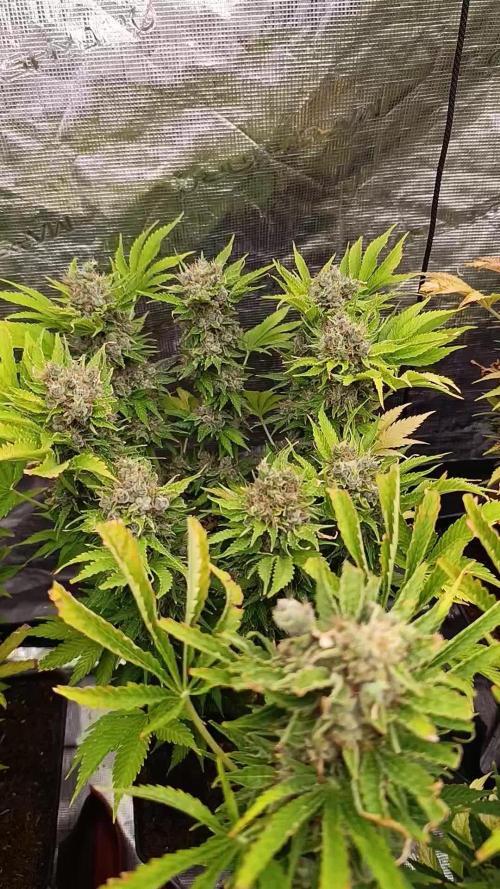
El cultivo entra en la fase final de maduración, con el lavado de raíces en su punto avanzado y el coco completamente estabilizado. Los cogollos se muestran totalmente compactos, duros y con el peso ya asentado.
La resina alcanza su expresión máxima, con tricomas mayoritariamente lechosos y un aumento progresivo de ámbar que marca claramente la ventana de corte. Los pistilos terminan de oxidarse y el fade se acentúa, reflejando el consumo final de reservas.
Momento de afinar el punto exacto de cosecha según efecto buscado.
Seguimos creciendo fuerte 💪!

Likes
25
Share


@TheCannaProphet
Follow
____________________________
~Seedsman Fuel D.O.G.~
____________________________
'Fuel D.OG Feminized was bred by crossing two highly celebrated and popular strains from the USA - Chemdawg (Sour Diesel x OG Kush) and Fuel OG (Diesel x Headband). Fuel D.OG is a 70% sativa, 30% Indica plant with very good potential yields both indoors and outdoors. Resin and THC production is also at a very high level.
Fuel D.OG improves on Chemdawg, being a much more robust plant with a much more intense flavor while also developing a larger calyxes than Chemdawg. Its robust appearance is typified by a thicker central stem that is so strong that it does not need to be supported during the later flowering stage in spite of the high degree of sativa stretch it undergoes once flowering has been initiated. Large spear-shaped buds surround the main stem like a crown. Outdoor cultivation produces plants that can grow up to 350 cm. tall in optimum conditions.
When cultivated indoors Fuel D.OG produces yields of 450 - 600 gr/m2 in a 65 - 70 day flowering period with generous quantities of resin already noticeable in the nascent buds during the third week. Its height can be controlled indoors by switching to the flowering light-schedule once plants are established and also by the use of the SCRoG technique whereby plants are trained horizontally. Outdoors, each plant can yield 700 - 800 gr. of large, sticky buds with harvests in the northern hemisphere ready at the beginning of October. Its large trichomes, concentration of terpenes and the sheer quality of resin make this a very serious proposition for extract/concentrate makers.
Fuel D.OG has more intense OG Kush flavors than the Chemdawg parent, with increased diesel emphasis and with citric, lemon and grapefruit scents. THC content is very high with low proportions of CBD. The effect experienced by consumers is one of intense relaxation evolving into a long-lasting narcotic stone that makes Fuel D.OG more suitable for evenings unless there are no important tasks to be completed.'
*description credit to Seedsman Seeds
__________________________________________________________________________________________________________________________________________________________________________________________________________________________________________________________________________________________________________________________________________________________________________________________________________________________________________________
-Characteristics-
BREEDER/BRAND: Seedsman
GENETICS: Chemdawg (Sour Diesel x OG Kush) and Fuel OG (|Diesel x Headband)
VARIETY: Mostly Sativa
FLOWERING TYPE: Photoperiod
SEX: Feminized
THC CONTENT: 20% Plus
CBD CONTENT: <1%
YIELD: Indoors: 450 - 600 gr/m2; Outdoors: 700 - 800 gr/plant
PLANT HEIGHT: Up to 350 cm. outdoors
GROWS: Greenhouse, Indoors, Outdoors
FLOWERING TIME: 65 - 70 days
HARVEST MONTH: Beginning October
TASTE / FLAVOR: Citrus, Diesel, Grapefruit, Kush, Lemon
EFFECT: Powerful, Relaxing, Sedative, Stoned
__________________________________________________________________________________________________________________________________________________________________________________________________________________________________________________________________________________________________________________________________________________________________________________________________________________________________________________
THE SETUP:
~Planted into Jiffy Peat Pellets that were hydrated with de-chlorinated water with SuperThrive added then ph'd to 6.0 @ 80℉
~Grown 100% organic in 10g fabric pots with Mother Earth 70/30 Coco/Perlite medium amended with 2tbs/g of Down To Earth 4-4-4 / 2 cups/g of Earthworm Castings / 1tbs/g of Dr. Earth Flower Girl 3-9-4, 1tbs/g of Dr. Earth Bat Guano, 3/4 cup of Down To Earth Azomite and 1 tsp/g Down To Earth Fish Bone Meal.
~24hr light cycle during Germination / 19/5 light cycle for Vegetation and 12/12 for Flower
~Straight water ph'd @ 6.2-6.8 when needed and weekly Compost Tea's.
__________________________________________________________________________________________________________________________________________________________________________________________________________________________________________________________________________________________________________________________________________________________________________________________________________________________________________________
Weekly Updates:
10/11- Week Nine! Here we go on our way to sticking a fork in this run!
She's starting to fade and she's putting out trichomes like crazy! Possibly by week's end she'll be hanging after she spends a couple of nights in the dark.
I watered today using straight water that's ph'd to 6.5-6.7 @ 72℉. I gave her a little over 1.5g to keep her flush going and then turned her pot.
Trichome status: 70% milky / 30% clear
10/13- I watered today with 1.5g of straight water that was ph'd to 6.5-6.7 @ 72℉ and gave her pot a turn.
She's progressing in her fade and is still bulking up. Her trichomes aren't quite where I like them yet, so more than likely she'll be going in the dark by next weekend! She's absolutely one beautiful cultivar! 🤩💚
10/15- My routine of watering every other day continues. Yesterday I watered her with her usual 1.5g of straight de-chlorinated water that was ph'd to 6.5-6.7 @ 72℉ and gave her pot a turn. Today was just spent checking her over, turning her pot and doing a quick check of her trichomes which are close, but not quite ripe enough yet!
10/17- Wow!... Nine weeks of flower DONE! 😎👍
Now my sights are set on getting this girl finished up and on her way to 48 hours in the dark before she's hung to begin drying.
I went ahead and watered her with her usual 1.5g of straight de-chlorinated water that was ph'd to 6.7 @ 72℉ and checked her trichomes, which are looking just about right!
This journey is coming to a close in the next couple of weeks with her harvest, drying and trimming up. I so appreciate you following along with me , it's been a blast sharing with you all! 😎🙏
~Thanks so much for checking out my diary! This epic run is in the home stretch with harvest fast approaching...Stay lifted and be Blessed! 😎🙏~
This week promises to be exciting so don't forget to check in! Harvest time will be here before you know it and I'm getting stoked to see the results! 😎🙏💚
~Thanks for stopping in! This epic run is in the home stretch with harvest fast approaching...Stay lifted and be Blessed! 😎🙏~

Likes
6
Share


Likes
3
Share

@Oyziphar
Follow
🌿
Once again, we had very sunny days this week 🌞🌞🌞and another heat wave is coming 😍😍😍
Fourth week of Light Deprivation
👉👉👉👉Every morning at 8:30 am I move the plants to the greenhouse.
👉👉👉👉Every evening at 8:30 pm I move the plants (together with some other strains) inside the growroom (which I don't use in the summer)
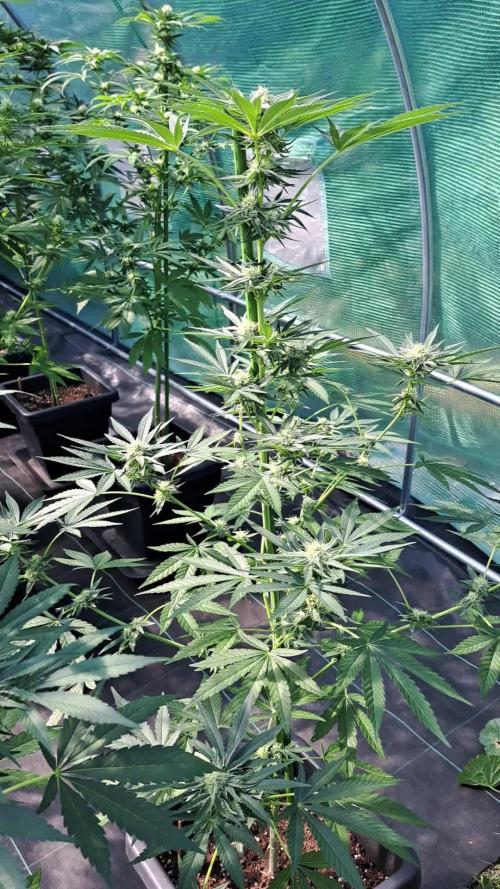
👉 The plants are making new flowers everyday and they are starting to smell now.
👉 I give the plants every other day a liquid booster with OPF 4:2:8 ; Fulvic 25 ; Yuccah ; Biovin liquid ; Earthworm compost extract.
Big Thanks to Luc from Plant Health Solutions / Bioplantenvoeding dot nl 🙏🙏🙏
Plant #1 ; height : 120 cm
Plant #2 ; height : 99 cm