Likes
Comments
Share
@Daw33d41
Follow
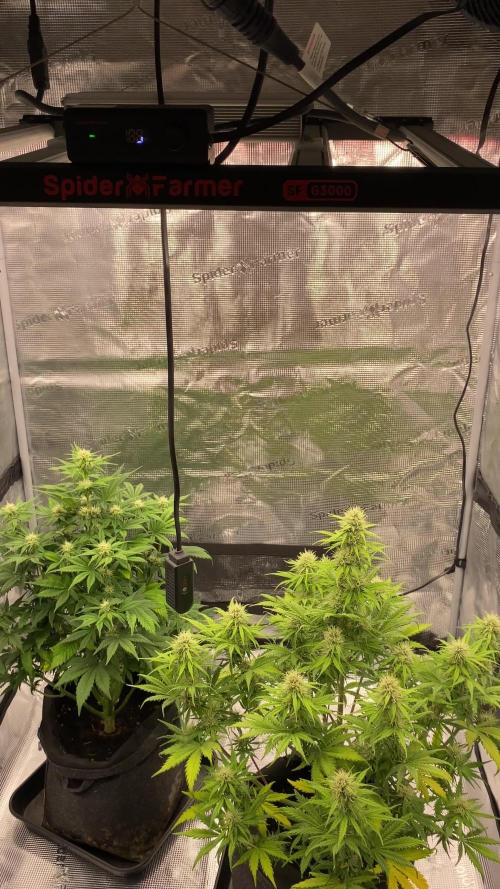
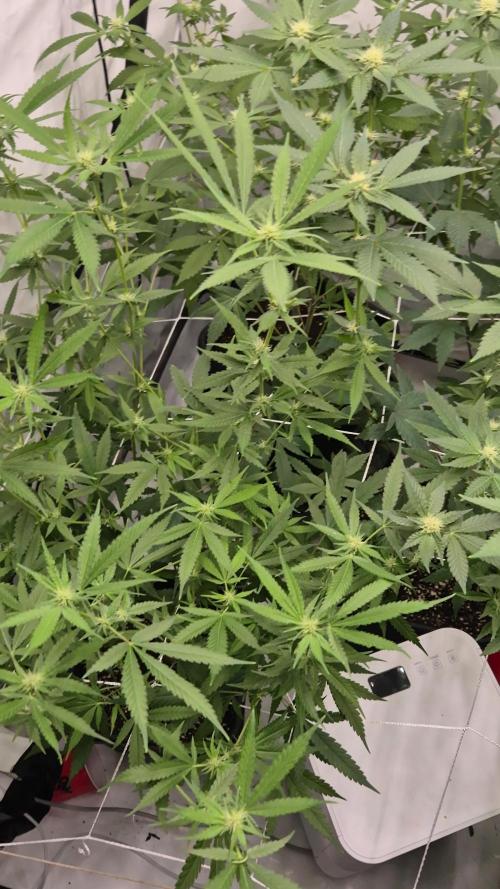
🇺🇸 Third week of flower, Wedding is a bit slower but the Freebie Chemdogging is going crazy, lower leaves started to yellow so I removed the worst ones, otherwise everything is fine, just watering with dechlorinated water and letting it ride, plants look healthy and things are developing nicely 🇨🇿 Třetí týden květu, Wedding je trochu pomalejší (asi zase airy fenotyp jako při prvním growu) ale Freebie Chemdogging jede bomby. Spodní listy začínaly žloutnout tak jsem ty nejhorší sundal, jinak všechno v pohodě. Zalívám odstátou vodou a nechávám je žít si svým životem. Vypadají zdravě a hezky se rozjíždí.

Likes
8
Share
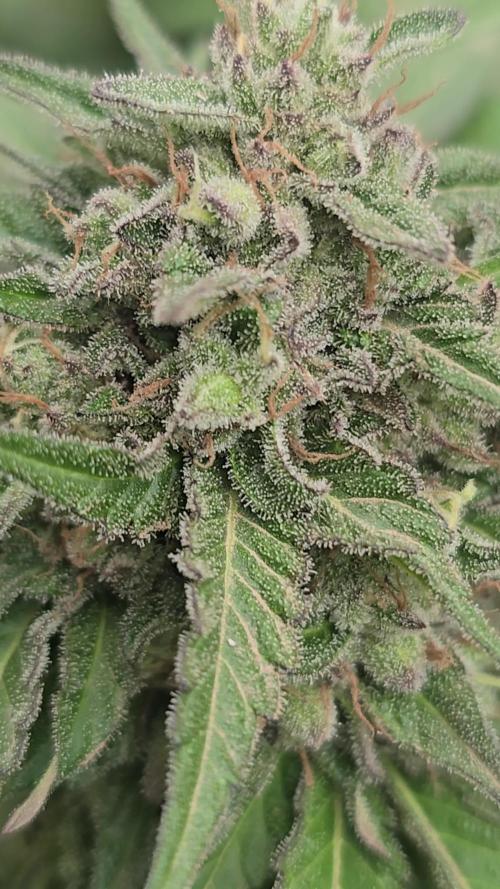
Weekly Grow Update 🌸 – Steady Progress and Sticky Buds! This week was super smooth. The plants continued developing nicely, and the buds have been packing on size. Plus, they’re getting stickier by the day, producing more and more resin – love seeing (and feeling) that! On top of that, some of the buds are starting to show a slight purple tint, which looks absolutely beautiful. Every day, I’m getting more excited about finally harvesting and testing these beauties – but there’s still a good bit of work ahead. Next week, I’m planning to tweak my feeding schedule a little: I’ll start lowering the Bio-Grow and increasing the Bio-Bloom to match the plants’ needs in late flowering. Watering habits have stayed about the same – around 4–5 liters every 2–3 days, depending on how heavy the pots feel. pH levels are usually between 6.4 and 6.8, and overall, the plants are looking fit and healthy. I really hope the next few weeks keep going as smoothly as this one. See you next time, friends – happy growing! 🌿✨
Likes
6
Share
@Theia
Follow
The plants are all super healthy. Just getting water in their autopots. Absolutely huge . Gorilla girl is 10cm off my head height in her pot. And I am 6ft 2ins. Rooms too full to get any pics that do not just look like jungle. But wow so healthy and green .
Likes
2
Share
67 days since April 16th, 2026 We become aware at such times of man's wonderful ability to bring seemingly unrelated elements into harmonic balance, and receive a glimpse into a world where everything exists in conscious sympathetic attunement to everything else. When we listen to a piece of music that seems to strike a beautiful chord somewhere inside us, or view a painting that simply glows with harmonic awareness well executed, we probably do not spare much time to contemplate the wonderfully intricate combination of vibrations that our sensors make it possible for us to perceive. We tend to appreciate the relationship between the parts of something by an awareness of the harmony or dissonance of the whole. This ability enables us to say "what a beautiful house!" instead of "analysis has proven that this collection of building materials exhibits certain elements of harmonic proportion." While this ability to instinctively appreciate the beauty of true harmony has an important role to play in evolution, a more analytical understanding of the laws involved can be most useful. This is especially so if we wish to create works of art where each part exists in true harmony, not only with the other part of that particular whole, but with the universe within which the creator and the created exist. Everything vibrates. From the most dense matter to the most subtle cosmic rays, everything which our senses allow our thoughts to become aware of, can be specified in terms of wavelength or frequency of vibration. These two terms define the same thing, but from different points of view. The following are the approximate wavelengths of various energy carriers: Cosmic rays 0.000,000,001 mm Gamma rays 0.000,000,1 mm X rays 0.000,500 mm Ultraviolet rays 0.003 mm Visible light 0.006 mm Infrared 0.01 mm Sound waves 1 meter Radio waves 300 meters Violet light 400 nm to 450 nm Blue light 450 nm to 500 nm Green light 500 nm to 570 nm Yellow light 570 nm to 590 nm Orange light 590 nm to 610 nm Red light 610 to 700 nm 1 nanometer (nm) = 0.000,000,1 cm = 1/10,000,000 cm If a guitar string is plucked and we hear a sound, it is not too difficult for the human mind to associate this sound with the vibration of the guitar string. With color it is quite different. It is difficult for us to conceive that the color of a substance is not an inherent property of the substance itself, but an indication picked up by our senses of that substance's ability to absorb or reflect the light which happens to be shining on it at that moment. Neither the matter nor the light is colored. What happens is that the brain learns to differentiate between the frequencies reflected or transmitted by the substance the eyes are focused on. The same thing happens with sound. When we say "Oh! Listen, they're playing my favorite song," what we really mean is: "My brain has stored within it a particular pattern of frequencies. I have compared the new information being received with this stored pattern and have deduced the answer that the two patterns are similar within certain specified tolerances." The 'pleasure' involved could have something to do with our running the pre-recorded pattern at the same time, in 'sympathy' with the new pattern as it is received. The word sympathy describes very well our ability to appreciate color and sound. It also describes the reason behind certain elements of harmony. For instance, if a substance vibrating at 100 cycles per second (tone 1) is in the proximity of another substance vibrating at 200 cycles per second (tone 2), we could perceive, if we had the right equipment, a certain sympathetic relationship between the two. We will see from this that there is a uniform doubling of the first tone seen in the second. At various points along the waves, the two are the same in amplitude. At other points, they are at opposite poles to each other. This doubled frequency has more points of similarity to the original than any other frequency except the original itself. If the equipment we had available for measuring these two frequencies was a soundboard amplifier and a pair of ears, then we would hear what would sound to us like one tone. If we had the opportunity to hear one at a time, we would hear that although they sound the same, one is higher in pitch than the other. This characteristic of 'the same but different in pitch', musicians have called the octave. Any two tones produced where one has exactly doubled the frequency of the other is called an octave. Speaking in ratios, an octave would appear then as the ratio 2:1 or 1:2, depending on whether we are talking of an octave up or down. A single note produced by almost any instrument will contain more than one wavelength or frequency. It will have a dominant frequency, the wavelength of which we would call the note's 'fundamental' or 1st harmonic. It will also have a varying number of upper harmonics, gradually fading in intensity into infinity or silence. Natural harmonics always have the same pattern of intervals between them. The interval between the 1st and 2nd harmonic is a perfect octave; between the 2nd and 3rd a perfect fifth; between the 3rd and 4th a perfect 4th; and so on, the intervals becoming smaller and smaller until they lose any relationship with the western 12 tone scale as it exists at the moment. Just as an octave has certain elements of sympathy with its fundamental, so some intervals have been noted to be more perfectly in sympathy with the fundamental than others. The ratio of the 'perfect 5th' or interval of 7 semitones, as it occurs in the harmonic series, is 3:2 or 2:3, while that of the 'perfect fourth" is 4:3 or 3:4. All the tones in the western 12 tone scale can be expressed in terms of the ratio between the upper tone and its fundamental. This would seem to be an ideal way of generating a scale from any given fundamental and several attempts have been made to do this, the Pythagorean system being probably the most well known. Although when working with a single tone instrument playing on its own, the Pythagorean formula works wonderfully well, if we had several instruments tuned this way together and asked them to play almost any western music, we would find that at times they sounded quite out of tune to each other. The lack of flexibility of the various scale systems based on the harmonic series has led to what is known as the 'tempered' scale. This uses as its primary unit of interval the ratio of the octave or 2:1. It then proceeds to divide the interval between any fundamental and its upper octave into 12 smaller intervals by applying the ratio: two to the one-twelfth power, to one (21/12:1). This equals 1.059463094, so by multiplying any frequency by this number, we will obtain the tempered semitone next up from our fundamental. We will also find that any tone twelve semitones up from any other tone, in a scale generated in this way, will have exactly double the frequency. If we took the note middle C on a piano and halved the wavelength, we would have the note C one octave above. If we halved this, we would have the C above, and so on. However, within about 6 octaves, we would find that although a 'sound' was being produced, no human ear could perceive it. If we kept on going, halving and producing upper octaves of our fundamental C, we would proceed through the infrared band, into the visible light spectrum. If we happened to be outside during the day, we would, for one octave only, see the note C with our eyes. The next octave above would already be in the ultraviolet band, and outside the eye's sensitivity range. If we can think of color as being an indication of a substance's vibratory rate or wavelength, we may begin to see a relationship that could exist between the color and sound spectrums. The logical extension of what has so far been said is that there exists a scale in the color spectrum that corresponds exactly to the scale in the sound spectrum, each color tone being an octave of the equivalent note in the sound range. This is not the end of the story but only the beginning. If we can for the moment accept that any wavelength in one band has upper and lower octave stretching out to infinity, then the next question is 'fine, but what shall we use as our fundamental? A particular color? A particular sound frequency?' The musicians among us will probably say 'A 440'. This means that the note A should vibrate at 440 Hertz, or 440 times per second. They would tell us that this is standard pitch has been adopted by most orchestras around the world; pianos are tuned to it, instruments are constructed to formulas based on it, and so to them it would probably seem the most appropriate place to begin. Some of these musicians may know of the battle that is still raging with regards to this being the standard, but few would know why A = 440 Hz was chosen except that it worked when it was set to be a suitable compromise between the many different pitches in use at the time. 432 Hz is said to be mathematically consistent with the patterns of the universe. Studies reveal that 432 Hz tuning vibrates with the universe’s golden mean PHI and unifies the properties of light, time, space, matter, gravity, and magnetism with biology, the DNA code, and consciousness. When our atoms and DNA start to resonate in harmony with the spiraling pattern of nature, our sense of connection to nature is said to be magnified. Another interesting factor to consider is that the A=432 Hz tuning correlates with the color spectrum, while the A=440 Hz is off. Audiophiles have also stated that A = 432 Hz music seems to be non-local and can fill an entire room, whereas A=440 Hz can be perceived as directional or linear in sound propagation. Once you adopt the idea that sound (or vibration in general) can have an equalizing and harmonizing effect (as well as a disturbing effect), the science of harmony can be applied to bring greater harmony into one's life or tune to specific energies. There is a form of absolute and relative harmony. Absolute harmony can, for example, be determined by the tuning of an instrument. The ancients tuned their instruments at an A of 432 Hz instead of 440 Hz - and for a good reason. There are plenty of music examples on the internet that you can listen to in order to establish the difference for yourself. Attuning the instrument to 432 Hz results in a more relaxing sound, while 440 Hz slightly tenses up the body. This is because 440 Hz is out of tune with both macro and micro cosmos. On the contrary, 432 Hz is in tune. To give an example of how this is manifested microcosmically: our breath (0,3 Hz) and our pulse (1,2 Hz) relate to the frequency of the lower octave of an A of 432 Hz (108 Hz) as 1:360 and 1:90. It is interesting to note that 432 Hz was the standard pitch of many old instruments and that it was only recently (19th and 20th century) the standard pitch was increased. This was done in order to be able to play for bigger audiences. Bigger audiences (more bodies) absorb more of the lower frequencies, so the higher pitch was more likely to “cut through”. One of the oldest instruments of the world is the bell ensemble of Yi Zeng (dated 423 BC), tuned to a standard F4 of 345 Hz, which gives an A= 432 Hz. The frequency of 345 Hz is that of the platonic year! Similarly, many old organs are tuned in A=432 as well; for example, St. Peter’s Capella Gregoriana, St. Peter’s Capella Giulia, S. Maria Maggiore in Rome. Maria Renold’s book “Intervals Scales Tones and the Concert Pitch C=128 Hz” claims conclusive evidence that 440 Hz and raising concert pitch above scientific “C” Prime=128 Hz (Concert A=432 Hz) disassociates the connection of consciousness to the body and creates anti-social conditions in humanity. The difference between concert pitch A=440 Hz and Concert A=432 Hz is only 8 cycles per second, but it is a perceptible difference of awareness in the human consciousness experience of the dream we share called existence.
Likes
17
Share
@Glizzy420
Follow
had a lot of issues with my ph and overfeeding so i flushed her the last 2 weeks , overall im happy with the results. Not my best yield but it'll keep improving. She smells great citrus and lemon sense! 🙂
Processing
Likes
13
Share
@Canadian
Follow
The plant continue to grow incredibly strong and fast from now on I well slow down on grow nutrientes cuz the leaves are very dark green and we are well into flowering meaning they don't need that much not nitrogen anymore. Thank you for reading I will continue to update have a happy grow.
Likes
39
Share
@Randyb4
Follow
This was a good week we say alot of growth and they seem like they've all recovered from the bad ph. Day 29 I topped Plant B and day 31 I topped the rest of them. Gave them 4 cups of water with 1 ml of calmag in it. Ph was at 6.4. Trying to plant some of the tops because why not. If they grow they grow. Day 33 I Transplanted into 1 gallon pots because the roots were filling and coming out of the bottom of the solo cup. Still in fox farms happy frog soil. Sprinkled some "great white" mycorrhizea in the soil. Transplanted went good.
Likes
2
Share
🍑🍑🍑 Apricot Automatic – Outdoor Projekt Woche 2 Während die Strawberry Gorillas bereits in der Blüte stehen, beginnt für drei neue Damen gerade erst das Abenteuer. Alle drei Apricot Automatics entwickeln sich gesund, zeigen eine kräftige grüne Farbe und haben sich hervorragend an die Outdoor-Bedingungen angepasst. Trotz ihres jungen Alters legen sie aktuell das Fundament für einen spannenden Sommer. 🌱 Gesunde Entwicklung ☀️ Sehr gute Anpassung an das Outdoor-Klima 💚 Keine sichtbaren Mangelerscheinungen oder Stresssymptome 🌿 Stetig neues Wachstum Der Großteil der Arbeit findet momentan unter der Erde statt. Die Wurzeln erschließen nach und nach die Stofftöpfe und schaffen die Grundlage für das spätere explosive Wachstum. Es ist immer wieder faszinierend zu sehen, dass jede große Outdoor-Pflanze einmal genau so begonnen hat – klein, unscheinbar und voller Potenzial. Für die kommenden Tage lautet die Mission: Wurzeln bilden, Sonne tanken und sich auf die Wachstumsphase vorbereiten. Das Abenteuer hat gerade erst begonnen. 🍑☀️🌱 📅 Wie jeden Sonntag gibt es neue Updates auf GrowDiaries, damit ihr die Entwicklung aller drei Apricot Automatic Pflanzen durch die gesamte Outdoor-Saison 2026 verfolgen könnt. 😎🍑🍑🍑🌱 -------------------------------------------------------------------------------------------------------------------------------------------------------------------- 🍑🍑🍑 Apricot Automatic – Outdoor Project Week 2 While the Strawberry Gorillas are already entering flower, three new ladies have just begun their journey. All three Apricot Automatics are showing healthy growth, vibrant green color, and excellent adaptation to their outdoor environment. Despite their young age, they are already building the foundation for what could become an exciting summer project. 🌱 Healthy development ☀️ Responding well to outdoor conditions 💚 No signs of deficiencies or stress 🌿 New growth appearing steadily At this stage, most of the work is happening below the surface as the roots establish themselves throughout the fabric pots. Once the root zone expands, growth above ground should accelerate significantly. It's always amazing to remember that every giant outdoor plant starts exactly like this — small, simple, and full of potential. For now, the mission is clear: Build roots, absorb sunshine, and prepare for the explosive growth phase ahead. The adventure has only just begun. 🍑☀️🌱 📅 As always, new updates will be posted every Sunday on GrowDiaries so you can follow the complete journey of all three Apricot Automatic plants throughout the 2026 outdoor season. 😎🍑🍑🍑🌱
Likes
9
Share
Did a banana tea with 2 banana peels it sat for 28 hours. They loved it. Will do again soon
Likes
20
Share
@Rob96
Follow
Still doing really well this one, buds look amazing and the smell is really really pungent. Really pleased with the topping on this one, tops all over and all really good strong tops. Around 3 weeks left to go so last week for nutes and will be flushing at end of this week, getting ready for harvest now really really excited to see this once all done.
Likes
27
Share
@D33jW
Follow
🚀 Let's fly to another weeK 🚀 🌸 Dozi ZoZi – Breed Bros 🌸 DAY92 / FLOWER 62 / WEEK 13 It was time to cut it down. Drying temperature 19 and 55% humidity. Only the exhaust fan is turned on at the lowest speed. I think everything is going in the right direction.
Likes
2
Share
Likes
563
Share
@Ju_Bps
Follow
Hello my friends 👨‍🌾👩‍🌾, Week was good, babies 👶 grow up nicely ☺️ I've found the origin of issue burning, it's from lamp. Now lamp is more than last week and my others babies are burned too now. This fu$%#ng thrips are back this week, condition was optimal for them, very dry, I've this week 45-50%... I've make an insecticide treatment. 💦 I vaporise soil 1 or 2 times per day with water + rhiso @PH 6 This start week Now, 200ml/plant each 2 days, I'll start nutes next week. Lamp @90% Bisous 💋😘, and see you next week. Thanks community for follow, likes, comments, always a pleasure 👩‍🌾👨‍🌾❤️🌲 Mars Hydro - TS 1000 https://www.mars-hydro.com/ts-1000-led-grow-light Mars Hydro - FC3000 https://www.mars-hydro.com/fc-3000-samsung-lm301b-led-grow-light Mars Hydro - SP3000 https://www.mars-hydro.com/sp-3000-samsung-lm301b-greenhouse-led-grow-light The High Chameleon - Bisous Au THC 💋💋🌲🌲😘😘 https://www.thehighchameleon.com/shop/bisous-au-thc-83
Likes
9
Share
@Krissci
Follow
Day 1 - ideally defoliation will be ideal this week Day 3 - LST
Likes
33
Share
Day 78 - pheno 1 was cut down, id normally hang dry the whole plant but decided to do it in branches instead. Second pheno has been left in darkness as i haven't had the time to cut. Pheno one is hung up and drying.. Room Humidity 60/60. As soon as she's dry enough I'll finish trimming her up. Then put them into jars. Might use boveda 60% packs but I'll see. Smells strong! Will post a harvest when both plants have been dried fully an in jars. Hope you enjoy the videos and pictures. Stay tuned.
Likes
10
Share
Week 3 lookin good 🤟🏾 She stopped stretching and now starting to focus on buds 🌳 imma get a new co2 packet and have her get big. Also for the main stem I’m just going to buy electric tape or a plant tie around it. She’s getting to big 💪🏾 And my clones are doing good and growing real fast imma put them ladies outside 🔥🌳
Likes
3
Share
@dwotTV
Follow
8/23 - End of Week 3. Going to start some top feeding at like half strength for the Fox Farm Soil schedule in next few days. Drinking well and consistently from the self-watering bases. Bugs seem to be under control but will probably add some bits to the bases to make sure the gnats don't resurface. Stalk is strong and looking good and a good amount of new growth after taking some fan leaves off yesterday to "top". CO2 levels looking a little better, opened another vent in the tent. 8/22 - Adjusted light down to 80% after getting a lux meter and checking the intensity. Soil PH is slighly acidic at 6.1. Got some phUp and phDown but haven't adjusted yet. Trimmed top 4 fan leaves to stall out the top stalk and open up the bottom branches a bit. Added a mushroom exhale bag to increase co2 levels, were sitting around 500 ppm before I added. 8/21 - Still drying out the self-watering base a bit, will add water today. Sides of fabric pot still a bit wet to the touch but I think that's just the active wicking going on. Thought the initial canoe'ing leaves were from overwatering when overfilling the self-watering base but now I think it has more to do w/ some shock from the thrips and 24 hour light, or perhaps a bit of sunburn from being sprayed w/ the neem oil / bug killer. 8/16 - Had to fight off some thrips and still dialing in the tent conditions. Might be a little overwatered currently.