


Likes
Comments
Share

@sunshinegroww
Follow
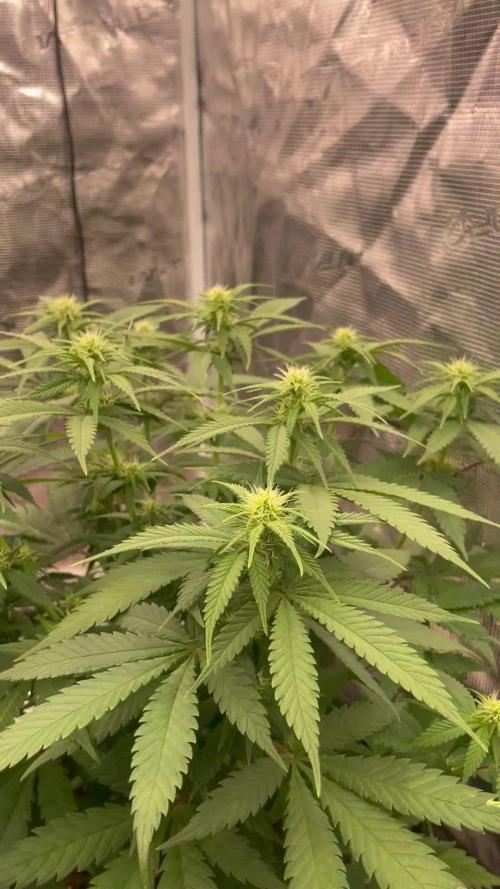
Welcome week 3 defo no more stretch few more days and will lolipop and let her fattens those flowers she is happy as lary indeed lets gooooooo

Likes
2
Share


@Growstopher
Follow
4.28.25. 4th week of veg
What up growers! A lot of tying down and defoliation going on. Starting to see signs of flower! Next week will be first week of flower. One more water with veg nutrients then switching over to flower!
Have good rest of week! 🏼.

Likes
31
Share


@BigBadLion
Follow
Hey all!
Sorry for the delay!
And this is it, the last week! Pistachio was cut a little earlier than Matcha because I wanted to give her a little more extra time to allow her to mature a little more, but sadly I couldn't give her too much time since most of her trichomes were already starting to oxidise (which might sound appealing to some, but not so much for me). Still, I think the time given was enough!
Thanks to semi-flush I gave to my girls I also managed to see what was happening to Matcha! The poor girl was suffering for so long!
Anyway, my next update will contain the harvest information regarding my ladies!
Thanks!

Likes
17
Share


@CanadianFillmore
Follow
Week 3 veg begins. Not feeding at this time as the pots are still heavy and the medium feels moist from last week. Plants look healthy and happy.
Nothing more to report at this time, thanks for stopping by, see you next week! 👽🌳🔥


Likes
13
Share


@GloveGreen
Follow
Hey guys,
Welcome everyone to this Diaries for the Taste of USA by Green House Seeds.
I would like to thank the support of the Green House Seeds Team. Excellent service!
On August 22, taking advantage of the Lunar cycle, 2 seeds of Dark Phoenix genetics were placed for germination. I will now be waiting for the beginning of the life cycle of this Wonderful Genetics that brings in its DNA Trainwreck x Jack Herer, having the following characteristics:
60% SATIVA - 40% INDICA
THC: 20-25% CBG: 0.5-1% CBD: 0%
Thank you Green House Seeds !
For germination I put the seeds in a glass of water for 8 hours. Then I placed it to germinate in Peat + Vermiculite substrate.
Temperature and Humidity are at 25 C° 56 % respectively.
26/08/2021
Fourth day of germination and Look at the wonders! Welcome to Life! A simple tribute To the great Breeder !!
27/08/2021
Sixth day of germination - 2 DP By GHSC .
The seeds of Green House Seeds showing their excellent quality!
Hello everyone today, 08/31/2021, I come to make the last update of the week of germination. From 09/01/2021 the Wonderful Dark Phoenix of Green House Seeds will go on a cycle of Light of 18/6 hours.
Environmental conditions:
Temperature: +/_ 25°C
humidity: 51%
Light:
FL 55 W + FL 36 W (I am unable to invest in a better lighting system).
Watering:
DIY Hydroponic System
Nutritional Solution:
Propia formulation until the arrival of Green House Feeding.
Thanks and I have a great week !!
Phoenix birds ready to fly to life!!

Likes
13
Share


@cookingwithninja
Follow
I made these fem seeds from bridal party x the queen from copycatgenetixx.
Initial germination start sept 2nd, added 3% h202 about 1 tbsp in the 1/2 cup of water. 4/4 100%
I do not need to hunt as all will be phenomenal


Likes
5
Share

@AlpenZilla
Follow
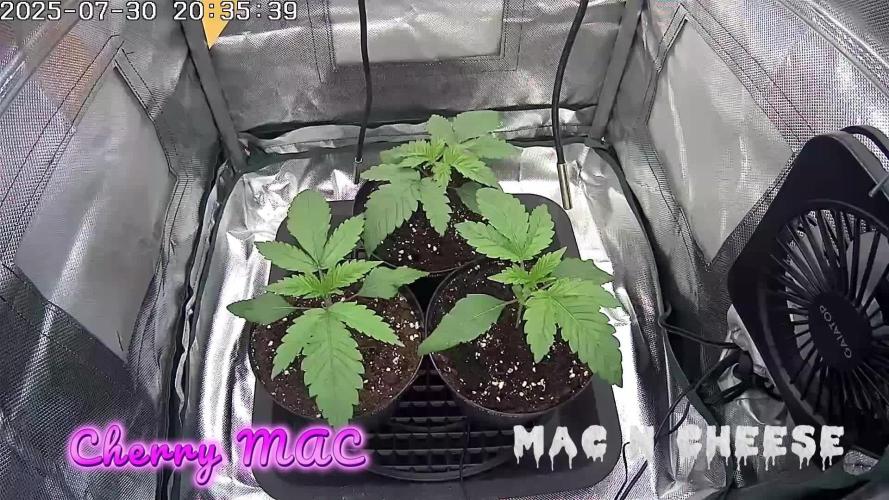
🏆 Harvest Report – Cherry MAC Muffin
Final dry yield: 161.71 g
The highest-yielding plant of the entire grow – dense, heavy flowers with excellent structure and minimal stem weight.
The buds cured into a standout mix of:
🍒 Cherry sweetness
🍦 Soft creamy undertones
🌈 Deep purple highlights on the tips and sugar leaves
The resin concentration was extremely high, giving the buds a frosted, almost glassy look.
Drying went smoothly thanks to the tight flower formation and healthy fade-out during flush.
No oversaturation, no nutrient residue – everything finished clean and aromatic.
Cherry MAC Muffin ended the run as the visual and aromatic highlight of the tent.
Outstanding vigor, strong late-flower development, and one of the densest structures of the grow.

Likes
4
Share


@FastBudsisMidz
Follow
The flagship of all my grow rooms, this is the strain you want to run into constant production
I find strains the pack on the sugar, but will not bulk up and chunk up, in my option Seed Junky Genetics always delivers top notch seeds
Likes
5
Share

@Ninjabuds
Follow
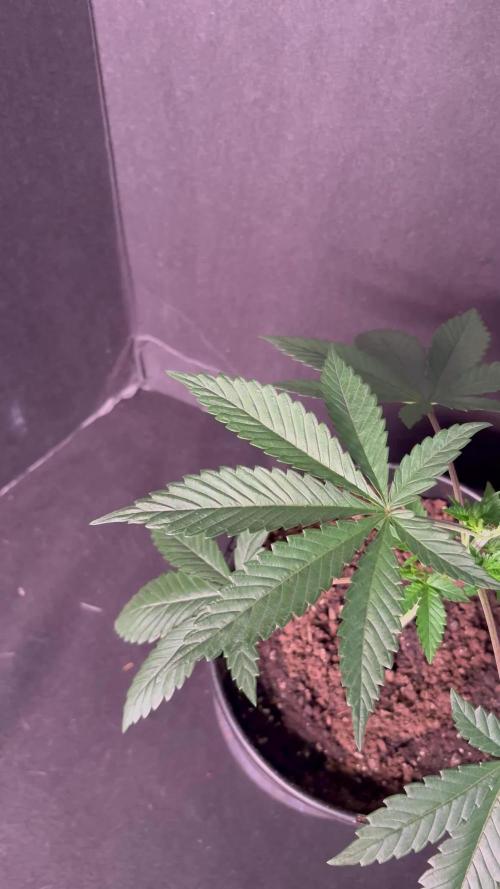
It’s day 27 from seed for all the plants in the photo sea of green. Let’s call it the battle of the strains summer 2025. All of the plants are starting to have visible differences. I’m already starting to tell witch plants are more sensitive than others.


Likes
25
Share


@Prototype0181
Follow
The lady's are a bit shocked after the ✂️ decapitation (topping) on 10-05. going for 6/8 cola's per plant👌
Stay tuned growmies 💚
Likes
12
Share


@kersenberg
Follow
Flower Week 3 / Day 2: The plants each received 2 liters of water and nutrients. I only gave them half the dose of fertilizer. They are doing wonderful. The leaves have a rich green color and are praying.
Flower Week 3 / Day 5: Today I defoliated them again a little, as some parts were getting a bit too bushy. They are now quite sticky and the trichomes glisten in the light. Unfortunately, it doesn't look quite the same on the video. All of Taylor's buds develop evenly. In Beyoncé's case, one half is already well developed and the other half behaves completely differently. In any case, both are healthy. Perhaps it is also due to the genetics of the plant.
Likes
4
Share


@GODAXE
Follow
27.08.2024
D48 since cutting,
lady starting to bush like their mother, as i did nt have place for 8 massive bush in the tent i proceed to some pruning and set some bud clip.
overall look
GBC #1
16 inch, flowering
GBC #2
16 inch, flowering
GBC #3
16 inch , still in veg, 😰
GBC #4
18 inch, full bud mod 😍
GBC #5
18 inch , full bud mod 😍
GBC #6
19 inch, flowering
GBC #7
20 inch, start flowering👍
GBC #8
18 inch, flowering
i will not weekly uptade, but keep you tuned

Likes
5
Share


@prebiancagrower
Follow
Hi People.
Week 3 here and my baby is fucking strong, is the first time I am using just LST as training and I have to say it blew my mind away.
The plant is very green, and strong, do you know when the plant is smelling healthy green? So, now I know what it is. hahahhaa
Thanks, people, and see you next week.
Love you all!
Likes
17
Share

@tony_kiffton
Follow
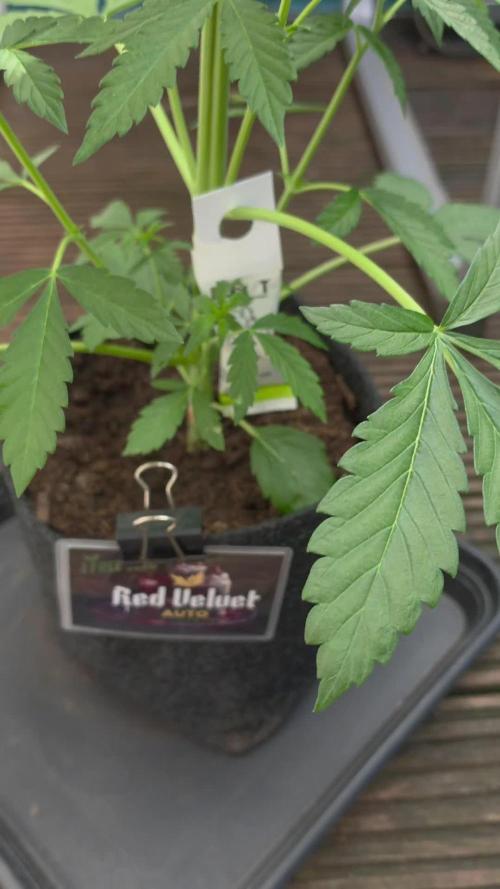
Tag 39
Flanze hat sich auf knapp 70cm getreckt ...
Blütephase hat eindeutig begonnen.
Nächste Woche wieder schönes Wetter
Likes
5
Share


@DaisyNabis
Follow
definitivamente están en pleno engorde mis glotoncitas, su olor inigualable a caramelos me dan una sensación de placer al contemplar me bello oasis


Likes
45
Share

@Webacca
Follow
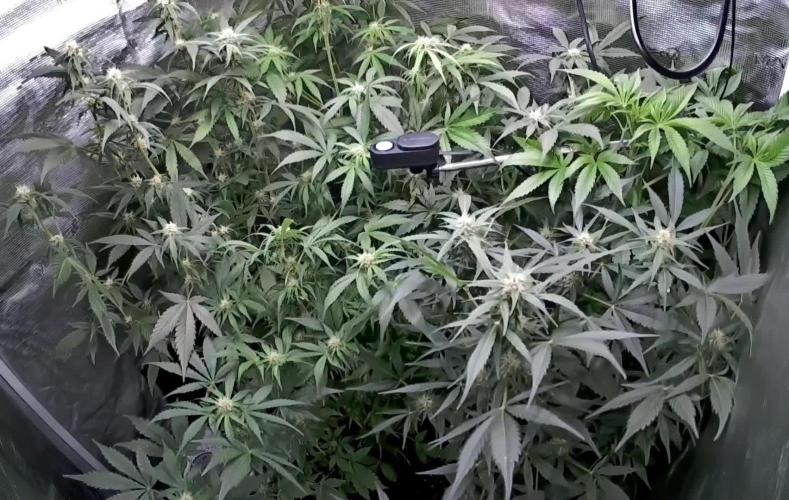
Gibt nicht viel zu sagen.
Es wächst verhaltener, Blüten bilden sich weiter aus.
Die Lemon Cherry Cookies hat immer noch keine Blüten (doch ne Photo, schätze ich mal) aber hat am meisten zugelegt. Stolze 13cm.
Noch was entlaubt, gedüngt und nu warten was die nächste Woche bringt.
Ggf geht es raus ins Gewächshaus.
Der letzte Zeitraffer ist am Ende dabei. Glaube nicht, dass ich noch einen laufen lasse. Spätestens draußen nicht mehr
Nachtrag: habe testweise die LCC ins Gewächshaus verfrachtet. Da konnte ich auch mal sehen, wie schmal und dünn sie gewachsen ist.
Es sind zwar irgendwie schon Blütenansätze zu erkennen, oder auch nicht. Alles sehr strange.
Hab sie dann direkt mal LS-trainiert. Schad ja nix
Und seit eben stehen sie alle drei dort.
Somit ist mehr Platz im Zelt, auch für den Fenchel. Der läuft nebenbei mit 😁
Likes
21
Share


@OGTrauma
Follow
Ok homies, here i did a topping cut on a , indica mix but a bit updated with some random yet a bit unstable yet updated that marked even more the phenos diferenced as there are clearly two stretchers maybe possesing a slighlty more sativa may happen sometimes on og kush family and expect too as are the more usual indica type, but i hope cut time are similar .It's quite in terms of growing stretch its very short and not good & the ideal if u need some that nor get tall fastly , but im getting into it as i intended tto give better usage on the net i use to not burn my leaf and bud as can be a hazzard on both veg and flower stretch that shit is controllable and im happen future with hopeful distribution . trying to learn from the previous grow 🎈🎂🍰🤙🔥💯
I got like a good reaction to feeding this challeging earth called organic life mix as im taming it by giving a more nitrogen update , including ca mg and at the same time spray them with barrier as both food and pest control uptake. They are far better also in terms of how they are dealing with the previous spotted defficencies. and the growth is as fast as expected of a fast substrate too, but 4 real its more demanding on food as it showed me carencies very early , so you may need to improve it or have a better feeding plan. mine is basic but works.
