


Likes
Comments
Share


@DarBGrowDiaries
Follow
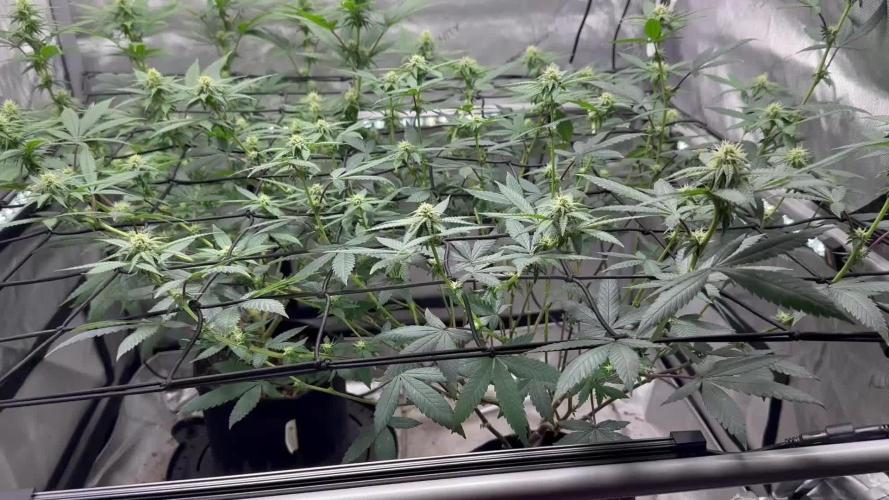
This lady grew into a colourful mess, I would have liked to maybe keep her going for another week, but since I started giving her only water she faded out very quick.
The buds smell really nice and lemony, but she did not frost up as I would have thought she would, maybe it was the pheno or on my part.



Processing
Likes
6
Share


Likes
1
Share


@pareto
Follow
Clearly got dominated by her pot mate. Looks and smells awesome though.
She got planted about a week after her pot mate. Maybe thats why she got the short end of the stick.
These plants are not mine. I am just documenting them.
--------------------------------------------------------------------------------------------------------------------------------------------------------------------------------
Set up cost (fixed costs)
-Lamp: 40€
-Timer: 3,5€
-Pot: 4€
-Total fixed costs: 47,5€
Given 5 years (or 15 grows) usage time translates to around 3,17€ per grow in materials.
Variable costs:
-Seeds: 13,17€
-Soil: 6€
-Fertilizer: 3,50€
-Power (100 days 18h/day): ~25,92€ (exact figure after harvest)
-Total variable costs: ~48,59€
-Total costs per grow: ~51,76€

Likes
7
Share


@MrEarlyBird
Follow
Really healthy leaves, however salt buildup starting to become evident on the roots, been giving occasional flushes with tap water that still has chlorine, and 40ml of h202 then the next day giving the next weeks bucket with 6mL of hydrogaurd and 3/4tsp of Great White (Every bucket) Have to change bucket every 2-3 days, at 3 days it’s damn near empty.

Likes
7
Share


@Cannasino9
Follow
Look good!!! She's grown quite a bit this week. Now I'm watering it one day yes and one day no. She's appreciate that. This variety won't say no to food ( at least for the moment that's the feeling I get.) See you in the next week!

Processing
Likes
6
Share


@Ferenc
Follow
Day 61: I left them in darkness for 3 days and just switched on the lamp for 12/12 with today the foirst day of the 9th week.
Fertilization goes on the same days with the nutrients above and water intake approx 250 ml per plant per day.
Nice green color comes they always look nice after darkness :) Lets' go.
Day 66: Growing growing growing...


Likes
30
Share


@Green_Dream
Follow
The bananas are quite progressive, they were like this from the start, they are one node ahead of their sisters. Planning to top them at the 6th node this time and give around 5-6 weeks of veg.

Likes
4
Share

@DogDoctorOfficial
Follow
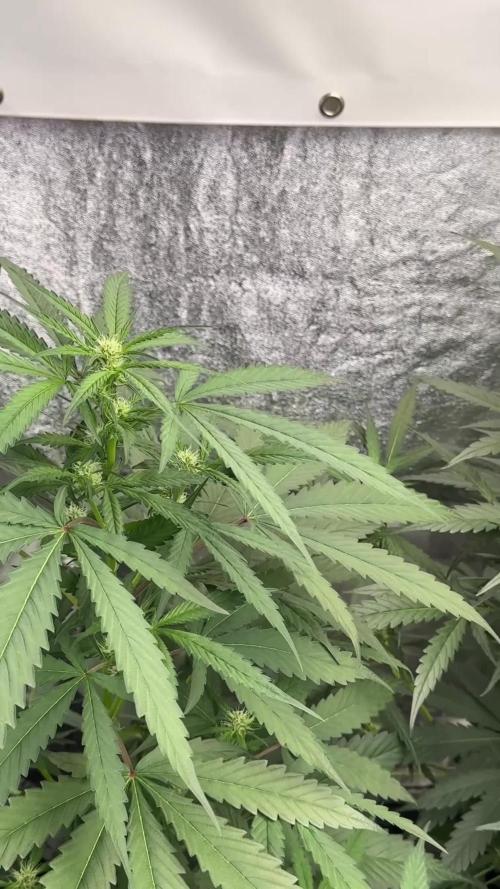
🌸 Pink Rosay Auto by Zamnesia | Pheno A | Week 6 (Flowering)
🌱 Elegance Never Needs to Be Loud
Some plants impress with sheer size.
Others with explosive growth.
Pink Rosay has chosen a different path.
She impresses through elegance.
Growing under the same 12/12 From Seed experiment as the rest of the 8×8 Adventure, she continues to prove that a plant doesn't need to be the tallest or widest to command attention. Standing at 96 cm, she has developed into a beautifully proportioned autoflower with a naturally balanced structure, excellent symmetry, and a calm confidence that becomes more obvious every week.
There isn't a single branch that feels out of place.
Everything seems perfectly positioned, as though nature designed her with precision from the very beginning.
Sometimes beauty isn't about being dramatic.
Sometimes it's simply about getting everything right.
⸻
🌸 Week 6 – Flowers Taking the Lead
This week marks a noticeable change in the plant's priorities.
The vertical stretch has begun slowing, allowing more energy to be invested where it matters most—building flowers.
Every branch is now crowned with bright white pistils, and the individual flower sites that appeared last week have already started connecting together, giving each branch the first hints of what will eventually become full colas.
The canopy feels alive.
Every day brings a little more volume, a little more stacking, and a little more character.
This is the stage where the plant quietly shifts from growing upward to growing outward, filling every flowering site with new life.
And Pink Rosay seems perfectly comfortable making that transition.
⸻
🌿 Structure & Natural Balance
One of my favorite qualities about this phenotype is just how naturally balanced she has become.
The gentle Low Stress Training performed during the previous weeks continues paying dividends, creating an open canopy where every branch receives excellent light without feeling overcrowded.
Her internodal spacing remains ideal, allowing light and airflow to reach deep into the plant while giving each future cola plenty of room to develop.
The central leader remains dominant, but the secondary branches are doing an excellent job keeping pace, creating a wonderfully uniform canopy that should translate into a very satisfying harvest later on.
She doesn't need correcting.
She simply needs time.
⸻
? The Language of White Pistils
One of the most beautiful sights in any flowering room is the explosion of fresh white pistils.
They're delicate.
They're bright.
And they're the plant's first true declaration that flower production is fully underway.
This week, Pink Rosay is absolutely covered in them.
Every flowering site seems to wear its own little crown of brilliant white hairs, reaching outward as the calyxes slowly begin stacking beneath them.
It's one of those moments every grower enjoys because those tiny white pistils are much more than beautiful—they're the blueprint of the harvest to come.
Today they're soft, fresh, and full of energy.
Over the coming weeks they'll guide the formation of every cola as the flowers swell, mature, and gradually begin revealing the frosty character hidden inside these genetics.
Watching that transformation never gets old.
⸻
🍃 Plant Health
Health continues to be outstanding throughout the entire plant.
The foliage maintains a rich, healthy green without excess or deficiency, while the leaves display excellent posture and remain perfectly relaxed under the current environmental conditions.
The stems have thickened nicely during the stretch and now provide a solid framework for the flowers that continue developing across the canopy.
There are no signs of stress.
No unnecessary stretching.
No wasted energy.
Just a healthy autoflower confidently following her own schedule.
⸻
💧 Hand Watering & Nutrition
Pink Rosay continues to be hand-watered, allowing close observation of both substrate moisture and daily plant response.
Current feeding:
• Terra Grow — 1.9 ml/L
• Terra Bloom — 1.9 ml/L
• Pure Zym — 1 ml/L
• Sugar Royal — 1 ml/L
• Power Buds — 1 ml/L
• Green Sensation — 1 ml/L
Maintaining:
• EC: 1.78 mS/cm
• pH: 6.0
The nutrient balance remains right where the plant wants it, supporting the transition from vigorous growth into full flower production while keeping the foliage healthy and vibrant.
⸻
🌡️ Environment
The environment continues providing exactly the consistency these genetics deserve.
Current conditions:
• Day temperature: 29°C
• Night temperature: 25°C
• Relative humidity: 60%
• Solution temperature: 21°C
• Root zone temperature: 21°C
• CO₂: approximately 529 ppm
Maintaining a stable environment allows each phenotype to express its genetics naturally, and Pink Rosay is taking full advantage of those conditions.
Healthy roots.
Stable climate.
Happy plants.
⸻
👀 Looking Ahead
The coming week should be where the flowers truly begin to gain substance.
The framework has been built.
Now it's time for the calyxes to start swelling, for the pistils to multiply even further, and for each flowering site to slowly merge into the colas that have been quietly preparing since the stretch began.
If she continues on this path, I expect a canopy filled with beautifully shaped, evenly developed flowers from top to bottom.
Everything about her suggests she's only just beginning to reveal what she's capable of.
⸻
🙏 Final Thoughts
Pink Rosay continues to remind me that perfection isn't always measured in size.
Sometimes it's found in balance.
In symmetry.
In healthy growth.
In the quiet confidence of a plant that simply does everything well.
Week after week, she has developed without drama, without setbacks, and with a grace that's difficult to ignore.
Watching those brilliant white pistils multiply across such a beautifully structured canopy has easily been one of this week's highlights, and I'm incredibly excited to see how these early flowers transform over the coming weeks.
A huge thank you to Zamnesia for these fantastic genetics, Plagron for providing the nutrition that keeps this project thriving, Future of Grow for the incredible lighting, TrolMaster for maintaining such a stable environment, and to everyone following this journey here on GrowDiaries.
Your encouragement, questions, and shared passion for growing make this 8×8 Adventure even more rewarding.
Until next week...
Growers Love and happy growing! 🌱💚

Likes
56
Share


@Wicked_Stix
Follow
Everything is going pretty smooth. Twisted helix is still looking rough and the leaves are dying. Other than that everyone is looking happy. Just packing on some trichomes and building some buds. Excited to see what these girls do over the next couple weeks. This sugar cane has the same mutation as the last one. Ovules growing out in the open not protected by a calyx. These ovules shriveled up and pretty much disappeared on the last plant. Didn't notice them in the buds at all.


Likes
16
Share


@ButterfliesLittleFarm
Follow
Hello Diary,
Cherry Pie has entered the flowering phase, the plant has started to form flowers 28 days after the start of the vegetation.
Cherry Pie has continued its rapid growth, this week more than 20 cm and is now 60 cm tall.
The stem has lengthened with its tip and now dominates the other branches.
The leaves are a healthy green color and show no signs that the plant is missing anything.
Summer temperatures are slowly falling, nothing significant, but every degree of lower temperature makes me happy.
This week the average was 29 degrees and rarely exceeded. The humidity in the grow box is around 50% which is ok.
Watering is a little more frequent, every three days, and sometimes every other day.
I still add CalMg but this week I started adding BIO-BLOOM Fertilizer.
I prepare 9 liters of water, add the listed nutrients and lower the p.H. to 6.0. I water all three plants on the Farm with this amount.
A few days before the end of the week, I cleaned the bottom of the plant to allow better air circulation and to make it easier for me to water.
I also turned up the LED lights to 80% at the beginning of the week.
Here's what the past week looked like.
15/08/2024 - Day 22.
Watering.
The soil was very dry and the leaves were drooping.
I watered each plant with 3 liters of water.
I put 1ml/liter CalMg and 1.5 ml/liter Bio-Bloom Fertilizer in the water.
18/08/2024 - Day 25.
Watering.
Again the soil is very dry and the leaves are drooping.
I repeated the same procedure as three days earlier.
21/08/2024 - Day 28.
Official end of the first week of flowering.
After taking photos, I watered all three plants at the Farm.
Cherry Pie - Day 28. - 60 cm
That's all I have for this week. See you soon and thank you all for your comments.


Likes
6
Share


@Mr_nugs_lover_David
Follow
I have topped one of the 5 phenos because this plants looks like they had a few more days of growth before flowering and wanted to get more colas, they are developing awesome one pheno ended up too small but it will definitely give something, let's see how this beautiful ladies keep developing

Likes
2
Share


@Comfrey
Follow
Die Ernte ist zwar lange her, aber ich wollte das Album noch abschließen. Leckere Blüten.

Likes
21
Share


@Trickybis82
Follow
Hi growmies,
Been a couple busy weeks with personal stuff and wasn't sure if I was going to be here to carry on my diaries.... however I am back!!!and free to carry on 🤫.
As you can see purple lemonade is coming along very nice indeed her aroma is beautiful and her look is outstanding..
Just started to flush her out for next couple weeks and will see from there how we get on.
But as my first hydroponics set up I am happy with my current look and speed to process thumbs 👍 👌 😀 up..
Peace out

Likes
2
Share

@Altitonans_Fulmen
Follow
The thoughts shared in this journal are my own—a snapshot of personal understanding at the exact moment of writing. It is not intended as a reference of absolute fact, but rather as an exercise in ἐπίνοια (epinoia): an exploration of thought, intuition, and creative insight.
Epinoia(ἐπίνοια) is a Greek term meaning thought, intention, purpose, or conception, stemming from "mind" (nous) and "upon" (epi), representing the mind's reflective or creative process, used in philosophy (Aristotle, Gnosticism) and theology to discuss understanding and divine names, appearing once in the New Testament for the "intent of your heart" (Acts 8:22). It signifies the mind's operation to form ideas or designs, contrasting with raw data or innate perception, and in Gnosticism, it's an emanation of divine wisdom (Sophia).
"Φsis" is a stylized spelling of the Ancient Greek word φύσις (physis), which translates directly to "nature" or the intrinsic essence of a living thing.
Exploring the deep intersection of science, intuition, and creative insight often leads to breakthroughs that challenge our understanding of what is possible. When we approach high-performance cultivation not just as a hobby, but as an exercise in pushing a biological system to its absolute genetic ceiling, the results can transform from simple data points into profound proof of concept. Achieving a highly optimized environment requires a shift in mindset away from empty promises and directly toward verifiable proof, building true confidence through a detailed archive of past lessons and strategic adjustments.
This philosophy turns a standard space into a precise mass and energy balance equation, where every variable is managed to eliminate biological bottlenecks entirely. In a recent project four individual plants produced 344 grams, 280 grams, 445 grams, and 255 grams respectively, resulting in a total harvest of 1,324 grams, or 47.2 ounces, of dry product. Operating with a 600-watt light source inside a four-by-four footprint, this brings the final efficiency to an exceptional 2.21 grams per watt.
To put this in perspective, the standard traditional indoor benchmark has long been established at 1.0 grams per watt, while expert commercial operations target 1.5 grams per watt, and elite commercial systems push the envelope between 1.8 and 2.0 grams per watt. Reaching 2.21 grams per watt places the outcome squarely within the top 0.1 percent of global benchmarks, acting as a true statistical outlier that demonstrates what happens when flawless environmental parameters meet a cultivar pushed to its maximum potential. Reaching this level of mastery demands that we move past the common trap of the mirror fallacy, where the ego mistakes its own limited perspective for universal truth and views different ideas as personal threats. True progress requires curiosity and dismantling the illusion that our immediate viewpoint is the objective standard, shifting the focus instead toward how a system actually operates under the absolute laws of physics. In a high-performance setup, maximizing output is never about adding random additives or forcing growth, but rather about systematically removing the limitations that hold the organism back. By maintaining a perfect vapor pressure deficit, ideal root-zone oxygenation, and precise structural canopy training every single minute of the cycle, the plant is freed to express 100 percent of its DNA potential without any lingering genetic latency.
Managing a dense canopy inside a tight footprint presents the ultimate challenge of mitigating stagnant air and preventing moisture issues. Overcoming this bottleneck relies on a sophisticated synganic approach, which seamlessly marries the precise control of synthetic mineral inputs with the natural resilience of active organic living soil. This method transforms the room into a closed-loop system where the internal microclimate is entirely isolated from external weather fluctuations and pests. Rather than openly exhausting the atmosphere, the air is continuously recirculated, enriched, and scrubbed using 264-nanometer ultraviolet light.
The foundation of this thriving ecosystem is a comprehensive substrate composition designed to provide perfect aeration, structural integrity, and biological buffering. The primary media base integrates expanded clay aggregates, coir chunks, premium coco coir, sphagnum peat moss, horticultural perlite, vermiculite, pumice, and volcanic basalt rock. To continuously condition the soil and fine-tune mineral availability, the mixture is amended with agricultural gypsum, wollastonite, dolomitic limestone, basalt rock dust, micronutrient-rich volcanic ash, greensand, crushed seashells, biochar, and shungite. This mineral architecture creates an incredibly stable environment where active soil biology naturally prevents salt toxicity and ensures steady, reliable nutrition throughout the entire life cycle.
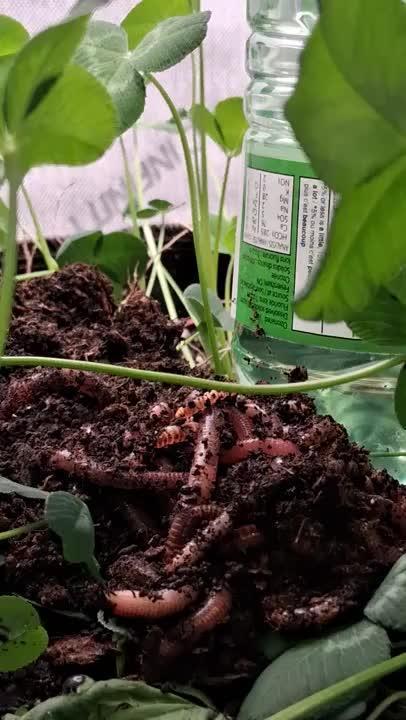
Living organisms within the substrate play a vital role in maintaining this delicate biological balance and breaking down organic material. Red wigglers continuously process organic matter into easily accessible plant nutrients while aerating the media; specialized predatory mites offer excellent biological control against common soil pests, and pillbugs excel at breaking down tough, woody elements. These biological components are further supported by a rich layer of organic amendments including high-phosphorus steamed bone meal, high-nitrogen dehydrated blood meal, fish bone meal, cold-processed kelp meal, dehydrated moringa powder, spirulina powder, and marine crustacean biomass rich in chitin. Combined with biological inoculants like mycorrhizal fungi, premium worm castings, and concentrated humic and fulvic acids, the entire system operates as a flawless biological transducer of light and energy.
Ultimately, shifting our perspective to view a grow space as a complete mass and energy balance equation changes the entire nature of agriculture. Success ceases to be a matter of luck or anecdotal habits and instead becomes the predictable result of meticulous design, patience, and the strategic elimination of failure. When science, biology, and engineering converge so harmoniously, we gain a deeper appreciation for the intricate natural systems that sustain life and growth. By sharing these detailed insights and refining our techniques, we can continue to unlock the absolute maximum potential hidden within the living world around us.
Comprehensive Substrate Composition:
1. Substrate Base & Aeration Media
Expanded Clay Aggregates (Hydroton Pebbles)
Coir Chunks & Horticultural Coco Coir
Sphagnum Peat Moss
Horticultural Perlite
Horticultural Vermiculite
Horticultural Pumice
Volcanic Basalt Rock
2. Mineral Amendments & Soil Conditioners
Agricultural Gypsum (Calcium Sulfate)
Wollastonite (Calcium Silicate)
Dolomitic Limestone (Calcium Magnesium Carbonate)
Basalt Rock Dust (Trace Mineralizer)
Azomite (Micronutrient-Rich Volcanic Ash)
Glauconite (Greensand)
Crushed Seashells (Calcium Carbonate Source)
Pyrolyzed Carbon Feedstocks (Biochar & Horticultural Charcoal)
Elite Shungite (Carbonaceous Mineraloid)
3. Organic Nutrient Amendments
Steamed Bone Meal (High Phosphorus)
Dehydrated Blood Meal (High Nitrogen)
Fish Bone Meal (Phosphorus & Trace Calcium)
Cold-Processed Kelp Meal (Ascophyllum nodosum)
Dehydrated Moringa Oleifera Powder (Botanical Nutrient)
Spirulina Powder (Arthrospira platensis / Cyanobacteria Nutrient)
Marine Crustacean Biomass (Shrimp & Crab Chitin)
4. Biological Inoculants & Organic Acids
Mycorrhizal Fungi Inoculant (Endomycorrhizae / Ectomycorrhizae)
Vermicompost (Premium Worm Castings)
Humic & Fulvic Acids (Concentrated Humates)
Human Body
65% Oxygen (in all liquids and tissues, bones, and proteins)
18% Carbon (everywhere)
10% Hydrogen (in all liquids and tissues, bones, proteins
3% Nitrogen (in all liquids and tissues, proteins
1,5% Calcium (lungs, kidney, liver, thyroid, brain, muscles, heart, bones)
1% Phosphorus (urine, bones, DNA)
0,35% Potassium (enzymes)
0,25% Sulphur (proteins)
0,15% Sodium (in all liquids and tissues) (in terms of salt)
0,05% Magnesium (lungs, kidney, liver, thyroid, brain, muscles, heart)
Plant
Mother-nutrients: Carbon 47%, Oxygen 43%, Hydrogen 4%.
Macro-nutrients: Nitrogen 3%, Phosphorus1%, Potassium1%, Calcium1%, Magnesium0.5%, Sulfur0.5%.
Micro-nutrients: All the rest combined 1%
More energy, more blueprint.
Although CO2 is a naturally occurring gas that both humans and plants use, it is invisible and odorless and can be fatal at high-levels. If you’re supplementing carbon dioxide in your grow room, ensure there are no leaks in any CO2 devices and always use a CO2 monitor and alarm.
0.02% Life unsustainable
0.03% Life OK
0.04% Current ambient atmospheric co2
0.04%-0.1% =400-1000ppm standard indoor co2.
0.1%-0.2% = 1000- 2000 ppm (prolonged exposure: drowsiness).
0.2%-0.4% = 2000-4000ppm (Headaches, fatigue, stagnation, stuffiness, poor concentration, loss of focus, increased heart rate, nausea).
1% is toxic
5% is quick death.
"Dabo vobis quod oculus non vidit, nec auris audivit, nec manus tetigit, quod in cor hominis non ascendit."
Likes
17
Share


@Huntress007
Follow
Yea she looks beautiful can’t wait to see her flowers nice shape goin on! 🌸💕

Likes
13
Share


@SzkolaZiola
Follow
Last days for most of them - only Strawberry Cough will stay longer - she is super hungry and I can not keep up with feeding her - most of leaves are yellow now. 😱
The rest - four plants will be harvested on the weekend - 2-3 days from now and frozen - I'll be making bubble hash and fresh frozen live resin from them in the following weeks 😈
Trichomes are mostly milky with some amber starting - ideal ripeness and time to freeze those glands


Likes
21
Share


@Greencrypto
Follow
I have changed tent to a bigger one 120x120x200 and upgraded my carbon filter and fan to a spider farmer 6” intelligent which seems all great happy with plants looking healthy I have another mare hydro ts1000 to also go in tent which will be going in around a week 😁👍 thanks to all


Likes
42
Share


@Dr_Boom
Follow
She's starting to bulk up, and I've cut my nutrients back in anticipation of the flush. She is a beauty and I love the colors she is displaying. I'm starting to get a distinct smell of burnt tires and rotten organic from her, with just a hint of sweetness. I love the smell! I added some plant ties this week to hold some of her branches up. Many of her branches are starting to droop under the weight of the buds, but nothing I can't handle. No problems this week and she is looking great.