


Likes
Comments
Share

@PapaTerps
Follow
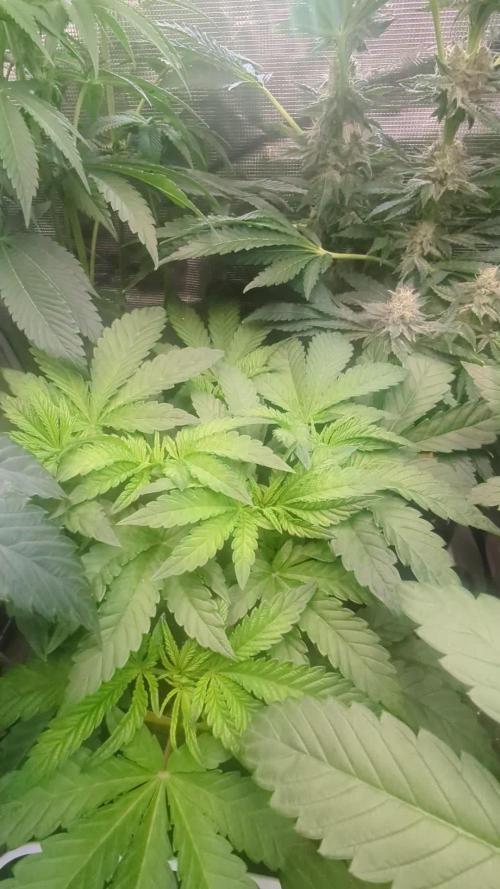
British Delight - Wizard Trees
Day 63 - Watered with 3L of RO tap water with nutrients, mixed individually, in order and then pH'd to 6.3! She has pretty much finished her stretch and is now focusing on developing her bud sites! She very very bushy and with big heavy fan leaves, so she'll require a good amount of defoliation later in the week, but for now I wanted to give her a couple of days to rest because she has only just finished the stretching phase... I'll update this week to show the progress she's made, but for now, I'm just going to let her be 🙏

Likes
4
Share

@Drobubba
Follow
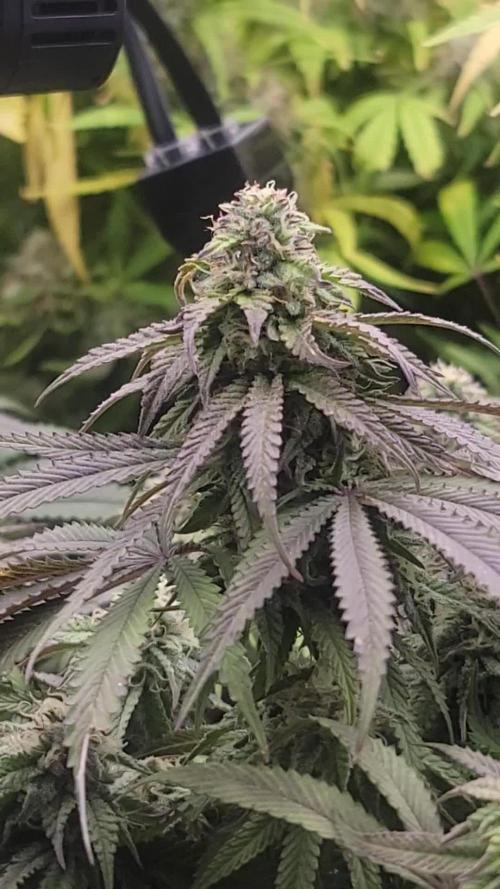
Week 12 day 84 from seed. Im trying to be patient. Ill give them another week or so. The banana bread auto suggested seed to harvest 75-85 days.The all gas og auto suggested seed to harvest 90-100 days. The kalini asia is 4 weeks of flower.im not sure how im going finish her, considering i have one tent. Nonetheless hope im making the right call. Fingers crossed!!!.


Processing
Likes
4
Share


@Englandshigh
Follow
This week she has been thirsty,and getting really frosty and producing all her colours/pistols and dank smell,

Likes
12
Share


@BB_UK
Follow
so here we are right at the end, smelling of beautiful fruits and some gassy fuel and cherry and orange aromas making it feel christmassy already, fading beautifully as i lowered the temperature and started to feed with only water! so in a few days ill chop this girls maybe weekend maybe after! whenever it suits because she is about 85% ripe! a little behind her clone sisters but nether the less shes nearly ready!

Likes
10
Share


@Backwood_scientist
Follow
Starting to see some purple on some of the leaves and I smell them every time I open up the tent . Just giving them regular ph water now and waiting for the harvest. Older leaves are also fading yellow .

Likes
12
Share


@Metamorph
Follow
Hello again, dear growers! 🌱👋
We’ve officially stepped into Week 10 of this wild and fragrant journey! Last week ended with a little makeover for the girls—I defoliated about 30-40% of the leaves again. ✂️ The Gorilla decided to keep me on my toes by showing some nutrient deficiencies on her leaves—guess she didn’t get enough food after the flush. 🍌🌿 (Lesson learned: don’t keep a Gorilla hungry!)
Now, let’s talk about Runtz! 😍 She’s an absolute queen—so photogenic that even my struggling phone can’t capture her real beauty. 📸✨ She’s forming into one giant, luscious bud, and her fragrance is something else entirely! 🕵️♂️ The carbon filter is fighting the good fight, but if the room isn’t aired out every 8-9 hours, a little aroma starts sneaking through.
But opening the tent… oh, my friends, that’s where the magic happens! 🌬️💫 The aroma is intoxicating—imagine diving headfirst into a field of flowers while bees whisper secrets in your ears. 🌺🐝 I just sit there, enchanted, savoring the smell, and staring at these beauties like a hypnotized gardener. Honestly, it’s hard to walk away. 😂
Here’s their menu for the week:
🍵 Feed: A+B 4ml/L, Micro Chum 1ml/L, Big Bud 2ml/L
📊 PPM: 1050 | pH: 5.8
💧 Runoff: PPM 1000 | pH 6.0-6.3
Now, for the not-so-great news…
I’m struggling with humidity levels—daytime sits around 65-77%, and at night, it can climb to a stubborn 80%. 🌫️ Temperature-wise, it’s 23-25°C during the day and drops to a cool 16-18°C at night. ❄️🔥
Despite the challenges, the endgame is near, and I’m savoring every moment of this grow! 🌟 🙌 Happy growing, everyone! 🌱🔥

Likes
12
Share


@Roberts
Follow
FBA2505 has had issues. I changed her to Athena nutrition about 4 days ago. I discovered root rot today. I removed some and rinsed the rest good. I then added about 3 ml of h2o2 to the solution to help kill off the bad bacteria. I will likely do a fresh solution change in a few days, and get some healthy cultures growing. I have had issues every time I use xpert nutrition. I can't seem to get a handle on it. Thanks again Xpert, Medic Grow, and Fast Buds. 🤜🏻🤛🏻🌱🌱🌱
Thank you grow diaries community for the 👇likes👇, follows, comments, and subscriptions on my YouTube channel👇.
❄️🌱🍻 Happy Growing 🌱🌱🌱
https://youtube.com/channel/UCAhN7yRzWLpcaRHhMIQ7X4g.
Likes
3
Share


@MarihuAchA
Follow
Últimos días de vida de este ejemplar. Muy contento con su aroma y sus terpenos. Hoy estamos a martes, creo que mañana o pasado igual a esta le toca corte. Ya les mandaré con la cosecha hecha. Gran abrazo
Likes
19
Share


@JeyGanesha
Follow
Anche a loro inizia ad uscire un profumo dolce, la hermafrodita non ha più creato bananine(fiori maschili) quindi tutto procede perfettamente,,💪👍 forza mie belle bimbe, datemi tanti fiorellini belli,dolci e profumati 🤣🤤🤣🤤🤣
Likes
31
Share


@Hempface86
Follow
Sorry for the late update. A lot has been going on lately. This girl needs a defoliation once they get home from work which will be probably tomorrow evening so I won't get to that until the following day at the earliest... i hope everyone is doing well, thank you so much to Kannabia Seeds


Likes
4
Share


@matias_scrog
Follow
TODO VA GENIAL, MUCHISIMA RESINA Y OLOR EN ESTA ETAPA. HE NOTADO QUE ALGUNAS HOJITAS SE ESTAN QUEMANDO EN LAS PUNTAS Y DOBLANDOSE HACIA ARRIBA, SUPONGO QUE FUE DEMASIADA COMIDA. DE TODOS MODOS ES MINIMO, NADA DE QUE PREOCUPARSE POR EL MOMENTO, VOY A HACER DOS RIEGOS CON AGUA Y LUEGO VOLVEMOS A FERTILIZAR!

Processing
Likes
8
Share


@weed_gastro
Follow
unstoppable :p
Day 29: on the video, the 2 on the right side are the Ayahuasca Purps, the other ones are Peyote critical.
getting real bushy, need to defoliate soon
day 32: they got their first feeding, I only use a minimal amount of blooming nutrients.
day 33: plucked some leaves , cuz there was no airflow at all, also installed a new ventilator.
day 36: had to pluck some leaves again


Likes
22
Share


@BruWeed
Follow
☘️08/11 - Empieza su primera semana en Etapa de Floración.
☘️Me sorprendió lo rápido que creció en altura en pocos días.
☘️Su desarrollo viene de forma correcta sin ningún tipo de inconvenientes.
☘️Estos días seguiré subiendo más imágenes de como viene su crecimiento.
Likes
12
Share


@Boomer911
Follow
Growth Overview:
Vegetative Stage: Auto Critical Orange Punch developed into a thick and bushy plant with vigorous growth. It filled out its space well, creating a dense canopy of healthy, deep green leaves.
Flowering Stage: The plant maintained its bushy structure, with buds developing steadily and gaining significant mass. By the time of harvest, the buds were thick and plentiful, displaying a beautiful orange hue typical of this strain.
Harvest Details:
Timing: Harvested at the peak of maturity, with the trichomes reaching the desired level of cloudiness and amber.
Yield: The plant produced a substantial amount of dense, resinous buds, thanks to its bushy nature and strong branching.


Likes
53
Share


@SativaSteve88
Follow
Smells getting stronger, flowers getting fatter, pistols starting to turn amber, we are getting closer to harvest, plants all nice and healthy the excitement grows the wait goes on but theyll soon be ready cant wait thery are looking really well, see you next week for the latest update ✌️👊
few of us closing in on harvest now with barneys new mimosa evo and cant wait to see the outcome, goodluck to all others with your harvest as well
Processing
Likes
14
Share


@Shellshocked
Follow
Over watered the wedding cake so I transplanted her into dry soil with food already in it but the food was 2 strong and burnt her so I quickly cut as many clones as I could (6) and trashed the rest of the plant so this grow is done but gonna replace this grow with a girl scout cookies got 2 of them so that's what's in the video there in fox farm ocean forrest soil they have not been fed yet growing kinda slow but looking very nice
Likes
11
Share


@NONSENSE
Follow
Very nice genetic. I'll do same Jack H from Fastbuds for sure again. Plant was very strong and ready for training. I still did not smoked it, will replay later about the taste and power.