





@SamDo
Volgen
Hello, fin de semaine 10, floraison 4.
Les plantes n’ont eu aucuns problèmes pour récupérer de leurs défoliation de la semaine précédente. Elles semblent en parfaite santé et la croissance des buds commence à se matérialiser de plus en plus,,, 😁
J’ai légèrement ajusté l’hydrométrie vers les 45/50%. J’ai aussi fait un arrosage plus léger en milieu de semaine à l’eau sans engrais avec un simple pH ajusté à 6.3/6.5
L’apparition de cristaux commence à se voir. C’est beaucoup plus marqué sur la gorilla CBD que sur la critical+ 2.0.
Voilà,, c’est tout pour cette semaine..
Happy grow...😎

shorts_status_processing


@PanicAttackZack
Volgen
Using a 50/50 mix of Purple Cow IndiCanja living soil and Fox Farms Ocean Forest, just ph'd water using lemon juice to bring down my tapwater and mammoth P microbes. I brew teas with Nature's living soil auto flower line. Seeds in the soil 4/17...I plant directly into the soil without presoaking or letting a taproot grow, I've had 100% success rate so far so I'll keep doing it I think




@NoProbation4Weed
Volgen
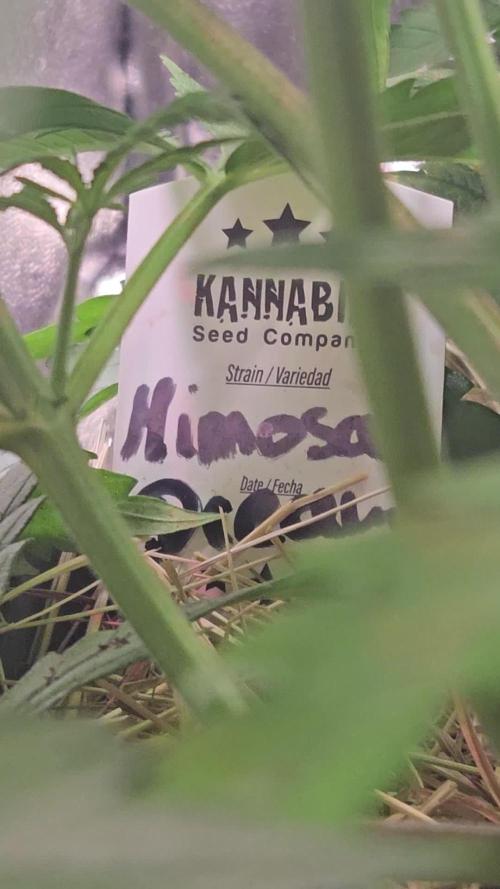
Extrem growth since she is under the Sanlight LED on 50%.
Plant looking healthy and good so far.



@Ultraviolet
Volgen
Its time to prepare for war. *Blows bagpipe*
FISH SH!T THE ORGANIC SOIL CONDITIONER (used twice before and always noticed instantly)
Fish Shit is a living product! It provides a complex Microbial profile that includes thousands of different species of bacteria, fungi, and protozoa. This profile is closer to a natural ecosystem than anything you will find on the market. Fish Shit helps release essential oils and terpenes which contribute to the building of a myriad of flavonoids. Flavanoids play a key role in the development of the most potent aromas and tasteful flavors of a plant and its fruit. Fish Shit contains beneficial microorganisms that help plants maximize nutrient uptake. It does this by transforming nutrients into more usable forms and keeping these nutrients in the soil longer. During photosynthesis plants naturally produce exudates (chemicals that are secreted through their roots). Through these exudates, plants can attract the types of good bacteria that are beneficial to them at different points in their growing cycle. These good bacteria cover the roots and act as a barrier to the invasion of disease-causing organisms that may harm the plant.
What Are Enzymes?
Before we dive headfirst into how, exactly, enzymes can benefit cannabis plants, it helps to understand a little about what these microscopic proteins do. Essentially, enzymes facilitate chemical reactions. They do so by binding with a substrate and forming or breaking molecular bonds. In this context, the substrate is the molecule upon which an enzyme acts to boost the efficiency of a reaction.
•substrate /sŭb′strāt″/
•noun
•The material or substance on which an enzyme acts. A surface on which an organism grows or is attached. An underlying layer; a substratum.
Enzymes are proteins with complex 3D shapes that feature regions called active sites. When the substrate binds to these active sites, it forms an enzyme-substrate complex that causes a chemical reaction to take place, temporarily changing the structure of the enzyme and ultimately causing molecules to either come together or break apart. As a result, molecular products are released, and the enzyme returns to its original shape.
Specific enzymes are capable of binding with certain substrates, as the substrate fits into the active site more or less via a lock-and-key principle. Although, new research suggests a more accurate theory of "induced fit", in which enzymes and substrates undergo structural changes to facilitate the reaction.
If you take the human body as an example, we have an abundance of enzymes in our saliva and digestive system. These molecules bind with substrates in these regions (food particles), working to break down the food we eat into usable parts before converting them to energy.
Enzymes in cannabis work in a similar way to the example highlighted above. Typically, enzymes occur in soil naturally, but if your soil mix is lacking organic material, or you're growing hydroponically, then adding enzymes directly to the substrate is crucial.
By using them in cannabis growing, enzymes not only help break down essential nutrients into smaller, more readily available pieces, but they also support the digestion of dead root cells, clearing a direct path for nutrients.
Overall, enzymes make it easier for your cannabis plants to absorb all the elements they need to reach their full potential. For growers, a plant that reaches its full potential means a bucketload of juicy buds come harvest. This is essential if you want to reuse a pot with old systems left over like mine.
Common plant enzymes include:
•Cellulase
•Xylanase
•Beta-glucosidase
•Hemicellulase
•Amidase
Amino acids are a crucial, yet basic unit of protein, and they contain an amino group and a carboxylic group. They play an extensive role in the gene expression process, which includes an adjustment of protein functions that facilitate messenger RNA
Nitrogen, phosphorus, and potassium are the three main pillars of nutrient solutions and fertilizers, but there are countless other nutrients that your cannabis plants need to produce the best possible harvest. Amino acids are one of them.
You may have noticed that amino acids get a lot of attention from bodybuilders and other athletes. That’s because they play a key role in the synthesis of protein, which, as you probably know, is super important for sports recovery and muscle growth. Amino acids are the building blocks of protein and the foundation of both plant and animal life.
But what do amino acids do for cannabis?
WHY IS PROTEIN IMPORTANT FOR CANNABIS?
Just like proteins are important for the human body, they are equally important for the growth and development of plants.
For example, proteins help plants:
•Facilitate the growth of intracellular plant structures
•Promote energy generation
•Stimulate metabolic processes
•Facilitate the absorption and transportation of nutrients
So, where do plants get these vital proteins from? Well, unlike humans, plants can’t source proteins or amino acids from other organisms. Instead, they need to create their own amino acids, and then use these to build protein. That's why gardeners, much like athletes, go wild for amino acid supplements.
Amino acids help plants by…
• Increasing their production of chlorophyll, which ultimately improves their ability to photosynthesize
• Serving as an easily absorbable form of nitrogen
• Stimulating the synthesis of key vitamins
• Improving their resistance to pests and diseases
• Boosting the strength of their cells
Amino acids also serve as the precursors to auxins, a group of plant hormones produced in the meristems—the apex of the stems where new leaves and stems are born.
Auxins play a key role in the plant, activating genes for plant growth and development by triggering a multitude of vital plant functions. In other words, they determine what its size and architecture will look like. Auxins influence the development of branches, flowers, and roots, and even help to regulate the photoperiod response of the plant.
Some amino acids, like cysteine, also work together with antioxidants like glutathione to help cannabis plants deal with oxidative stress, which can be caused by high-intensity lighting, some nutrient solutions, and high levels of CO₂.
Unlike humans, plants can synthesize all the amino acids they need to survive and develop properly. Unfortunately, however, amino acid synthesis is a really high-energy process, and plants may struggle to produce enough amino acids when exposed to stress.
WHAT FACTORS AFFECT A PLANT’S ABILITY TO SYNTHESISE AMINO ACIDS?
Any kind of stress can affect a plant’s ability to produce enough amino acids.
This includes:
• Drought
• Temperature extremes
• Poor soil health
• Pests
• Diseases
• Poor lighting
• Lack of space
• Poor root health
WHAT DOES ALL OF THIS MEAN FOR WEED PLANTS?
If you want to push your plants to their extreme in terms of floral growth and resin production, you should look into amino acid fertilizers. By making amino acids readily available to your plants, they’ll be able to use crucial energy to grow and bloom, rather than focusing on synthesizing amino acids themselves. Game of Inches, this is another Plants can absorb amino acids via their roots and leaves. They can also benefit from amino acids during both their vegetative and flowering phases. The fastest way for plants to absorb amino acids is via their leaves. The foliar application of amino acids is believed to improve the transportation of nutrients, increase transpiration, and boost photosynthesis. Hence, I recommend feeding your plants with foliar amino acid fertilizers. When doing so, however, carefully measure the amount of fertilizer you use, as—like with any nutrient—overfeeding can damage your plants.
FOLIAR FEED AND SOIL SOAK
• 1 crushed queen anne carrot
• Add 2 tbsp of NPK Raw powdered water-soluble cane molasses
• 20ml h2o2
• 1 crushed radish
• 0.25 tsp NPK Enzymes
• 0.25 tsp NPK Amino Acids
• 50ml coconut water ( nature's own amniotic fluid packed with amino, enzymes )
+ The sound of songbirds.
Onto the predators
1250 -Green Lacewings
Lacewings are extremely voracious predatory insects that feed on several pests. In adulthood, it feeds on pollen and nectar. In the larval stage, it feeds on aphids, thrips, and mealybugs at all stages of growth. It can also attack spider mites in moderate quantities. It is initially an aphid predator, but very effectively controls thrips and mealybugs infestations. It is so voracious that in the absence of prey, it will feed on its congeners. Lacewings are cannibalistic if there is no food available for them. It is therefore important to introduce them into an infestation situation, and not just preventively.
•congener /kŏn′jə-nər/
•noun
•A member of the same kind, class, or group.
•An organism belonging to the same taxonomic genus as another organism.
•A thing of the same kind as. or nearly allied to, another; specifically, in botany and zoology, a plant or an animal belonging to the same genus as another or to one nearly allied.
Ideal temperature 20°C – 26°C
Ideal humidity 60% – 70%
Predatory stage life cycle 21 days
Introduction rate 4 weeks
Storage Refrigerator
Use Immediately
Are there any specific instructions on how to use this predator?
Lacewings are available on small paper cards that you can hang to plant stems. On the cards are dozens of eggs ready to hatch. There are also sterile eggs they can feed on once they have hatched before they are ready to disperse in the foliage. It is important to use them quickly upon receipt to avoid cannibalism. If you don't use them right away, you can store the cards in the refrigerator for 24 to 48 hours to prevent the eggs from hatching too quickly. Avoid storing them for longer than this or you risk losing eggs. 1250 eggs are divided into 7.5 cards, 2500 eggs on 15 cards, and 5000 on 30 cards. The application rate is one card per square meter of growing surface.
Is this predator best used for preventive or curative treatments?
Lacewings are used as a curative solution.
Anything else I should know?
Lacewing eggs hatch approximately 24-72 hours after the cards are exposed to room temperature. When they emerge, the lacewings are just 1.5-2 mm long. They are very small so they are difficult to see. Once hatched, they will stay on the cards for a few hours and then disperse in the foliage. You quickly lose sight of them if you have not witnessed the hatching.
They then live in the foliage for about 3 weeks. Often, you will see them towards the end of their larval cycle. After feeding for 3 weeks, they will triple and even quadruple in size. At that point, they are easier to see. But they remain very discreet insects, it is not abnormal not to see them.
Egg carcasses left behind on the cards do not disappear after the hatching has happened. It's normal to see eggs still on the cards. Visually it is very similar before and after hatching.
Also, on the boxes, there are sterile ephestia eggs which are used to feed the lacewings once hatched. Not all lacewing eggs are viable either. Only a certain percentage of lacewing eggs will hatch. Once hatched, the eggs are white. You can observe this using a magnifying glass.
With,
5000 Stratiolaelaps Scimitus
It is used to prevent or control thrips pupae, fungus gnats larvae, and root mealybugs in the soil. It can also be used for red mites in bird farms or hen houses. The adult is about 1 mm long and is medium brown with a beige triangle on its back. Another fun fact about them is they can survive without prey. They can eat algae and plant debris. This is why they can reproduce and stay in plants for long periods.
Ideal temperature 15°C – 23°C
Predatory stage life cycle 18 days
Introduction rate 2 weeks
Storage Room temperature
Use Within one week
Are there any specific instructions on how to use this predator?
Sprinkle directly on the growing media. They can live in all types of substrates like potting soil, coconut fiber, rock wool, cedar mulch, etc. Stratiolaelaps establish easily so they are permanently fighting pests. One introduction is generally enough unless you have an infestation. In this case, introduce them at least twice at a 2-week interval for best results. If you grow your plants in a 100% mineral substrate, it will have to be released more often since there is less organic matter than in traditional soil.
Do I need to take any specific precautions?
Stratiolaelaps breed in the top layer of the soil. So it is important not to disturb them in the first days following their introduction. They don't like temperatures below 8 ° C. So be sure not to introduce them in a water-saturated or cold environment. Release them 24-48 hours after your last watering. They are very sensitive to chemical acaricides and diatomaceous earth. These methods are incompatible with their use.


@romeoromeo
Volgen
Growing strong and big 💪🏼🌱
Day 15, gave her tap water with bio bizz fertilisers, in the evening did some LST.
Day 16, continuing with the LST, growing strong and healthy 💚
Day 17, gave her only water, 0,5 ml, she is getting bigger 🤭😊

shorts_status_processing


@ladyjane
Volgen
8/17 - Fed the ladies with liquid nutrients today. Also did some selective defoliation. The soil looks really healthy. You can see how happy my worms are. The two are coming along nicely and just starting to bud.
8/19 - Top fed all the ladies today with Uprising Grow, Uprising Bloom, and Elemental.
8/21 - They are in bloom! They are beginning to flower and looking lovely. In between feedings I water with RO water and molasses. They seem to love it.
8/24 - Blooming along nicely! Watering just about every day now. Added some mulch to the tops that I made from the dried leaves I take during defoliation. Hoping to keep the tops a little more moist.


@eLeMeNt3de
Volgen
First time growing Blueberry Auto, found it to fast growing with little margin for error.


@GreenCreative
Volgen
Ok so initiated flushing after using the finisher for around 5 days it's getting exciting now she's smelling just as sweet and cheesy as it did a few weeks ago. Can't wait to smoke her! Might doing her again next time as she did so well


@GermanGrow182
Volgen
Bin zufrieden. Die ersten 3 banana wollte ich ohne amber. Die letzten beiden mit viel amber. Knapp 2 Wochen machen den Unterschied bei diesem strain.


@The_Good_Twin
Volgen
03 Sep 2021
I am going to flip the light schedule today and start the flowering stage for my trio. They are plenty big enough now, so it’s time to start producing some bud!
I’m going to start the Early Bloom level on my feed chart (stage 1), but I’m only going to give them half strength till I know they can handle it. Here’s what they’re getting today: CALiMAGic 2ml, FloraMicro 2.8ml, FloraGro 3.3ml, FloraBloom 3.3ml, Floralicious Plus 1ml, and Liquid KoolBloom 1ml.
My TDS monitor is still not working properly, so I only have the pH to worry about till I can get another one. All 3 plants had an initial pH of 6.4 and were not adjusted. Runoff pH was as follows:
C1 - 5.8, C2 - 6.0, C3 - 5.7
The temperature was 84F, and humidity was 50%. I’ve adjusted the timers to switch to a 12/12 light schedule for flowering to start tonight! Harvest should be in about 45 days, then I’m taking the rest of the year off. Well, maybe not the whole rest of the year, but close.
Happy growing everyone!!
08 Sep 2021
So, we’re nearing the end of the first week of the flowering stage and the plants are doing wonderful! I last fed them 5 days ago before going out of town for the weekend, which was also the day that I switched them to start flowering. So far they have started to stretch a bit and develop their branches a little more. I measured each plant today, as well as check the distance from the lights.
C1 is 19 inches tall and is 16 inches away from the light. C2 is 20 inches tall and 15 inches from the light. C3 is also 20 inches tall, and 15 inches away from the lights.
Some of the leaves are showing the fact that they hadn’t been watered/fed in 5 days, but they mostly look good. They are all looking green, healthy and bushy! I plan to do some defoliation tomorrow to thin them out a bit. I’m also planning on trimming off all of their lower leaves and small undeveloped branches to make them more manageable.
I kept with the same feeding levels today as the other day. Each plant took nearly the whole gallon of water mixed with nutrients today, and still had plenty of runoff. I still haven’t gotten a replacement for my broken TDS meter, so I don’t have any TDS data today, just pH.
Each plant was given CALiMAGic 2ml, FloraMicro 2.8ml, FloraGro 3.3ml, FloraBloom 3.3ml, Floralicious Plus 1ml, and Liquid KoolBloom 1ml. The initial pH for all 3 gallons was 6.4. Normally I don’t adjust this pH level, but since the runoff pH has been low (between 5.7-5.9) when feeding this level, I decided to adjust a little today.
I added 1ml of pH UP to each gallon which adjusted each of them to 6.7 going in. The runoff pH for each plant was as follows:
C1 - 6.3, C2 - 6.2, and C3 - 6.0. This level is much better than before, so I’ll keep adjusting to near the same levels in future feedings.
The temperature in the tent was 86F, and humidity was 43%.
10 Sep 2021
Today I mainly just did plant maintenance. I defoliated and trimmed the living daylights out of my Trio! They’re practically nude!! It’s a great flowering start point. At least in my opinion.
I also pruned about 12 smaller branches for clones. I’m not doing anything special with them, except cutting them off, trimming off excess foliage and sticking them in a solo cup with water and a tiny bit of FloraMicro and FloraGro with the ends cut at a 45 degree angle. This is the method I used to get this Trio, so I’m hoping that some of the 12 grow roots to have a perpetual Blueberry Muffin grow going. It’s an awesome strain!!
After doing all the maintenance, I wanted to water/feed them, but the clock was against me. The lights go out at 8 pm, and it was already 7:40 pm. So what I did was prepare 1 gallon with the proper nutrients and pH for the 3 of them to share. Each of them received 5 1/3 cups
I fed them CALiMAGic 2ml, FloraMicro 2.8ml, FloraGro 3.3ml, FloraBloom 3.3ml, Floralicious Plus 1ml, and Liquid KoolBloom 1ml. The initial pH was 6.4, and I added 1ml of pH UP which adjusted the pH to 6.6.
I added 2 cups to each plant in turn twice, then 1 cup in turn for a total of 5 cups each, then split the remaining cup between the 3 plants. Each got 5 1/3 cups of the solution and none of them had any significant runoff to measure.
I trimmed and defoliated each plant to provide equal and plentiful light exposure all the way through each plant. I cleared off all of the lower branches for clones, and to provide clearance at the bottom of each plant. All 3 are growing with their branches in a Christmas tree formation seeking the light with good spacing. I’m hoping that I didn’t over for it today, and that each plant responds the way I want them too. Time will tell.
Happy growing everyone!!


shorts_status_processing


@KarukeraOxymore
Volgen
she likes the heat a lot, i added the co2 on the 21st day, i saw all the difference in the next hour, it's amazing how they can store so much light/she likes the heat a lot, i added co2 to the 21st day, i saw all the difference in the next hour, it's amazing how they can store so much light
* I still have not turned on the HLG 300


@Aleks555
Volgen
Hello everyone. The week went well, our girl is growing, enjoying a diet of 2000 ppm. On December 17.12. 2023, we'll switch the light to 12/12, it's time to start flowering.
We took clones from our girl on December 10.12, 2023. The clones look healthy, but I haven't seen any roots yet, so I'm not sure whether to switch our girl to flowering or wait a bit longer. You'll find out about my decision next week. Don't forget to leave comments and ratings. Thanks, everyone.





@GoldenWeedGrower
Volgen
Legend
Timestamp: 📅
EC - pH: ⚗️
Temp - Hum: 🌡️
Water: 🌊
Food: 🍗
pH Correction: 💧
Actions: 💼
Thoughts: 🧠
Events: 🚀
Media: 🎬
D: DAY, G: GERMINATION, V: VEGETATIVE, B: BLOOMING, R: RIPENING, D: DRYING, C: CURING
________________________________
📅 D98/B36 - 21/02/24
⚗️ EC: 0.8 pH: 5.3
🌡️ T: 21-23 °C H: 45-75 %
🌊
🍗
💧
💼 Some defolation
🧠
🚀
🎬 Added timelapse video and screenshots
________________________________
📅 D99/B37 - 22/02/24
⚗️ EC: 0.8 pH: 5.3
🌡️ T: 19-24 °C H: 50-75 %
🌊 14 L
🍗 Calmag - Bloom A-B
💧
💼 I've prepared all the stuff for 3 days out. I'm going to leave today and get back on Sunday (25/02). Humidifier filled up
🧠
🚀
🎬
________________________________
📅 D100/B38 - 23/02/24 💯💯💯
⚗️
🌡️ T: 19-23 °C H: 45-65 %
🌊
🍗
💧
💼
🧠
🚀 First Day Out
🎬
________________________________
📅 D101/B39 - 24/02/24
⚗️
🌡️ T: 21-24 °C H: 50-65 %
🌊
🍗
💧
💼
🧠
🚀 Second Day Out
🎬
________________________________
📅 D102/B40 - 25/02/24
⚗️ EC: 1.0 pH: 6.0
🌡️ T: 20-24 °C H: 55-70 %
🌊 RES Changed 💦💦💦
🍗 Calmag - Bloom A-B - Bud Candy - B52 - Overdrive
💧
💼 I changed the res for last 10-15 days of blooming until ripening and flush
🧠
🚀 I'm back
🎬 Big job on media. I edited the cumulated time lapse videos and splitted day by day. Also uploaded the screenshots from the TrolMaster App for each day out. Great job !
________________________________
📅 D103/B41 - 26/02/24
⚗️ EC: 0.8 pH: 5.2
🌡️ T: 20-24 °C H: 50-70 %
🌊 1L
🍗
💧
💼 Some defolation
🧠 She's not yet ready, I think a couple of week more
🚀
🎬 8 pics added + 4 pics macro. Timelapse and screenshots
________________________________
📅 D104/B42 - 27/02/24
⚗️ EC: 1 pH: 5.9
🌡️ T: 20-24 °C H: 50-65 %
🌊 6L
🍗 Calmag - Bloom A-B - Bud Candy - B52 - Overdrive
💧 some pH+
💼
🧠
🚀 End of the 6 weeks of flowering
🎬 Added timelapse and screenshots. I also prepared a timelapse of the entire week with some music 🎵🎵🎵 and weekly rate of T-H and VPD 📈📈📈





@DreamIT
Volgen
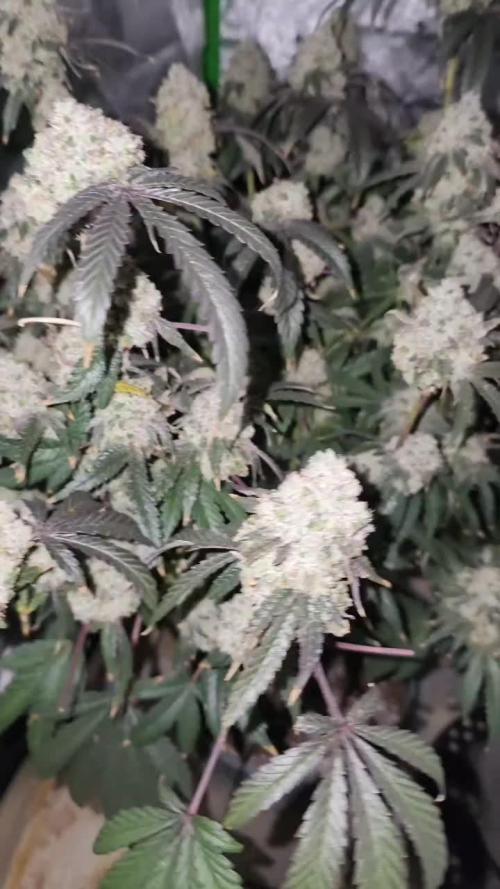
There is little to say yet. I recommend everyone to try this technique at least once. Maximize your harvest and increase your personal experience. If you want more serious proof of how mainlining works, take a look at the diaries of @Canamatoes, my teacher and mentor. More updates later, stay high🤘😁🦄




@SmylinPupil
Volgen
Well I’m closing this one out. I had a lot of problems with humidity outside and bud rot, in hindsight i read a few reviews in the last few weeks and purple kush is susceptible to bud rot. I did 2 separate harvest, one on the 9th and one on the 14th. I collected everything I could smoke, there is still buds left on the plants but because of bud rot and immature buds I’m saying fuck it. Sonoma seeds quotes 9-10 weeks flower i harvested at week 8 and week 9. I harvested just shy of a pound total, and just over and oz of “purple” looking weed. Between you guys and i, the purple one was pretty shwaggy as far as bud goes. Would i grow this again outdoors? NOPE. Would i try it indoors? You will have to stay tuned for my next grow. If you plan to grow this strain outdoors do not do it. The fact that it’s pretty much 100%indica it does not like to get wet,🤦♂️🏻 if you are in the desert, indoors or live in Afghanistan (lineage) go for it. The taste is also not quite what I expected, all the reviews say grapes, but i taste a neutral taste. Some of it smells quite good in the jars but as soon as you smell each bud it smells like spicy woody herb with some dank undertone. Trimming it i had some sort of dank spicy smell i just can’t put my fingers on, except it was all over them. The buzz is “ok”but nothing to knock your socks off with. It is a stimulating feeling followed by a calm “not sleepy” feeling. I haven’t grown many outdoor variety’s but I’m sure most of them turn out the same. I’m waiting for my indoor no name to finish and I can start trying to redeem myself with my leftover seeds, and hopefully get the true quality/if there is, with this purple kush strain.
Fall indoor; here i come. Thanks for tagging along.
Cheers.
Update: decided to make bubble hash with it.
Update 2: pressed some hash into some shatter
